

10 Best Barbell Standing Ab Rollerout Alternatives for Core Safety
The Barbell Standing Ab Rollerout is done standing with a barbell. Ranked closest by our scoring: the Kettlebell Double Windmill, the Barbell Rollerout and the Barbell Rollerout From Bench.
Updated Ranked by our 12-factor similarity model How it works
Original Exercise: Barbell Standing Ab Rollerout
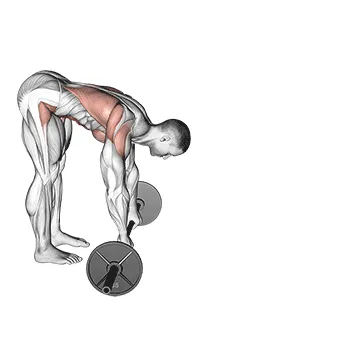
- Primary muscle
- Abs
- Equipment
- Barbell
- Difficulty
- Advanced
- Type
- Compound
Secondary muscles: Shoulders, Lower Back
How to perform Barbell Standing Ab Rollerout
- Stand upright with your feet shoulder-width apart and hold the barbell with both hands in front of your thighs.
- Engage your core and slowly roll the barbell down towards the ground, keeping your back straight and your arms extended.
- Continue rolling the barbell forward until your body is fully extended and your hands are directly above your head.
- Pause for a moment, then slowly roll the barbell back towards your thighs, maintaining control and keeping your core engaged.
- Repeat for the desired number of repetitions.
Ranked Barbell Standing Ab Rollerout Alternatives
10 substitutes, ranked by how closely each one matches the Barbell Standing Ab Rollerout on movement pattern, muscles worked, equipment and body position. The higher the score, the less you change. Open "How to perform this exercise" on a card for the steps; every card title links to that exercise's own alternatives page.
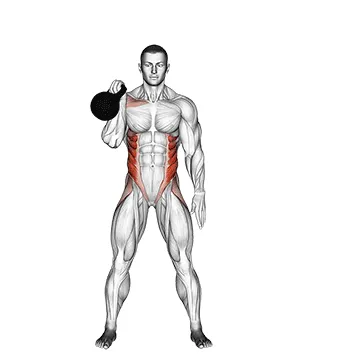
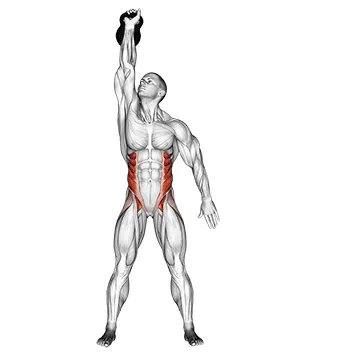
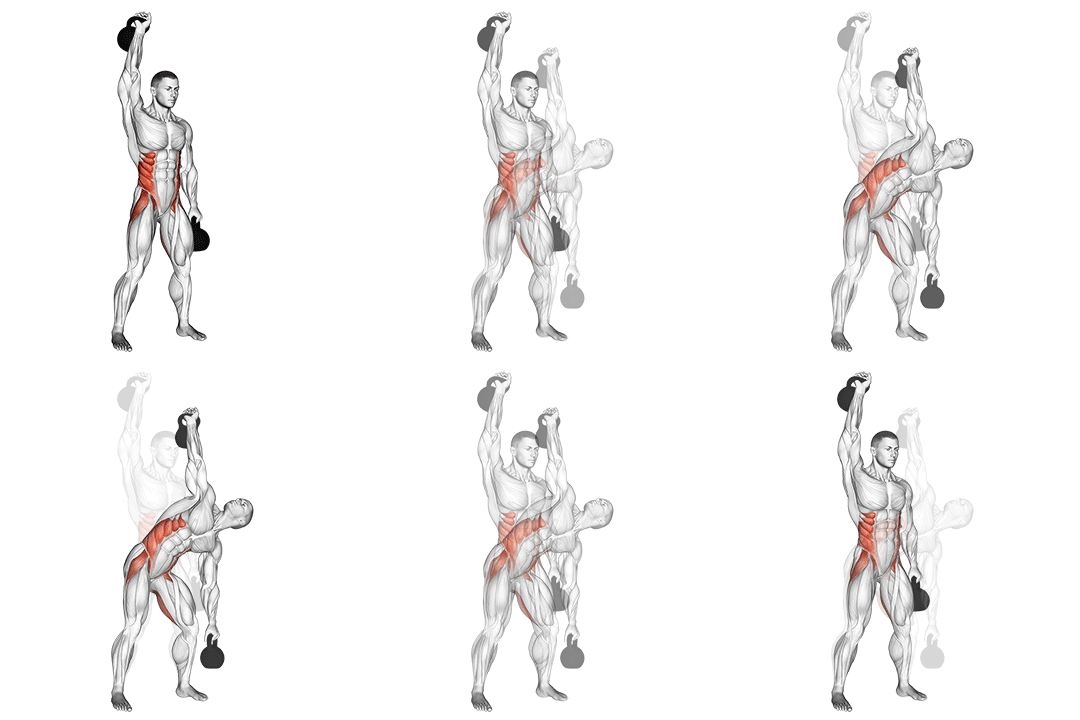
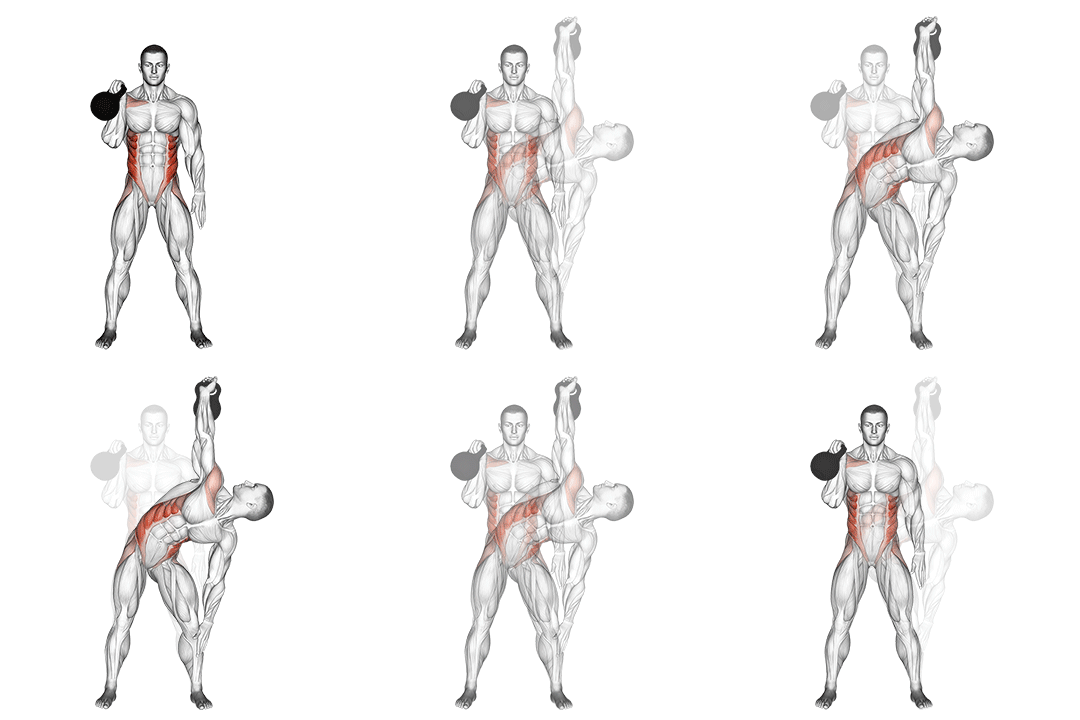
Best match 1. Kettlebell Double Windmill
95% match- Abs
- Kettlebell
- Advanced
- Compound
A good swap when you have a kettlebell to work with, and it still works the abs.
How to perform this exercise
- Stand with your feet shoulder-width apart, holding a kettlebell in your right hand.
- Extend your right arm overhead, keeping your eyes on the kettlebell.
- Rotate your left foot 45 degrees to the left and your right foot 90 degrees to the right.
- Bend at the waist to the left, keeping your right arm extended overhead.
- Lower the kettlebell towards the ground, reaching towards your left foot.
- Pause for a moment, then engage your core and push through your right foot to return to the starting position.
- Repeat for the desired number of repetitions, then switch sides.
Sets and reps: 3 to 5 sets of 5 to 8 reps.
Why this matches
- Primary muscle: abs, the same as the Barbell Standing Ab Rollerout
- Equipment: free weights, the same as the Barbell Standing Ab Rollerout
- Body position: standing, the same as the Barbell Standing Ab Rollerout
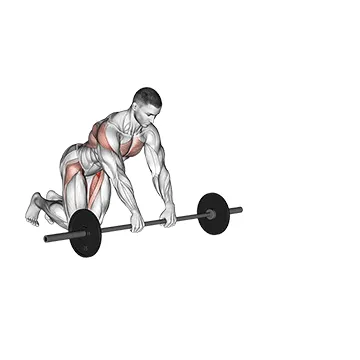
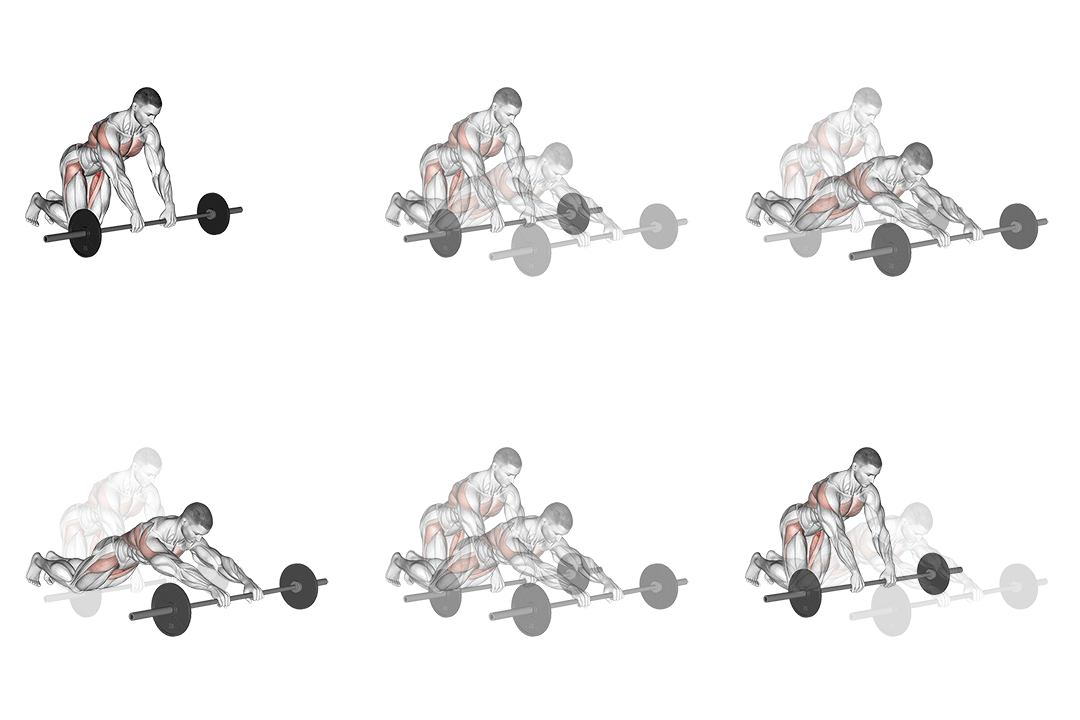
2. Barbell Rollerout
87% match- Abs
- Barbell
- Advanced
- Compound
Pick this when you want an easier version that still works the abs.
How to perform this exercise
- Kneel on the floor and hold a barbell with both hands, shoulder-width apart.
- Roll the barbell forward, extending your arms and keeping your core engaged.
- Continue rolling forward until your body is fully extended and your arms are overhead.
- Pause for a moment, then slowly roll the barbell back towards your knees, maintaining control.
- Repeat for the desired number of repetitions.
Sets and reps: 3 to 5 sets of 5 to 8 reps.
Why this matches
- Primary muscle: abs, the same as the Barbell Standing Ab Rollerout
- Equipment: free weights, the same as the Barbell Standing Ab Rollerout
- Body position: kneeling, not standing
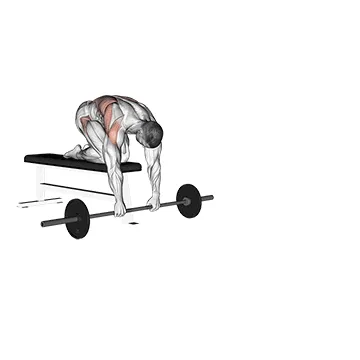
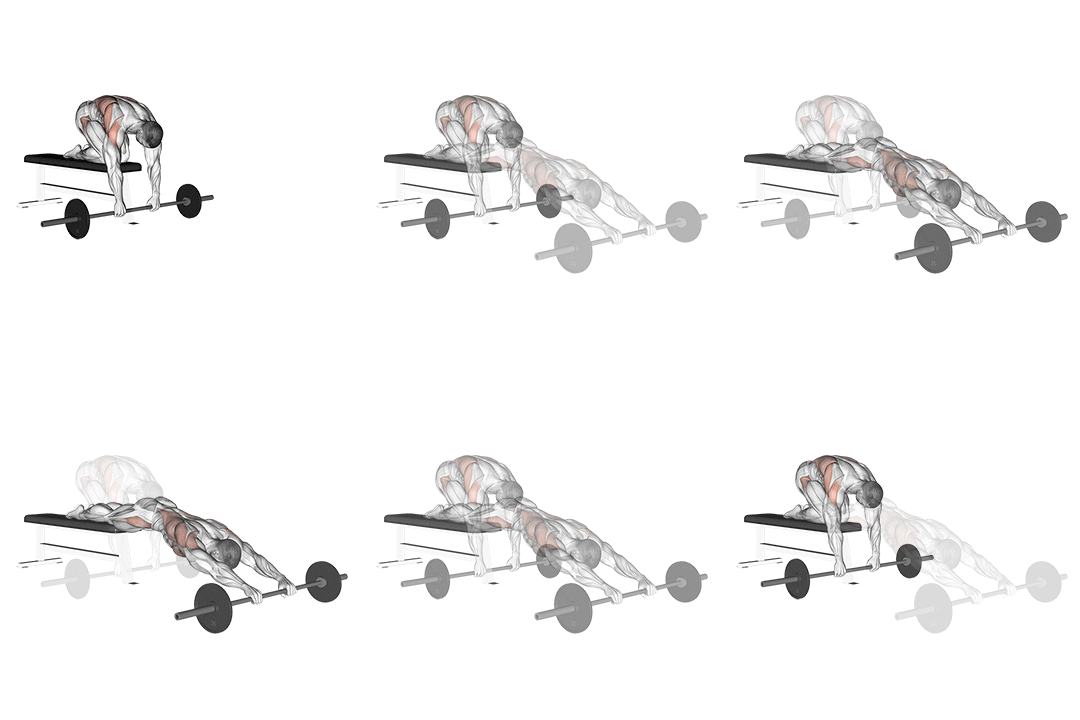
3. Barbell Rollerout From Bench
87% match- Abs
- Barbell
- Intermediate
- Compound
How to perform this exercise
- Start by kneeling on the floor with a barbell placed on a bench in front of you.
- Grasp the barbell with an overhand grip, slightly wider than shoulder-width apart.
- Keeping your core engaged and your back straight, slowly roll the barbell forward, extending your arms in front of you.
- Continue rolling the barbell forward until your body is fully extended and your arms are overhead.
- Pause for a moment at the fully extended position, then slowly roll the barbell back towards your body, returning to the starting position.
- Repeat for the desired number of repetitions.
Sets and reps: 3 or 4 sets of 6 to 10 reps.
Why this matches
- Primary muscle: abs, the same as the Barbell Standing Ab Rollerout
- Equipment: free weights, the same as the Barbell Standing Ab Rollerout
- Body position: kneeling, not standing
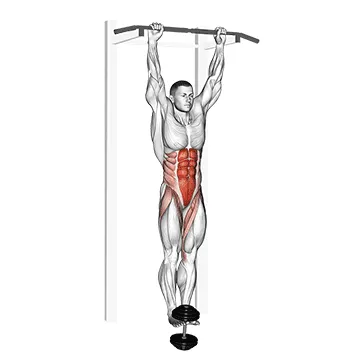
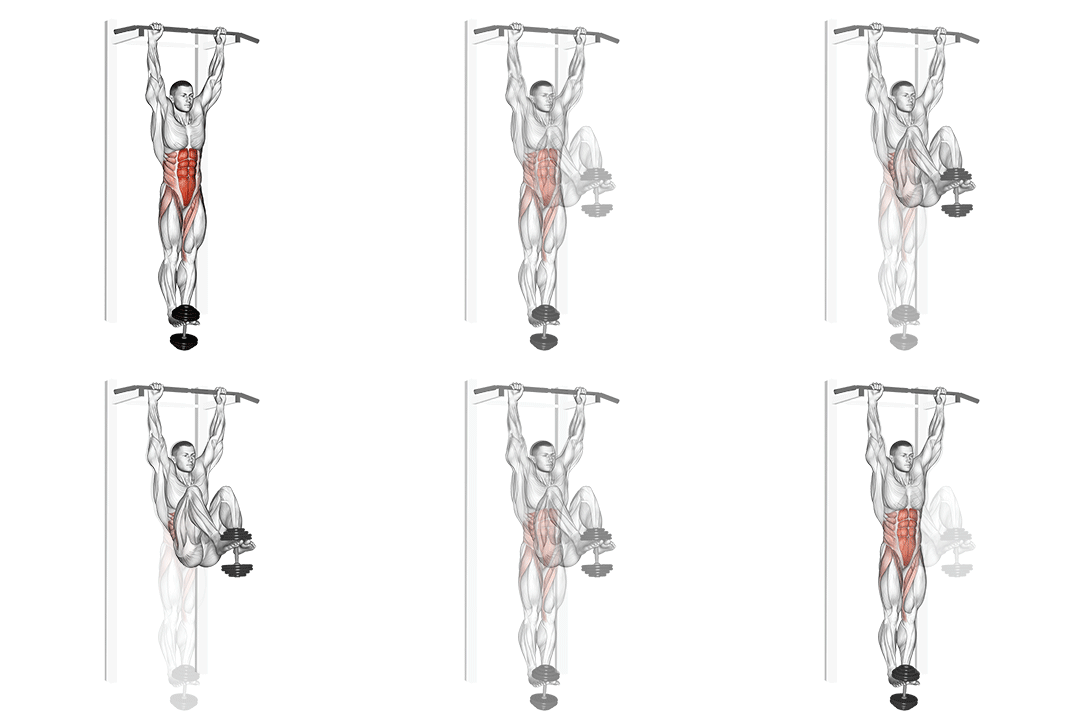
4. Weighted Hanging Leg-hip Raise
85% match- Abs
- Weighted
- Advanced
- Compound
A straight swap when you want to keep working the abs.
How to perform this exercise
- Hang from a pull-up bar with your arms fully extended and your palms facing away from you.
- Engage your core and lift your legs up in front of you, keeping them straight.
- Continue lifting until your legs are parallel to the ground or slightly higher.
- Pause for a moment at the top, then slowly lower your legs back down to the starting position.
- Repeat for the desired number of repetitions.
Sets and reps: 3 to 5 sets of 5 to 8 reps.
Why this matches
- Primary muscle: abs, the same as the Barbell Standing Ab Rollerout
- Equipment: free weights, the same as the Barbell Standing Ab Rollerout
- Body position: hanging, not standing
5. Advanced Kettlebell Windmill
84% match- Abs
- Kettlebell
- Advanced
- Compound
Pick this when you want a harder single-arm version that still works the abs.
How to perform this exercise
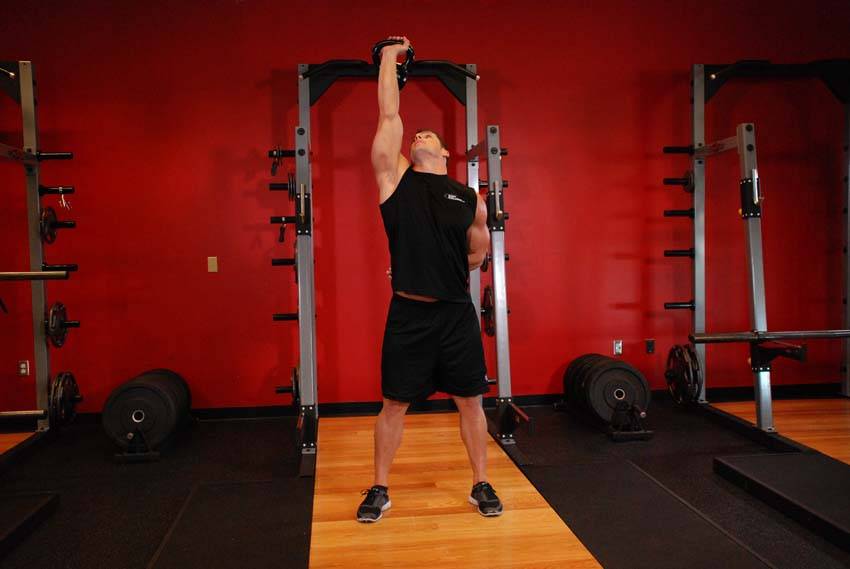
- Clean and press a kettlebell overhead with one arm.
- Keeping the kettlebell locked out at all times, push your butt out in the direction of the locked out kettlebell. Keep the non-working arm behind your back and turn your feet out at a forty-five degree angle from the arm with the kettlebell.
- Lower yourself as far as possible.
- Pause for a second and reverse the motion back to the starting position.
Sets and reps: 3 to 5 sets of 5 to 8 reps on each side.
Why this matches
- Primary muscle: abs, the same as the Barbell Standing Ab Rollerout
- Equipment: free weights, the same as the Barbell Standing Ab Rollerout
- Body position: standing, the same as the Barbell Standing Ab Rollerout
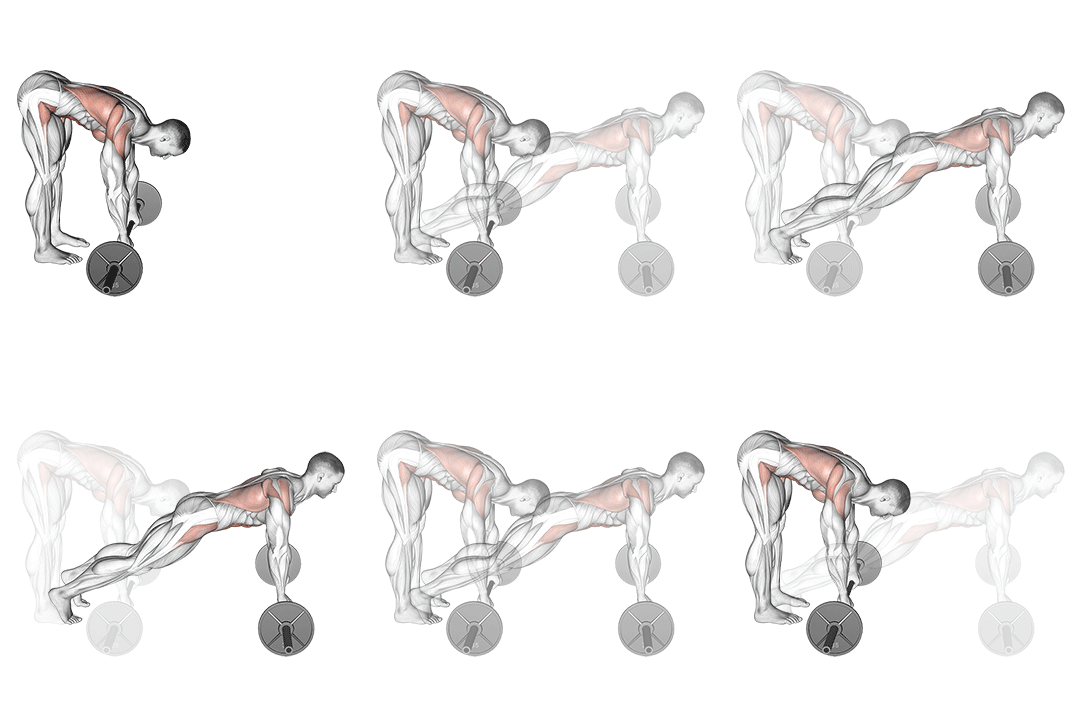
6. Barbell Ab Rollout
84% match- Abs
- Barbell
- Advanced
- Compound
It uses the same equipment and still works the abs.
How to perform this exercise
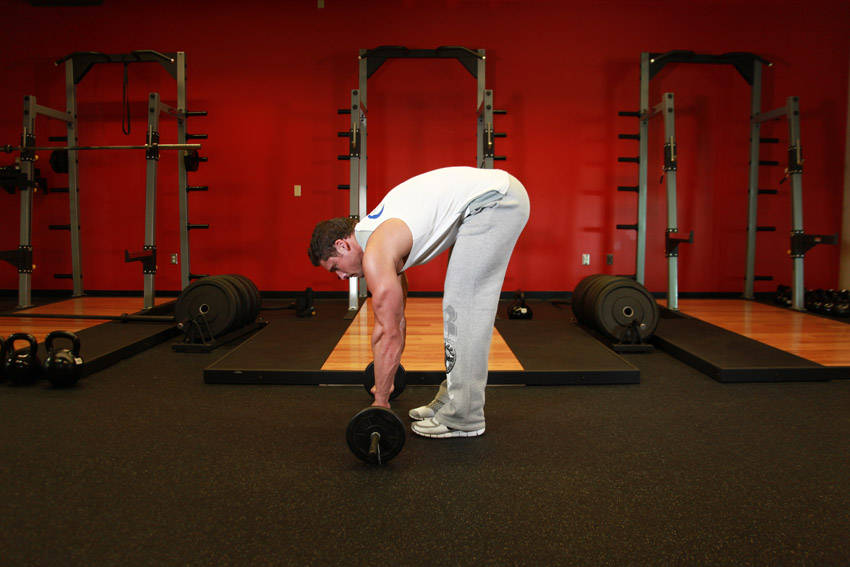
- For this exercise you will need to get into a pushup position, but instead of having your hands of the floor, you will be grabbing on to an Olympic barbell (loaded with 5-10 lbs on each side) instead. This will be your starting position.
- While keeping a slight arch on your back, lift your hips and roll the barbell towards your feet as you exhale. Tip: As you perform the movement, your glutes should be coming up, you should be keeping the abs tight and should maintain your back posture at all times. Also your arms should be staying perpendicular to the floor throughout the movement. If you don't, you will work out your shoulders and back more than the abs.
- After a second contraction at the top, start to roll the barbell back forward to the starting position slowly as you inhale.
- Repeat for the recommended amount of repetitions.
Sets and reps: 3 to 5 sets of 5 to 8 reps.
Why this matches
- Primary muscle: abs, the same as the Barbell Standing Ab Rollerout
- Equipment: free weights, the same as the Barbell Standing Ab Rollerout
7. Kettlebell Bent Press
84% match- Abs
- Kettlebell
- Advanced
- Compound
Pick this when you want to work the abs one side at a time.
How to perform this exercise
- Stand with your feet shoulder-width apart, holding a kettlebell in your right hand.
- Bend your knees slightly and press the kettlebell overhead with your right arm, keeping your elbow locked.
- Rotate your torso to the left, shifting your weight onto your left foot.
- Bend your left knee and lower your torso towards the ground, keeping your right arm extended overhead.
- As you lower, keep your eyes on the kettlebell and your chest lifted.
- Once your left hand touches the ground, push through your left foot and straighten your left leg, driving your hips forward.
- As you drive your hips forward, use your core and right arm to press the kettlebell back up to the starting position.
- Repeat for the desired number of repetitions, then switch sides.
Sets and reps: 3 to 5 sets of 5 to 8 reps on each side.
Why this matches
- Primary muscle: abs, the same as the Barbell Standing Ab Rollerout
- Equipment: free weights, the same as the Barbell Standing Ab Rollerout
- Body position: standing, the same as the Barbell Standing Ab Rollerout
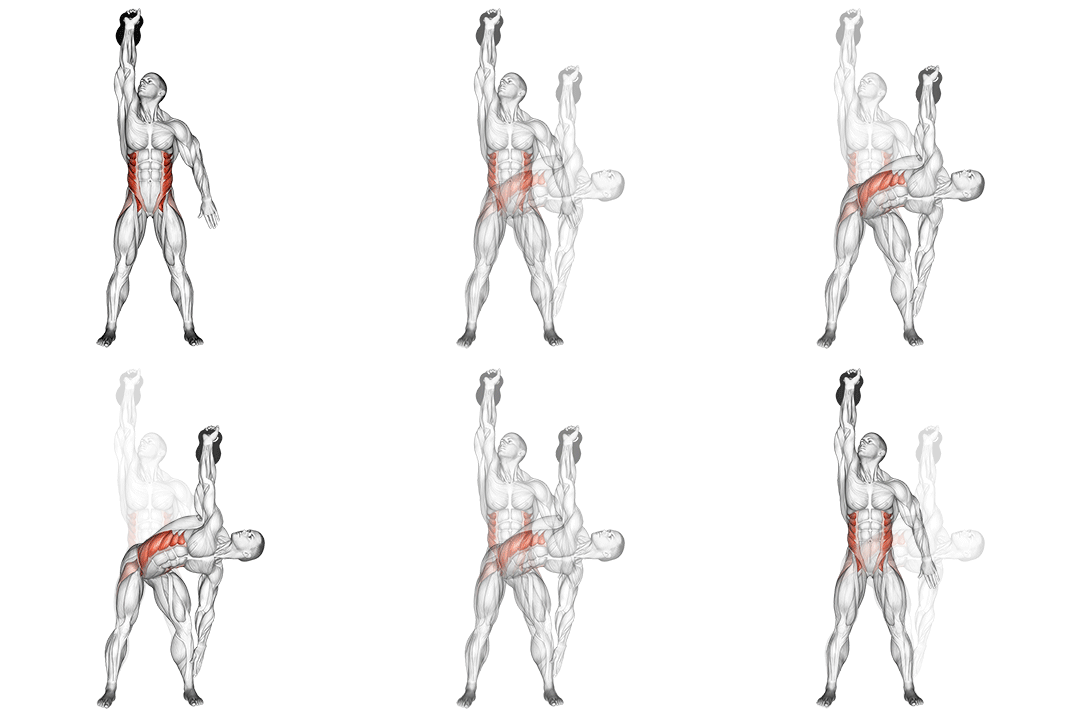
8. Kettlebell Windmill
84% match- Abs
- Kettlebell
- Intermediate
- Compound
How to perform this exercise
- Stand with your feet shoulder-width apart, holding a kettlebell in your right hand overhead.
- Rotate your left foot outwards about 45 degrees and keep your right foot pointing forward.
- Bend your torso to the left side, keeping your right arm extended overhead and your eyes on the kettlebell.
- Lower your torso as far as you can while keeping your right arm straight and your left arm extended to the side.
- Pause for a moment, then return to the starting position by pushing through your right foot and engaging your obliques.
- Repeat for the desired number of repetitions, then switch sides.
Sets and reps: 3 to 5 sets of 5 to 8 reps on each side.
Why this matches
- Primary muscle: abs, the same as the Barbell Standing Ab Rollerout
- Equipment: free weights, the same as the Barbell Standing Ab Rollerout
- Body position: standing, the same as the Barbell Standing Ab Rollerout
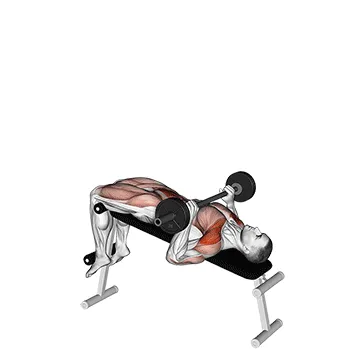
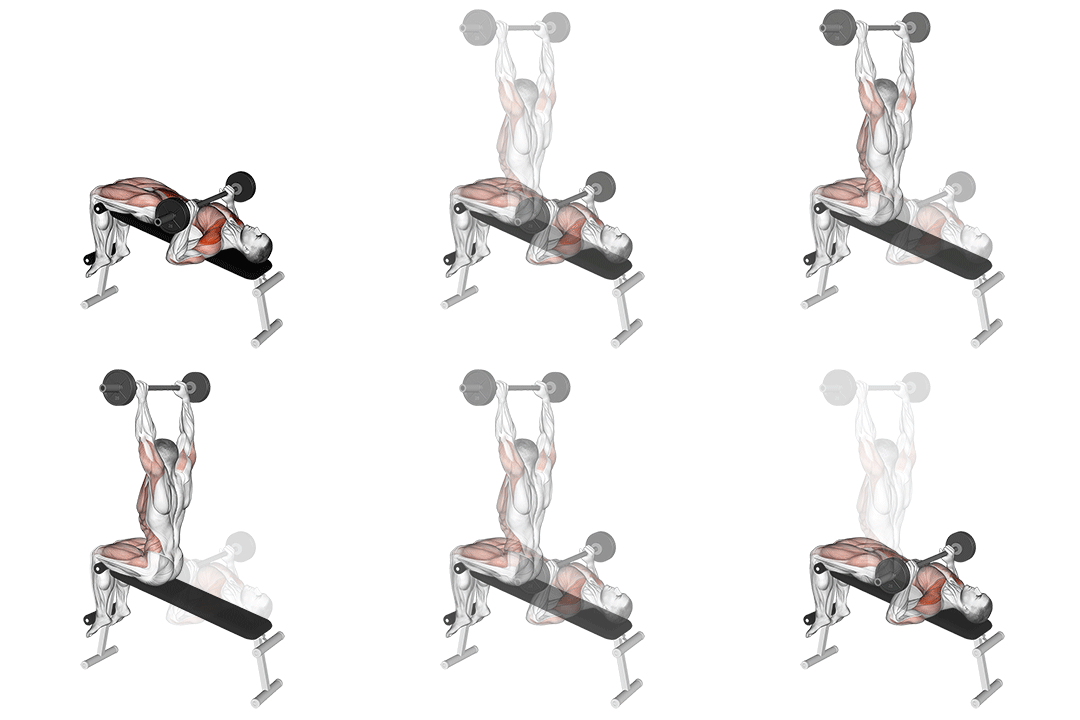
9. Barbell Press Sit-up
80% match- Abs
- Barbell
- Intermediate
- Compound
How to perform this exercise
- Lie flat on your back on a mat with your knees bent and feet flat on the ground.
- Hold the barbell with an overhand grip, resting it on your chest.
- Engaging your abs, slowly lift your upper body off the ground, curling forward until your torso is at a 45-degree angle.
- Pause for a moment at the top, then slowly lower your upper body back down to the starting position.
- Repeat for the desired number of repetitions.
Sets and reps: 3 or 4 sets of 6 to 10 reps.
Why this matches
- Primary muscle: abs, the same as the Barbell Standing Ab Rollerout
- Equipment: free weights, the same as the Barbell Standing Ab Rollerout
- Body position: lying on your back, not standing
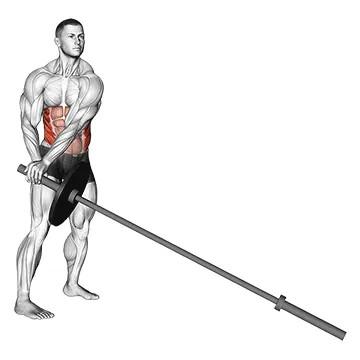
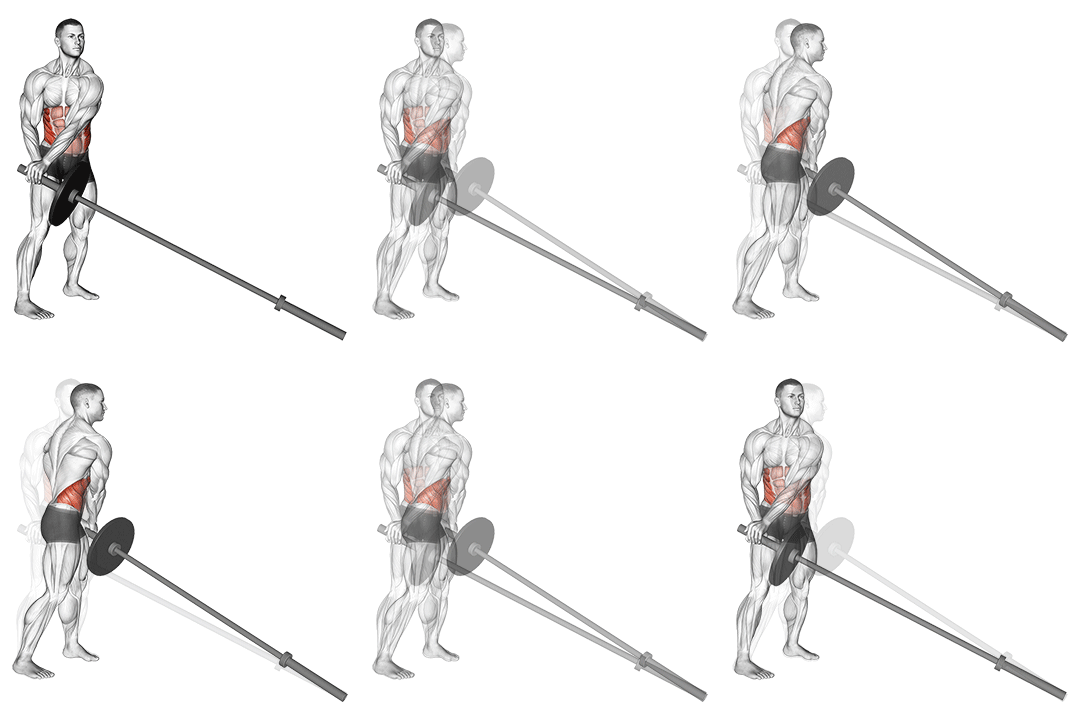
10. Landmine 180
79% match- Abs
- Barbell
- Intermediate
- Compound
How to perform this exercise
- Stand with your feet shoulder-width apart and hold the barbell with both hands in front of your chest.
- Bend your knees slightly and rotate your torso to the right, swinging the barbell down towards your right hip.
- As you reach the bottom of the movement, quickly reverse the motion and rotate your torso to the left, swinging the barbell up and across your body towards your left shoulder.
- Continue this twisting motion, alternating sides, for the desired number of repetitions.
Sets and reps: 3 to 5 sets of 5 to 8 reps.
Why this matches
- Primary muscle: abs, the same as the Barbell Standing Ab Rollerout
- Equipment: free weights, the same as the Barbell Standing Ab Rollerout
- Body position: standing, the same as the Barbell Standing Ab Rollerout
- Balance: easier to stay steady on than the Barbell Standing Ab Rollerout
Why You Might Need a Barbell Standing Ab Rollerout Alternative
You might substitute the barbell standing rollout because of low-back pain, limited shoulder mobility, lack of barbell equipment, or insufficient progressions for your current strength. The standing rollout creates high shear and large hip-to-spine lever forces that can overload the lumbar spine if you lack core stiffness. Alternatives let you maintain the anti-extension cue, bracing the lats and drawing the ribs down, while shortening the lever arm or changing loading direction to reduce shear. Use substitutes to prioritize spinal safety, build progressive core strength, or shift to rotational/anti-rotation drills when needed.
Barbell Standing Ab Rollerout FAQ
What muscles does Barbell Standing Ab Rollerout work?
The rollout primarily trains the rectus abdominis and external obliques through anti-extension. It also recruits the transverse abdominis and lats for trunk stiffness and the erector spinae and hip flexors as secondary stabilizers. Cue: keep the ribs down to maximize abdominal drive and limit lumbar extension.
What is the best bodyweight alternative to Barbell Standing Ab Rollerout?
A strict hollow-body hold and hollow rocks are the best pure bodyweight alternatives because they train sustained anterior core tension without long-lever shear. Cue: flatten the lower back to the floor by posteriorly tilting the pelvis and actively drawing the ribs toward the pelvis to maintain rectus and TVA activation.
Find Alternatives for Any Exercise
Search the exercise database and filter the ranked substitutes by the equipment you own.
Similarity scores compare exercise metadata such as movement pattern, muscles, equipment and body position. They are not a safety rating or a check that you own the equipment. Learn about our methodology