

10 Best Lever One Arm Shoulder Press Alternatives for Home Gyms
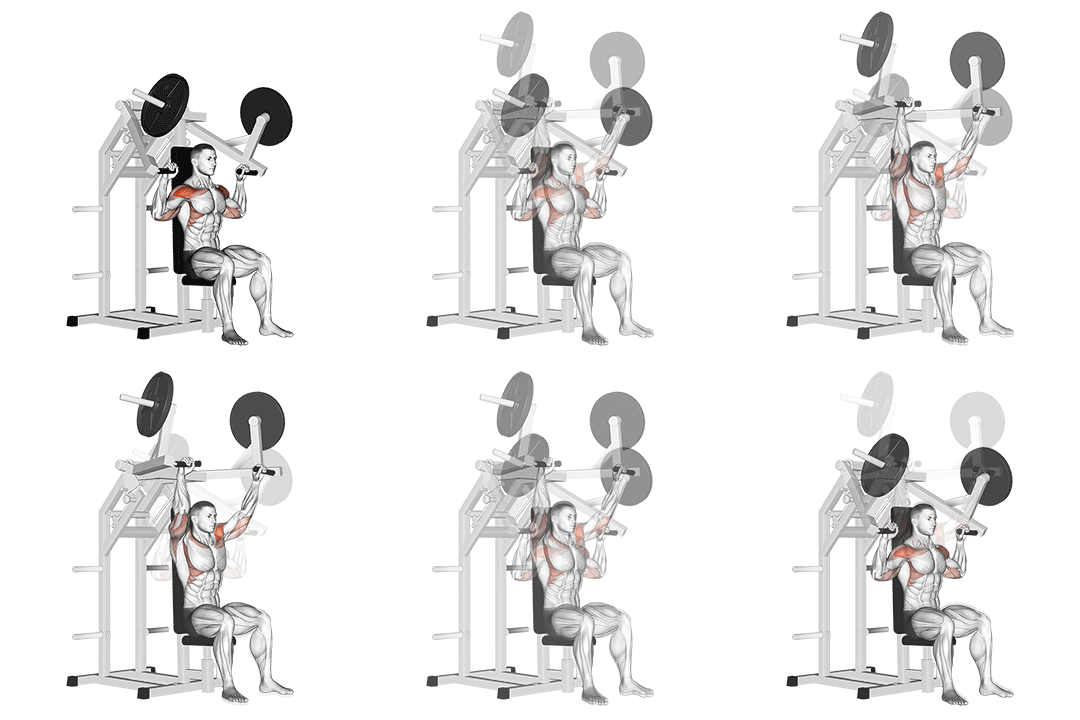
The Lever One Arm Shoulder Press is done seated with a lever machine. Ranked closest by our scoring: the Lever Shoulder Press, the Machine Shoulder (Military) Press and the Kettlebell Seated Press.
Updated Ranked by our 12-factor similarity model How it works
Original Exercise: Lever One Arm Shoulder Press
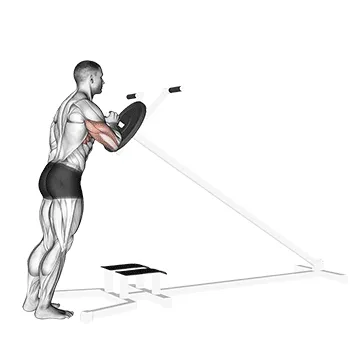
- Primary muscle
- Delts
- Equipment
- Lever
- Difficulty
- Intermediate
- Type
- Compound
Secondary muscles: Triceps, Upper Back
How to perform Lever One Arm Shoulder Press
- Adjust the seat height and position yourself on the machine with your back against the pad.
- Grasp the lever handle with one hand and position your elbow at a 90-degree angle.
- Press the lever upward until your arm is fully extended overhead.
- Pause for a moment at the top, then slowly lower the lever back down to the starting position.
- Repeat for the desired number of repetitions, then switch to the other arm.
Ranked Lever One Arm Shoulder Press Alternatives
10 substitutes, ranked by how closely each one matches the Lever One Arm Shoulder Press on movement pattern, muscles worked, equipment and body position. The higher the score, the less you change. Open "How to perform this exercise" on a card for the steps; every card title links to that exercise's own alternatives page.
Best match 1. Lever Shoulder Press
88% match- Delts
- Lever
- Intermediate
- Compound
The same equipment, taken with an overhand grip.
How to perform this exercise
- Adjust the seat height and position yourself on the machine with your back against the backrest.
- Grasp the handles with an overhand grip and position your hands at shoulder level.
- Push the handles upward until your arms are fully extended, but do not lock your elbows.
- Pause for a moment at the top, then slowly lower the handles back down to the starting position.
- Repeat for the desired number of repetitions.
Sets and reps: 3 or 4 sets of 6 to 10 reps.
Why this matches
- Movement: strict overhead press, the same as the Lever One Arm Shoulder Press
- Primary muscle: delts, the same as the Lever One Arm Shoulder Press
- Equipment: a machine, the same as the Lever One Arm Shoulder Press
- Body position: seated, the same as the Lever One Arm Shoulder Press
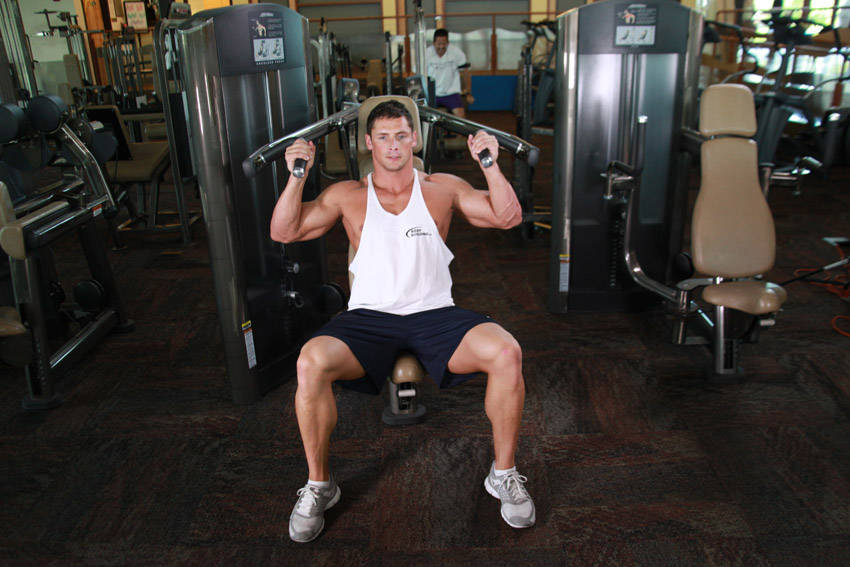
2. Machine Shoulder (Military) Press
88% match- Delts
- Machine
- Intermediate
- Compound
A good swap when you have a machine to work with, and it still works the delts.
How to perform this exercise
- Sit down on the Shoulder Press Machine and select the weight.
- Grab the handles to your sides as you keep the elbows bent and in line with your torso. This will be your starting position.
- Now lift the handles as you exhale and you extend the arms fully. At the top of the position make sure that you hold the contraction for a second.
- Lower the handles slowly back to the starting position as you inhale.
- Repeat for the recommended amount of repetitions.
Sets and reps: 3 or 4 sets of 6 to 10 reps.
Why this matches
- Movement: strict overhead press, the same as the Lever One Arm Shoulder Press
- Primary muscle: delts, the same as the Lever One Arm Shoulder Press
- Equipment: a machine, the same as the Lever One Arm Shoulder Press
- Body position: seated, the same as the Lever One Arm Shoulder Press
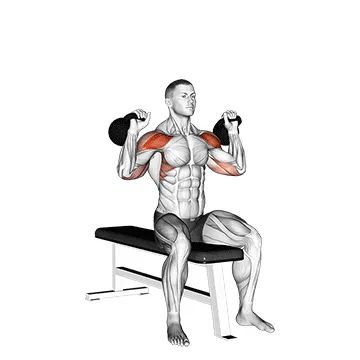
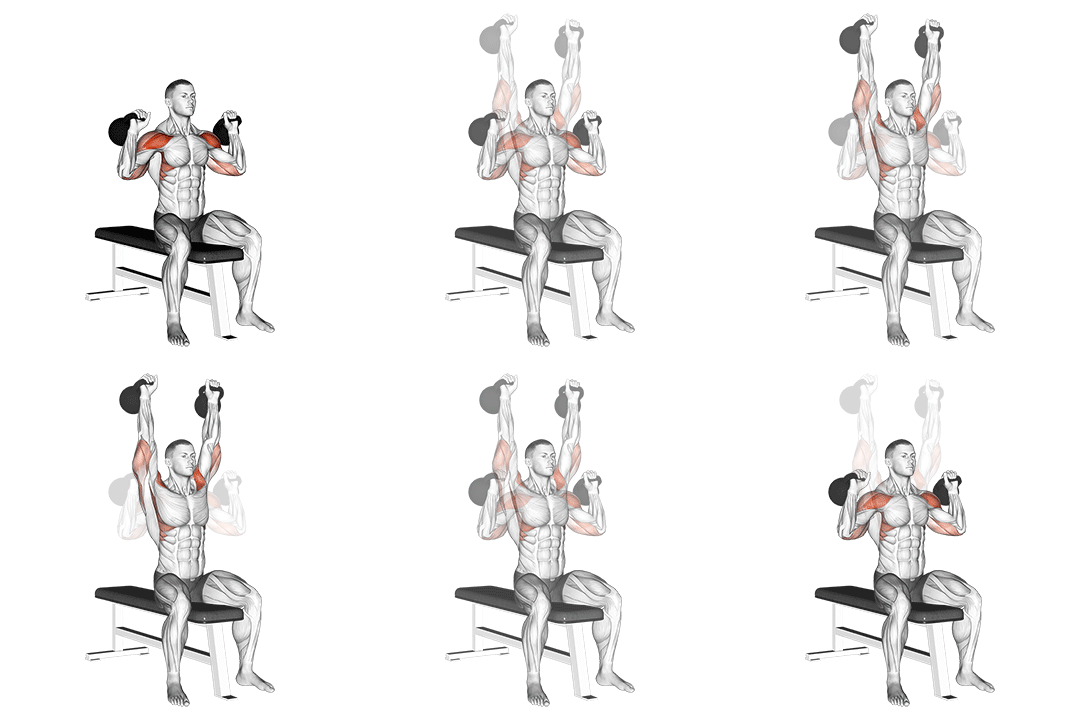
3. Kettlebell Seated Press
88% match- Delts
- Kettlebell
- Intermediate
- Compound
A good swap when you have a kettlebell to work with, and it still works the delts.
How to perform this exercise
- Sit on a bench with your back straight and feet flat on the ground.
- Hold a kettlebell in each hand at shoulder height, palms facing forward.
- Press the kettlebells overhead, fully extending your arms.
- Lower the kettlebells back to shoulder height.
- Repeat for the desired number of repetitions.
Sets and reps: 3 or 4 sets of 6 to 10 reps on each side.
Why this matches
- Primary muscle: delts, the same as the Lever One Arm Shoulder Press
- Equipment: free weights, not a machine
- Body position: seated, the same as the Lever One Arm Shoulder Press
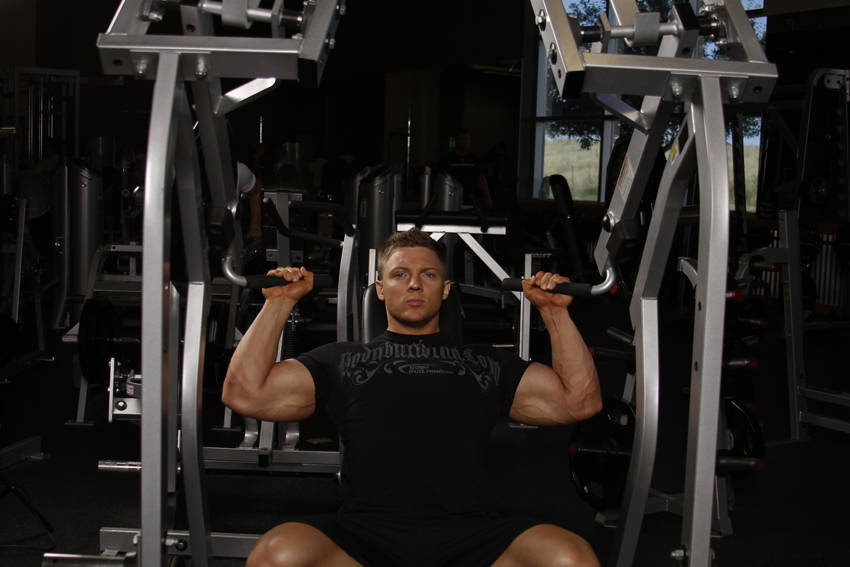
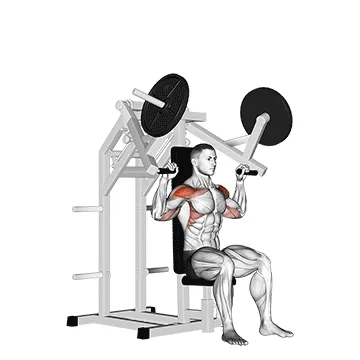
4. Leverage Shoulder Press
88% match- Delts
- Machine
- Intermediate
- Compound
How to perform this exercise
- Load an appropriate weight onto the pins and adjust the seat for your height. The handles should be near the top of the shoulders at the beginning of the motion. Your chest and head should be up and handles held with a pronated grip. This will be your starting position.
- Press the handles upward by extending through the elbow.
- After a brief pause at the top, return the weight to just above the start position, keeping tension on the muscles by not returning the weight to the stops until the set is complete.
Sets and reps: 3 or 4 sets of 6 to 10 reps.
Why this matches
- Movement: strict overhead press, the same as the Lever One Arm Shoulder Press
- Primary muscle: delts, the same as the Lever One Arm Shoulder Press
- Equipment: a machine, the same as the Lever One Arm Shoulder Press
- Body position: seated, the same as the Lever One Arm Shoulder Press
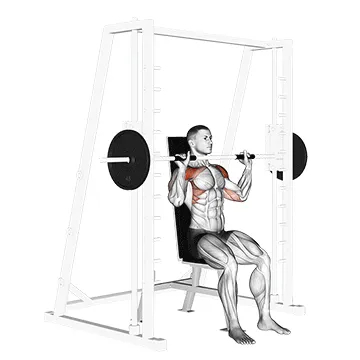
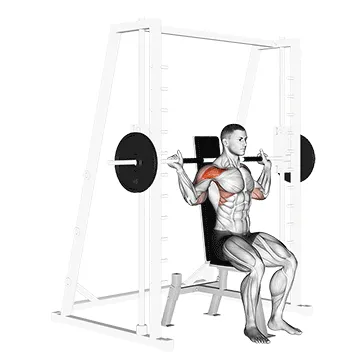
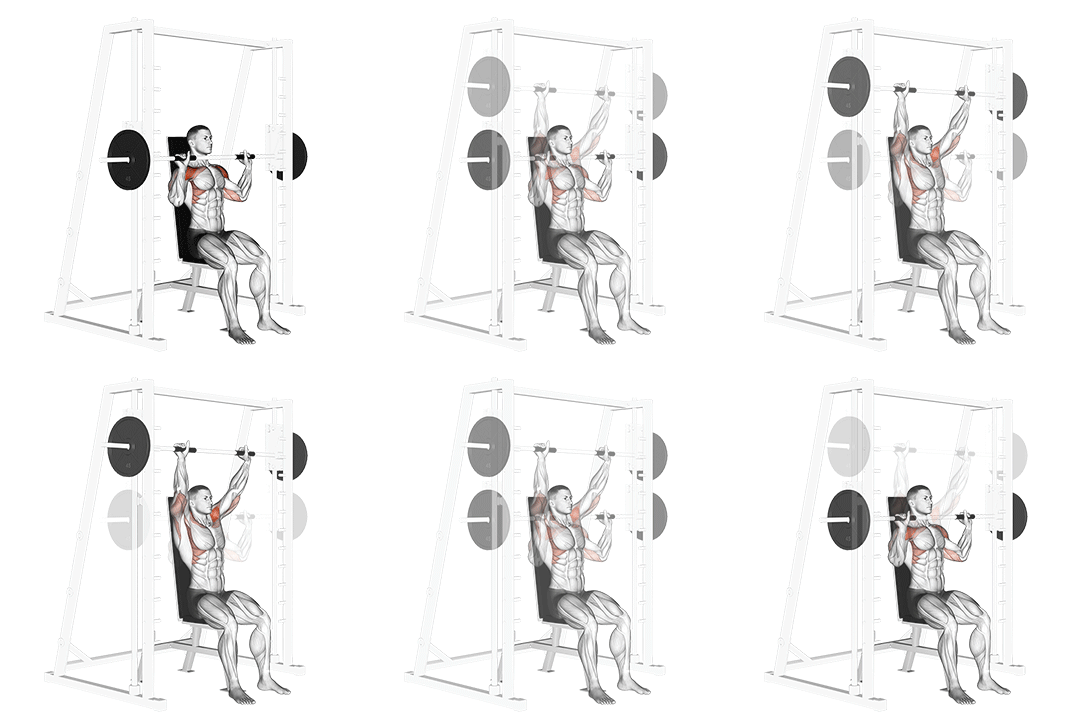
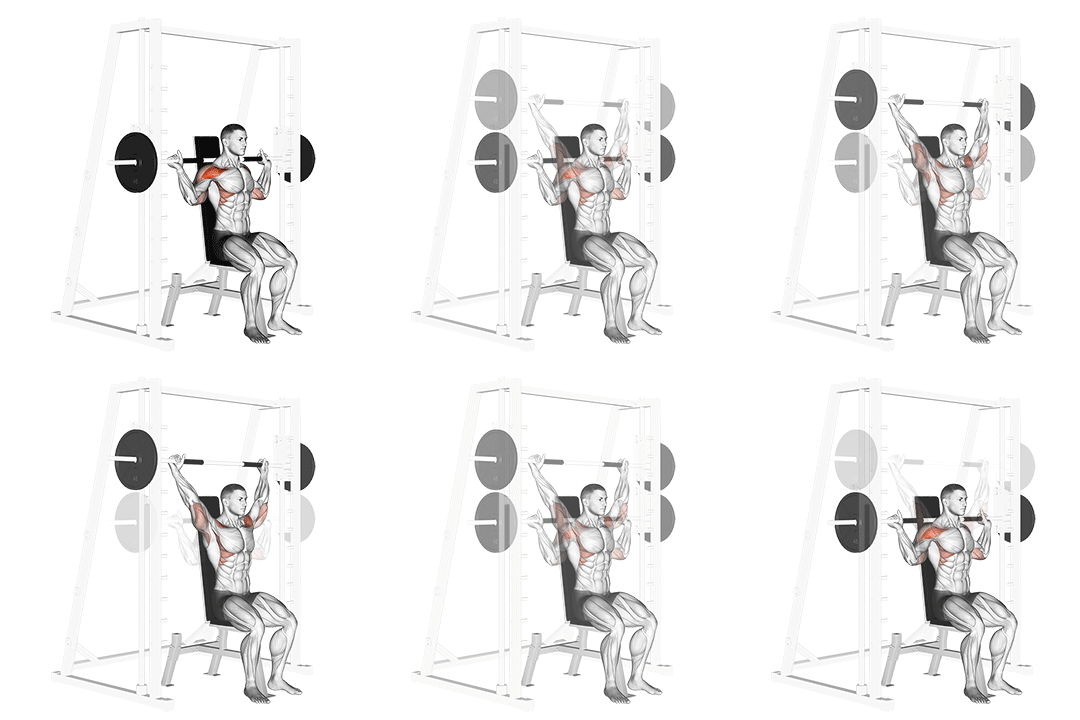
5. Smith Seated Shoulder Press
88% match- Delts
- Smith-machine
- Intermediate
- Compound
A good swap when you have a Smith machine to work with, and it still works the delts.
How to perform this exercise
- Adjust the seat height so that the handles are at shoulder level.
- Sit on the machine with your back against the pad and your feet flat on the floor.
- Grasp the handles with an overhand grip and lift them off the supports, extending your arms fully.
- Lower the handles down to shoulder level, keeping your elbows slightly bent.
- Press the handles up overhead until your arms are fully extended.
- Pause for a moment at the top, then slowly lower the handles back down to shoulder level.
- Repeat for the desired number of repetitions.
Sets and reps: 3 or 4 sets of 6 to 10 reps.
Why this matches
- Movement: strict overhead press, the same as the Lever One Arm Shoulder Press
- Primary muscle: delts, the same as the Lever One Arm Shoulder Press
- Equipment: a machine, the same as the Lever One Arm Shoulder Press
- Body position: seated, the same as the Lever One Arm Shoulder Press
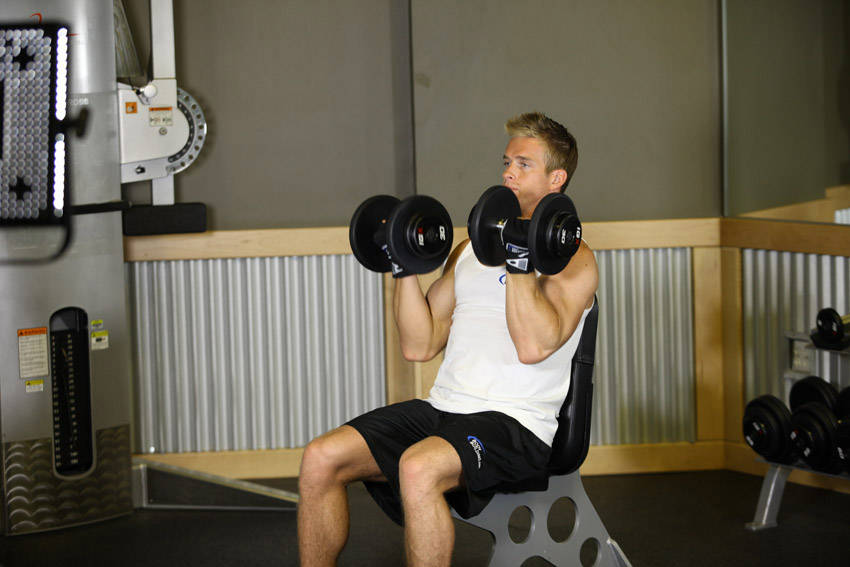
6. Arnold Dumbbell Press
82% match- Delts
- Dumbbell
- Intermediate
- Compound
A good swap when you have dumbbells to work with, and it still works the delts.
How to perform this exercise
- Sit on an exercise bench with back support and hold two dumbbells in front of you at about upper chest level with your palms facing your body and your elbows bent. Tip: Your arms should be next to your torso. The starting position should look like the contracted portion of a dumbbell curl.
- Now to perform the movement, raise the dumbbells as you rotate the palms of your hands until they are facing forward.
- Continue lifting the dumbbells until your arms are extended above you in straight arm position. Breathe out as you perform this portion of the movement.
- After a second pause at the top, begin to lower the dumbbells to the original position by rotating the palms of your hands towards you. Tip: The left arm will be rotated in a counter clockwise manner while the right one will be rotated clockwise. Breathe in as you perform this portion of the movement.
- Repeat for the recommended amount of repetitions.
Sets and reps: 3 or 4 sets of 6 to 10 reps.
Why this matches
- Movement: strict overhead press, the same as the Lever One Arm Shoulder Press
- Primary muscle: delts, the same as the Lever One Arm Shoulder Press
- Equipment: free weights, not a machine
- Body position: seated, the same as the Lever One Arm Shoulder Press
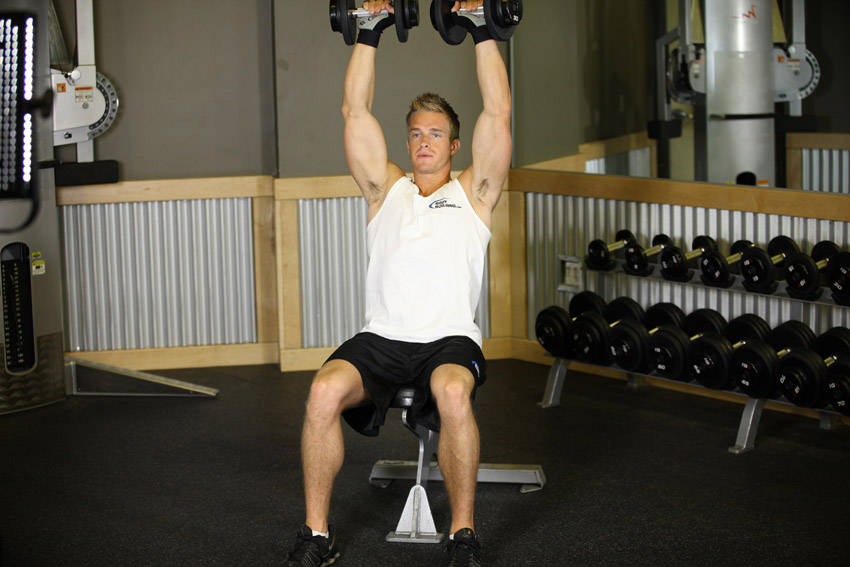
7. Seated Dumbbell Press
82% match- Delts
- Dumbbell
- Intermediate
- Compound
How to perform this exercise
- Grab a couple of dumbbells and sit on a military press bench or a utility bench that has a back support on it as you place the dumbbells upright on top of your thighs.
- Clean the dumbbells up one at a time by using your thighs to bring the dumbbells up to shoulder height at each side.
- Rotate the wrists so that the palms of your hands are facing forward. This is your starting position.
- As you exhale, push the dumbbells up until they touch at the top.
- After a second pause, slowly come down back to the starting position as you inhale.
- Repeat for the recommended amount of repetitions.
Sets and reps: 3 or 4 sets of 6 to 10 reps.
Why this matches
- Primary muscle: delts, the same as the Lever One Arm Shoulder Press
- Equipment: free weights, not a machine
- Body position: seated, the same as the Lever One Arm Shoulder Press
- Delts
- Kettlebell
- Intermediate
- Compound
How to perform this exercise
- Sit on a bench with your back straight and feet flat on the ground.
- Hold a kettlebell in each hand at shoulder level with your palms facing forward.
- Press the kettlebells overhead by extending your arms fully.
- Pause for a moment at the top, then slowly lower the kettlebells back to shoulder level.
- Repeat for the desired number of repetitions.
Sets and reps: 3 or 4 sets of 6 to 10 reps.
Why this matches
- Movement: strict overhead press, the same as the Lever One Arm Shoulder Press
- Primary muscle: delts, the same as the Lever One Arm Shoulder Press
- Equipment: free weights, not a machine
- Body position: seated, the same as the Lever One Arm Shoulder Press
9. Lever Military Press
80% match- Delts
- Lever
- Intermediate
- Compound
How to perform this exercise
- Adjust the seat height and position yourself on the machine with your back against the backrest.
- Grasp the handles with an overhand grip and position your hands slightly wider than shoulder-width apart.
- Push the handles upward until your arms are fully extended, but do not lock your elbows.
- Pause for a moment at the top, then slowly lower the handles back down to the starting position.
- Repeat for the desired number of repetitions.
Sets and reps: 3 or 4 sets of 6 to 10 reps.
Why this matches
- Movement: strict overhead press, the same as the Lever One Arm Shoulder Press
- Primary muscle: delts, the same as the Lever One Arm Shoulder Press
- Equipment: a machine, the same as the Lever One Arm Shoulder Press
- Body position: standing, not seated
10. Smith Behind Neck Press
80% match- Delts
- Smith-machine
- Advanced
- Compound
How to perform this exercise
- Adjust the seat height of the smith machine so that the bar is at shoulder level.
- Stand with your feet shoulder-width apart and your knees slightly bent.
- Grasp the bar with an overhand grip, slightly wider than shoulder-width apart.
- Lift the bar off the rack and step back, maintaining a stable stance.
- Lower the bar down to the back of your neck, keeping your elbows pointing forward.
- Press the bar up overhead until your arms are fully extended.
- Pause for a moment at the top, then slowly lower the bar back down to the starting position.
- Repeat for the desired number of repetitions.
Sets and reps: 3 to 5 sets of 5 to 8 reps.
Why this matches
- Primary muscle: delts, the same as the Lever One Arm Shoulder Press
- Equipment: a machine, the same as the Lever One Arm Shoulder Press
- Body position: standing, not seated
Why You Might Need a Lever One Arm Shoulder Press Alternative
You might substitute the Lever One Arm Shoulder Press for equipment limits, shoulder pain, or to correct unilateral imbalances. Lever rigs stabilize the path and lower stabilizer demand; switching to dumbbells or landmine variations increases rotator cuff and scapular stabilizer activation, improving joint resilience. If you have shoulder impingement, choose a neutral-grip landmine press and tuck the elbow 20–30 degrees to reduce subacromial compression while still targeting the anterior and lateral deltoids. For hypertrophy, use strict tempo and full controlled range of motion to maximize time under tension.
How to Choose the Right Lever One Arm Shoulder Press Substitute
Pick a substitute based on equipment, stability needs, and training goals. For maximal loading and strength, use a seated barbell or heavy dumbbell single-arm press while keeping the wrist stacked and scapula pinned to isolate the deltoid. For reduced joint shear or rehab, choose the landmine single-arm press with a forward-arc path and neutral rotation to shift load away from the glenoid. For hypertrophy and unilateral balance, use cables or kettlebells with strict tempo and a full concentric squeeze to ensure even deltoid activation and correct compensations.
Lever One Arm Shoulder Press FAQ
What muscles does Lever One Arm Shoulder Press work?
The exercise primarily targets the anterior and lateral deltoid fibers, with the triceps brachii and upper trapezius assisting. Scapular stabilizers and the rotator cuff work isometrically to center the humeral head, keep the scapula slightly retracted and upwardly rotated during the press to maintain glenohumeral alignment.
Can I build muscle without doing Lever One Arm Shoulder Press?
Yes, you can build deltoid mass with other compound and unilateral presses that provide progressive overload, such as dumbbell overhead presses or landmine single-arm presses. Focus on increasing load or reps over time, use full range of motion, and pause briefly at lockout to increase mechanical tension on the delts.
Find Alternatives for Any Exercise
Search the exercise database and filter the ranked substitutes by the equipment you own.
Similarity scores compare exercise metadata such as movement pattern, muscles, equipment and body position. They are not a safety rating or a check that you own the equipment. Learn about our methodology