

10 Olympic Barbell Hammer Curl Alternatives
The Olympic Barbell Hammer Curl is done standing with a barbell. Ranked closest by our scoring: the Biceps Leg Concentration Curl and the Bodyweight Side Lying Biceps Curl.
Updated Ranked by our 12-factor similarity model How it works
Original Exercise: Olympic Barbell Hammer Curl
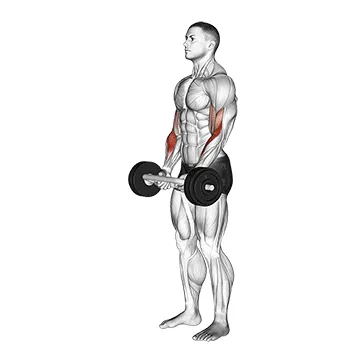
- Primary muscle
- Biceps
- Equipment
- Barbell
- Difficulty
- Intermediate
- Type
- Isolation
Secondary muscles: Forearms
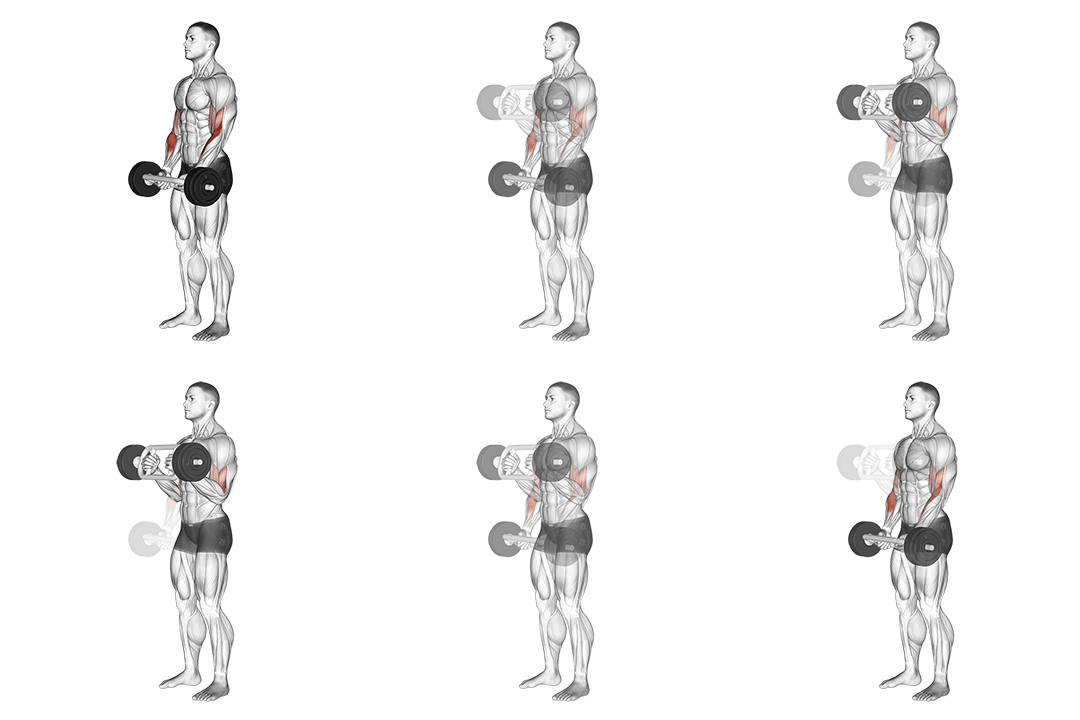
How to perform Olympic Barbell Hammer Curl
- Stand up straight with your feet shoulder-width apart and hold an Olympic barbell with an overhand grip.
- Let the barbell hang at arm's length in front of your thighs, with your palms facing your body.
- Keeping your upper arms stationary, exhale and curl the weights while contracting your biceps.
- Continue to raise the barbell until your biceps are fully contracted and the barbell is at shoulder level.
- Hold the contracted position for a brief pause as you squeeze your biceps.
- Inhale and slowly begin to lower the barbell back to the starting position.
- Repeat for the desired number of repetitions.
Ranked Olympic Barbell Hammer Curl Alternatives
10 substitutes, ranked by how closely each one matches the Olympic Barbell Hammer Curl on movement pattern, muscles worked, equipment and body position. The higher the score, the less you change. Open "How to perform this exercise" on a card for the steps; every card title links to that exercise's own alternatives page.
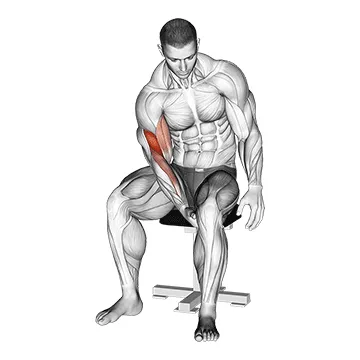
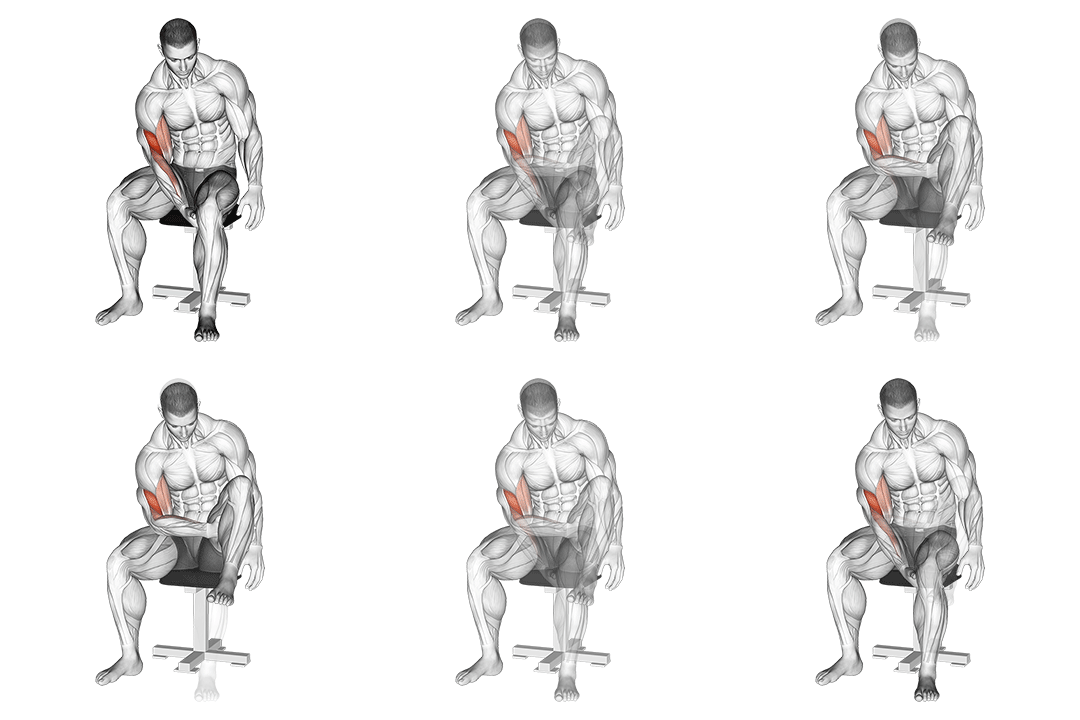
Best match 1. Biceps Leg Concentration Curl
70% match- Biceps
- Bodyweight
- Beginner
- Isolation
Pick this when you want an easier single-arm version that still works the biceps.
How to perform this exercise
- Sit on a bench with your legs spread apart and your feet flat on the ground.
- Hold a dumbbell in one hand and place your elbow on the inside of your thigh, just above the knee.
- With your palm facing up, curl the dumbbell towards your shoulder while keeping your upper arm stationary.
- Squeeze your biceps at the top of the movement, then slowly lower the dumbbell back to the starting position.
- Repeat for the desired number of repetitions, then switch arms.
Sets and reps: 3 sets of 8 to 12 reps on each side, and add reps before you add load.
Why this matches
- Movement: curl, the same as the Olympic Barbell Hammer Curl
- Primary muscle: biceps, the same as the Olympic Barbell Hammer Curl
- Equipment: bodyweight only, not free weights
- Body position: seated, not standing
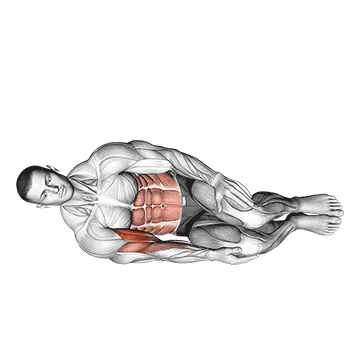
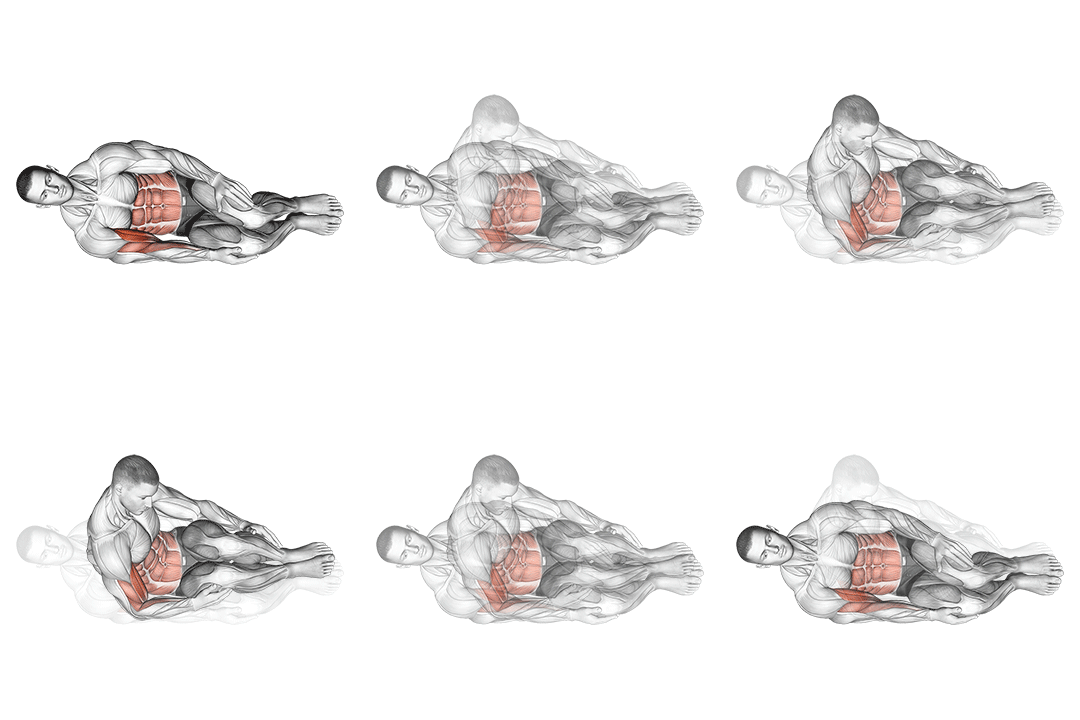
2. Bodyweight Side Lying Biceps Curl
70% match- Biceps
- Bodyweight
- Beginner
- Isolation
Pick this when you want an easier version that works the biceps one side at a time.
How to perform this exercise
- Lie on your side with your legs extended and your head supported by your arm.
- Hold your upper arm against your side and bend your elbow to curl your forearm towards your shoulder.
- Pause for a moment at the top, then slowly lower your forearm back down to the starting position.
- Repeat for the desired number of repetitions.
Sets and reps: 3 sets of 8 to 12 reps on each side, and add reps before you add load.
Why this matches
- Movement: curl, the same as the Olympic Barbell Hammer Curl
- Primary muscle: biceps, the same as the Olympic Barbell Hammer Curl
- Equipment: bodyweight only, not free weights
- Triceps
- Bodyweight
- Beginner
- Isolation
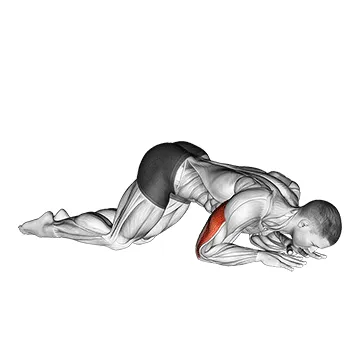
A looser match: it works the triceps rather than the biceps.
How to perform this exercise
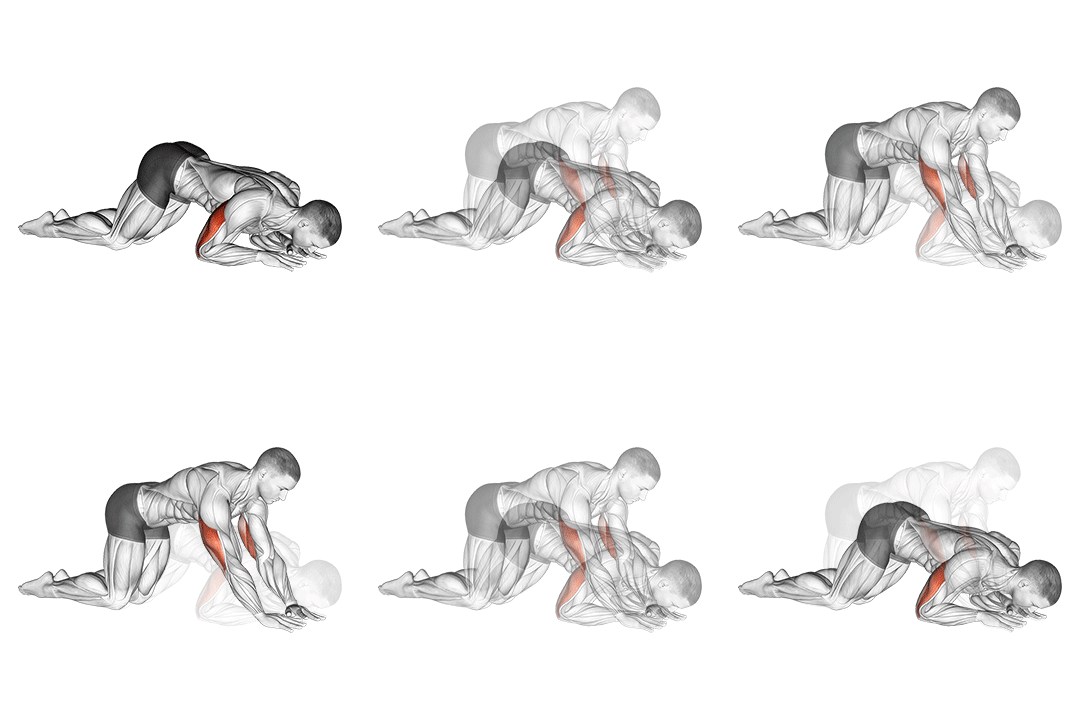
- Kneel down on the ground with your knees hip-width apart.
- Place your hands on the ground in front of you, shoulder-width apart, fingers pointing forward.
- Extend your legs straight behind you, balancing on your toes and hands, forming a straight line from head to heels.
- Bend your elbows and lower your upper body towards the ground, keeping your elbows close to your sides.
- Pause for a moment at the bottom, then push through your hands to straighten your arms and return to the starting position.
- Repeat for the desired number of repetitions.
Sets and reps: 3 sets of 8 to 12 reps, and add reps before you add load.
Why this matches
- Primary muscle: triceps, not biceps
- Equipment: bodyweight only, not free weights
- Body position: kneeling, not standing
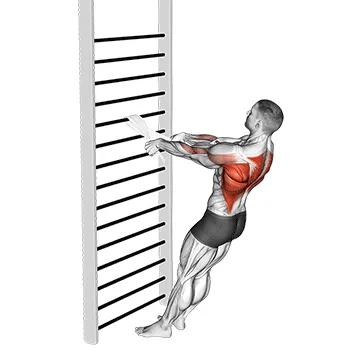
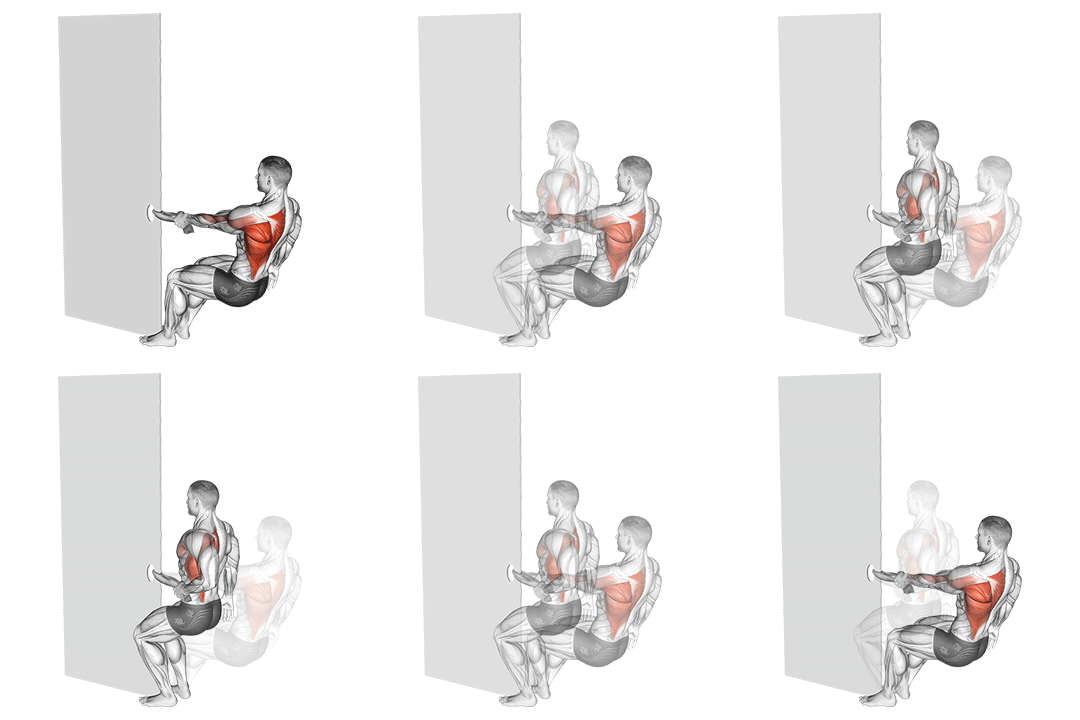
- Lats
- Bodyweight
- Intermediate
- Compound
A looser match: it works the lats rather than the biceps.
How to perform this exercise
- Stand with your feet shoulder-width apart and hold a towel in front of you with both hands.
- Bend your knees slightly and hinge forward at the hips, keeping your back straight.
- Pull the towel towards your chest, squeezing your shoulder blades together.
- Pause for a moment at the top, then slowly release the tension and return to the starting position.
- Repeat for the desired number of repetitions.
Sets and reps: 3 or 4 sets of 6 to 10 reps.
Why this matches
- Primary muscle: lats, not biceps
- Equipment: bodyweight only, not free weights
- Body position: standing, the same as the Olympic Barbell Hammer Curl
- Balance: harder to stay steady on than the Olympic Barbell Hammer Curl
5. Elevator
44% match- Upper Back
- Bodyweight
- Intermediate
- Compound
A looser match: it works the upper back rather than the biceps.
How to perform this exercise
- Stand with your feet shoulder-width apart and your knees slightly bent.
- Place your hands on your hips or cross them in front of your chest.
- Keeping your back straight, slowly bend forward at the waist, lowering your upper body towards the ground.
- Pause for a moment at the bottom, then slowly raise your upper body back up to the starting position.
- Repeat for the desired number of repetitions.
Sets and reps: 3 or 4 sets of 6 to 10 reps.
Why this matches
- Primary muscle: upper back, not biceps
- Equipment: bodyweight only, not free weights
- Body position: standing, the same as the Olympic Barbell Hammer Curl
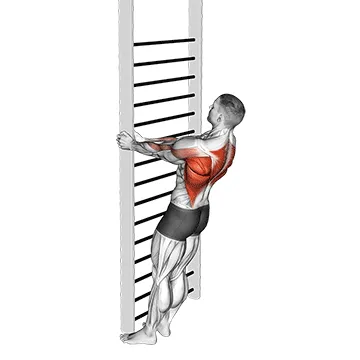
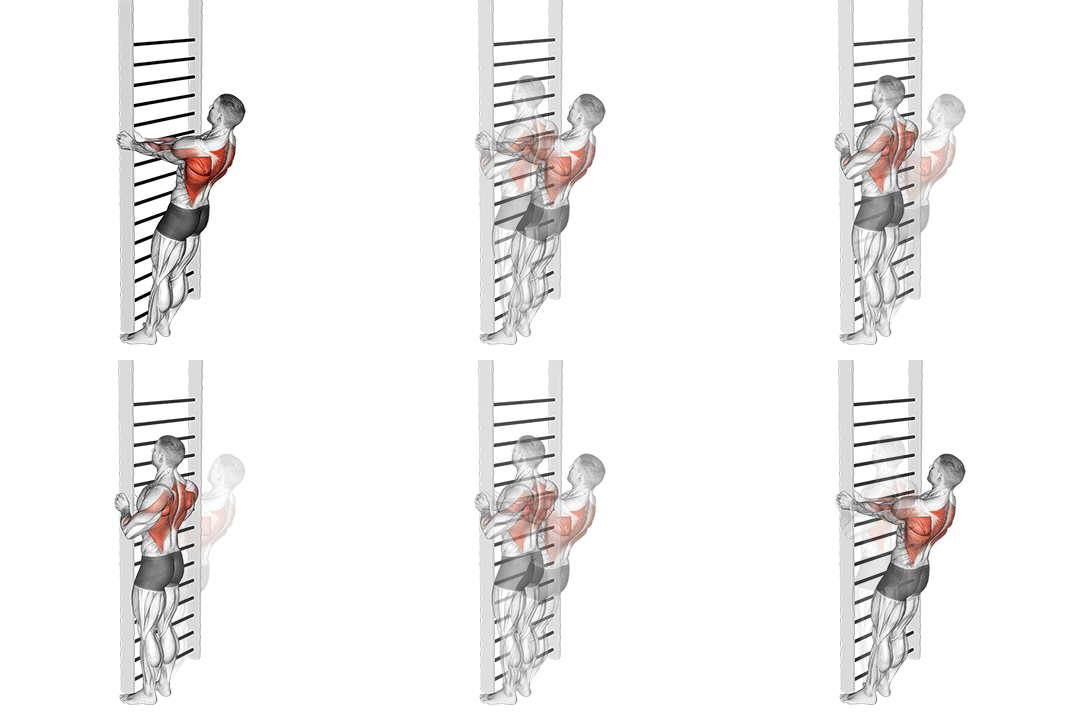
- Lats
- Bodyweight
- Beginner
- Compound
How to perform this exercise
- Stand with your feet shoulder-width apart and knees slightly bent.
- Bend forward at the waist, keeping your back straight and your core engaged.
- Extend your arms straight in front of you, gripping the bar or handles with a close grip.
- Pull the bar or handles towards your body, squeezing your shoulder blades together.
- Pause for a moment at the top of the movement, then slowly release and return to the starting position.
- Repeat for the desired number of repetitions.
Sets and reps: 3 sets of 8 to 12 reps, and add reps before you add load.
Why this matches
- Primary muscle: lats, not biceps
- Equipment: bodyweight only, not free weights
- Body position: standing, the same as the Olympic Barbell Hammer Curl
- Balance: harder to stay steady on than the Olympic Barbell Hammer Curl
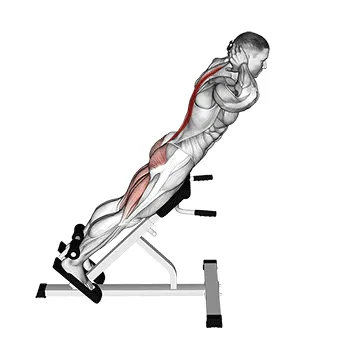
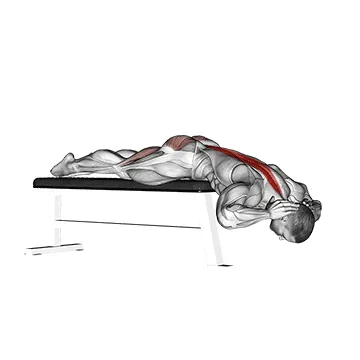
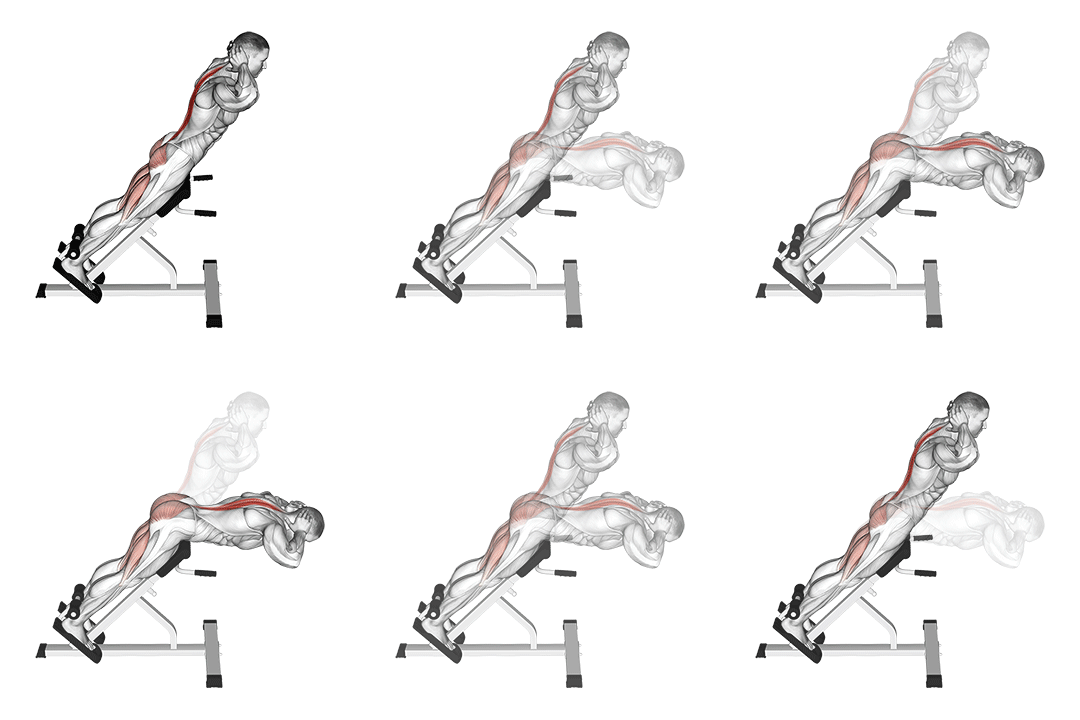
7. Hyperextension
40% match- Spine
- Bodyweight
- Intermediate
- Compound
A looser match: it works the spinal erectors rather than the biceps.
How to perform this exercise
- Adjust the hyperextension bench so that your upper thighs are resting on the pad and your feet are secured.
- Cross your arms over your chest or place your hands behind your head.
- Lower your upper body towards the ground while keeping your back straight.
- Pause for a moment at the bottom, then raise your upper body back up until it is in line with your legs.
- Repeat for the desired number of repetitions.
Sets and reps: 3 or 4 sets of 6 to 10 reps.
Why this matches
- Primary muscle: spine, not biceps
- Equipment: bodyweight only, not free weights
- Body position: lying face down, not standing
- Balance: easier to stay steady on than the Olympic Barbell Hammer Curl
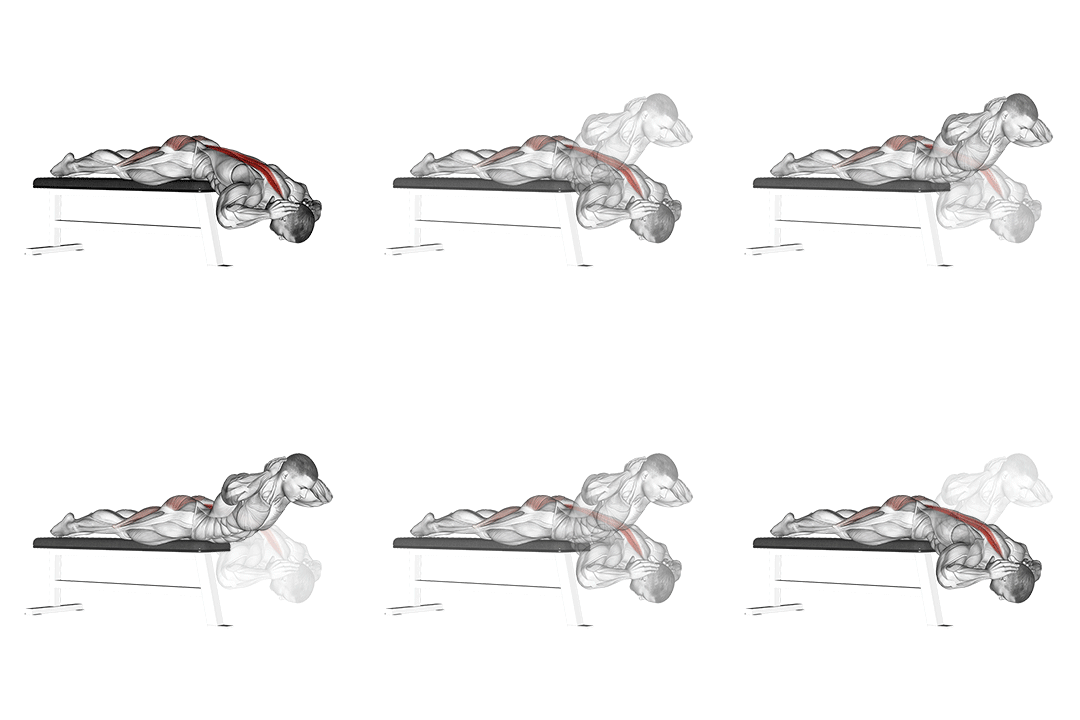
8. Hyperextension (On Bench)
40% match- Spine
- Bodyweight
- Intermediate
- Compound
How to perform this exercise
- Adjust the hyperextension bench so that your hips are resting comfortably on the pad and your feet are secured.
- Cross your arms over your chest or place your hands behind your head.
- Slowly lower your upper body towards the ground while keeping your back straight.
- Pause for a moment at the bottom, then raise your upper body back up until it is in line with your legs.
- Repeat for the desired number of repetitions.
Sets and reps: 3 or 4 sets of 6 to 10 reps.
Why this matches
- Primary muscle: spine, not biceps
- Equipment: bodyweight only, not free weights
- Body position: lying face down, not standing
- Balance: easier to stay steady on than the Olympic Barbell Hammer Curl
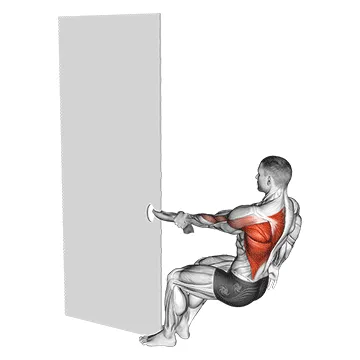
9. One Arm Towel Row
39% match- Upper Back
- Bodyweight
- Intermediate
- Compound
How to perform this exercise
- Stand with your feet shoulder-width apart, knees slightly bent, and hold a towel with one hand.
- Bend forward at the waist, keeping your back straight and your core engaged.
- Extend your arm fully, allowing the towel to hang in front of you.
- Pull the towel towards your chest, squeezing your shoulder blades together.
- Pause for a moment at the top, then slowly lower the towel back to the starting position.
- Repeat for the desired number of repetitions, then switch arms.
Sets and reps: 3 or 4 sets of 6 to 10 reps on each side.
Why this matches
- Primary muscle: upper back, not biceps
- Equipment: bodyweight only, not free weights
- Body position: standing, the same as the Olympic Barbell Hammer Curl
- Balance: harder to stay steady on than the Olympic Barbell Hammer Curl
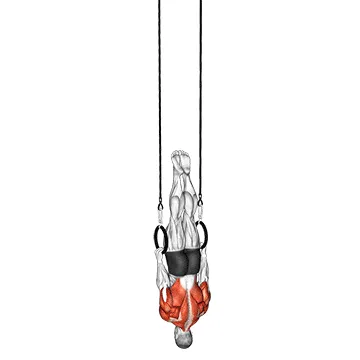
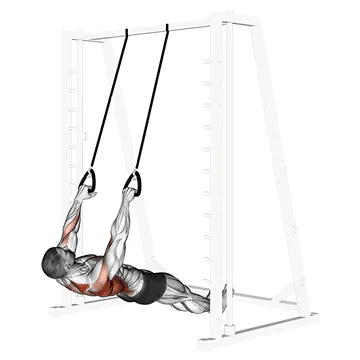
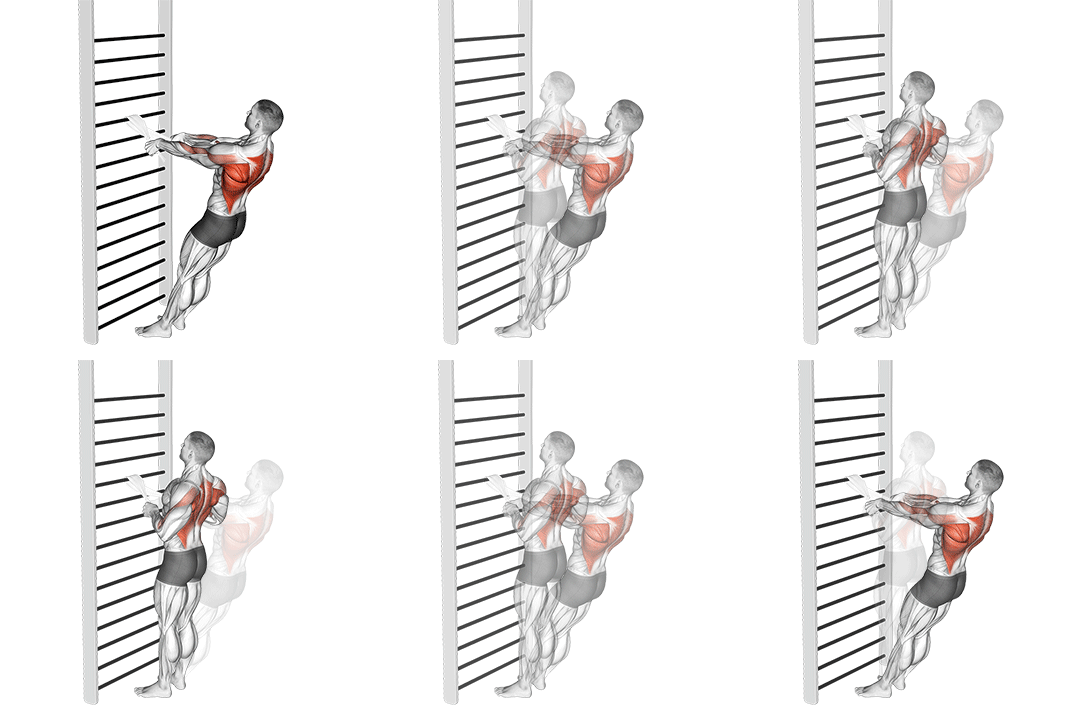
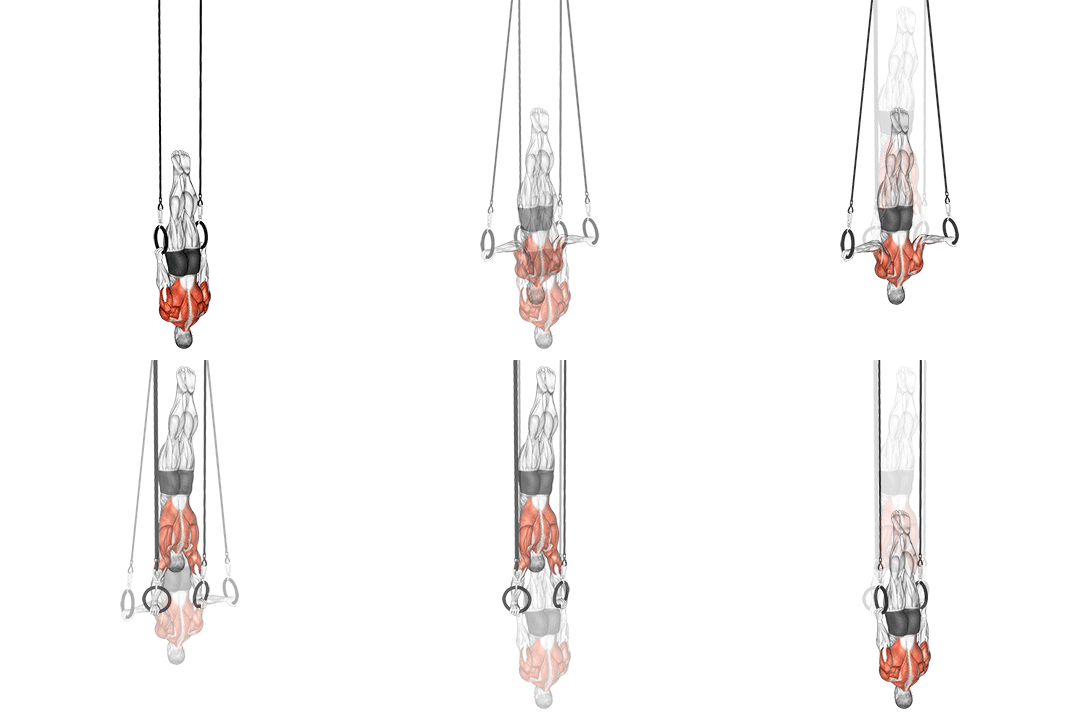
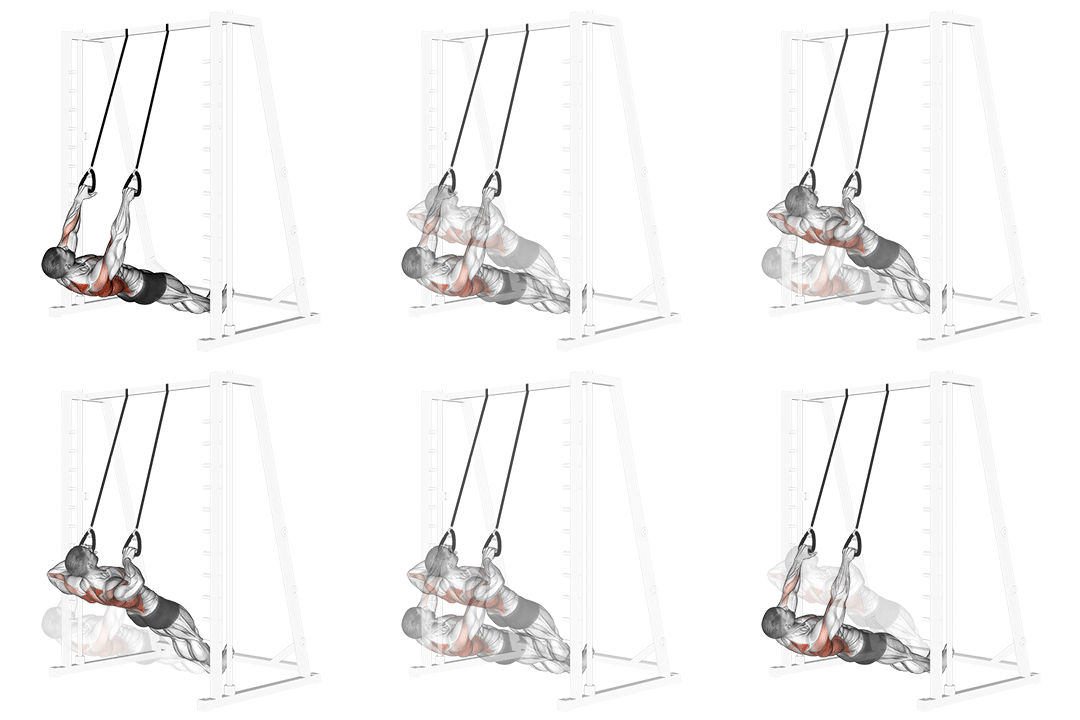
10. Inverted Row With Straps
39% match- Lats
- Bodyweight
- Intermediate
- Compound
How to perform this exercise
- Set up a suspension trainer or straps at chest height.
- Stand facing the anchor point and grab the handles with an overhand grip.
- Walk your feet forward, leaning back until your body is at an angle.
- Keep your body straight and engage your core.
- Pull your chest towards the handles, squeezing your shoulder blades together.
- Pause for a moment at the top, then slowly lower yourself back to the starting position.
- Repeat for the desired number of repetitions.
Sets and reps: 3 or 4 sets of 6 to 10 reps.
Why this matches
- Primary muscle: lats, not biceps
- Equipment: a suspension trainer, not free weights
- Body position: hanging, not standing
- Balance: harder to stay steady on than the Olympic Barbell Hammer Curl
Olympic Barbell Hammer Curl FAQ
What muscles does Olympic Barbell Hammer Curl work?
The movement targets the biceps brachii and places heavy emphasis on the brachialis and brachioradialis via the neutral (hammer) grip. Keep the elbow fixed at your side and the wrist neutral to maximize brachialis activation and reduce shoulder contribution.
Find Alternatives for Any Exercise
Search the exercise database and filter the ranked substitutes by the equipment you own.
Similarity scores compare exercise metadata such as movement pattern, muscles, equipment and body position. They are not a safety rating or a check that you own the equipment. Learn about our methodology