

10 Best Posterior Tibialis Stretch Alternatives for Calf Mobility
If you can't perform the Posterior Tibialis Stretch, use targeted calf and deep-posterior compartment options such as a bent-knee soleus wall stretch, banded posterior tibialis release, or single-leg eccentric heel drops. Cue: keep the ankle dorsiflexed and toes forward to load the medial calf and activate the posterior tibialis reliably.
Original Exercise: Posterior Tibialis Stretch
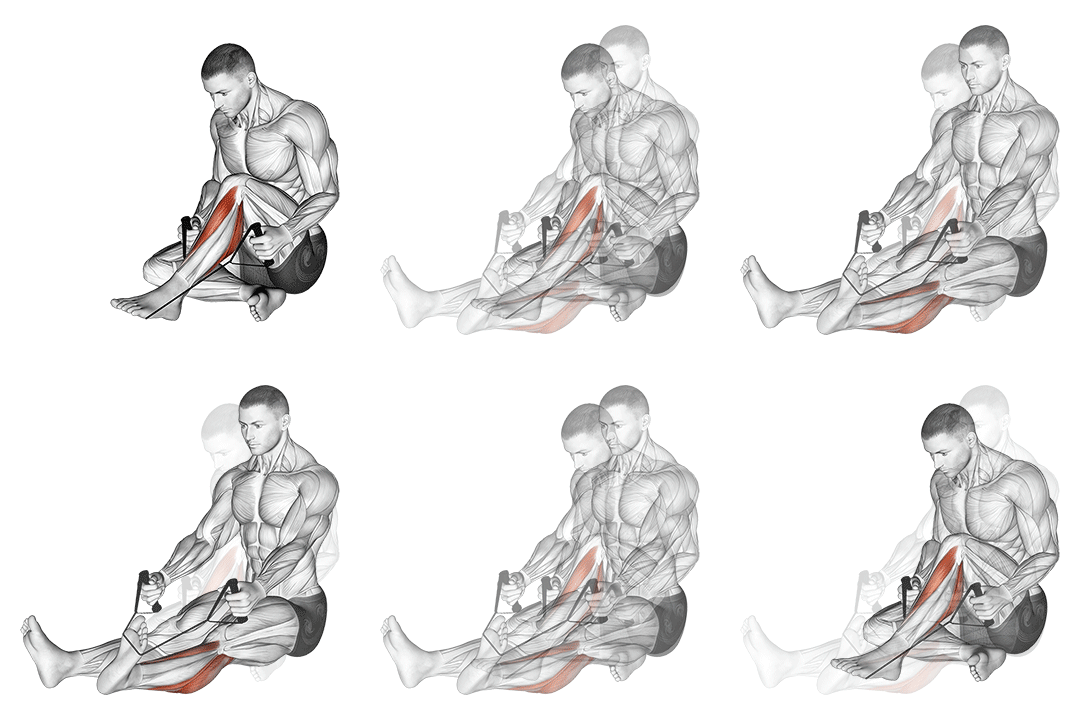
How to Perform Posterior Tibialis Stretch
- Sit on the ground with your legs extended in front of you.
- Loop the rope around the ball of your foot and hold the ends of the rope with your hands.
- Gently pull the rope towards you, flexing your foot and stretching your calf muscles.
- Hold the stretch for 20-30 seconds.
- Release the tension on the rope and relax your foot.
- Repeat the stretch on the other leg.
Best Posterior Tibialis Stretch Alternatives
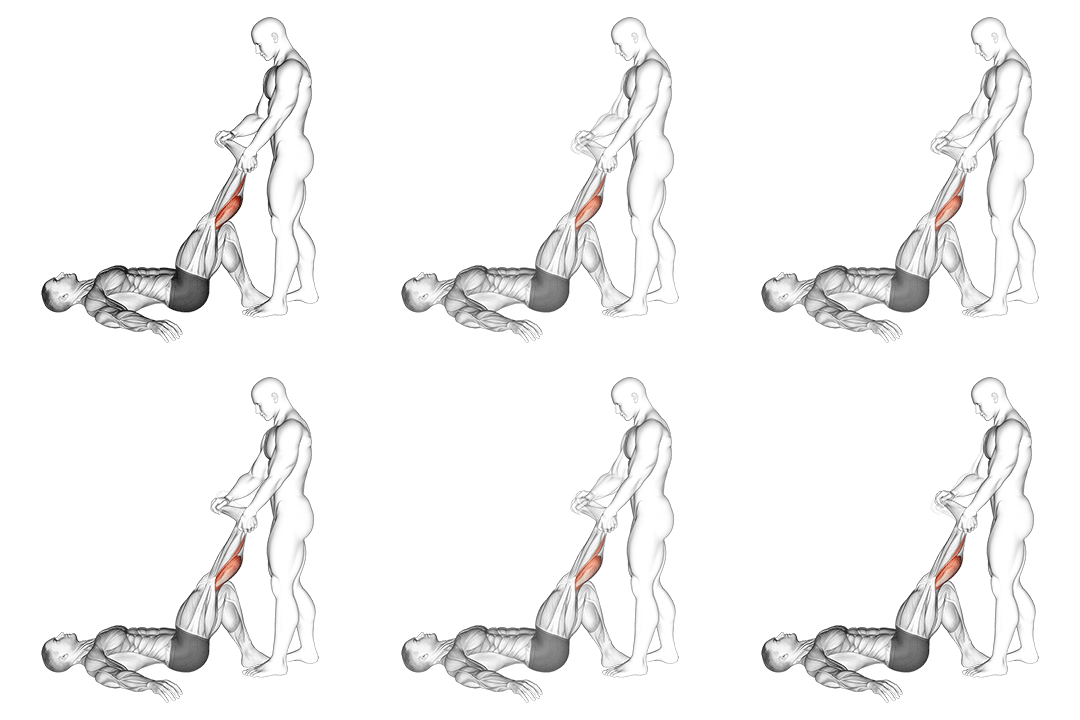
1. Assisted Lying Calves Stretch
75.2% MatchHow to perform this exercise
- Lie on your back with your legs extended.
- Bend one knee and place your foot flat on the ground.
- Using your hands or a towel, gently pull your toes towards your body, feeling a stretch in your calf.
- Hold the stretch for 20-30 seconds.
- Release the stretch and repeat on the other leg.
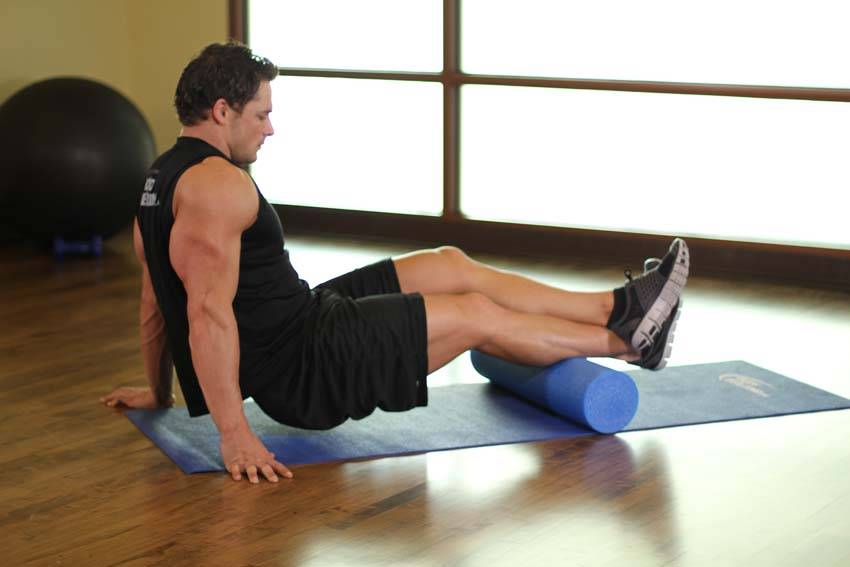
2. Calves-SMR
69.2% MatchHow to perform this exercise
- Begin seated on the floor. Place a foam roller underneath your lower leg. Your other leg can either be crossed over the opposite or be placed on the floor, supporting some of your weight. This will be your starting position.
- Place your hands to your side or just behind you, and press down to raise your hips off of the floor, placing much of your weight against your calf muscle. Roll from below the knee to above the ankle, pausing at points of tension for 10-30 seconds. Repeat for the other leg.
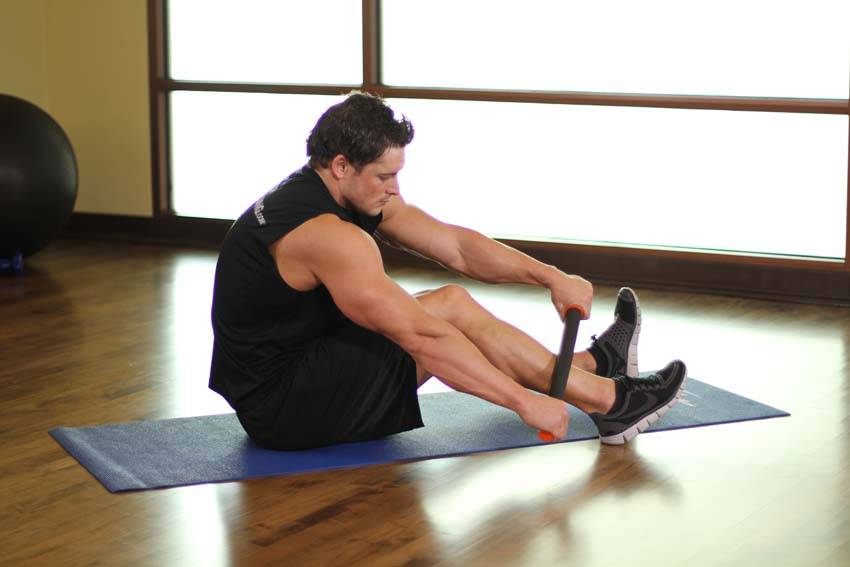
3. Anterior Tibialis-SMR
66.2% MatchHow to perform this exercise
- Begin seated on the ground with your legs bent and your feet on the floor.
- Using a Muscle Roller or a rolling pin, apply pressure to the muscles on the outside of your shins. Work from just below the knee to above the ankle, pausing at points of tension for 10-30 seconds. Repeat on the other leg.
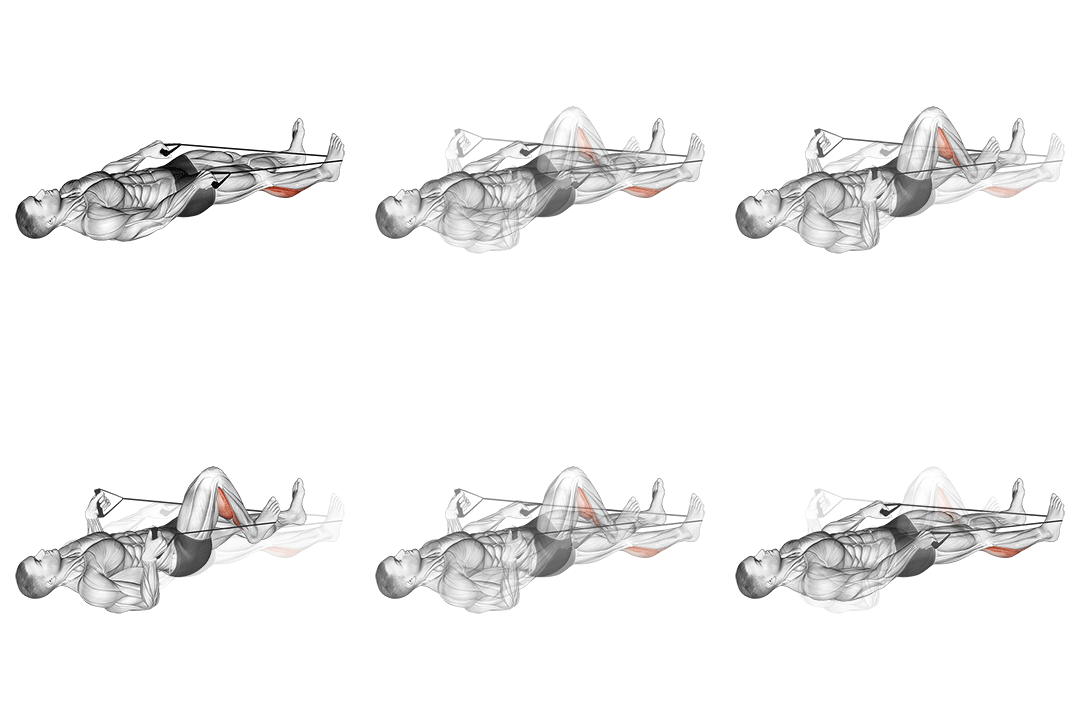
4. Calf Stretch With Rope
65.2% MatchHow to perform this exercise
- Stand facing a wall or sturdy object with your feet hip-width apart.
- Hold the ends of the rope in each hand and place the middle of the rope around the ball of your right foot.
- Step back with your left foot, keeping your heel on the ground and your leg straight.
- Lean forward, keeping your back straight, and gently pull on the rope to stretch your calf.
- Hold the stretch for 20-30 seconds, then release.
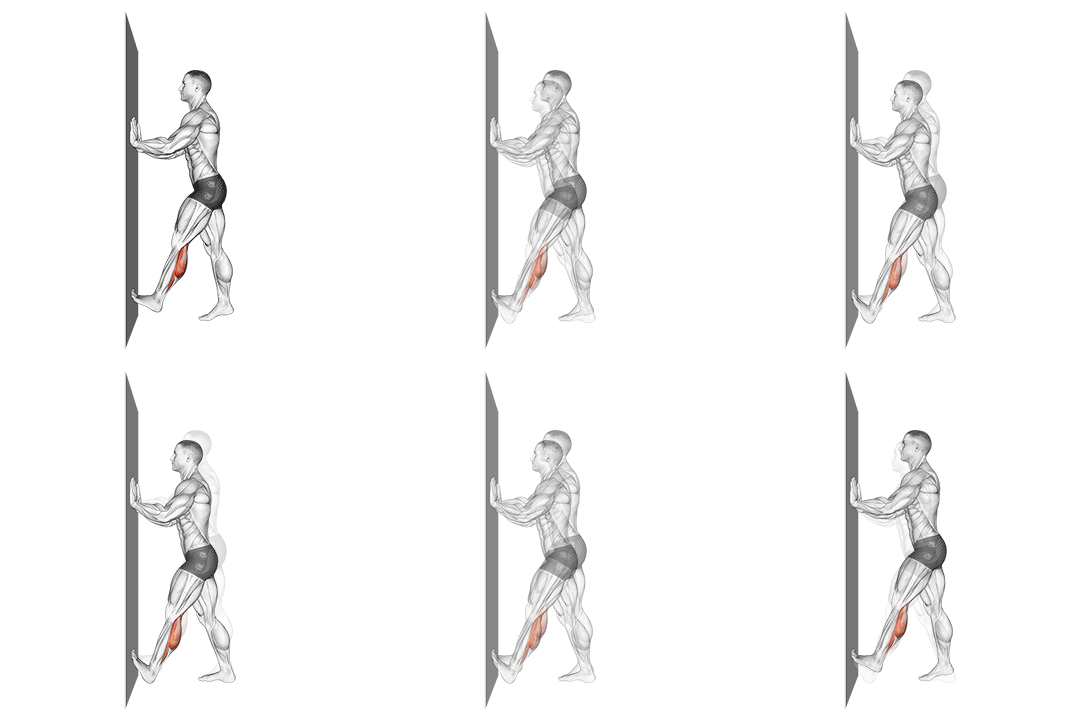
5. Calf Push Stretch With Hands Against Wall
65.2% MatchHow to perform this exercise
- Stand facing a wall with your feet hip-width apart.
- Place your hands against the wall at shoulder height.
- Step back with one foot, keeping your heel on the ground and your leg straight.
- Bend your front knee slightly and lean forward, feeling a stretch in your calf.
- Hold the stretch for 20-30 seconds.
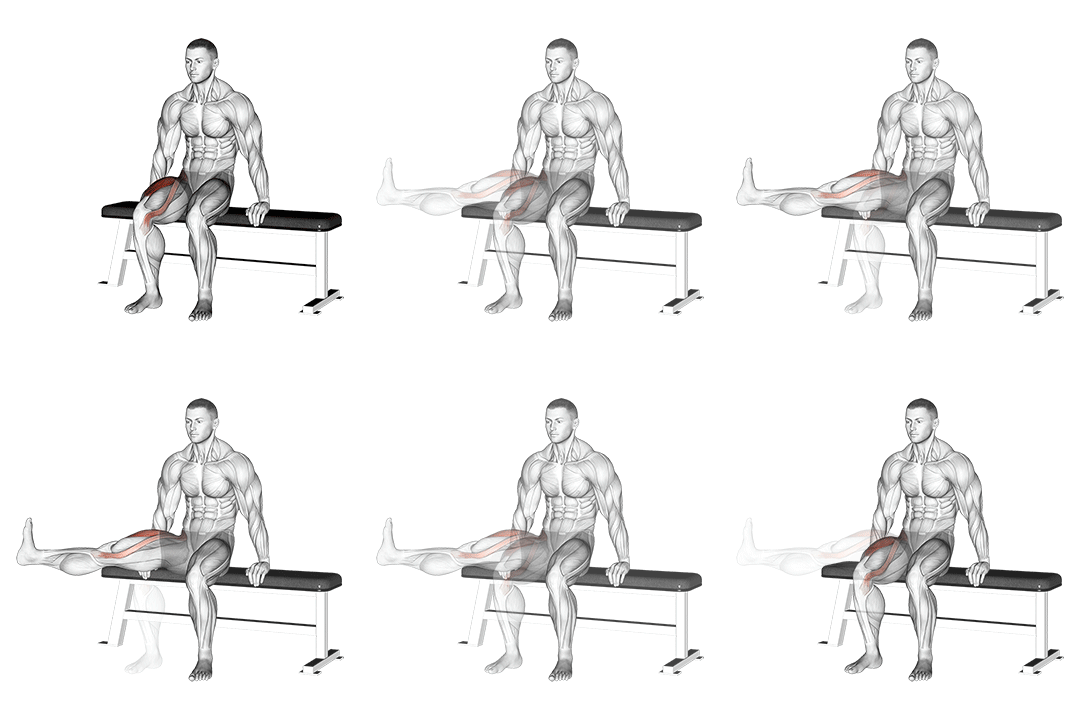
6. Chair Leg Extended Stretch
65.2% MatchHow to perform this exercise
- Sit on the edge of a chair with your back straight and feet flat on the ground.
- Extend one leg straight out in front of you, keeping your heel on the ground.
- Lean forward slightly, feeling a stretch in your quadriceps.
- Hold this position for 20-30 seconds.
- Switch legs and repeat the stretch.
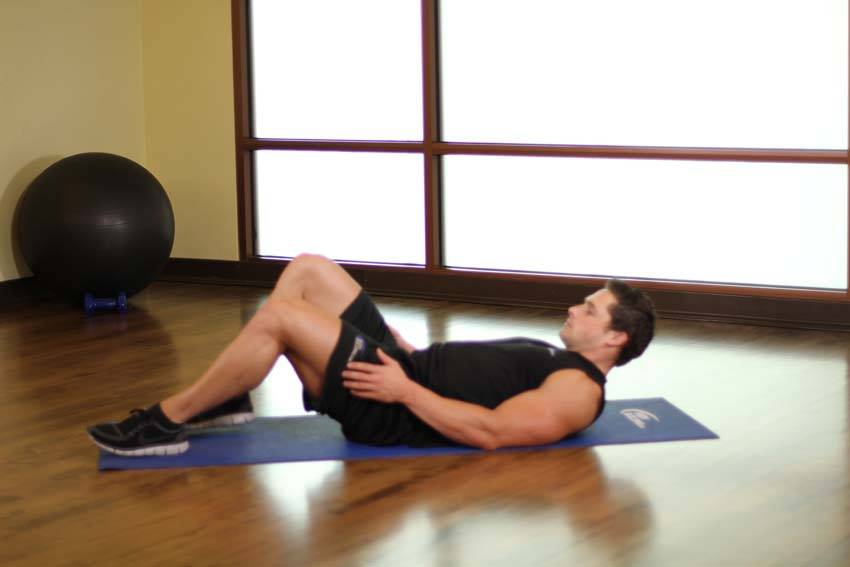
7. Ankle On The Knee
65.2% MatchHow to perform this exercise
- From a lying position, bend your knees and keep your feet on the floor.
- Place your ankle of one foot on your opposite knee.
- Grasp the thigh or knee of the bottom leg and pull both of your legs into the chest. Relax your neck and shoulders. Hold for 10-20 seconds and then switch sides.
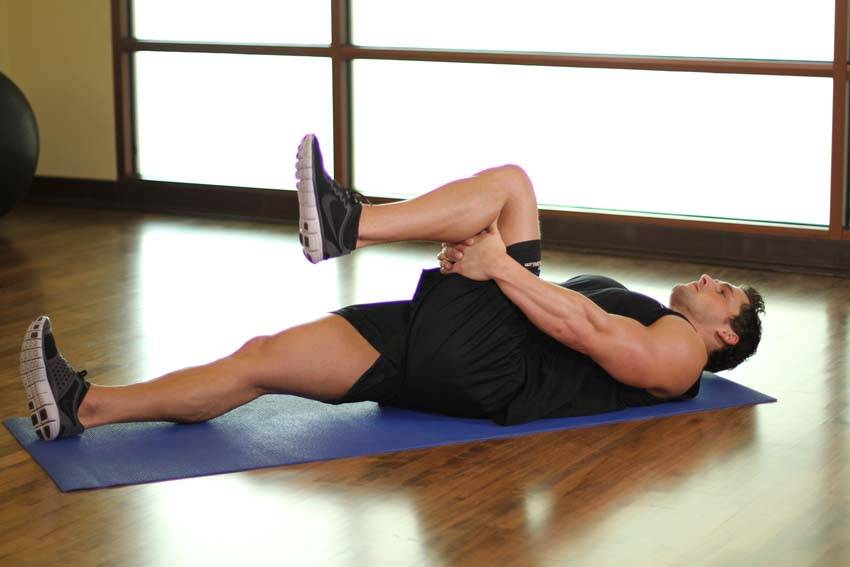
8. 90/90 Hamstring
64.7% MatchHow to perform this exercise
- Lie on your back, with one leg extended straight out.
- With the other leg, bend the hip and knee to 90 degrees. You may brace your leg with your hands if necessary. This will be your starting position.
- Extend your leg straight into the air, pausing briefly at the top. Return the leg to the starting position.
- Repeat for 10-20 repetitions, and then switch to the other leg.
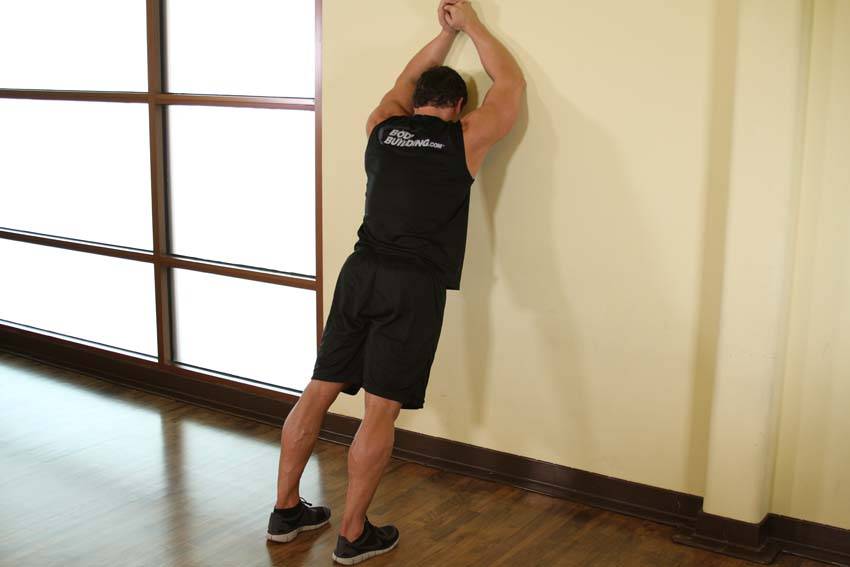
9. Calf Stretch Elbows Against Wall
64.4% MatchHow to perform this exercise
- Stand facing a wall from a couple feet away.
- Lean against the wall, placing your weight on your forearms.
- Attempt to keep your heels on the ground. Hold for 10-20 seconds. You may move further or closer the wall, making it more or less difficult, respectively.
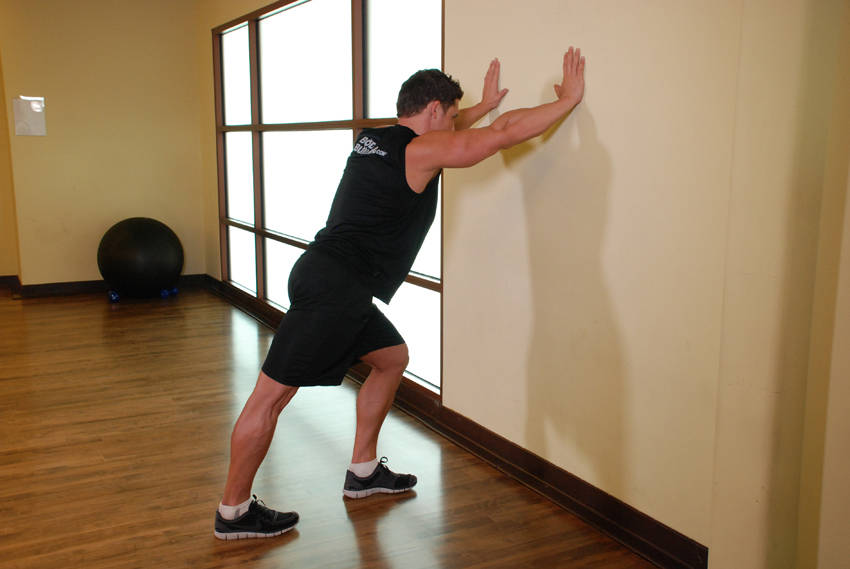
10. Calf Stretch Hands Against Wall
64.4% MatchHow to perform this exercise
- Stand facing a wall from several feet away. Stagger your stance, placing one foot forward.
- Lean forward and rest your hands on the wall, keeping your heel, hip and head in a straight line.
- Attempt to keep your heel on the ground. Hold for 10-20 seconds and then switch sides.
Why You Might Need a Posterior Tibialis Stretch Alternative
You may need substitutes due to no rope available, ankle surgery precautions, medial shin pain, or poor tolerance of direct tissue compression. Substitutes let you isolate the same fibers and movement patterns while avoiding aggravating positions. For example, a bent-knee soleus wall stretch biases the soleus and deep posterior chain without strong plantarflexion torque, reducing strain on an inflamed tendon. A banded posterior tibialis self-mobilization lets you produce a controlled eversion/inversion shear to unload adherent tissue while maintaining neuromuscular activation of the tibialis posterior.
How to Choose the Right Substitute
Pick a substitute based on your goal (mobility, pain reduction, or strength), available equipment, and tissue irritability. If your aim is mobility, perform sustained, low-load stretches (30–60s) with ankle dorsiflexion and knee position to bias soleus or gastrocnemius. For strength or tendon rehab, choose slow eccentric calf raises or banded resisted inversion to eccentrically load the posterior tibialis. If pain limits range, use isometric holds at a comfortable angle to maintain activation. Always cue medial arch lift and ankle dorsiflexion to ensure posterior tibialis recruitment.
Frequently Asked Questions
What muscles does Posterior Tibialis Stretch work?
The stretch targets the deep posterior compartment of the lower leg, emphasizing the posterior tibialis and the medial calf fibers such as the soleus. Biomechanically it places the ankle into dorsiflexion and slight eversion/inversion control, lengthening tissues that support the medial arch.
What is the best bodyweight alternative to Posterior Tibialis Stretch?
A bent-knee soleus wall stretch is the best bodyweight substitute for most people; stand with one foot back, bend both knees, press the back heel down and dorsiflex the ankle. Cue: keep the heel driven into the floor and feel stretch deep in the medial calf and around the tibialis posterior insertion.
Can I build muscle without doing Posterior Tibialis Stretch?
Yes. Build calf and posterior tibialis muscle through progressive loading like weighted calf raises, single-leg eccentric heel drops, and resisted inversion exercises. Use knee position to bias soleus (knee bent) or gastrocnemius (knee extended) and prioritize progressive overload rather than relying on a single stretch.
More Exercise Alternatives
Find Alternatives for Any Exercise
Use our free tool to discover the best substitute exercises based on your available equipment and goals.
Try the Exercise Substitution Finder →