

10 Best Dumbbell Seated One Leg Calf Raise Alternatives for Home & Gym
The Dumbbell Seated One Leg Calf Raise is done seated with dumbbells. Ranked closest by our scoring: the Single Leg Calf Raise (On A Dumbbell), the Dumbbell Seated One Leg Calf Raise - Hammer Grip and the Barbell Seated Calf Raise. A harder version, the Dumbbell Single Leg Calf Raise, is listed below as a progression rather than a swap.
Updated Ranked by our 12-factor similarity model How it works
Original Exercise: Dumbbell Seated One Leg Calf Raise
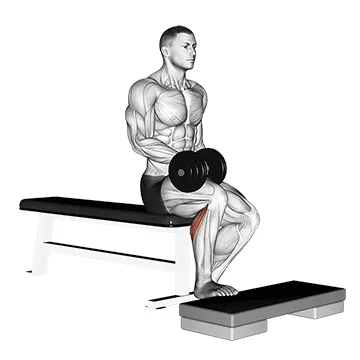
- Primary muscle
- Calves
- Equipment
- Dumbbell
- Difficulty
- Intermediate
- Type
- Isolation
Secondary muscles: Hamstrings, Glutes
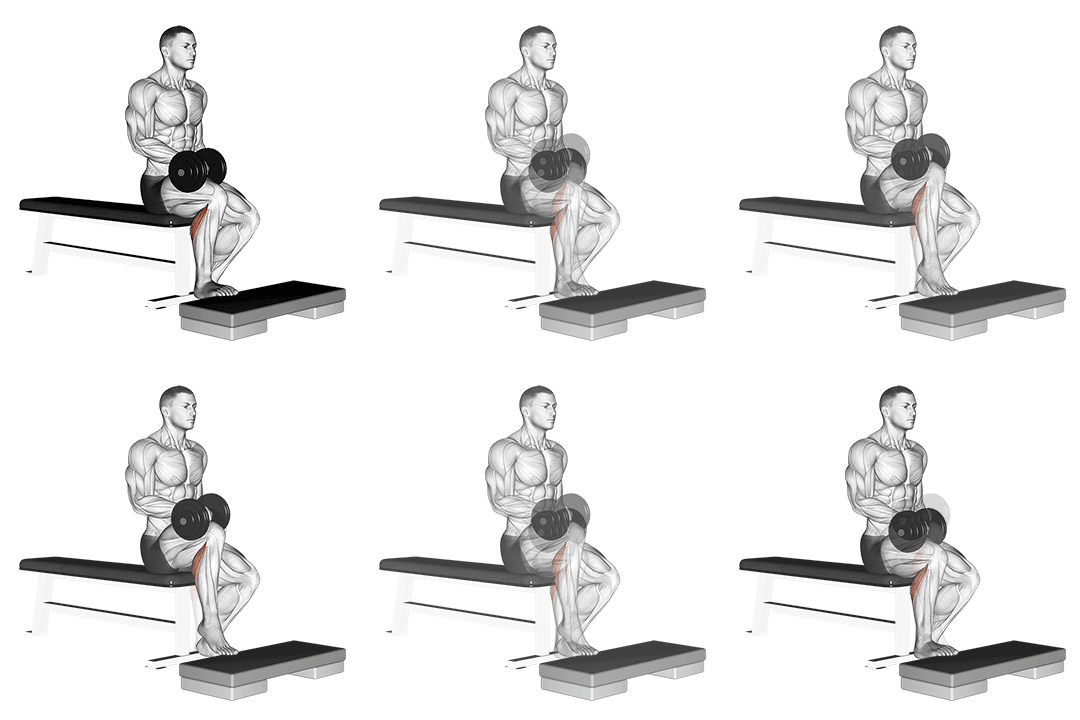
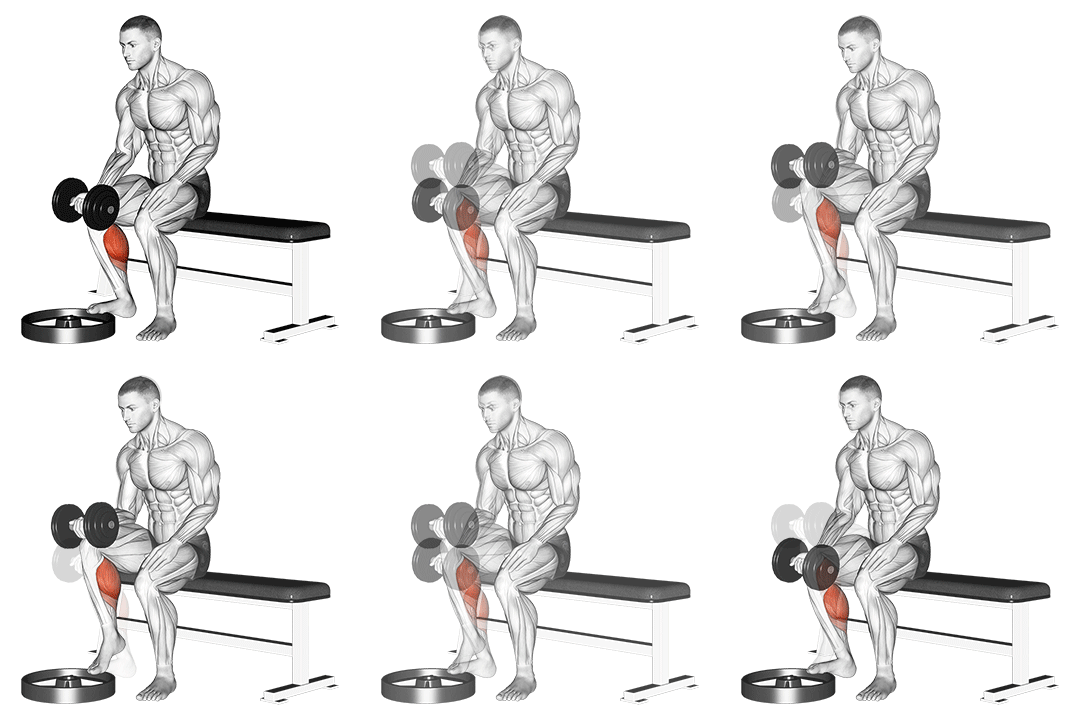
How to perform Dumbbell Seated One Leg Calf Raise
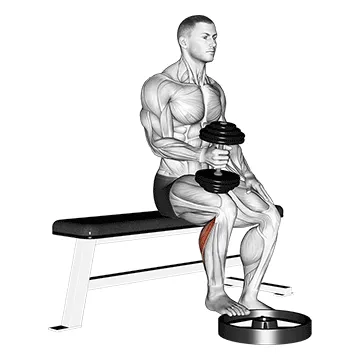
- Sit on a bench or chair with your feet flat on the ground and a dumbbell resting on your right thigh.
- Extend your left leg straight out in front of you, keeping your foot flexed.
- Place the ball of your right foot on an elevated surface, such as a step or weight plate.
- Using your calf muscles, raise your right heel as high as possible.
- Pause for a moment at the top, then slowly lower your heel back down to the starting position.
- Repeat for the desired number of repetitions, then switch legs.
Ranked Dumbbell Seated One Leg Calf Raise Alternatives
10 substitutes, ranked by how closely each one matches the Dumbbell Seated One Leg Calf Raise on movement pattern, muscles worked, equipment and body position. The higher the score, the less you change. Open "How to perform this exercise" on a card for the steps; every card title links to that exercise's own alternatives page. Harder versions are tagged as progressions and kept out of the top spot even when they score higher.
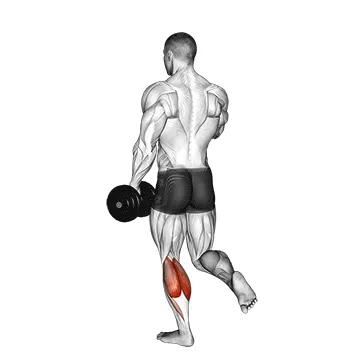
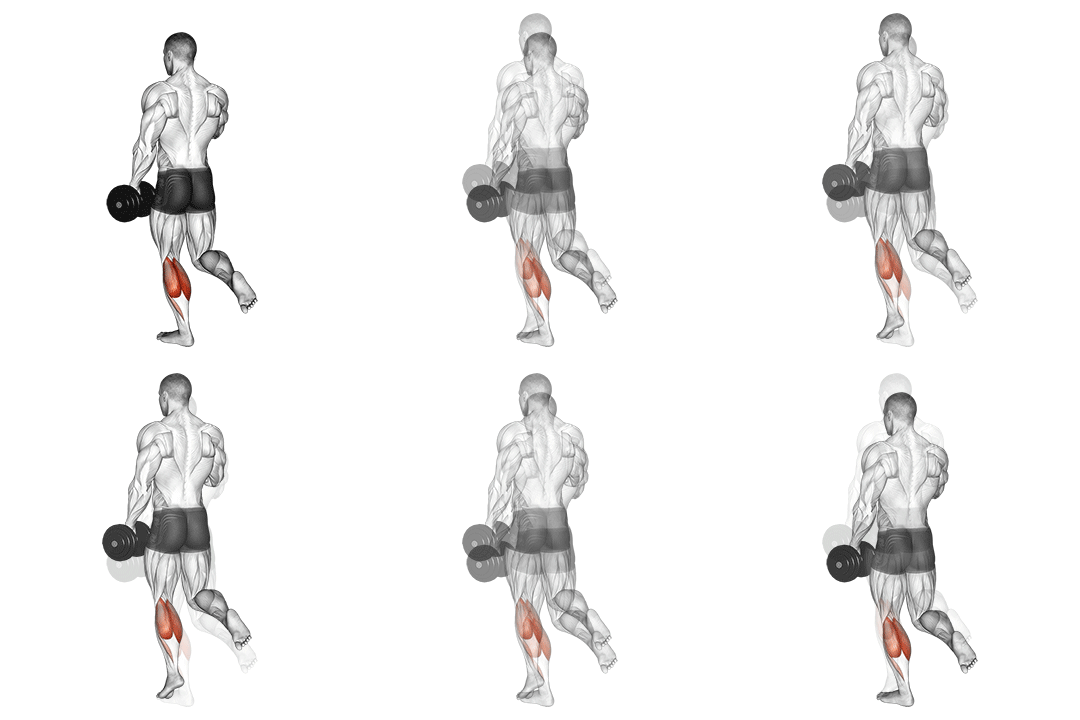
Best match - Calves
- Dumbbell
- Intermediate
- Isolation
Pick this when you want to work the calves with more balance to manage.
How to perform this exercise
- Stand with your feet hip-width apart and hold a dumbbell in one hand.
- Lift one foot off the ground and balance on the other foot.
- Slowly raise your heel as high as possible, using your calf muscles.
- Pause for a moment at the top, then slowly lower your heel back down.
- Repeat for the desired number of repetitions, then switch to the other leg.
Sets and reps: 3 sets of 10 to 15 reps on each side.
Why this matches
- Primary muscle: calves, the same as the Dumbbell Seated One Leg Calf Raise
- Equipment: free weights, the same as the Dumbbell Seated One Leg Calf Raise
- Body position: standing, not seated
- Balance: harder to stay steady on than the Dumbbell Seated One Leg Calf Raise
Progression
2. Dumbbell Single Leg Calf Raise
90% match- Calves
- Dumbbell
- Intermediate
- Isolation
Pick this when you want a harder version that still works the calves.
How to perform this exercise
- Stand on the edge of a step or platform with your heels hanging off and your toes on the step.
- Hold a dumbbell in one hand and place your other hand on a wall or railing for support.
- Raise your heel as high as possible, lifting your body up onto your toes.
- Pause for a moment at the top, then slowly lower your heel back down below the step.
- Repeat for the desired number of repetitions, then switch to the other leg.
Sets and reps: 3 sets of 10 to 15 reps on each side.
Why this matches
- Primary muscle: calves, the same as the Dumbbell Seated One Leg Calf Raise
- Equipment: free weights, the same as the Dumbbell Seated One Leg Calf Raise
- Body position: standing, not seated
- Balance: harder to stay steady on than the Dumbbell Seated One Leg Calf Raise
- Calves
- Dumbbell
- Intermediate
- Isolation
It uses the same equipment and still works the calves.
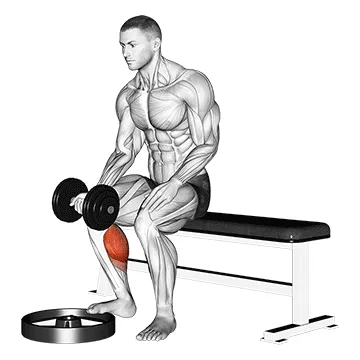
How to perform this exercise
- Sit on a bench or chair with your feet flat on the ground and a dumbbell resting on your thighs.
- Place one foot on a raised surface, such as a step or block, with your heel hanging off the edge.
- Hold the dumbbell with a hammer grip, meaning your palms are facing each other and your fingers are wrapped around the handle.
- Keeping your core engaged and your back straight, slowly raise your heel as high as possible by pushing through the ball of your foot.
- Pause for a moment at the top, then slowly lower your heel back down to the starting position.
- Repeat for the desired number of repetitions, then switch to the other leg.
Sets and reps: 3 sets of 10 to 15 reps on each side.
Why this matches
- Primary muscle: calves, the same as the Dumbbell Seated One Leg Calf Raise
- Equipment: free weights, the same as the Dumbbell Seated One Leg Calf Raise
- Body position: seated, the same as the Dumbbell Seated One Leg Calf Raise
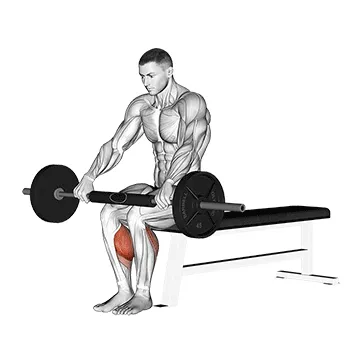
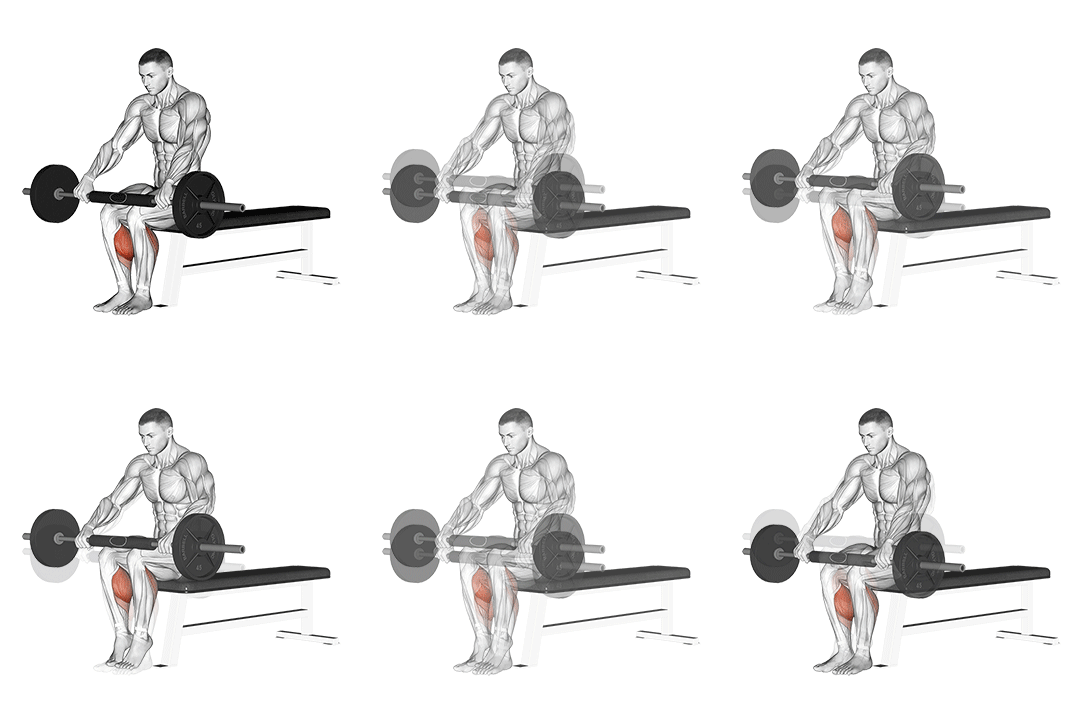
4. Barbell Seated Calf Raise
76% match- Calves
- Barbell
- Beginner
- Isolation
A good swap when you have a barbell to work with, and it still works the calves.
How to perform this exercise
- Sit on a bench with your feet flat on the floor and a barbell resting on your thighs.
- Place the balls of your feet on a raised platform, such as a block or step.
- Position the barbell across your thighs and hold it securely with your hands.
- Keeping your back straight and your core engaged, lift your heels off the ground by extending your ankles.
- Pause for a moment at the top, then slowly lower your heels back down to the starting position.
- Repeat for the desired number of repetitions.
Sets and reps: 3 sets of 10 to 15 reps.
Why this matches
- Primary muscle: calves, the same as the Dumbbell Seated One Leg Calf Raise
- Equipment: free weights, the same as the Dumbbell Seated One Leg Calf Raise
- Body position: seated, the same as the Dumbbell Seated One Leg Calf Raise
- Balance: easier to stay steady on than the Dumbbell Seated One Leg Calf Raise
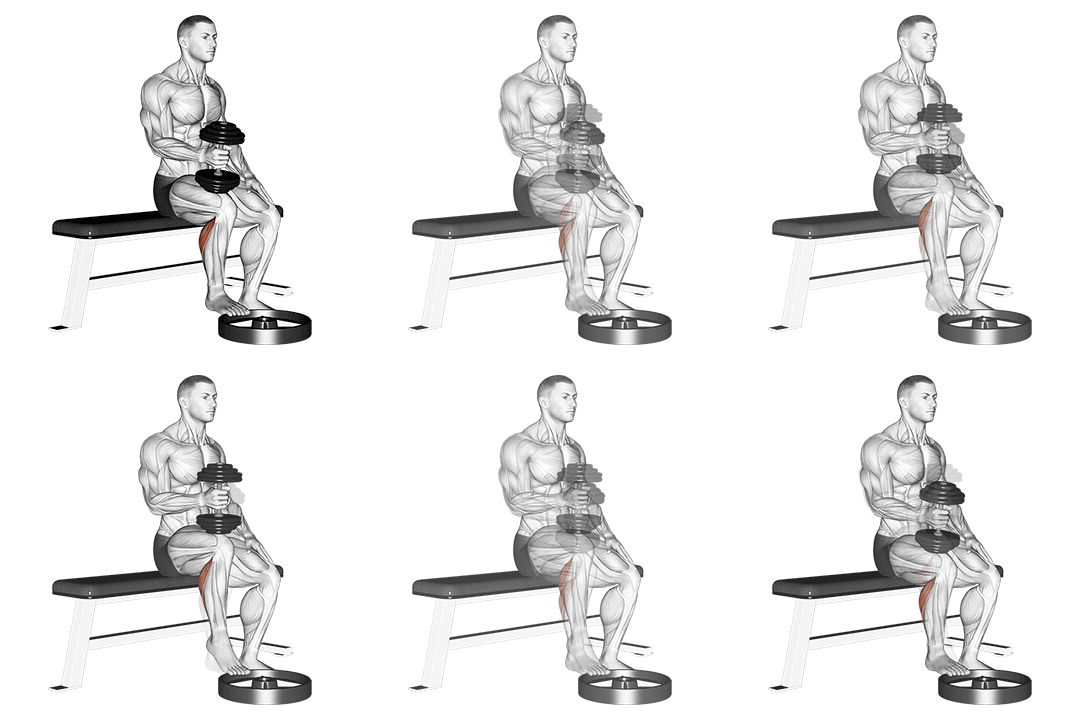
- Calves
- Dumbbell
- Intermediate
- Isolation
How to perform this exercise
- Sit on a bench or chair with your back straight and your feet flat on the ground.
- Hold a dumbbell in one hand and place it on top of your thigh, palm facing up.
- Lift one leg off the ground and extend it in front of you, keeping your knee slightly bent.
- Raise your heel as high as possible by pushing through the ball of your foot.
- Pause for a moment at the top, then slowly lower your heel back down.
- Repeat for the desired number of repetitions, then switch legs and repeat.
Sets and reps: 3 sets of 10 to 15 reps on each side.
Why this matches
- Primary muscle: calves, the same as the Dumbbell Seated One Leg Calf Raise
- Equipment: free weights, the same as the Dumbbell Seated One Leg Calf Raise
- Body position: seated, the same as the Dumbbell Seated One Leg Calf Raise
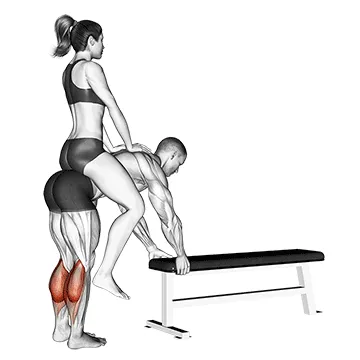
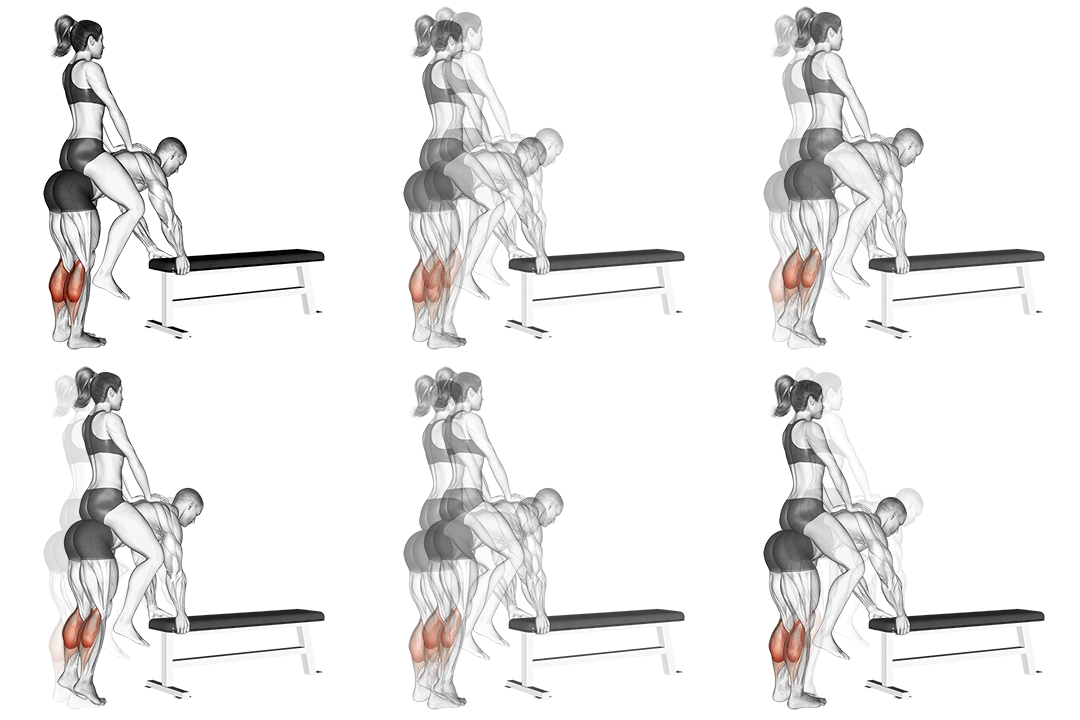
6. Weighted Donkey Calf Raise
74% match- Calves
- Weighted
- Intermediate
- Isolation
How to perform this exercise
- Stand on a raised platform with your toes on the edge and your heels hanging off.
- Hold onto a stable object for support.
- Raise your heels as high as possible by extending your ankles.
- Pause for a moment at the top, then slowly lower your heels back down to the starting position.
- Repeat for the desired number of repetitions.
Sets and reps: 3 sets of 10 to 15 reps.
Why this matches
- Primary muscle: calves, the same as the Dumbbell Seated One Leg Calf Raise
- Equipment: free weights, the same as the Dumbbell Seated One Leg Calf Raise
- Body position: standing, not seated
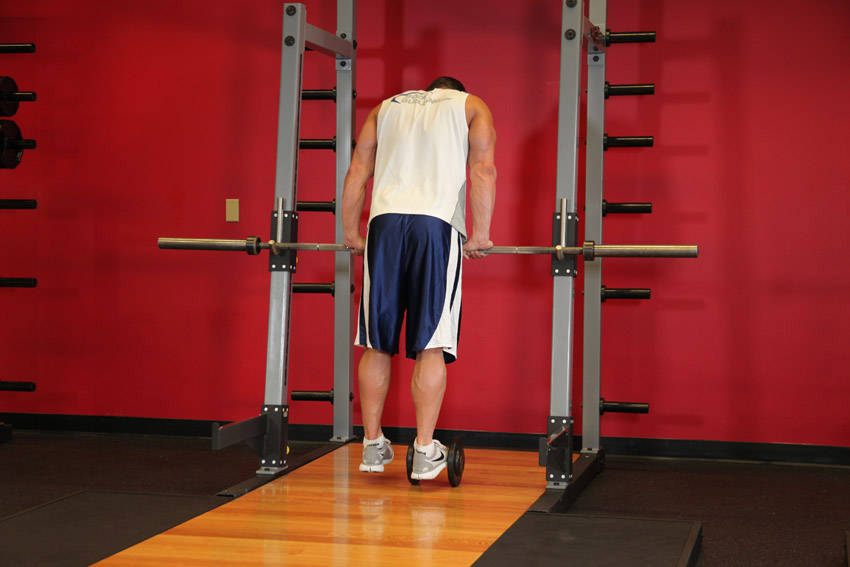
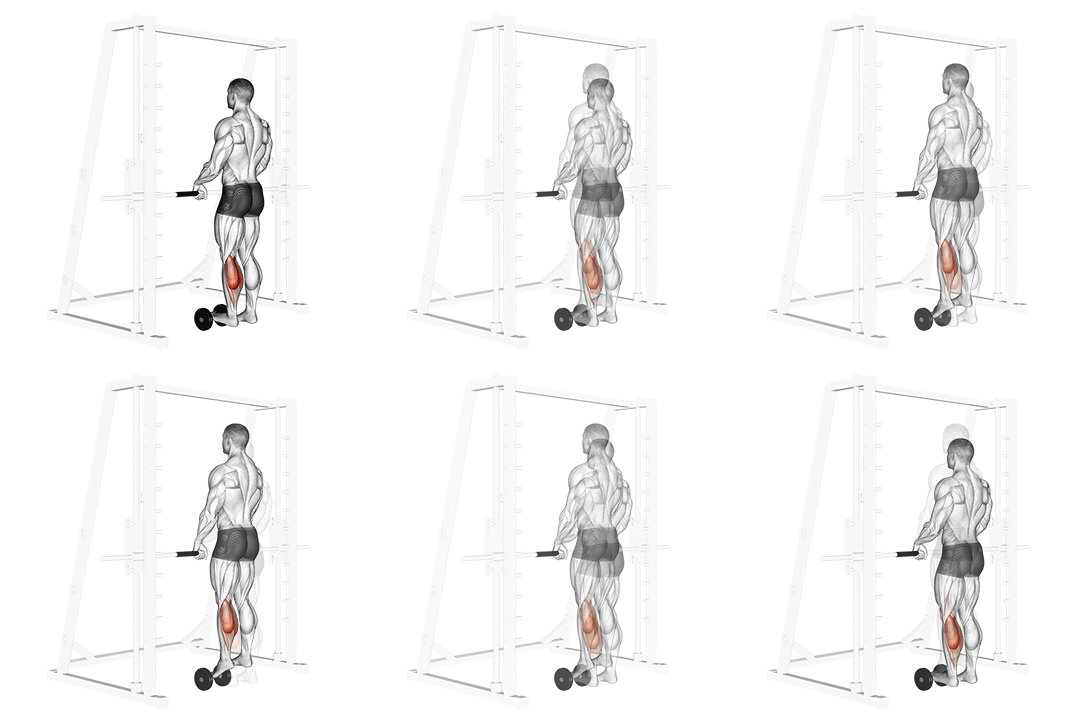
7. Calf Raise On A Dumbbell
74% match- Calves
- Dumbbell
- Beginner
- Isolation
Pick this when you want an easier version that still works the calves.
How to perform this exercise
- Hang on to a sturdy object for balance and stand on a dumbbell handle, preferably one with round plates so that it rolls as in this manner you have to work harder to stabilize yourself; thus increasing the effectiveness of the exercise.
- Now roll your foot slightly forward so that you can get a nice stretch of the calf. This will be your starting position.
- Lift the calf as you roll your foot over the top of the handle so that you get a full extension. Exhale during the execution of this movement. Contract the calf hard at the top and hold for a second. Tip: As you come up, roll the dumbbell slightly backward.
- Now inhale as you roll the dumbbell slightly forward as you come down to get a better stretch.
- Repeat for the recommended amount of repetitions.
Sets and reps: 3 sets of 10 to 15 reps.
Why this matches
- Primary muscle: calves, the same as the Dumbbell Seated One Leg Calf Raise
- Equipment: free weights, the same as the Dumbbell Seated One Leg Calf Raise
- Body position: standing, not seated
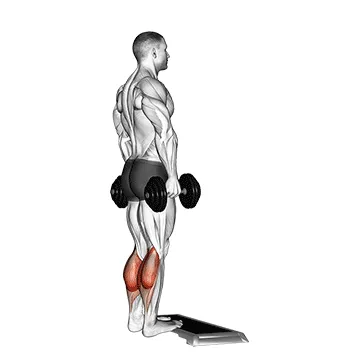
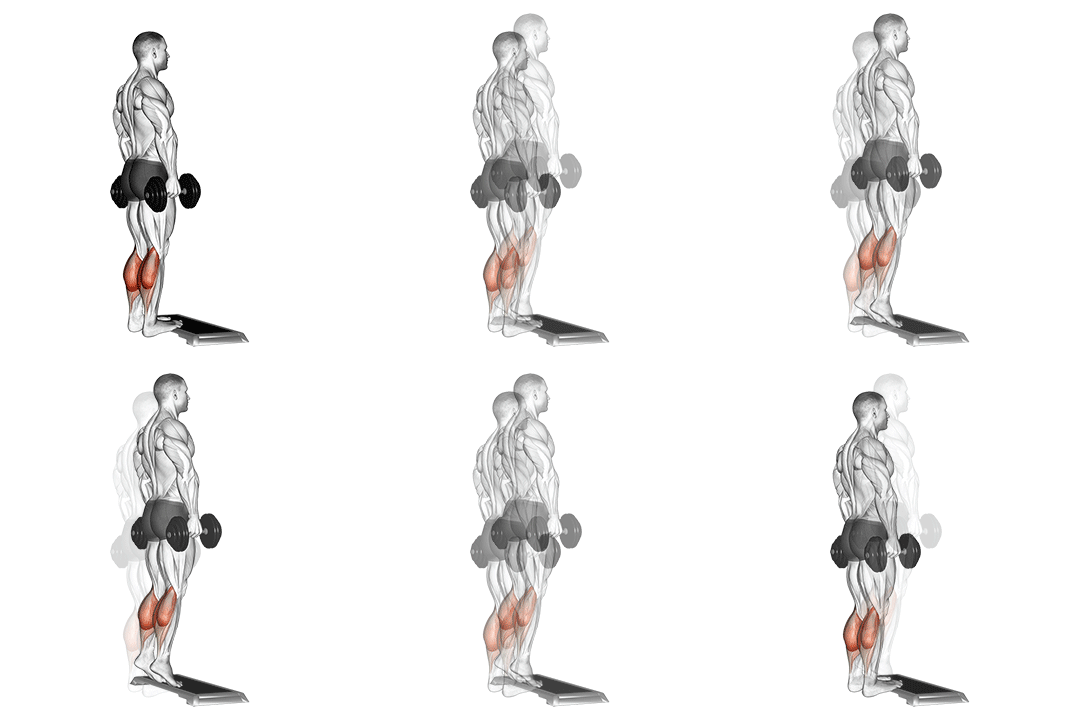
8. Dumbbell Standing Calf Raise
74% match- Calves
- Dumbbell
- Beginner
- Isolation
How to perform this exercise
- Stand with your feet shoulder-width apart, holding a dumbbell in each hand.
- Raise your heels off the ground as high as possible, using your calves.
- Pause for a moment at the top, then slowly lower your heels back down to the starting position.
- Repeat for the desired number of repetitions.
Sets and reps: 3 sets of 10 to 15 reps.
Why this matches
- Primary muscle: calves, the same as the Dumbbell Seated One Leg Calf Raise
- Equipment: free weights, the same as the Dumbbell Seated One Leg Calf Raise
- Body position: standing, not seated
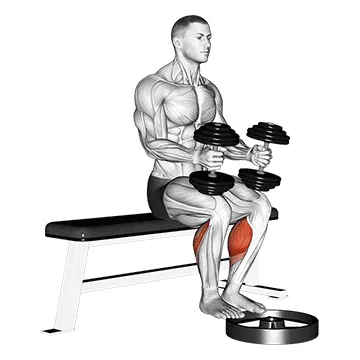
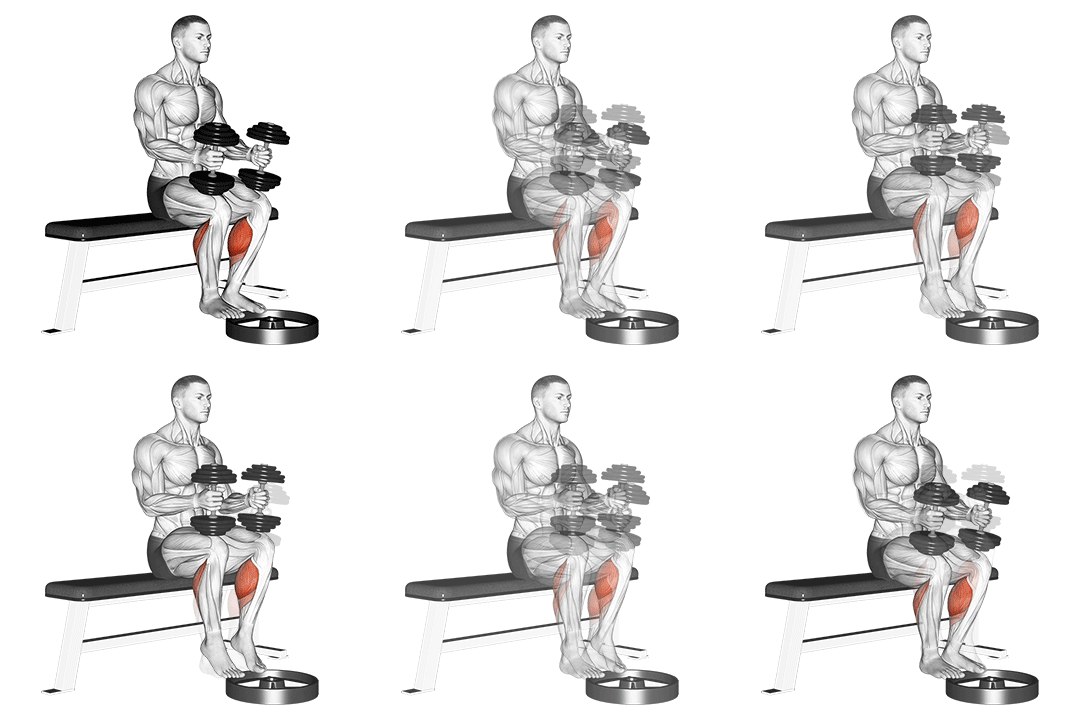
9. Dumbbell Seated Calf Raise
71% match- Calves
- Dumbbell
- Beginner
- Isolation
How to perform this exercise
- Sit on a bench or chair with your feet flat on the ground and a dumbbell resting on your thighs.
- Place the balls of your feet on a raised surface such as a step or block, with your heels hanging off the edge.
- Hold onto the dumbbell for stability.
- Raise your heels as high as possible, lifting your body weight onto the balls of your feet.
- Pause for a moment at the top, then slowly lower your heels back down to the starting position.
- Repeat for the desired number of repetitions.
Sets and reps: 3 sets of 10 to 15 reps.
Why this matches
- Primary muscle: calves, the same as the Dumbbell Seated One Leg Calf Raise
- Equipment: free weights, the same as the Dumbbell Seated One Leg Calf Raise
- Body position: seated, the same as the Dumbbell Seated One Leg Calf Raise
- Balance: easier to stay steady on than the Dumbbell Seated One Leg Calf Raise
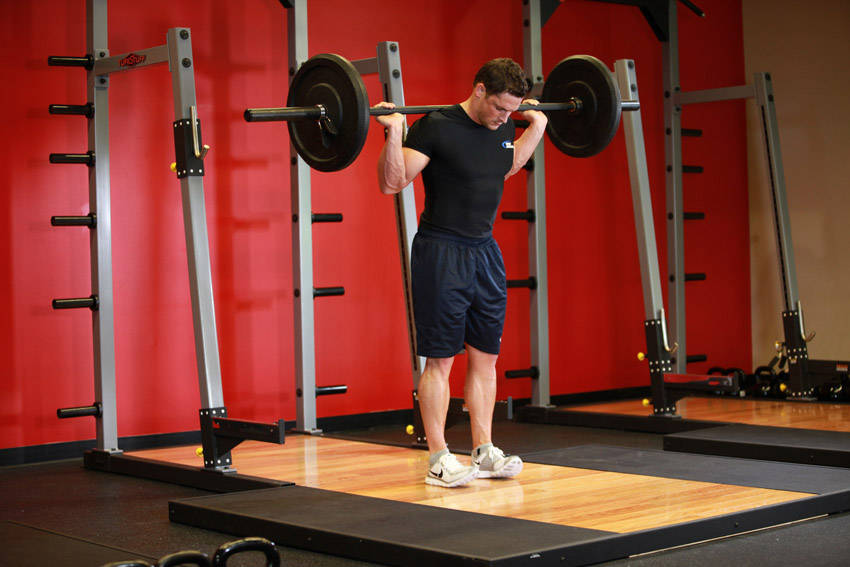
10. Rocking Standing Calf Raise
70% match- Calves
- Barbell
- Intermediate
- Isolation
How to perform this exercise
- This exercise is best performed inside a squat rack for safety purposes. To begin, first set the bar on a rack that best matches your height. Once the correct height is chosen and the bar is loaded, step under the bar and place it on the back of your shoulders (slightly below the neck).
- Hold on to the bar using both arms at each side and lift it off the rack by first pushing with your legs and at the same time straightening your torso.
- Step away from the rack and position your legs using a shoulder width medium stance with the toes slightly pointed out. Keep your head up at all times as looking down will get you off balance. Also maintain a straight back and keep the knees with a slight bend; never locked. This will be your starting position.
- Raise your heels as you breathe out by extending your ankles as high as possible and flexing your calf. Ensure that the knee is kept stationary at all times. There should be no bending (other than the slight initial bend we created during positioning) at any time. Hold the contracted position by a second before you start to go back down.
- Go back slowly to the starting position as you breathe in by lowering your heels as you bend the ankles until calves are stretched.
- Now lift your toes by contracting the tibia muscles in the front of the calves as you breathe out.
- Hold for a second and bring them back down as you breathe in.
- Repeat for the recommended amount of repetitions.
Sets and reps: 3 sets of 10 to 15 reps.
Why this matches
- Primary muscle: calves, the same as the Dumbbell Seated One Leg Calf Raise
- Equipment: free weights, the same as the Dumbbell Seated One Leg Calf Raise
- Body position: standing, not seated
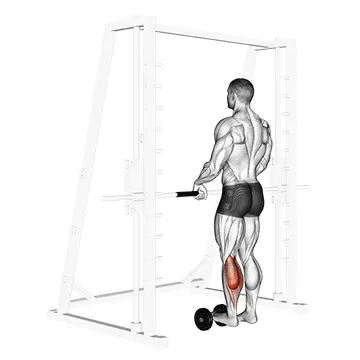
Why You Might Need a Dumbbell Seated One Leg Calf Raise Alternative
You might substitute the Dumbbell Seated One Leg Calf Raise because of equipment limits, knee pain, training variety, or to shift emphasis between calf muscles. Seated unilateral raises bias the soleus by keeping the knee flexed; if you lack a bench or dumbbell you can use a banded seated variation to preserve plantarflexion range. Injuries that limit knee position or ankle dorsiflexion often require standing or machine alternatives that allow a more controlled eccentric. Choosing a substitute lets you maintain progressive overload and full ankle ROM while respecting joint constraints and training goals.
Dumbbell Seated One Leg Calf Raise FAQ
What muscles does Dumbbell Seated One Leg Calf Raise work?
The exercise primarily targets the soleus, with secondary work from the gastrocnemius and other ankle plantarflexors. Because the knee is bent, the gastrocnemius length is reduced and the soleus contributes more during the plantarflexion concentric and controlled eccentric.
What is the best bodyweight alternative to Dumbbell Seated One Leg Calf Raise?
A single-leg standing calf raise is the top bodyweight substitute: push through the forefoot, pause at peak plantarflexion, then lower for a 2–3 second eccentric. Keep the knee slightly bent to bias the soleus or straighten it to increase gastrocnemius involvement.
Find Alternatives for Any Exercise
Search the exercise database and filter the ranked substitutes by the equipment you own.
Similarity scores compare exercise metadata such as movement pattern, muscles, equipment and body position. They are not a safety rating or a check that you own the equipment. Learn about our methodology