

10 Best Rear Leg Raises Alternatives for No-Equipment Workouts
If you can’t perform Rear Leg Raises, use exercises that still target hip extension and glute activation. Try single-leg glute bridges, quadruped hip extensions, donkey kicks, standing hip extensions, or bodyweight Romanian deadlifts. Focus on squeezing the glute at full hip extension and keep the lumbar spine neutral to maximize glute recruitment.
Original Exercise: Rear Leg Raises
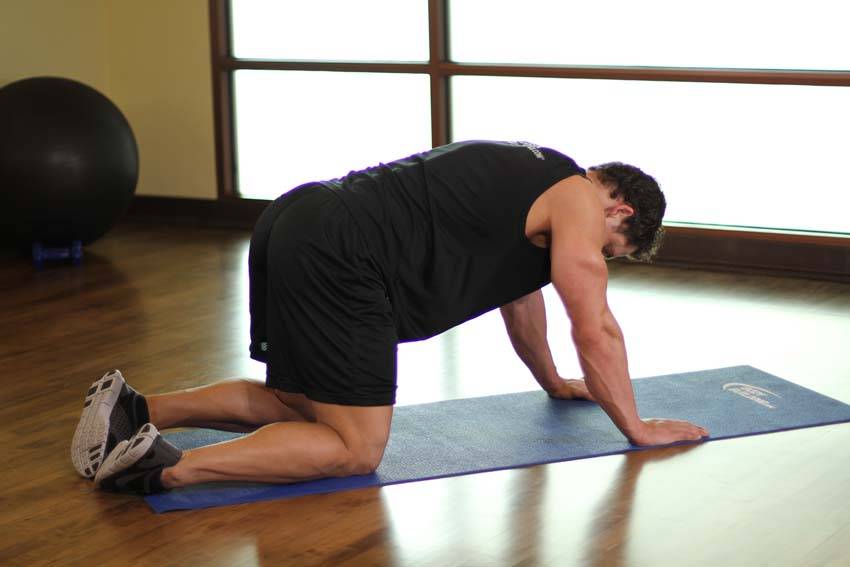
How to Perform Rear Leg Raises
- Place yourself on your hands knees on an exercise mat. Your head should be looking forward and the bend of the knees should create a 90-degree angle between the hamstrings and the calves. This will be your starting position.
- Extend one leg up and behind you. The knee and hip should both extend. Repeat for 5-10 repetitions, and then switch sides.
Pro Tips
- Category: Stretching
- Force: Push
Best Rear Leg Raises Alternatives
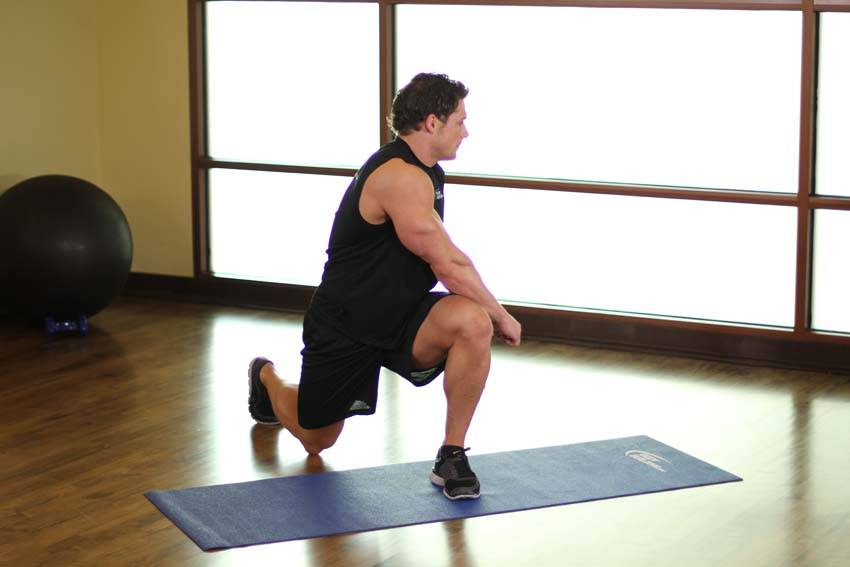
1. Crossover Reverse Lunge
74% MatchHow to perform this exercise
- Stand with your feet shoulder width apart. This will be your starting position.
- Perform a rear lunge by stepping back with one foot and flexing the hips and front knee. As you do so, rotate your torso across the front leg.
- After a brief pause, return to the starting position and repeat on the other side, continuing in an alternating fashion.
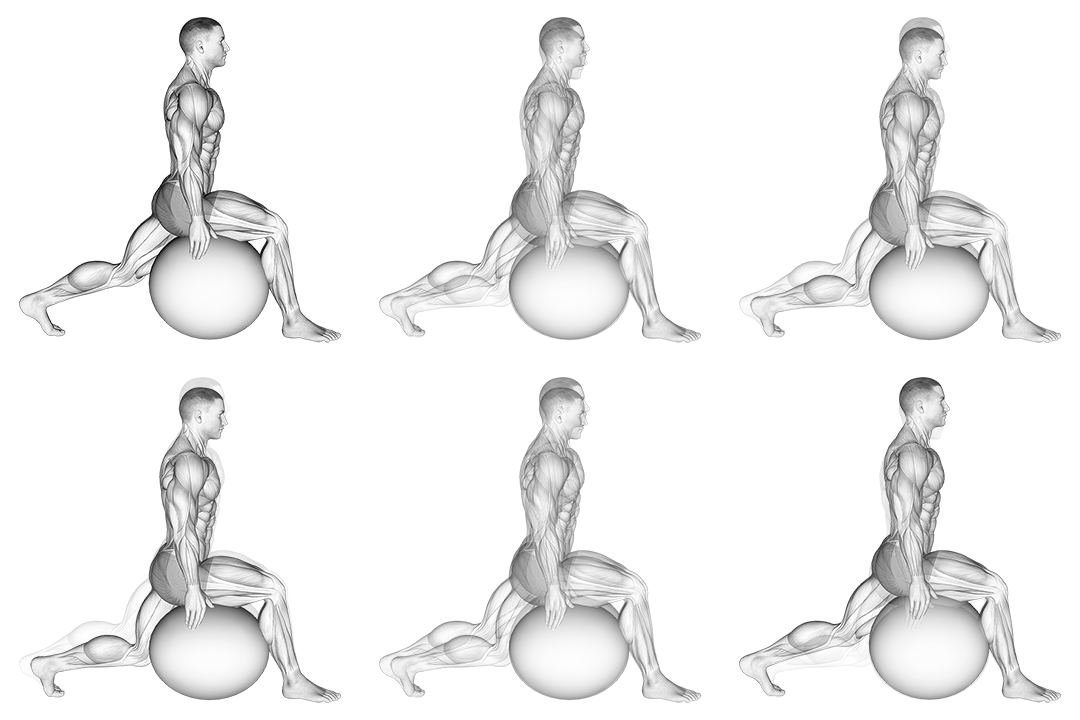
2. Exercise Ball Hip Flexor Stretch
64.7% MatchHow to perform this exercise
- Place the stability ball on the ground and kneel in front of it.
- Place your right foot on top of the stability ball, with your knee bent at a 90-degree angle.
- Extend your left leg behind you, keeping it straight.
- Lean forward, pushing your hips towards the stability ball, until you feel a stretch in your right hip flexor.
- Hold the stretch for 20-30 seconds, then switch sides and repeat.
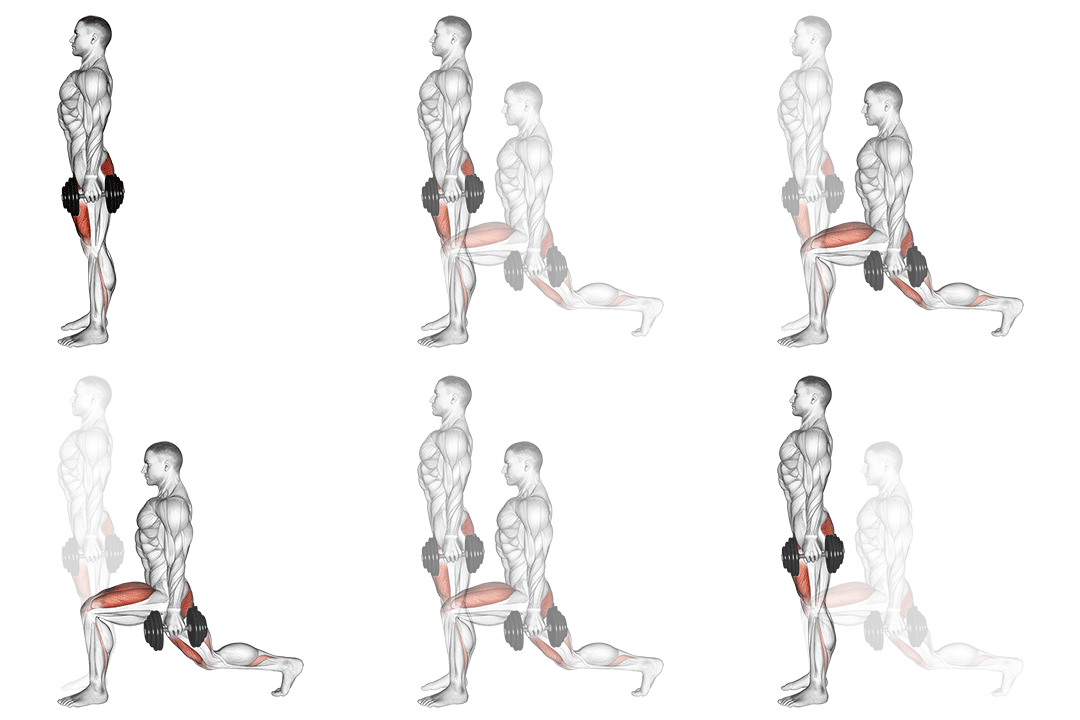
3. Dumbbell Rear Lunge
64.6% MatchHow to perform this exercise
- Stand with your feet shoulder-width apart, holding a dumbbell in each hand.
- Take a step backward with your right foot, lowering your body into a lunge position.
- Bend your left knee and lower your body until your left thigh is parallel to the ground.
- Pause for a moment, then push through your left heel to return to the starting position.
- Repeat on the other side, stepping back with your left foot.
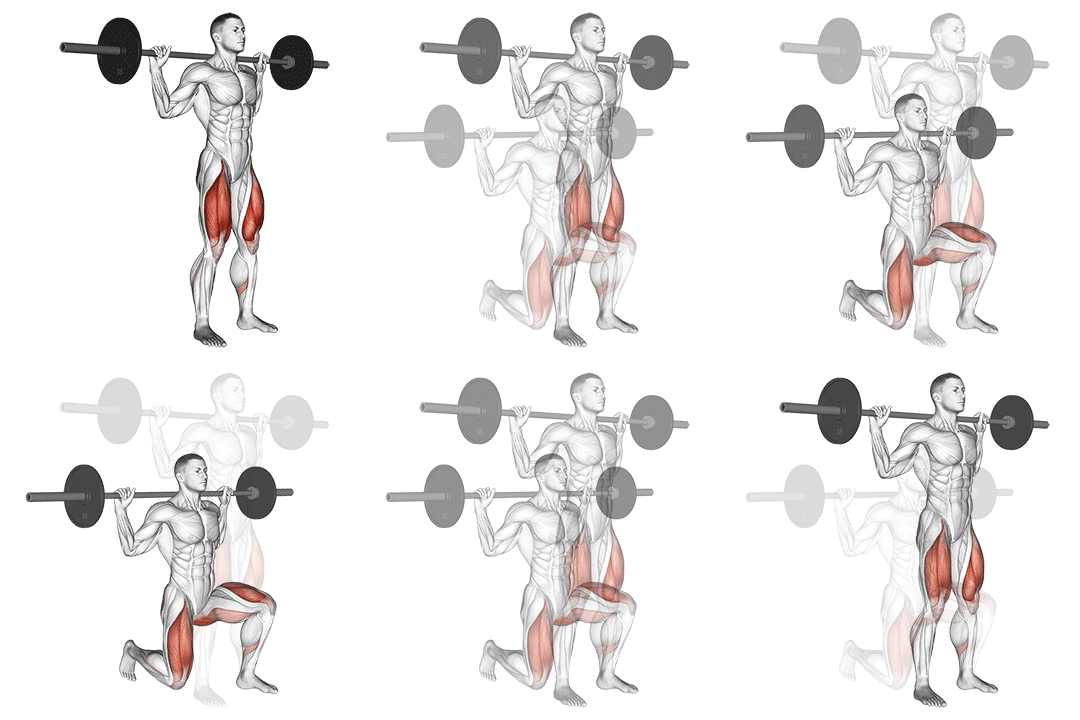
4. Barbell Rear Lunge
64.2% MatchHow to perform this exercise
- Start by standing with your feet shoulder-width apart and a barbell resting on your upper back.
- Take a step backward with your right foot, landing on the ball of your foot.
- Bend both knees to lower your body until your left thigh is parallel to the ground.
- Push through your left heel to return to the starting position.
- Repeat with the other leg.
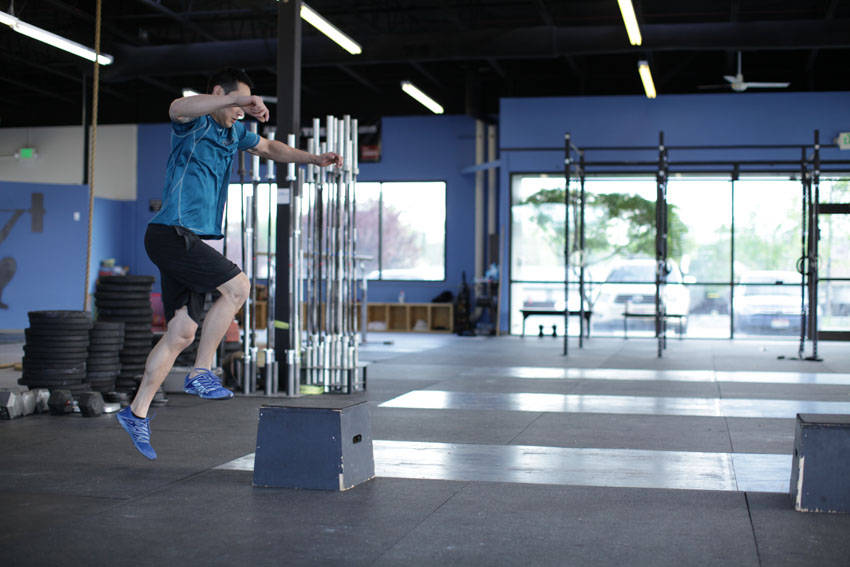
5. Box Skip
60.2% MatchHow to perform this exercise
- You will need several boxes lined up about 8 feet apart.
- Begin facing the first box with one leg slightly behind the other.
- Drive off the back leg, attempting to gain as much height with the hips as possible.
- Immediately upon landing on the box, drive the other leg forward and upward to gain height and distance, leaping from the box. Land between the first two boxes with the same leg that landed on the first box.
- Then, step to the next box and repeat.
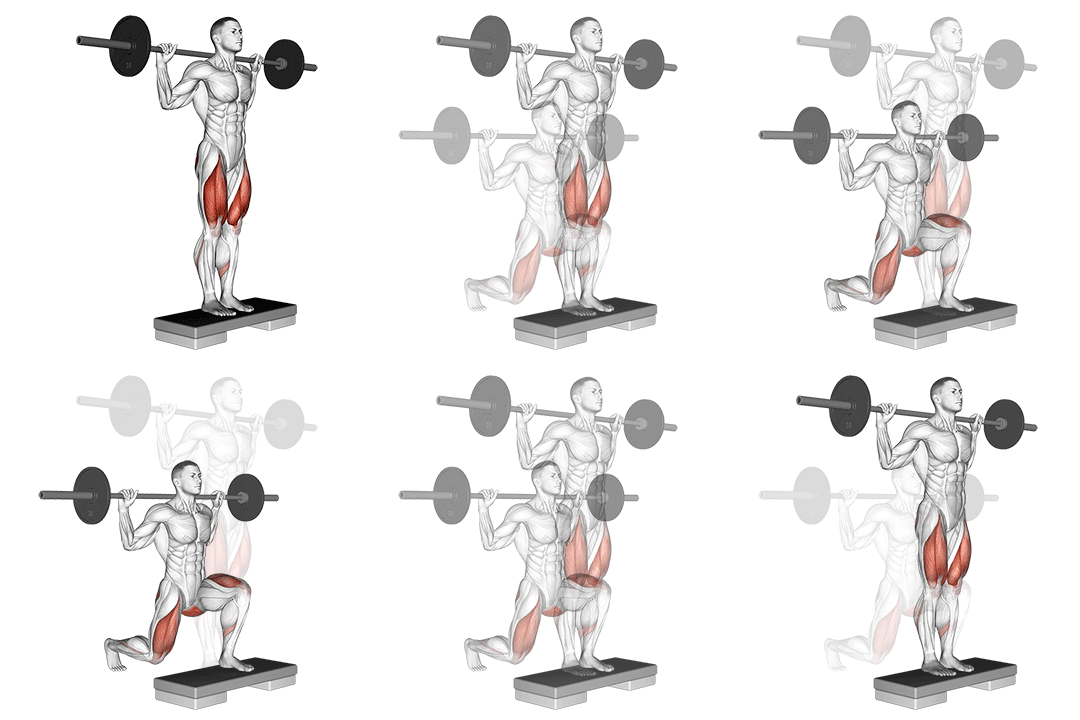
6. Barbell Rear Lunge V. 2
59.2% MatchHow to perform this exercise
- Stand with your feet shoulder-width apart and hold a barbell across your upper back.
- Take a step backward with your right foot, landing on the ball of your foot.
- Bend both knees to lower your body until your left thigh is parallel to the ground.
- Push through your left heel to return to the starting position.
- Repeat with the other leg.
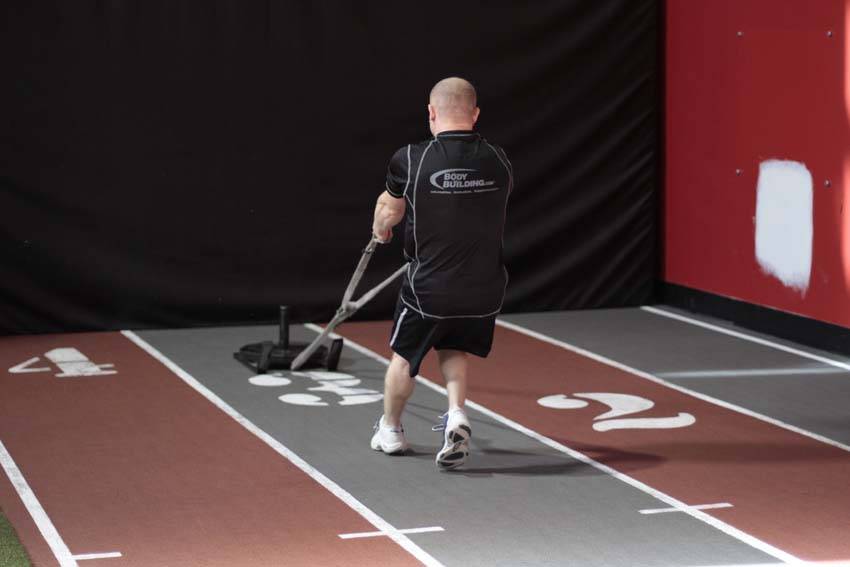
7. Backward Drag
57.2% MatchHow to perform this exercise
- Load a sled with the desired weight, attaching a rope or straps to the sled that you can hold onto.
- Begin the exercise by moving backwards for a given distance. Leaning back, extend through the legs for short steps to move as quickly as possible.
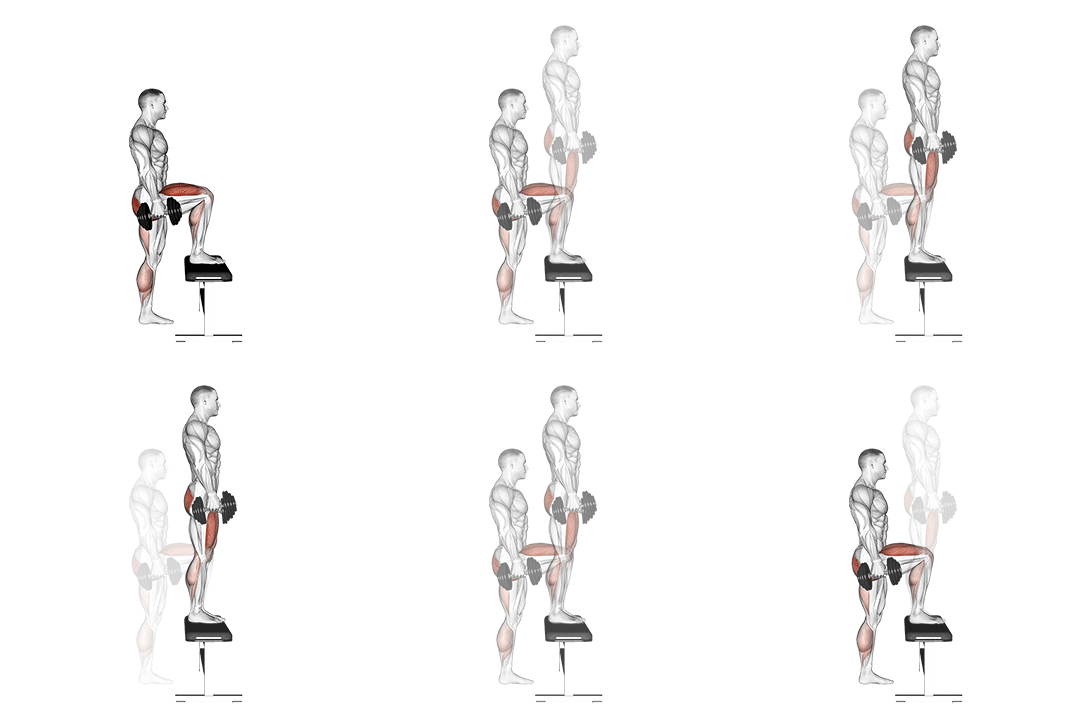
8. Dumbbell Step-up
54.6% MatchHow to perform this exercise
- Stand in front of a bench or step with a dumbbell in each hand, palms facing your body.
- Place your right foot on the bench or step, ensuring your entire foot is in contact with the surface.
- Push through your right heel and lift your body up onto the bench or step, straightening your right leg.
- Bring your left foot up onto the bench or step, standing fully upright.
- Step back down with your left foot, followed by your right foot, returning to the starting position.
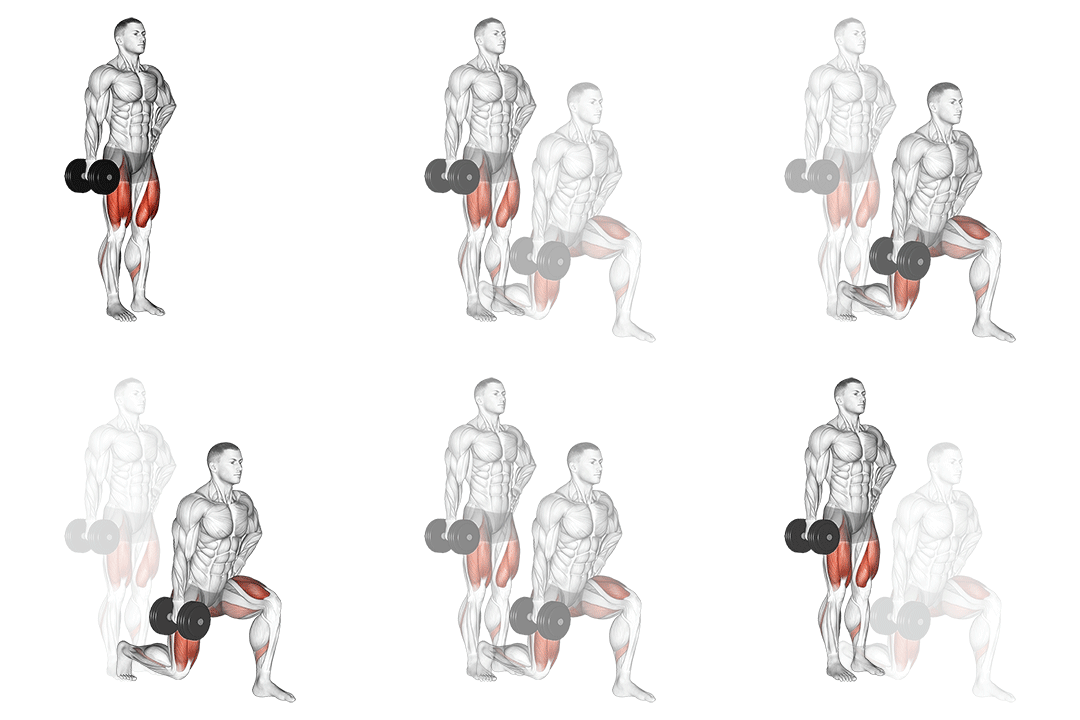
9. Dumbbell Contralateral Forward Lunge
54% MatchHow to perform this exercise
- Stand with your feet shoulder-width apart, holding a dumbbell in each hand.
- Take a step forward with your right foot, keeping your back straight and core engaged.
- Lower your body by bending both knees until your right thigh is parallel to the ground.
- Push through your right heel to return to the starting position.
- Repeat with your left leg.
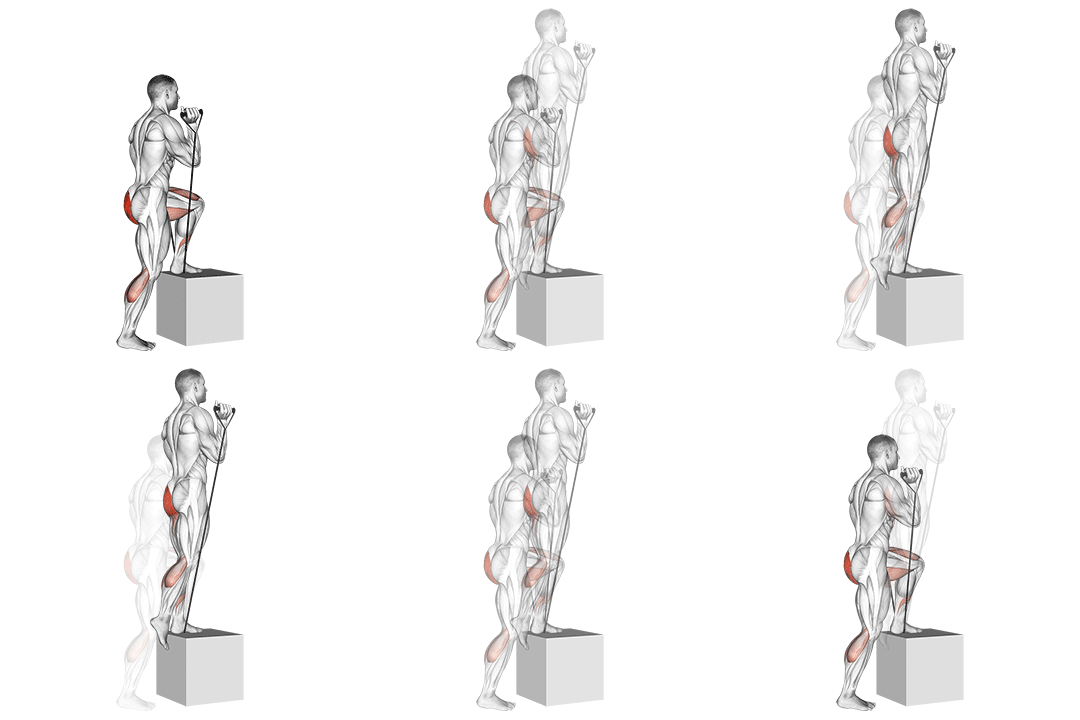
10. Band Step-up
54% MatchHow to perform this exercise
- Place a band around your thighs, just above your knees.
- Stand facing a step or platform with your feet hip-width apart.
- Step up onto the platform with your right foot, pushing through your heel.
- Extend your left leg behind you, keeping it straight.
- Lower your left foot back down to the ground.
Why You Might Need a Rear Leg Raises Alternative
You may substitute Rear Leg Raises for several reasons: low-back or hip discomfort, limited hip extension, lack of balance, or a need for greater progressive overload. Some people need more compound loading to grow the glutes, while others require gentler, pain-free patterns. Choose replacements that preserve posterior chain mechanics — hip hinge or controlled hip extension — and cue full glute contraction (think: drive the heel down or press the knee back). Substitutes like single-leg glute bridges shift load into a longer, stronger hip-extension range, improving mechanical tension on the glute max without stressing the lumbar spine.
How to Choose the Right Substitute
Select a substitute based on your goal, available equipment, and movement limitations. For pure isolation and posterior activation, pick single-leg glute bridges or quadruped hip extensions and cue a hard glute squeeze at lockout. For strength and progression, choose bodyweight Romanian deadlifts or single-leg RDLs to load the posterior chain through a hip hinge while maintaining spinal neutrality. If balance or hip mobility limits you, use supported standing hip extensions and emphasize slow eccentric control. Prioritize exercises that let you progressively increase difficulty while keeping hip extension as the prime mover.
Frequently Asked Questions
What muscles does Rear Leg Raises work?
Rear Leg Raises primarily target the gluteus maximus and recruit the gluteus medius for stabilization. You also get secondary activation of the hamstrings and lumbar erectors to control hip extension and pelvic position.
What is the best bodyweight alternative to Rear Leg Raises?
The single-leg glute bridge is the best bodyweight alternative: lie supine, drive one heel into the floor, and extend the hip while keeping the ribcage down. Cue a full glute squeeze at the top and avoid hyperextending the lower back.
Can I build muscle without doing Rear Leg Raises?
Yes — you can build glute muscle using progressive overload and compound patterns like single-leg RDLs, glute bridges, and hip thrust progressions. Focus on achieving mechanical tension through full hip extension, increasing reps, tempo, or external load over time.
More Exercise Alternatives
Find Alternatives for Any Exercise
Use our free tool to discover the best substitute exercises based on your available equipment and goals.
Try the Exercise Substitution Finder →