

10 Best Shoulder Press - With Bands Alternatives
The Shoulder Press - With Bands is done standing with a band. Ranked closest by our scoring: the Standing Palms-in Dumbbell Press, the Dumbbell Arnold Press and the Dumbbell Shoulder Press.
Updated Ranked by our 12-factor similarity model How it works
Original Exercise: Shoulder Press - With Bands
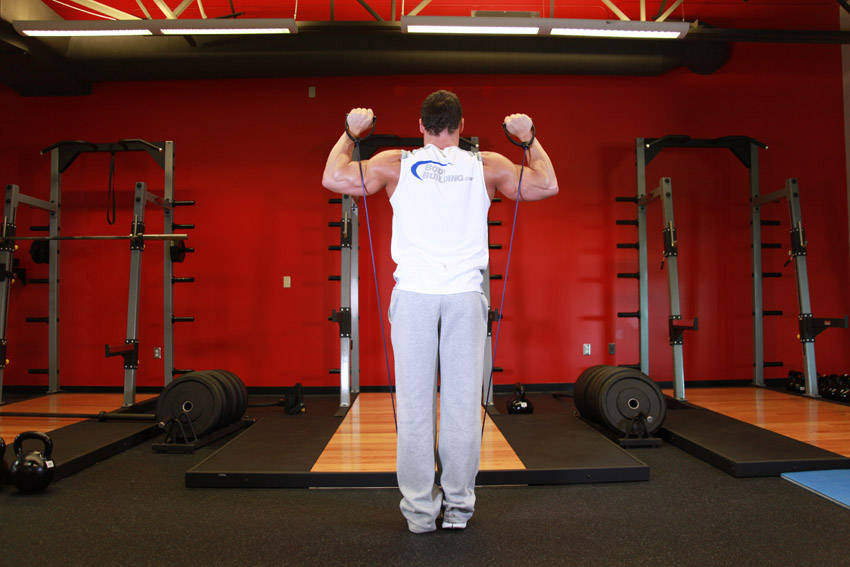
- Primary muscle
- Delts
- Equipment
- Band
- Difficulty
- Intermediate
- Type
- Compound
Secondary muscles: Triceps
How to perform Shoulder Press - With Bands
- To begin, stand on an exercise band so that tension begins at arm's length. Grasp the handles and lift them so that the hands are at shoulder height at each side.
- Rotate the wrists so that the palms of your hands are facing forward. Your elbows should be bent, with the upper arms and forearms in line to the torso. This is your starting position.
- As you exhale, lift the handles up until your arms are fully extended overhead.
Ranked Shoulder Press - With Bands Alternatives
10 substitutes, ranked by how closely each one matches the Shoulder Press - With Bands on movement pattern, muscles worked, equipment and body position. The higher the score, the less you change. Open "How to perform this exercise" on a card for the steps; every card title links to that exercise's own alternatives page.
Best match 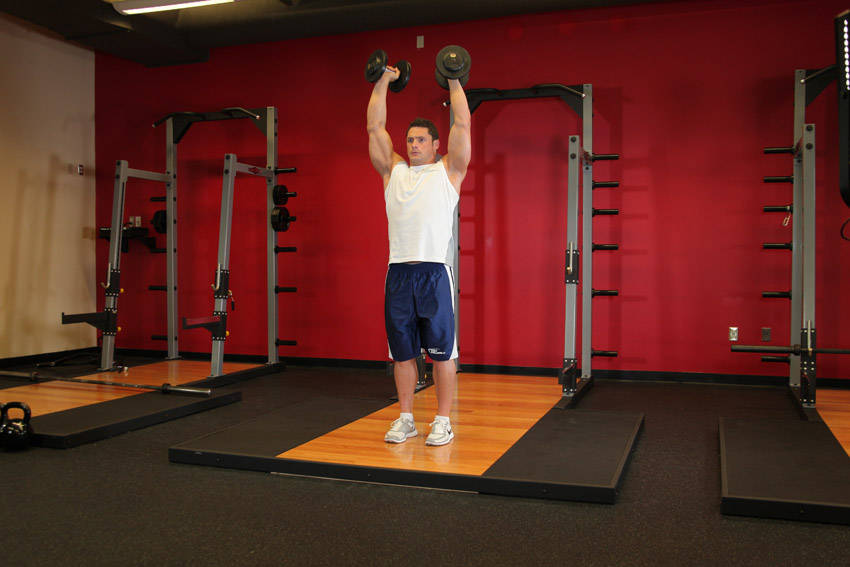
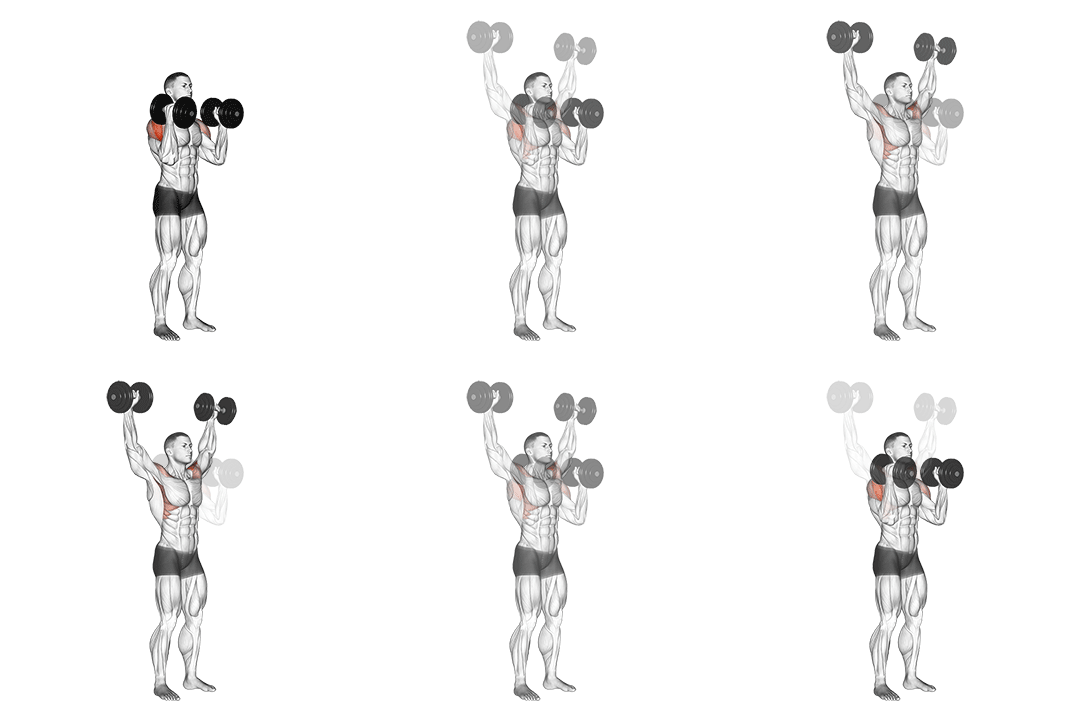
1. Standing Palms-in Dumbbell Press
89% match- Delts
- Dumbbell
- Intermediate
- Compound
A good swap when you have dumbbells to work with, and it still works the delts.
How to perform this exercise
- Start by having a dumbbell in each hand with your arm fully extended to the side using a neutral grip. Your feet should be shoulder width apart from each other. Now slowly lift the dumbbells up until you create a 90 degree angle with your arms. Note: Your forearms should be perpendicular to the floor. This the starting position.
- Continue to maintain a neutral grip throughout the entire exercise. Slowly lift the dumbbells up until your arms are fully extended.
- While inhaling lower the weights down until your arm is at a 90 degree angle again.
- Repeat for the recommended amount of repetitions.
Sets and reps: 3 or 4 sets of 6 to 10 reps.
Why this matches
- Primary muscle: delts, the same as the Shoulder Press - With Bands
- Equipment: free weights, not a band
- Body position: standing, the same as the Shoulder Press - With Bands
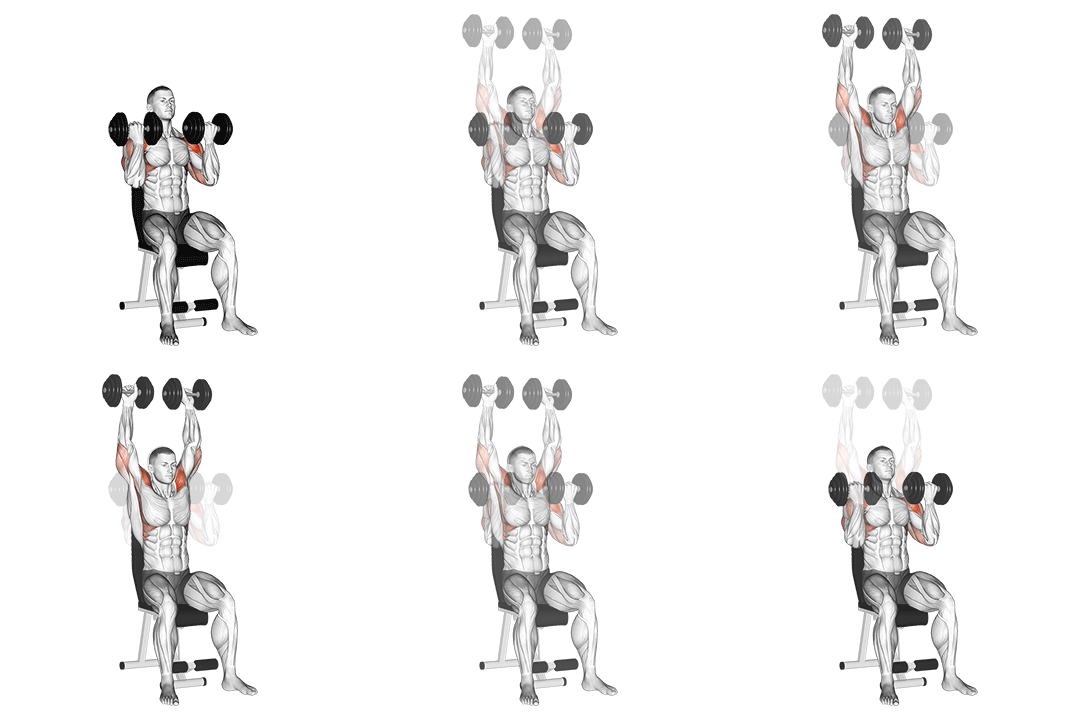
2. Dumbbell Arnold Press
89% match- Delts
- Dumbbell
- Intermediate
- Compound
How to perform this exercise
- Sit on a bench with back support and hold a dumbbell in each hand at shoulder level, palms facing your body and elbows bent.
- Press the dumbbells upward until your arms are fully extended and your palms are facing forward.
- Rotate your wrists as you lift, so that your palms are facing forward at the top of the movement.
- Pause for a moment at the top, then slowly lower the dumbbells back to the starting position.
- Repeat for the desired number of repetitions.
Sets and reps: 3 or 4 sets of 6 to 10 reps.
Why this matches
- Movement: strict overhead press, the same as the Shoulder Press - With Bands
- Primary muscle: delts, the same as the Shoulder Press - With Bands
- Equipment: free weights, not a band
- Body position: standing, the same as the Shoulder Press - With Bands
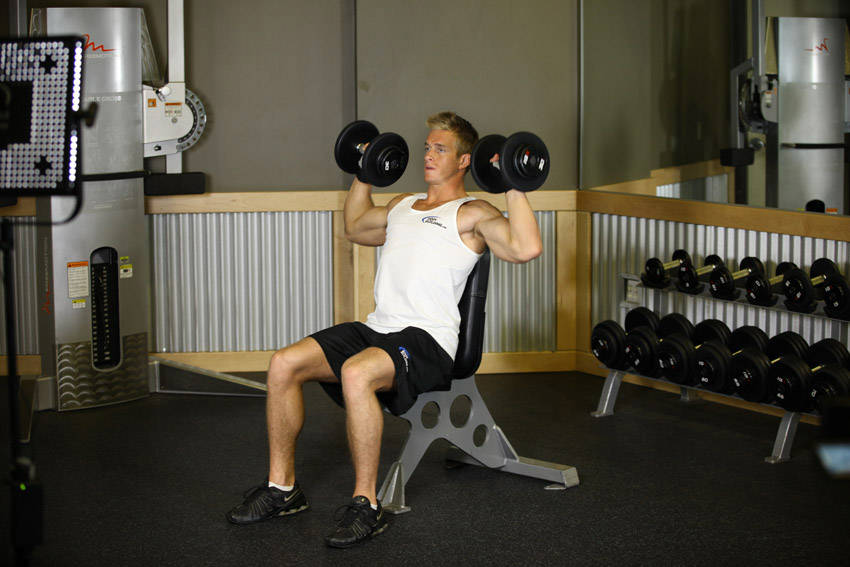
3. Dumbbell Shoulder Press
89% match- Delts
- Dumbbell
- Intermediate
- Compound
How to perform this exercise
- While holding a dumbbell in each hand, sit on a military press bench or utility bench that has back support. Place the dumbbells upright on top of your thighs.
- Now raise the dumbbells to shoulder height one at a time using your thighs to help propel them up into position.
- Make sure to rotate your wrists so that the palms of your hands are facing forward. This is your starting position.
- Now, exhale and push the dumbbells upward until they touch at the top.
- Then, after a brief pause at the top contracted position, slowly lower the weights back down to the starting position while inhaling.
- Repeat for the recommended amount of repetitions.
Sets and reps: 3 or 4 sets of 6 to 10 reps.
Why this matches
- Movement: strict overhead press, the same as the Shoulder Press - With Bands
- Primary muscle: delts, the same as the Shoulder Press - With Bands
- Equipment: free weights, not a band
- Body position: standing, the same as the Shoulder Press - With Bands
4. Dumbbell W-press
89% match- Delts
- Dumbbell
- Intermediate
- Compound
How to perform this exercise
- Sit on a bench with a dumbbell in each hand, palms facing forward.
- Raise the dumbbells to shoulder height, elbows bent and palms facing forward.
- Press the dumbbells upward until your arms are fully extended overhead.
- Lower the dumbbells back to shoulder height.
- Repeat for the desired number of repetitions.
Sets and reps: 3 or 4 sets of 6 to 10 reps.
Why this matches
- Primary muscle: delts, the same as the Shoulder Press - With Bands
- Equipment: free weights, not a band
- Body position: standing, the same as the Shoulder Press - With Bands
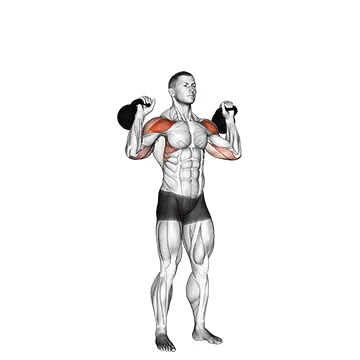
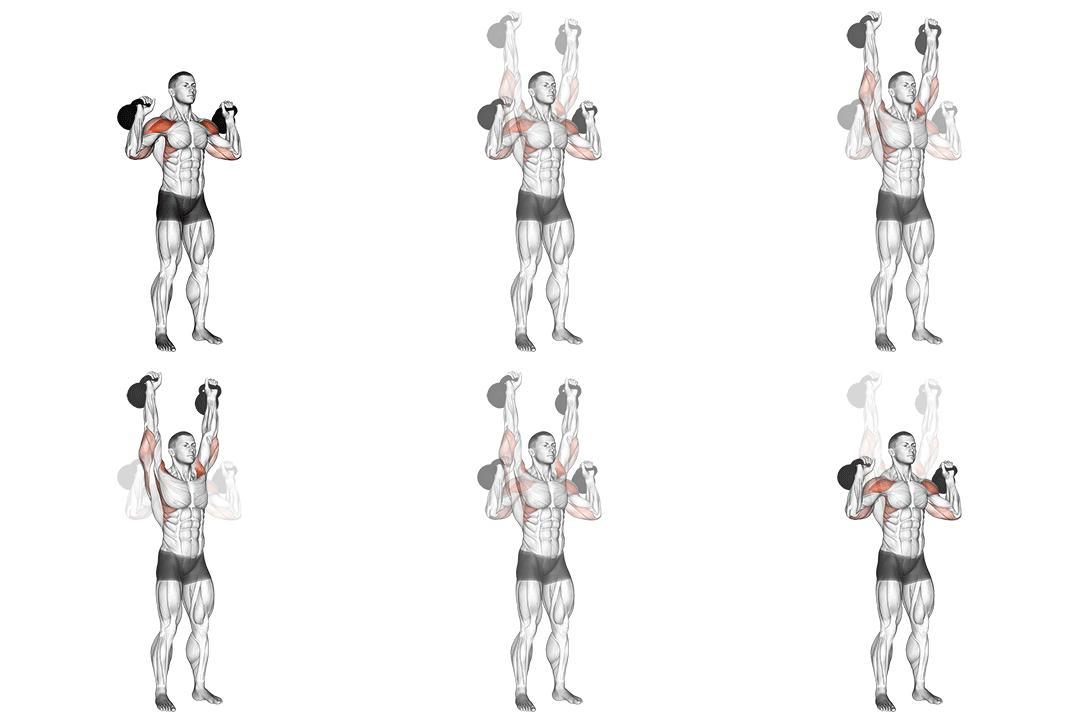
5. Kettlebell Two Arm Military Press
89% match- Delts
- Kettlebell
- Intermediate
- Compound
A good swap when you have a kettlebell to work with, and it still works the delts.
How to perform this exercise
- Stand with your feet shoulder-width apart, holding a kettlebell in each hand at shoulder level with your palms facing forward.
- Engage your core and press the kettlebells overhead, fully extending your arms.
- Pause for a moment at the top, then slowly lower the kettlebells back to the starting position.
- Repeat for the desired number of repetitions.
Sets and reps: 3 or 4 sets of 6 to 10 reps.
Why this matches
- Movement: strict overhead press, the same as the Shoulder Press - With Bands
- Primary muscle: delts, the same as the Shoulder Press - With Bands
- Equipment: free weights, not a band
- Body position: standing, the same as the Shoulder Press - With Bands
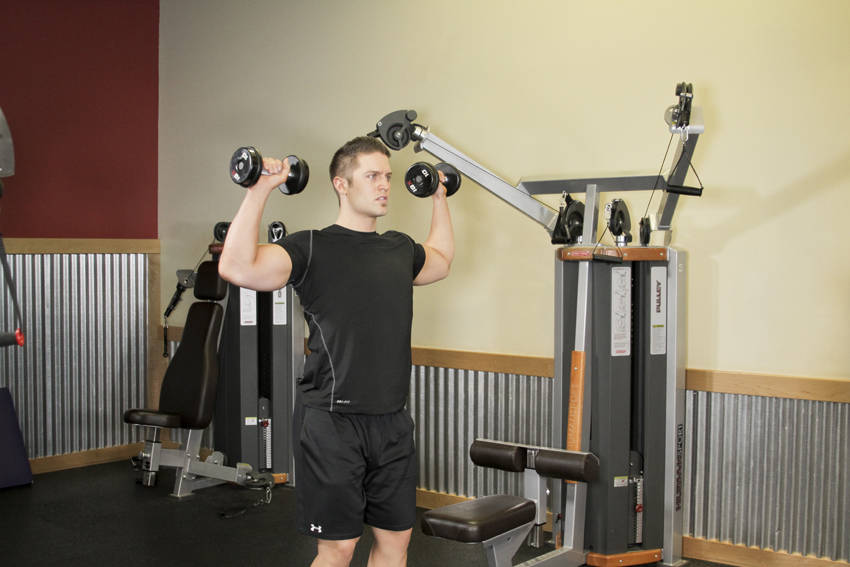
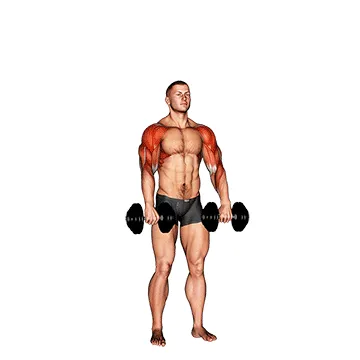
6. Standing Dumbbell Press
89% match- Delts
- Dumbbell
- Intermediate
- Compound
How to perform this exercise
- Standing with your feet shoulder width apart, take a dumbbell in each hand. Raise the dumbbells to head height, the elbows out and about 90 degrees. This will be your starting position.
- Maintaining strict technique with no leg drive or leaning back, extend through the elbow to raise the weights together directly above your head.
- Pause, and slowly return the weight to the starting position.
Sets and reps: 3 or 4 sets of 6 to 10 reps.
Why this matches
- Primary muscle: delts, the same as the Shoulder Press - With Bands
- Equipment: free weights, not a band
- Body position: standing, the same as the Shoulder Press - With Bands
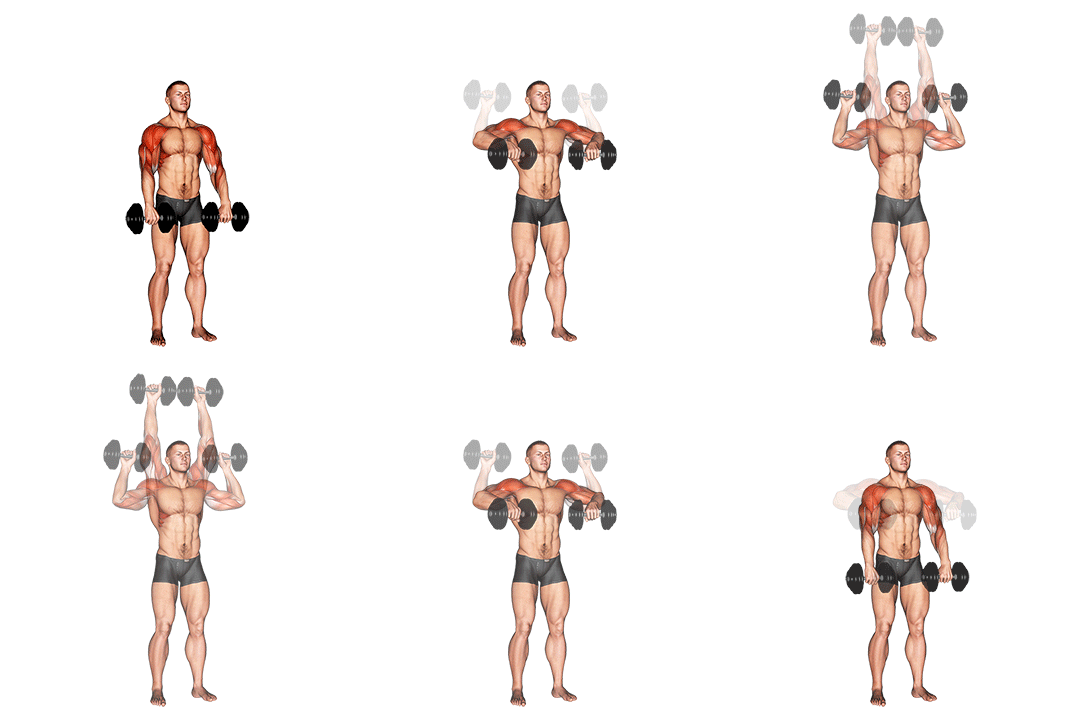
7. Dumbbell Cuban Press
88% match- Delts
- Dumbbell
- Intermediate
- Compound
How to perform this exercise
- Stand with your feet shoulder-width apart, holding a dumbbell in each hand at shoulder height with your palms facing down.
- Keeping your core engaged and your back straight, press the dumbbells straight up overhead until your arms are fully extended.
- Rotate your wrists so that your palms are facing forward.
- Lower the dumbbells back down to shoulder height, rotating your wrists back to the starting position.
- Repeat for the desired number of repetitions.
Sets and reps: 3 or 4 sets of 6 to 10 reps.
Why this matches
- Primary muscle: delts, the same as the Shoulder Press - With Bands
- Equipment: free weights, not a band
- Body position: standing, the same as the Shoulder Press - With Bands
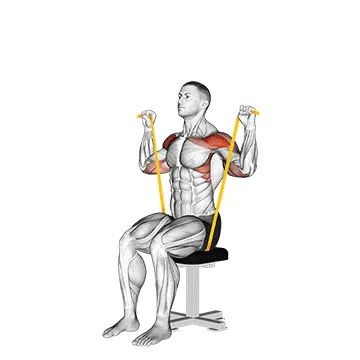
- Delts
- Band
- Intermediate
- Compound
How to perform this exercise
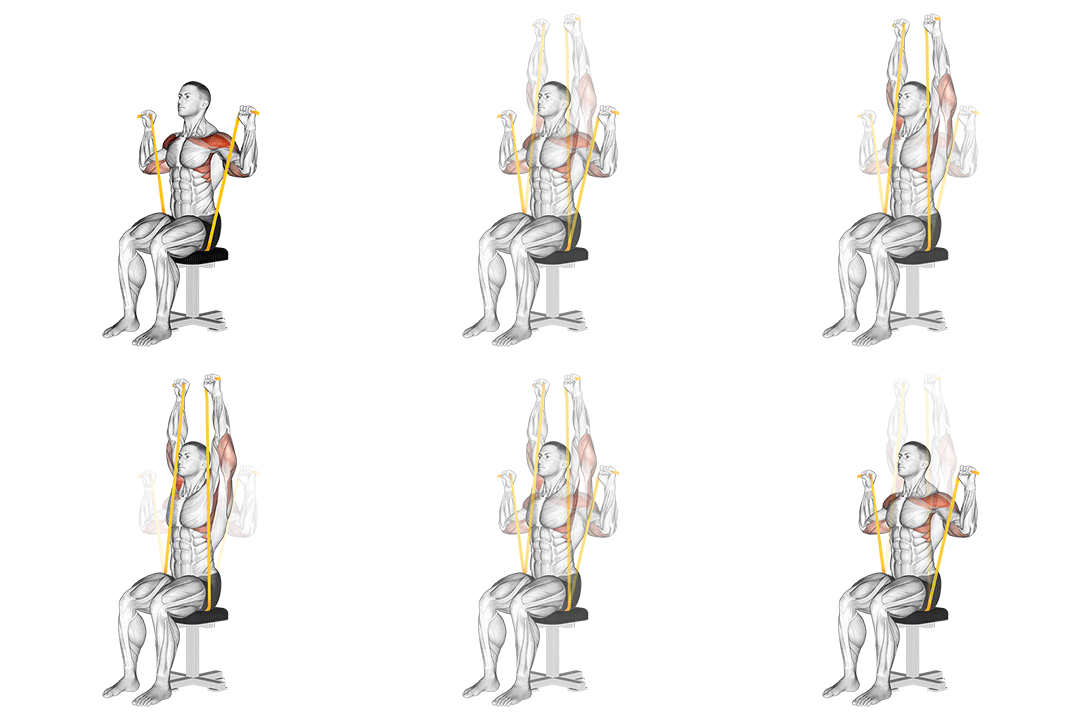
- Sit on a chair or bench with your back straight and feet flat on the ground.
- Hold the resistance band with both hands, palms facing forward, and bring it up to shoulder level.
- Press the band overhead, extending your arms fully.
- Pause for a moment at the top, then slowly lower the band back down to shoulder level.
- Repeat for the desired number of repetitions.
Sets and reps: 3 or 4 sets of 6 to 10 reps.
Why this matches
- Movement: strict overhead press, the same as the Shoulder Press - With Bands
- Primary muscle: delts, the same as the Shoulder Press - With Bands
- Equipment: a band, the same as the Shoulder Press - With Bands
- Body position: seated, not standing
- Balance: easier to stay steady on than the Shoulder Press - With Bands
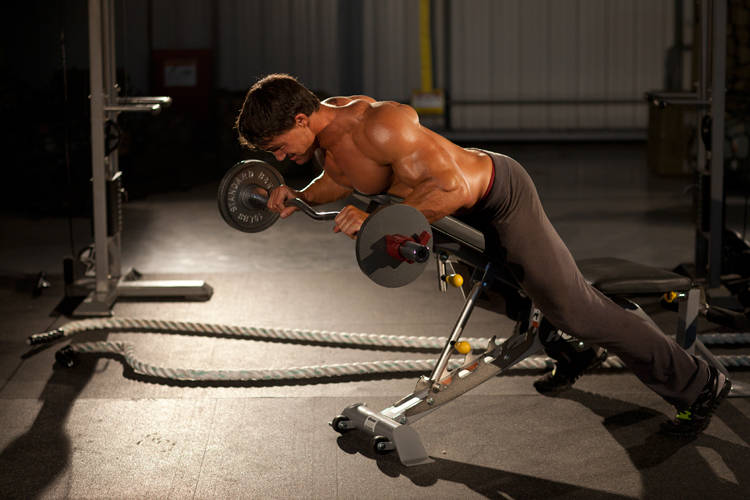
9. Anti-gravity Press
85% match- Delts
- Barbell
- Intermediate
- Compound
How to perform this exercise
- Place a bar on the ground behind the head of an incline bench.
- Lay on the bench face down. With a pronated grip, pick the barbell up from the floor. Flex the elbows, performing a reverse curl to bring the bar near your chest. This will be your starting position.
- To begin, press the barbell out in front of your head by extending your elbows. Keep your arms parallel to the ground throughout the movement.
- Return to the starting position and repeat to complete the set.
Sets and reps: 3 or 4 sets of 6 to 10 reps.
Why this matches
- Primary muscle: delts, the same as the Shoulder Press - With Bands
- Equipment: free weights, not a band
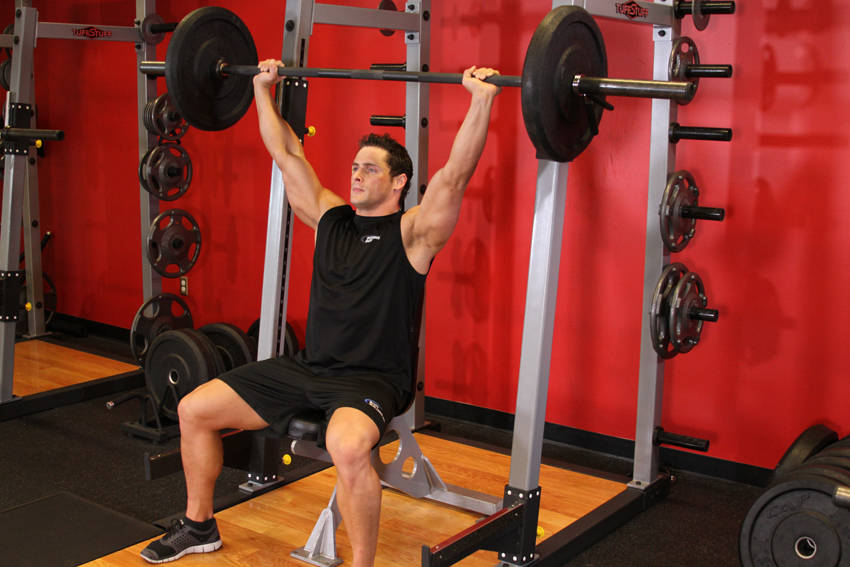
10. Barbell Shoulder Press
85% match- Delts
- Barbell
- Intermediate
- Compound
How to perform this exercise
- Sit on a bench with back support in a squat rack. Position a barbell at a height that is just above your head. Grab the barbell with a pronated grip (palms facing forward).
- Once you pick up the barbell with the correct grip width, lift the bar up over your head by locking your arms. Hold at about shoulder level and slightly in front of your head. This is your starting position.
- Lower the bar down to the shoulders slowly as you inhale.
- Lift the bar back up to the starting position as you exhale.
- Repeat for the recommended amount of repetitions.
Sets and reps: 3 or 4 sets of 6 to 10 reps.
Why this matches
- Movement: strict overhead press, the same as the Shoulder Press - With Bands
- Primary muscle: delts, the same as the Shoulder Press - With Bands
- Equipment: free weights, not a band
- Body position: standing, the same as the Shoulder Press - With Bands
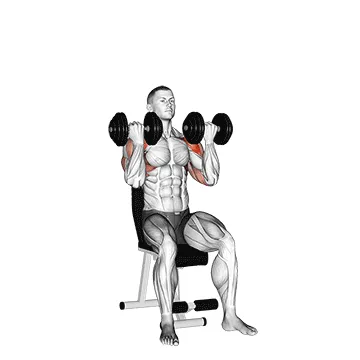
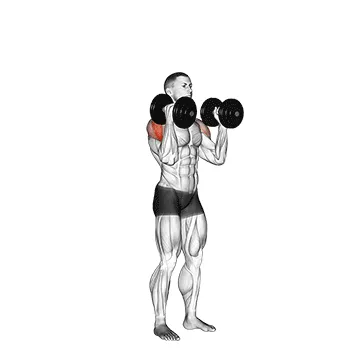
Shoulder Press - With Bands FAQ
What muscles does Shoulder Press - With Bands work?
The exercise primarily targets the deltoids, especially the anterior and middle heads, while secondarily loading the triceps, upper trapezius, and scapular stabilizers. Bands increase time under tension, requiring the rotator cuff to stabilize the humeral head through the range; cue: maintain scapular control throughout the press.
Find Alternatives for Any Exercise
Search the exercise database and filter the ranked substitutes by the equipment you own.
Similarity scores compare exercise metadata such as movement pattern, muscles, equipment and body position. They are not a safety rating or a check that you own the equipment. Learn about our methodology