

10 Best Sled Reverse Flye Alternatives for Limited Equipment
If you can’t perform the sled reverse flye, use exercises that replicate horizontal abduction and scapular retraction to hit the posterior deltoid. Try bent-over dumbbell reverse flyes, band pull-aparts, or chest-supported rear delt rows. Cue: hinge at the hips, keep a neutral spine, and lead with the elbows to isolate the rear delts.
Original Exercise: Sled Reverse Flye
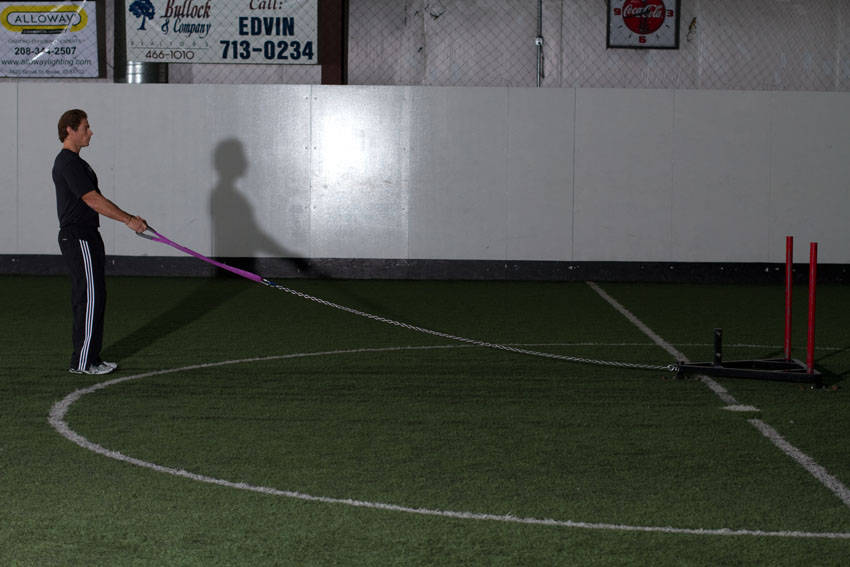
How to Perform Sled Reverse Flye
- Attach dual handles to a sled connected by a rope or chain. Load the sled to a light weight.
- Face the sled, backing up until there is some tension in the line. Take both handles at arms length at about waist level. Bend the knees slightly and keep your chest and head up. This will be your starting position.
- Without flexing the elbow, pull the handles upward and apart, performing a reverse fly with some external rotation. Your palms should be facing forward as you do this.
- Return to the starting position, taking a couple steps back to take the slack out of the line.
Pro Tips
- Category: Strength
- Force: Pull
- Movement type: Isolation
Ranked Sled Reverse Flye Alternatives
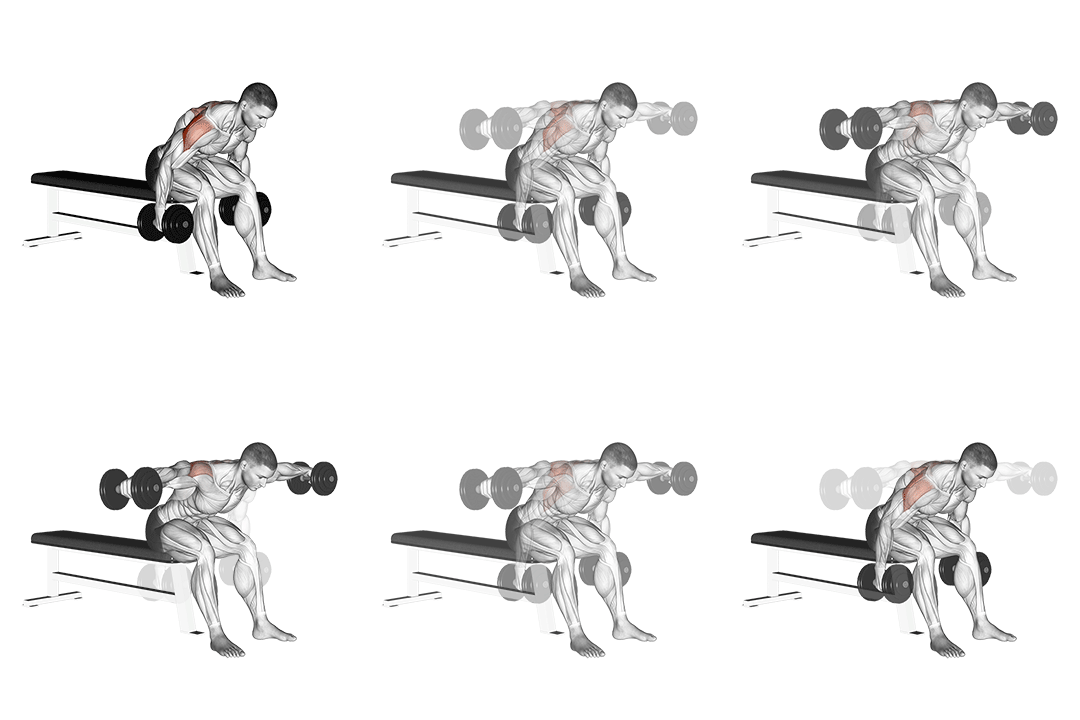
1. Dumbbell Rear Fly
99.2% MatchHow to perform this exercise
- Stand with your feet shoulder-width apart and hold a dumbbell in each hand.
- Bend your knees slightly and hinge forward at the hips, keeping your back straight.
- Extend your arms straight down towards the ground, palms facing each other.
- Keeping a slight bend in your elbows, lift your arms out to the sides and squeeze your shoulder blades together.
- Pause for a moment at the top, then slowly lower your arms back down to the starting position.
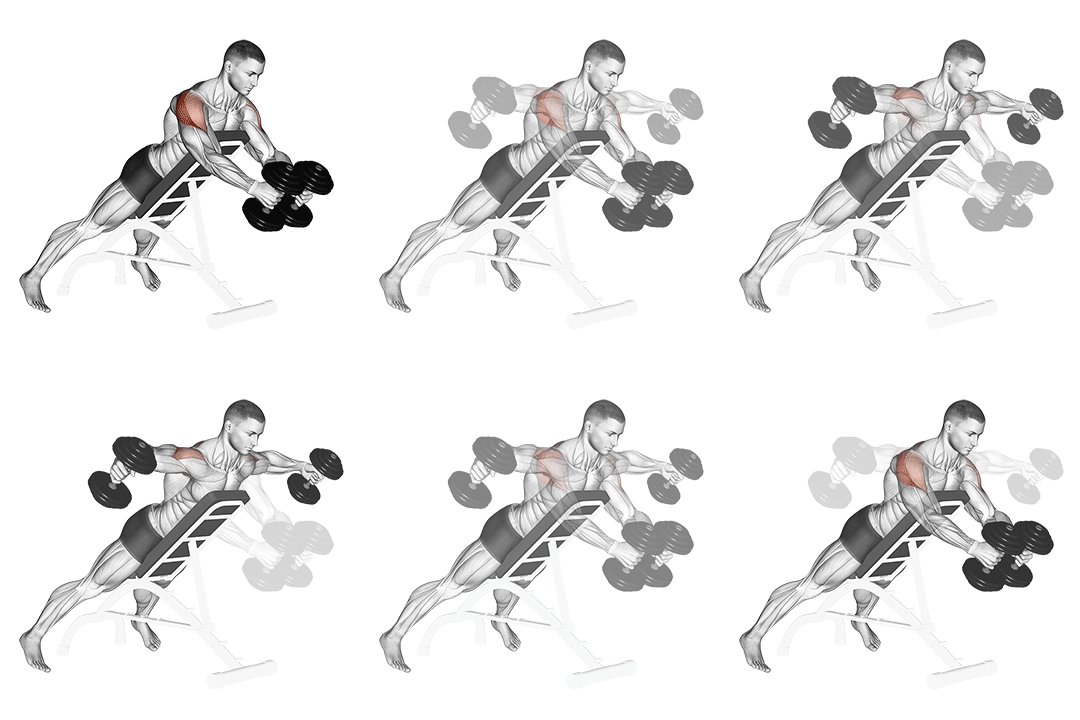
2. Dumbbell Reverse Fly
99.2% MatchHow to perform this exercise
- Stand with your feet shoulder-width apart and hold a dumbbell in each hand.
- Bend your knees slightly and hinge forward at the hips, keeping your back straight.
- Extend your arms straight down in front of you, palms facing each other.
- Keeping a slight bend in your elbows, raise your arms out to the sides until they are parallel to the ground.
- Pause for a moment at the top, then slowly lower your arms back down to the starting position.
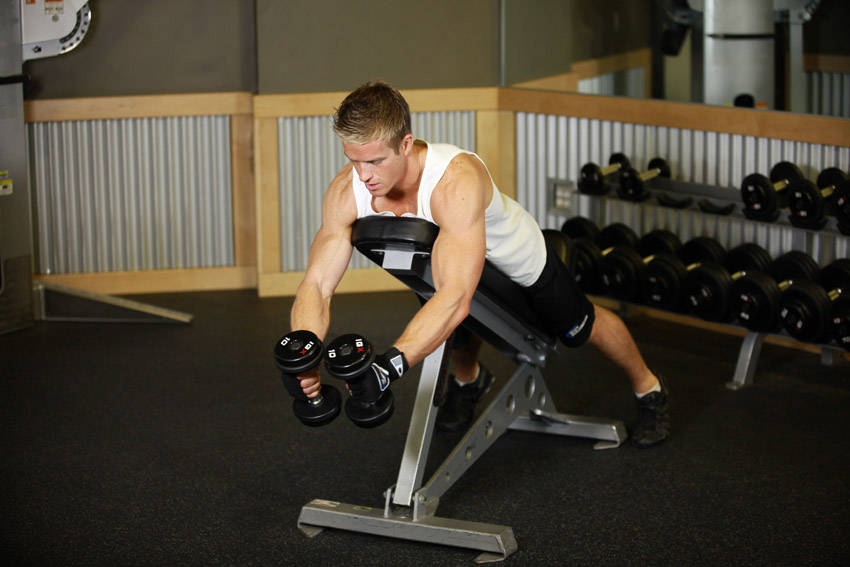
3. Reverse Flyes
99.2% MatchHow to perform this exercise
- To begin, lie down on an incline bench with the chest and stomach pressing against the incline. Have the dumbbells in each hand with the palms facing each other (neutral grip).
- Extend the arms in front of you so that they are perpendicular to the angle of the bench. The legs should be stationary while applying pressure with the ball of your toes. This is the starting position.
- Maintaining the slight bend of the elbows, move the weights out and away from each other (to the side) in an arc motion while exhaling. Tip: Try to squeeze your shoulder blades together to get the best results from this exercise.
- The arms should be elevated until they are parallel to the floor.
- Feel the contraction and slowly lower the weights back down to the starting position while inhaling.
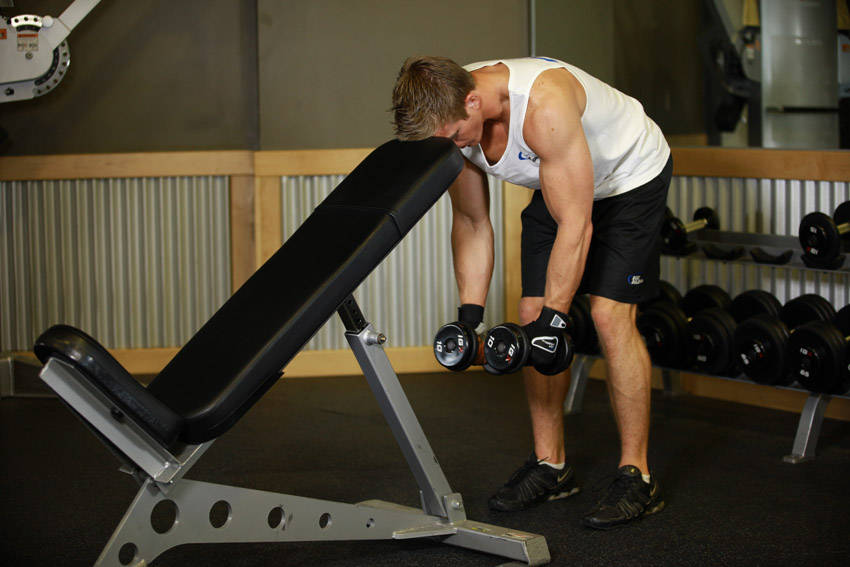
4. Bent Over Dumbbell Rear Delt Raise With Head On Bench
98.4% MatchHow to perform this exercise
- Stand up straight while holding a dumbbell in each hand and with an incline bench in front of you.
- While keeping your back straight and maintaining the natural arch of your back, lean forward until your forehead touches the bench in front of you. Let the arms hang in front of you perpendicular to the ground. The palms of your hands should be facing each other and your torso should be parallel to the floor. This will be your starting position.
- Keeping your torso forward and stationary, and the arms straight with a slight bend at the elbows, lift the dumbbells straight to the side until both arms are parallel to the floor. Exhale as you lift the weights. Caution: avoid swinging the torso or bringing the arms back as opposed to the side.
- After a one second contraction at the top, slowly lower the dumbbells back to the starting position.
- Repeat the recommended amount of repetitions.
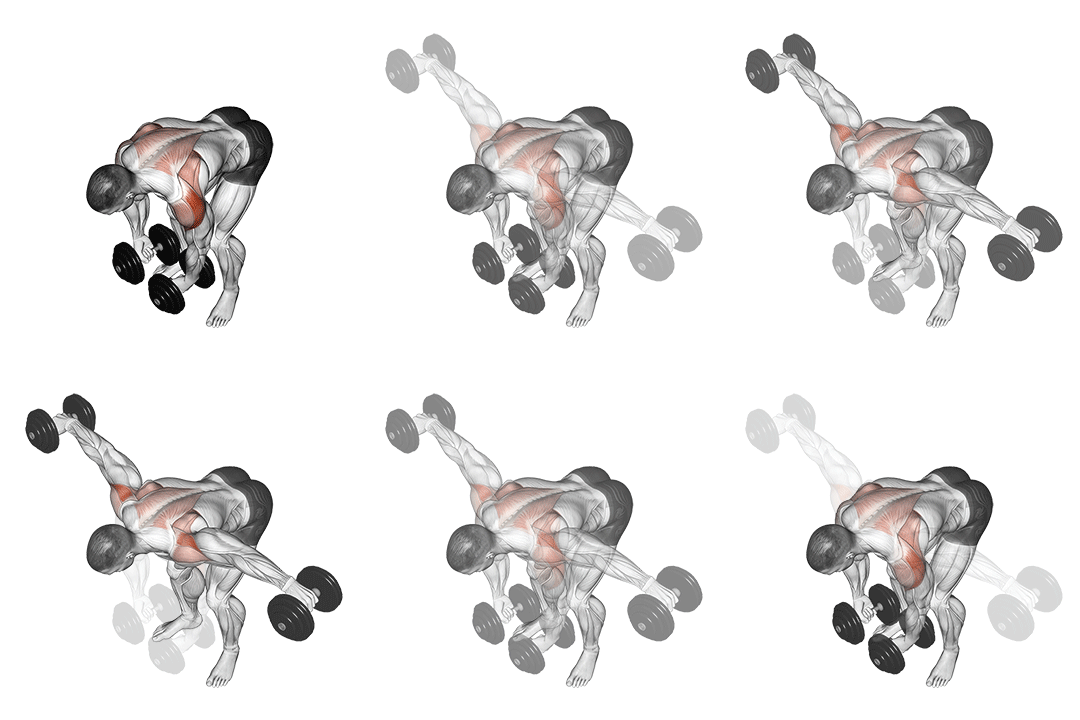
5. Dumbbell Rear Lateral Raise
98.4% MatchHow to perform this exercise
- Stand with your feet shoulder-width apart and hold a dumbbell in each hand, palms facing your body.
- Bend your knees slightly and hinge forward at the hips, keeping your back straight and core engaged.
- Raise your arms out to the sides, keeping a slight bend in your elbows, until they are parallel to the floor.
- Pause for a moment at the top, then slowly lower your arms back down to the starting position.
- Repeat for the desired number of repetitions.
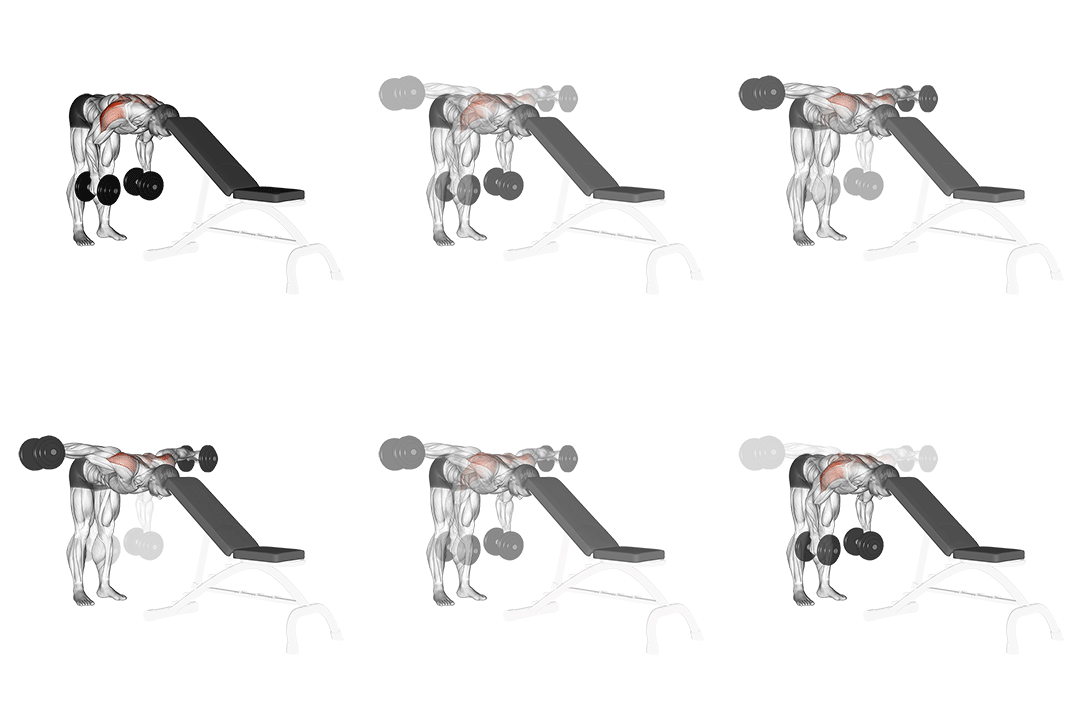
6. Dumbbell Rear Lateral Raise (support Head)
98.4% MatchHow to perform this exercise
- Stand with your feet shoulder-width apart and hold a dumbbell in each hand.
- Bend your knees slightly and hinge forward at the hips, keeping your back straight.
- Raise your arms out to the sides, keeping a slight bend in your elbows, until they are parallel to the ground.
- Pause for a moment at the top, then slowly lower your arms back down to the starting position.
- Repeat for the desired number of repetitions.
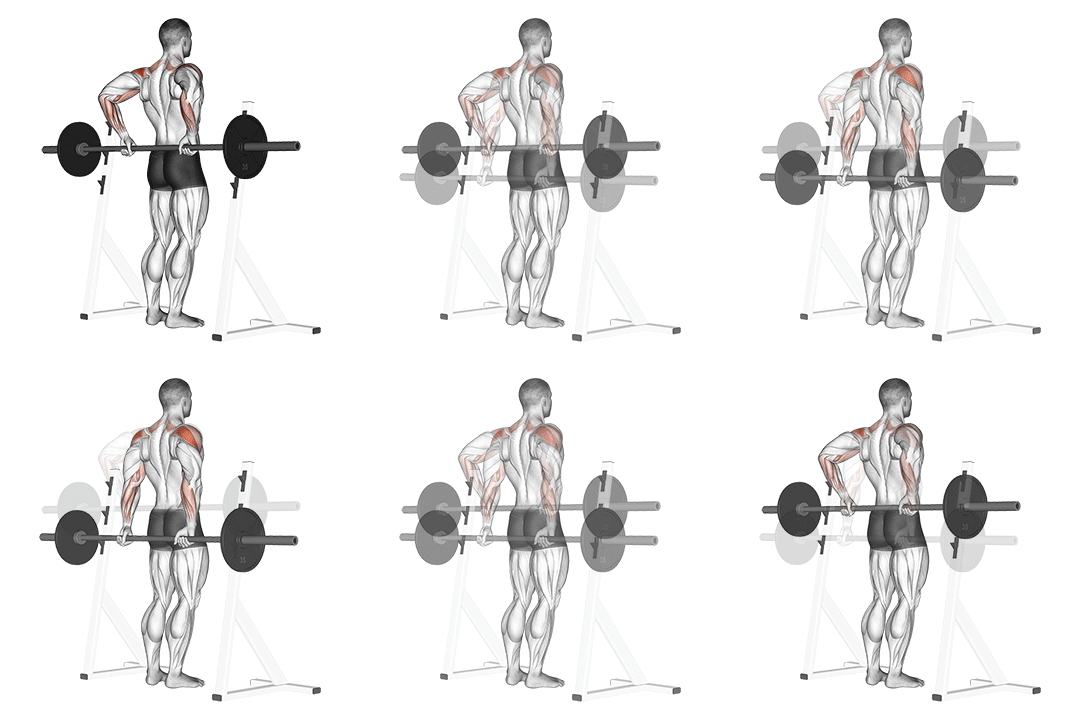
7. Barbell Rear Delt Raise
96% MatchHow to perform this exercise
- Stand with your feet shoulder-width apart and hold a barbell with an overhand grip, palms facing down.
- Bend your knees slightly and hinge forward at the hips, keeping your back straight.
- Raise the barbell out to the sides, keeping your arms straight, until they are parallel to the ground.
- Pause for a moment at the top, then slowly lower the barbell back to the starting position.
- Repeat for the desired number of repetitions.
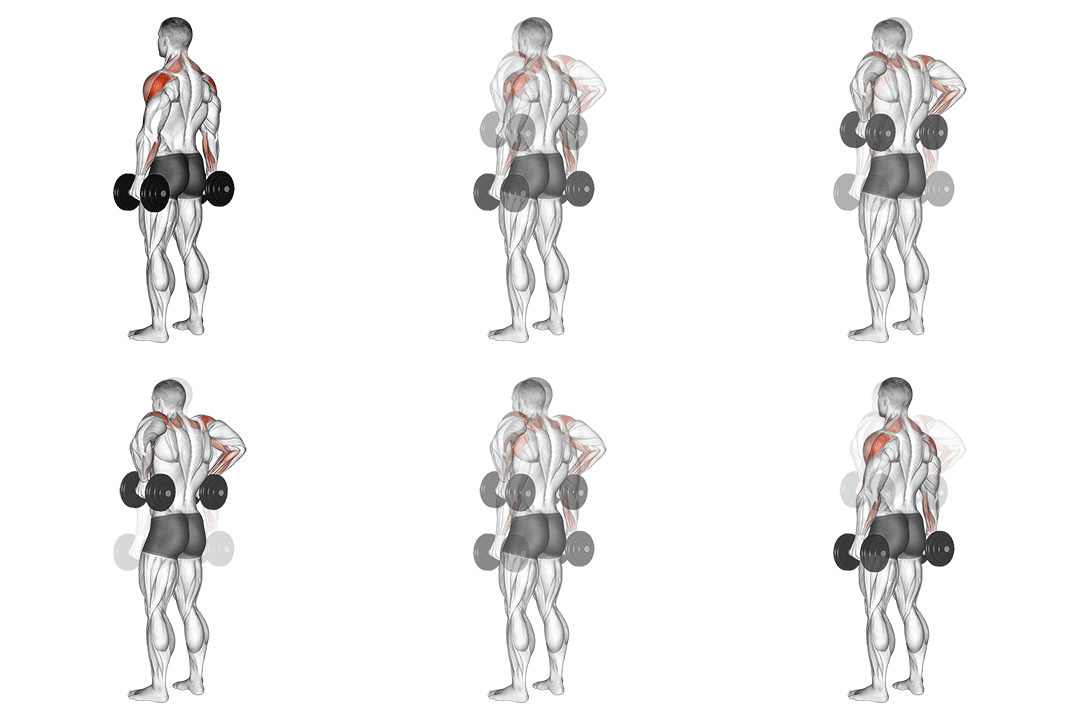
8. Dumbbell Rear Delt Raise
95.2% MatchHow to perform this exercise
- Stand with your feet shoulder-width apart and hold a dumbbell in each hand, palms facing your body.
- Bend your knees slightly and hinge forward at the hips, keeping your back straight.
- Raise your arms out to the sides, keeping a slight bend in your elbows, until they are parallel to the floor.
- Pause for a moment at the top, then slowly lower your arms back down to the starting position.
- Repeat for the desired number of repetitions.
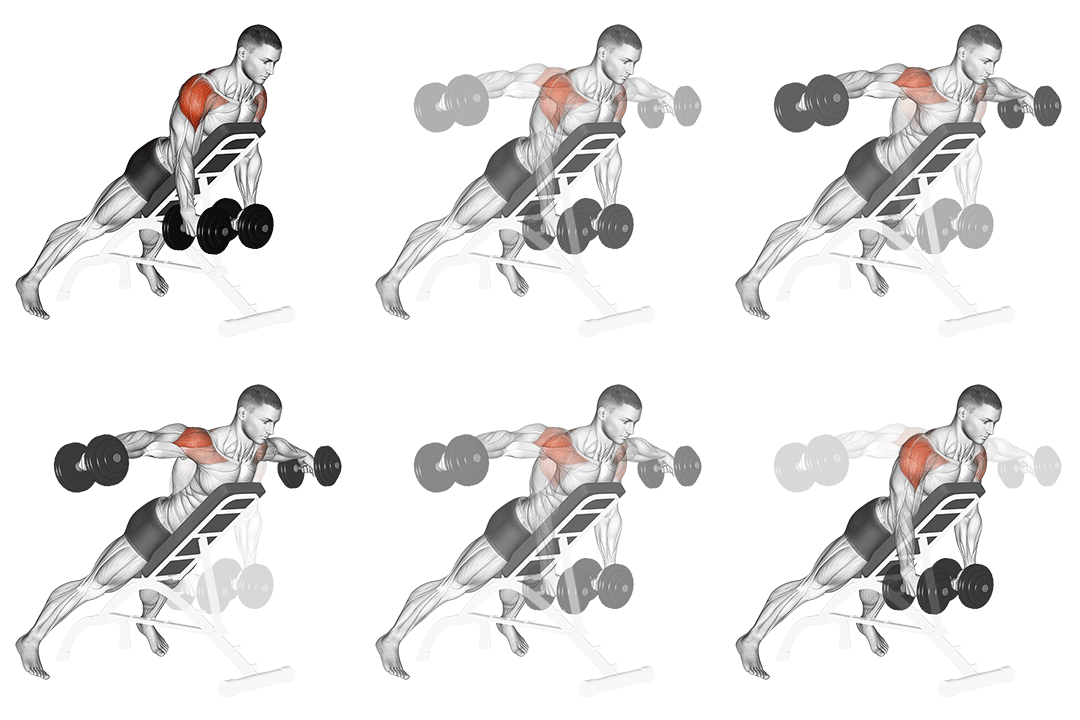
9. Dumbbell Incline Rear Lateral Raise
90.4% MatchHow to perform this exercise
- Set up an incline bench at a 45-degree angle.
- Sit on the bench with your chest against the backrest and hold a dumbbell in each hand.
- Extend your arms straight down with your palms facing each other.
- Keeping a slight bend in your elbows, raise your arms out to the sides until they are parallel to the ground.
- Pause for a moment at the top, then slowly lower your arms back down to the starting position.
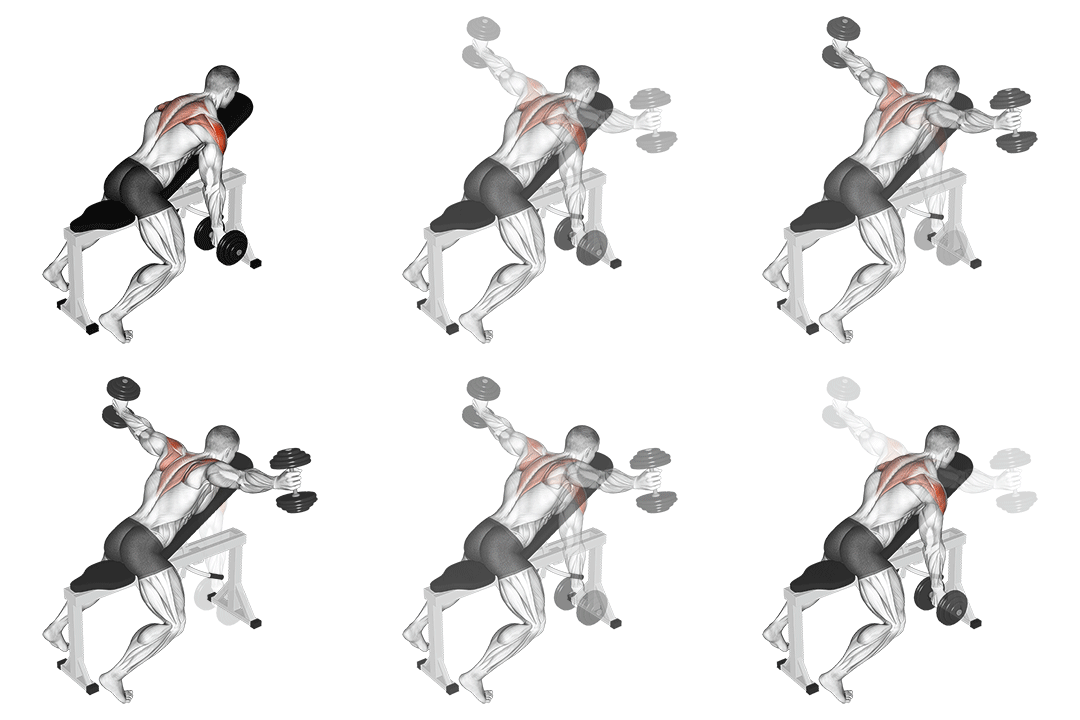
10. Dumbbell Incline T-raise
90.4% MatchHow to perform this exercise
- Set an incline bench to a 45-degree angle and sit on it with a dumbbell in each hand, palms facing inwards.
- Lean forward and let your arms hang straight down, perpendicular to the floor.
- Keeping your arms straight, raise them out to the sides until they are parallel to the floor, forming a 'T' shape with your body.
- Pause for a moment at the top, then slowly lower your arms back down to the starting position.
- Repeat for the desired number of repetitions.
Why You Might Need a Sled Reverse Flye Alternative
You may substitute the sled reverse flye for several reasons: lack of access to a sled, shoulder pain with loaded horizontal abduction, or a desire to vary stimulus. Alternatives let you preserve posterior deltoid activation while altering load type, range of motion, or stabilization demands. For example, a chest-supported rear delt row reduces lower-back and trap involvement, cue a flat chest on an incline bench and pull through the elbows to maximize rear-delt recruitment. Bands and dumbbells let you change resistance curve and scapular mechanics, so you can reduce shear at the GH joint and emphasize pure horizontal abduction.
How to Choose the Right Substitute
Pick a substitute by matching the primary movement (horizontal abduction) and the desired training variable: load, stability, or range of motion. If you lack equipment, choose band pull-aparts or bodyweight Y/T raises; cue a slight elbow bend and squeeze the rear delts for 1–2 seconds. If you want higher loading with less lumbar stress, use chest-supported dumbbell reverse flyes and set the bench to a 30–45° incline so you maintain scapular retraction. Prioritize exercises that limit upper-trap elevation and encourage external rotation to keep emphasis on the posterior deltoid.
Frequently Asked Questions
What muscles does Sled Reverse Flye work?
The sled reverse flye primarily targets the posterior deltoid and assists scapular retraction via the rhomboids and middle trapezius. It produces horizontal abduction of the shoulder, so cue pulling through the elbow to maximize rear-delt activation and limit upper-trap dominance.
What is the best bodyweight alternative to Sled Reverse Flye?
Band pull-aparts are the best bodyweight-compatible alternative for rear-delt isolation; they reproduce horizontal abduction and scapular retraction. Cue a slow, controlled spread with the hands at shoulder height, lead with the elbows, and pause at full retraction to feel the posterior delts engaging.
Can I build muscle without doing Sled Reverse Flye?
Yes. You can build posterior deltoid mass using alternatives like bent-over dumbbell reverse flyes, chest-supported rows, and face pulls that maintain the same movement pattern. Focus on progressive overload, strict technique (hinge at hips, maintain neutral spine), and full range of motion to ensure consistent muscle activation.
More Exercise Alternatives
Find Alternatives for Any Exercise
Use the exercise substitution finder to compare ranked alternatives for your available equipment and training preference.
Try the Exercise Substitution Finder →