

10 Best Smith Machine Bent Over Row Alternatives for Limited Equipment
If you can’t use the Smith Machine bent-over row, swap to barbell bent-over rows, single-arm dumbbell rows, chest-supported rows, seated cable rows, or inverted rows to target the middle back. Hinge at the hips, keep a neutral spine, and pull by retracting the scapula and driving the elbow toward the hip to maximize rhomboid and mid-trapezius activation.
Original Exercise: Smith Machine Bent Over Row
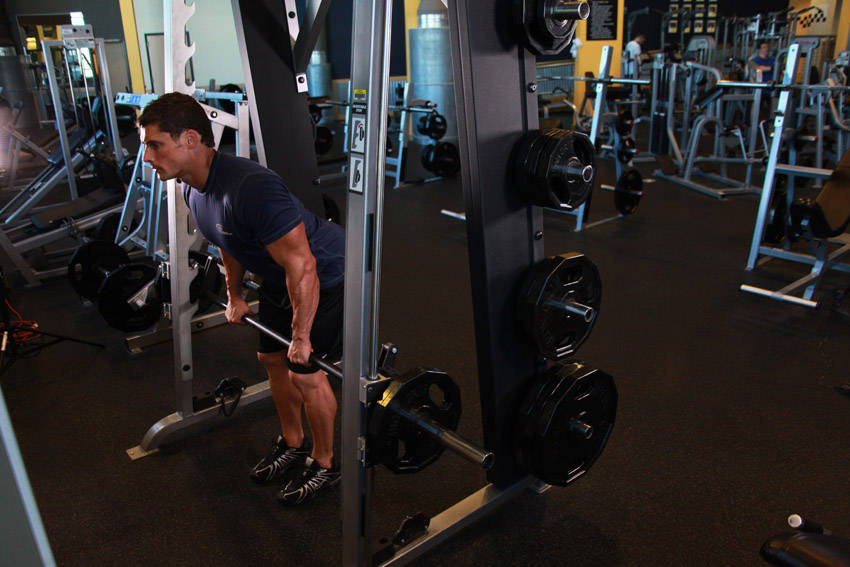
How to Perform Smith Machine Bent Over Row
- Set the barbell attached to the smith machine to a height that is about 2 inches below your knees.
- Bend your knees slightly and bring your torso forward, by bending at the waist, while keeping the back straight until it is almost parallel to the floor. Tip: Make sure that you keep the head up.
- Now grasp the barbell using an overhand (pronated) grip and unlock it from the smith machine rack. Then let it hang directly in front of you as your arms hang extended perpendicular to the floor and your torso. This is your starting position.
- While keeping the torso stationary, lift the barbell as you breathe out, keeping the elbows close to the body and not doing any force with the forearm other than holding the weights. On the top contracted position, squeeze the back muscles and hold for a second.
- Slowly lower the weight again to the starting position as you inhale.
- Repeat for the recommended amount of repetitions.
Pro Tips
- Category: Strength
- Force: Pull
- Movement type: Compound
Ranked Smith Machine Bent Over Row Alternatives
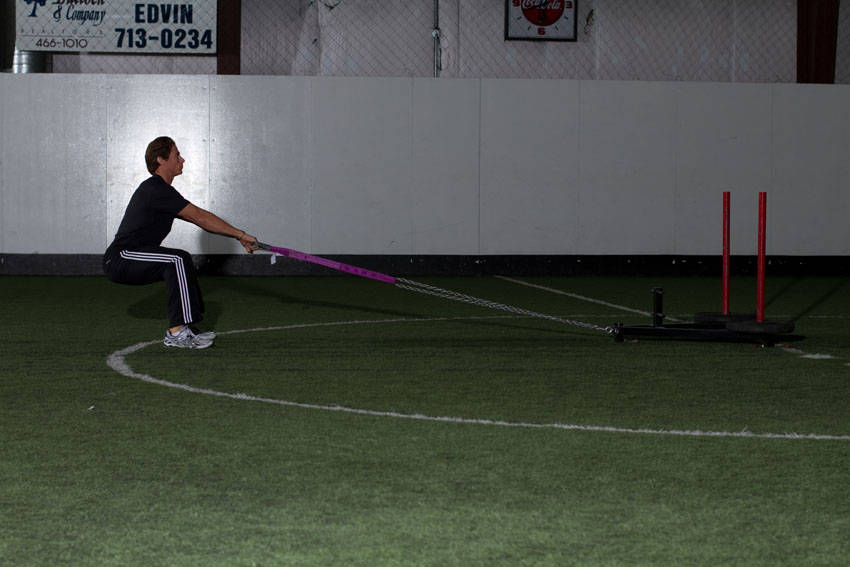
1. Sled Row
78.3% MatchHow to perform this exercise
- Attach dual handles to a sled connected by a rope or chain. Load the sled to an appropriate weight. Face the sled, backing up until there is some tension in the line.
- With a handle in each hand, bend the knees slightly, keep your head and chest up, and begin with your arms extended.
- To initiate the movement, flex the elbow as you retract your shoulder blades, pulling the sled towards you.
- Take a step or two back to get tension in the line and repeat.
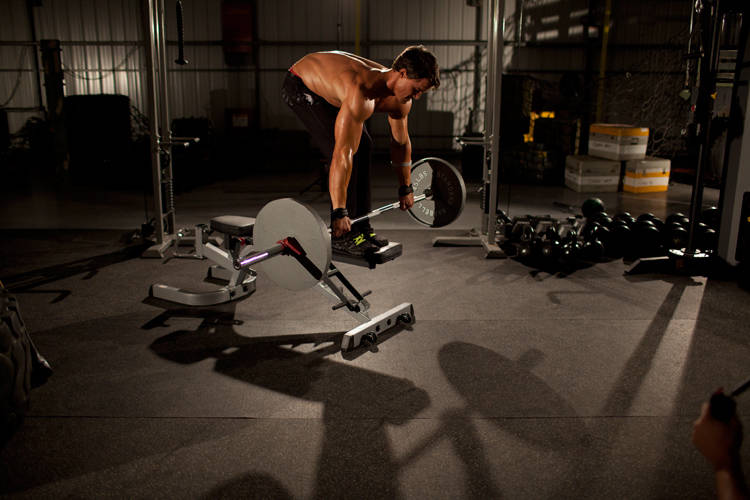
2. Straight Bar Bench Mid Rows
75% MatchHow to perform this exercise
- Place a loaded barbell on the end of a bench. Standing on the bench behind the bar, take a medium, pronated grip. Stand with your hips back and chest up, maintaining a neutral spine. This will be your starting position.
- Row the bar to your torso by retracting the shoulder blades and flexing the elbows. Use a controlled movement with no jerking.
- After a brief pause, slowly return the bar to the starting position, ensuring to go all the way down.
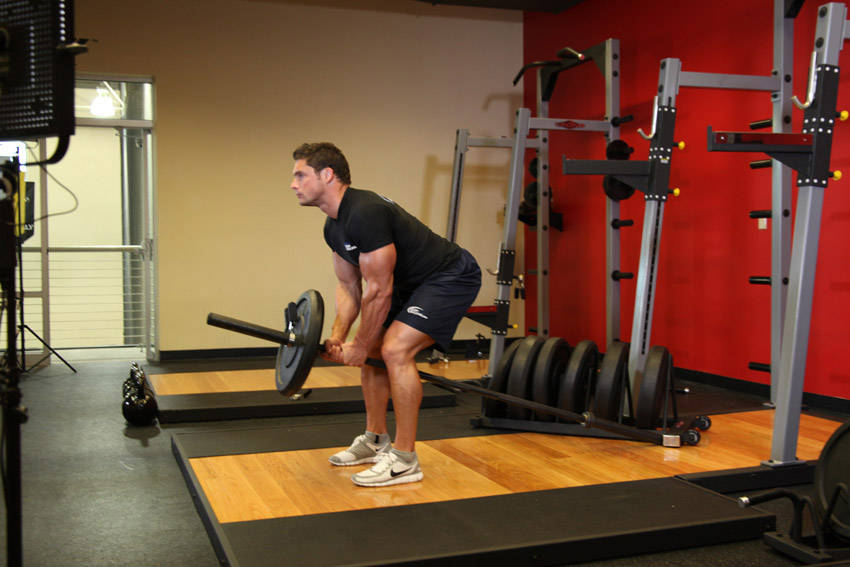
3. Bent Over Two-Arm Long Bar Row
71% MatchHow to perform this exercise
- Put weight on one of the ends of an Olympic barbell. Make sure that you either place the other end of the barbell in the corner of two walls; or put a heavy object on the ground so the barbell cannot slide backward.
- Bend forward until your torso is as close to parallel with the floor as you can and keep your knees slightly bent.
- Now grab the bar with both arms just behind the plates on the side where the weight was placed and put your other hand on your knee. This will be your starting position.
- Pull the bar straight up with your elbows in (to maximize back stimulation) until the plates touch your lower chest. Squeeze the back muscles as you lift the weight up and hold for a second at the top of the movement. Breathe out as you lift the weight. Tip: Use a stirrup or double handle cable attachment by hooking it under the end of the bar.
- Slowly lower the bar to the starting position getting a nice stretch on the lats. Tip: Do not let the plates touch the floor. To ensure the best range of motion, I recommend using small plates (25-lb ones) as opposed to larger plates (like 35-45lb ones).
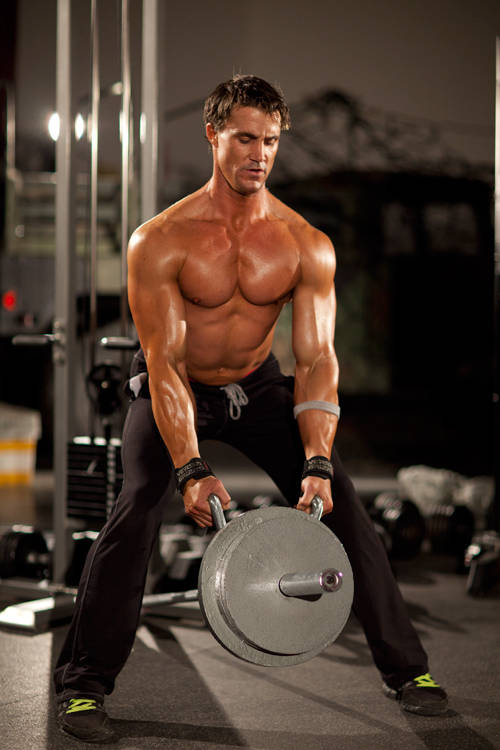
4. T-Bar Row With Handle
71% MatchHow to perform this exercise
- Position a bar into a landmine or in a corner to keep it from moving. Load an appropriate weight onto your end.
- Stand over the bar, and position a Double D row handle around the bar next to the collar. Using your hips and legs, rise to a standing position.
- Assume a wide stance with your hips back and your chest up. Your arms should be extended. This will be your starting position.
- Pull the weight to your upper abdomen by retracting the shoulder blades and flexing the elbows. Do not jerk the weight or cheat during the movement.
- After a brief pause, return to the starting position.
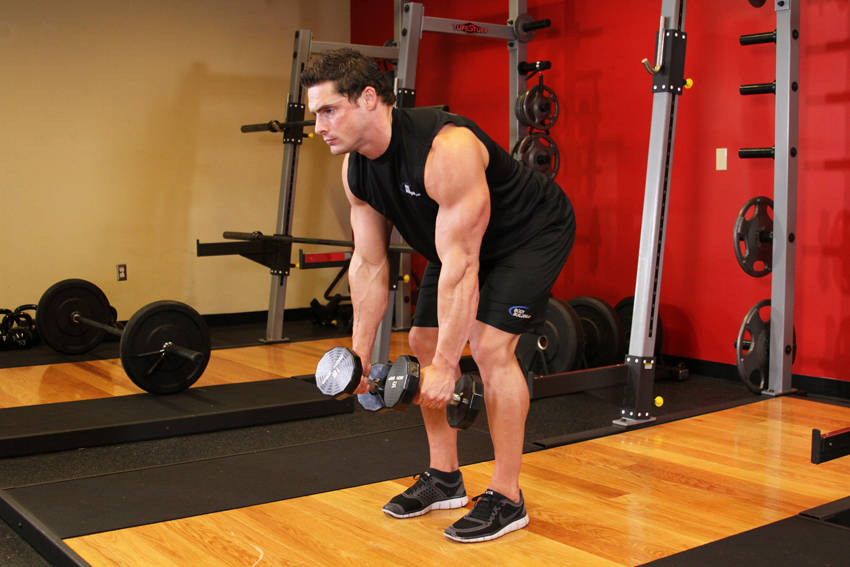
5. Bent Over Two-Dumbbell Row
70.4% MatchHow to perform this exercise
- With a dumbbell in each hand (palms facing your torso), bend your knees slightly and bring your torso forward by bending at the waist; as you bend make sure to keep your back straight until it is almost parallel to the floor. Tip: Make sure that you keep the head up. The weights should hang directly in front of you as your arms hang perpendicular to the floor and your torso. This is your starting position.
- While keeping the torso stationary, lift the dumbbells to your side (as you breathe out), keeping the elbows close to the body (do not exert any force with the forearm other than holding the weights). On the top contracted position, squeeze the back muscles and hold for a second.
- Slowly lower the weight again to the starting position as you inhale.
- Repeat for the recommended amount of repetitions.
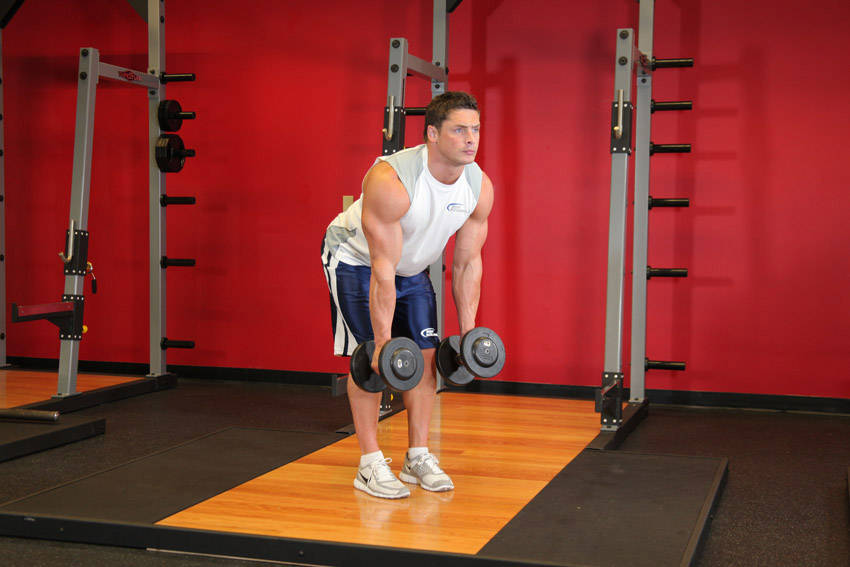
6. Bent Over Two-Dumbbell Row With Palms In
70.4% MatchHow to perform this exercise
- With a dumbbell in each hand (palms facing each other), bend your knees slightly and bring your torso forward, by bending at the waist, while keeping the back straight until it is almost parallel to the floor. Tip: Make sure that you keep the head up. The weights should hang directly in front of you as your arms hang perpendicular to the floor and your torso. This is your starting position.
- While keeping the torso stationary, lift the dumbbells to your side as you breathe out, squeezing your shoulder blades together. On the top contracted position, squeeze the back muscles and hold for a second.
- Slowly lower the weight again to the starting position as you inhale.
- Repeat for the recommended amount of repetitions.
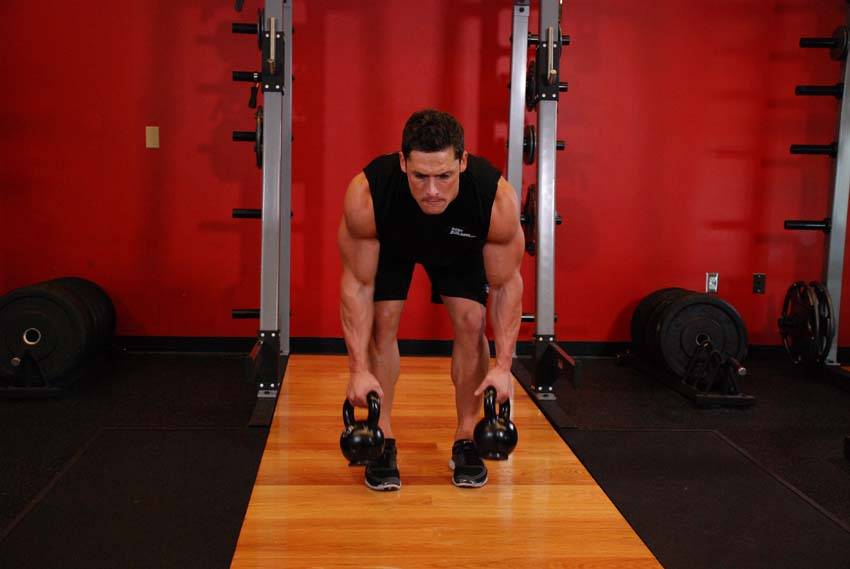
7. Two-Arm Kettlebell Row
70.4% MatchHow to perform this exercise
- Place two kettlebells in front of your feet. Bend your knees slightly and then push your butt out as much as possible as you bend over to get in the starting position.
- Grab both kettlebells and pull them to your stomach, retracting your shoulder blades and flexing the elbows. Keep your back straight. Lower and repeat.
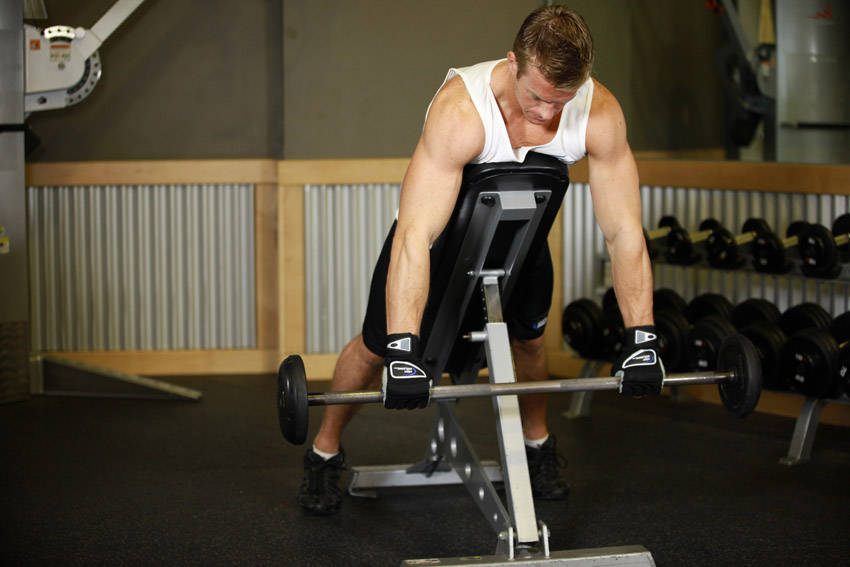
8. Incline Bench Pull
69.9% MatchHow to perform this exercise
- Grab a dumbbell in each hand and lie face down on an incline bench that is set to an incline that is approximately 30 degrees.
- Let the arms hang to your sides fully extended as they point to the floor.
- Turn the wrists until your hands have a pronated (palms down) grip.
- Now flare the elbows out. This will be your starting position.
- As you breathe out, start to pull the dumbbells up as if you are doing a reverse bench press. You will do this by bending at the elbows and bringing the upper arms up as you let the forearms hang. Continue this motion until the upper arms are at the same level as your back. Tip: The elbows will come out to the side and your upper arms and torso should make the letter "T" at the top of the movement. Hold the contraction at the top for a second.
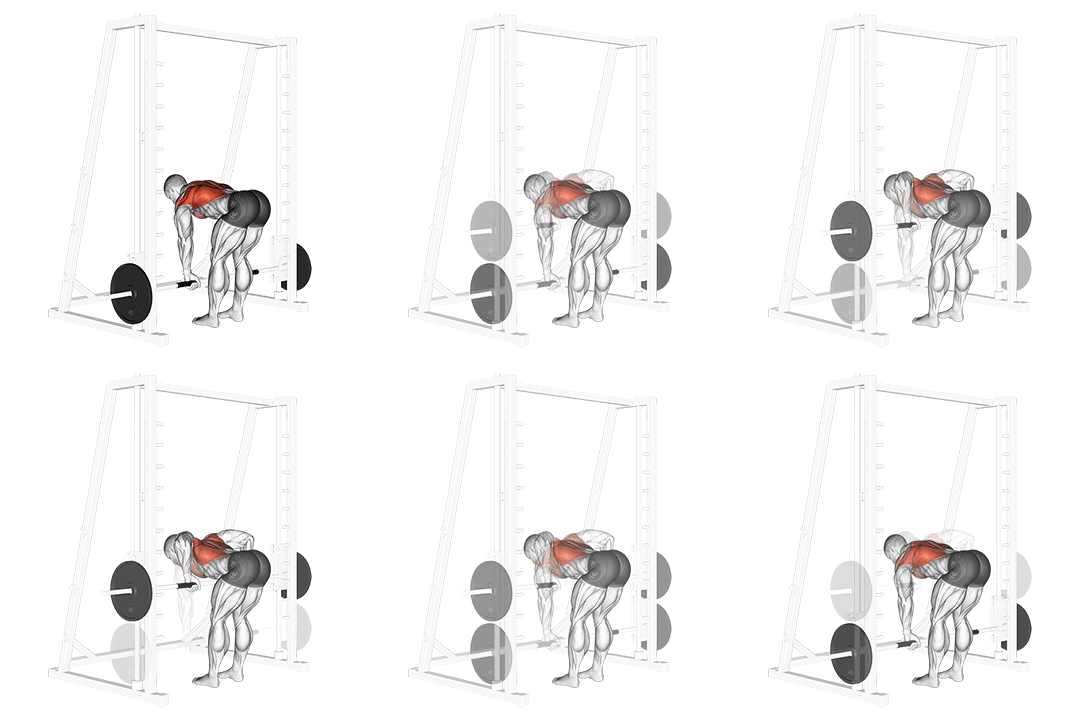
9. Smith Bent Over Row
65.8% MatchHow to perform this exercise
- Set up the smith machine with the bar at hip height.
- Stand facing the bar with your feet shoulder-width apart.
- Bend your knees slightly and hinge forward at the hips, keeping your back straight.
- Grasp the bar with an overhand grip, hands slightly wider than shoulder-width apart.
- Pull the bar towards your lower chest, squeezing your shoulder blades together.
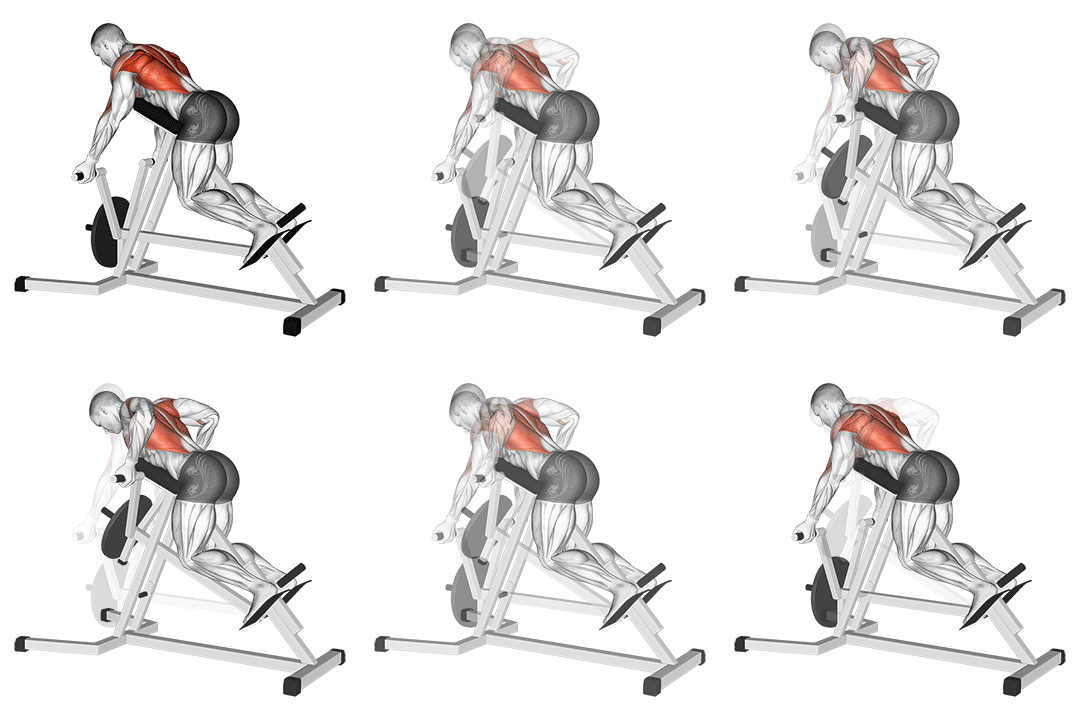
10. Lever Reverse T-bar Row
63.9% MatchHow to perform this exercise
- Adjust the seat height and footplate position on the leverage machine.
- Sit on the machine with your chest against the pad and your feet flat on the footplate.
- Grasp the handles with an overhand grip, slightly wider than shoulder-width apart.
- Keep your back straight and engage your core.
- Pull the handles towards your chest, squeezing your shoulder blades together.
Why You Might Need a Smith Machine Bent Over Row Alternative
You may substitute the Smith Machine bent-over row for several reasons: no access to the machine, lower-back pain from fixed hip angles, or a need for unilateral loading to fix imbalances. The machine’s fixed bar path can limit natural shoulder rotation and reduce scapular protraction/retraction mechanics, so free-weight or supported options let you load the middle back while preserving spinal position. If you have lumbar discomfort, choose chest-supported rows to offload the erector spinae; if you need core and posterior chain demand, pick barbell or dumbbell hinges and cue a tight brace and neutral spine to protect the low back.
How to Choose the Right Substitute
Select a substitute based on equipment, injury history, and the movement pattern you want to train. For maximal middle-back activation and heavy loading, use barbell bent-over rows and cue a hip hinge with a 15-30° knee bend and scapular retraction. For single-arm strength and unilateral correction, choose single-arm dumbbell rows and pull the elbow back and slightly up to engage lats and rhomboids. For reduced spinal loading, prefer chest-supported rows and focus on squeezing the shoulder blades together each rep. Consider grip (pronated vs neutral), range of motion, and your ability to progressively overload the movement.
Frequently Asked Questions
What muscles does Smith Machine Bent Over Row work?
The primary targets are the middle back muscles, latissimus dorsi, rhomboids, and middle trapezius, with secondary involvement from posterior deltoids, biceps, and the erector spinae for stabilization. Cue scapular retraction and drive the elbows toward the hips to emphasize rhomboid and mid-trap activation while protecting the lumbar spine.
What is the best bodyweight alternative to Smith Machine Bent Over Row?
The inverted row is the best bodyweight substitute because it preserves a horizontal pulling vector and strong scapular retraction. Set the bar at waist height, keep your body rigid, pull the chest to the bar, and lead with the elbows while squeezing your shoulder blades together to maximize middle-back activation.
Can I build muscle without doing Smith Machine Bent Over Row?
Yes, you can achieve equal hypertrophy using other row variations if you apply progressive overload and maintain tension on the target muscles. Use heavy barbell rows, weighted pull-ups, or loaded cable rows and focus on full range of motion, controlled eccentric phases, and consistent scapular retraction to drive middle-back growth.
More Exercise Alternatives
Find Alternatives for Any Exercise
Use the exercise substitution finder to compare ranked alternatives for your available equipment and training preference.
Try the Exercise Substitution Finder →