

10 Best Squat To Overhead Reach Alternatives for Home Workouts
If you can’t perform the Squat To Overhead Reach, use other knee-dominant bodyweight moves that load the quads: split squats, step-ups, reverse lunges, bodyweight squats and wall-sits. Cue: sit hips back slightly, then press through the mid-foot and drive the knees forward on the ascent to emphasize quad activation while keeping a neutral spine.
Original Exercise: Squat To Overhead Reach
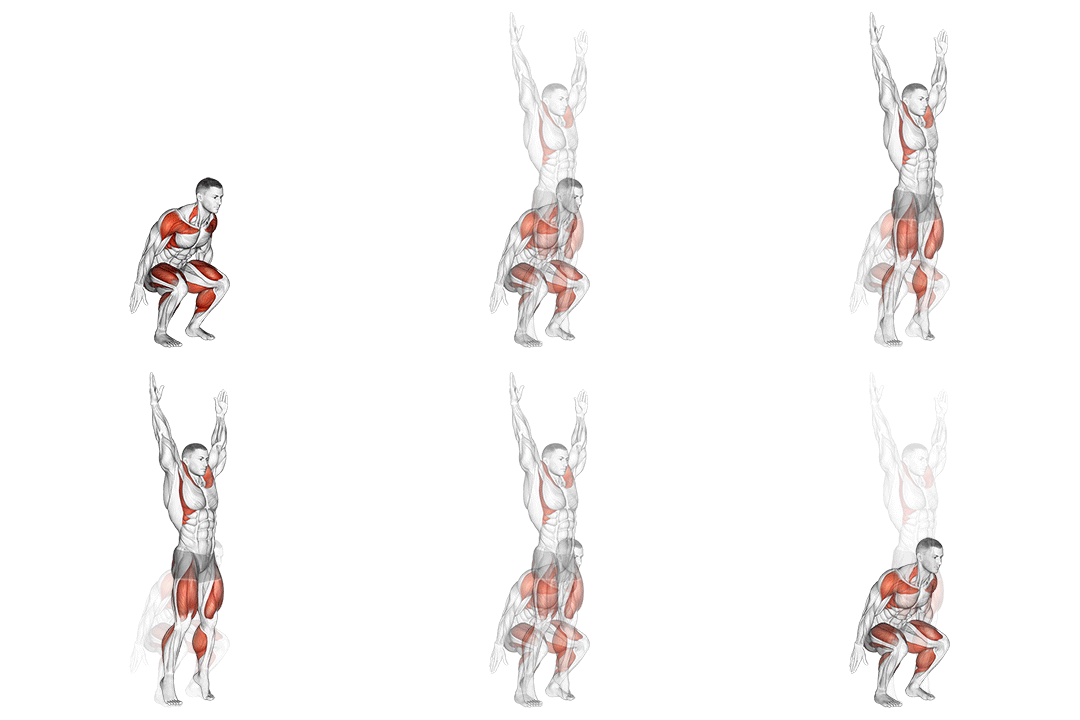
How to Perform Squat To Overhead Reach
- Stand with your feet shoulder-width apart and toes slightly turned out.
- Lower your body down into a squat position by bending your knees and pushing your hips back.
- As you come up from the squat, extend your arms overhead, reaching towards the ceiling.
- Return to the starting position by lowering your arms and bending your knees to squat down again.
- Repeat for the desired number of repetitions.
Best Squat To Overhead Reach Alternatives
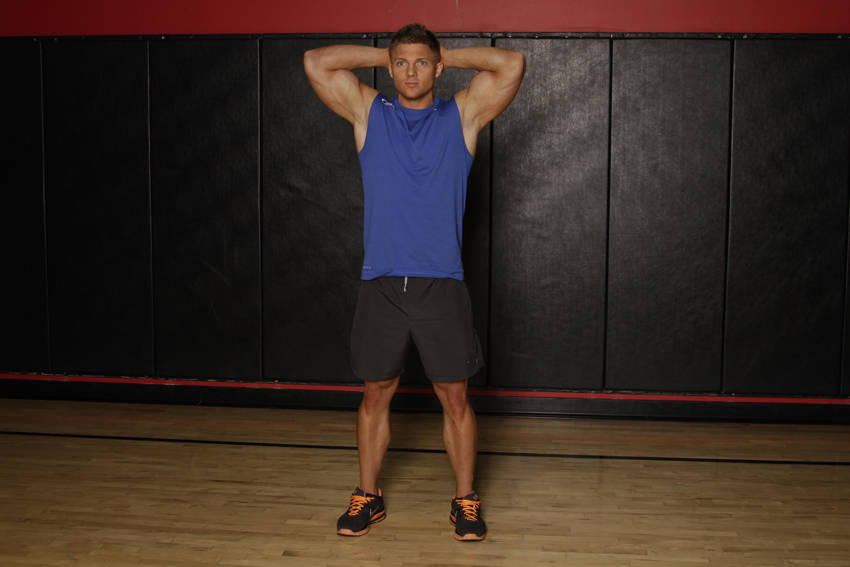
1. Bodyweight Squat
96.6% MatchHow to perform this exercise
- Stand with your feet shoulder width apart. You can place your hands behind your head. This will be your starting position.
- Begin the movement by flexing your knees and hips, sitting back with your hips.
- Continue down to full depth if you are able,and quickly reverse the motion until you return to the starting position. As you squat, keep your head and chest up and push your knees out.
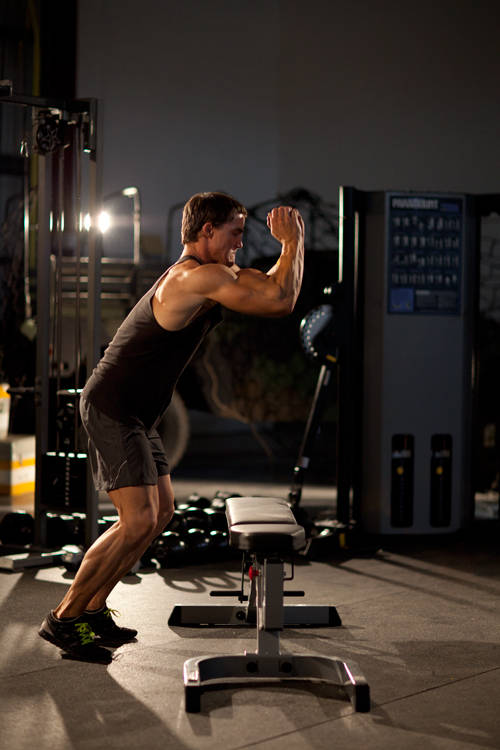
2. Bench Jump
90.2% MatchHow to perform this exercise
- Begin with a box or bench 1-2 feet in front of you. Stand with your feet shoulder width apart. This will be your starting position.
- Perform a short squat in preparation for the jump; swing your arms behind you.
- Rebound out of this position, extending through the hips, knees, and ankles to jump as high as possible. Swing your arms forward and up.
- Jump over the bench, landing with the knees bent, absorbing the impact through the legs.
- Turn around and face the opposite direction, then jump back over the bench.
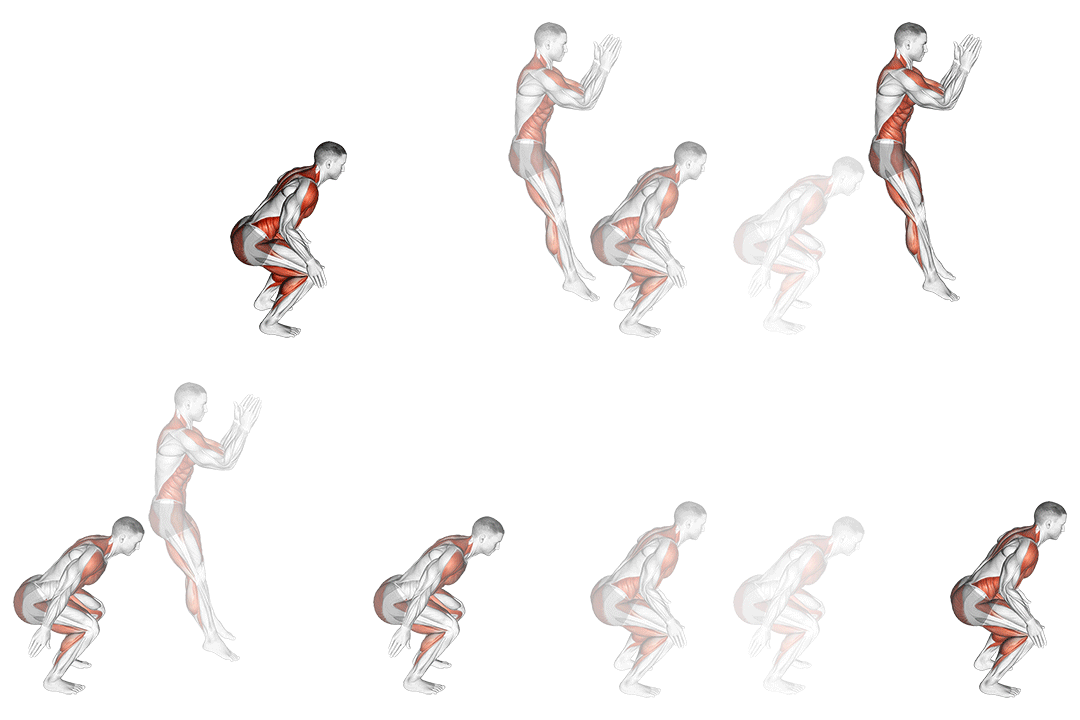
3. Backward Jump
89.4% MatchHow to perform this exercise
- Stand with your feet shoulder-width apart.
- Bend your knees slightly and jump backwards, pushing off with both feet.
- Land softly on the balls of your feet, bending your knees to absorb the impact.
- Repeat for the desired number of repetitions.
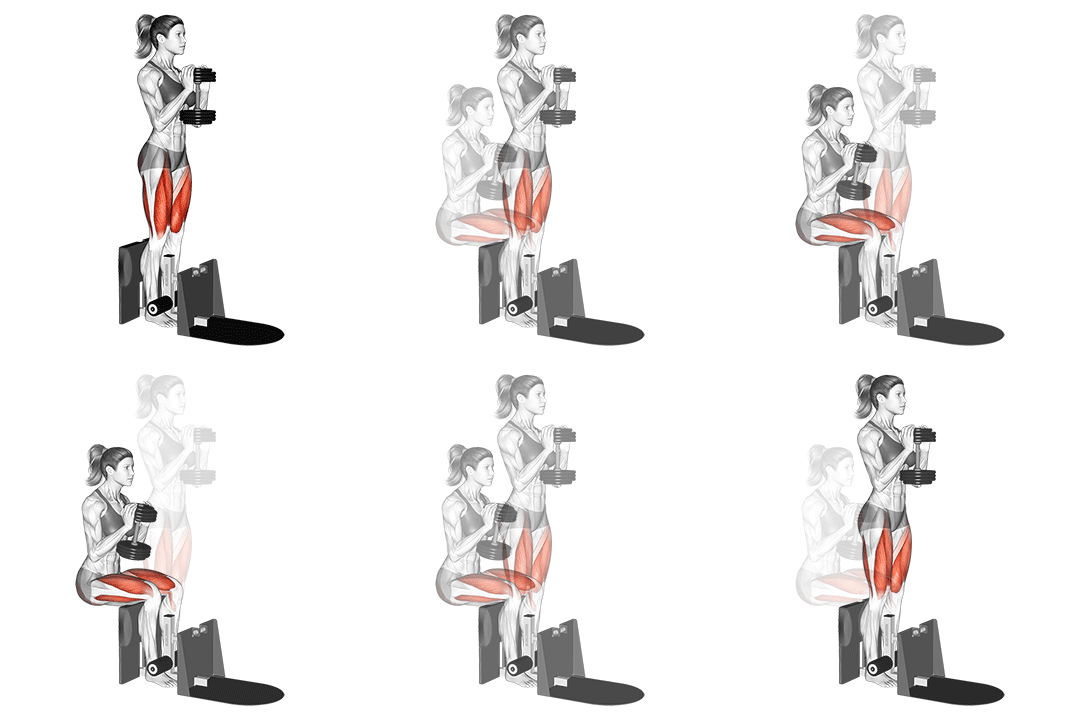
4. Dumbbell Supported Squat
88.7% MatchHow to perform this exercise
- Stand with your feet shoulder-width apart, holding a dumbbell in each hand at your sides.
- Keeping your chest up and core engaged, slowly lower your body down by bending your knees and pushing your hips back.
- Continue lowering until your thighs are parallel to the ground, or as low as you can comfortably go.
- Pause for a moment at the bottom, then push through your heels to return to the starting position.
- Repeat for the desired number of repetitions.
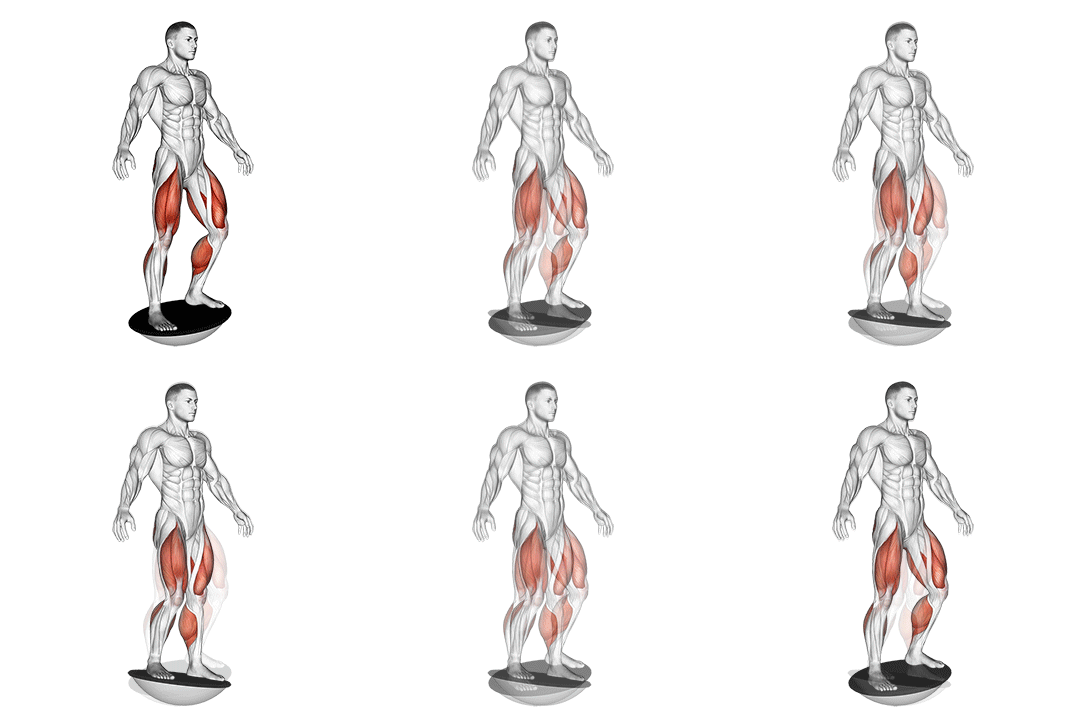
5. Balance Board
88.1% MatchHow to perform this exercise
- Place the balance board on a flat surface.
- Step onto the balance board with one foot, ensuring it is centered.
- Slowly shift your weight onto the foot on the balance board, keeping your core engaged.
- Maintain your balance and stability as you hold the position for a desired amount of time.
- Repeat the exercise with the other foot.
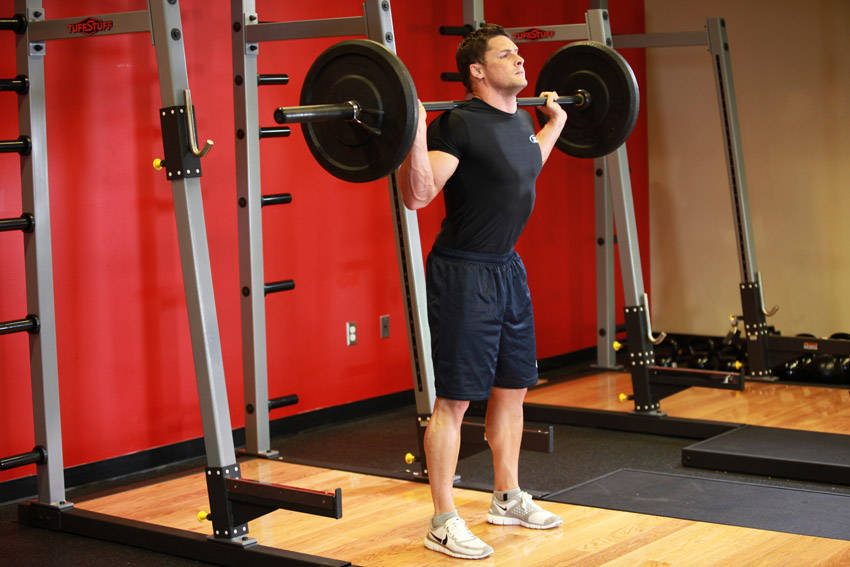
6. Barbell Squat
85.2% MatchHow to perform this exercise
- This exercise is best performed inside a squat rack for safety purposes. To begin, first set the bar on a rack to just below shoulder level. Once the correct height is chosen and the bar is loaded, step under the bar and place the back of your shoulders (slightly below the neck) across it.
- Hold on to the bar using both arms at each side and lift it off the rack by first pushing with your legs and at the same time straightening your torso.
- Step away from the rack and position your legs using a shoulder width medium stance with the toes slightly pointed out. Keep your head up at all times and also maintain a straight back. This will be your starting position. (Note: For the purposes of this discussion we will use the medium stance described above which targets overall development; however you can choose any of the three stances discussed in the foot stances section).
- Begin to slowly lower the bar by bending the knees and hips as you maintain a straight posture with the head up. Continue down until the angle between the upper leg and the calves becomes slightly less than 90-degrees. Inhale as you perform this portion of the movement. Tip: If you performed the exercise correctly, the front of the knees should make an imaginary straight line with the toes that is perpendicular to the front. If your knees are past that imaginary line (if they are past your toes) then you are placing undue stress on the knee and the exercise has been performed incorrectly.
- Begin to raise the bar as you exhale by pushing the floor with the heel of your foot as you straighten the legs again and go back to the starting position.
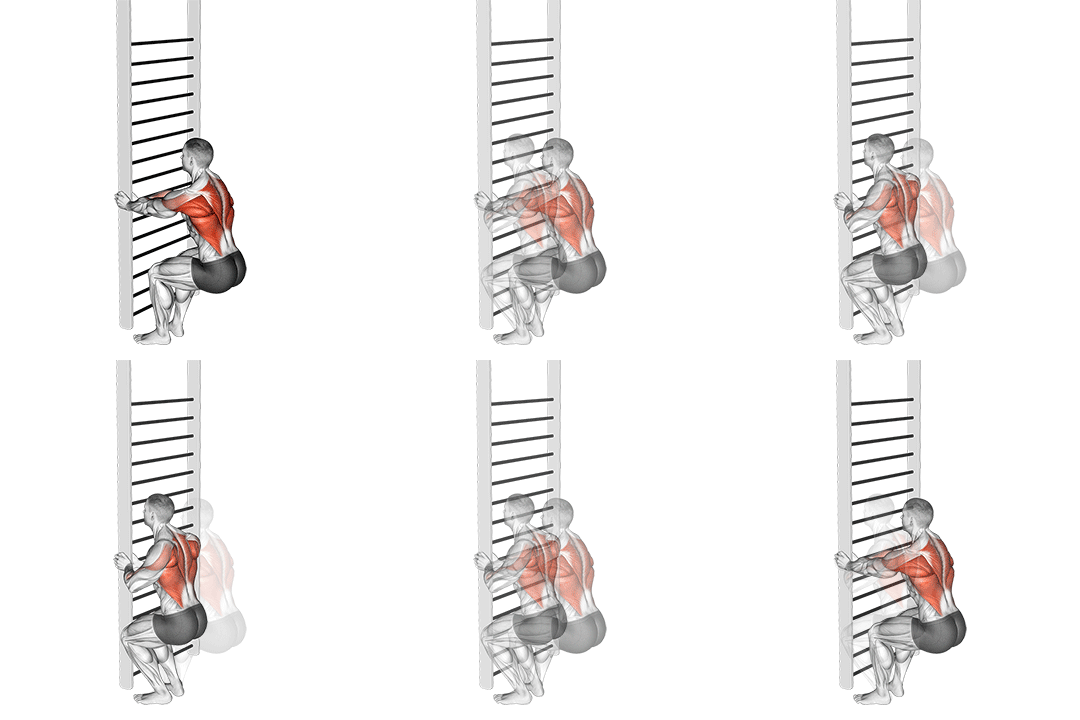
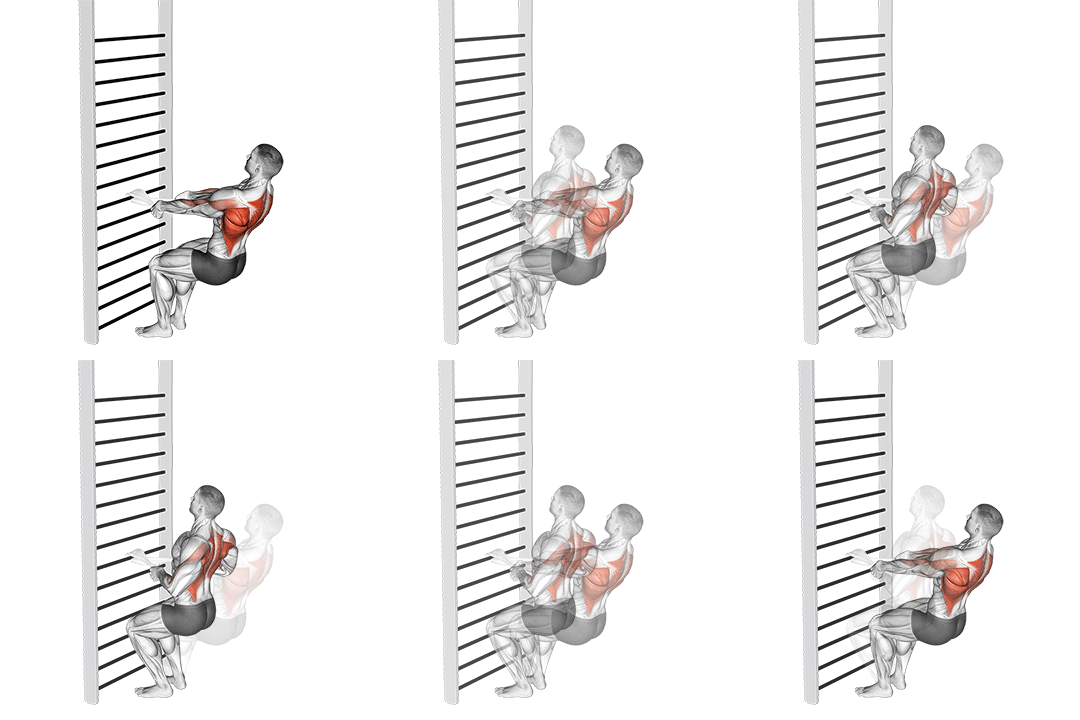
7. Bodyweight Squatting Row
84.4% MatchHow to perform this exercise
- Stand with your feet shoulder-width apart, holding onto a sturdy object or suspension trainer with your arms extended.
- Lower your body into a squat position, keeping your back straight and your knees behind your toes.
- From the squat position, pull your body up towards the object or suspension trainer, squeezing your shoulder blades together.
- Pause for a moment at the top, then slowly lower your body back down to the starting position.
- Repeat for the desired number of repetitions.
8. Bodyweight Squatting Row (with Towel)
82.3% MatchHow to perform this exercise
- Stand with your feet shoulder-width apart, holding a towel in front of you with your palms facing down.
- Bend your knees and lower your body into a squat position, keeping your back straight and your chest up.
- As you lower into the squat, simultaneously pull the towel towards your chest, squeezing your shoulder blades together.
- Pause for a moment at the bottom of the squat, then slowly return to the starting position while extending your arms.
- Repeat for the desired number of repetitions.
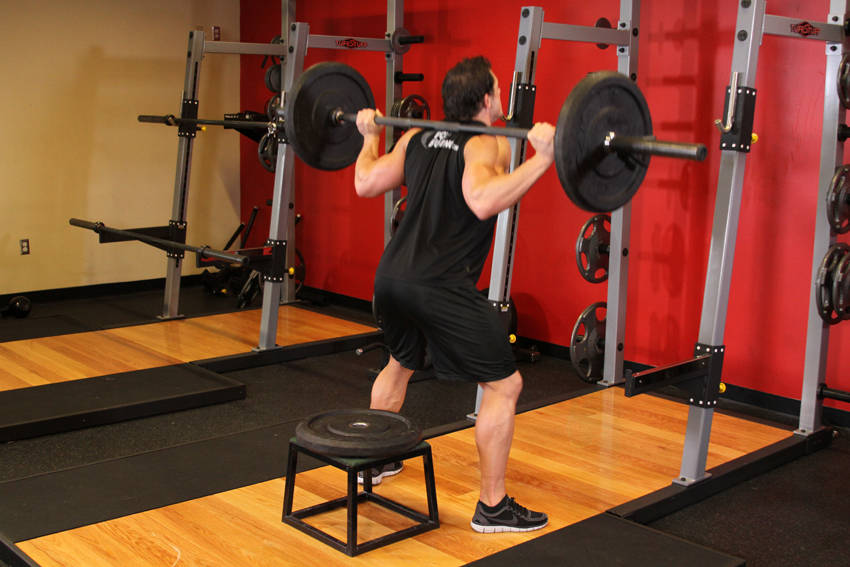
9. Barbell Squat To A Bench
81.2% MatchHow to perform this exercise
- This exercise is best performed inside a squat rack for safety purposes. To begin, first place a flat bench or a box behind you. The flat bench is used to teach you to set your hips back and to hit depth.
- Then, set the bar on a rack that best matches your height. Once the correct height is chosen and the bar is loaded, step under the bar and place the back of your shoulders (slightly below the neck) across it.
- Hold on to the bar using both arms at each side and lift it off the rack by first pushing with your legs and at the same time straightening your torso.
- Step away from the rack and position your legs using a shoulder width medium stance with the toes slightly pointed out. Keep your head up at all times as looking down will get you off balance and also maintain a straight back. This will be your starting position. (Note: For the purposes of this discussion we will use the medium stance described above which targets overall development; however you can choose any of the three stances discussed in the foot stances section).
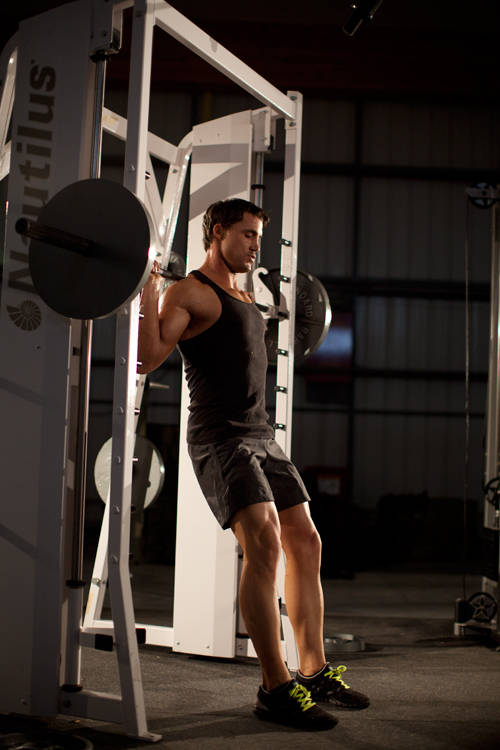
10. Chair Squat
80.7% MatchHow to perform this exercise
- To begin, first set the bar to a position that best matches your height. Once the bar is loaded, step under it and position it across the back of your shoulders.
- Take the bar with your hands facing forward, unlock it and lift it off the rack by extending your legs.
- Move your feet forward about 18 inches in front of the bar. Position your legs using a shoulder width stance with the toes slightly pointed out. Look forward at all times and maintain a neutral or slightly arched spine. This will be your starting position.
- Slowly lower the bar by bending the knees as you maintain a straight posture with the head up. Continue down until the angle between the upper and lower leg breaks 90 degrees.
- Begin to raise the bar as you exhale by pushing the floor with the heels of your feet, extending the knees and returning to the starting position.
Why You Might Need a Squat To Overhead Reach Alternative
You may need substitutes because of shoulder or thoracic mobility limits that make overhead reaching unsafe, low-back pain that increases with spinal extension, lack of space, or simple preference for a more quad-focused movement. The overhead reach adds thoracic extension and shoulder stabilization, which increases upper-back and scapular demand; removing the reach reduces spinal shear and overhead shoulder load. Choose alternatives that preserve the knee-dominant eccentric-to-concentric pattern to maintain quadriceps hypertrophy and force production. Cue for substitutes: keep chest tall, hinge minimally at the hips, and press through the mid-foot so the quads absorb eccentric load and produce concentric knee extension.
How to Choose the Right Substitute
Match the substitute to the Squat To Overhead Reach by considering movement pattern, loading potential, range of motion and joint tolerance. If your goal is quad hypertrophy, pick exercises that bias knee extension like front-loaded split squats or high step-ups to increase vasti activation. If shoulders or thoracic mobility are the limiter, choose wall-sits or step-ups to eliminate overhead demand. For unilateral balance deficits use Bulgarian split squats with a slow eccentric to build single-leg neuromuscular control. Technique cue: ensure the working knee tracks over the second toe and lower under control to maximize quad eccentric loading; adjust intensity with step height, pause length or added resistance.
Frequently Asked Questions
What muscles does Squat To Overhead Reach work?
The exercise primarily targets the quadriceps via knee extension while also recruiting glutes and hamstrings for hip stability and core muscles for torque control. The overhead reach engages thoracic extensors and scapular stabilizers, raising upper-back activation. Cue: drive through the mid-foot and maintain a neutral spine to maximize quad involvement.
What is the best bodyweight alternative to Squat To Overhead Reach?
The Bulgarian split squat is an excellent bodyweight alternative because it preserves knee-dominant loading while adding unilateral stability and greater quad activation on the front leg. Cue: keep the front foot flat, descend until the front thigh is near parallel, then drive through the front mid-foot to emphasize quadriceps concentric force.
Can I build muscle without doing Squat To Overhead Reach?
Yes — you can build quadriceps and lower-body muscle using other knee-dominant movements combined with progressive overload. Use step-ups, split squats, slow-eccentric bodyweight squats and pause reps, increasing volume or external load to stimulate hypertrophy. Cue: prioritize full range of motion and controlled eccentrics to maximize mechanical tension and muscle damage.
More Exercise Alternatives
Find Alternatives for Any Exercise
Use our free tool to discover the best substitute exercises based on your available equipment and goals.
Try the Exercise Substitution Finder →