

10 Best Standing Behind Neck Press Alternatives for Safer Shoulders
If you need an alternative to the Standing Behind Neck Press, switch to front-oriented overhead presses and unilateral landmine or dumbbell variations that load the delts without extreme shoulder external rotation. Try a strict barbell military press or seated dumbbell press — keep wrists neutral and press in the scapular plane to emphasize middle and anterior deltoid activation.
Original Exercise: Standing Behind Neck Press
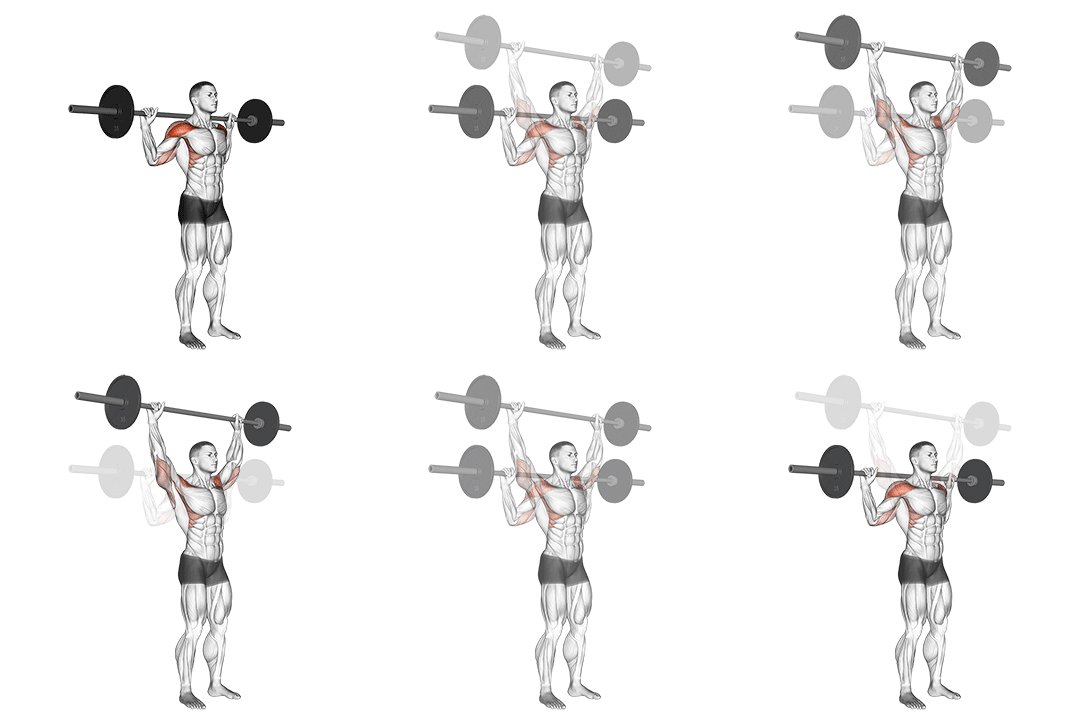
How to Perform Standing Behind Neck Press
- Stand with your feet shoulder-width apart and hold the barbell behind your neck with an overhand grip.
- Keep your back straight and core engaged.
- Press the barbell overhead by extending your arms, fully extending your elbows.
- Pause for a moment at the top, then slowly lower the barbell back down to the starting position.
- Repeat for the desired number of repetitions.
Best Standing Behind Neck Press Alternatives
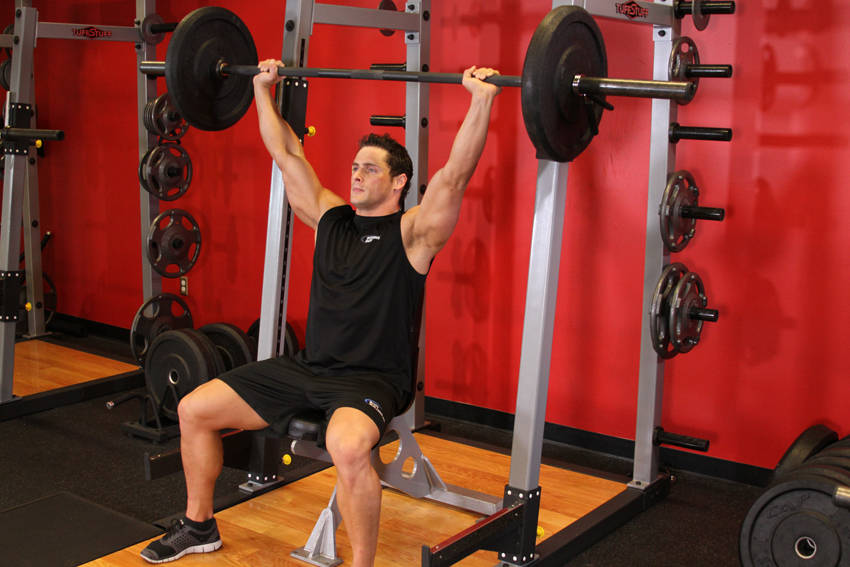
1. Barbell Shoulder Press
99.9% MatchHow to perform this exercise
- Sit on a bench with back support in a squat rack. Position a barbell at a height that is just above your head. Grab the barbell with a pronated grip (palms facing forward).
- Once you pick up the barbell with the correct grip width, lift the bar up over your head by locking your arms. Hold at about shoulder level and slightly in front of your head. This is your starting position.
- Lower the bar down to the shoulders slowly as you inhale.
- Lift the bar back up to the starting position as you exhale.
- Repeat for the recommended amount of repetitions.
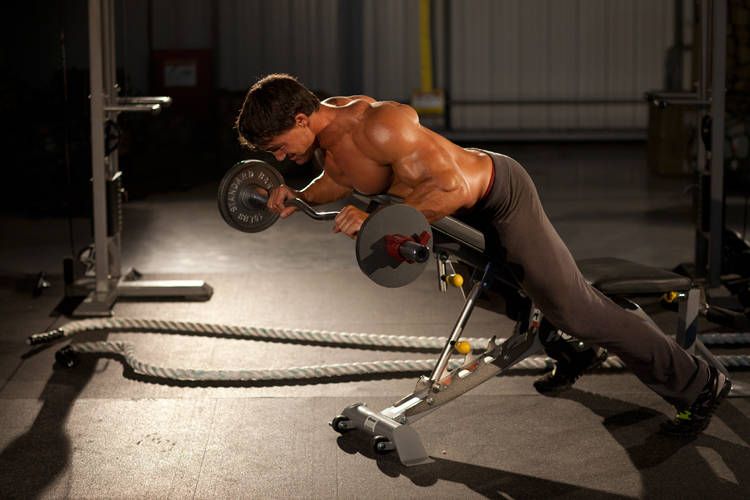
2. Anti-Gravity Press
99.9% MatchHow to perform this exercise
- Place a bar on the ground behind the head of an incline bench.
- Lay on the bench face down. With a pronated grip, pick the barbell up from the floor. Flex the elbows, performing a reverse curl to bring the bar near your chest. This will be your starting position.
- To begin, press the barbell out in front of your head by extending your elbows. Keep your arms parallel to the ground throughout the movement.
- Return to the starting position and repeat to complete the set.
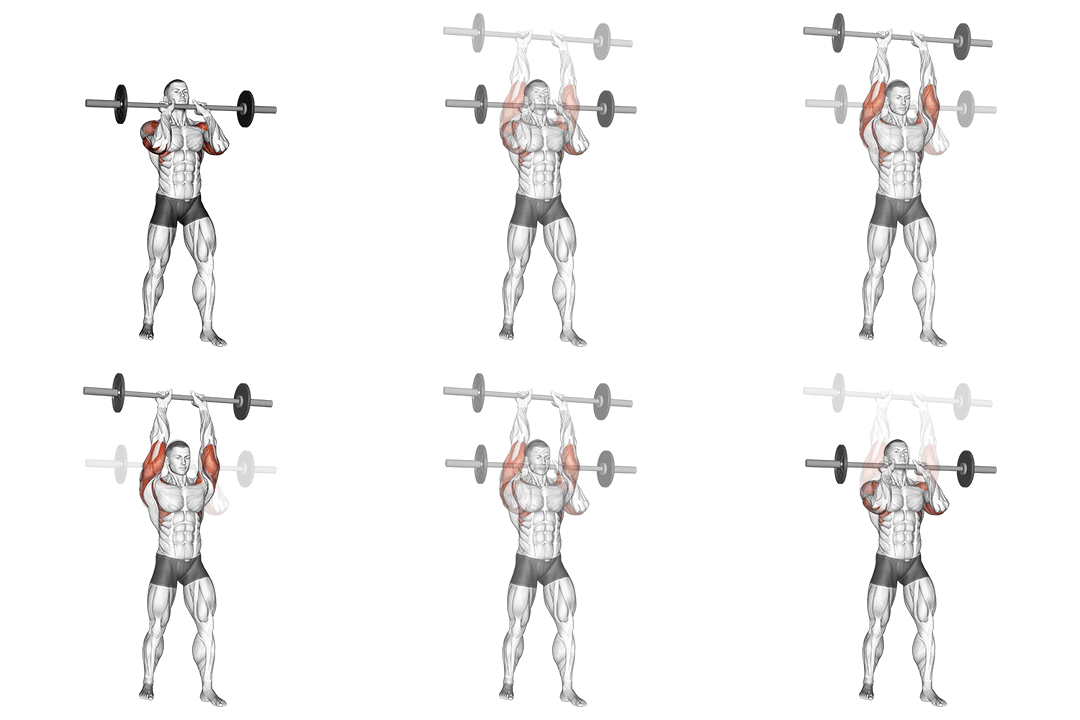
3. Barbell Standing Close Grip Military Press
99.9% MatchHow to perform this exercise
- Stand with your feet shoulder-width apart and hold the barbell with an overhand grip, hands slightly closer than shoulder-width apart.
- Lift the barbell to shoulder height, keeping your elbows close to your body.
- Press the barbell overhead, extending your arms fully.
- Lower the barbell back to shoulder height.
- Repeat for the desired number of repetitions.
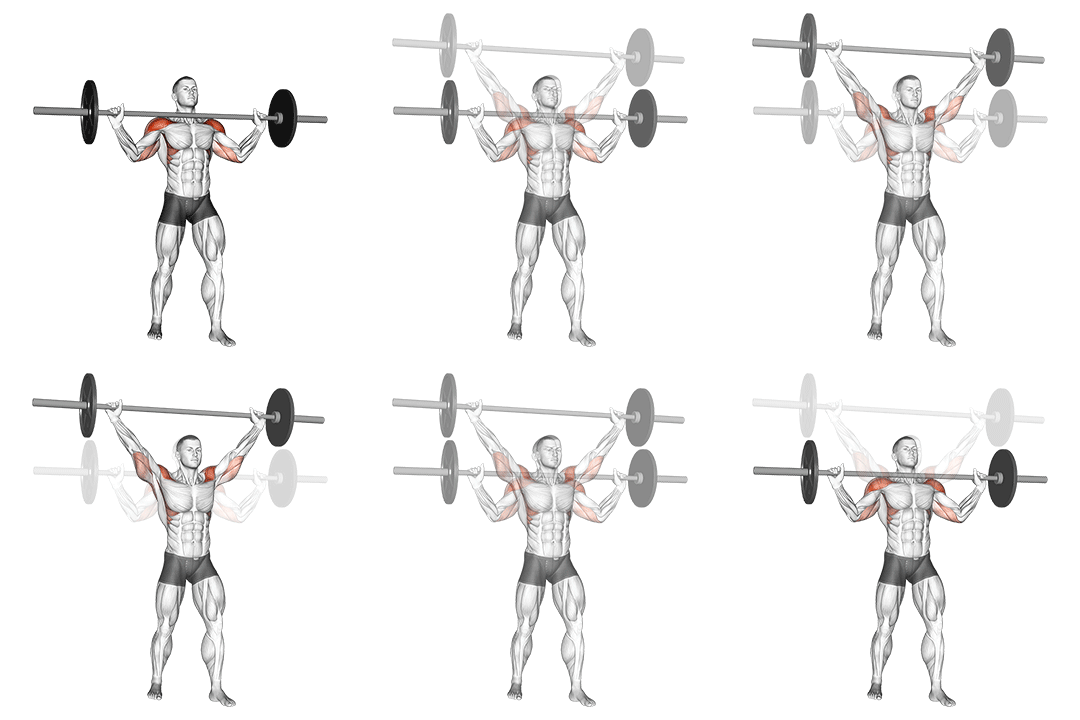
4. Barbell Standing Wide Military Press
98% MatchHow to perform this exercise
- Stand with your feet shoulder-width apart and hold the barbell with an overhand grip, slightly wider than shoulder-width.
- Lift the barbell to shoulder height, keeping your elbows slightly in front of the bar.
- Press the barbell overhead, extending your arms fully.
- Lower the barbell back to shoulder height and repeat for the desired number of repetitions.
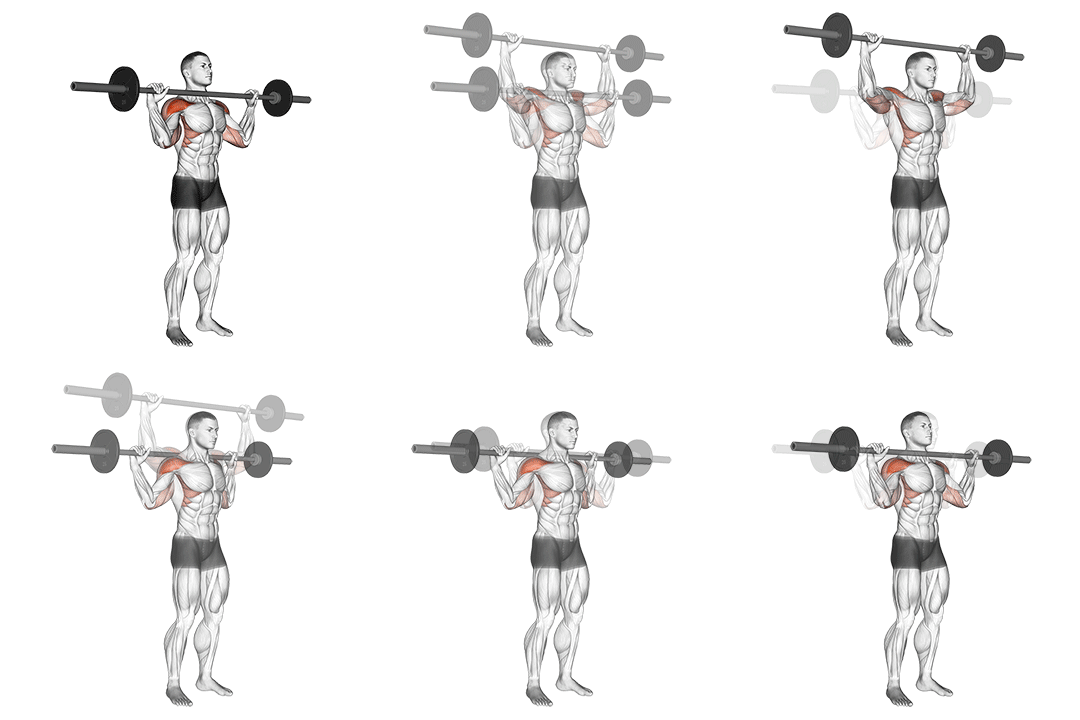
5. Barbell Standing Bradford Press
90.4% MatchHow to perform this exercise
- Stand with your feet shoulder-width apart and hold the barbell in front of your shoulders with an overhand grip.
- Press the barbell overhead, fully extending your arms.
- Lower the barbell back down to the starting position.
- Repeat for the desired number of repetitions.
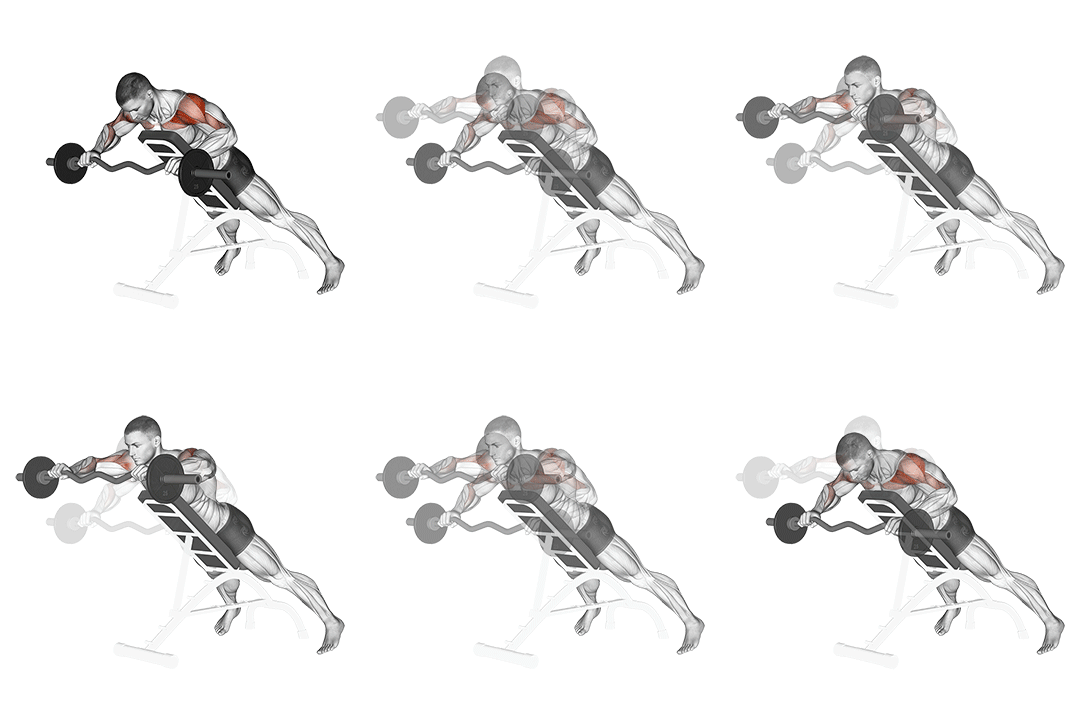
6. Ez Barbell Anti Gravity Press
90% MatchHow to perform this exercise
- Start by standing with your feet shoulder-width apart and holding the ez barbell with an overhand grip.
- Raise the barbell to shoulder height, keeping your elbows slightly bent and your palms facing forward.
- Press the barbell overhead, extending your arms fully.
- Lower the barbell back to shoulder height and repeat for the desired number of repetitions.
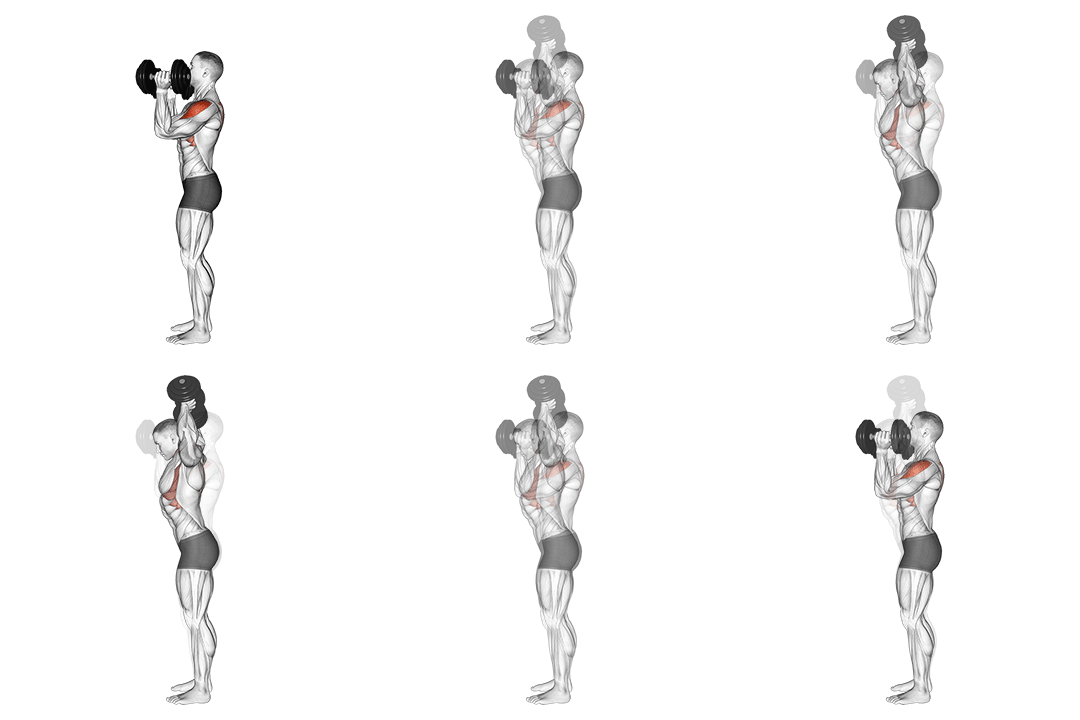
7. Dumbbell Scott Press
90% MatchHow to perform this exercise
- Sit on a bench with a dumbbell in each hand, palms facing forward.
- Raise the dumbbells to shoulder height, with your elbows bent and palms facing forward.
- Press the dumbbells upward until your arms are fully extended.
- Pause for a moment at the top, then slowly lower the dumbbells back to the starting position.
- Repeat for the desired number of repetitions.
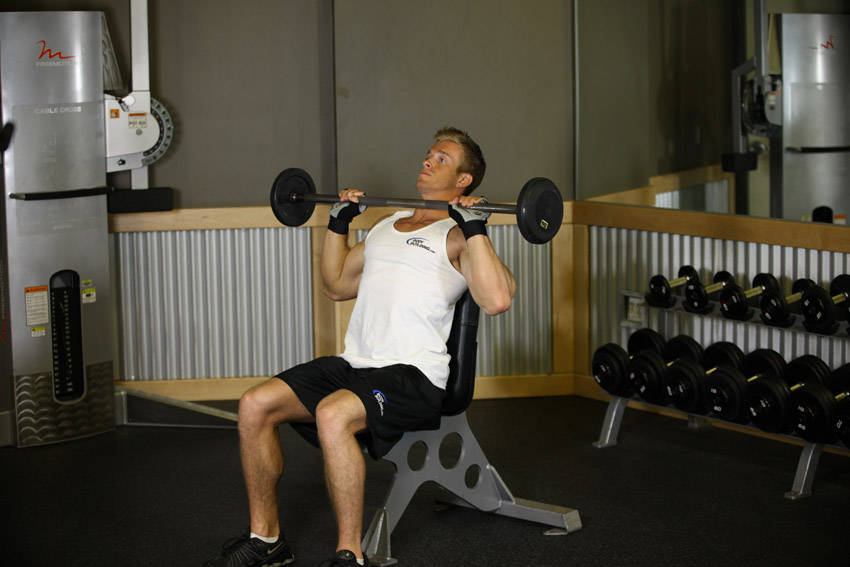
8. Bradford/Rocky Presses
88.7% MatchHow to perform this exercise
- Sit on a Military Press Bench with a bar at shoulder level with a pronated grip (palms facing forward). Tip: Your grip should be wider than shoulder width and it should create a 90-degree angle between the forearm and the upper arm as the barbell goes down. This is your starting position.
- Once you pick up the barbell with the correct grip, lift the bar up over your head by locking your arms.
- Now lower the bar down to the back of the head slowly as you inhale.
- Lift the bar back up to the starting position as you exhale.
- Lower the bar down to the starting position slowly as you inhale. This is one repetition.
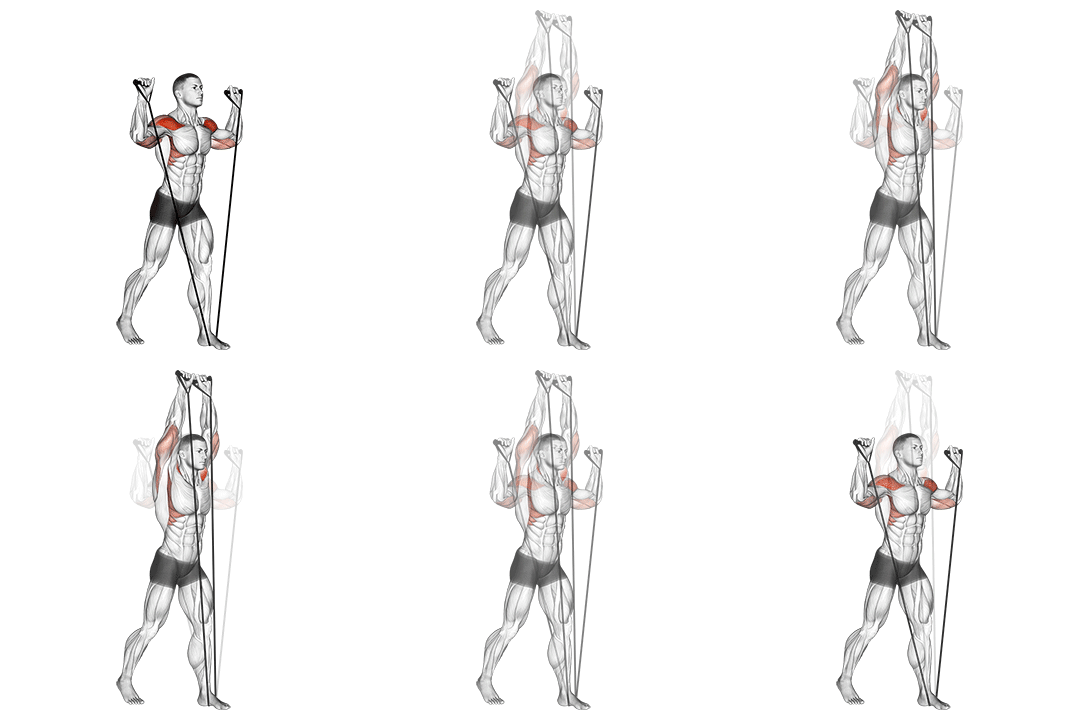
9. Band Shoulder Press
88.7% MatchHow to perform this exercise
- Stand with your feet shoulder-width apart and place the band under your feet.
- Hold the band with your palms facing forward and raise your hands to shoulder height, elbows bent.
- Press the band overhead, fully extending your arms.
- Pause for a moment at the top, then slowly lower the band back to shoulder height.
- Repeat for the desired number of repetitions.
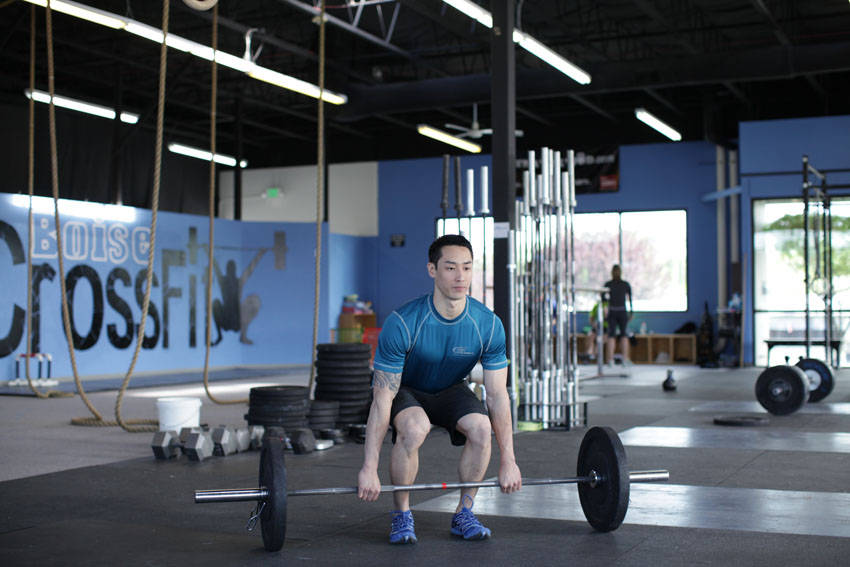
10. Clean And Press
88.5% MatchHow to perform this exercise
- Assume a shoulder-width stance, with knees inside the arms. Now while keeping the back flat, bend at the knees and hips so that you can grab the bar with the arms fully extended and a pronated grip that is slightly wider than shoulder width. Point the elbows out to sides. The bar should be close to the shins. Position the shoulders over or slightly ahead of the bar. Establish a flat back posture. This will be your starting position.
- Begin to pull the bar by extending the knees. Move your hips forward and raise the shoulders at the same rate while keeping the angle of the back constant; continue to lift the bar straight up while keeping it close to your body.
- As the bar passes the knee, extend at the ankles, knees, and hips forcefully, similar to a jumping motion. As you do so, continue to guide the bar with your hands, shrugging your shoulders and using the momentum from your movement to pull the bar as high as possible. The bar should travel close to your body, and you should keep your elbows out.
- At maximum elevation, your feet should clear the floor and you should start to pull yourself under the bar. The mechanics of this could change slightly, depending on the weight used. You should descend into a squatting position as you pull yourself under the bar.
- As the bar hits terminal height, rotate your elbows around and under the bar. Rack the bar across the front of the shoulders while keeping the torso erect and flexing the hips and knees to absorb the weight of the bar.
Why You Might Need a Standing Behind Neck Press Alternative
Many lifters replace the behind-neck press due to shoulder pain, limited thoracic mobility, or gym rules. The behind-neck path forces the humerus into excessive abduction and external rotation, increasing impingement torque and stressing the rotator cuff. Substitutes like the front military press or landmine press keep the humeral head more centered in the glenoid and allow safer scapular upward rotation. Use cues such as “tuck the chin, keep elbows slightly in front of the body, and avoid lifting arms above shoulder plane” to reduce shear on the cuff while still targeting the middle deltoid and upper trap.
How to Choose the Right Substitute
Select a substitute based on your goal, mobility, and available equipment. For max strength pick a strict barbell military press — brace your core, press the bar up while keeping elbows under wrists to drive middle deltoid recruitment. For balanced hypertrophy use seated dumbbell presses to correct unilateral imbalances; keep a neutral wrist and press in the scapular plane to engage both anterior and lateral heads. If you have limited shoulder ROM, choose a landmine or single-arm press to reduce abduction stress while still loading the delts and challenging anti-rotation stability.
Frequently Asked Questions
What muscles does Standing Behind Neck Press work?
The lift primarily targets the middle deltoid and recruits anterior deltoid, upper trapezius, and triceps for lockout. It also requires strong scapular stabilizers and rotator cuff engagement because of the abducted and externally rotated shoulder position.
What is the best bodyweight alternative to Standing Behind Neck Press?
A pike push-up is the most accessible bodyweight substitute; set hips high, lower your forehead toward the floor, and push vertically to mimic overhead pressing. For more loading progress to strict handstand push-ups once you can keep the scapula packed and the spine neutral.
Can I build muscle without doing Standing Behind Neck Press?
Yes. You can build shoulder mass with front-oriented overhead presses, seated dumbbell presses, push presses, and targeted lateral raises while applying progressive overload. Prioritize full range of motion, controlled eccentric phases, and exercises that allow safe scapular mechanics to maximize deltoid activation.
More Exercise Alternatives
Find Alternatives for Any Exercise
Use our free tool to discover the best substitute exercises based on your available equipment and goals.
Try the Exercise Substitution Finder →