

10 Best Standing Military Press Alternatives for When You Can't Press
The Standing Military Press is done standing with a barbell. Ranked closest by our scoring: the Anti-gravity Press, the Barbell Shoulder Press and the Barbell Standing Close Grip Military Press. Three harder versions, the Standing Behind Neck Press, the Standing Barbell Press Behind Neck and the Standing Bradford Press, are listed below as progressions rather than swaps.
Updated Ranked by our 12-factor similarity model How it works
Original Exercise: Standing Military Press
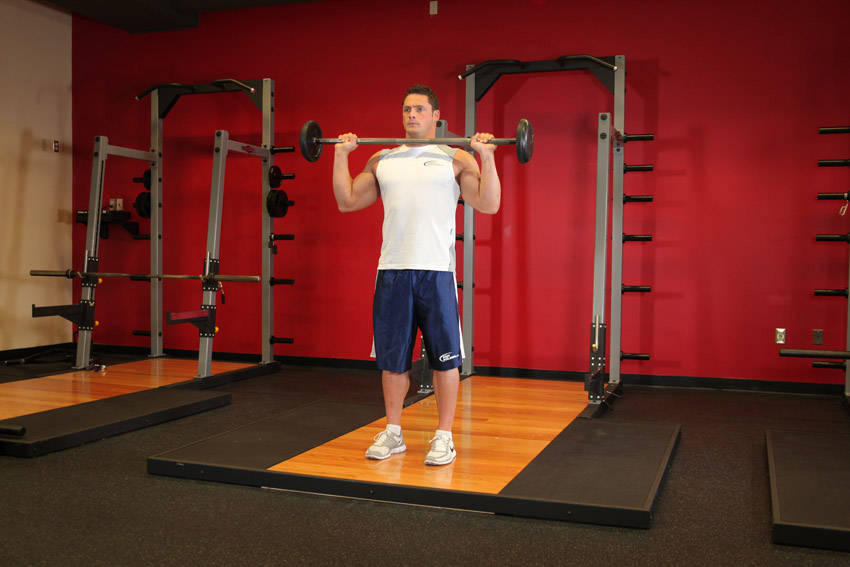
- Primary muscle
- Delts
- Equipment
- Barbell
- Difficulty
- Intermediate
- Type
- Compound
Secondary muscles: Triceps
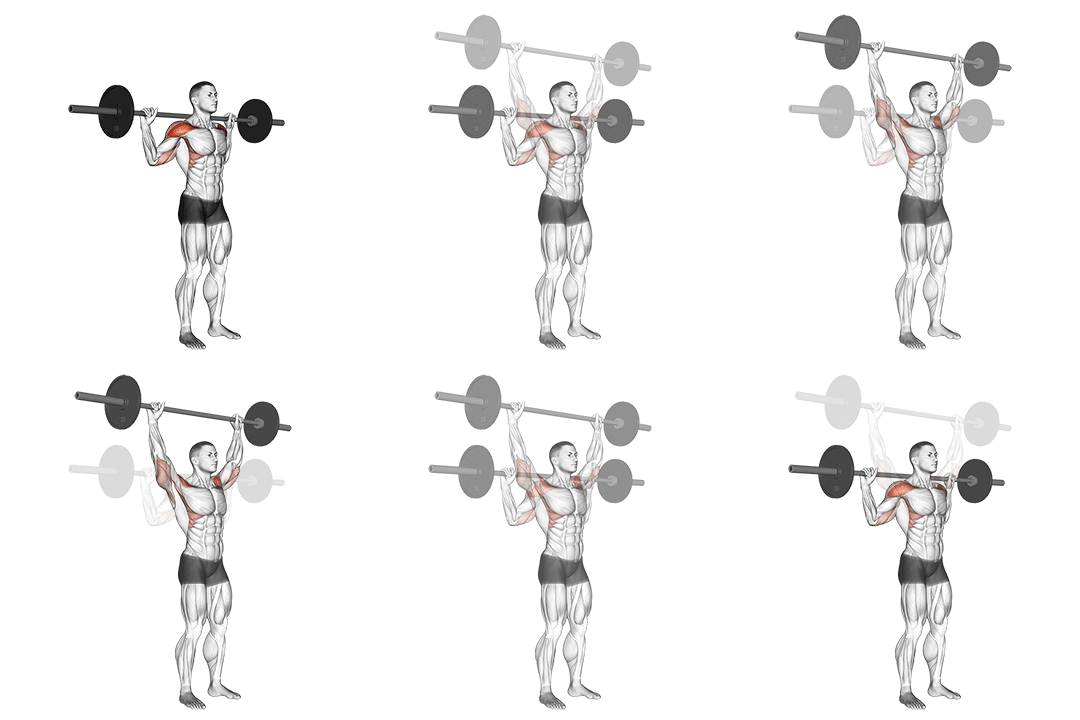
How to perform Standing Military Press
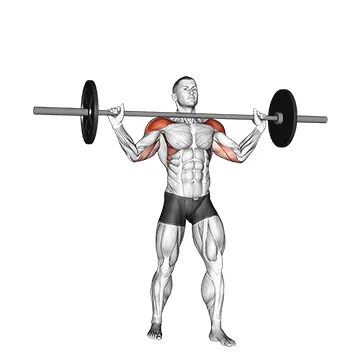
- Start by placing a barbell that is about chest high on a squat rack. Once you have selected the weights, grab the barbell using a pronated (palms facing forward) grip. Make sure to grip the bar wider than shoulder width apart from each other.
- Slightly bend the knees and place the barbell on your collar bone. Lift the barbell up keeping it lying on your chest. Take a step back and position your feet shoulder width apart from each other.
- Once you pick up the barbell with the correct grip length, lift the bar up over your head by locking your arms. Hold at about shoulder level and slightly in front of your head. This is your starting position.
- Lower the bar down to the collarbone slowly as you inhale.
- Lift the bar back up to the starting position as you exhale.
- Repeat for the recommended amount of repetitions.
Ranked Standing Military Press Alternatives
10 substitutes, ranked by how closely each one matches the Standing Military Press on movement pattern, muscles worked, equipment and body position. The higher the score, the less you change. Open "How to perform this exercise" on a card for the steps; every card title links to that exercise's own alternatives page. Harder versions are tagged as progressions and kept out of the top spot even when they score higher.
Best match 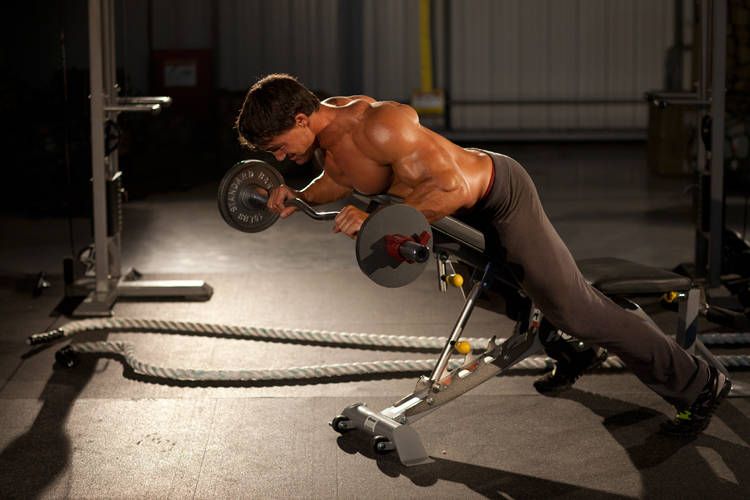
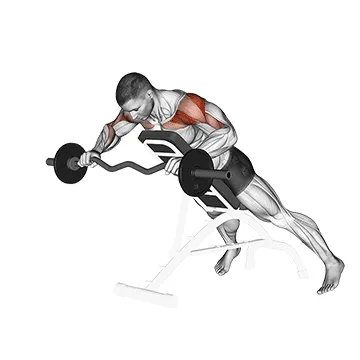
1. Anti-gravity Press
99% match- Delts
- Barbell
- Intermediate
- Compound
It uses the same equipment and still works the delts.
How to perform this exercise
- Place a bar on the ground behind the head of an incline bench.
- Lay on the bench face down. With a pronated grip, pick the barbell up from the floor. Flex the elbows, performing a reverse curl to bring the bar near your chest. This will be your starting position.
- To begin, press the barbell out in front of your head by extending your elbows. Keep your arms parallel to the ground throughout the movement.
- Return to the starting position and repeat to complete the set.
Sets and reps: 3 or 4 sets of 6 to 10 reps.
Why this matches
- Primary muscle: delts, the same as the Standing Military Press
- Equipment: free weights, the same as the Standing Military Press
2. Barbell Shoulder Press
99% match- Delts
- Barbell
- Intermediate
- Compound
How to perform this exercise
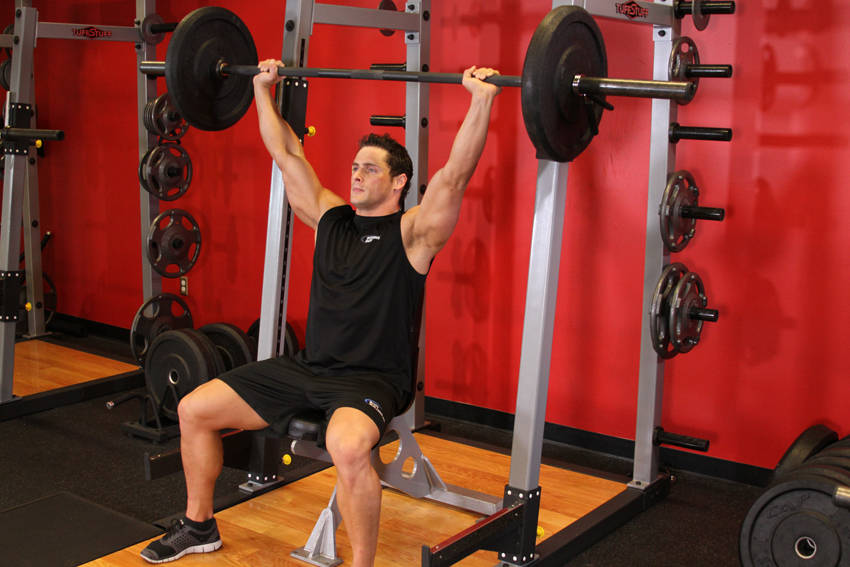
- Sit on a bench with back support in a squat rack. Position a barbell at a height that is just above your head. Grab the barbell with a pronated grip (palms facing forward).
- Once you pick up the barbell with the correct grip width, lift the bar up over your head by locking your arms. Hold at about shoulder level and slightly in front of your head. This is your starting position.
- Lower the bar down to the shoulders slowly as you inhale.
- Lift the bar back up to the starting position as you exhale.
- Repeat for the recommended amount of repetitions.
Sets and reps: 3 or 4 sets of 6 to 10 reps.
Why this matches
- Movement: strict overhead press, the same as the Standing Military Press
- Primary muscle: delts, the same as the Standing Military Press
- Equipment: free weights, the same as the Standing Military Press
- Body position: standing, the same as the Standing Military Press
- Delts
- Barbell
- Intermediate
- Compound
How to perform this exercise
- Stand with your feet shoulder-width apart and hold the barbell with an overhand grip, hands slightly closer than shoulder-width apart.
- Lift the barbell to shoulder height, keeping your elbows close to your body.
- Press the barbell overhead, extending your arms fully.
- Lower the barbell back to shoulder height.
- Repeat for the desired number of repetitions.
Sets and reps: 3 or 4 sets of 6 to 10 reps.
Why this matches
- Movement: strict overhead press, the same as the Standing Military Press
- Primary muscle: delts, the same as the Standing Military Press
- Equipment: free weights, the same as the Standing Military Press
- Body position: standing, the same as the Standing Military Press
Progression
4. Standing Behind Neck Press
99% match- Delts
- Barbell
- Advanced
- Compound
Pick this when you want a harder version that still works the delts.
How to perform this exercise
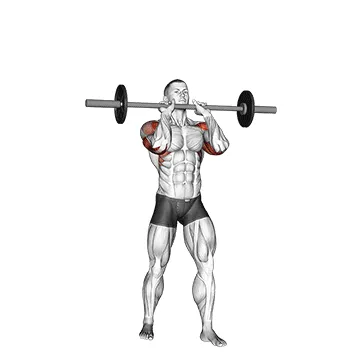
- Stand with your feet shoulder-width apart and hold the barbell behind your neck with an overhand grip.
- Keep your back straight and core engaged.
- Press the barbell overhead by extending your arms, fully extending your elbows.
- Pause for a moment at the top, then slowly lower the barbell back down to the starting position.
- Repeat for the desired number of repetitions.
Sets and reps: 3 to 5 sets of 5 to 8 reps.
Why this matches
- Primary muscle: delts, the same as the Standing Military Press
- Equipment: free weights, the same as the Standing Military Press
- Body position: standing, the same as the Standing Military Press
- Delts
- Barbell
- Intermediate
- Compound
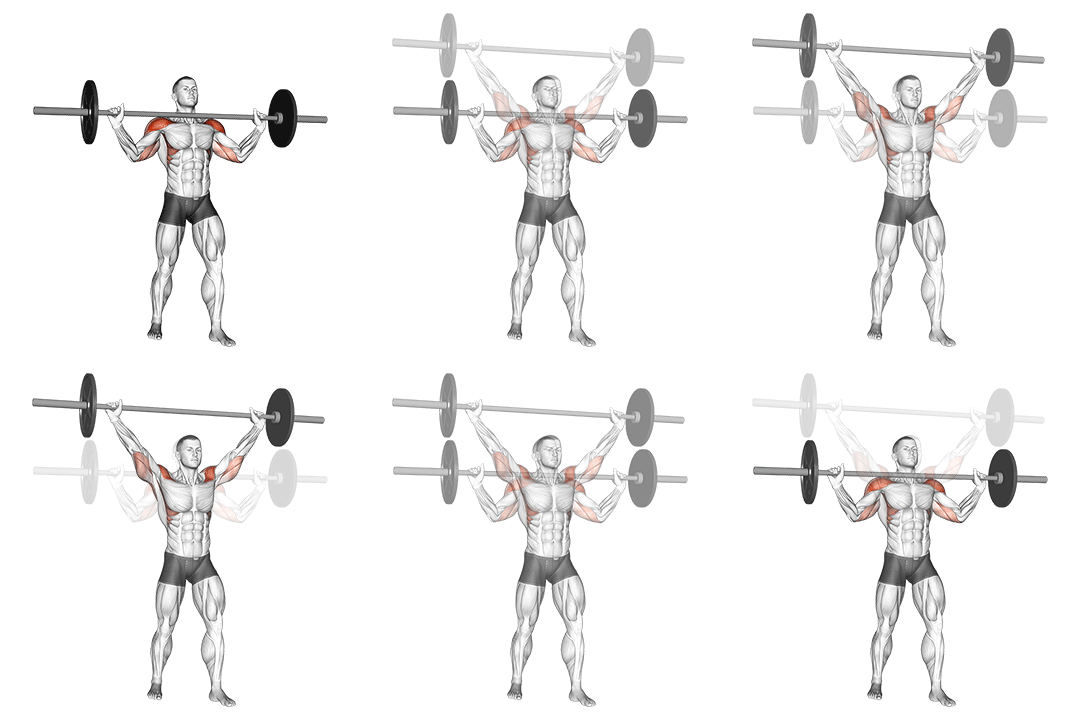
The same equipment, taken with a wide grip.
How to perform this exercise
- Stand with your feet shoulder-width apart and hold the barbell with an overhand grip, slightly wider than shoulder-width.
- Lift the barbell to shoulder height, keeping your elbows slightly in front of the bar.
- Press the barbell overhead, extending your arms fully.
- Lower the barbell back to shoulder height and repeat for the desired number of repetitions.
Sets and reps: 3 or 4 sets of 6 to 10 reps.
Why this matches
- Movement: strict overhead press, the same as the Standing Military Press
- Primary muscle: delts, the same as the Standing Military Press
- Equipment: free weights, the same as the Standing Military Press
- Body position: standing, the same as the Standing Military Press
Progression
- Delts
- Barbell
- Advanced
- Compound
How to perform this exercise
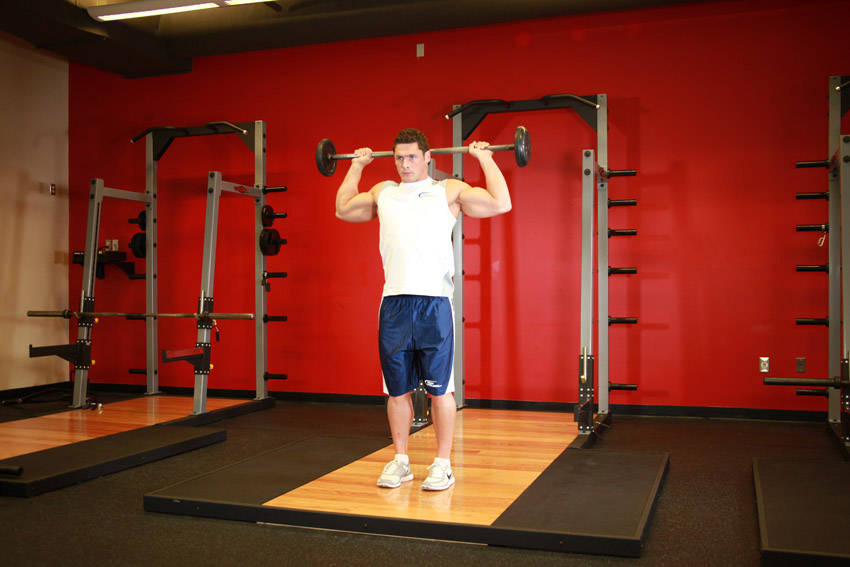
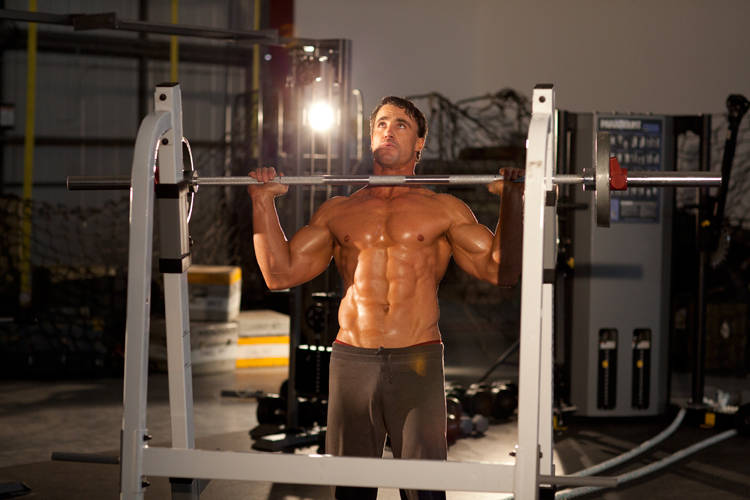
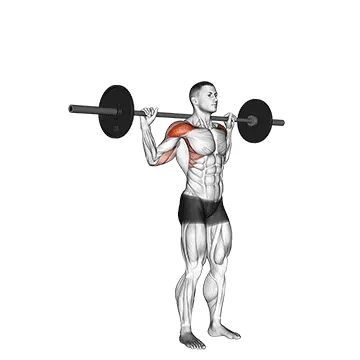
- This exercise is best performed inside a squat rack for easier pick up of the bar. To begin, first set the bar on a rack that best matches your height. Once the correct height is chosen and the bar is loaded, step under the bar and place the back of your shoulders (slightly below the neck) across it.
- Hold on to the bar using both arms at each side and lift it off the rack by first pushing with your legs and at the same time straightening your torso.
- Step away from the rack and position your legs using a shoulder width medium stance with the toes slightly pointed out. Your back should be kept straight while performing this exercise. This will be your starting position.
- Elevate the barbell overhead by fully extending your arms while breathing out.
- Hold the contraction for a second and lower the barbell back down to the starting position by inhaling.
- Repeat for the recommended amount of repetitions.
Sets and reps: 3 to 5 sets of 5 to 8 reps.
Why this matches
- Primary muscle: delts, the same as the Standing Military Press
- Equipment: free weights, the same as the Standing Military Press
- Body position: standing, the same as the Standing Military Press
Progression
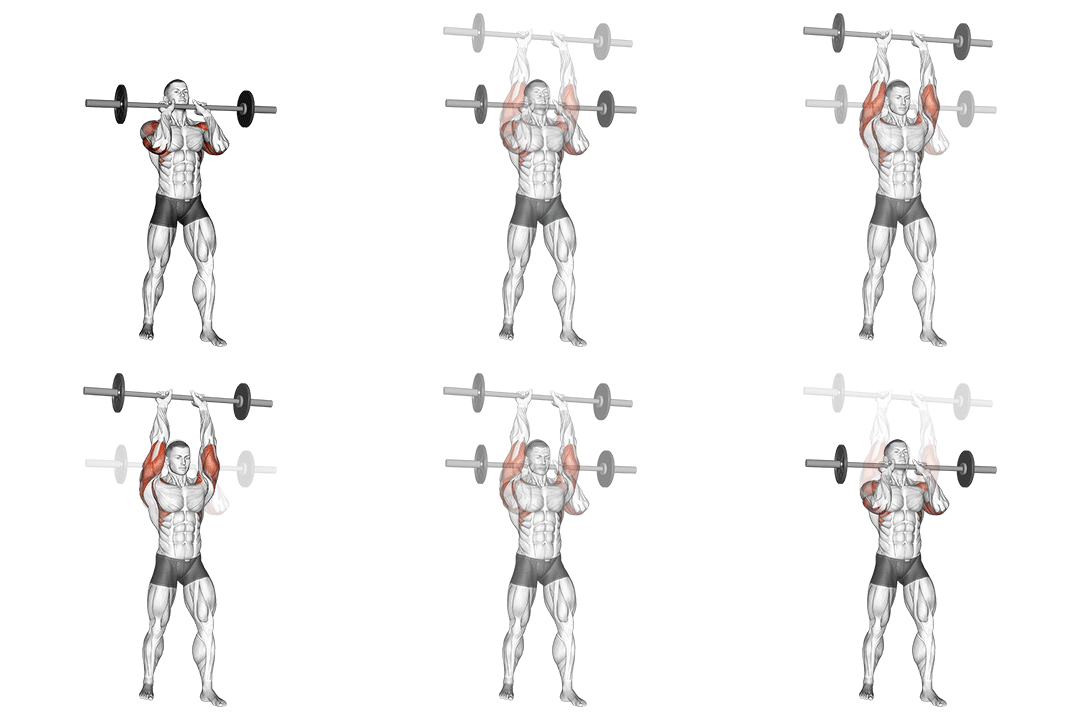
7. Standing Bradford Press
97% match- Delts
- Barbell
- Advanced
- Compound
How to perform this exercise
- Place a loaded bar at shoulder level in a rack. With a pronated grip at shoulder width, begin with the bar racked across the front of your shoulders. This is your starting position.
- Initiate the lift by extending the elbows to press the bar overhead. Avoid locking out the elbow as you move the weight behind your head.
- Lower the bar down to the back of the head until your elbow forms a right angle.
- Lift the bar back over your head by extending the elbows
- Lower the bar down to the starting position.
- Alternate in this manner until you complete the recommended amount of repetitions.
Sets and reps: 3 to 5 sets of 5 to 8 reps.
Why this matches
- Primary muscle: delts, the same as the Standing Military Press
- Equipment: free weights, the same as the Standing Military Press
- Body position: standing, the same as the Standing Military Press
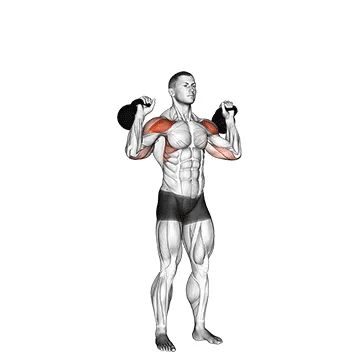
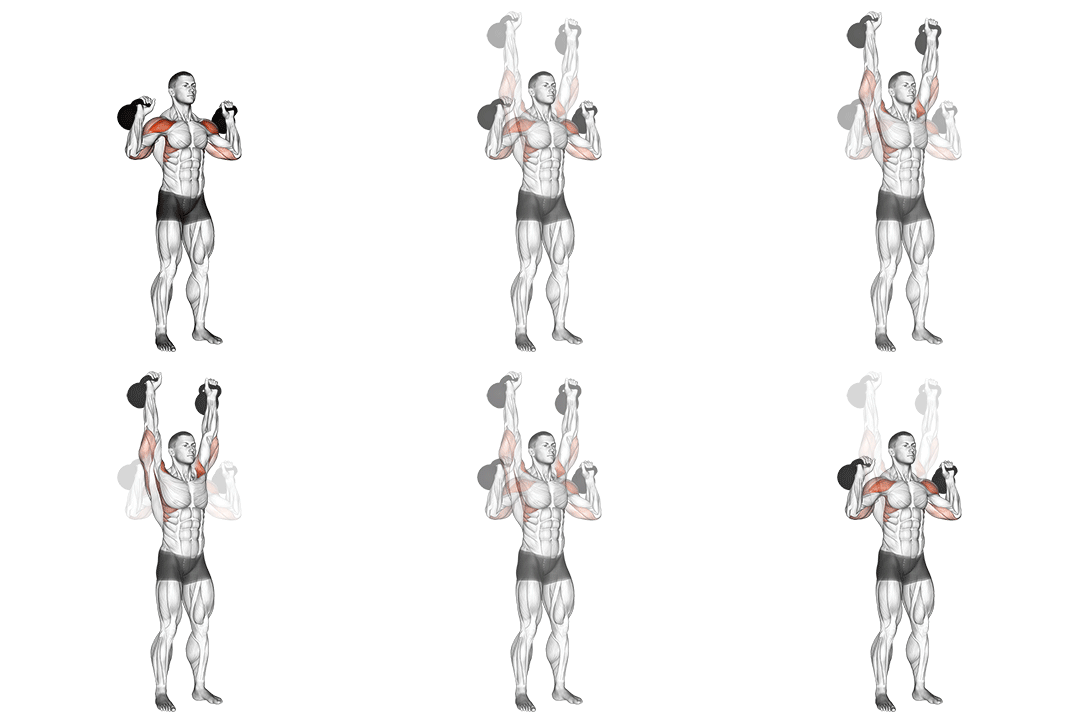
8. Kettlebell Two Arm Military Press
96% match- Delts
- Kettlebell
- Intermediate
- Compound
How to perform this exercise
- Stand with your feet shoulder-width apart, holding a kettlebell in each hand at shoulder level with your palms facing forward.
- Engage your core and press the kettlebells overhead, fully extending your arms.
- Pause for a moment at the top, then slowly lower the kettlebells back to the starting position.
- Repeat for the desired number of repetitions.
Sets and reps: 3 or 4 sets of 6 to 10 reps.
Why this matches
- Movement: strict overhead press, the same as the Standing Military Press
- Primary muscle: delts, the same as the Standing Military Press
- Equipment: free weights, the same as the Standing Military Press
- Body position: standing, the same as the Standing Military Press
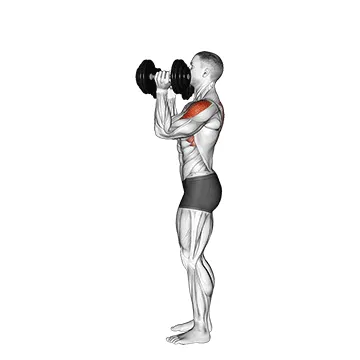
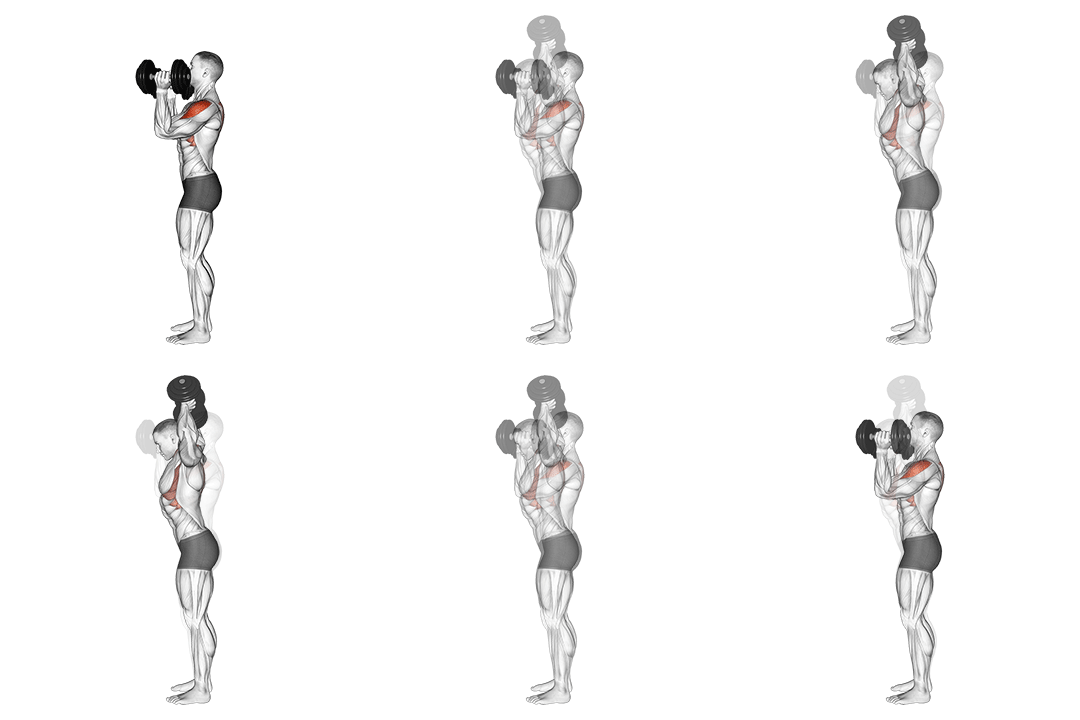
9. Dumbbell Scott Press
90% match- Delts
- Dumbbell
- Intermediate
- Compound
How to perform this exercise
- Sit on a bench with a dumbbell in each hand, palms facing forward.
- Raise the dumbbells to shoulder height, with your elbows bent and palms facing forward.
- Press the dumbbells upward until your arms are fully extended.
- Pause for a moment at the top, then slowly lower the dumbbells back to the starting position.
- Repeat for the desired number of repetitions.
Sets and reps: 3 or 4 sets of 6 to 10 reps.
Why this matches
- Primary muscle: delts, the same as the Standing Military Press
- Equipment: free weights, the same as the Standing Military Press
- Body position: standing, the same as the Standing Military Press
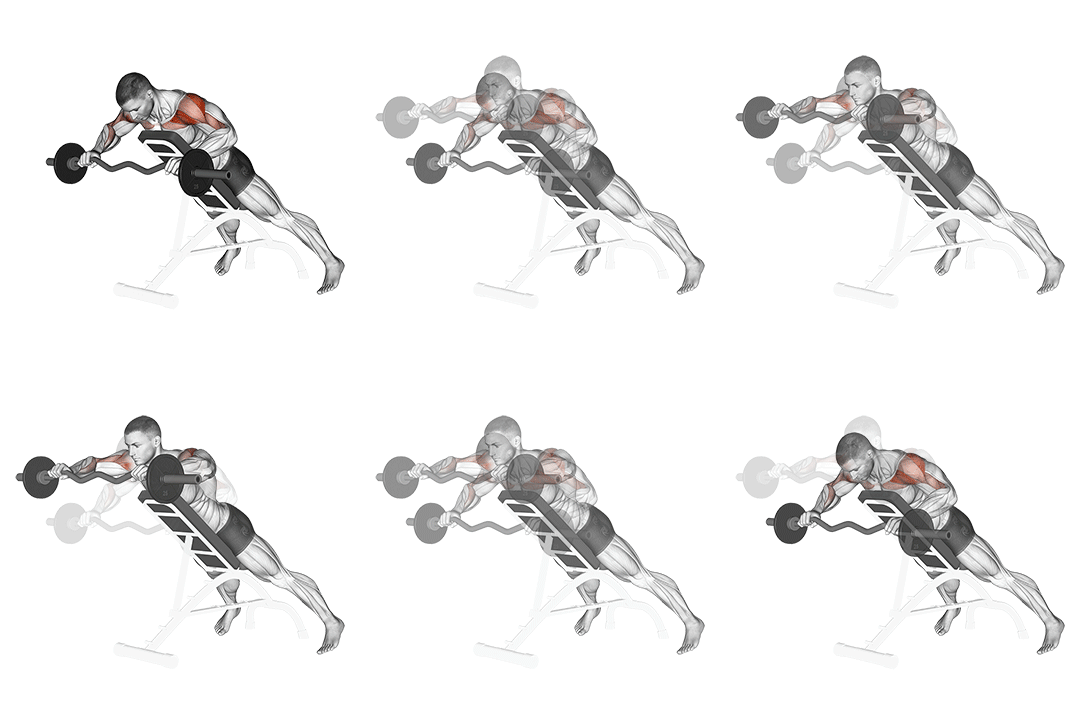
10. EZ Barbell Anti Gravity Press
90% match- Delts
- Ez-barbell
- Advanced
- Compound
How to perform this exercise
- Start by standing with your feet shoulder-width apart and holding the ez barbell with an overhand grip.
- Raise the barbell to shoulder height, keeping your elbows slightly bent and your palms facing forward.
- Press the barbell overhead, extending your arms fully.
- Lower the barbell back to shoulder height and repeat for the desired number of repetitions.
Sets and reps: 3 to 5 sets of 5 to 8 reps.
Why this matches
- Primary muscle: delts, the same as the Standing Military Press
- Equipment: free weights, the same as the Standing Military Press
- Body position: standing, the same as the Standing Military Press
Standing Military Press FAQ
What muscles does Standing Military Press work?
The Standing Military Press primarily targets the anterior and medial deltoids, with secondary loading of the triceps, upper trapezius, and serratus anterior. It also recruits stabilizers in the rotator cuff and core for upright posture and scapular upward rotation during lockout.
Find Alternatives for Any Exercise
Search the exercise database and filter the ranked substitutes by the equipment you own.
Similarity scores compare exercise metadata such as movement pattern, muscles, equipment and body position. They are not a safety rating or a check that you own the equipment. Learn about our methodology