

10 Best Weighted Seated Bicep Curl (On Stability Ball) Alternatives for Home & Gym
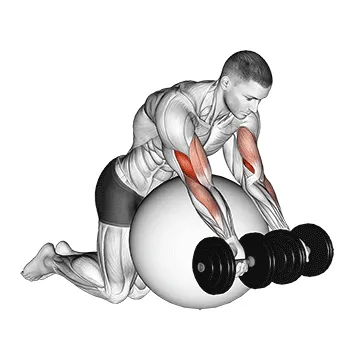
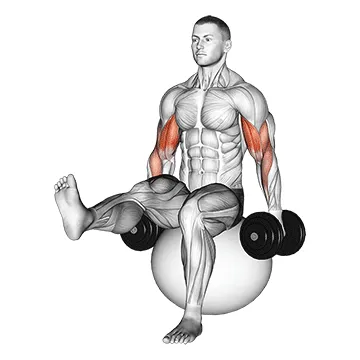
The Weighted Seated Bicep Curl (On Stability Ball) is done seated with dumbbells. Ranked closest by our scoring: the Dumbbell Preacher Curl, the Seated Dumbbell Curl and the Seated Dumbbell Inner Biceps Curl. Five harder versions, among them the Dumbbell Preacher Curl Over Exercise Ball and the Dumbbell Bicep Curl On Exercise Ball With Leg Raised, are listed below as progressions rather than swaps.
Updated Ranked by our 12-factor similarity model How it works
Original Exercise: Weighted Seated Bicep Curl (On Stability Ball)
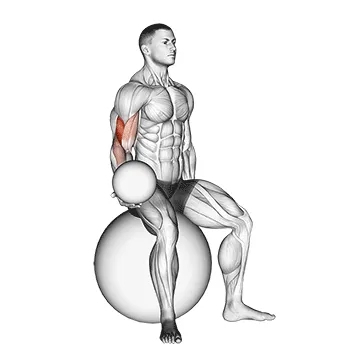
- Primary muscle
- Biceps
- Equipment
- Dumbbell
- Difficulty
- Beginner
- Type
- Isolation
Secondary muscles: Forearms
How to perform Weighted Seated Bicep Curl (On Stability Ball)
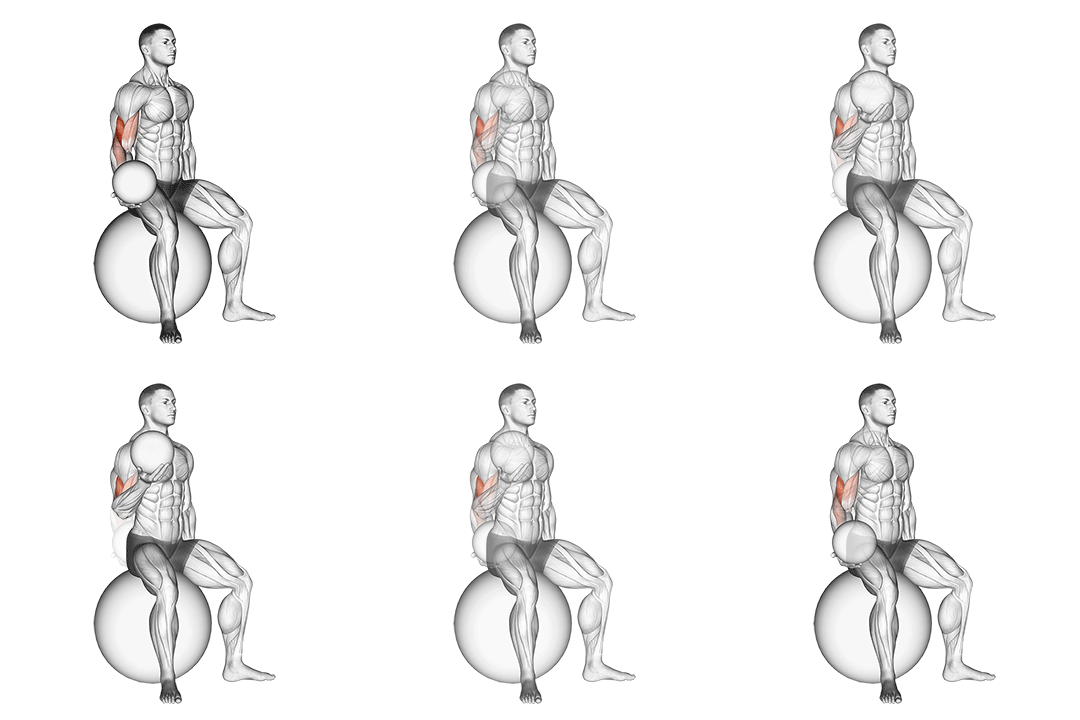
- Sit on a stability ball with your feet flat on the ground and your back straight.
- Hold a medicine ball with an underhand grip, palms facing up, and let your arms hang down by your sides.
- Keeping your upper arms stationary, exhale and curl the medicine ball up towards your shoulders.
- Pause for a moment at the top, squeezing your biceps.
- Inhale and slowly lower the medicine ball back down to the starting position.
- Repeat for the desired number of repetitions.
Ranked Weighted Seated Bicep Curl (On Stability Ball) Alternatives
10 substitutes, ranked by how closely each one matches the Weighted Seated Bicep Curl (On Stability Ball) on movement pattern, muscles worked, equipment and body position. The higher the score, the less you change. Open "How to perform this exercise" on a card for the steps; every card title links to that exercise's own alternatives page. Harder versions are tagged as progressions and kept out of the top spot even when they score higher.
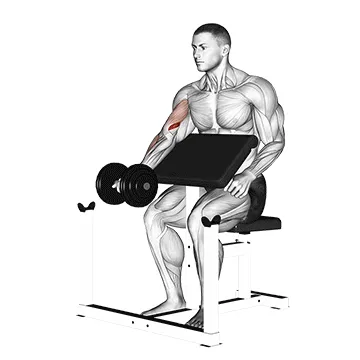
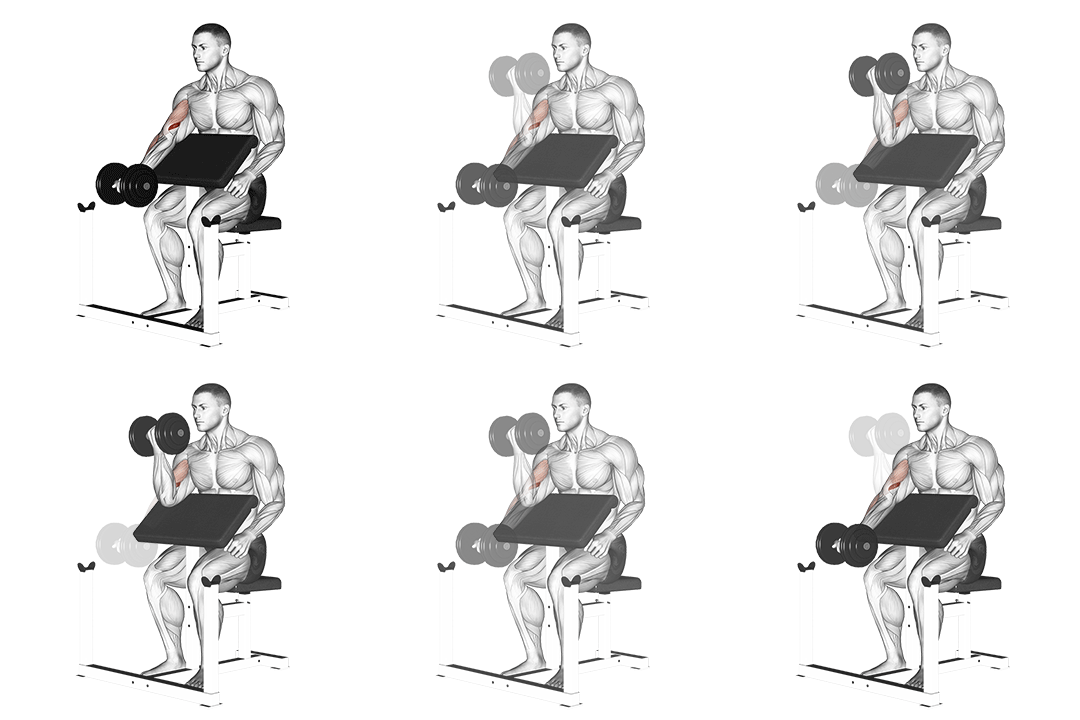
Best match 1. Dumbbell Preacher Curl
98% match- Biceps
- Dumbbell
- Beginner
- Isolation
Pick this when you want to work the biceps with less balance to manage.
How to perform this exercise
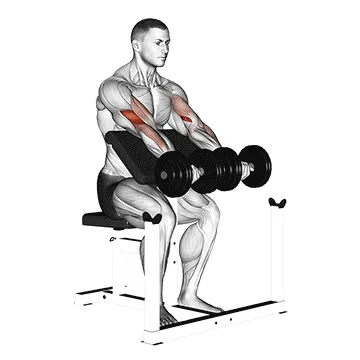
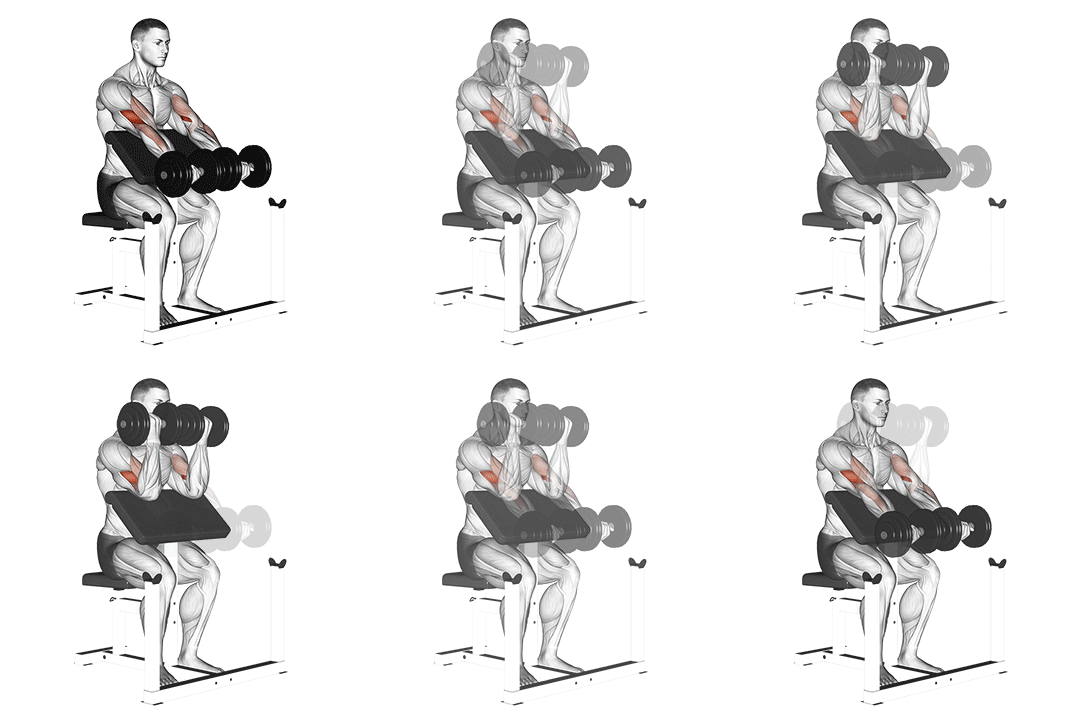
- Sit on a preacher curl bench with your upper arms resting on the pad and your chest against it.
- Hold a dumbbell in each hand with your palms facing up and your arms fully extended.
- Keeping your upper arms stationary, exhale and curl the weights while contracting your biceps.
- Continue to raise the dumbbells until your biceps are fully contracted and the dumbbells are at shoulder level.
- Hold the contracted position for a brief pause as you squeeze your biceps.
- Inhale and slowly begin to lower the dumbbells back to the starting position.
- Repeat for the desired number of repetitions.
Sets and reps: 3 sets of 10 to 15 reps.
Why this matches
- Movement: curl, the same as the Weighted Seated Bicep Curl (On Stability Ball)
- Primary muscle: biceps, the same as the Weighted Seated Bicep Curl (On Stability Ball)
- Equipment: free weights, the same as the Weighted Seated Bicep Curl (On Stability Ball)
- Body position: seated, the same as the Weighted Seated Bicep Curl (On Stability Ball)
- Balance: easier to stay steady on than the Weighted Seated Bicep Curl (On Stability Ball)
Progression
- Biceps
- Dumbbell
- Intermediate
- Isolation
Pick this when you want a harder version that still works the biceps.
How to perform this exercise
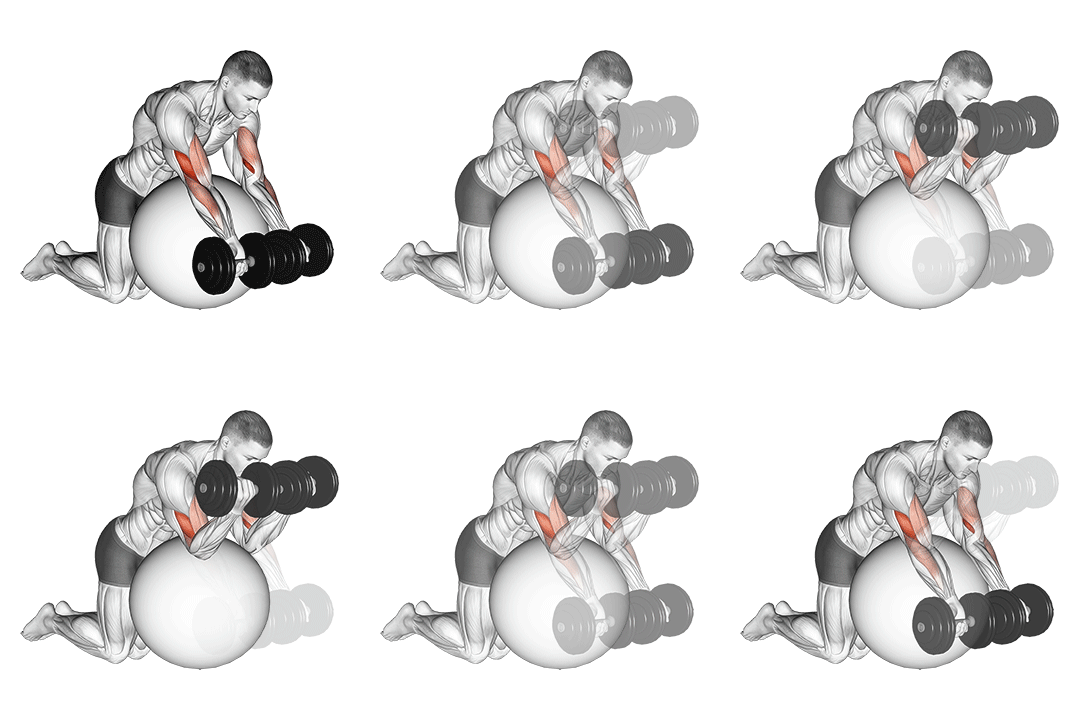
- Sit on an exercise ball with your feet flat on the ground and your back straight.
- Hold a dumbbell in one hand with an underhand grip, resting your elbow on the exercise ball.
- Keeping your upper arm stationary, exhale and curl the dumbbell up towards your shoulder.
- Pause for a moment at the top, then inhale and slowly lower the dumbbell back to the starting position.
- Repeat for the desired number of repetitions, then switch arms.
Sets and reps: 3 sets of 10 to 15 reps.
Why this matches
- Movement: curl, the same as the Weighted Seated Bicep Curl (On Stability Ball)
- Primary muscle: biceps, the same as the Weighted Seated Bicep Curl (On Stability Ball)
- Equipment: free weights, the same as the Weighted Seated Bicep Curl (On Stability Ball)
- Body position: seated, the same as the Weighted Seated Bicep Curl (On Stability Ball)
Progression
- Biceps
- Dumbbell
- Intermediate
- Isolation
How to perform this exercise
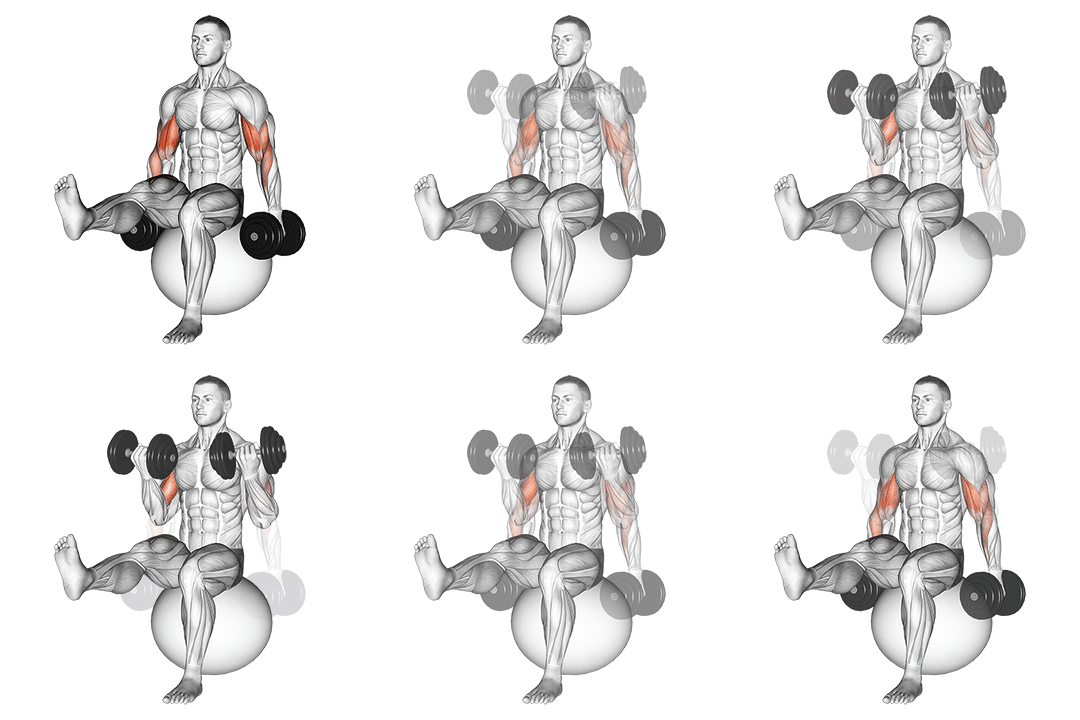
- Sit on an exercise ball with your feet flat on the ground and your back straight.
- Hold a dumbbell in each hand with your palms facing forward and your arms fully extended.
- Slowly curl the dumbbells towards your shoulders, keeping your elbows close to your sides.
- Pause for a moment at the top of the movement, then slowly lower the dumbbells back to the starting position.
- While performing the bicep curl, raise one leg off the ground and hold it in the air for the duration of the exercise.
- Repeat for the desired number of repetitions, then switch legs and repeat.
Sets and reps: 3 sets of 10 to 15 reps.
Why this matches
- Movement: curl, the same as the Weighted Seated Bicep Curl (On Stability Ball)
- Primary muscle: biceps, the same as the Weighted Seated Bicep Curl (On Stability Ball)
- Equipment: free weights, the same as the Weighted Seated Bicep Curl (On Stability Ball)
- Body position: seated, the same as the Weighted Seated Bicep Curl (On Stability Ball)
Progression
- Biceps
- Dumbbell
- Intermediate
- Isolation
How to perform this exercise
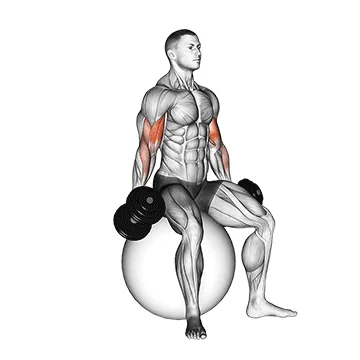
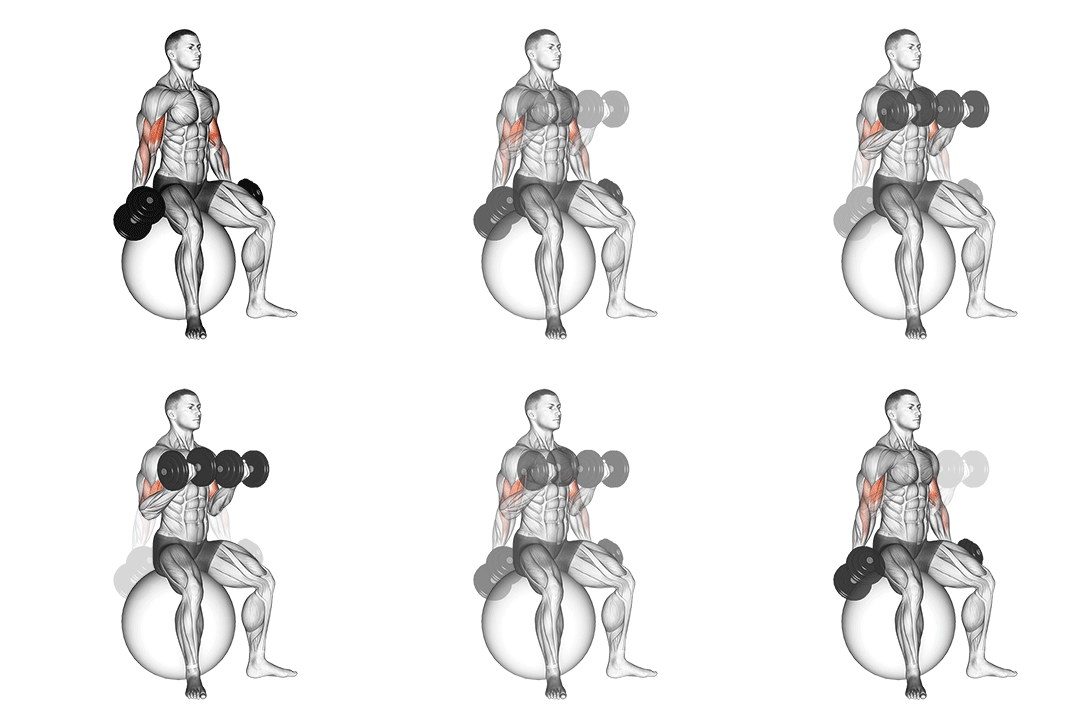
- Sit on a stability ball with your feet flat on the ground and your back straight.
- Hold a dumbbell in each hand with your palms facing forward and your arms fully extended.
- Keeping your upper arms stationary, exhale and curl the dumbbells while contracting your biceps.
- Continue to raise the dumbbells until your biceps are fully contracted and the dumbbells are at shoulder level.
- Hold the contracted position for a brief pause as you squeeze your biceps.
- Inhale and slowly begin to lower the dumbbells back to the starting position.
- Repeat for the desired number of repetitions.
Sets and reps: 3 sets of 10 to 15 reps.
Why this matches
- Movement: curl, the same as the Weighted Seated Bicep Curl (On Stability Ball)
- Primary muscle: biceps, the same as the Weighted Seated Bicep Curl (On Stability Ball)
- Equipment: free weights, the same as the Weighted Seated Bicep Curl (On Stability Ball)
- Body position: seated, the same as the Weighted Seated Bicep Curl (On Stability Ball)
Progression
- Biceps
- Dumbbell
- Intermediate
- Isolation
How to perform this exercise
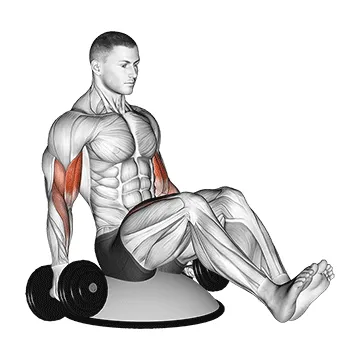
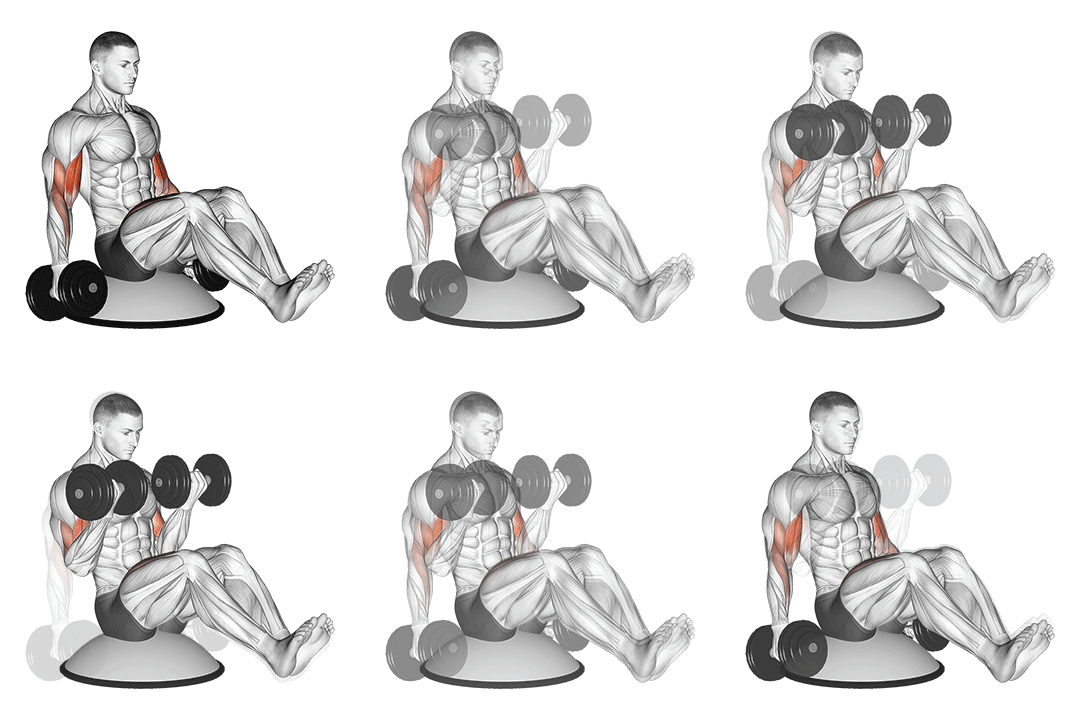
- Sit on a bosu ball with your feet flat on the ground and your knees bent at a 90-degree angle.
- Hold a dumbbell in each hand with your palms facing forward and your arms fully extended down by your sides.
- Keeping your upper arms stationary, exhale and curl the weights while contracting your biceps.
- Continue to raise the dumbbells until your biceps are fully contracted and the dumbbells are at shoulder level.
- Hold the contracted position for a brief pause as you squeeze your biceps.
- Inhale and slowly begin to lower the dumbbells back to the starting position.
- Repeat for the desired number of repetitions.
Sets and reps: 3 sets of 10 to 15 reps.
Why this matches
- Movement: curl, the same as the Weighted Seated Bicep Curl (On Stability Ball)
- Primary muscle: biceps, the same as the Weighted Seated Bicep Curl (On Stability Ball)
- Equipment: free weights, the same as the Weighted Seated Bicep Curl (On Stability Ball)
- Body position: seated, the same as the Weighted Seated Bicep Curl (On Stability Ball)
- Balance: harder to stay steady on than the Weighted Seated Bicep Curl (On Stability Ball)
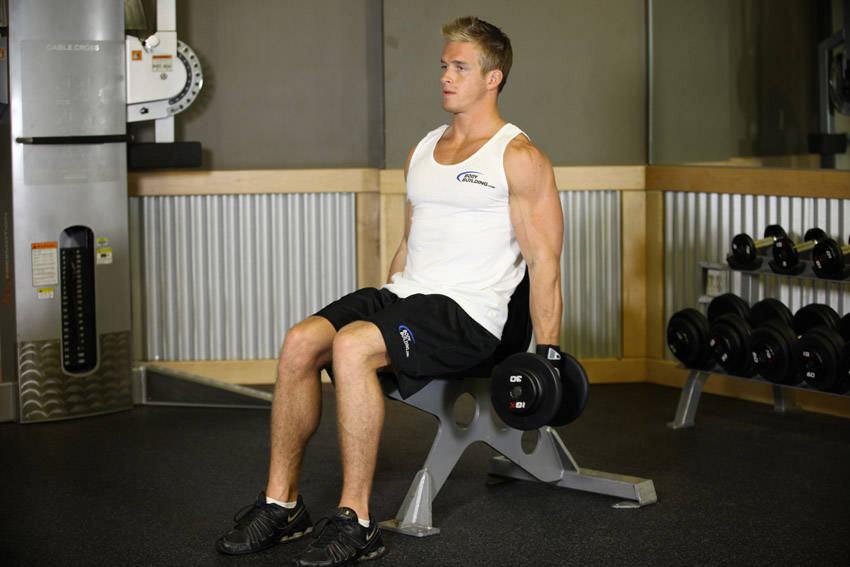
6. Seated Dumbbell Curl
97% match- Biceps
- Dumbbell
- Beginner
- Isolation
How to perform this exercise
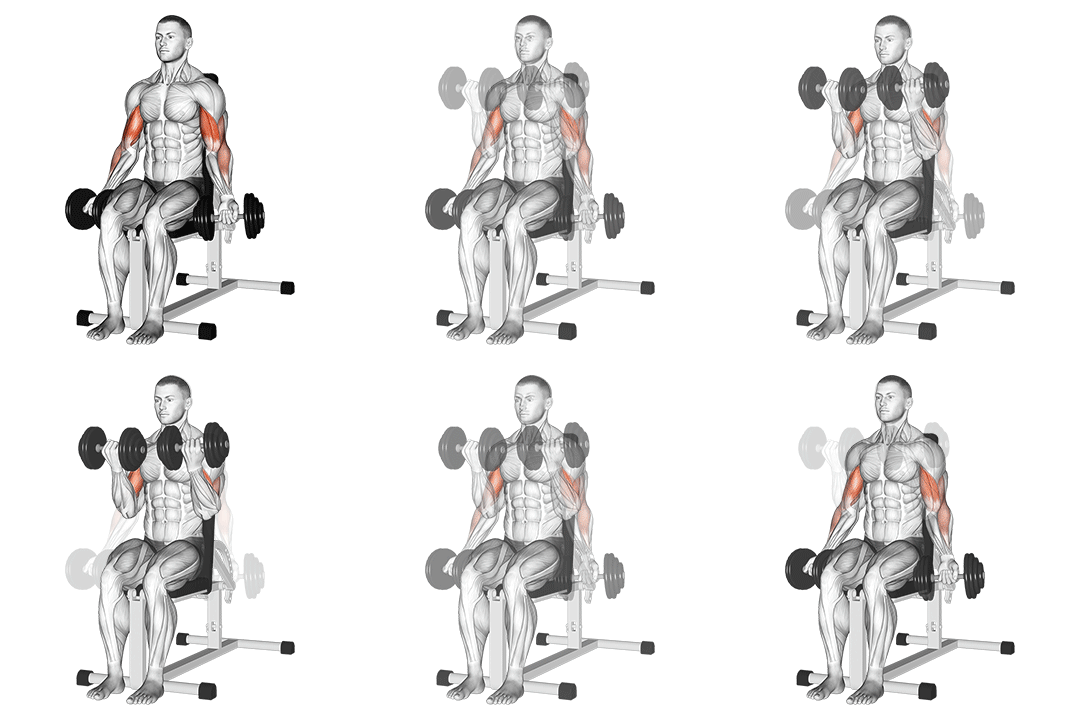
- Sit on a flat bench with a dumbbell on each hand being held at arms length. The elbows should be close to the torso.
- Rotate the palms of the hands so that they are facing your torso. This will be your starting position.
- While holding the upper arm stationary, curl the weights and start twisting the wrists once the dumbbells pass your thighs so that the palms of your hands face forward at the end of the movement. Make sure that you contract the biceps as you breathe out and make sure that only the forearms move. Continue the movement until your biceps are fully contracted and the dumbbells are at shoulder level. Hold the contracted position for a second as you squeeze the biceps.
- Slowly begin to bring the dumbbells back to the starting position as your breathe in and as you rotate the wrists back to a neutral grip.
- Repeat for the recommended amount of repetitions.
Sets and reps: 3 sets of 10 to 15 reps.
Why this matches
- Movement: curl, the same as the Weighted Seated Bicep Curl (On Stability Ball)
- Primary muscle: biceps, the same as the Weighted Seated Bicep Curl (On Stability Ball)
- Equipment: free weights, the same as the Weighted Seated Bicep Curl (On Stability Ball)
- Body position: seated, the same as the Weighted Seated Bicep Curl (On Stability Ball)
- Balance: easier to stay steady on than the Weighted Seated Bicep Curl (On Stability Ball)
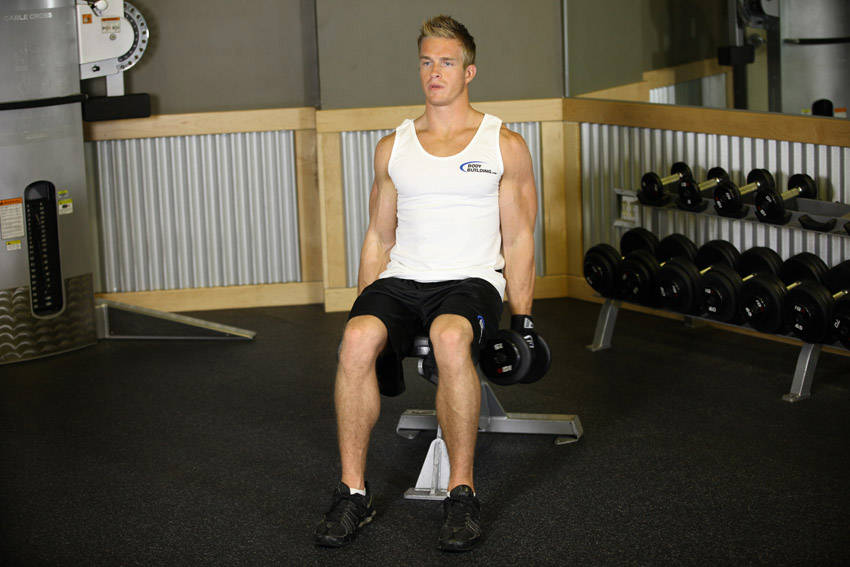
7. Seated Dumbbell Inner Biceps Curl
97% match- Biceps
- Dumbbell
- Beginner
- Isolation
How to perform this exercise
- Sit on the end of a flat bench with a dumbbell in each hand being held at arms length. The elbows should be close to the torso.
- Rotate the palms of the hands so that they are facing inward in a neutral position. This will be your starting position.
- While holding the upper arms stationary, curl the dumbbells out and up, turning the palms out as you lift and keeping your forearms in line with your outer deltoids. Tips:
- Only the forearms should move. Continue the movement until your biceps are fully contracted and the dumbbells are at shoulder level. Hold the contracted position for a second as you squeeze the biceps.
- Slowly begin to bring the dumbbells back to the starting position as your breathe in. Remember to rotate your arms as you lower the dumbbells so that you can switch back to a neutral grip.
- Repeat for the recommended amount of repetitions.
Sets and reps: 3 sets of 10 to 15 reps.
Why this matches
- Movement: curl, the same as the Weighted Seated Bicep Curl (On Stability Ball)
- Primary muscle: biceps, the same as the Weighted Seated Bicep Curl (On Stability Ball)
- Equipment: free weights, the same as the Weighted Seated Bicep Curl (On Stability Ball)
- Body position: seated, the same as the Weighted Seated Bicep Curl (On Stability Ball)
- Balance: easier to stay steady on than the Weighted Seated Bicep Curl (On Stability Ball)
8. Dumbbell Seated Bicep Curl
96% match- Biceps
- Dumbbell
- Beginner
- Isolation
How to perform this exercise
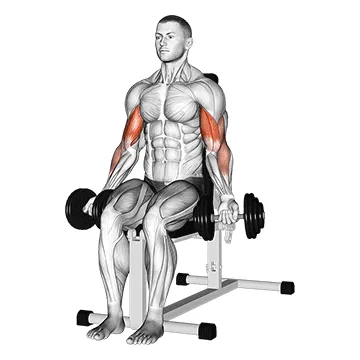
- Sit on a bench with your feet flat on the ground and hold a dumbbell in each hand, palms facing up.
- Keep your back straight and your elbows close to your torso.
- Exhale and curl the dumbbells up towards your shoulders, contracting your biceps.
- Pause for a moment at the top, then inhale and slowly lower the dumbbells back down to the starting position.
- Repeat for the desired number of repetitions.
Sets and reps: 3 sets of 10 to 15 reps.
Why this matches
- Movement: curl, the same as the Weighted Seated Bicep Curl (On Stability Ball)
- Primary muscle: biceps, the same as the Weighted Seated Bicep Curl (On Stability Ball)
- Equipment: free weights, the same as the Weighted Seated Bicep Curl (On Stability Ball)
- Body position: seated, the same as the Weighted Seated Bicep Curl (On Stability Ball)
- Balance: easier to stay steady on than the Weighted Seated Bicep Curl (On Stability Ball)
Progression
9. Dumbbell Seated Preacher Curl
96% match- Biceps
- Dumbbell
- Intermediate
- Isolation
How to perform this exercise
- Sit on a preacher curl bench with your feet flat on the floor.
- Hold a dumbbell in one hand with an underhand grip, resting your upper arm against the preacher pad.
- Keeping your upper arm stationary, exhale and curl the dumbbell up towards your shoulder.
- Pause for a moment at the top, then inhale and slowly lower the dumbbell back down to the starting position.
- Repeat for the desired number of repetitions, then switch arms.
Sets and reps: 3 sets of 10 to 15 reps.
Why this matches
- Movement: curl, the same as the Weighted Seated Bicep Curl (On Stability Ball)
- Primary muscle: biceps, the same as the Weighted Seated Bicep Curl (On Stability Ball)
- Equipment: free weights, the same as the Weighted Seated Bicep Curl (On Stability Ball)
- Body position: seated, the same as the Weighted Seated Bicep Curl (On Stability Ball)
- Balance: easier to stay steady on than the Weighted Seated Bicep Curl (On Stability Ball)
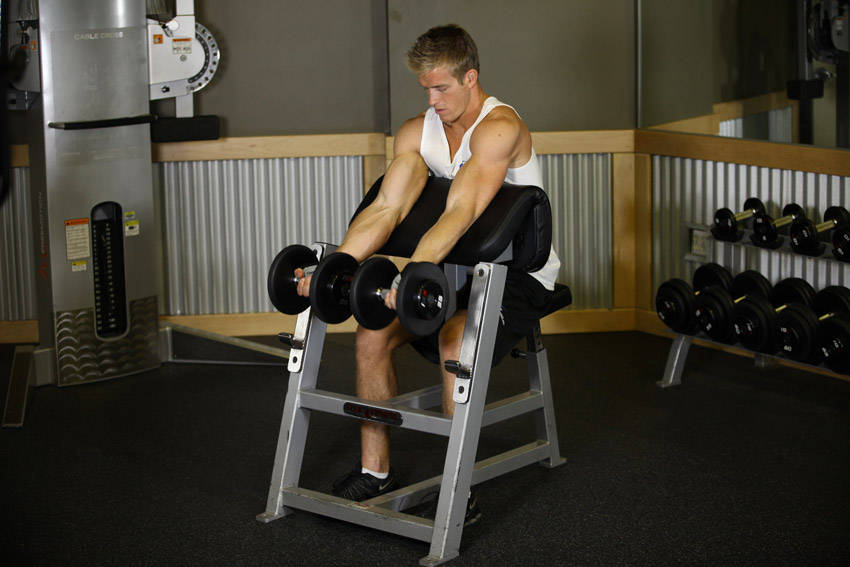
10. Two-arm Dumbbell Preacher Curl
96% match- Biceps
- Dumbbell
- Beginner
- Isolation
How to perform this exercise
- Grab a dumbbell with each arm and place the upper arms on top of the preacher bench or the incline bench. The dumbbell should be held at shoulder length. This will be your starting position.
- As you breathe in, slowly lower the dumbbells until your upper arm is extended and the biceps is fully stretched.
- As you exhale, use the biceps to curl the weights up until your biceps is fully contracted and the dumbbells are at shoulder height.
- Squeeze the biceps hard for a second at the contracted position and repeat for the recommended amount of repetitions.
Sets and reps: 3 sets of 10 to 15 reps.
Why this matches
- Movement: curl, the same as the Weighted Seated Bicep Curl (On Stability Ball)
- Primary muscle: biceps, the same as the Weighted Seated Bicep Curl (On Stability Ball)
- Equipment: free weights, the same as the Weighted Seated Bicep Curl (On Stability Ball)
- Body position: seated, the same as the Weighted Seated Bicep Curl (On Stability Ball)
- Balance: easier to stay steady on than the Weighted Seated Bicep Curl (On Stability Ball)
Why You Might Need a Weighted Seated Bicep Curl (On Stability Ball) Alternative
You may substitute the stability-ball seated curl for several practical reasons: lack of equipment, balance or lower-back limitations, shoulder pain, or a desire for greater load progression. The stability ball increases core demand and anti-extension stress; substitutes let you isolate the elbow-flexion pattern without additional stability requirements. For rehab, pick options that minimize shoulder elevation and maintain an upper-arm vertical line so the biceps (long and short heads) handle most of the torque. For strength progression, choose a substitute that accepts heavier loads or unilateral loading to correct imbalances while you keep a neutral spine and scapula retracted.
Weighted Seated Bicep Curl (On Stability Ball) FAQ
What muscles does Weighted Seated Bicep Curl (on Stability Ball) work?
The primary movers are the biceps brachii (long and short heads). Secondary contributors include the brachialis and brachioradialis, while core and shoulder stabilizers engage more when using a stability ball. Cue: keep elbows fixed and supinate the wrist to maximize biceps recruitment and reduce shoulder compensation.
Find Alternatives for Any Exercise
Search the exercise database and filter the ranked substitutes by the equipment you own.
Similarity scores compare exercise metadata such as movement pattern, muscles, equipment and body position. They are not a safety rating or a check that you own the equipment. Learn about our methodology