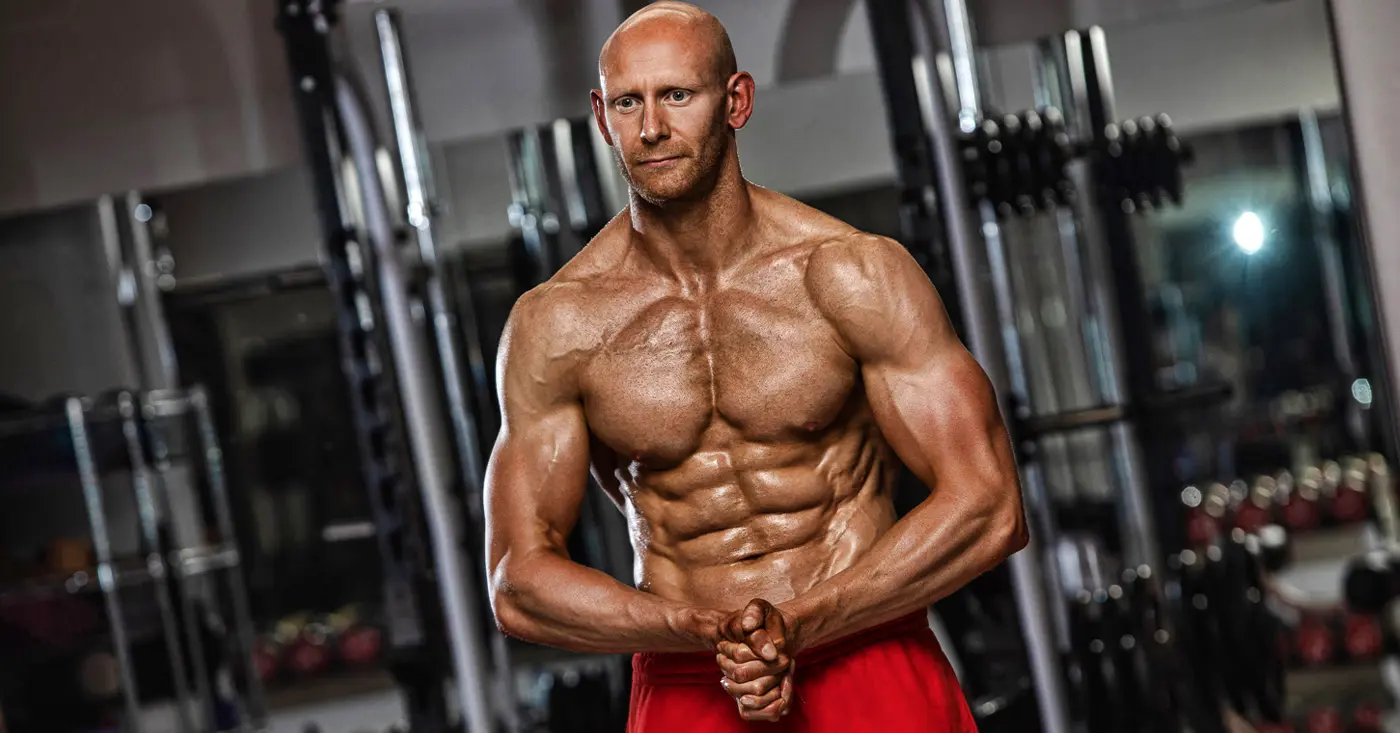
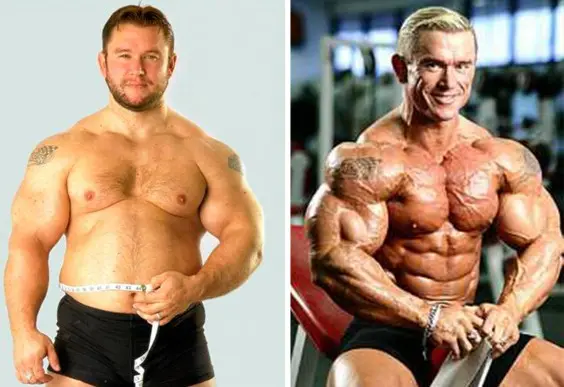
When I started lifting weights I was tired of being skinny and weak. I had a deep emotional desire to gain strength and build my body. Gaining size would boost my confidence and would also help to be more competitive on the rugby pitch. I’d been told I needed to gain 20 lbs by my rugby coaches and I was determined to achieve that and more. I wanted results and I wanted them fast. Like most people, I am a sucker for instant gratification so I pursued my goals aggressively. I chased scale weight hard and a month later I was 10lbs heavier. My diet of protein shakes and cheesecakes had moved the needle on the scales. The problem was I’d gained about 9lbs of fat. I’d gone from skinny to skinny-fat!
This experience was a valuable lesson. I learned that I couldn’t force feed muscle gain. There is only so fast that you can build muscle. If you do everything right, you can be at the top end of this rate of gain without the excess blubber I gained on my first bulk. Fuelled by the frustration of my failed first attempt at bulking, I began searching for a better way. What I discovered was that there was an ideal rate of gain that maximised muscle mass while minimising fat gain.
My initial mind-set of, “you have got to eat big to get big” wasn’t completely wrong. It adheres to a key principles of muscle gain – you need a calorie surplus to build muscle. A calorie surplus is when you consume a positive energy intake and your weight increases. As a recent research paper on muscle gain stated, “Strength training and positive energy intake are the most important factors related to lean body mass (LBM) gain.” Think of it this way, training creates the potential for muscle gain. Your diet dictates if you achieve that potential. Or put another way, all the eating in the world won’t get you jacked if you don’t eat enough to grow!
This information can get you in trouble. It was what led to my flabby downfall on my first bulk. I knew eating enough to gain weight was important and I took a more is better approach. I became focused on forcing the scales up as quickly as possible. Sadly, eating tons of food, gaining weight rapidly, and expecting to build purely lean muscle is delusional.
Research highlights this point. In fact, one overfeeding study found that in young, lean men, 4.5 lbs of fat were gained for every 2 lbs gain in muscle. Even with an optimal training program, the ratio of muscle to fat gain is highly dependent on the magnitude of your calorie surplus.
This was illustrated in a study by Garthe and colleagues in 2013, which found elite athletes who ate a large calorie surplus gained five times more fat than those that ate a more moderate surplus. Sadly, the group that ate more did not gain significantly more muscle. It seems that beyond a certain threshold of calories, almost all weight gain is fat. These findings support the old adage that you cannot out-train a bad diet.
Reverse Engineer Your Rate of Gain
To pinpoint the rate of gain that will maximise muscle mass while minimising fat gain, it is logical to consider how much you can realistically gain over the course of your entire lifting career. This allows you to reverse engineer yearly, monthly, and weekly rates of gain so that you can track progress and make dietary adjustments as needed.
In my experience, it is possible for a natural trainee to gain 40-50 pounds of muscle across their entire training career. For shorter guys, the lower end of this range is probably more realistic, and for extremely tall guys the upper end, or even slightly above, is a good target.
Progress Is Not Linear
Reaching the ceiling of your muscular genetic potential is going to take time. For most guys, it’ll take the best part of a decade of consistent training and nutrition to get there. This progress does not happen in a straight line.
Newbie gains are a real thing. Over the first few months of training you can build muscle faster than at any other point in your lifting career. I have often seen guys gain 20 pounds in their first year of training. Some have even gained 25! That rate of gain does not continue unchecked though. Sadly, the repeated bout effect kicks in. The repeated bout effect is basically a sports science term for the law of diminishing returns.

The body is an incredible adaptive mechanism. Every time it is exposed to a stimulus it adapts and subsequent exposures to the stimulus become less and less significant. Your weight training is no different. Each time you repeat a training session, the body is better equipped to deal with it. In the first few months, when training in the gym is completely new, the body makes substantial adaptations (e.g. muscle growth is quick). Gradually, the response to training will become blunted and gains are much slower and harder to come by.
This is even highlighted by the American College of Sport Medicine who state that,
“Athletes with a long history of heavy strength training may have less capacity for increasing lean body mass and strength”.
Long story short, your rate of gain will slow each year. Building your first 5 pounds of muscle is easy. Building the final 5 pounds of your genetic potential is extremely difficult.
Over the years, many experts have theorised on ideal rates of gain. These theories and practical experience have resulted in various estimations and equations being developed to predict rates of muscle gain. While each is slightly different, the results they predict are all relatively similar. Furthermore, they accurately reflect what I have seen from working with hundreds of clients. So, here are what I believe to be realistic rates of gain for the average lifter:
- Beginner (up to two years of good training): 1-1.5% of body weight per month
- Intermediate (between 2 and 4 years of consistent proper training): 0.5-1% of body weight per month
- Advanced (5+ years of proper training): 0.25-0.5% of body weight per month
Putting the Theory into Practice
Although the examples above are monthly targets, I prefer working on weekly targets with clients. This helps them to keep focused on the goal. Additionally, muscle gain is an example of incremental marginal gains. You cannot under eat for 3 weeks then stuff your face for a week to hit the monthly weight gain target and expect good results. There is only so much muscle building you can do in any single day. Consistency is key. Muscle gain is a case of relentlessly stacking one muscle-building day on top of another, one meal at a time.
A 2019 review of the scientific literature by Iraki et al, also suggested a weekly weight gain target for natural bodybuilders. Their recommendations were 0.25-0.5% per week for beginners and a slightly slower approach for advanced bodybuilders. As such, I recommend the following weekly rate of gain:
- Beginner (up to two years of good training): 0.25-0.5% per week
- Intermediate (between 2 and 4 years of consistent proper training): 0.25% of body weight per week
- Advanced (5+ years of proper training): 0.2% of body weight per month
You will notice that the upper end of these targets equates to a slightly faster monthly gain than in the monthly rates of gain I outlined above. The reason for this is two-fold. Firstly, the Garthe study used elite athletes and found those gaining 0.2% of body weight per week gained a very good ratio of muscle to fat. If highly trained elite athletes, who are close to their genetic potential can build muscle mass without much fat gain using a 0.2% weekly weight gain, then the average gym goer should be able to do the same with 0.2-0.25%.
The second reason is down to the practicality of tracking progress. I have found that gaining slower than this presents a real logistical issue. For example, according to the monthly rates suggested earlier, the intermediate lifter who weighs 165 lbs should be aiming for 0.5-1% of muscle gain per month. That is 0.8-1.65lbs per month. This works out to 0.027-0.055lbs per day! The chances are that your scales aren’t accurate enough to detect this difference. When you consider that there are about a dozen variables which can cause fluctuations in weight on a daily basis, it is tough to be confident you are actually gaining muscle at this super-slow rate. Instead, you might be doing what I call “gaintaining”. This is a horrible no-man’s land scenario where you are training your ass off to provide the stimulus for growth, but only eating enough to maintain your existing physique.
If you make the gaintaining mistake by trying to gain only pure muscle at a very slow rate you might end up making no progress at all. You will have wasted time thinking you’re building muscle when in fact all you have done is a lot of training with nothing to show for it. The solution to this is fairly simple – weigh-in multiple times a week and track the weekly rolling average.
Even relying on your weekly average scale weight can be problematic when you’re advanced. Our 165lbs example guy from earlier would only be looking at gaining 0.21-0.042 lbs per week as an intermediate. An advanced lifter of the same weight, however, would only be expected to gain 0.11-0.21lbs per week. Your scales might not be accurate enough to pick up the lower end of this range. Even if they do, your weight can easily fluctuate by more than this on a day to day basis anyway. Consequently, you might not get useful data if you only rely on the slower rates suggested.
How to Build Muscle as Fast as Possible Without Getting Fat
The good news is that fat loss is much quicker than muscle gain. For this reason, I suggest pushing for the slightly quicker rates outlined in my weekly guidelines. That more assertive rate of gain will guarantee you’re building muscle whilst also keeping fat gain to a minimum. Whatever fat you do gain can quickly be removed using a mini-cut. A mini-cut is a 2-6 week hyper-focused diet. The goal of a mini-cut is not to get shredded, but to get lean enough to be in a good position to build muscle again.
The aim with a mini cut is to treat fat loss like a bank robber treats his next heist. Get in, get the job done, get out, and get on with your life. In your case this means dieting aggressively for a few short weeks to shed any body fat you gained while bulking, then get back to packing on muscle at a rate of 0.2-0.5% per week.
The Bottom Line
If you gain too fast you’ll get fat. If you try to gain purely lean muscle you will probably build zero muscle. By aiming for the 0.25-0.5% per week rate of gain you can be confident that you have maximised your muscle building potential while keeping fat gain to a minimum. At the end of each bulk, a mini-cut will allow you to trim away the fat rapidly while retaining all your hard earned muscle. You will then be best placed to pursue another bulking phase.
That bulk, mini-cut cycle, repeated numerous times, is the blueprint to packing on muscle and radically transforming your physique.
References:
Iraki J, Fitschen P, Espinar S, & Helms E. Nutrition Recommendations for Bodybuilders in the Off-Season: A Narrative Review Sports. 2019, 7 (7), 154
Garthe, I. Raastad, T. Refsnes, P.E. Sundgot-Borgen, J. Effect of nutritional intervention on body composition and performance in elite athletes. Eur. J. Sport Sci. 2013, 13, 295–303
Bouchard et al. The Response to Long-Term Overfeeding in Identical Twins. New England Journal of Medicine. 1990, 322, 1477-1482
 You can also follow us on Twitter, Facebook, Instagram, and
YouTube for even more content.
You can also follow us on Twitter, Facebook, Instagram, and
YouTube for even more content.Tip: If you're signed in to Google, tap Follow.