


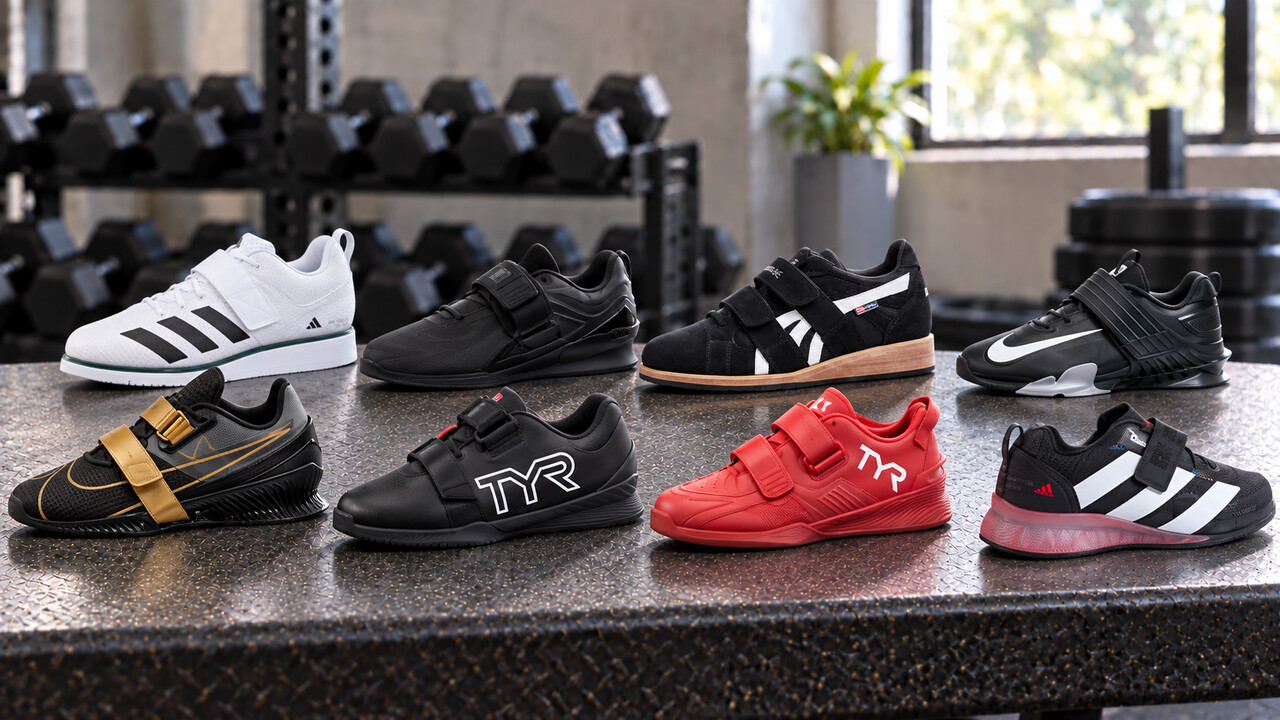
Short on time? The Nike Romaleos 4 is our top pick for serious lifting because it combines a rigid midsole, dual midfoot straps, and a wide heel. If you need more forefoot room, start with the TYR L-1 Lifter instead.
A raised heel can help you stay upright in a squat, but the wrong toe box can make a $200 lifting shoe a poor purchase. Choose heel height and fit together: a stiff Olympic lifter suits cleans and snatches, while a lower-heel budget shoe can be enough for recreational squats.
Our eight picks cover narrow and roomy toe boxes, 15mm beginner heels, and more specialized lifting platforms. Check the size chart and return terms before choosing a sale color. A discount does not help if you cannot exchange a pair that pinches your toes.
Written by Matthew Magnante, ACE. Reviewed by Tom Miller, CSCS. Last updated: October 2, 2026.
Quick Picks
| Category | Pick | Why It Wins | Price Checked |
|---|---|---|---|
| Best Overall | Nike Romaleos 4 | Rigid platform, dual straps, strong heel lockdown | $200 |
| Best Wide Toe Box | TYR L-1 Lifter | 21mm heel with an anatomical toe box | $99 sale / $200 MSRP |
| Best Premium Wide Lifter | TYR L-2 Lifter | 21mm drop, TPU midsole, more protective upper | $180 sale / $225 MSRP |
| Best Olympic Weightlifting Shoe | Adidas Adipower Weightlifting 3 | Tall heel and classic Adidas lifting fit | $184 sale / $230 MSRP |
| Best Budget | Adidas Powerlift 5 | 15mm heel and stable base at a lower price | $85 at Rogue / $130 MSRP |
| Best Stable Platform | Reebok Legacy Lifter IV | Wide midfoot strap and raised heel for heavy lifting | Price varies |
| Best Classic Lifter | Do-Win Classic Lifter | Stacked leather heel and old-school dual straps | $75 sale / $130 MSRP |
| Best Beginner Nike | Nike Savaleos | Single strap and lower raised heel | $125 |
How We Chose These Weightlifting Shoes
We rank these shoes by heel height, midsole construction, strap layout, toe box shape, sizing guidance, and value for the named category. A rigid heel and secure midfoot matter most for Olympic lifting; a lower heel and lower price can make more sense for recreational squats. We distinguish manufacturer-listed heel-to-toe drop from total heel height and flag gaps in the published specifications. We also consider current model availability and return terms, because you need a shoe that fits your foot rather than one that wins on paper. The star scores reflect those editorial criteria. Prices and sale sizes vary by color, and a higher score does not mean a narrow shoe will suit a wide foot.
For training context, weightlifting shoes are useful because the raised, non-compressible heel can help lifters maintain a more upright torso and reach depth in squat patterns. Research on squat footwear shows that shoes and heel elevation can change squat mechanics, although the effect depends on the lifter, load, and movement style. That is why we separate true Olympic lifting shoes from lower-heel beginner shoes and cross-training options.
Best Overall: Nike Romaleos 4

Nike Romaleos 4
Best OverallDual straps and a rigid platform suit serious barbell training; choose TYR instead if you need a roomier anatomical toe box.
Pros
- Dual adjustable midfoot straps
- Rigid midsole for heavy lifting
- Wide heel and flat outsole
Cons
- Runs small according to Nike
- Narrower fit than TYR
- Expensive if you only squat casually
The Nike Romaleos 4 is our top pick for lifters who want one serious shoe for squats, cleans, snatches, and heavy accessory work. Nike lists the current model at $200, with dual midfoot straps, a rigid midsole, and a wide flat outsole. Nike also says the shoe fits small and recommends ordering a half size up, which matters because a cramped toe box can ruin an otherwise excellent lifter.
Choose this if you want a stiff lifting platform and do not need a wide toe box. The Romaleos 4 has two midfoot straps, compared with the Savaleos’ single strap, and suits lifters who want a dedicated Olympic shoe. Skip it if you have wide feet, prefer flexible shoes, or mostly deadlift. A raised heel is useful for squat depth, but it is not the best setup for every pull from the floor.
Compared with the TYR L-1, the Romaleos 4 gives you a narrower, more locked-in Nike fit. Compared with the Adidas Powerlift 5, it is more expensive but more serious under heavy Olympic lifting work. If you are building your squat and want to compare your numbers after changing shoes, use our squat strength standards after a few weeks of consistent training.
Best Wide Toe Box: TYR L-1 Lifter

TYR L-1 Lifter
Best Wide Toe BoxStart here for a wide toe box and 21mm drop; check sale-size availability and exchange terms before choosing a discounted color.
Pros
- Anatomical toe box gives toes more room
- 21mm heel-to-toe drop
- Dual straps and flat wide sole
Cons
- Sale colors and sizes move quickly
- Final-sale terms may apply
- Too roomy for lifters who like a narrow race-fit shoe
The TYR L-1 Lifter is the shoe we would point wide-footed lifters to first. TYR lists a 21mm heel-to-toe drop, an anatomical toe box, a flat wide sole, dual midfoot straps, and reinforced heel support. That combination solves one of the biggest problems with classic lifters: they can be stable but painfully narrow through the forefoot.
This is the right pick if your toes feel pinched in Nike or Adidas lifters, or if you squat better when your foot can spread naturally. It is also one of the best values right now when sale sizing is available. Skip it if you want a very snug, narrow fit or if your size is only available in a colorway you cannot return. Sale pricing is useful, but final-sale terms can turn a sizing mistake into an expensive lesson.
Compared with the Romaleos 4, the TYR L-1 gives you more forefoot room and a slightly taller listed heel. Compared with the TYR L-2, it is the cleaner value buy. Most lifters who simply want a wide, stable squat shoe should start here before paying more for the L-2.
Best Premium Wide Lifter: TYR L-2 Lifter

TYR L-2 Lifter
Best Premium Wide LifterPay more than the L-1 for a TPU midsole, heel counter, and double leather straps while keeping TYR's wide toe box.
Pros
- 21mm heel-to-toe drop
- Wide toe box with upgraded upper structure
- TPU midsole and dual straps
Cons
- Costs more than the L-1
- Overbuilt for casual gym lifters
- Colorway pricing can vary
The TYR L-2 Lifter is the premium option for lifters who like the TYR toe box but want more upper structure. TYR lists a 21mm heel-to-toe drop, toe guard, heel counter, TYRTAC outsole, TPU midsole, and double leather straps. The red/white model costs $180 on sale against a $225 MSRP; other colors may differ.
Choose the L-2 if you already know you like TYR’s anatomical fit and want more structure through the upper. It is especially compelling for lifters who struggle to find a wide lifter that still feels locked down during aggressive footwork. Skip it if you are only buying your first pair for casual squats. The L-1 or Adidas Powerlift 5 is easier to justify for that use case.
The main comparison is simple: the L-1 is the value wide-toe pick, and the L-2 is the premium wide-toe pick. If you train Olympic lifts several times per week, the L-2 earns its place. If you mostly squat twice per week, save the money.
Best Olympic Weightlifting Shoe: Adidas Adipower Weightlifting 3

Adidas Adipower Weightlifting 3
Best Olympic Weightlifting ShoeChoose the dedicated Adipower platform over Powerlift for Olympic lifts; wide-footed lifters should compare TYR before paying the $230 full price.
Pros
- Tall heel suits deep receiving positions
- Classic Adidas lifting shape
- Secure lace and strap setup
Cons
- Some sizes and colors sell out
- Not as wide as TYR
- High MSRP compared with budget lifters
The Adidas Adipower Weightlifting 3 is our dedicated Olympic lifting pick for athletes who prefer Adidas sizing. Adidas lists the model at $230 MSRP, with the linked black color priced at $184 on sale. Check your chosen color and size before comparing it with the $200 Romaleos 4.
Choose this if you like a tall heel, a more traditional weightlifting profile, and a snug performance fit. Skip it if you need a wide toe box or if the official page has your size sold out. Adidas lifters can be excellent when the fit works, but they are not the friendliest option for wide-footed athletes.
Compared with the Romaleos 4, the Adipower 3 is the better choice for Adidas loyalists and lifters who prefer its heel feel. Compared with the Powerlift 5, it is a more specialized Olympic lifting shoe. If your training is mostly high-bar squats and front squats, read our barbell squat guide and make sure your technique needs the extra heel before paying premium-shoe money.
Best Budget: Adidas Powerlift 5

Adidas Powerlift 5
Best BudgetA 15mm effective heel and die-cut wedge suit recreational squats at a lower price; dedicated Olympic lifters should compare the stiffer options.
Pros
- 15mm effective heel height
- Lower price than premium lifters
- Flexible canvas upper with mesh inserts
Cons
- Not as rigid as Romaleos or TYR L-2
- Lower heel may not be enough for stiff ankles
- Less specialized for Olympic lifting
The Adidas Powerlift 5 is the best budget pick for recreational lifters who do not need a $200-plus Olympic shoe. Rogue lists it at $85 against a $130 MSRP; Amazon pricing depends on size and color. The listed specs include a 15mm effective heel height, flexible canvas upper with mesh inserts, high-density die-cut midsole wedge, strap and lace closure, and slip-resistant rubber outsole.
This is the shoe for someone who wants help staying upright in squats but does not need a competition-style Olympic lifter. It is also a good bridge shoe if you split time between bodybuilding, machines, and barbell work. Skip it if you need a very rigid platform for cleans and snatches, or if ankle mobility is your limiting factor and you need a taller heel.
Compared with the Nike Savaleos, the Powerlift 5 is the better value when sale pricing is active. Compared with the Romaleos 4, it is less locked-in but much easier to justify for casual lifting. If you are also training pulls, our barbell deadlift guide explains why a raised heel is not always the best choice for hinging.
Best Stable Platform: Reebok Legacy Lifter IV

Reebok Legacy Lifter IV
Best Stable PlatformCompare Reebok's broad strap and raised platform with Romaleos, but confirm heel specifications and your size's price before placing an order.
Pros
- Wide midfoot strap creates a secure feel
- Raised heel built for squats and Olympic lifts
- Engineered mesh upper adds lockdown and flex
Cons
- Reebok lists fewer specs than rivals, including heel height
- Price and availability can vary
- Less proven than older Legacy Lifter generations
The Reebok Legacy Lifter IV belongs on the list because the Legacy line has long been one of the more stable alternatives to Nike and Adidas. Reebok’s current page describes a unique strap system, engineered mesh upper, raised heel, and a design intended for clean and jerk, back squats, and deadlifts. That is enough to keep it in the conversation, but not enough for us to rank it above the more clearly documented picks.
Choose this if you already like Reebok training shoes or want a stable platform with a strong midfoot strap. Skip it if you need fully transparent heel-height specs before buying, or if you can get the Romaleos 4 or TYR L-1 in your size for less. Reebok discounts often change the value equation, so price-check before deciding.
Compared with the Romaleos 4, the Legacy Lifter IV has less current third-party consensus but may appeal to lifters who liked previous Legacy models. Compared with the Adidas Powerlift 5, it is the more serious stable-platform option when available at a good price.
Best Classic Lifter: Do-Win Classic Lifter

Do-Win Classic Lifter
Best Classic LifterThe stacked leather heel and two straps suit traditional lifting-shoe buyers; note that Rogue says heel height varies with shoe size.
Pros
- Stacked genuine leather heel
- Approximate 0.75-inch heel-to-toe drop
- Two hook-and-loop straps
Cons
- Heel height varies by size
- Old-school feel is not for everyone
- Lower review rating than several premium picks
The Do-Win Classic Lifter is the throwback pick that still makes sense because the price is reasonable and the design is straightforward. Rogue lists the shoe with a stacked genuine leather heel, suede and mesh upper, two hook-and-loop straps, and an approximate 0.75-inch heel-to-toe drop. Rogue also notes that the exact heel measurement varies by size.
Choose this if you want a classic lifting shoe without paying premium Nike, TYR, or Adidas prices. It is also a good option for lifters who like the feel of a stacked heel rather than a very modern plastic platform. Skip it if you want the newest materials, the highest owner rating, or a shoe with exact same-drop behavior across every size.
Compared with the Powerlift 5’s die-cut midsole wedge, the Do-Win has a stacked leather heel and two straps. Its approximate 0.75-inch drop works out to about 19mm, below the TYR L-1’s listed 21mm. If mobility is the reason you are considering a heel, pair the shoe change with ankle work like our 5-minute squat mobility routine.
Best Beginner Nike: Nike Savaleos
Nike Savaleos
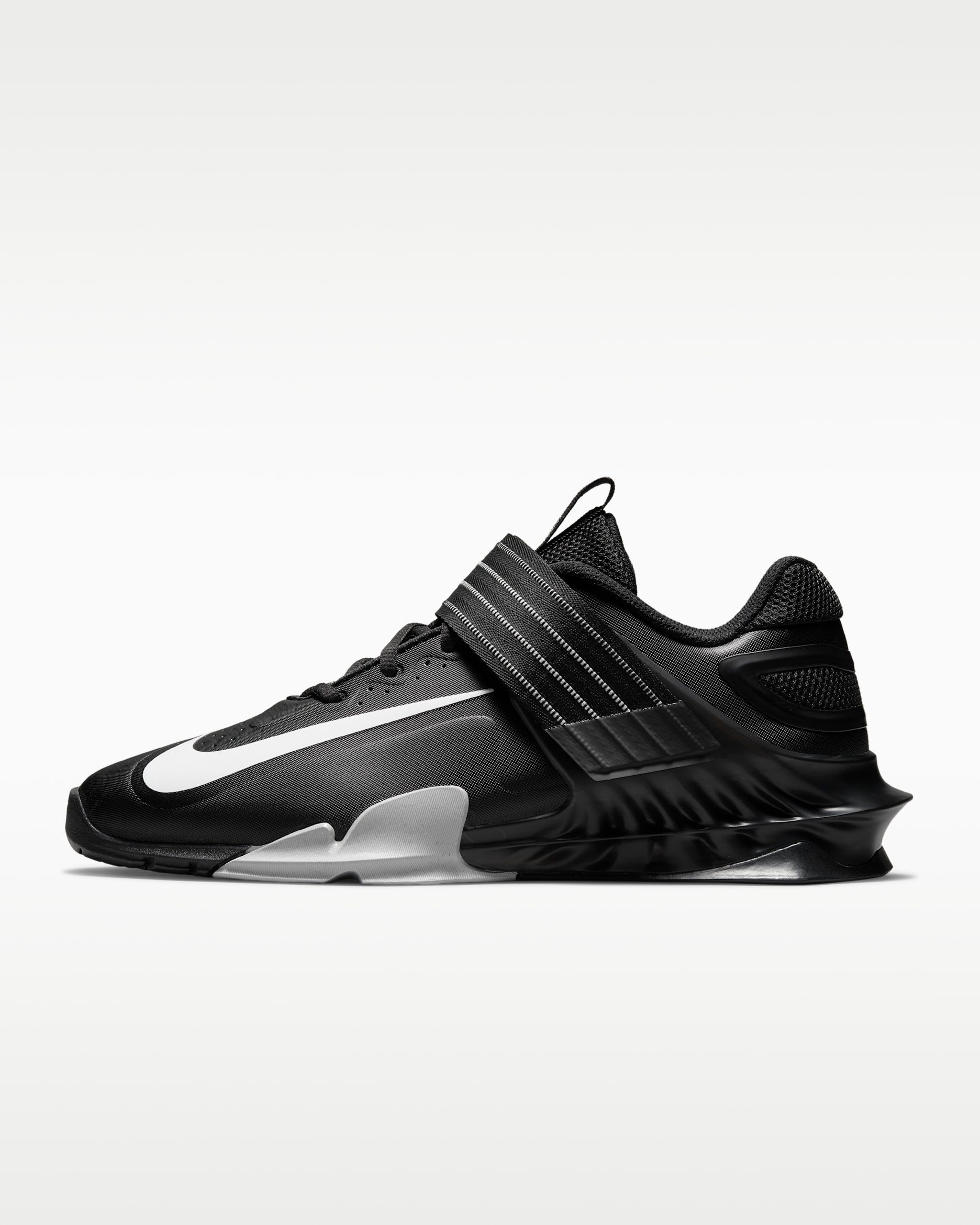
Best Beginner NikeSave $75 against Romaleos 4 for a single-strap Nike lifting shoe; serious Olympic lifters should compare the more specialized dual-strap model.
Pros
- Lower price than Romaleos 4
- Rigid midsole with a heel lift
- Single strap and flat base add squat stability
Cons
- Not a true premium Olympic lifter
- Lower heel than most serious lifters
- Runs small according to Nike
The Nike Savaleos is the beginner-friendly Nike option. Nike lists the linked black/red/white model at $125 with a hook-and-loop strap, rigid midsole with a heel lift, flat wide base, and padded mesh around the heel. That puts it $75 below the Romaleos 4 at regular pricing.
Choose this if you want a Nike lifting shoe for squats and general gym work but do not want the stiffness or price of the Romaleos 4. Skip it if you are training Olympic lifts seriously or if the price gets too close to sale pricing on the Romaleos 4. At that point, buy the better shoe.
Compare the Savaleos’ $125 price with the Powerlift 5’s current price in your size; sales can make the Adidas the cheaper choice. Choose Nike for its fit rather than a small price difference. For flat, low-profile alternatives, see our best barefoot shoes for working out.
Buying Older Weightlifting Shoes
The Nike Romaleos 3 and Adidas Powerlift 4 predate the Romaleos 4 and Powerlift 5. You may also find older Reebok Lifter PR, CrossFit Lifter, Adidas Leistung, or Inov-8 Fastlift models on clearance. Compare the exact size, condition, price, and return policy before choosing an older pair over a current model.
An older shoe can still suit your foot, but a small discount rarely justifies uncertain sizing or a no-return purchase. Start with current models when you need a straightforward exchange, especially for your first lifting shoe.
Weightlifting Shoe Comparison Table
| Shoe | Price Checked | Heel | Best For | |
|---|---|---|---|---|
| Nike Romaleos 4 | $200 | Raised rigid heel | Most serious lifters | Check Price |
| TYR L-1 Lifter | $99 sale / $200 MSRP | 21mm | Wide feet | Check Price |
| TYR L-2 Lifter | $180 sale / $225 MSRP | 21mm | Premium wide lifter | Check Price |
| Adidas Adipower Weightlifting 3 | $184 sale / $230 MSRP | Tall raised heel | Olympic lifting | Check Price |
| Adidas Powerlift 5 | $85 at Rogue / $130 MSRP | 15mm | Budget squats | Check Price |
| Reebok Legacy Lifter IV | Varies | Raised heel | Stable platform | Check Price |
| Do-Win Classic Lifter | $75 sale / $130 MSRP | Approx. 0.75 in, varies by size | Classic lifting feel | Check Price |
| Nike Savaleos | $125 | Lower raised heel | Beginner Nike fans | Check Price |
How to Choose Weightlifting Shoes
Buy for the lifts you perform most. For recreational squats, compare the Powerlift 5’s 15mm wedge with the Do-Win’s approximate 19mm drop before spending $200 on Romaleos. For frequent cleans and snatches, compare Romaleos’ two straps with the Adipower’s lace-and-strap design. Wide-footed lifters have a clearer reason to pay for TYR’s anatomical toe box than to choose a narrower shoe by price alone.
A back-squat footwear study and a heel-lift insole study examined changes in squat mechanics and lower-limb work. Use heel elevation as a positioning aid, not a guarantee of better lifts or fewer injuries.
Heel Height
A taller heel usually helps lifters reach depth with a more upright torso, especially in high-bar squats, front squats, cleans, and snatches. Around 19-22mm is common for serious lifters. Lower-heel shoes around 15mm, like the Adidas Powerlift 5, are easier to live with for general strength training but may not give stiff-ankled lifters enough help in the bottom position.
Sole Rigidity
A good lifting shoe should not feel like a running shoe. Squishy foam wastes force and can make heavy squats feel unstable. Premium lifters like the Romaleos 4 and TYR L-2 use rigid platforms because the point is not comfort during a jog. The point is a stable base under load.
Toe Box and Fit
Fit can matter more than brand. Nike and Adidas lifters often feel secure but narrow. TYR’s L-1 and L-2 are better starting points if you need room for toe splay. If the shoe is too tight, your foot may shift, cramp, or distract you during heavy sets. If it is too loose, you lose the locked-in feel that makes lifters useful.
When Not to Wear Weightlifting Shoes
Do not wear heeled lifters for every exercise by default. They can be useful for squats and Olympic lifts, but many lifters prefer flat shoes for deadlifts, Romanian deadlifts, sled work, carries, and general conditioning. If deadlift strength is the main goal, compare your progress with our 9-week deadlift program rather than forcing every lift into the same shoe.
Flat Shoes for Powerlifting
Many powerlifters own two pairs: a heeled lifter for squats and a flat shoe for deadlifts. Some use flats for all three lifts. Choose a flat shoe by its sole, grip, midfoot fit, and your federation’s rules.
Deadlift: Pull in Flats
A raised heel adds height under your feet, so the bar travels farther, and it changes your starting position. A thin, flat sole keeps the pull as short as your build allows and gives you an even, stable base. That is why many powerlifters deadlift in flat shoes or deadlift slippers.
Squat: Heel or Flat Depends on Your Squat
Lifters who squat high-bar or with a close stance and an upright torso usually do best in the heeled shoes above. Many low-bar powerlifters squat in flats or a low heel, because their torso leans forward more and a wider stance needs less ankle bend. Neither is wrong. Squat in both for a few sessions and keep the pair that gets you to depth in the most stable position.
Bench Press: Grip Matters More Than Heel
On the bench, your feet need to stay planted. The IPF requires your feet to stay flat on the floor, as flat as the shape of the shoe allows, so a sole that grips the platform helps you hold your leg drive. Bench in whatever you squatted in, as long as the sole does not slide when you drive your legs. Both heeled and flat shoes are legal.
What to Look For in a Flat Shoe
- A thin, hard sole. Skip cushioned running or walking shoes. Soft foam compresses under a heavy bar.
- A flat underside. Flat rubber that grips the platform beats a deep tread.
- A snug midfoot. Your foot should not slide inside the shoe when you push your knees out or drive through the floor.
- Room for your toes. Toes that can spread give you a wider base, the same reason we like TYR’s toe box above.
Common choices are classic flat canvas sneakers such as Converse Chuck Taylor All Stars, deadlift slippers (a thin sole and a soft upper, made for pulling), and minimalist training shoes. For flat, low-profile picks, see our best barefoot shoes for working out. If you are buying one pair for all three lifts, start with a flat canvas sneaker or a minimalist trainer. Both usually meet the IPF rules below. Add a heeled lifter later if your squat needs it.
Meet Rules for Shoes
If you compete, check your federation’s rulebook before meet day; our powerlifting federations directory lists each federation and its recent meets. Under the IPF Technical Rules in force from 1 March 2026:
- You must wear indoor sports shoes or boots, weightlifting or powerlifting shoes, or deadlift slippers. Hiking boots are not allowed.
- The sole can be no thicker than 5 cm at any point, and the underside must be flat, with no projections or modifications.
- Loose insoles are limited to 1 cm, and socks with a rubber sole are not allowed.
- Shoes must be fastened on the platform, and nothing may be applied to the underside, including chalk or resin. A spray of water is allowed.
Once your shoes are sorted, the meet command center plans your attempts and warm-ups from your training maxes.
FAQ
Are weightlifting shoes worth it?
Yes, if you squat, front squat, clean, or snatch often enough to benefit from a stable raised heel. They are less useful if most of your training is machines, dumbbells, or deadlifts. A beginner can start with a budget model like the Adidas Powerlift 5 before buying a premium shoe.
What heel height is best for weightlifting shoes?
Most serious weightlifting shoes sit around 19-22mm. That range helps many lifters reach depth and keep the torso more upright. Lower heels around 15mm can work well for general strength training, especially if you do not need much ankle-mobility help.
Should weightlifting shoes fit tight?
They should fit secure, not painful. Your heel should stay locked down and your midfoot should not slide, but your toes should not feel crushed. Nike specifically says the Romaleos 4 fits small and recommends ordering a half size up.
Can I deadlift in weightlifting shoes?
You can. Olympic lifters often pull in heeled shoes because it matches their sport. Powerlifters usually deadlift in flats because a raised heel lengthens the pull. See Flat Shoes for Powerlifting above.
Are wide toe box lifting shoes better?
They are better if your foot needs the room. A wider toe box can let the foot spread naturally and reduce pinching during squats. The TYR L-1 and L-2 are the best picks here for wide-footed lifters. Narrow-footed lifters may prefer the locked-in feel of Nike or Adidas.
What is the best weightlifting shoe for beginners?
The Adidas Powerlift 5 is the best value beginner pick because it has a lower price, a 15mm heel, and enough stability for squats. The Nike Savaleos is also beginner-friendly, but it is less compelling if its price gets close to discounted Romaleos 4 pricing.
Bottom Line
The Nike Romaleos 4 is the best overall weightlifting shoe for most serious lifters in 2026 because it combines a rigid platform, dual straps, strong lockdown, and current availability from Nike. Wide-footed lifters should start with the TYR L-1, and budget-focused lifters should check the Adidas Powerlift 5 before spending more.
Check Nike’s half-size-up guidance and the retailer’s return terms before ordering. For your pulls, use the flat-shoe guidance above to decide whether you need a separate pair. The right squat shoe does not need to be your shoe for every lift.
Sources
- The effect of weightlifting shoes on the kinetics and kinematics of the back squat
- Effect of heel lift insoles on lower extremity muscle activation and joint work during barbell squats
- IPF Technical Rulebook, in force from 1 March 2026 (3.7 Shoes or boots; 3.14 General)



If you are going for finest contents like I do, only visit this website every day as
it provides quality contents, thanks