
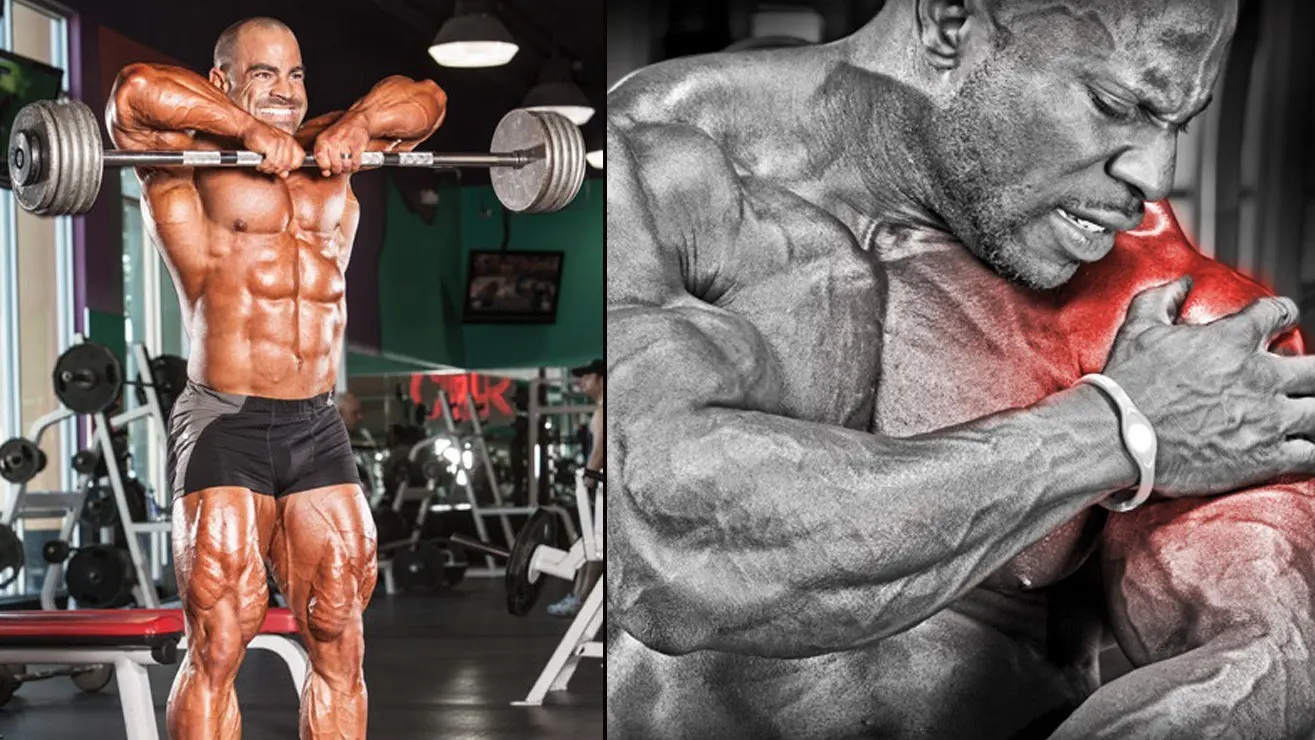
Things get more complicated. We’ve previously covered muscles, such as biceps, that simply shorten or lengthen to close or open a hinge joint. That was the primary school; this is college – because your shoulder joints offer an advanced degree of mobility. Three distinct delt heads move your arms over 180-degree arcs. This greater complexity leads to heightened risks of errors and injuries.
So take careful notes as we tackle the five most common shoulder training blunders and explain how to shoulder on correctly.
Mistake #1: Overemphasising Front Delts
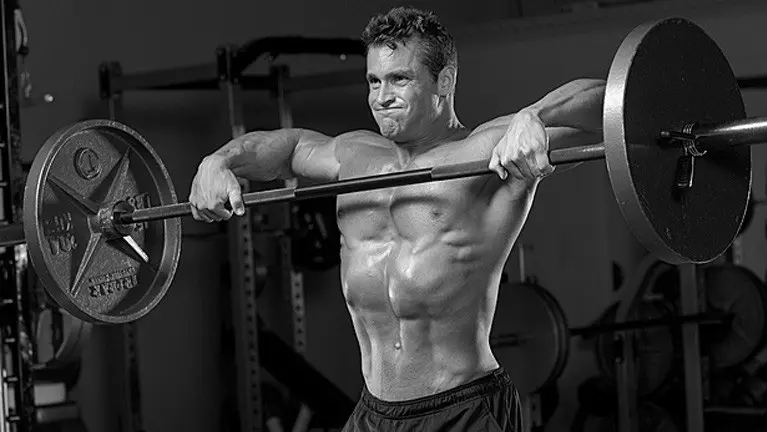 All delt heads do not work equally, and the one that typically carries the heaviest load is anterior. Your front delts are not only primary movers during overhead presses, they’re also secondary movers during chest and triceps workouts, helping during presses and dips. If you’re doing front raises in addition to a lot of shoulder, chest and tri compound lifts, you’re likely overworking your front delts.
This is especially true if you train chest and shoulders in the same workout or on consecutive days.
Solutions
- If you hit chest before shoulders in the same workout, consider how much pressing and dipping you’ve already done before working delts. If the total is at least eight sets, do no more than four sets total of shoulder presses and front raises.
- Don’t train chest and shoulders on consecutive days. Ideally, three days should pass between hitting each, so if you do chest on Monday, do delts on Thursday.
- Dumbbell presses or presses behind the neck stress the middle delts more and front delts less, so these are good alternatives to military presses if you believe that your front delts are overtrained or that they’re outgrowing the other heads.
- One cardinal rule of bodybuilding is that you can never be too wide. And so, it’s generally best to emphasize your middle delts more and front delts less on shoulder day, because the middles (most responsible for shoulder width) get little stress during other workouts and your fronts may assist during both your chest and tri sessions.
Mistake #2: Underemphasizing Rear Delts
 Just as anterior delts tend to get too much emphasis, posterior delts tend to get too little. Rear delts assist during lat exercises, such as rows and pulldowns; but if you’re targeting your lats correctly, it’s unlikely that your rear delts are receiving enough work on back or shoulder day to reach their full potential.
Most bodybuilders relegate rear laterals to last place in their shoulder routines, and then go through the paces for four sets of minimal intensity. It’s no wonder posterior delts are so frequently your shoulders’ weakest links.
Solutions
- Consider training rear delts on a back day, when you can emphasize them separately from their front and middle brothers. Perform four to six sets of rear laterals at the end of your back workout.
- If you choose to train posteriors on shoulder day, don’t always perform them last in your routine.
Instead, do rear laterals after presses – but before any side laterals or front raises – or switch up the order from workout to workout.
Mistake #3: Too Fast And Furious
 Especially when it comes to side laterals and front raises, trainers tend to go too heavy and use too much momentum. Each delt head is relatively small, and to isolate them, you need to minimize both momentum and assistance from other muscles. You may not want to be seen holding 20-pound dumbbells, but if that’s what it takes to best isolate your medial delts, then those are the weights you should be grabbing.
Solutions
- Do shoulder exercises seated instead of standing to remove your legs from the lifts.
- Choose weights that you can utilize for 8-12 strict reps at a relatively slow pace (1 second up, 2 seconds down). Pause at the bottom of reps to begin each rep from a dead stop and eliminate any swinging momentum.
Mistake #4: Improper Form
 This mistake usually runs in concert with #3. The main culprit is emphasizing the weight and not focusing on muscle stimulation. Thus, the weight is raised by any means necessary. Other times, trainers simply develop bad habits; some never learn how to do lifts in the manner that best stimulates muscle gains.
Solutions
Correct form is especially important on shoulder day, because of the ball-and-socket joints’ vulnerability to injury.
- When doing side laterals, let your elbows lead the way and raise them until they’re even with your shoulders. In the top position, your hands should be just below the level of your elbows (arms slightly bent) with your pinkies up and thumbs down.
- Throughout each set, focus on the deltoid heads you’re targeting, not on the resistance. Work the muscle, not the weight. After reaching failure in a shoulder exercise, don’t cheat to eke out extra reps. Instead, do a drop set, have a partner help with forced, reps or use the rest-pause technique.
When doing overhead presses, lower your hands to approximately chin level (or below) and raise to just short of lockout.
Mistake #5: Lack Of Exercise Variety
 Shoulders may be the only body part you train with just free weights. It’s true that barbells and dumbbells are the most effective training tools, but you can too easily fall into a rut of doing the same three or four free-weight exercises the same way, workout after workout. Variety is also an effective tool.
Solutions
There are a lot of ways to do overhead presses.
Try including a different pressing exercise each shoulder workout. Here are three free-weight presses you likely aren’t doing: underhand presses (press a barbell over-head with a shoulder-width underhand grip); Arnold presses (press dumbbells from underhand at the bottom to overhand at the top); and rack military presses (press each rep from a dead stop off of power-rack supports set at chin level).
- There’s more to training middle delts than just dumbbell side laterals. On occasion, do side laterals with cables or a machine and, regardless of equipment, you can go unilateral. Wide-grip upright rows are another way of targeting your middle delts.
- Likewise, you can perform rear laterals with cables or machines and go unilateral. You can also do wide-grip bent-over rows to focus more on your posterior delts. A Smith machine is an effective tool for wide-grip rows; hold each contraction and flex your rear delts.
Lessons Learnt
- Work your front delts less and middle delts more
- Train rear delts after back or don’t leave them for last in your shoulder routine
- Sit down and slow down to remove momentum from lifts
- Use strict form and avoid cheating, even if only to extend a set beyond failure
- Do a wide variety of shoulder exercises
Author: Greg Merritt
References: muscleandfitness.com
Copyright 2011 Weider Publications