

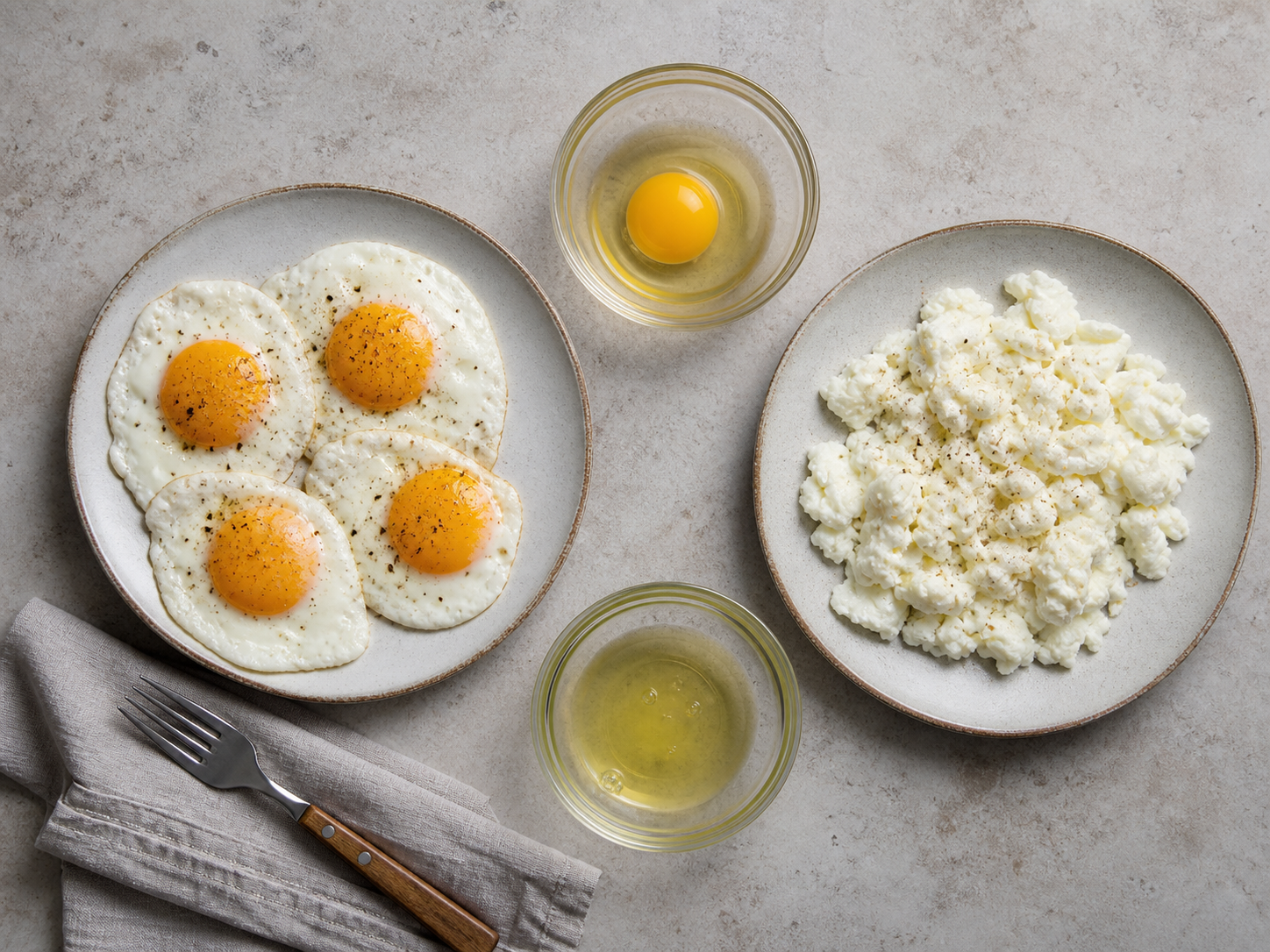
Whole eggs and egg whites can both support muscle growth. Whole eggs provide protein along with fat, choline, and other nutrients concentrated in the yolk. Egg whites provide complete protein for far fewer calories. Current research has not shown that eating the yolk produces greater long-term muscle growth when protein intake is similar.
Your calorie target, appetite, food preferences, and blood-lipid health should drive the choice. A person cutting weight may get more value from mostly whites. Someone who needs more calories may prefer whole eggs. Many lifters can split the difference by combining one or two whole eggs with enough whites to reach their meal’s protein target.

Which Is Better for Building Muscle?
Neither option has a proven advantage for long-term hypertrophy when a lifter eats enough total protein and calories. Whole eggs offer more nutrients and energy per serving. Egg whites make it easier to raise protein without adding much fat or many calories. Both contain all nine essential amino acids.
The yolk may influence the short-term muscle-building response after a workout, but an acute laboratory response does not tell us how much muscle someone will gain over several months. Training quality, progressive overload, total daily protein, energy intake, and adherence carry more practical weight than choosing one part of an egg.
If you need help setting a daily target, FitnessVolt’s protein calculator gives a useful starting range based on body weight and goal. Divide that target across meals you can repeat consistently.
Whole Egg vs. Egg White Nutrition
One large whole egg provides about 72 calories and 6.3 grams of protein. The white from one large egg provides about 17 calories and 3.6 grams of protein. The yolk accounts for nearly all of the egg’s fat, cholesterol, and choline.
The table uses rounded values from USDA FoodData Central for a 50-gram large whole egg and a 33-gram large egg white. It assumes raw egg with no butter, oil, cheese, or other ingredients. Cooking changes water weight, while added fats can change the meal’s calories substantially.
| Serving | Calories | Protein | Fat | Saturated fat | Cholesterol | Choline |
|---|---|---|---|---|---|---|
| 1 large whole egg | 72 kcal | 6.3 g | 4.8 g | 1.6 g | 186 mg | 147 mg |
| White from 1 large egg | 17 kcal | 3.6 g | 0.1 g | Trace | 0 mg | Less than 1 mg |
| 4 large whole eggs | 286 kcal | 25.1 g | 19.0 g | 6.3 g | 744 mg | 588 mg |
| 7 large egg whites | 120 kcal | 25.2 g | 0.4 g | About 0.1 g | 0 mg | About 3 mg |
Carton egg whites vary by brand. Check the label for serving size, sodium, and additives before treating a carton serving as identical to the white from one shell egg.
What Changes When Protein Is Matched?
Four whole eggs and seven egg whites each supply about 25 grams of protein. The whole eggs provide roughly 166 more calories, 19 grams of fat, and far more choline. The whites provide almost the same protein with negligible fat and no cholesterol.
| Protein-matched meal | Protein | Calories | Best fit | Main tradeoff |
|---|---|---|---|---|
| 4 whole eggs | About 25 g | About 286 | Higher-calorie diets and people who value yolk nutrients | More calories, fat, and dietary cholesterol |
| 7 egg whites | About 25 g | About 120 | Calorie-controlled diets and high-volume meals | Few of the nutrients concentrated in the yolk |
| 2 whole eggs plus 4 whites | About 27 g | About 213 | Maintenance, recomp, or a flexible everyday breakfast | Requires separating eggs or using a carton |
Equal protein servings expose the calorie and nutrient tradeoffs. Three whole eggs and three whites deliver different amounts of protein, so an egg-for-egg comparison hides part of the decision.
Do Whole Eggs Stimulate More Muscle Protein Synthesis?
A small 2017 trial found a larger five-hour muscle protein synthesis response after whole eggs than after a protein-matched serving of egg whites. Ten resistance-trained young men completed one leg workout and consumed 18 grams of protein. The result supports further study of the yolk’s food matrix, but it cannot predict months of muscle gain.
The 2017 randomized crossover trial reported about a 40% larger myofibrillar protein synthesis response with whole eggs. Both meals produced similar blood leucine availability. The researchers proposed that nutrients in the yolk may have contributed to the difference.
A later 12-week trial provides a better test of the outcome lifters care about. Thirty resistance-trained young men consumed either three whole eggs or six egg whites after training. Both groups gained muscle, and the researchers found no significant between-group difference in skeletal muscle mass. Some strength and body-composition measures favored whole eggs, but the study was small and the two meals supplied different calories.
A 2021 review of whole-egg research reached a measured conclusion: whole eggs may increase the acute muscle protein synthesis response, while evidence for greater long-term hypertrophy remains limited. A 2026 acute study of 65 trained adults also found no statistically significant difference in myofibrillar protein synthesis among six protein-matched foods.
Why an Acute Response Does Not Equal More Muscle
Researchers can measure muscle protein synthesis for a few hours after one workout. Hypertrophy develops through repeated training and recovery over many weeks. A resistance-training study by Damas and colleagues found that early increases in protein synthesis tracked muscle damage more closely than hypertrophy. A larger short-term reading does not guarantee more contractile muscle later.
Use the egg studies to guide meal design, not to assign magic properties to yolks or whites. Your complete diet and training program determine whether that meal contributes to muscle gain.
How Should You Choose for Cutting, Maintenance, or Bulking?
Choose the combination that reaches your protein target without pushing calories past or below your goal. Whites work well when calories are tight. Whole eggs help when appetite is low or a higher-calorie meal fits the plan. A mixed serving gives most lifters an easy middle option.
| Goal | Practical starting serving | Why it works | Adjust when |
|---|---|---|---|
| Cutting | 1 whole egg plus 4-6 whites | Provides roughly 20-28 g of protein while keeping calories controlled | Hunger stays high or the rest of the meal lacks fiber and volume |
| Maintenance or recomp | 2 whole eggs plus 4 whites | Provides about 27 g of protein with some yolk nutrients and moderate calories | Your daily protein or calorie total consistently misses its target |
| Bulking | 2-3 whole eggs, plus whites as needed | Adds protein and calories without requiring a large volume of food | Fat intake crowds out carbohydrate or total calories rise too quickly |
| Elevated LDL-C or ApoB | Use more whites and individualize yolks with a clinician | Keeps egg protein while reducing dietary cholesterol and saturated fat | Your clinician gives a different target based on labs and medical history |
These servings are starting points, not prescriptions. Body size, daily protein intake, total calories, food allergies, and the rest of the meal all matter. FitnessVolt’s bodybuilding breakfast guide offers more ways to pair eggs with carbohydrate, fruit, and other protein sources.
Are Whole Eggs Bad for Cholesterol?
Whole eggs contain dietary cholesterol, and some people experience a larger LDL cholesterol response than others. The American Heart Association allows moderate egg intake within a heart-healthy eating pattern for healthy adults. People with dyslipidemia, diabetes, or cardiovascular risk need more individualized guidance.
An American Heart Association science advisory states that healthy people can include up to one whole egg per day as part of a healthy diet. That guidance does not make higher intakes harmless for everyone. A meta-analysis of randomized trials found that higher egg intake increased LDL cholesterol by about 8 mg/dL on average compared with control diets, though individual responses varied.
Your full meal affects the health and calorie profile. Eggs cooked with a little oil and served with vegetables differ from eggs paired with large amounts of butter, cheese, and processed meat. People with elevated LDL-C or ApoB, familial hypercholesterolemia, diabetes, or established cardiovascular disease should discuss yolk intake with a qualified clinician.
How to Prepare Eggs for a Better Training Meal
Build the meal around your protein and calorie targets, then add foods that support the rest of your day. Scrambled eggs with vegetables and potatoes suit a larger training meal. An omelet with one whole egg and several whites can provide similar protein with fewer calories.
- Measure added fat. One tablespoon of butter or oil adds roughly 100-120 calories.
- Add carbohydrate when it fits. Oats, potatoes, fruit, or whole-grain toast can support training and recovery.
- Add produce. Peppers, spinach, mushrooms, tomatoes, or fruit improve meal volume and variety.
- Use a mixed serving for convenience. Keep one or two yolks for flavor, then add shell or carton whites to raise protein.
For more cooking ideas, see FitnessVolt’s guide to the healthiest ways to prepare eggs. Lifters who struggle to build complete meals can also use the protein and carbohydrate examples in our guide to eating for muscle gain.

Handle and Cook Eggs Safely
The FDA recommends buying refrigerated eggs with clean, uncracked shells and keeping them refrigerated at 40 degrees Fahrenheit or below. Cook shell eggs until the white and yolk are firm. Cook dishes containing eggs to an internal temperature of 160 degrees Fahrenheit.
Use pasteurized shell eggs or pasteurized egg products for recipes that remain raw or lightly cooked. This precaution matters more for pregnant people, young children, older adults, and anyone with a weakened immune system because these groups face a higher risk from foodborne illness.
Frequently Asked Questions
Do egg whites contain complete protein?
Yes. Egg-white protein contains all nine essential amino acids. Removing the yolk reduces calories, fat, cholesterol, choline, and several micronutrients, but it does not turn the remaining protein into an incomplete protein.
Are whole eggs better after a workout?
Whole eggs produced a larger acute muscle protein synthesis response in one small 2017 study. A 12-week trial found no greater gain in skeletal muscle mass than egg whites. Either can work after training when the meal helps you meet daily protein and calorie needs.
How many egg whites equal the protein in one whole egg?
One large whole egg has about 6.3 grams of protein. One large white has about 3.6 grams. Roughly two whites provide a little more protein than one whole egg, with fewer calories and almost no fat.
Can you eat whole eggs while cutting?
Yes. Whole eggs can fit a calorie deficit. Combining one whole egg with several whites often makes the meal easier to fit because you keep yolk flavor and nutrients while increasing protein for fewer calories.
Are carton egg whites as good as shell egg whites?
Pasteurized carton whites can provide similar protein and save preparation time. Compare labels because serving sizes, sodium, additives, and texture vary. Follow the package’s refrigeration and use-by instructions.
Do whole eggs raise testosterone?
One small 12-week study found changes in some hormone measures after whole-egg intake, but it did not establish whole eggs as a reliable testosterone booster. Adequate calories, dietary fat, sleep, and resistance training matter more than one food.
Sources
- U.S. Department of Agriculture. 2019. Egg, whole, raw, fresh, FDC ID 171287. FoodData Central. Accessed July 17, 2026.
- U.S. Department of Agriculture. 2019. Egg, white, raw, fresh, FDC ID 172183. FoodData Central. Accessed July 17, 2026.
- van Vliet S, et al. 2017. Consumption of whole eggs promotes greater stimulation of postexercise muscle protein synthesis than consumption of isonitrogenous amounts of egg whites in young men. American Journal of Clinical Nutrition. PMID: 28978542. DOI: 10.3945/ajcn.117.159855.
- Bagheri R, et al. 2021. Whole egg vs. egg white ingestion during 12 weeks of resistance training in trained young males. Journal of Strength and Conditioning Research. PMID: 33306586. DOI: 10.1519/JSC.0000000000003922.
- Santos HO, et al. 2021. The effect of whole egg intake on muscle mass: are the yolk and its nutrients important? International Journal of Sport Nutrition and Exercise Metabolism. PMID: 34504041. DOI: 10.1123/ijsnem.2021-0086.
- Haigh L, et al. 2026. Ingestion of diverse protein-rich whole-foods result in similar post exercise whole body and myofibrillar protein synthesis rates compared with a more isolated protein source in young adults. American Journal of Clinical Nutrition. DOI: 10.1016/j.ajcnut.2026.101231.
- Damas F, et al. 2016. Resistance training-induced changes in integrated myofibrillar protein synthesis are related to hypertrophy only after attenuation of muscle damage. Journal of Physiology. PMID: 27219125. DOI: 10.1113/JP272472.
- Carson JAS, et al. 2020. Dietary cholesterol and cardiovascular risk: a science advisory from the American Heart Association. Circulation. DOI: 10.1161/CIR.0000000000000743.
- Li Y, et al. 2020. Association between egg consumption and cholesterol concentration: a systematic review and meta-analysis of randomized controlled trials. Nutrients. DOI: 10.3390/nu12071995.
- U.S. Food and Drug Administration. n.d. What you need to know about egg safety. Accessed July 17, 2026.