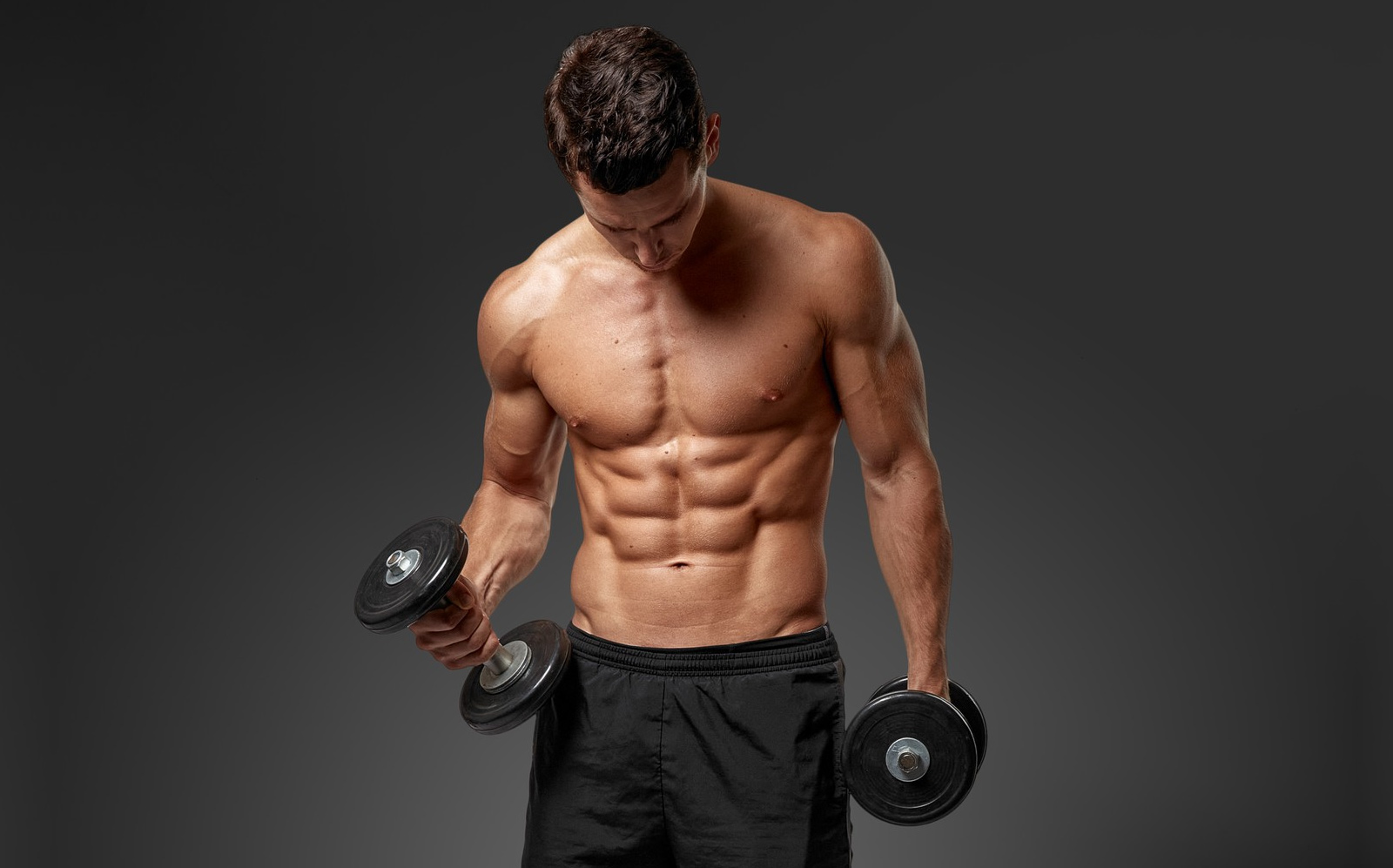
Crunches are a popular exercise that isolate your abs. Done correctly, the only thing that moves during crunches is your spine, with your rectus abdominis muscle doing almost all the work.
However, while this sounds like good news, it actually isn’t. That’s because your abs don’t usually function in isolation, so it doesn’t make much sense to train them in this way.
I mean, other than sitting up in bed in the morning, when was the last time you did anything remotely resembling a crunch in your day-to-day life? And even if you do perform a crunch-like movement, you probably only do it once and not dozens of times in a row.
And speaking of repetitions, while a raw beginner might struggle to do 15-20 crunches, more experienced exercisers should have no problem cranking out 30, 50, or even 100 reps per set. Such a high volume is largely a waste of time because it’s only the final few tough reps that have any kind of training effect.
So, while crunches aren’t inherently bad, they probably aren’t the best way to train your abs, especially once you’ve graduated from beginner to intermediate status.
I’m a veteran personal trainer and while I do prescribe crunches to some of my clients, I prefer to use functional full body exercises that work the abs more naturally. Lifting and carrying weights, especially single dumbbells, works your abs in conjunction with the rest of your body, delivering a much more effective, time-efficient workout.
In this article, I share a tried and tested 8-move dumbbell routine that’ll light up your abs AND strengthen the rest of your body—no crunches required.
Beyond Crunches: What Your Abs Actually Do
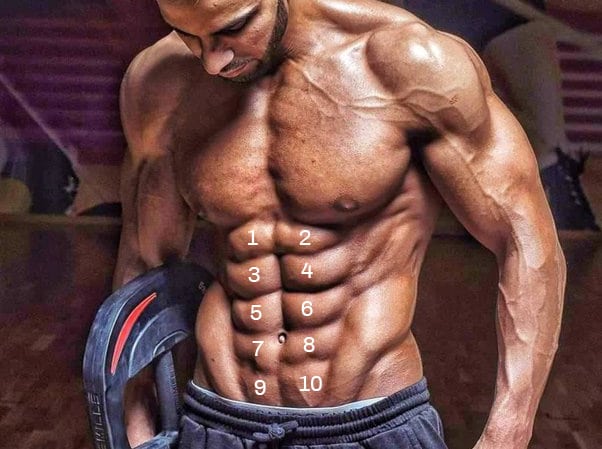
A flat stomach or six-pack abs are at the top of most people’s must-have list. But, to achieve either of these goals, exercisers often focus on their rectus abdominis muscle, or abs for short.
Located at the front of the abdomen, this flat, segmented muscle’s main role is flexing your spine, like when you’re doing sit-ups or crunches.
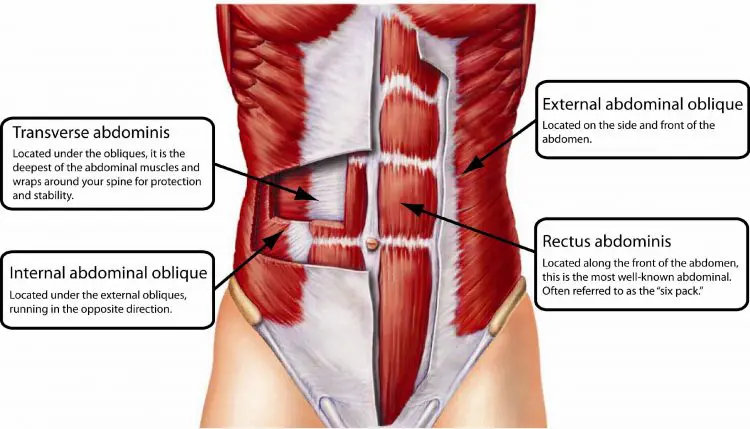
However, your midsection comprises more than just your abs. In fact, there are numerous equally important muscles that are collectively known as your core. So, while your abs are part of your core, your core is so much more than just your abs, which is why crunches aren’t the best way to develop the midsection of your dreams.
The muscles that make up your core include:
- Transverse abdominis
- Diaphragm
- Pelvic floor
- Multifidus
- Obliques
- Erector spinae
- Rectus abdominis
While crunches are an effective movement for targeting the abs, they don’t do much for the other core muscles. Consequently, many people neglect these other muscles or have to spend time doing exercises that isolate them, too.
A better way to train the core is to train it as it works in nature—in conjunction with the rest of your body. After all, your core is your natural weightlifting belt, and its primary job is to support your spine as you move your arms and legs.
This not only makes better use of your time but will also help improve your ability to perform physically demanding tasks, both in and out of the gym. And if that’s not compelling enough, integrating your core with the rest of your body will also reduce your risk of back pain (1).
So, crunches? Just say no!
8-Move Dumbbell Flow for Stronger Abs
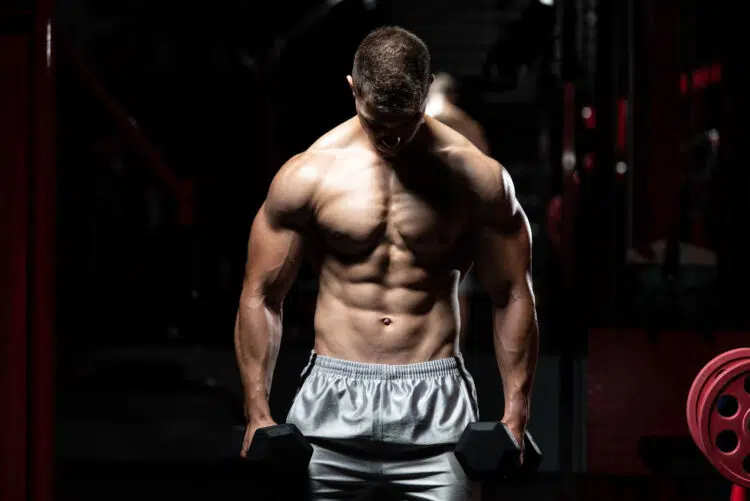
Now that you understand why your core needs more than endless crunches, it’s time to put that knowledge into practice. This eight-move dumbbell flow trains your abs the way they were meant to work—supporting and stabilizing your body as you lift, carry, and move.
Related: 12 Best Rotation and Anti-Rotation Exercises for Functional Core Strength
Do this workout 2-3 times a week on non-consecutive days to allow plenty of time for rest and recovery.
Regarding exercise performance, you have a choice, and both options can work, so it’s up to you which approach you prefer:
- Option 1: Complete all repetitions for one side of your body before switching sides on the next lap.
- Option 2: Alternate sides within each exercise, moving on to the next exercise only after training both sides
But, before you begin, make sure you prepare your body for what you’re about to do by warming up. Start with 5-10 minutes of easy cardio followed by dynamic mobility and flexibility exercises for all your major joints, especially your lower back.
Related: How to Warm Up for Strength Training
Before you dive in, remember: this eight-move flow is designed as one continuous sequence that works your core from every angle. Beginners can start with just one lap and focus on learning proper form. Over time, you’ll build the strength and stamina to complete multiple laps confidently.
| Exercise | Suggested Repetitions | |
| 1 | Dumbbell Suitcase Deadlift | 8-12 |
| 2 | Dumbbell Single-Arm Waiter’s Carry | 30-50 feet |
| 3 | Dumbbell Pallof Press | 8-12 |
| 4 | Dumbbell Woodchop | 8-12 |
| 5 | Dumbbell Goblet Squat | 8-12 |
| 6 | Dumbbell Good Morning | 8-12 |
| 7 | Dumbbell Lunge with Rotation | 8-12 |
| 8 | Dumbbell Single-Arm Curl and Press | 8-12 |
Exercise Instructions
To help you get the most from this workout, here are step-by-step instructions for each movement. Focus on controlled technique rather than rushing through the exercises. Proper form ensures your abs and core muscles are fully engaged while reducing your risk of injury.
1. Dumbbell Suitcase Deadlift
The single-arm dumbbell suitcase deadlift is a gold-standard leg and core exercise that’s as functional as it is effective.
- Place your dumbbell on the floor and stand next to it with your feet roughly shoulder-width apart.
- Squat down and grab the dumbbell with your nearside hand.
- Inhale, brace your core, lower your hips, lift your chest, and pull your shoulders back and down.
- Drive your feet into the floor and stand up, taking care not to lean sideways.
- Lower the dumbbell back to the floor and repeat.
2. Dumbbell Single-Arm Waiter’s Carry
This move challenges your core, shoulders, and arms. While you might raise a few eyebrows at the gym when you do this one, rest assured it’s a super-effective exercise.
- Lift and hold a single dumbbell above your head. Brace your core and engage your shoulders and upper back.
- Keeping your arm straight and vertical, go for a walk around your training area. Keep your torso upright—no leaning or twisting.
- Continue for the prescribed distance and then carefully lower the dumbbell back down.
3. Dumbbell Pallof Press
While this exercise is traditionally done using a cable machine or resistance bands, it works almost as well with a dumbbell.
- Stand with your feet shoulder-width apart, knees slightly bent. Brace your core and hold your dumbbell in front of your chest.
- Without leaning backward, extend your arms out in front of you.
- Bring the weight back to your chest and repeat.
4. Dumbbell Woodchop
Dumbbell woodchops are a dynamic full body exercise involving rotation which means it’s great for targeting your obliques. Make like a lumberjack and swing that dumbbell!
- Stand with your feet shoulder-width apart and hold your dumbbell in both hands.
- Bend your knees slightly and rotate your shoulders so the dumbbell travels outside of your legs.
- Next, rotate the other way and, keeping your arms straight, swing the dumbbell diagonally across your body and up to around shoulder-height.
- Lower the weight and repeat.
5. Dumbbell Goblet Squat
Goblet squats are more than just a popular leg exercise; they also work your core. Brace your abs to maintain your posture, just as these muscles often work in nature.
- Hold your dumbbell in front of your chest.
- Stand with your feet about shoulder-width apart, toes turned slightly outward.
- Keeping your core braced, squat down until your thighs are roughly parallel to the floor, taking care not to round your lower back.
- Stand back up and repeat.
6. Dumbbell Good Morning
While dumbbell goblet squats emphasize your thighs, good mornings target your glutes and hamstrings more. You’ll also need to use your core to maintain good posture and stop your back from rounding.
- Rest and hold your dumbbell on the back of your neck.
- Stand with your feet shoulder-width apart, knees slightly bent.
- Without rounding your lower back, push your hips rearward and lean forward until you feel a deep stretch in your hamstrings.
- Drive your hips forward and stand back up.
- That’s one rep—keep going!
7. Dumbbell Lunge with Rotation
Lunges are already a fantastic exercise, but adding a twist makes them even better. Use a light dumbbell for this move—it’s far harder than it looks!
- Stand with your feet together and your arms extended in front of you, dumbbell clasped firmly in your hands.
- Take a large step forward, bend your legs, and lower your rearmost knee to within an inch of the floor.
- Simultaneously rotate your upper body so your arms pass over your leading leg.
- Return to the starting position and repeat.
8. Dumbbell Single-Arm Curl and Press
The single-arm curl and press works your biceps, triceps, shoulder, and core, making it a very time-efficient exercise. Use your core to keep your torso vertical and stationary.
- Stand with your feet about shoulder-width apart, knees slightly bent. Hold a dumbbell in one hand, arm by your side.
- Bend your elbow and curl the weight up to your shoulder.
- Next, press the weight overhead.
- Reverse this movement to lower the dumbbell back down to your side.
Frequently Asked Questions
Do you have questions about this standing dumbbell flow? No problem, because I’ve got answers!
1. Can I use two dumbbells instead of one to save time?
You could, but I don’t recommend it. In most cases, switching to two weights will make the workout less effective as one dumbbell will counterbalance the other. Using one dumbbell means your core has to work harder to stabilize an offset load.
2. How heavy should my dumbbell be for this workout?
This is a tricky question to answer as I have no way of knowing how strong you are. Instead, you should select weights that you find somewhat challenging but can still use in good form. If your technique breaks down, dollars to donuts you’re trying to use too much weight.
3. How often should I do this dumbbell flow?
2-3 times per week on non-consecutive days, e.g., Monday, Wednesday, and Friday, is ideal. This provides a good balance between work and rest. Training your core more often is not recommended and will not produce better results.
4. What should I do if I feel back pain during these exercises?
Stop! While core training can help reduce your risk of back pain, injuries can still happen. Pain is your body’s way of saying that something is wrong and it should not be ignored. Reduce the weight, tighten up your form, and try again. If the pain persists rest until it subsides and seek medical attention if necessary.
5. Can beginners do this workout, or is it only for experienced lifters?
This workout is suitable for all fitness levels. Adjust your weights, sets, and reps to match your current fitness and strength. You should finish each workout feeling like you still have a little gas left in the tank.
Need more information? Drop me a line in the comments section below and I’ll get back to you ASAP.
Closing Thoughts
Crunches have their place, but if you’re serious about building a strong, functional core, it’s time to expand your approach. This eight-move dumbbell flow trains your abs the way they’re designed to work—in harmony with the rest of your body.
Stay consistent, focus on form, and don’t rush progress. Over time, you’ll develop a resilient midsection that looks great and supports you in everything you do, both inside and outside the gym.
Related: Goodbye Sit-Ups—This 10-Minute Routine Targets Your Core and Pelvic Floor Together
References:
- Smrcina Z, Woelfel S, Burcal C. A Systematic Review of the Effectiveness of Core Stability Exercises in Patients with Non-Specific Low Back Pain. Int J Sports Phys Ther. 2022 Aug 1;17(5):766-774. doi: 10.26603/001c.37251. PMID: 35949382; PMCID: PMC9340836.