
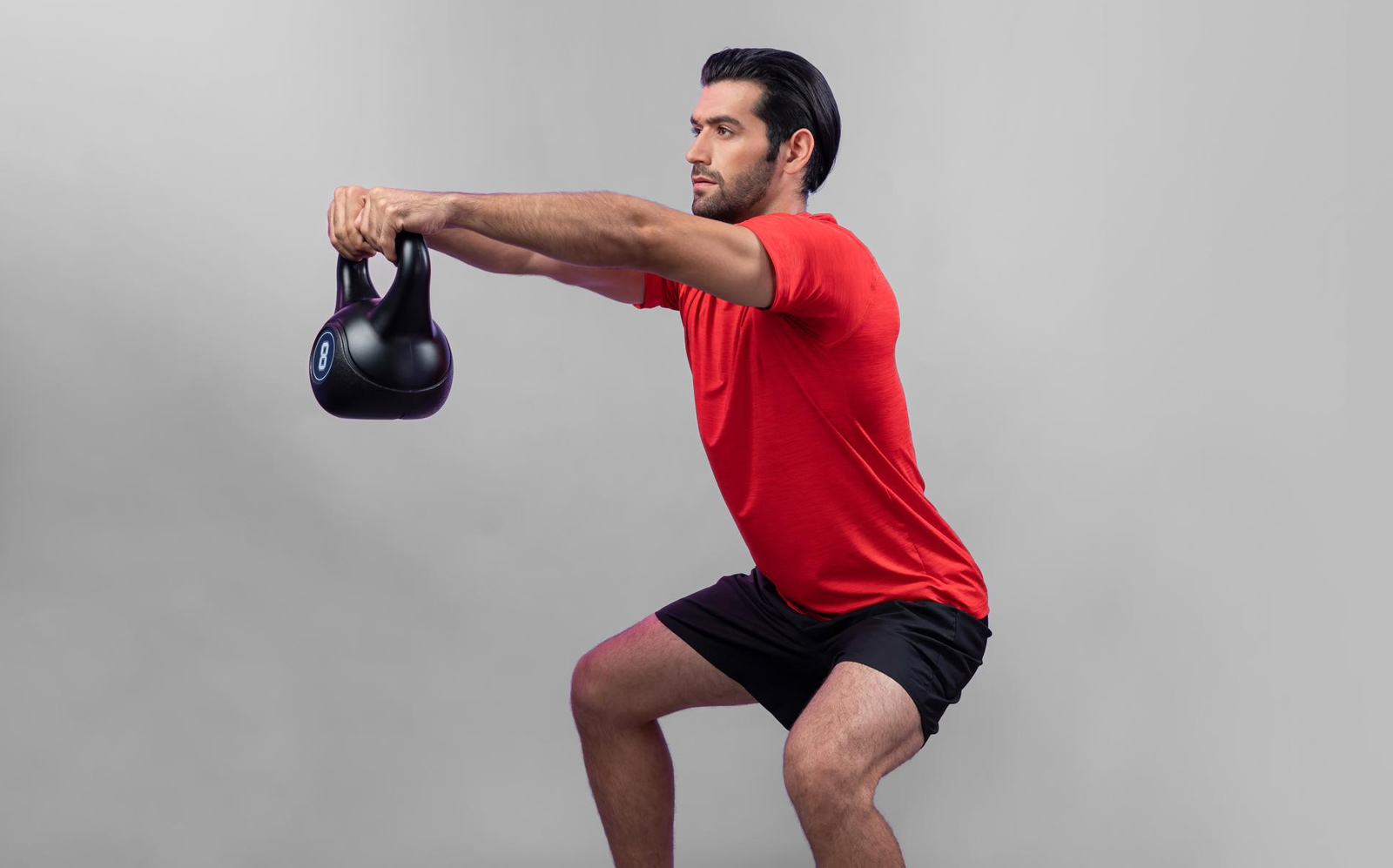
When it comes to high-intensity interval training, HIIT for short, treadmill sprints are a popular way to go. Just jump on, press the accelerator button, and run like your life depends on it!
Rest, repeat, and feel the fat falling off your body.
My favorite treadmill sprint workout is 400-meter repeats, starting each one every third minute. Four to six rounds make for an excellent finisher that leaves my legs burning, my heart pounding, and my lungs heaving.
I’ve done a lot of treadmill sprints in my nearly 40 years as an athlete and personal trainer, and I’m a certified fan. That said, as I’ve gotten older, I’ve also come to realize that they are not the most joint-friendly way to perform HIIT.
And that’s not just my opinion; several of my clients have told me that treadmill sprints, while undeniably effective, bother their feet, ankles, knees, and hips.
The good news is that, with HIIT, there are plenty of other ways to burn calories like a furnace while building fitness and endurance.
In this article, I reveal my favorite tried-and-tested treadmill sprint alternatives and share a couple of workouts you can apply to these exercises.
What is HIIT Anyway?

Before I discuss my favorite treadmill sprint alternatives, I’d like to take a moment to clarify what high-intensity interval training is all about so we’re all on the same page. Feel free to skip this section if you’re already familiar.
HIIT is a form of cardio training that involves alternating short periods of high-intensity work with brief rests. Anaerobic in nature—meaning without oxygen—the work intervals are usually pretty short, 20-60 seconds being typical. Rests are also brief, but usually equal to or slightly longer than the work periods.
HIIT workouts involve repeated bouts of work, called sets or rounds.
For example:
- Treadmill sprint 60 seconds
- Walk two minutes
- Repeat eight times to total 24 minutes
The high intensity nature of this style of training means that HIIT workouts are short, tough, and burn more kilocalories per minute than conventional low-intensity steady-state cardio. This isn’t just influencer hyperbole; lots of research supports the benefits and effectiveness of HIIT compared to regular cardio (1).
Related: HIIT vs. LISS Cardio: Which One Is Best for Fitness and Fat Loss?
That’s not to say that LISS cardio is in any way bad—it’s still a safe and effective way to work out. However, HIIT offers a few significant advantages and benefits which may mean it’s a better choice for some exercisers.
Treadmill sprints are a good choice for HIIT, but they’re not the only way to perform this time-efficient type of training.
Low-Impact Treadmill Sprint Alternative #1: Thrusters
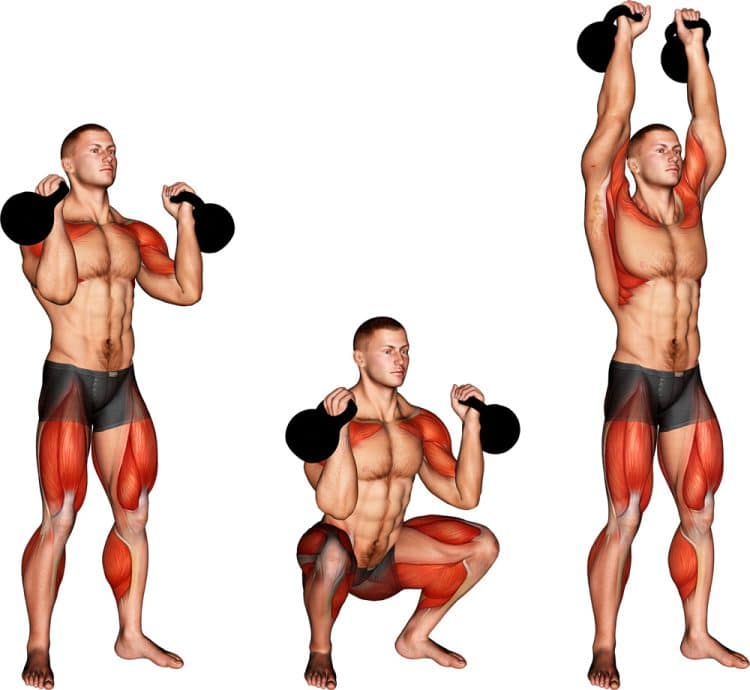
Thrusters combine two exercises to deliver a full-body training effect that is easily on par with treadmill sprints. However, unlike sprinting, both your feet remain planted firmly on the ground, so there is no joint-aggravating impact to worry about.
Also known as the squat to overhead press, thrusters have their roots in Olympic weightlifting but gained even more popularity when they were adopted as a staple exercise by CrossFit.
Why It Works
Thrusters combine weighted squats with overhead presses. As such, they involve almost every major muscle in your body. Consequently, every rep performed requires a lot of effort and energy, ensuring your heart rate climbs as rapidly as it would during a set of treadmill sprints.
This exercise works best when done with light to moderate weights and for medium to high reps—20-30 works really well. While some people prefer heavy weights and low reps for thrusters, this combination is not so effective for HIIT.
How to Perform Thrusters
- Stand with your feet shoulder-width apart, toes turned slightly outward.
- Hold your weight(s) in front of your shoulders.
- Brace your core and lift your chest.
- Bend your knees and squat down until your thighs are at least parallel to the floor.
- Stand up explosively and use this momentum to help you push the weight above your head to arms’ length.
- Lower the weight(s) back to your shoulders and repeat.
Pro Tips:
- Do not round your lower back as doing so can lead to injury.
- You can do this exercise with dumbbells, a barbell, medicine ball, or sandbag.
- Do not squat and then press. Instead, try to perform the lift in one, smooth motion.
Related: Thrusters: Total Body Workout for Stronger Legs and Core
Low-Impact Treadmill Sprint Alternative #2: Kettlebell Swings
Like thrusters, kettlebell swings have gained a lot of popularity because of CrossFit. However, and contrary to what many people think, CrossFit didn’t invent this exercise, and it’s been around since the early part of the last century. In fact, it was a favorite of many legendary physical culturists, including Eugene Sandow and Arthur Saxon.

Why It Works
Kettlebell swings are predominantly a lower body exercise that targets the muscles on the back of your legs and hips—the posterior chain. Your upper body also gets in on the action, especially the shoulders and upper back.
Using all these muscles simultaneously demands a lot of oxygen and energy, making the kettlebell swing a very challenging, rewarding exercise.
How to Perform Kettlebell Swings
- Stand with your feet about shoulder-width apart.
- Hold your kettlebell in front of your hips.
- Brace your core.
- Bend your knees slightly, hinge forward at the hips, and lower the weight between your knees.
- Snap your hips forward and use this momentum to help you swing the weight forward and up to shoulder height (Russian-style swings) or above your head (the American swing).
- Lower the weight and repeat.
Pro Tips:
- This is a hip-hinge movement and not a squat. Do not bend your knees more than necessary.
- Keep your arms straight throughout—imagine they are cables.
- Avoid rounding your lower back, which could cause injury.
Related: Kettlebell Swings: Ignite Your Glutes, Core, and Strength!
Low-Impact Treadmill Sprint Alternative #3: Weighted Step-Ups
Treadmill sprinting is a unilateral movement, meaning it works one leg at a time. While not an essential consideration for effective HIIT training, I know some people prefer to swap “like for like” to keep their workouts consistent.
Step-ups, especially with weights, work your legs in a very similar way to sprints, but without the impact that can jar your joints and lower back.
Why It Works
Lifting and lowering your body weight (plus dumbbells) using one leg at a time puts a lot of stress on your legs, and therefore your heart and lungs. The higher the step and the heavier the dumbbells, the more demanding this exercise becomes.
Plus, as well as working your legs, your arms, shoulders, upper back, and core also require a lot of oxygen and energy, adding to the effectiveness of this highly accessible exercise.
How to Perform Weighted Step-Ups
- Stand facing a shin to knee-high bench or box.
- Hold a dumbbell in each hand.
- Lift one leg and place your foot flat on the top of the step.
- Drive down through your leg and step up onto your platform.
- Leading with the same leg, carefully step back down.
- Continue for the desired number of reps.
Pro Tips:
- Do all your reps on one side before switching or alternate legs step-by-step as preferred.
- Use kettlebells instead of dumbbells if necessary.
- Maintain a tall torso and good posture throughout—no slouching.
Related: Dumbbell Step-Up: Build Strong Legs and Glutes Effectively
Low-Impact Treadmill Sprint Alternative #4: Medicine Ball Slams
If I were giving trophies for the most fun treadmill sprint alternative, I’d probably award it to this exercise—the medicine ball slam. There are very few exercises that are so satisfying to do. Medicine ball slams are a total stress-buster, and I’m sure you’ll enjoy doing them as much as my clients and I do!
Why It Works
Medicine ball slams engage both your upper and lower body, making them a very oxygen and energy-costly exercise. In addition, those muscles have to generate a lot of force to throw the medicine ball as hard as this exercise requires. A few reps into your set, you’ll realize just how challenging and effective this exercise really is.
How to Perform Medicine Ball Slams
- Stand with your feet shoulder-width apart, knees slightly bent.
- Brace your core.
- Hold your medicine ball in both hands and raise it above your head.
- Putting your entire body into the throw, hurl the ball down between and slightly in front of your feet.
- Catch the ball as it rebounds and repeat.
Pro Tips:
- Do not use a gel-filled medicine ball for this exercise, as they’re prone to splitting.
- A non-bouncing “slam ball” makes this exercise even harder as you’ll need to pick it back up between reps.
- Experiment with different balls weights to find the right balance between overload and explosiveness. 10-20 pounds is a good range for most people.
Related: Ultimate Medicine Ball Slam: Power Up Your Core & Strength
Programming Options: How to Structure Your Sprint Alternatives
While all the exercises shared so far are undeniably effective, you’ll get more from them if you program them correctly. Here are a few ways to structure your sprint alternatives for best results.
Time-Based Intervals
For this option, simply pair your chosen work duration with an appropriate rest period. Repeat for as many rounds as you wish. Good options include:
- 30 seconds work, 30 seconds rest, repeated 10 times to total 10 minutes
- 40 seconds work, 80 seconds rest, repeated 8 times to total 16 minutes
- 60 seconds work, 120 seconds rest, repeated 10 times to total 30 minutes
As a rule, the shorter the work interval, the more intensely you should perform your chosen exercise.
EMOM Intervals
EMOM is short for Every Minute On the Minute. This form of HIIT involves doing a set of your chosen exercise as quickly as possible, resting for whatever time is remaining, and then starting the next set at the top of the next minute. For example:
- 10 kettlebell swings (takes 20 seconds)
- 40 seconds remaining for rest
- Repeat
Tabatas

Tabatas were invented by Japanese sports scientist Izumi Tabata. This short but brutally effective HIIT program only lasts four minutes but will probably feel like the longest four minutes of your life!
Pick your exercise and perform the following:
- As many reps as possible in 20 seconds
- Rest 10 (yes, just ten!) seconds
- Repeat 8-10 rounds
Circuit Training
You don’t have to limit your workouts to just one treadmill sprint alternative. In fact, you can combine all four exercises into a single workout if you wish. This is called circuit training, which is a proven workout method for maximizing gains in minimal time.
For example:
| Exercise | Reps or Time | Transition/Rest | Rounds | |
| 1 | Thrusters | 15-20/30-45 seconds | 15 seconds | 3-5 rounds, resting 60-90 seconds between each one |
| 2 | Kettlebell Swings | 15-20/30-45 seconds | 15 seconds | |
| 3 | Dumbbell Step-ups | 15-20/30-45 seconds | 15 seconds | |
| 4 | Medicine Ball Slams | 15-20/30-45 seconds | 15 seconds |
Closing Thoughts
As effective as treadmill sprint intervals undoubtedly are, they’re not for everyone. In fact, it’s hard to think of many exercises that involve more joint-jarring impact—weighted squat jumps, maybe?
The good news is that you don’t have to destroy your knees and hips to torch fat and get fit, and there are plenty of great low-impact alternatives to treadmill sprints.
The exercises in this article are four of my favorites, but I’d love to hear what you like to do instead of treadmill sprints. Drop me a line in the comments section below and share your best-loved low-impact HIIT exercises.
References:
1 – Foster C, Farland CV, Guidotti F, Harbin M, Roberts B, Schuette J, Tuuri A, Doberstein ST, Porcari JP. The Effects of High Intensity Interval Training vs Steady State Training on Aerobic and Anaerobic Capacity. J Sports Sci Med. 2015 Nov 24;14(4):747-55. PMID: 26664271; PMCID: PMC4657417.