
A lot of lifters only know two types of cardio: the kind they avoid and the kind that wrecks their next leg day. That is why Zone 2 has become popular. It promises conditioning without punishment. The problem is that most Zone 2 advice is written for endurance athletes, not people trying to squat, press, pull, and keep muscle.
For lifters, Zone 2 is not a personality. It is a tool. It should improve work capacity, recovery between sets, heart health, and body-composition consistency without turning every week into a hybrid-athlete experiment. Done right, it feels almost too easy at first. That is the point.
The smart version uses the talk test, heart-rate ranges, and weekly placement so the cardio supports lifting instead of competing with it.
This Is Not Another Zone 2 Benefits Article
FitnessVolt has already covered Zone 2 training and hybrid lifting. This article solves a narrower problem: where to put easy cardio when lower-body performance still matters. The question is not whether Zone 2 can improve conditioning. The question is how to add it without turning leg day into a recovery problem.
The rule is simple: move cardio before you remove it. If squats, deadlifts, or split squats feel flat, first change the session placement, then the duration, then the machine. Dropping cardio entirely is the last step, not the first.
The Better Move
Use the trend as a doorway, then build a system you can repeat. The win is not novelty. The win is a rule that survives real training weeks, busy mornings, missed meals, stress, and imperfect equipment. That is why this article focuses on decisions, not hacks.
Use The Talk Test Before You Obsess Over Heart Rate
Heart-rate zones are useful, but they are estimates. Stress, caffeine, heat, poor sleep, dehydration, and medications can move the number. The talk test gives lifters a simple guardrail: you should be breathing more than normal, but still controlled enough to talk. If the session turns into intervals, it is not Zone 2 anymore.
- Use a watch if you have one, but let breathing confirm the zone.
- Keep nasal breathing optional, not mandatory.
- Stop chasing a higher number just because the session feels easy.
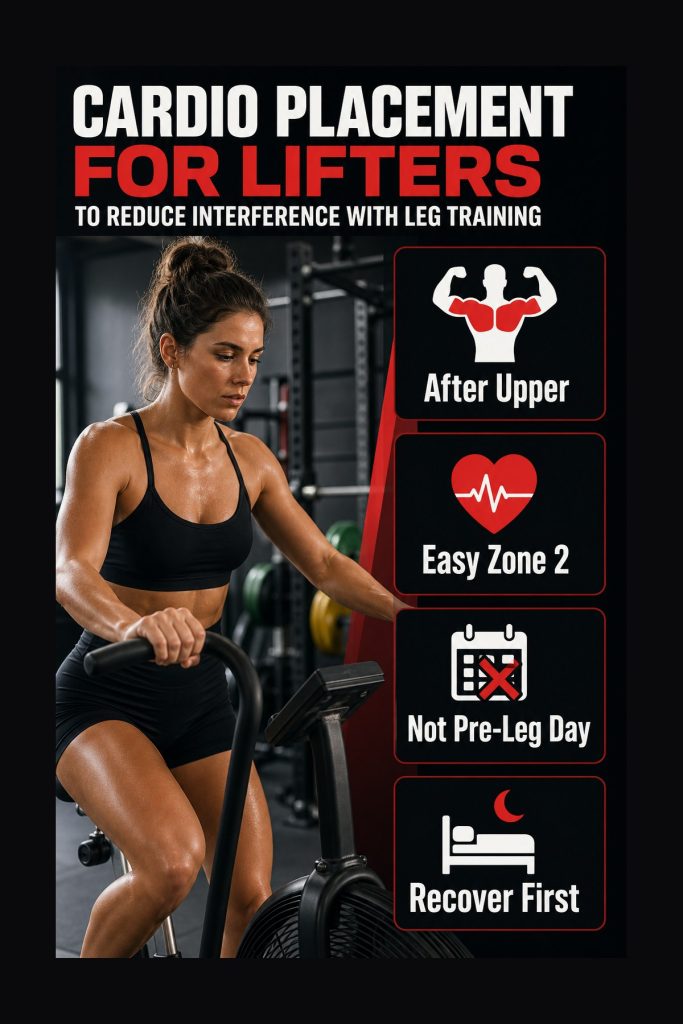
Do Zone 2 Away From Heavy Leg Stress
Zone 2 is low stress compared with intervals, but it still uses legs. The safest placement is after upper-body lifting, on a recovery day, or several hours away from heavy lower-body work. If your squat or deadlift performance drops, the first adjustment is not to quit cardio. It is to move the session or shorten it.
- If you need a gentler starting point, FitnessVolt’s walking workout guide gives a simple base.
- If walking intervals suit you better, use interval walking training as the bridge.
- Do not add Zone 2 and a hard diet cut in the same week unless recovery is already stable.
Add Minutes Before Intensity
Most lifters make Zone 2 too hard because they equate sweat with value. The better progression is boring: add five minutes per session, then add a third weekly session, then consider a slightly harder machine or incline. The goal is to leave the session feeling better than when you started, not to prove you survived cardio.
- Week 1: 2 sessions of 20 minutes.
- Week 2: 2 sessions of 25 minutes.
- Week 3: 3 sessions of 25 minutes.
- Week 4: 2-3 sessions of 30 minutes.
Keep Intervals In Their Own Lane
HIIT and Zone 2 are different tools. HIIT can be effective, but it carries more fatigue and competes harder with strength training. Zone 2 gives you more repeatable volume with less recovery cost. If you love hard conditioning, keep it to one focused session and let Zone 2 handle the aerobic base.
- Use the 12-3-30 workout article as a comparison point for incline walking intensity.
- If legs are sore for two days after cardio, the session was probably too hard.
- If resting heart rate and mood improve, the dosage is probably in the right range.
Zone 2 Placement For Lifters
| Training day | Best cardio option | Why |
|---|---|---|
| Heavy squat/deadlift day | Skip or do 10-15 easy minutes only | Protect lower-body performance |
| Upper-body day | 20-30 minutes after lifting | Lower interference risk |
| Rest day | Outdoor walk, bike, or incline treadmill | Adds movement without extra lifting stress |
| Cutting phase | Shorter, more frequent sessions | Helps output without crushing recovery |
Use It This Week
Run a two-week test before deciding whether Zone 2 works for you. Put two sessions on the calendar, keep them easy enough to talk, and leave at least one day between the hardest leg session and the longest cardio session.
Use lifting performance as the pass/fail test. If lower-body numbers, motivation, and soreness stay stable while conditioning improves, the dose is right. If squats feel flat and your legs are heavy all week, the problem is usually placement or duration, not Zone 2 itself.
Do not add a hard calorie deficit during the same test week. Zone 2 is easy to blame when the real issue is that food, sleep, and cardio all changed at once.
Adjust It By Goal
| Goal | Best adjustment | Why |
|---|---|---|
| Fat loss | 2-4 easy sessions weekly | Sustainable output beats punishment |
| Strength | 2 short sessions after upper-body or rest days | Protect heavy lower-body sessions |
| Conditioning | Build toward 90 total weekly minutes | Volume creates the aerobic base |
| Recovery | Use outdoor walking or bike at low RPE | Keep stress low enough to repeat |
When To Change The Plan
Do not judge the plan from one perfect day or one bad day. Most useful fitness and nutrition changes need a short runway. Give the system one to two weeks unless pain, dizziness, digestive distress, sleep disruption, or a clear medical concern shows up sooner. Early feedback is useful, but it needs context.
The right adjustment is usually smaller than the emotional reaction. If the plan feels too hard, reduce the dose before abandoning the idea. If it feels too easy, repeat it until the habit is stable before adding complexity. Most people fail these trends by escalating too quickly, not by starting too conservatively.
- Change one variable at a time so the result is readable.
- Keep the part that improves training, hunger, recovery, or consistency.
- Remove the part that adds friction without a clear payoff.
- Treat pain, dizziness, unusual fatigue, or persistent digestive symptoms as stop signs, not discipline tests.
The Smarter Starting Dose
Start smaller than your motivation wants. A conservative first dose protects the rest of the week and gives you cleaner feedback. Once the behavior is repeatable, progression is easy. When the starting point is too aggressive, the plan often fails for reasons that have nothing to do with the idea itself.
That is especially important for lifters because everything competes with recovery. A new food habit can change digestion. A new cardio session can change leg fatigue. A new recovery tool can change sleep timing. The first job is to make the change fit the training week. The second job is to make it stronger.
Mistakes To Avoid
- Turning Zone 2 into secret HIIT.
- Adding too much duration in week one.
- Using the stair climber too aggressively when legs already need recovery.
- Ignoring sleep and food, then blaming cardio for fatigue.
How To Know It Is Working
The right version should make the next decision easier. Training should feel more predictable, meals should require less negotiation, and recovery should become easier to read. If the plan adds stress, confusion, pain, or obsessive tracking, simplify it before adding another layer.
Use one clear metric for two weeks. For nutrition articles, that could be hunger, protein consistency, calories, or training energy. For training articles, use performance, soreness, joint comfort, and repeatability. If the metric improves without creating a new problem, keep the system.
Where This Fits On FitnessVolt
This piece is meant to connect with the rest of your training and nutrition system, not replace it. Use the linked FitnessVolt guides where they match your next decision, especially when you need a calculator, a workout progression, or a more detailed nutrition framework.
FAQ
What heart rate is Zone 2?
A common estimate is roughly 60-70 percent of max heart rate, but the talk test is often more useful for normal lifters. You should be able to talk in short sentences.
Does Zone 2 burn fat?
It uses fat as a meaningful fuel source during the session, but fat loss still depends on weekly energy balance. Its best value is sustainable calorie output and improved conditioning.
Should lifters do Zone 2 before or after lifting?
Most lifters should lift first and do Zone 2 after, or place Zone 2 on a separate day. Heavy cardio before lifting can reduce performance.
How many days per week should I do Zone 2?
Start with two weekly sessions. Add a third only if your lifting performance, sleep, and soreness remain stable.
Sources
- American College of Sports Medicine. n.d. Physical Activity Guidelines resources. Accessed June 4, 2026.
- Garber CE, et al. 2011. Quantity and Quality of Exercise for Developing and Maintaining Fitness. Medicine & Science in Sports & Exercise. Accessed June 4, 2026.
- Foster C, et al. 2008. The Talk Test as a marker of exercise training intensity. Journal of Cardiopulmonary Rehabilitation and Prevention. Accessed June 4, 2026.