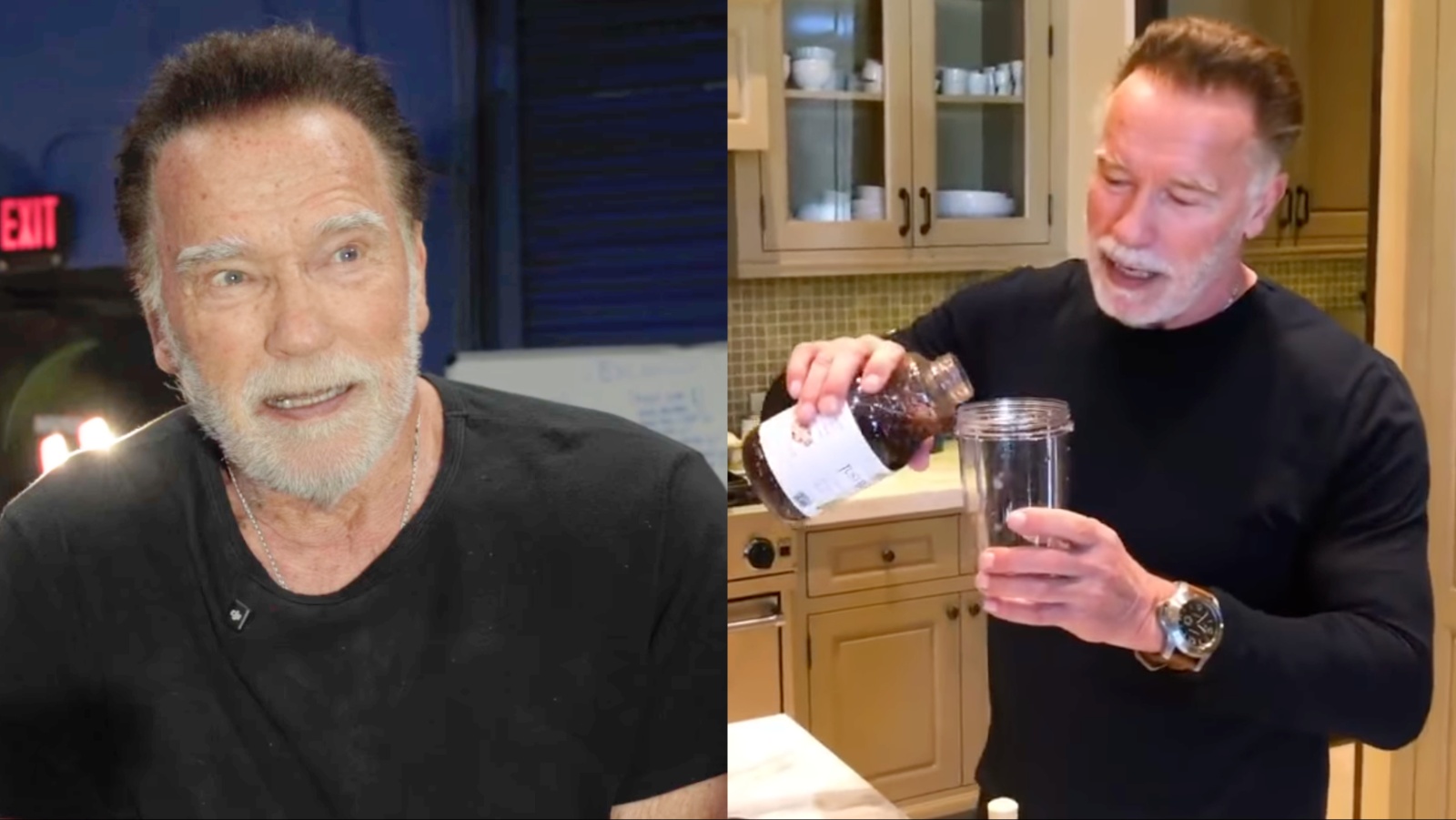
Arnold Schwarzenegger doesn’t mess around when it comes to his protein. In his latest Arnold’s Pump Club Newsletter shared on Jan. 19, 2026, he broke down his ultimate guide for spotting quality protein powder. He also shared how to avoid common mistakes that could cost you gains.
“Protein powder isn’t required to be healthy or strong. But if you use one, make sure it’s actually doing the job you hired it for. Read the label. Check the amino acids. And don’t settle for less.”
Protein is essential to muscle growth, and bodybuilders depend on it, often, to improve their physique and fuel their training demands. During the Golden Era (1960s-1980s), protein powders weren’t readily available. Over decades, they’ve grown in popularity, with many athletes turning to them to meet their daily macronutrient goals.
For Schwarzenegger, protein is just as important today as it was when he was the reigning seven-time Mr. Olympia champion. At 78 years old, he continues to nurture his nutrition so he can focus on leading a happier and more active lifestyle.
Arnold Schwarzenegger on How to Pick the Right Protein Powder Without Making a Mistake
In the newsletter, Schwarzenegger first stressed that protein powder labels often fall short of their claims:
“How To Spot a Quality Protein Powder (And Avoid a Common Mistake)
Protein powders are supposed to make it easier to hit your protein target. But some labels don’t tell the full story. And if you don’t know what to look for, you could be paying for protein that doesn’t actually help you build muscle.”
“Not all whey protein is equal, and some powders inflate their numbers in ways that reduce the amount of muscle-building protein you actually get.
According to Schwarzenegger, whey protein concentrate can range in actual protein, with some lower-grade products containing more lactose and fillers.
“Whey protein concentrate sounds like a premium ingredient. And sometimes it is. But that single phrase can hide a huge quality difference.”
Whey protein concentrate can range from about 25% protein to over 80% protein by weight. That’s because lower-grade concentrates contain much more lactose and filler.”
He explained that supplement companies don’t have to disclose which grade of protein they put in their products:
“It’s not that all concentrates are bad. It’s that you don’t know what whey concentrate you get because supplement labels don’t have to disclose which grade they use. Two products can look identical on the front and be radically different on the inside.”
“You’ll still get the grams listed on the Nutrition Facts label. But you won’t know whether that protein came from a dense, high-quality source or a lower-grade powder padded with lactose.”
Beyond that issue, he warned that some companies ‘amino spike’ their products to artificially inflate the protein on the back of their labels.
“And that’s not even the biggest issue. Some companies go a step further with a practice called protein (or amino) spiking.”
“Protein content is often measured indirectly by nitrogen levels. Cheap, free-form amino acids contain nitrogen, so manufacturers can add them to inflate the protein count without adding real, complete protein that your body can use.”
He shared that glycine, taurine, and glutamine are common spiking ingredients.
“Common spiking ingredients include glycine, taurine, and glutamine. These amino acids aren’t dangerous, but they don’t stimulate muscle protein synthesis the way complete protein does.
That means a scoop claiming 25 grams of protein may only deliver 15–18 grams of usable, muscle-building protein.”
Schwarzenegger provided a cheat sheet for those looking for high quality protein powders:
- Check the ingredient list
- Look for an amino acid profile on the label
- Avoid proprietary blends
- Do a reality check on price
When looking at the label, he said the amino acid profile should have leucine at around 10-11% with BCAAs making up at least 25%. If those numbers are off, he believes it’s a red flag.
“Look for an amino acid profile on the label (good products have nothing to hide). For whey, leucine should be at least 10–11% of total protein, and total BCAAs should be at least 25%. If those numbers don’t line up, that’s a red flag.”
To ensure you pick a quality protein powder, he noted that picking an NSF Certified for Sport or Informed Sport- approved option is best.
“If you want to make it simple, select a whey protein isolate, which is standardized at ~90% protein with minimal lactose, so you don’t have to worry about the variation you get with concentrates. Only buy third-party certified products, such as NSF Certified for Sport or Informed Sport. And stick to brands that disclose protein grade and amino acid data.”
A consumer report confirmed that many protein powders contain high levels of lead. However, Schwarzenegger emphasized, ‘you don’t need to fear all toxins.’ He warned that people can become exposed to heavy metals just from trace amounts found on common items.
Schwarzenegger doesn’t believe protein powders are inherently bad. He is adamant that understanding the label is key to choosing a worthwhile option.
RELATED: Jay Cutler Weighs In on Whether Protein Powder Can Be Your Main Source of Protein