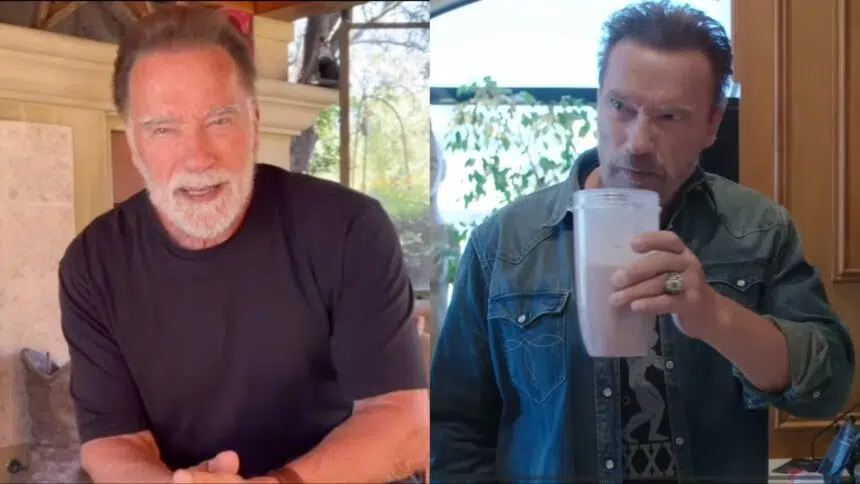
Bodybuilding legend Arnold Schwarzenegger still watches over his diet since stepping off the stage. On March 3, 2026, he discussed whether soy protein offers the same muscle gains as dairy-based protein sources.
“There’s a version of the protein conversation that stops at ‘animal protein is better,’ and nobody ever digs any deeper. And while earlier research suggested that plants were inferior, more recent studies paint a more nuanced picture, especially when it comes to soy.”
In the 1970s and early 80s, Arnold Schwarzenegger established himself as an all-time great bodybuilder. He faced off against legends like Sergio Oliva and Frank Zane en route to winning seven Mr. Olympia titles.
Schwarzenegger’s love for bodybuilding still lives on today; fans are excited to witness the upcoming 2026 Arnold Classic, one of the most prestigious bodybuilding events on the IFBB Pro League calendar. Competitors will showcase their best physiques in Columbus, Ohio, from March 5-8. Despite a busy schedule, Schwarzenegger always makes time to break down the latest dieting trends.
Is Soy Protein an Inferior Protein? Arnold Schwarzenegger Weighs In
In the latest Arnold’s Pump Club newsletter, Schwarzenegger examined 43 randomized controlled trials and found that soy protein produced comparable muscle gains to dairy protein.
“A 2025 meta-analysis of 43 randomized controlled trials found that soy protein produces comparable muscle gains to dairy protein. If you’ve been avoiding soy because someone told you it’s a poor muscle-building protein, the evidence says otherwise.”
Though some research suggests plant protein led to less muscle mass, Schwarzenegger emphasized that there was a caveat:
“Researchers reviewed randomized controlled trials comparing plant and animal protein sources in relation to muscle mass, strength, and physical performance. Overall, plant protein led to slightly less muscle mass, but this headline finding overlooked an important point.”
“When soy was compared directly against milk protein across 17 trials, the difference essentially disappeared. The gap in the broader analysis was driven by single-source proteins such as rice, oat, chia, and potato, which showed a greater disadvantage relative to animal protein.”
Moreover, the findings showed that, in adults 60 or older, the difference in protein source was no longer significant for muscle mass increase.
“Not to mention, strength and physical performance showed no significant differences across any group, regardless of protein source.
In adults 60 and older, even the small muscle mass gap between plant and animal protein was no longer statistically significant, suggesting that for this age group, hitting your daily protein target matters considerably more than where it comes from.”
He cautioned that this study observed research-tested soy protein supplements, not tofu, edamame, or tempeh, which are known for their soy protein contents.
“It’s worth noting that the research tested soy protein supplements, not specifically foods like tofu, edamame, or tempeh. That said, whole-food soy-based foods have meaningful protein quality on their own. Soy is a complete protein, containing all nine essential amino acids.”
“Research on protein quality scoring across 45 sources confirms that the majority of soy products have high absorption (based on gold-standard DIAAS scores), and a controlled digestibility study measuring amino acid absorption found tofu to be approximately 95% digestible, which is comparable to animal protein sources. The key functional difference from dairy is lower leucine content, not a fundamental deficiency in quality.”
Taking this all into account, Schwarzenegger doesn’t believe individuals are leaving gains on the table by choosing soy protein over a different source.
“Like any dietary decision, what you eat is your choice. You don’t need to eat soy, and you can avoid it if you feel that’s the best choice for you.
With any diet, getting some variety from your protein sources is a good idea. But if soy protein is part of your diet — whether from a supplement or whole food sources like edamame and tofu — the evidence suggests you’re not meaningfully leaving muscle gains on the table.”
Understanding how to leverage protein for fitness goals remains one of Schwarzenegger’s primary goals. He recently unpacked the benefits of plant-based protein options. The seven-time Mr. Olympia described them as the ultimate anti-aging macronutrient that helps you reach older age free of disease.
At 78, Schwarzenegger takes his diet seriously. He believes soy protein can offer just as many benefits as dairy-based options when it comes to muscle growth.
RELATED: Arnold’s Anabolic Secret: The Protein Shake Hack for Building More Muscle with Fewer Calories
 You can also follow us on Twitter, Facebook, Instagram, and
YouTube for even more content.
You can also follow us on Twitter, Facebook, Instagram, and
YouTube for even more content.Tip: If you're signed in to Google, tap Follow.