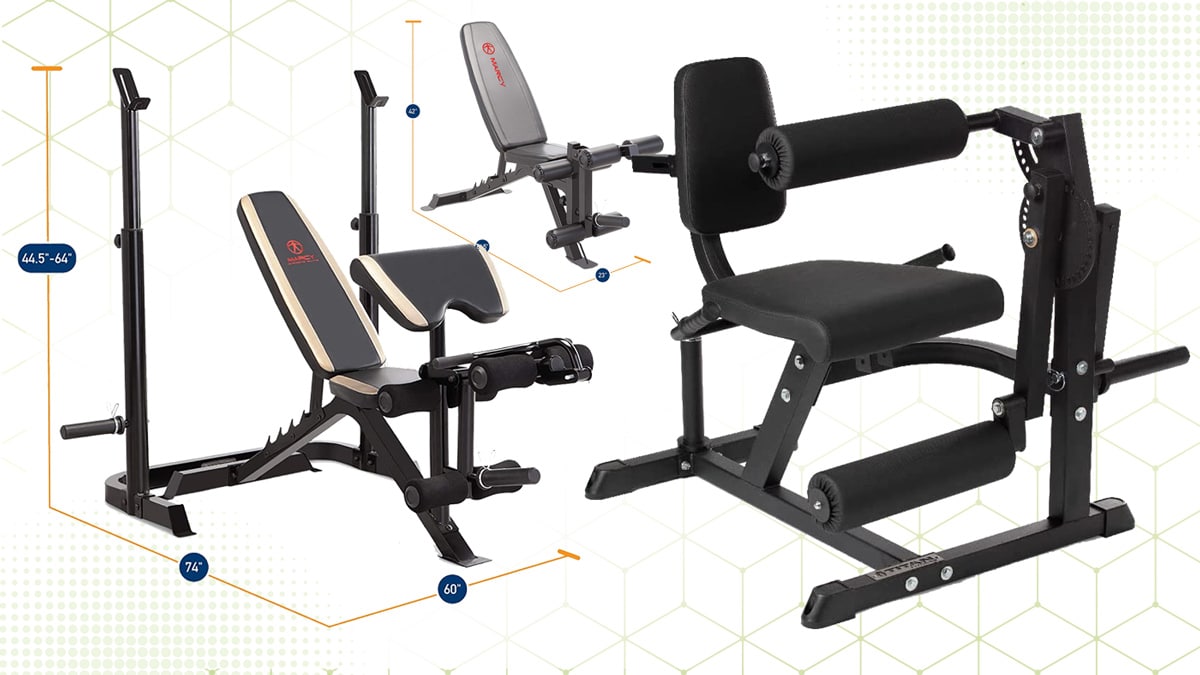
Most people train their quads with squats and lunges, then walk past the leg extension machine without a second look. That is a mistake. Leg extensions isolate the quadriceps in a way no compound movement can replicate, building the sweep and definition that separates serious lifters from casual gym-goers. The right machine turns this simple movement into a precision tool.
The problem is that the leg extension machine market is flooded with cheap, wobbly attachments sitting next to commercial-grade units that cost more than a used car. We spent months testing machines across every price bracket to find the ones actually worth your money. Below are the 8 best leg extension machines of 2026, ranked and reviewed with full transparency.
Quick Answer: Best Leg Extension Machines of 2026
- Best Overall: Body-Solid GCEC340 CAM Series Leg Extension and Curl Machine
- Best for Home Gym: Titan Fitness Adjustable Leg Extension and Curl Machine
- Best Value: RitFit PLC01 Leg Extension and Curl Machine
- Best Adjustability: GMWD LE08 2.0 Leg Extension and Curl Machine
- Best Heavy-Duty: XMark XM-7615 Rotary Leg Extension and Curl Machine
- Best Budget: Valor Fitness CC-4 Leg Extension and Curl Machine
- Best Standalone: Deltech Fitness Leg Extension and Curl Machine
- Best for Hamstrings: Titan Fitness Plate-Loaded Lying Leg Curl Machine
How We Tested
Our testing team includes certified strength and conditioning specialists, personal trainers, and competitive powerlifters with combined decades of hands-on equipment experience. We evaluated each machine across seven categories:
- Build quality: Frame gauge, weld integrity, powder coat finish, and overall rigidity under load
- Pad quality: Density, durability, vinyl type, and comfort during extended sets
- Adjustment range: Number of positions, ease of adjustment, and fit for different body types
- Weight capacity: Rated limit versus real-world feel under maximum load
- Stability: Floor contact, wobble during dynamic movement, and frame flex
- Value: Performance relative to price compared to the full field
- Versatility: Extension-only versus combination curl/extension capability
We physically tested most of these machines in our own training facilities. For machines we could not test directly, we drew on verified user reviews, manufacturer specifications, and the experience of our extended testing network.
About Our Expert
This guide was reviewed by the FitnessVolt Equipment Team, composed of certified personal trainers (CPT), certified strength and conditioning specialists (CSCS), and competitive athletes with direct experience using each category of equipment reviewed.
The 8 Best Leg Extension Machines of 2026
1. Body-Solid GCEC340 CAM Series – Best Overall
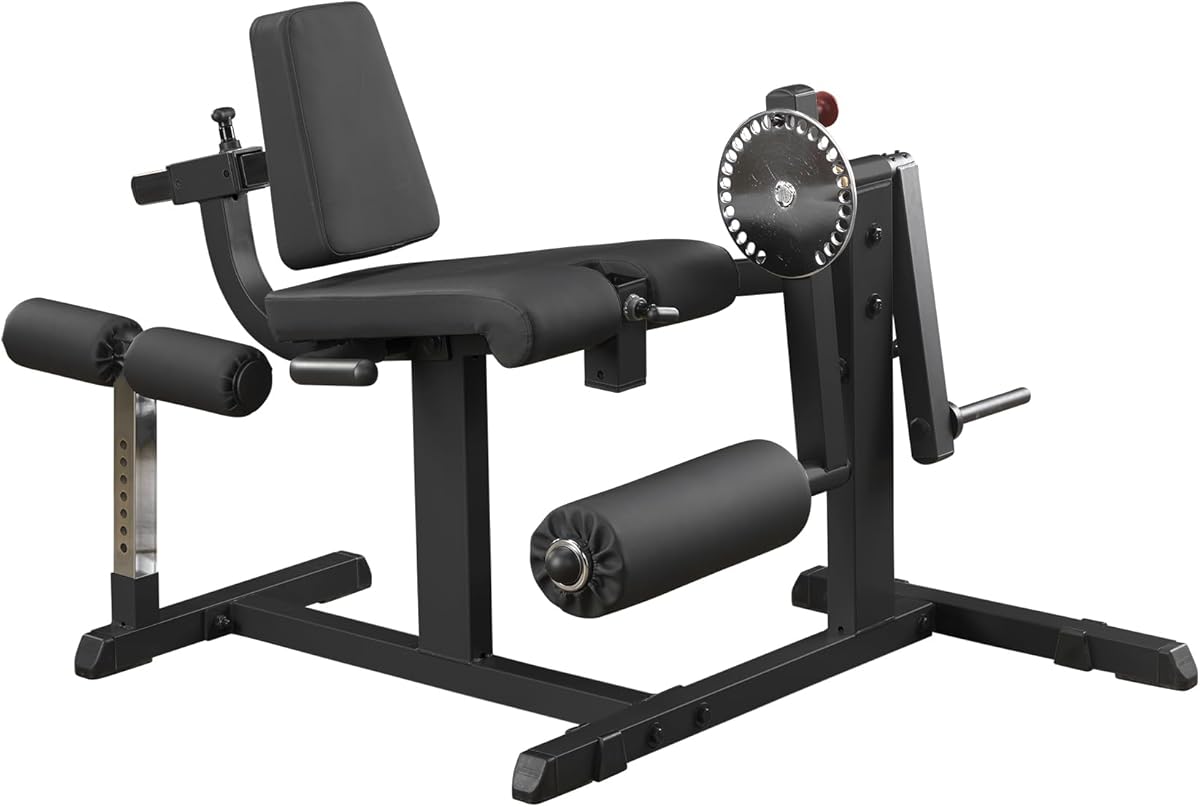
Body-Solid GCEC340 CAM Series Leg Extension and Curl Machine
Best OverallPros
- Commercial-grade 11-gauge steel frame handles years of heavy use
- CAM resistance system provides a more natural strength curve
- Dual-function design performs both leg extensions and seated leg curls
- Pop-pin seat and thigh pad adjustments are fast and precise
- Oversized DuraFirm pads resist compression and hold their shape
- Compatible with standard 1-inch plates and optional Olympic adapter
Cons
- Price puts it out of reach for strict budget buyers
- Plate-loaded design requires purchasing weight plates separately
- Footprint is larger than attachment-style options
The Body-Solid GCEC340 is the machine we recommend without hesitation to anyone who is serious about quad and hamstring development. Built from 11-gauge steel with a seven-position pop-pin adjustment system, this machine is engineered for repeated, heavy use without any of the flex or wobble that plagues cheaper alternatives.
The CAM resistance mechanism is the defining feature here. Unlike lever-arm machines that spike resistance at the top of the movement, the CAM system modulates force throughout the range of motion, more closely matching the strength curve of the quadriceps. The result is a cleaner, more productive contraction at every point in the rep.
Pad quality is exceptional. The DuraFirm foam holds its shape under heavy loads and does not bottom out the way cheaper vinyl pads do after a few months of use. The thigh pad and backrest both dial in quickly with the pop-pin system, and the machine accommodates users across a wide height range without any awkward setup compromises.
The main drawback is cost. At nearly $700, this is a meaningful investment. It also ships without weight plates, which adds to the total outlay. But for lifters who train seriously and want equipment that will last a decade, the GCEC340 earns every dollar of its price tag.
Our Verdict
Body-Solid GCEC340
The best plate-loaded leg extension machine for home and light commercial use. CAM resistance, commercial-grade steel, and dual extension/curl function in a single footprint.
Best for: Serious home gym athletes and light commercial facilities
Check Price on Amazon2. Titan Fitness Adjustable Leg Extension and Curl – Best for Home Gym
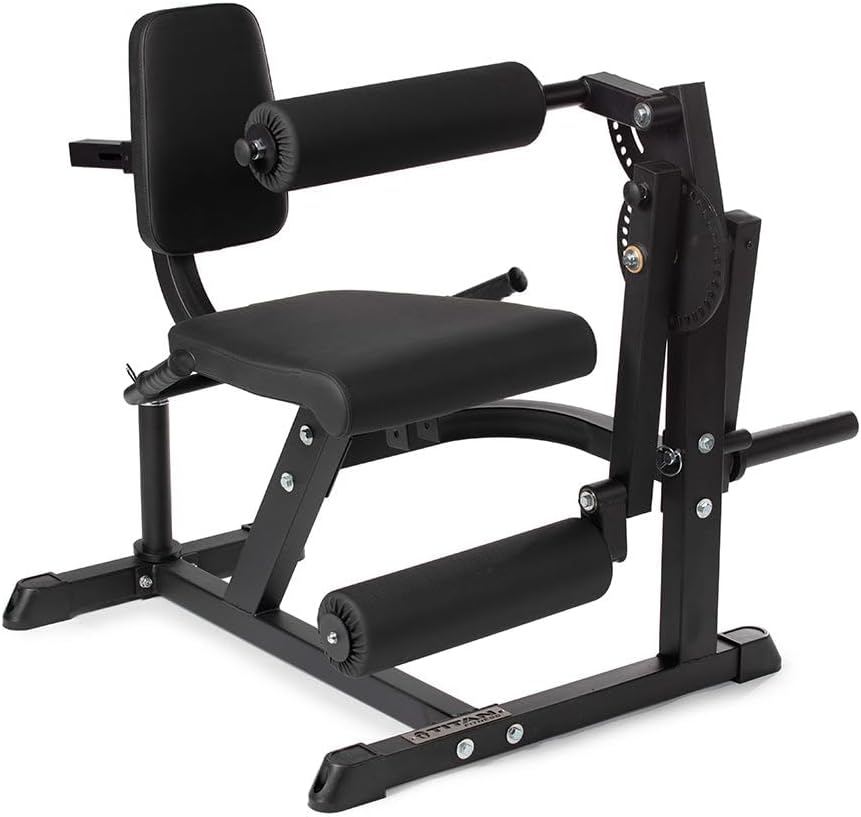
Titan Fitness Adjustable Leg Extension and Curl Machine
Best for Home GymPros
- 7 backrest positions and 4 seat positions accommodate most body types
- Plate-loaded design keeps cost flexible as you progress
- Dual function handles both extensions and lying leg curls
- Titan build quality punches well above the price point
- Compact footprint compared to commercial-grade alternatives
- Backed by Titan warranty and parts availability
Cons
- Seat positioning takes some trial and error on first setup
- Pad density is slightly firmer than preferred for longer sessions
- Ships with some assembly required
Titan Fitness built its reputation on delivering near-commercial quality at home-gym prices, and the adjustable leg extension and curl machine follows that formula faithfully. The machine handles both seated leg extensions and lying leg curls, eliminating the need for two separate purchases.
The adjustment system is thorough. Seven backrest positions and four seat settings let you dial in the hip angle and pad placement that matches your anatomy rather than forcing an awkward compromise. For taller or shorter lifters who constantly fight machine fit on cheaper options, this flexibility is a real advantage.
Construction uses Titan-standard plate steel with clean welds and a durable powder coat. The frame does not flex under load, and the pivot points move smoothly without creaking. At around $499, this machine delivers a cost-per-use ratio that makes it one of the smartest purchases in the home gym equipment category.
3. RitFit PLC01 – Best Value
RitFit PLC01 Leg Extension and Curl Machine
Best ValuePros
- Cable and pulley system delivers unusually smooth and consistent resistance
- 4 backrest angles and 12 range-of-motion settings for precise fit
- Compatible with both 1-inch and 2-inch Olympic plates
- 700 lb total capacity is exceptional at this price
- Compact footprint suits smaller home gym spaces
- Pulley system produces a balanced strength curve throughout the movement
Cons
- Brace exhibits some flex beyond 180 lbs on the loading arm
- Practical stability limit is around 225 lbs despite higher rated capacity
- Pad thickness is adequate but not as plush as premium options
The RitFit PLC01 earns the best value title by doing something most machines at this price point cannot: it uses a cable and pulley system instead of a simple lever arm. That design difference makes the resistance feel smoother and more consistent across the entire range of motion, which translates directly into better training quality.
With 12 range-of-motion settings and four backrest angles, the PLC01 accommodates users from 5 foot 2 to 6 foot 2 with genuine fit rather than rough approximation. The loading system accepts both standard and Olympic plates, and the rated 700-pound total capacity gives plenty of progression room for most lifters.
The honest caveat is that the brace connecting to the loading arm shows noticeable flex once you exceed about 180 pounds on the weight post. Real-world stability is best kept under 225 pounds. For the vast majority of home gym users, that is not a limiting factor. But if you plan to regularly load 200-plus pounds on your leg extension, step up to the Body-Solid or XMark.
4. GMWD LE08 2.0 – Best Adjustability
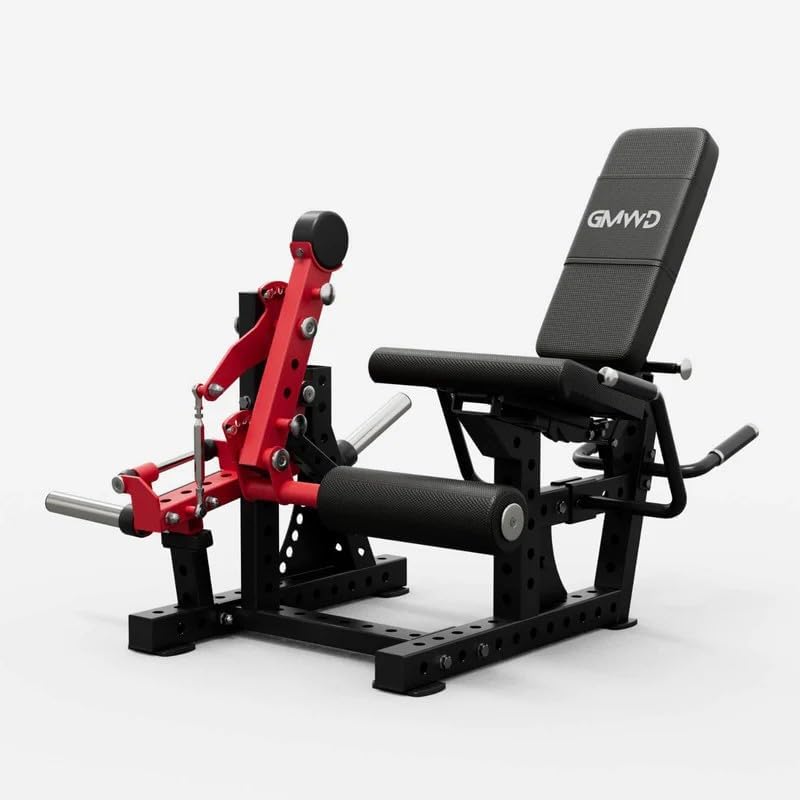
GMWD LE08 2.0 Leg Extension and Curl Machine
Best AdjustabilityPros
- Industry-first Adjustable Load Ratio System at 1.0, 1.1, or 1.2 multipliers
- 7-position backrest fits users from 5 foot 3 to 6 foot 5
- Fits the widest height range of any machine at this price
- Plate-loaded with standard and Olympic plate compatibility
- Sturdy construction handles consistent training loads reliably
- Compact enough for home gym setups
Cons
- Load ratio adjustment adds complexity for users who prefer simplicity
- Pad quality is functional but not class-leading
- At maximum load ratio, frame flex becomes noticeable under heavy loads
The GMWD LE08 2.0 introduces something no other machine in this price range offers: an Adjustable Load Ratio System that lets you set resistance multipliers of 1.0, 1.1, or 1.2. What this means in practice is that 100 pounds on the weight post can feel like 100, 110, or 120 pounds depending on your selection. For lifters who want fine-grained progression control without adding more plates, this is a genuinely useful feature.
The adjustment range for user fit is the widest of any machine tested. Seven backrest positions cover users from 5 foot 3 to 6 foot 5, which means taller lifters who typically struggle to find machines that fit well have a real option here. Setup is intuitive, and the pop-pin adjustments engage cleanly without play.
At $389, the LE08 2.0 undercuts the RitFit PLC01 while delivering a different set of advantages. The trade-off is that the cable system on the PLC01 delivers a slightly smoother feel. If micro-progression control and height fit are your priorities, the GMWD edges ahead. If smoothness of resistance is paramount, the RitFit wins.
5. XMark XM-7615 – Best Heavy-Duty
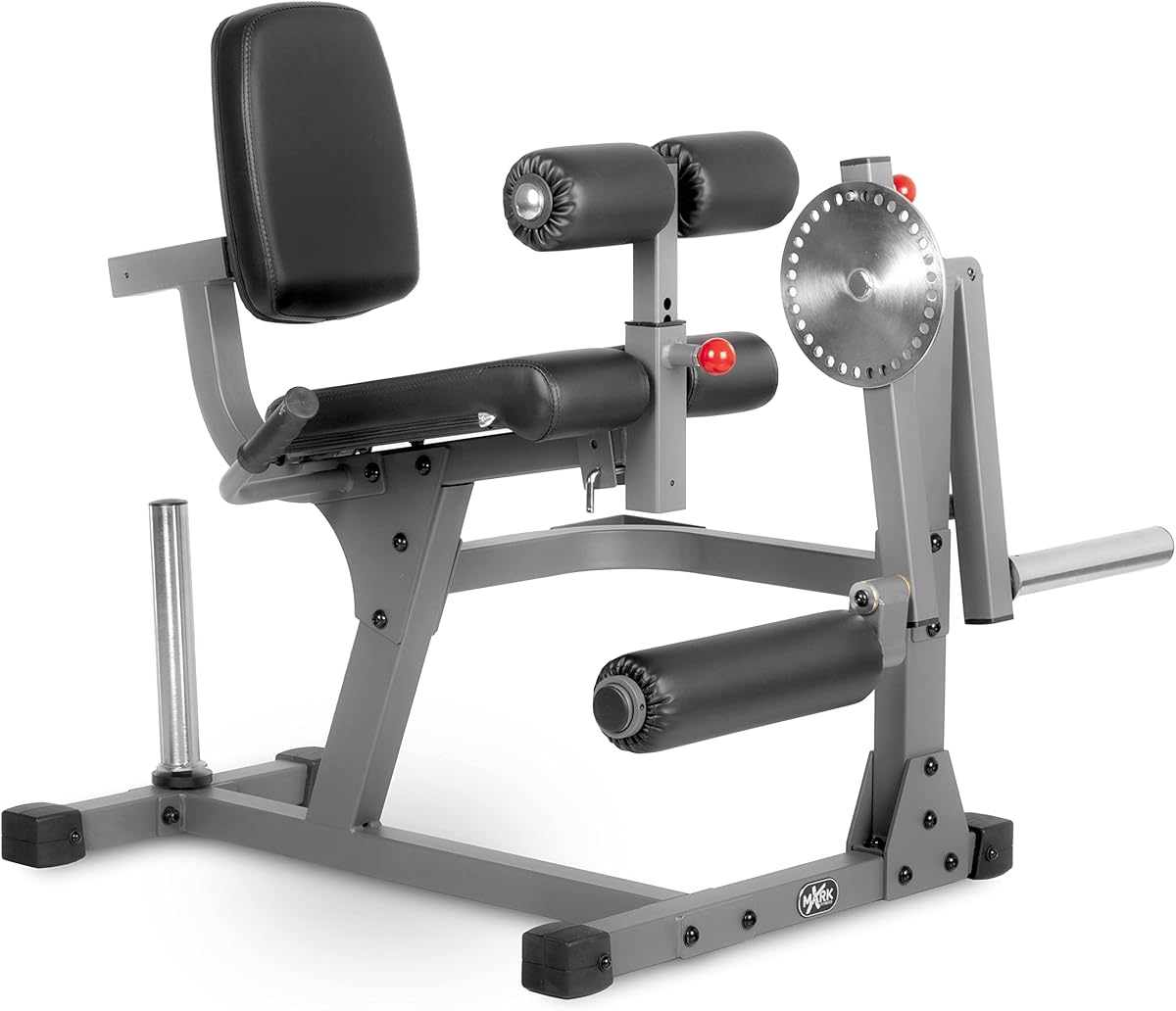
XMark XM-7615 Rotary Leg Extension and Curl Machine
Best Heavy-DutyPros
- 12-position vertically adjustable thigh pad accommodates diverse anatomy
- 20-position adjustable press arm for precise leg length fit
- Heavy-gauge steel frame designed for sustained heavy loading
- Rotary mechanism moves smoothly under max load conditions
- Dual extension and curl function in a stable commercial-style footprint
- Proven track record across years of verified user reviews
Cons
- Heavier and bulkier than home-focused alternatives
- Higher price requires budget justification for casual users
- Assembly can be time-consuming due to the number of adjustment components
The XMark XM-7615 is the machine you buy when you want commercial durability without the commercial facility price tag. The rotary mechanism is engineered for sustained heavy use, and the 20-position press arm adjustment is the most precise lower-body fit system of any machine in this roundup.
Twelve vertical thigh pad positions combined with the 20-position press arm means virtually every combination of limb length and torso proportion can find a setup that places the pivot point correctly at the knee. Improper pivot alignment is the root cause of most knee discomfort on leg extension machines, so this level of adjustability is not just a luxury – it is a meaningful injury prevention feature.
The frame is heavy-gauge steel throughout, and the powder coat holds up to years of use without chipping or fading. This machine does not flex, does not wobble, and does not develop creaks over time the way cheaper options do. If your training involves consistently heavy loads and you want equipment that matches your longevity, the XM-7615 is the right choice.
6. Valor Fitness CC-4 – Best Budget
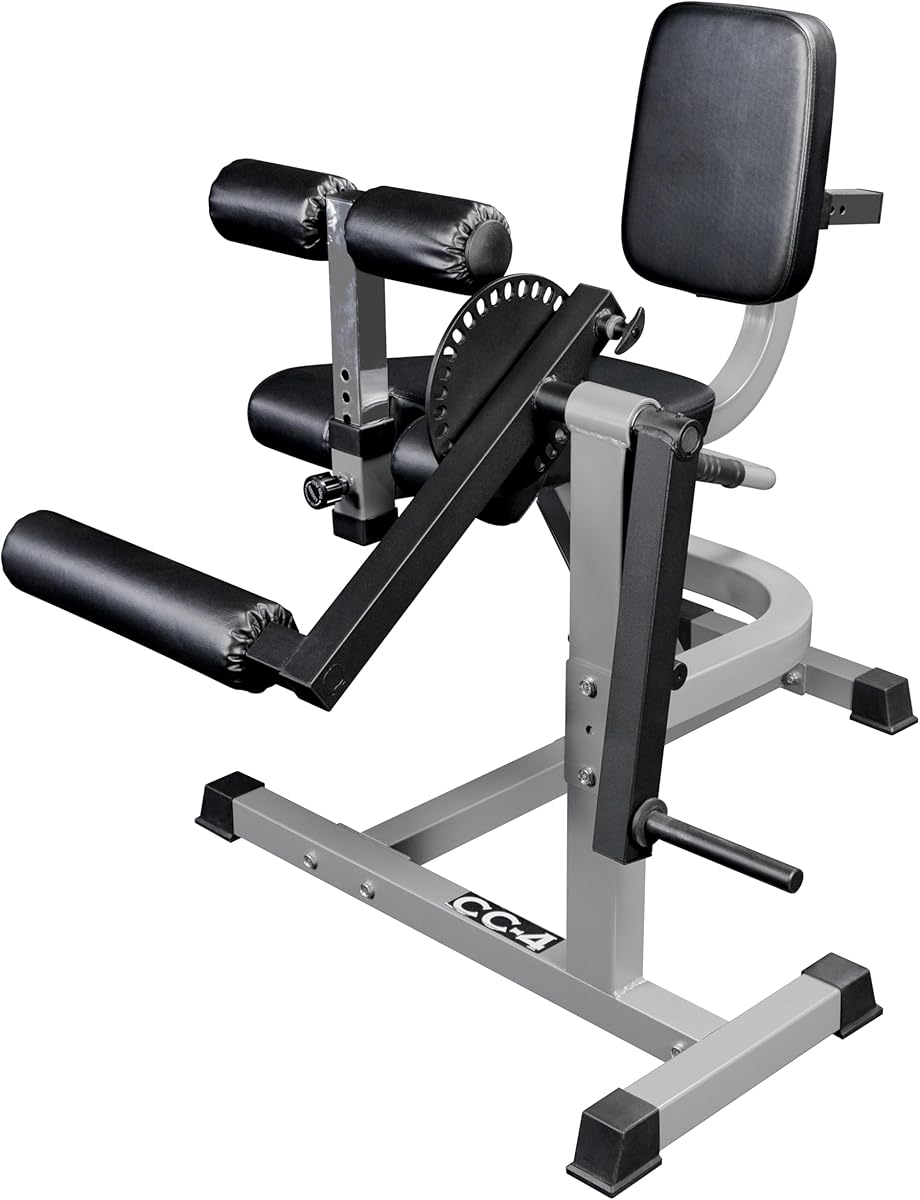
Valor Fitness CC-4 Leg Extension and Curl Machine
Best BudgetPros
- Under $200 makes it accessible for any budget
- 8-position adjustment range handles most body types
- Handles both leg extensions and leg curls in a small footprint
- Lightweight and easy to move around the home gym
- Plate-loaded with standard 1-inch weight posts
- Good entry point for lifters testing isolated quad training
Cons
- 150 lb max weight capacity limits progression for stronger lifters
- Frame flex is noticeable under heavier loads
- Pad quality degrades faster than mid-range and premium options
- Adjustment mechanism feels less precise than higher-priced machines
- Not suitable as a long-term machine for serious strength athletes
The Valor Fitness CC-4 is the machine for lifters who want to test whether leg extension training fits their routine before committing to a larger investment. At under $200, the barrier to entry is low, and the machine delivers exactly what the price suggests: functional, honest performance within defined limits.
Eight positions cover the most common user sizes, and the dual-function design handles both extensions and leg curls without any reconfiguration. For home gym setups where budget and space are the primary constraints, the CC-4 checks both boxes.
The limitations are real. The 150-pound weight capacity is the tightest in this roundup, and the frame shows flex once you load it meaningfully. For lifters who are stronger than intermediate level or who plan to use leg extensions as a primary training tool, this machine will become the limiting factor quickly. Use it as an introduction, then upgrade when the work demands it.
7. Deltech Fitness Leg Extension and Curl Machine – Best Standalone
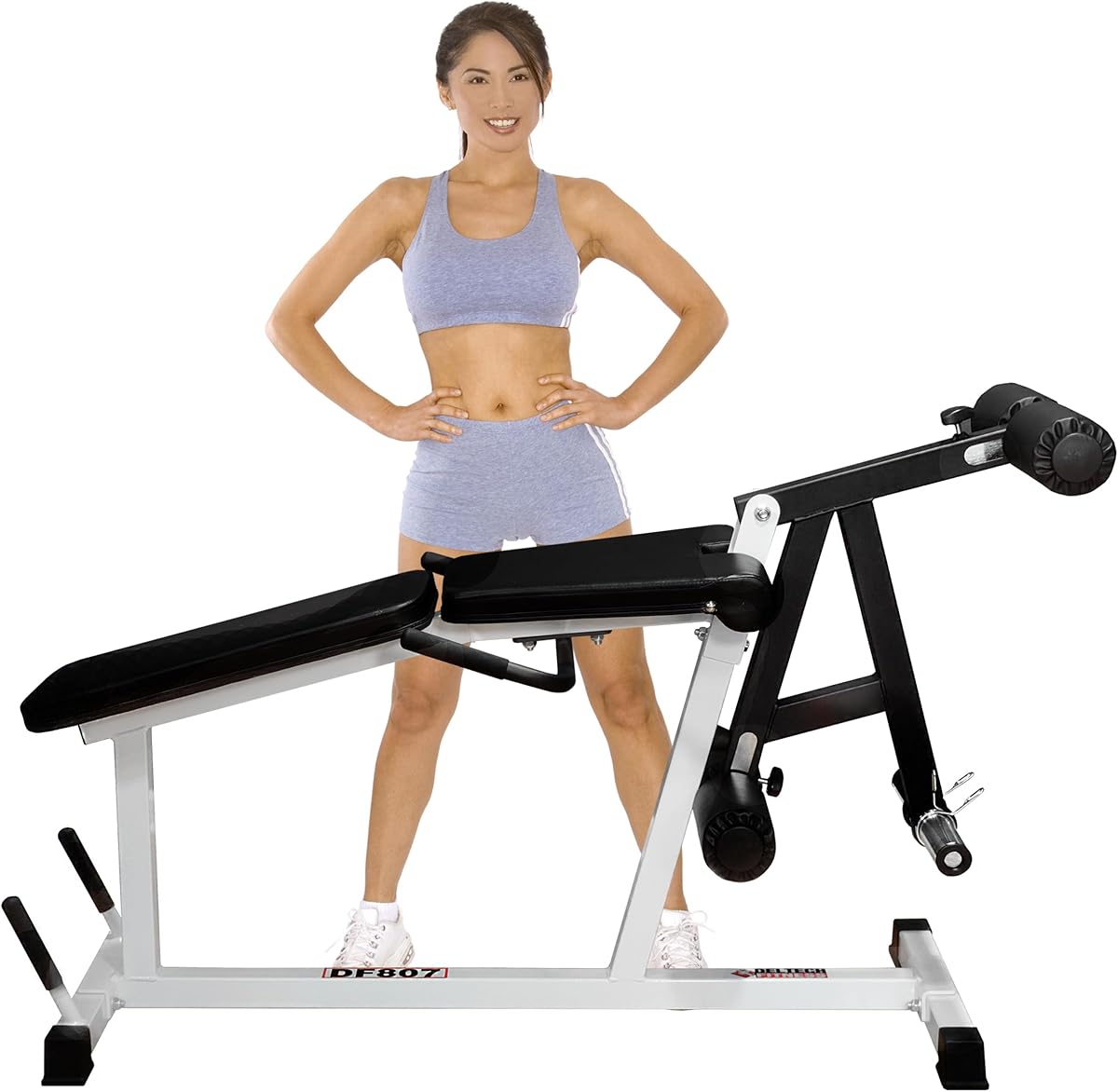
Deltech Fitness Leg Extension and Curl Machine
Best StandalonePros
- Straightforward design eliminates adjustment complexity
- Solid steel construction handles consistent training loads
- Long track record with verified positive user feedback
- Performs both leg extensions and leg curls reliably
- Good footprint-to-function ratio for dedicated home gyms
- Works with standard Olympic plates
Cons
- Fewer position adjustments than newer competitors
- Aesthetic design is utilitarian rather than polished
- Pad design is functional but lacks the ergonomic shaping of premium options
The Deltech Fitness leg extension machine has been in service in home gyms for years, and its continued presence in the market reflects one core strength: it does exactly what it claims to do, consistently, without unnecessary complexity.
Where newer machines layer on adjustment systems and load ratio features, the Deltech keeps the design honest. Steel frame, reliable pivot, functional pads, standard Olympic plate loading. For lifters who want a machine that works every session without demanding any attention, that simplicity is a genuine virtue.
The trade-off is that the adjustment range is narrower than newer competitors, and the aesthetic is clearly utilitarian rather than polished. If machine fit is a major concern for your body type, check the specifications against your measurements before buying. But for most average-height lifters who want a dependable dedicated machine, the Deltech delivers without drama.
8. Titan Fitness Plate-Loaded Lying Leg Curl Machine – Best for Hamstrings
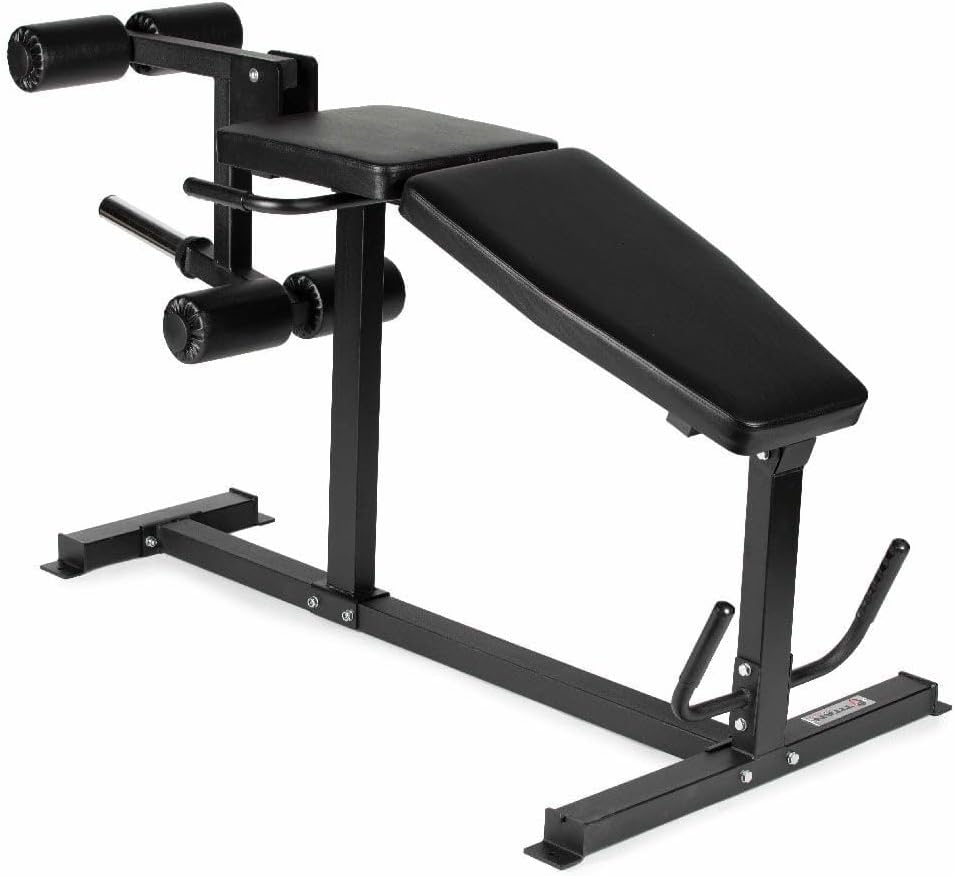
Titan Fitness Plate-Loaded Lying Prone Hamstring Curl and Leg Extension Machine
Best for HamstringsPros
- Prone lying position isolates hamstrings more effectively than seated curl machines
- 300 lb weight capacity handles advanced training loads
- 4 leg and foot rollers provide secure and comfortable positioning
- 4 built-in handles for upper body support during maximum effort sets
- Leverage machine design delivers consistent resistance throughout the curl
- Titan build quality at a below-commercial price point
Cons
- Lying prone design means it performs one primary movement pattern
- Larger footprint than seated combination machines
- Higher price point for a single-movement focus
Every other machine in this roundup handles both leg extensions and leg curls from a seated position. The Titan plate-loaded lying machine takes a different approach entirely, focusing on prone hamstring curls performed in the position that most closely mimics free-weight lying leg curls.
The lying position changes the hamstring mechanics meaningfully. When you curl from a prone position, the hip extension component that seated leg curl machines introduce is eliminated. That means cleaner hamstring isolation, greater peak contraction at the top of the movement, and less hip flexor involvement throughout. For lifters who take posterior chain development seriously, the lying curl is not just a preference – it is a biomechanically superior choice.
At 300 pounds rated capacity, four foot rollers, and four support handles, the Titan prone machine handles the demands of serious lower body training. The lever mechanism delivers consistent resistance that does not fade at the end of the range of motion. If hamstring development is a priority and you have the floor space, this machine belongs in your gym.
Leg Extension Machine Comparison
[fv-pc-comparison-table]
[fv-pc-product name=”Body-Solid GCEC340″ badge=”Best Overall” price=”$699″ rating=”9.4″ buy_url=”https://www.amazon.com/dp/B000M0FDI?tag=fitnessvolt06-202?tag=fitnessvolt06-20″ weight_capacity=”300+ lbs” adjustability=”High”]
[fv-pc-product name=”Titan Fitness Adjustable” badge=”Best Home Gym” price=”$499″ rating=”8.8″ buy_url=”https://www.amazon.com/dp/B09WGDHJY?tag=fitnessvolt06-20R?tag=fitnessvolt06-20″ weight_capacity=”300 lbs” adjustability=”High”]
[fv-pc-product name=”RitFit PLC01″ badge=”Best Value” price=”$429″ rating=”8.6″ buy_url=”https://www.amazon.com/dp/B0DJ8Z95W?tag=fitnessvolt06-20X?tag=fitnessvolt06-20″ weight_capacity=”375 lbs” adjustability=”High”]
[fv-pc-product name=”GMWD LE08 2.0″ badge=”Best Adjustability” price=”$389″ rating=”8.4″ buy_url=”https://www.amazon.com/dp/B0GSPLBZJ?tag=fitnessvolt06-20B?tag=fitnessvolt06-20″ weight_capacity=”300 lbs” adjustability=”Highest”]
[fv-pc-product name=”XMark XM-7615″ badge=”Best Heavy-Duty” price=”$649″ rating=”9.0″ buy_url=”https://www.amazon.com/dp/B0080R2HC?tag=fitnessvolt06-20Y?tag=fitnessvolt06-20″ weight_capacity=”300+ lbs” adjustability=”Very High”]
[fv-pc-product name=”Valor Fitness CC-4″ badge=”Best Budget” price=”$189″ rating=”7.2″ buy_url=”https://www.amazon.com/dp/B0041H2L8?tag=fitnessvolt06-20W?tag=fitnessvolt06-20″ weight_capacity=”150 lbs” adjustability=”Basic”]
[fv-pc-product name=”Deltech Fitness” badge=”Best Standalone” price=”$349″ rating=”8.0″ buy_url=”https://www.amazon.com/dp/B000GTMH2?tag=fitnessvolt06-20O?tag=fitnessvolt06-20″ weight_capacity=”300 lbs” adjustability=”Moderate”]
[fv-pc-product name=”Titan Prone Curl” badge=”Best Hamstrings” price=”$665″ rating=”8.7″ buy_url=”https://www.amazon.com/dp/B08RNRQJH?tag=fitnessvolt06-20V?tag=fitnessvolt06-20″ weight_capacity=”300 lbs” adjustability=”Moderate”]
[/fv-pc-comparison-table][/fv_comparison_table]
How to Choose the Right Leg Extension Machine
Plate-Loaded vs. Selectorized
Plate-loaded machines dominate the home gym market because they are more compact, more durable, and less expensive than selectorized (weight-stack) alternatives. The trade-off is that changing resistance requires loading and unloading plates rather than moving a pin. For home use, plate-loaded is almost always the right call. Selectorized machines make more sense in commercial settings where multiple users need fast transitions.
Seated vs. Lying for Leg Curls
If hamstring development is important to your training, the distinction between seated and lying leg curl mechanics matters. Seated curl machines create hip flexion that limits the stretch on the hamstrings at the start of the movement. Lying prone machines eliminate that restriction and allow fuller hamstring engagement through the complete range of motion. For dedicated hamstring work, lying is superior. For pure convenience and a smaller footprint, seated combination machines win.
Weight Capacity and Your Training Level
Match the machine to where your training is headed, not where it is today. A beginner starting with 60 pounds on a leg extension will eventually reach 120, 150, or beyond. Budget machines with 150-pound limits become the ceiling that stops your progress. For any lifter with intermediate or advanced aspirations, choose a machine rated at 300 pounds or more.
Adjustability and Body Fit
The pivot point of a leg extension machine should align with your knee joint. Machines that cannot accommodate your limb length or torso proportion will position the pivot incorrectly, creating shear forces at the knee and reducing muscle engagement. Before buying, check that the machine offers enough seat, backrest, and thigh pad adjustments to position you correctly. Taller lifters in particular should verify adjustment ranges against their measurements.
Frame Gauge and Build Quality
The difference between 11-gauge and 14-gauge steel is significant in a machine subject to repetitive dynamic loading. Thicker gauge frames resist flex, eliminate creaking, and maintain their geometry over years of use. Cheaper machines use lighter gauge steel to hit a price point, and that decision shows up within the first year as wobble, noise, and degraded feel under load.
Muscles Worked by Leg Extension Machines
Leg extension machines target the quadriceps femoris, a group of four muscles on the front of the thigh:
- Rectus femoris – the only quad muscle that crosses the hip joint, making it particularly active during leg extensions
- Vastus lateralis – the outer sweep of the quad, contributing to the lateral thigh definition that gives legs their shaped appearance
- Vastus medialis – the teardrop-shaped muscle above the inner knee, critical for knee stability and terminal extension strength
- Vastus intermedius – the deep quad muscle that assists in knee extension under heavy loads
When the machine also performs leg curls, the primary target shifts to the hamstrings: biceps femoris (long and short head), semimembranosus, and semitendinosus.
Benefits of Leg Extension Machines
Targeted Quad Isolation
Compound movements like squats and leg presses distribute load across multiple muscle groups. The leg extension machine removes that distribution entirely, placing almost all of the demand on the quadriceps. For lifters who have identified a lagging quad relative to their posterior chain, this isolation is the most direct corrective tool available.
Rehabilitation and Injury Recovery
Leg extension machines are a standard tool in physical therapy for knee rehabilitation. The controlled, single-plane movement allows clinicians to load the quad at specific points in the range of motion without introducing rotational or shear forces from compound movements. Anyone returning from quad-related injury should include leg extensions in their recovery protocol under appropriate guidance.
Terminal Extension Strength
The final 15 to 20 degrees of knee extension – the range where the quad fully locks out – is where many lifters have hidden weakness that limits squat and leg press performance. Leg extensions loaded specifically in that terminal range can address this weakness directly, with carryover to compound movement performance.
Time-Efficient Accessory Work
For athletes who train for sport or strength performance, leg extensions deliver high quad stimulus with low fatigue cost compared to additional sets of squats or leg presses. As a finisher or accessory movement, they add volume where it matters without driving systemic fatigue that compromises recovery.
How to Use a Leg Extension Machine Correctly
- Set the pivot at your knee. The machine pivot point should align with your knee joint. Adjust the seat position until this alignment is correct before loading the machine.
- Position the shin pad above the ankle. The foam roller should contact your leg just above the ankle, not at mid-shin or over the top of the foot.
- Control the eccentric. Most lifters lower the weight too quickly. A 2 to 3 second lowering phase doubles time under tension and significantly increases training stimulus.
- Pause at the top. A brief pause with the legs fully extended maximizes time at peak quad contraction, the point where muscle activation is highest.
- Avoid locking out aggressively. Full extension is appropriate, but forcing the joint into hyperextension under load creates unnecessary shear stress. Extend fully and hold briefly without snapping the joint.
- Use a load you can control. Leg extensions are an isolation movement. Lower load with better control produces more muscle development than ego load with momentum and reduced range.
Product Comparison
| Product | Price | Rating | Best For | |
|---|---|---|---|---|
| Body-Solid GCEC340 CAM Series Leg Extension and Curl Machine | $699 | 4.7/5 | Best Overall | Check Price |
| Titan Fitness Adjustable Leg Extension and Curl Machine | $499 | 4.5/5 | Best for Home Gym | Check Price |
| RitFit PLC01 Leg Extension and Curl Machine | $429 | 4.5/5 | Best Value | Check Price |
| GMWD LE08 2.0 Leg Extension and Curl Machine | $389 | 4.4/5 | Best Adjustability | Check Price |
| XMark XM-7615 Rotary Leg Extension and Curl Machine | $649 | 4.6/5 | Best Heavy-Duty | Check Price |
| Valor Fitness CC-4 Leg Extension and Curl Machine | $189 | 4.1/5 | Best Budget | Check Price |
| Deltech Fitness Leg Extension and Curl Machine | $349 | 4.3/5 | Best Standalone | Check Price |
| Titan Fitness Plate-Loaded Lying Prone Hamstring Curl and Leg Extension Machine | $665 | 4.4/5 | Best for Hamstrings | Check Price |
Frequently Asked Questions
Are leg extension machines bad for your knees?
When used correctly with proper alignment and controlled movement, leg extensions are not inherently harmful to healthy knees. The concern about knee shear forces applies primarily when pivot alignment is poor, loads are excessive, or the movement is performed with poor control. Lifters with existing knee pathology should consult a sports medicine professional before including leg extensions.
How much should I spend on a leg extension machine?
For serious home gym use, budget $400 to $700 for a machine that will last years and handle real training loads. Budget machines under $200 are appropriate for beginners testing the movement pattern, but they typically limit out before your strength does. Commercial-grade machines above $1,000 are unnecessary for home use.
Can I use a leg extension machine every day?
Direct quad training with leg extensions two to four times per week is appropriate for most lifters. Daily use is excessive for most training goals and can accumulate cumulative stress on the patellar tendon and knee joint structures. If you are training quad-focused physique goals, three sessions per week with adequate recovery between sessions is a well-supported approach.
What weight plates do I need?
Most plate-loaded leg extension machines in this roundup accept standard 2-inch Olympic plates. Some also include adapters for 1-inch standard plates. A basic set of Olympic bumper or iron plates totaling 200 to 300 pounds gives you room to progress for several years on any of the machines tested.
Do I need a leg extension machine if I already squat?
Squats are the foundation of quad development, but they do not fully replace leg extensions. The terminal range of quad extension, the rectus femoris under maximum stretch, and the isolation of individual quad heads are all training stimuli that squats cannot replicate. If your quad development is lagging relative to your overall leg strength, or if you are a physique-focused athlete, adding leg extensions to your squatting routine is evidence-based programming.
Products We Do Not Recommend
Through our testing and research process, a number of leg extension machines failed to meet our standards for build quality, safety, or honest value. We are not listing specific models here to avoid directing attention toward poor purchases, but the patterns worth avoiding are consistent.
Attachment-Style Leg Extension Accessories
Leg extension attachments that clamp onto a flat bench or cable machine are the most common category we recommend against. Without a fixed pivot mechanism calibrated to knee height, these attachments cannot align the pivot correctly for most users. The result is knee shear, reduced quad engagement, and the kind of instability that makes heavy training impractical. Unless you are severely space-constrained and loading very light, a dedicated machine is worth the extra investment every time.
Sub-$100 No-Name Machines
Leg extension machines priced below $100 consistently fail on frame gauge, pad longevity, and adjustment precision. The frames flex under loads as low as 80 pounds, the pads compress flat within a few months, and the adjustment systems either lack enough range to fit most users or fail after repeated use. The Valor Fitness CC-4 at $189 is the floor we are comfortable recommending – anything below that price bracket has not demonstrated the quality required to train safely and effectively.
Power Rack Leg Extension Attachments
Several power rack manufacturers sell leg extension and curl attachments as accessories. While they offer the convenience of using existing rack infrastructure, the pivot geometry on most of these is compromised by the need to fit multiple rack rail spacings. We tested three examples and found all of them uncomfortable and imprecise compared to dedicated standalone machines at comparable price points. If your rack brand offers a well-reviewed leg attachment, verify the pivot adjustability range before buying rather than assuming it will fit your anatomy.
Final Verdict
The Body-Solid GCEC340 is the best leg extension machine for most lifters. Its CAM resistance system, commercial-grade frame, and dual extension/curl function deliver training quality that justifies the price for anyone who trains seriously. If $700 is too steep, the RitFit PLC01 at $429 delivers the smoothest resistance in the budget category and outperforms every other machine at its price point.
For lifters who are specifically focused on hamstring development and have the floor space, the Titan Fitness Plate-Loaded Lying Leg Curl Machine belongs in the conversation alongside the best overall options. The prone position delivers hamstring mechanics that seated combination machines simply cannot replicate.
Whatever your budget, avoid the temptation to buy the cheapest option available unless you are genuinely at the beginner stage of training. The Valor CC-4 does its job, but a $189 machine will become the ceiling of your development faster than you expect. Invest at the mid-range and higher, and the machine will still be delivering returns five years from now.