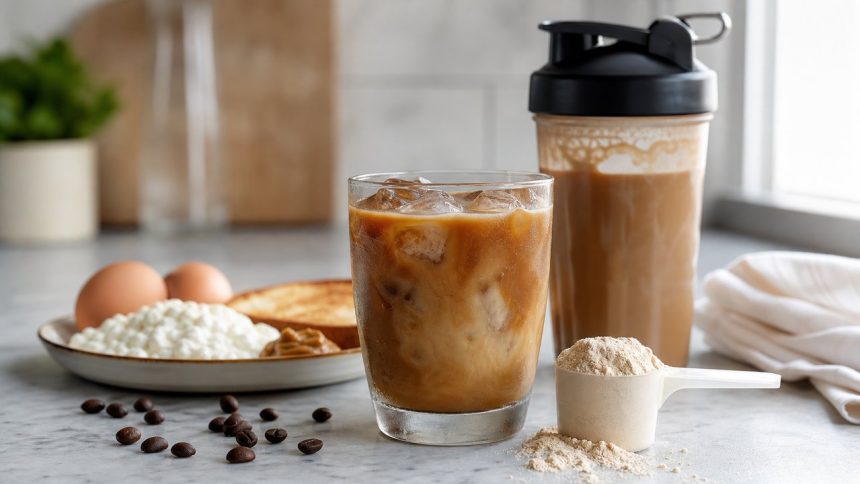
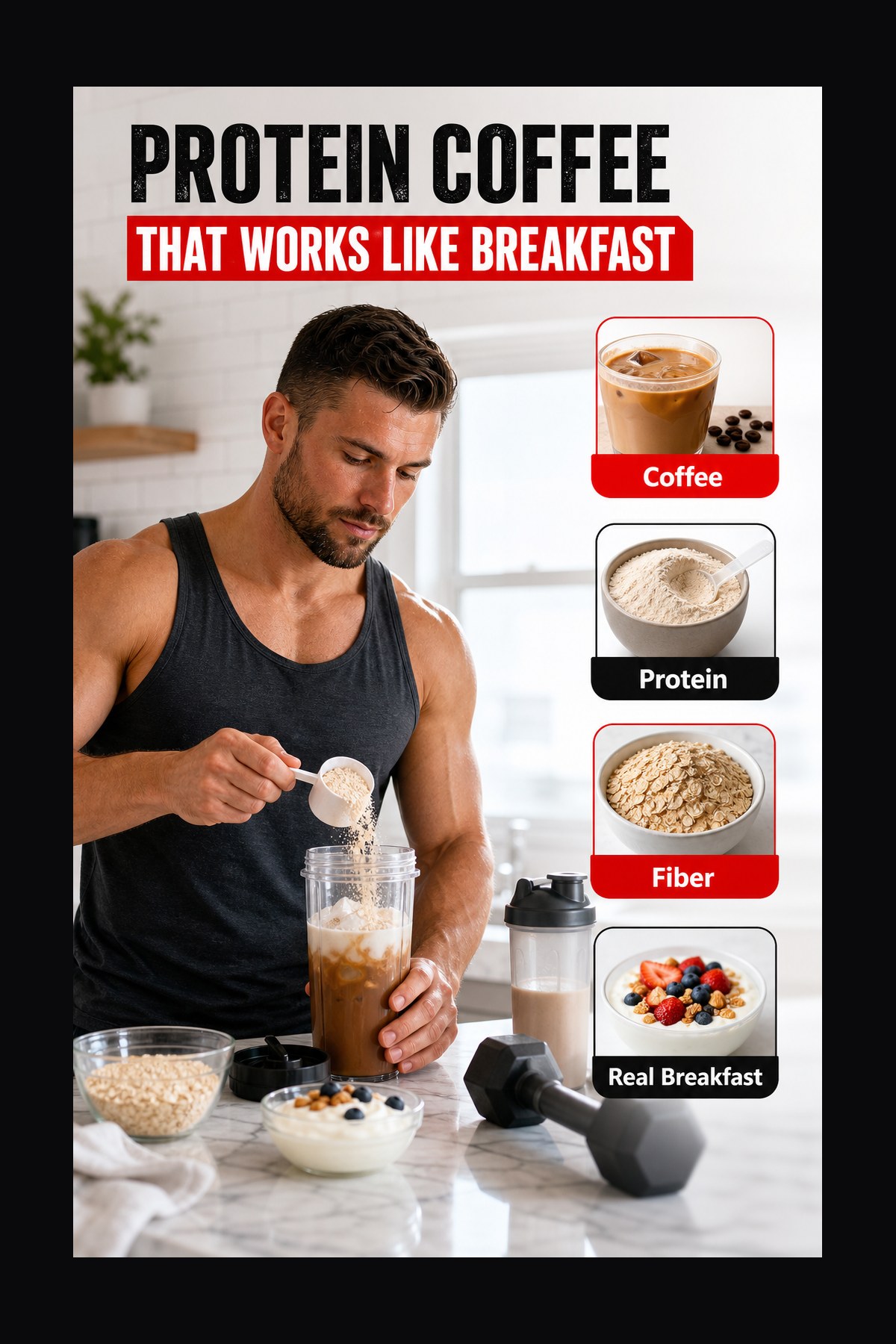
Protein coffee, or proffee, became popular because it solves a real problem: many people start the day with caffeine but almost no protein. The bad version is a giant sweet drink with a little protein thrown in. The useful version is closer to a small breakfast anchor that makes the next meal easier.
The goal is not to turn coffee into a bodybuilding supplement commercial. It is to get 20-30 grams of protein into a habit you already have, without clumps, stomach issues, or a caffeine dose that ruins sleep later. That requires a better formula than dumping powder into hot coffee and hoping for the best.
This guide gives you a simple build, a cold version, a hot version, and the mistakes that make protein coffee taste chalky or behave like dessert.
The Better Move
Use the trend as a doorway, then build a system you can repeat. The win is not novelty. The win is a rule that survives real training weeks, busy mornings, missed meals, stress, and imperfect equipment. That is why this article focuses on decisions, not hacks.
Use A Slurry, Not A Prayer
The biggest protein coffee mistake is mixing powder straight into hot coffee. Whey can clump or cook when the liquid is too hot. The fix is simple: mix protein with cold milk or water first, then add coffee. For iced protein coffee, this is easy. For hot coffee, let the coffee cool slightly and stir slowly.
- Add protein powder to 3-5 ounces cold liquid.
- Shake or whisk until smooth.
- Add coffee last, then ice or extra milk.
Match The Powder To The Drink
Whey isolate usually mixes lighter and cleaner. Whey concentrate can taste creamier but may bother sensitive stomachs. Casein thickens the drink. Plant protein can work, but texture varies widely. The right powder is the one you can drink consistently without turning breakfast into a chore.
- If shakes usually bloat you, read FitnessVolt’s guidance around protein digestion before making this daily.
- If morning protein is the issue, compare this with 15 high-protein breakfasts.
- If calories are low, use water or unsweetened milk; if gaining, use dairy milk and a larger serving.
Keep The Caffeine Honest
Protein does not cancel caffeine. If your protein coffee is a second or third coffee, it can still push sleep in the wrong direction. The FDA notes that about 400 milligrams of caffeine per day is not generally associated with dangerous effects for most adults, but individual tolerance varies. For lifters, sleep quality matters as much as the morning lift.
- Use one normal coffee base, not a hidden energy drink.
- Avoid late-day protein coffee if sleep is fragile.
- If you train early, protein coffee can be a light pre-workout breakfast.
Make It A Meal Only If It Acts Like One
A 120-calorie protein coffee is not breakfast for everyone. If you are hungry an hour later, add food: fruit, oats, eggs, yogurt, or toast. If you are cutting and it holds you until lunch, fine. The drink should fit the day instead of becoming a diet rule.
- For a fuller structure, use the 30/10 plate rule at your next meal.
- If you are using protein coffee for weight loss, track total calories rather than assuming it is automatically light.
- If you are trying to build muscle, make sure the rest of the day supplies enough total protein and calories.
Protein Coffee Builds
| Goal | Build | Watch-out |
|---|---|---|
| Light breakfast | Coffee + whey isolate + unsweetened milk | May need fruit or oats |
| Pre-workout | Cold brew + whey + banana on the side | Avoid too much fiber right before training |
| Muscle gain | Coffee + milk + protein + oats blended separately | Calories climb fast |
| Sensitive stomach | Smaller protein serving + lactose-free milk | Test before busy mornings |
Use It This Week
Test protein coffee on a normal morning before you use it before a hard workout. Digestion, caffeine response, and powder texture vary. The best recipe is the one you can drink without stomach noise or a sugar crash.
Keep the first version boring: coffee, protein, liquid, ice, and one flavor. Once it mixes smoothly, decide whether it needs more calories. Many people ruin protein coffee by turning it into a dessert and then pretending the protein makes the calories invisible.
If sleep quality drops, the coffee is not failing as protein; it is failing as caffeine timing. Move it earlier or reduce the coffee base before changing powders.
Adjust It By Goal
| Goal | Best adjustment | Why |
|---|---|---|
| Fat loss | Use unsweetened milk or water | Keeps calories controlled |
| Muscle gain | Add milk, oats, or a banana | Turns it into a real breakfast |
| Early training | Use as light fuel with fruit | Better than caffeine alone |
| Sensitive stomach | Use smaller protein dose first | Tolerance beats macro perfection |
When To Change The Plan
Do not judge the plan from one perfect day or one bad day. Most useful fitness and nutrition changes need a short runway. Give the system one to two weeks unless pain, dizziness, digestive distress, sleep disruption, or a clear medical concern shows up sooner. Early feedback is useful, but it needs context.
The right adjustment is usually smaller than the emotional reaction. If the plan feels too hard, reduce the dose before abandoning the idea. If it feels too easy, repeat it until the habit is stable before adding complexity. Most people fail these trends by escalating too quickly, not by starting too conservatively.
- Change one variable at a time so the result is readable.
- Keep the part that improves training, hunger, recovery, or consistency.
- Remove the part that adds friction without a clear payoff.
- Treat pain, dizziness, unusual fatigue, or persistent digestive symptoms as stop signs, not discipline tests.
The Smarter Starting Dose
Start smaller than your motivation wants. A conservative first dose protects the rest of the week and gives you cleaner feedback. Once the behavior is repeatable, progression is easy. When the starting point is too aggressive, the plan often fails for reasons that have nothing to do with the idea itself.
That is especially important for lifters because everything competes with recovery. A new food habit can change digestion. A new cardio session can change leg fatigue. A new recovery tool can change sleep timing. The first job is to make the change fit the training week. The second job is to make it stronger.
Mistakes To Avoid
- Adding protein directly to boiling coffee.
- Using protein coffee as a full meal when it does not keep you full.
- Turning it into a high-calorie dessert without noticing.
- Drinking it late enough to hurt sleep.
How To Know It Is Working
The right version should make the next decision easier. Training should feel more predictable, meals should require less negotiation, and recovery should become easier to read. If the plan adds stress, confusion, pain, or obsessive tracking, simplify it before adding another layer.
Use one clear metric for two weeks. For nutrition articles, that could be hunger, protein consistency, calories, or training energy. For training articles, use performance, soreness, joint comfort, and repeatability. If the metric improves without creating a new problem, keep the system.
Where This Fits On FitnessVolt
This piece is meant to connect with the rest of your training and nutrition system, not replace it. Use the linked FitnessVolt guides where they match your next decision, especially when you need a calculator, a workout progression, or a more detailed nutrition framework.
Reader Scenarios
Early lifter
Use protein coffee as a light anchor, then eat a real meal after training. If the session is hard, add a banana, toast, or oats instead of relying on coffee alone.
Fat-loss breakfast skipper
Use a lower-calorie build with whey and unsweetened milk, but judge it by hunger two hours later. If it turns into grazing, add fruit or yogurt.
Afternoon coffee habit
Keep the protein but move caffeine earlier. A decaf or half-caf version can protect sleep while keeping the protein routine.
FAQ
Can you put protein powder in coffee?
Yes, but it mixes better if you make a cold slurry first. Avoid dumping whey directly into boiling coffee because it can clump.
Is protein coffee good for weight loss?
It can help if it replaces a sugary drink or closes a protein gap, but it still has calories. The total day matters.
How much protein should protein coffee have?
Most people can start with 20-30 grams. Smaller bodies or sensitive stomachs may prefer less, especially at first.
Can protein coffee replace breakfast?
Sometimes, but only if it keeps you full and your total nutrition stays adequate. Many active people need food with it.
Sources
- U.S. Food and Drug Administration. n.d. Spilling the Beans: How Much Caffeine is Too Much? Accessed June 4, 2026.
- Jäger R, et al. 2017. International Society of Sports Nutrition Position Stand: protein and exercise. Journal of the International Society of Sports Nutrition. Accessed June 4, 2026.
- U.S. Department of Agriculture. n.d. FoodData Central. Accessed June 4, 2026.