
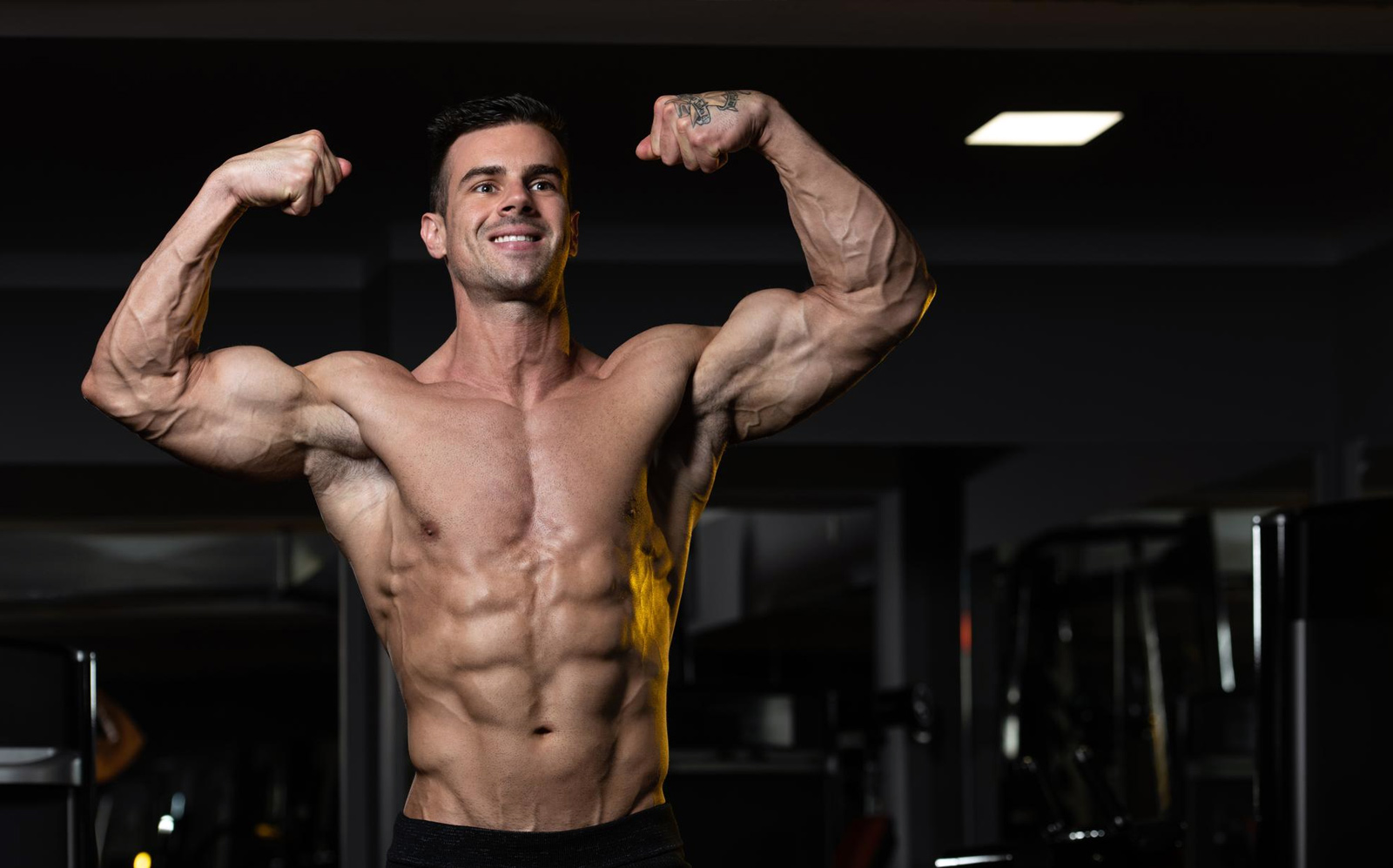
For such a relatively small muscle, the biceps attract a lot of attention. Just about every exerciser—and especially bodybuilders—wants bigger, harder, fuller, more peaked biceps, and a lot of lifters’ self-esteem is directly linked to the size of their arms.
As such, many exercisers dedicate loads of time and energy to training their biceps. Endless sets of every type of curl imaginable, 21s, drop sets, supersets, lengthened partials, burn reps, myo-reps—they use all these methods and more to sculpt the arms of their dreams.
You’d think, then, that everyone who lifts should have awesome arms. But look around most gyms, and you’ll see this ISN’T the case.
Sadly, despite all that time, effort, and perspiration, many exercisers are frustrated with their lack of progress. It’s not that they aren’t putting in the time—it’s that they aren’t training smart.
I’m not being judgmental, because I’ve been there, too. With more than 35 years of training experience under my lifting belt, I’ve made plenty of mistakes, including lots that have limited my biceps growth.
If I’d only known these things when I started training, I know my arms would be even bigger than they are today.
In this article, I share ten biceps training rules that will ensure your arms reach their muscular potential. Think of these as the rules of biceps growth—and break them at your peril!
The 10 Commandments of Effective Biceps Training
Turn your peashooters into cannons with these tried and tested rules for building bigger biceps!
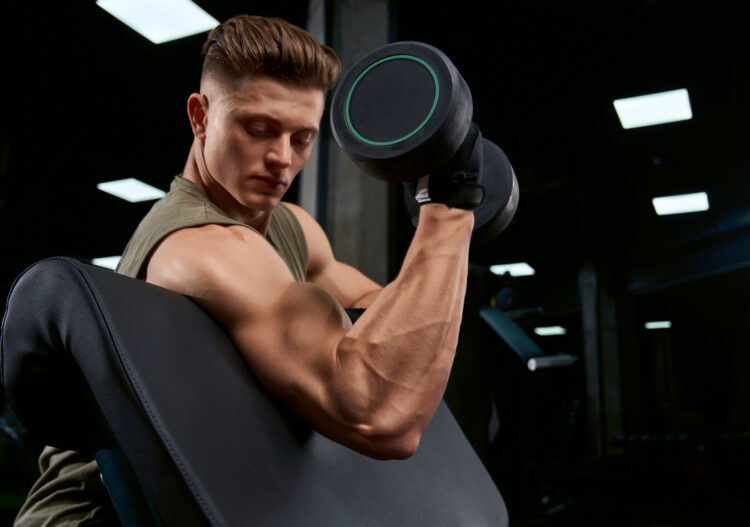
1. Prioritize Progressive Overload
We have a saying in fitness: “If you always do what you have always done, you’ll always get what you have always got.” I know, it’s a bit of a tongue-twister, but it describes how doing the same workout over and over will prevent you from making gains.
If you want your arms to grow, you must challenge them with ever more difficult workouts (1), known as progressive overload. You can gradually increase the weight or reps, do more sets, reduce inter-set rest periods, do more exercises, or increase training frequency. Manipulating any of these training variables will ensure your workouts push you forward rather than drag you back.
But a word of caution—make haste slowly. Small, regular increases in training volume or intensity produce better results than huge but unsustainable changes. For example, it’s better to add a pound a week to the bar than 20 pounds all at once.
When it comes to building bigger biceps, slow and steady wins the race!
2. Optimize Your Training Volume
How many sets do you do for your arms? If it’s less than 10 or more than 20 per week, you could be undermining your progress. According to research, 10-20 hard sets per week is optimal for building muscle (2).
Before you dive straight into 20 sets of curls per week, it’s important to stress that, in general, beginners need less volume than more experienced lifters. So, if you’ve been training for a year or less, stick to the lower end of the scale and only increase the number of sets gradually.
Of course, for a set to be effective, it must take you to within 1-3 reps of failure. Easy sets, e.g., warm-ups, do not count.
Related: Is Your Workout “Junk Volume”? How To Tell If Your Extra Sets Are Hurting, Not Helping Gains
3. Train Your Biceps Twice a Week
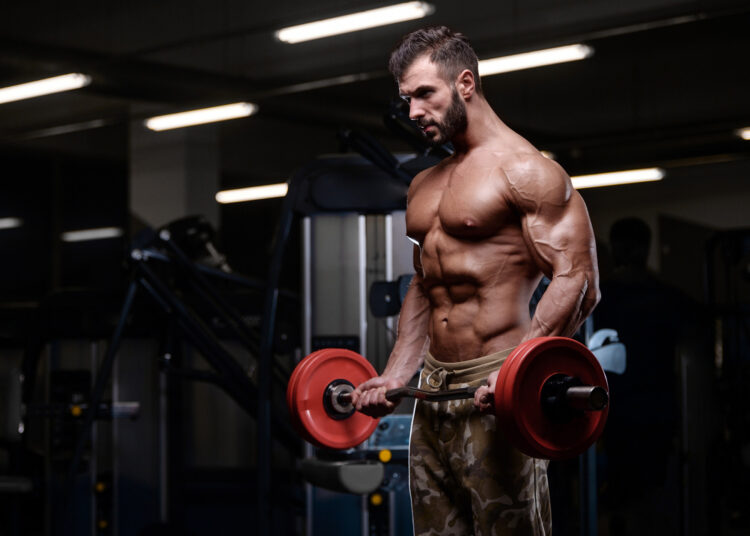
What do you think would happen if you ran ten miles today, and then didn’t run again for a week or two? You’d probably just end up tired, injured, and making zero progress.
And yet, this is how many people train their biceps—with one marathon-length workout per week.
While one workout per muscle group per week—known as the bro split—was common and popular during the golden era of bodybuilding, modern research suggests that training muscles twice and even three times per week produces better results (3).
So, if you plan to do 12 sets per week for your arms, your biceps workout could look something like this:
Monday:
- Barbell curls 3 x 6-8
- Incline dumbbell curls 3 x 10-12
Thursday:
- Alternating dumbbell curls 3 x 8-10
- Concentration curls 3 x 12-15
Fewer exercises and sets per session mean you’ll be able to train harder and heavier, producing better results than long, laborious workouts.
4. Hit Your Biceps From a Range of Angles
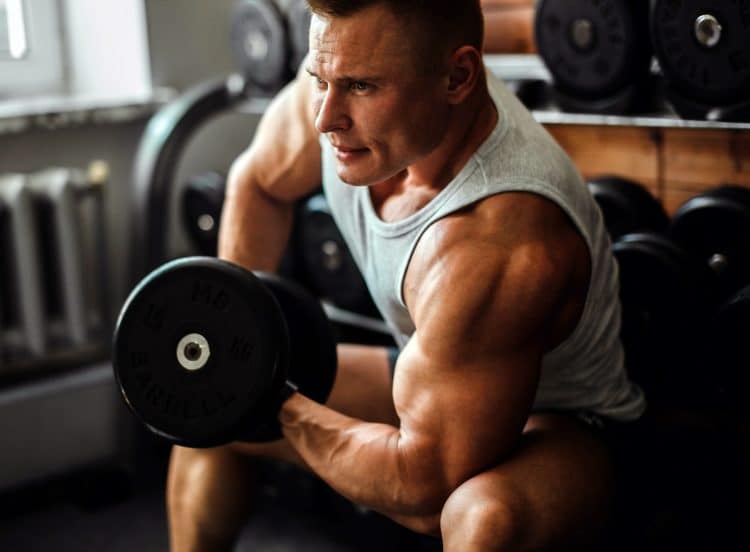
Look at the average biceps workout, and you’ll see that most of the exercises are performed with the arms tucked in close to the sides, e.g., during conventional barbell, dumbbell, or cable curls.
However, even if you use different training tools, the movement remains virtually unchanged, making your workouts incredibly repetitive.
A far superior approach is to change the angle of your upper arm relative to your torso, so you train your biceps in different positions and at different lengths. For example:
Arms in front of your torso
Arms behind your torso
- Incline curls
- Drag curls
- Bayesian cable curls
Arms next to your torso
- Barbell curls
- Dumbbell curls
- Cable curls
This variety ensures that no muscle fiber is left unchallenged, and your biceps will have no choice but to adapt and grow.
5. Emphasize the Eccentric (Lowering) Phase of Every Rep
Most strength training reps comprise three phases: concentric (lifting), isometric (pause), and lowering (eccentric). While all three have a part to play in triggering muscle growth, research suggests that the eccentric or lowering phase is the most important (4).
A lot of exercisers put all their energy into lifting weights, but then they all but drop them, which makes their reps less effective than they should be.
Avoid this by lowering your weights half as fast as you lift them. So, if, during curls, you raise the weight in two seconds, control the descent, and lower the load in four seconds. This 1:2 ratio is probably the simplest and most convenient way to use tempo training in your workouts.
Related: Eccentric Vs. Concentric Training
6. Don’t Neglect Your Brachialis Muscle
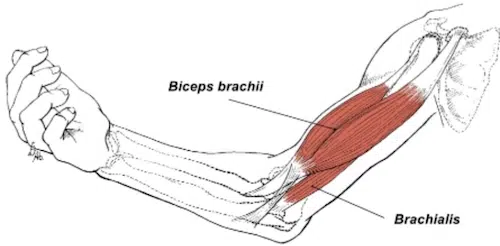
The brachialis is your biceps’ often forgotten next-door neighbor. Located just beneath the lower portion of the biceps, it’s a powerful elbow flexor and, when well-developed, helps to “prop up” your biceps and make them look larger (5).
In addition, having stronger brachialis muscles will allow you to train your biceps with heavier loads, making your arm workouts even more effective.
The brachialis is most active during semi-supinated/neutral grip arm and back exercises, including:
- Hammer curls
- Zottman curls
- Cross-body curls
- Neutral grip pull-ups and pulldowns
- Neutral grip seated, dumbbell, and T-bar rows
7. Vary Your Rep Ranges
Most lifters train their biceps using the standard bodybuilding rep range of 8-12. While there is nothing inherently wrong with this, doing nothing but sets of 8-12 can become pretty boring and, pun intended, repetitive. As mentioned way back in point #1, doing the same thing over and over is a surefire way to bring your progress to a grinding halt.
So, instead of only doing 8-12 reps, try using other rep schemes in your biceps workouts. For example:
- Barbell curls 3 x 4-6 (heavy weight)
- Dumbbell curls 3 x 8-10 (moderate weight)
- Cable curls 3 x 15-20 (light weight)
Such an approach ensures you challenge all the different muscle fibers, from type IIa fast-twitch to type I slow-twitch, and all those in between.
8. Use Training Intensifiers From Time to Time
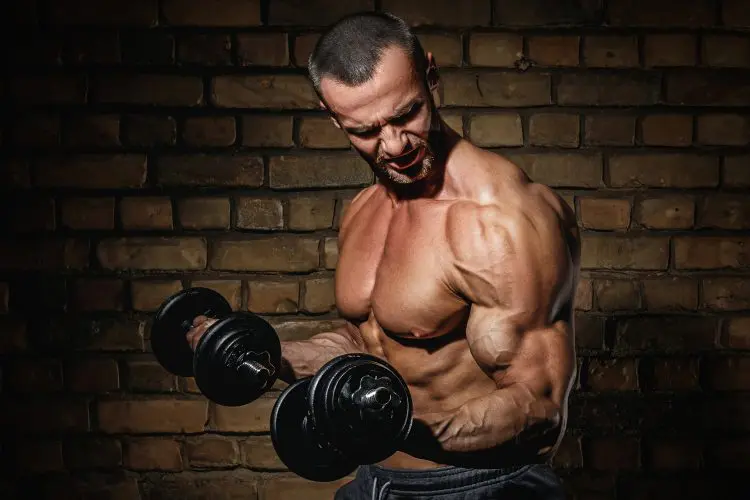
Most lifters will get great results from “straight” sets, i.e., reps performed in the conventional way. In fact, 80-90 percent of your workouts should comprise straight sets. But, and especially if you are stuck in a progress rut, the occasional training intensifier could be just what you need to get you back on track.
Training intensifiers, also known as training systems, are recognized methods designed to push your muscles to failure and beyond. This fresh injection of extra intensity doesn’t just break down progress barriers—it destroys them!
Good choices for biceps training include:
- Drop sets
- Myo reps
- Forced reps
- Supersets and trisets
- Paused reps
- Blood flow restriction
Learn more about the best training systems in this detailed guide.
9. Isolate and Integrate Your Biceps
Isolation exercises, such as barbell and dumbbell curls, target your biceps and very little else. As such, they are the cornerstone of most lifters’ biceps workouts. However, as the saying goes, there is more than one way to skin a cat, and while isolation exercises are effective, they aren’t the only way to beef up your arms.
Compound exercises such as chin-ups, underhand seated and bent-over rows, and underhand pulldowns are all excellent biceps exercises, even though they’re mainly thought of as back builders.
The main reason that compound exercises are a valuable addition to all those curls is that they allow you to lift a lot more weight. As such, they put loads of muscle-building tension through your biceps.
I mean, compare how much weight you can curl to how much you can row—big difference, right?
While there is no need to drop the isolation exercises from your program, it’s important to remember that compound exercises are also biceps builders and deserve a place in your workouts, too.
10. Be Patient, Be Consistent

Rome wasn’t built in a day, and biceps don’t grow overnight. Instead, it takes months (if not years) of dedicated effort to build arms that turn heads. Try to rush the process and you’ll just end up sore, injured, and with arms that long sleeves were invented to cover!
So, start slow and easy, building a solid foundation on the basics before gradually moving on to more advanced training methods. If you’ve only been training for a couple of years, following Mr. Olympia’s ultra-long and super-intense biceps workout is a recipe for disaster.
Long story short—you just aren’t ready for it, yet.
Master the basics, train your arms consistently, and they will grow—albeit probably slower than you’d like. But remember, every successful workout contributes to your future biceps size. In contrast, every missed workout means the arms of your dreams are a little further away.
So, turn up, do your curls, rest, eat, and repeat. That’s the real secret to building bigger, stronger biceps!
Related: No More Boring Bicep Curls — These 6 Compound Exercises Build Bigger Arms in Half the Time
Closing Thoughts
Building bigger biceps isn’t about endless curls or chasing every new trend—it’s about training smarter, not just harder. Use these rules as your roadmap: overload progressively, vary angles and reps, utilize compound exercises, and stay consistent.
Pick one or two strategies from this article and apply them this week—track your progress and adjust as you go.
Small, smart changes will trigger noticeable growth, so stop spinning your wheels and start transforming your arms today!
References:
- Peterson MD, Pistilli E, Haff GG, Hoffman EP, Gordon PM. Progression of volume load and muscular adaptation during resistance exercise. Eur J Appl Physiol. 2011 Jun;111(6):1063-71. doi: 10.1007/s00421-010-1735-9. Epub 2010 Nov 27. PMID: 21113614; PMCID: PMC4215195.
- Baz-Valle E, Balsalobre-Fernández C, Alix-Fages C, Santos-Concejero J. A Systematic Review of The Effects of Different Resistance Training Volumes on Muscle Hypertrophy. J Hum Kinet. 2022 Feb 10;81:199-210. doi: 10.2478/hukin-2022-0017. PMID: 35291645; PMCID: PMC8884877.
- Schoenfeld BJ, Ogborn D, Krieger JW. Effects of Resistance Training Frequency on Measures of Muscle Hypertrophy: A Systematic Review and Meta-Analysis. Sports Med. 2016 Nov;46(11):1689-1697. doi: 10.1007/s40279-016-0543-8. PMID: 27102172.
- da Silva LSL, Gonçalves LDS, Alves Campos PH, Benjamim CJR, Tasinafo Júnior MF, de Lima LCR, Bueno Júnior CR, Alves CPL. Comparison Between Eccentric vs. Concentric Muscle Actions On Hypertrophy: A Systematic Review and Meta-analysis. J Strength Cond Res. 2025 Jan 1;39(1):115-134. doi: 10.1519/JSC.0000000000004981. PMID: 39652733.
- Plantz MA, Bordoni B. Anatomy, Shoulder and Upper Limb, Brachialis Muscle. [Updated 2023 Feb 21]. In: StatPearls [Internet]. Treasure Island (FL): StatPearls Publishing; 2025 Jan-. Available from: https://www.ncbi.nlm.nih.gov/books/NBK551630/