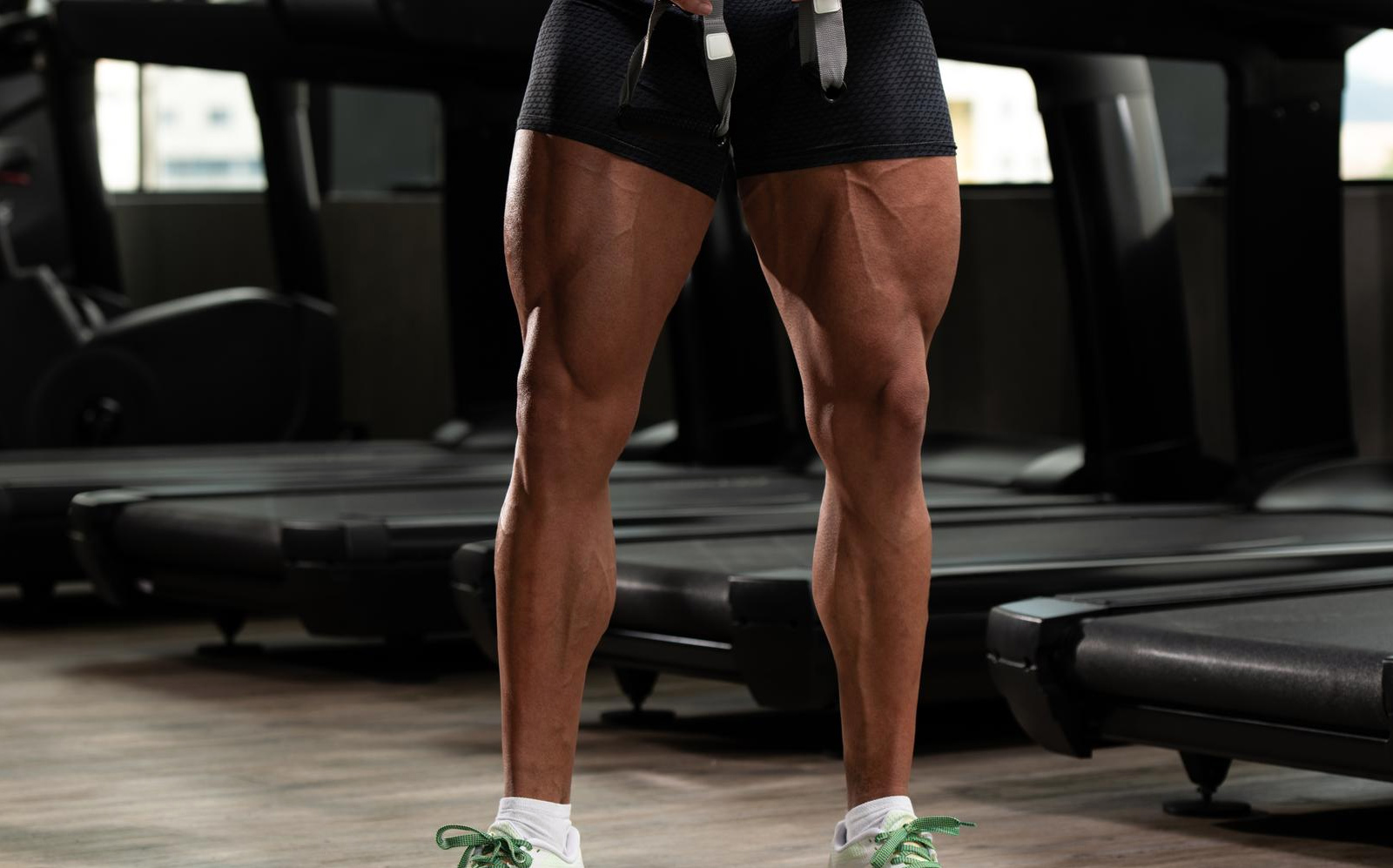
As the popular saying goes, an apple a day keeps the doctor away, and a daily set of squats will make your thighs and butt look hot!
Okay, so I made up that last line, but according to many trainers, squats are the foundation of effective leg workouts. Squats—in all their forms—are often referred to as the “king of exercises,” a title they largely deserve.
Squats are one of the most versatile, rewarding exercises. They work virtually every muscle in your lower body and can be adapted to meet almost any fitness goal, from building muscle to getting insanely strong to improving athletic performance (1). Squats are also the first contested lift in powerlifting—a sport I competed in for many years.
And yet, despite these accolades, squats have a dark side.
For some, a set of squats is about as appealing as the flu. They’re difficult, awkward, and can even be painful.
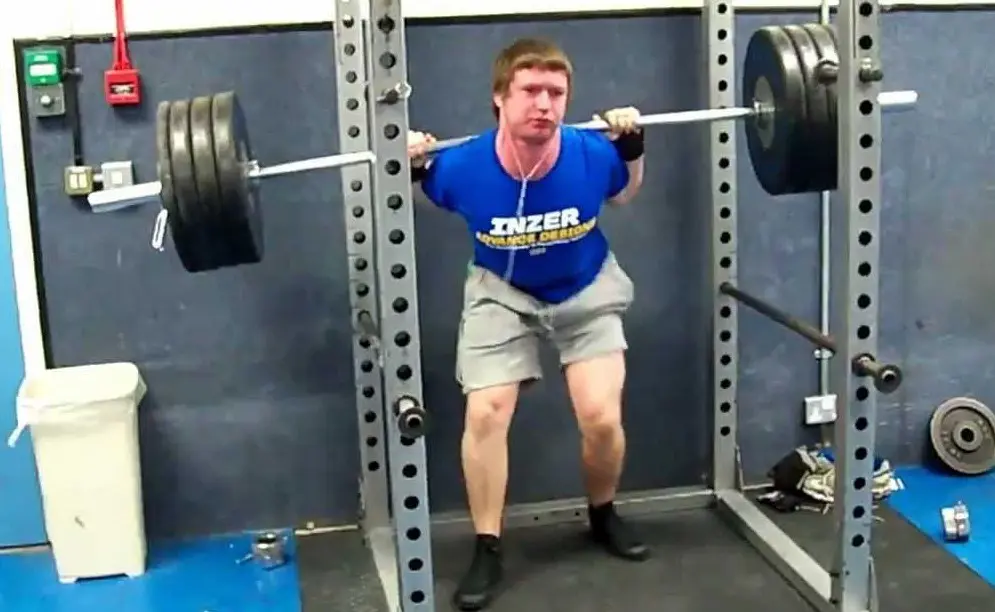
Of course, there is no escaping hard work when you’re trying to transform your body from soft to strong. But there is a big difference between exercise-induced muscle soreness and actual joint pain.
So, if you can squat, then you probably should. But if squats bother your knees, hips, or lower back, the good news is that there are plenty of other exercises you can do instead.
I’m a veteran personal trainer, and while I encourage all of my clients to squat if they can, I also know that not everyone was born to squat. In this article, I share a four-move routine designed to build leg mass without conventional squats.
Related: 12 Unique Squat Variations for Stronger, More Muscular Legs
Building Bigger, Stronger Legs Without Squats
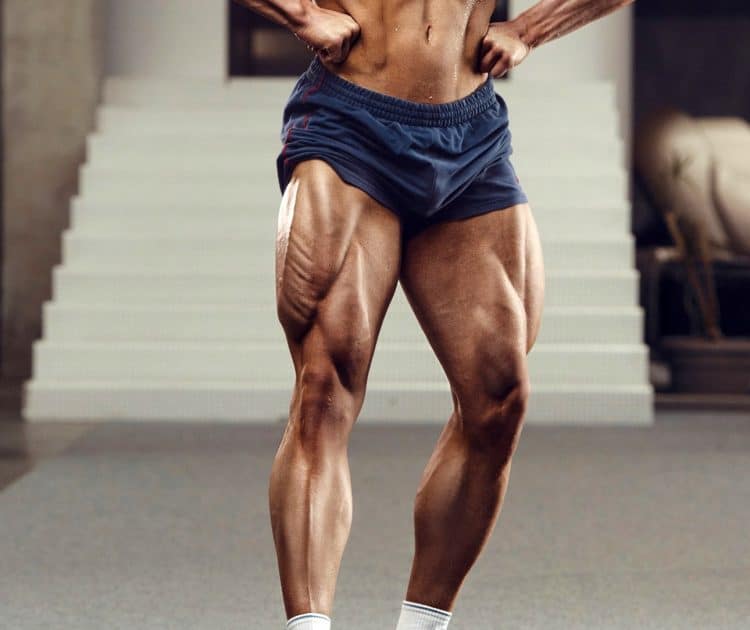
Contrary to what you may have heard, squats are NOT the only exercise with the power to build bigger, stronger legs. With apologies to the Quadfather Tom Platz, while squats can be effective for some people, they’re problematic for others.
That’s because squats require:
- Good ankle, knee, and hip mobility
- Healthy joints and lower back
- A strong core
- Excellent balance
- A high level of kinesthetic awareness and coordination
- Technical proficiency
Plus, depending on the variation you choose for your workouts, you’ll also need the right equipment. For example, barbell back squats—especially when done with heavy weights—require a power rack. That’s no problem if you work out in a well-equipped gym, but home lifters may not have the space or budget for such a bulky setup.
The good news is that while squats are undeniably effective, there are plenty of lower-body exercises you can do instead. And, at the risk of being a little blasphemous, there isn’t anything magical about squats—they’re just one of the many tools you can use to build the body of your dreams.
Squat-Free Leg Workout
So, with all that in mind, here’s a four-move, squat-free workout designed to build stronger, more muscular legs. Do it 1-2 times per week on non-consecutive days to allow time for recovery and growth.
But, before you so much as lay a finger on a weight, you must prepare your body and mind with an appropriate warm-up.
Start with 5-10 minutes of light cardio, e.g., cycling or elliptical, followed by dynamic mobility and flexibility exercises for the joints and muscles you are about to use. Finish off with some muscle activation drills to get your nervous system firing correctly.
Related: How to Warm Up for Strength Training
| Exercise | Sets | Reps | Recovery | |
| 1a | Leg extensions | 4 | 21 | 90 seconds |
| 1b | Reverse deficit lunge | 4 | 8-12 per leg | |
| 2 | Dumbbell Romanian deadlift | 3 | 12-15 | 60 seconds |
| 3 | Leg press – narrow stance | 3 | 6-10 | 90 seconds |
Exercises 1a and 1b are performed as supersets. Do the first exercise (leg extensions) and immediately do a set of the second exercise (reverse deficit lunges). Rest 90 seconds and then repeat the pairing three more times.
Exercise Instructions
You’ll get better results and fewer injuries if you train with good technique. Follow these step-by-step instructions to make your workout as safe and effective as possible.
1. Leg Extensions (21s)
Target muscles: Quadriceps
Leg extensions target your quads, which are located on the front of your thighs. Training these muscles first will make the next exercise much more challenging. However, you won’t be doing straight sets of leg extensions. Instead, we’re going to fry your quads with an old bodybuilding favorite—21s. And yes, your muscles are supposed to burn and shake during this exercise!
How to do it:
- Adjust the leg extension machine so that your knees line up with the lever arm pivot point, and the pad sits across your ankles/lower shins.
- Sit on the machine and grab the handles.
- Extend your legs and lift the weight about a third of the way up. Lower the weight and repeat seven times.
- Next, from one-third up, fully extend your knees and then lower the weight partway back down. Again, repeat seven times.
- Finally, do seven full reps, but do not allow the weights to touch down. Pause at the top of each rep and squeeze your quads as hard as you can.
- Lower the weight, clamber off the machine, and immediately transition to the next exercise.
Home Workout Alternatives:
2. Reverse Deficit Lunge
Target muscles: Quadriceps, hamstrings, gluteus maximus, abductors, adductors
Reverse lunges are a very joint-friendly leg exercise. Adding a deficit increases the range of motion, turning a good movement into a great one. You’ll feel this exercise in all your lower body muscles, but it’s especially effective for targeting your upper hamstrings and lower glutes—the so-called glute/hamstring tie-in. Plus, having just finished leg extension 21s, your quads will be crying for mercy, too.
How to do it:
- Hold a dumbbell in each hand and stand on a 6 to 8-inch platform. Brace your core and pull your shoulders down and back.
- Starting with your feet together, take a step back, bend your legs, and lower your rearmost knee down to just below the level of your front foot.
- Push off your back leg and return to the platform.
- Do your next rep with the other leg.
- Alternate legs for the prescribed number of reps.
Home Workout Alternatives:
3. Dumbbell Romanian Deadlift
Target muscles: Hamstrings, gluteus maximus, lower back
Romanian deadlifts are a superb posterior chain exercise. Beloved by bodybuilders, weightlifters, and athletes alike, this move will ensure that your legs look as good from the back as they do from the front.
While you can do Romanian deadlifts with a barbell, I personally find them more effective and lower-back-friendly when they’re performed with dumbbells. Dumbbells allow you to keep the weight closer to your legs, freeing you to focus on the target muscles.
How to do it:
- Hold a dumbbell in each hand and stand with your feet shoulder-width apart, knees slightly bent. Pull your shoulders down and back and brace your core.
- Hinging from the hips, push your butt back, lean forward, and lower the weights down the sides of your legs. Descend as far as you can without rounding your lower back.
- Drive your hips forward and stand back up.
- That’s one rep—keep going.
Home Workout Alternatives:
4. Leg Press – Narrow Stance
Target muscles: Quadriceps, hamstrings, gluteus maximus
The leg press is an excellent way to finish a lower-body workout. With no weight balancing to worry about, you can push your muscles to failure without your stabilizers bringing your set to a premature end. Adopting a narrow stance means your quadriceps will be doing the bulk of the work, and should leave you feeling pumped, tired, but satisfied you’ve triggered new muscle growth.
Related: Different Leg Press Foot Placements Explained
How to do it:
- Sit on the leg press machine so your buttocks and lower back are pressed firmly against the bottom of the seat.
- Place your feet close together on the lower part of the footrest to emphasize your quadriceps.
- Release the safety catches.
- Bend your legs and lower the weight as far as you can without rounding your lower back.
- Extend your legs and repeat.
- Re-engage the safety catches at the end of your set.
Home Workout Alternatives:
Tips For Even Better Workouts
Get even more from your workouts with these tried-and-tested hints and tips!
Eat Well for Better Gains
Training is only one side of the strength and muscle-building equation—your diet also plays an important role. While it’s beyond the scope of this article to provide you with a diet to follow, these snippets will steer you in the right direction:
- Create a 250-500 calorie surplus to fuel your workouts and subsequent recovery and muscle growth.
- Consume around one gram of protein per pound of bodyweight, or about two grams per kilo.
- Eat mostly whole foods, including whole grains, vegetables, some fruits, nuts, seeds, natural oils, and unprocessed protein.
- Supplement wisely, with whey protein and creatine being the best choices for most lifters.
- Drink plenty of water while avoiding too much soda, juice, and alcohol.
- Not gaining weight or feeling unrecovered? You probably need to eat more.

Sleep Yourself Stronger
Intense training breaks your body down and diminishes your energy and resources. In contrast, sleep is when your body gets busy repairing the damage from your workouts and building your muscles back bigger and stronger. As such, most lifters need 7-9 hours of sleep per night. Sleep deprivation can severely impede your progress.
Be Patient and Consistent
Just as Rome wasn’t built in a day, it takes months and even years of effort to build muscle and strength. Progress can be frustratingly slow, but remember that every workout you complete will take you one small step closer to your goal.
However, if you miss more workouts than you finish, that slow progress will be even slower, and you may even lose your hard-won gains. So, commit to the process and be consistent. There are no shortcuts, but your sustained efforts will be rewarded!
Avoid Stress and Other Lifestyle Progress Killers
Even the best workout and nutrition plan won’t produce the results you want if your lifestyle doesn’t support your training. Too much stress, excessive alcohol, smoking, drug use, negativity, partying, etc., can rob your body of the energy and nutrients it needs to repair and recover from your training.
There are 168 hours in a week, and you’ll only spend a few of them at the gym. However, it’s the remaining 160-odd hours that determine your results.
Closing Thoughts
Squats deserve their reputation as one of the most effective leg-building exercises in existence. And if they’re working for you—producing results without pain—there’s no reason to abandon them.
For many lifters, squats will always be a cornerstone movement.
However, not everybody responds the same way to the same exercises. If squats cause discomfort, aggravate old injuries, or fail to deliver the results you’re after, you’re not out of options.
The four-move, squat-free workout you’ve just read offers a proven alternative for building strength, size, and power without compromising your joints or enjoyment of training.
The most effective program is the one you can perform consistently, safely, and with enthusiasm. So, whether squats remain in your rotation or you swap them for these alternatives, commit fully and train with purpose.
Your next lower-body day could be the one that changes how you train legs forever—so grab your weights, follow the plan, and see just how effective squat-free workouts can be.
References:
1 – Stone MH, Hornsby G, Mizuguchi S, Sato K, Gahreman D, Duca M, Carroll K, Ramsey MW, Stone ME, Haff GG. The Use of Free Weight Squats in Sports: A Narrative Review-Squatting Movements, Adaptation, and Sports Performance: Physiological. J Strength Cond Res. 2024 Aug 1;38(8):1494-1508. doi: 10.1519/JSC.0000000000004838. PMID: 39072660.
 You can also follow us on Twitter, Facebook, Instagram, and
YouTube for even more content.
You can also follow us on Twitter, Facebook, Instagram, and
YouTube for even more content.Tip: If you're signed in to Google, tap Follow.