

Classic Physique vs Men's Physique
Classic Physique uses five mandatory bodybuilding poses, plain black trunks, and a height-based weight table. Men's Physique uses front and back turns, board shorts, and a different height-based weight table. Both are scored entirely in judging, with finals available as confirmation. The official rules do not publish a universal physique goal for either division.
What Men's Classic Physique and Men's Physique are
Men's Classic Physique is judged on the same balance of size, symmetry and muscularity as open bodybuilding, but within a height-based weight cap and across five mandatory poses that exclude most muscular.
Men's Physique is judged on proper shape and symmetry combined with muscularity and overall condition, plus stage presence and poise, with extreme muscularity marked down.
Those wordings are the federation's own, read from NPC Worldwide Rules, access date 2026-08-20. Everything below sets the two published rule sets side by side: attire, posing, scoring, the height tables where they exist, and the champions each side has produced.
How the Men's Classic Physique and Men's Physique rules differ
One published rule at a time, Men's Classic Physique on the left and Men's Physique on the right. Where a cell says a rule is not specified, the federation's own page does not publish one and we leave the gap open.
| Rule | Men's Classic Physique | Men's Physique |
|---|---|---|
| Goal | Not specified in the published rule page. | Not specified in the published rule page. |
| Attire | Plain, opaque, solid-black matte Spandex trunks; shirtless and barefoot. Briefs, underwear, padding, and prohibited materials are not allowed. | Board shorts worn one inch below the navel and ending two inches above the kneecap; shirtless and barefoot. Spandex and logos other than a manufacturer logo are prohibited. |
| Posing | Five mandatory poses, excluding most muscular. Judging presentation is up to 60 seconds; the finals routine is up to two minutes, followed by a 60-second posedown. | Front and back turns, an individual walk, and callouts. The published Pro rule page does not state a time limit. |
| Judging | Quarter turns, mandatory poses, and callouts. Judging counts 100%; finals callouts may replace the judging score as confirmation. | Front and back turns with callouts. Judging counts 100%; finals callouts may replace the judging score as confirmation. |
| Caps and classes | Height-specific maximum weights apply. See the published table below. | Height-specific maximum weights apply. See the published table below. |
Men's Classic Physique and Men's Physique weight caps by height
Both divisions cap competition weight by measured height, and the two limits are not the same. Every height the federation lists is paired below, so the gap at any given height can be read straight off the row.
| Height | Men's Classic Physique max weight | Men's Physique max weight |
|---|---|---|
| Up to and including 5'4" | 177 lb (80.3 kg) | 167 lb (75.7 kg) |
| Up to and including 5'5" | 182 lb (82.6 kg) | 172 lb (78.0 kg) |
| Up to and including 5'6" | 187 lb (84.8 kg) | 177 lb (80.3 kg) |
| Up to and including 5'7" | 192 lb (87.1 kg) | 182 lb (82.6 kg) |
| Up to and including 5'8" | 197 lb (89.4 kg) | 187 lb (84.8 kg) |
| Up to and including 5'9" | 204 lb (92.5 kg) | 194 lb (88.0 kg) |
| Up to and including 5'10" | 212 lb (96.2 kg) | 202 lb (91.6 kg) |
| Up to and including 5'11" | 219 lb (99.3 kg) | 209 lb (94.8 kg) |
| Up to and including 6'0" | 227 lb (103.0 kg) | 217 lb (98.4 kg) |
| Up to and including 6'1" | 234 lb (106.1 kg) | 224 lb (101.6 kg) |
| Up to and including 6'2" | 242 lb (109.8 kg) | 232 lb (105.2 kg) |
| Up to and including 6'3" | 249 lb (112.9 kg) | 239 lb (108.4 kg) |
| Up to and including 6'4" | 256 lb (116.1 kg) | 246 lb (111.6 kg) |
| Up to and including 6'5" | 263 lb (119.3 kg) | 253 lb (114.8 kg) |
| Up to and including 6'6" | 270 lb (122.5 kg) | 260 lb (117.9 kg) |
| Up to and including 6'7" | 277 lb (125.6 kg) | 267 lb (121.1 kg) |
| Over 6'7" | 284 lb (128.8 kg) | 274 lb (124.3 kg) |
Choosing between Men's Classic Physique and Men's Physique
These are the questions the published rules actually answer for each side, grouped so the two can be read against each other. None of it is a recommendation: no federation publishes advice on which division suits a competitor, and we do not invent one.
Men's Classic Physique
- What poses are required in Classic Physique?
- Front double biceps, side chest, back double biceps, abdominals and thighs, and a favorite classic pose.
- Is the most muscular pose allowed in Classic Physique?
- No. The required favorite classic pose specifically excludes most muscular.
- What is the Classic Physique weight cap?
- The maximum weight depends on measured height. The official height-weight table is reproduced on this page.
- How long is the Classic Physique finals routine?
- The finals routine is limited to two minutes.
Men's Physique
- What poses are used in Men's Physique?
- Competitors perform front and back turns during individual presentation and callouts.
- What must Men's Physique competitors wear?
- Board shorts must sit one inch below the navel, end two inches above the kneecap, and taper toward the knee.
- Does Men's Physique have a weight cap?
- Yes. The maximum weight depends on measured height, as shown in the official table on this page.
- How is Men's Physique scored?
- Judging counts 100%. Finals callouts may be scored as confirmation and replace the judging score.
Recent Men's Classic Physique and Men's Physique Olympia champions
The five most recent Olympia champions we hold on record for each side. Rules say what a division asks for; the champion list shows who has been answering it.
Men's Classic Physique Olympia
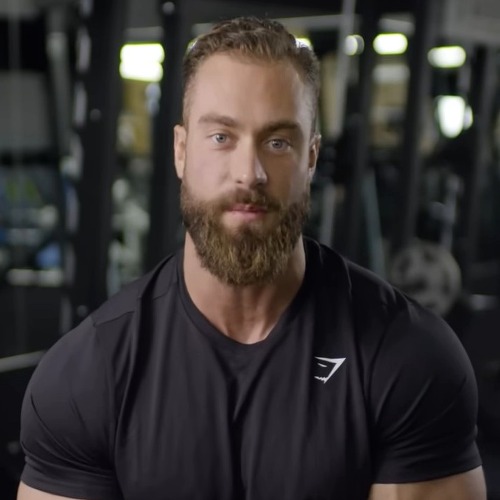 2022
Chris Bumstead
Canada
2023
Chris Bumstead
Canada
2024
Chris Bumstead
Canada
2022
Chris Bumstead
Canada
2023
Chris Bumstead
Canada
2024
Chris Bumstead
Canada
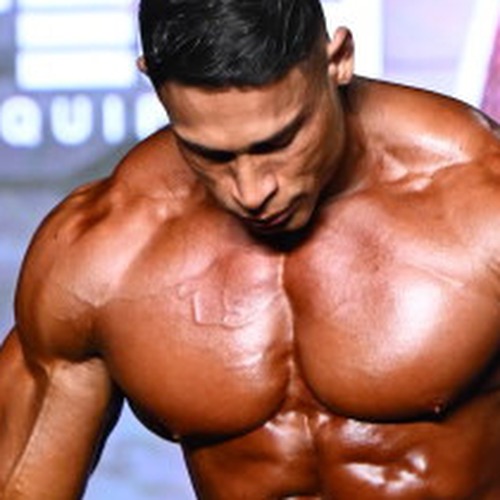 2025
Ramon Rocha Queiroz
Brazil
2025
Ramon Rocha Queiroz
Brazil
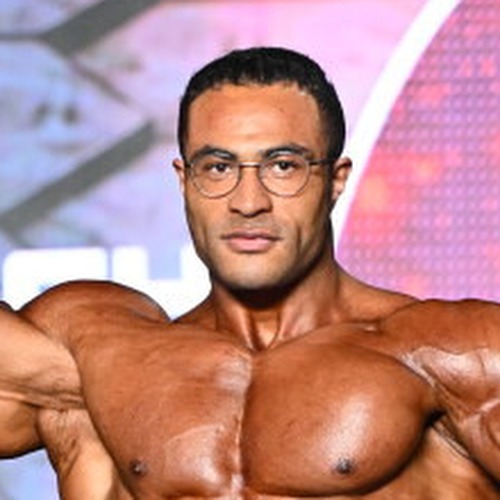 2026
Niall Darwen
United Kingdom
2026
Niall Darwen
United Kingdom
View the full Men's Classic Physique champion history
Men's Physique Olympia
Sources for the Men's Classic Physique and Men's Physique rules
Every rule and cap on this page was read from the pages below on the dates shown. Nothing here is transcribed from a second-hand summary.
IFBB Professional League Rules. Version and access date: 2026-07-13.
Not published here: a typical winning size for either side. Champion height and contest-day weight are recorded together too rarely in this database to average honestly, and a general profile weight is not a stage weight.