It’s no secret that chicken is a fantastic source of lean, high-quality protein. However, determining the exact protein content can be a bit challenging. That’s where our Chicken Protein Calculator comes in. It’s a simple but powerful tool that allows you to accurately measure and understand the protein content of your chicken dishes.
Example: Chicken breast, roasted
52.8g of protein
6 oz (170.1 g) of chicken breast, roasted, has 52.8 g of protein, by cooked weight.
You entered the weight after cooking. Cooking drives water out (USDA: 74 g of water per 100 g raw, 65 g cooked), so 100 g of cooked chicken breast holds 31.0 g of protein against 22.5 g raw. Enter your own portion above to replace this example.
Calories
281 kcal
Fat
6.1 g
Saturated fat: 1.7 g.
Niacin (vitamin B3)
23.3 mg
Selenium
46.9 mcg
| Nutrient | In 170 g | Per 100 g |
|---|---|---|
| Protein | 52.8 g | 31.0 g |
| Calories | 281 kcal | 165 kcal |
| Fat | 6.1 g | 3.6 g |
| Saturated fat | 1.7 g | 1.0 g |
| Cholesterol | 145 mg | 85 mg |
| Water | 111.0 g | 65.3 g |
| Niacin (vitamin B3) | 23.3 mg | 13.7 mg |
| Vitamin B6 | 1.02 mg | 0.6 mg |
| Vitamin B12 | 0.58 mcg | 0.34 mcg |
| Selenium | 46.9 mcg | 27.6 mcg |
| Phosphorus | 388 mg | 228 mg |
| Potassium | 435 mg | 256 mg |
| Zinc | 1.7 mg | 1 mg |
| Iron | 1.77 mg | 1.04 mg |
| 6 oz of each cut | Protein |
|---|---|
| Breast (yours) | 52.8 g |
| Thigh | 42.1 g |
| Drumstick | 41.2 g |
| Wing | 51.8 g |
| 6 oz of chicken breast, each way | Protein |
|---|---|
| RawWater: 74 g per 100 g | 38.3 g |
| Roasted (yours)Water: 65 g per 100 g | 52.8 g |
| StewedWater: 68 g per 100 g | 49.3 g |
| FriedWater: 60 g per 100 g | 56.9 g |
| Lean label test, per 100 g as sold | Amount | Lean limit |
|---|---|---|
| FatAs sold: Chicken breast, raw | 2.6 g | under 10 g |
| Saturated fat | 0.6 g | 4.5 g or less |
| Cholesterol | 73 mg | under 95 mg |
| Label it can carryExtra lean needs under 5 g fat, under 2 g saturated fat and under 95 mg cholesterol. Both labels also apply per serving, which this check does not test. | Extra lean |
| Next steps |
|---|
| Find your daily protein targetOur protein calculator works it out from your weight, age and goal. Add it above to see how much of it this covers. |
| Beef protein calculatorSteaks and ground beef from 80 to 93% lean. |
| Egg protein calculatorWhole eggs five ways, whites, yolks, duck and quail eggs. |
| Fish protein calculatorSalmon, tuna, cod, tilapia, trout and mackerel. |
| Protein shake calculatorYour powder plus milk, fruit and nut butter, added up. |
Values: USDA FoodData Central (SR Legacy), FDC ID 171477, Chicken, broilers or fryers, breast, meat only, cooked, roasted, per 100 g, times your 170.1 g. Ounces and pounds: NIST SP 811. Lean limits: 9 CFR 381.462(e).
How to Use the Chicken Protein Calculator
- Select the Chicken Cut: Choose the type of chicken cut you will be using from the dropdown list. Options include Chicken Breast, Chicken Thigh, Chicken Drumstick and Chicken Wing, all meat without the skin.
- Enter the Chicken Weight: Input the weight of the chicken in the provided field. You can enter the weight of a single chicken piece or the total weight if using multiple pieces. Then tap g, oz or lb for the unit.
- Choose How You Weighed It: Tell the calculator whether you weighed the chicken raw or after cooking, and if cooked, whether it was roasted, stewed or fried. Cooking drives out water, so 100 grams of cooked chicken has more protein than 100 grams of raw chicken. The protein itself is not lost.
- Enter Your Daily Protein Target (Optional): Input your daily protein target in grams, if you know it. The results then show what share of it the chicken covers and how much is still to eat today.
- Show the Nutrients: Click “Show the nutrients” to see the results for what you entered.
Understanding the Results
The results card opens with the protein in your portion and one sentence that repeats what you entered: the cut, the weight with its equivalent in grams, and whether you weighed it raw or cooked. A second sentence explains how that choice changes the figure. Then you get:
- Protein: Displays the protein content of the chicken dish based on the inputs you provided.
- Share of Your Daily Target: Shown only when you enter a target. It gives the share of your target this portion covers and how much protein is still to eat today.
- Calories: Shows the calculated calorie content of the chicken dish.
- Fat: Indicates the fat content of the chicken.
Additionally, a nutrient table gives the vitamin and mineral content for your portion and per 100 grams:
- Vitamins: Lists the amounts of niacin, vitamin B6 and vitamin B12 in your portion.
- Minerals: Lists the amounts of selenium, phosphorus, potassium, zinc and iron in your portion.
Use the “Print” button on the results card to keep a copy for your reference.

The Science Behind the Chicken Protein Calculator
The Chicken Protein Calculator isn’t just a random number generator. It’s a precision tool rooted in scientific research and data analysis.
Data Collection for the Chicken Protein Calculator
The Chicken Protein Calculator uses values from USDA FoodData Central for skinless chicken meat from the breast, thigh, drumstick and wing, raw and cooked three ways: roasted, stewed and fried. Each result names the FDC ID it used, so you can check the numbers yourself.
Mathematics of the Chicken Protein Calculator
The Chicken Protein Calculator uses this data to calculate the protein content of your entered chicken product and portion size. This calculation involves proportions, making it accurate and reliable.
How Much Protein in Chicken? Breast, Thigh and More
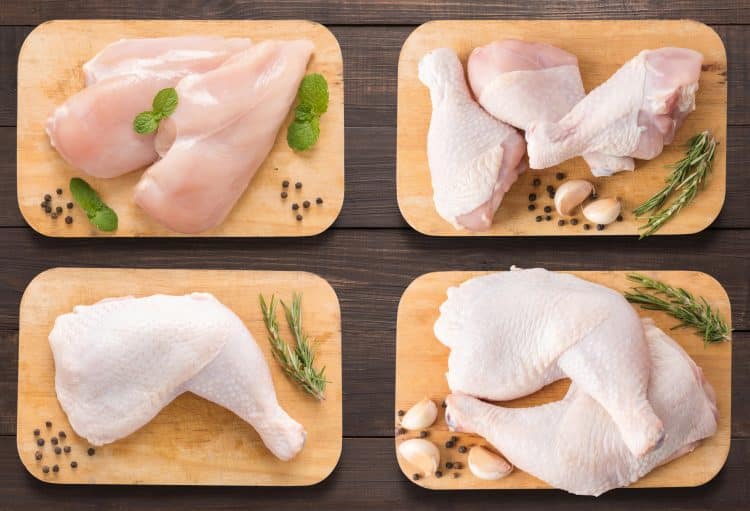
Chicken Breast:
Chicken breast is a popular choice due to its high protein content. A skinless, cooked chicken breast weighing 172 grams contains about 53 grams of protein, equivalent to 31 grams per 100 grams. It is a low-fat and protein-rich option, making it favored by bodybuilders and those aiming for weight loss.
Chicken Thigh:
Chicken thighs are a flavorful and cost-effective cut of meat. A 52-gram skinless, boneless, cooked chicken thigh contains 12.9 grams of protein, equivalent to 24.8 grams per 100 grams. Each chicken thigh has around 93 calories, with about 55% of the calories coming from protein and most of the rest from fat. The darker color and slightly higher fat content contribute to their succulent taste. In summary, chicken thighs provide 12.9 grams of protein and a balanced protein-to-fat calorie ratio.
Chicken Drumstick:
Chicken drumsticks, the lower part of the chicken leg, are a protein-rich choice. A 44-gram skinless, boneless, cooked chicken drumstick contains approximately 10.7 grams of protein, or 24.2 grams per 100 grams. With 68 calories per drumstick and about 63% of calories from protein, they offer a flavorful and satisfying option.
Chicken Wing:
Chicken wings, commonly enjoyed as snacks, contain approximately 6.4 grams of protein in a skinless, boneless wing weighing 21 grams. This is equivalent to 30.5 grams of protein per 100 grams. With around 43 calories per wing and 60% of the calories coming from protein, they offer a flavorful option. When consumed with the skin, a chicken wing provides 99 calories with a protein-to-fat calorie ratio of 39:61.
Read also: Turkey Vs. Chicken: Which Is Healthier
Which Cut Should You Eat for Maximum Benefit?
The choice of chicken cut depends on your personal preferences, dietary goals, and nutritional needs. Chicken breast is known for its high protein content and lower fat content, making it a popular choice among those aiming for lean muscle development. Chicken thigh and drumstick are slightly higher in fat but still provide a good amount of protein. Chicken wing meat has almost as much protein per 100 grams as breast (30.5 vs 31 grams), but a wing is small and you usually eat it with the skin, which adds fat and calories. Wings can still fit a balanced diet.
Consider your dietary preferences and goals when selecting the chicken cut that suits you best.
FAQs
How accurate is the Chicken Protein Calculator?
It is highly accurate, thanks to the extensive USDA data it is based on.
Can I use the Chicken Protein Calculator for other meats?
No, this calculator is specifically designed for chicken products.
How do you calculate protein in chicken?
To calculate the protein content in chicken, you need to know the weight of the chicken and the protein content per 100 grams. You can use the following formula:
Protein Content = (Weight of Chicken / 100) * Protein Content per 100 grams
First, determine the weight of the chicken. Then, obtain the protein content per 100 grams from a reliable source such as a food database or packaging information. Divide the weight of the chicken by 100 to convert it to the equivalent value per 100 grams. Multiply this value by the protein content per 100 grams to calculate the protein content in the actual amount of chicken you have.
By applying this formula, you can accurately determine the protein content in chicken based on its weight and protein content per 100 grams.
How much protein is in a 4 oz serving of chicken?
A 4 oz (113 g) serving of boneless, skinless chicken breast has about 25 grams of protein if you weigh it raw, or about 35 grams if you weigh it cooked. Cooking drives out water, so the same piece of chicken weighs less once cooked but keeps its protein.
The Bottom Line
The Chicken Protein Calculator is a valuable tool for anyone looking to measure and understand the protein content of their chicken dishes. It helps you make informed dietary choices and promotes healthier living. By using this calculator, you can optimize your protein intake and tailor your chicken dishes to meet your nutritional needs.
Now you’re all set to calculate and understand the protein content of your chicken dishes using the Chicken Protein Calculator!
Related:
- Egg Protein Calculator
- Protein Shake Calculator
- Beef Protein Calculator
- Fish Protein Calculator
- Protein Calculator
- Fat Calculator
- Carbohydrate Calculator
- Macro Calculator
- Water Intake Calculator
- Fasting Calculator
- Weight Gain Calculator
- TDEE Calculator
- Ideal Body Weight Calculator