
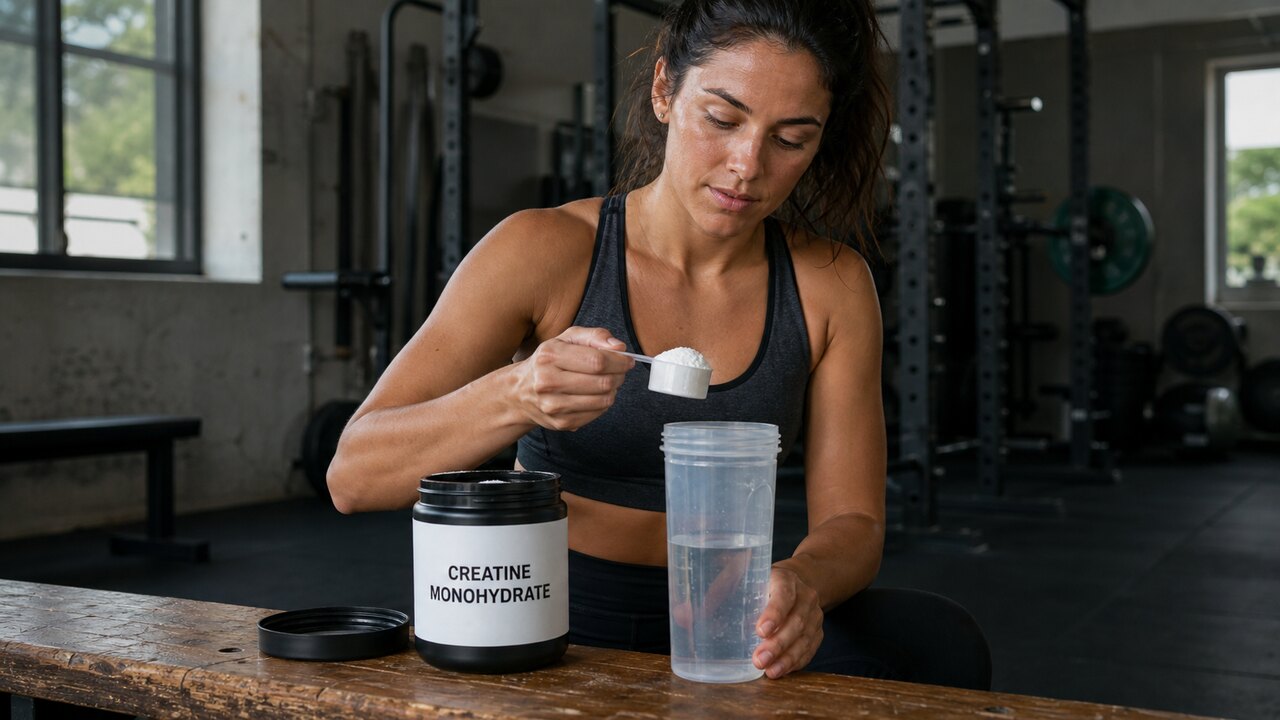
Creatine is not a men’s supplement, and women do not need a special pink-labeled version of it. For a healthy adult woman who lifts weights, sprints, or does repeated hard intervals, plain creatine monohydrate is a reasonable supplement to consider. The usual dose is 3 to 5 grams every day. A loading phase is optional, and the time of day matters far less than taking it consistently.
The part that deserves more honesty is the benefit. Creatine has a strong overall research record, but studies performed specifically in active women are smaller and less consistent than supplement advertising suggests. It may help you complete a little more high-quality work in the gym and support training progress over time. It will not replace a progressive program, enough food, protein, or sleep.
| Question | What the evidence supports |
|---|---|
| Can women take creatine? | Most healthy adult women can consider creatine monohydrate at a standard daily dose. |
| Best daily dose | 3 to 5 grams per day, including rest days. |
| Is loading required? | No. Loading fills muscle stores faster, but daily maintenance dosing also works. |
| Will it cause weight gain? | A small early increase from water held with muscle creatine can occur. That is not body-fat gain. |
| Does it cause hair loss? | Direct evidence has not shown hair loss, but the newest hair trial was short and included men only. |
| Pregnancy or breastfeeding? | Human supplementation evidence is not strong enough for a routine recommendation. Ask your prenatal clinician. |
What Creatine Does in Your Muscles
Your muscles use adenosine triphosphate, or ATP, to power a hard contraction. The available supply is small, so your body has to rebuild it quickly. Stored phosphocreatine helps recycle ADP back into ATP during short, intense efforts.
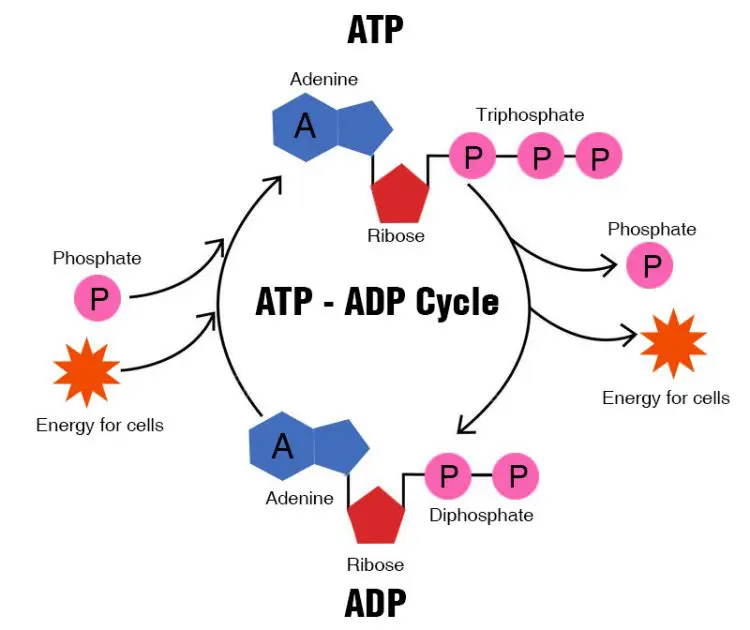
Supplementing with creatine can increase the creatine stored in muscle. In practical terms, that may help during repeated sets of squats, presses, jumps, sprints, or hard intervals where one effort follows another. It does not provide a stimulant rush, and you may not feel anything after a single serving. Its value comes from fuller stores and the training you perform with them.
What Benefits Can Women Realistically Expect?
Strength and high-intensity training
The best case for creatine is its ability to support repeated, high-intensity work. An extra repetition here or better output across several sets can add up across months of training. That is why creatine is more relevant to resistance training and sprint-style work than to a long, easy walk.
Still, women-specific results are mixed. A 2025 systematic review of 27 studies in active females found that most measured outcomes did not improve with creatine. Favorable results appeared in 3 of 11 strength or power comparisons, 4 of 17 anaerobic comparisons, and 1 of 5 aerobic comparisons. The studies varied widely in dose, duration, training status, and how well they accounted for female physiology.1
That does not make creatine useless. It means the honest expectation is a possible small performance advantage, not a guaranteed transformation.

Muscle gain and body composition
Creatine does not build muscle while you sit still. Its role is to support the training stimulus. When resistance training, food, and recovery are in place, the ability to sustain better work may contribute to more lean mass over time. If muscle gain is your main goal, use it alongside a sensible muscle-building plan for women, not instead of one.
Creatine is also not a fat burner. A change in lean-mass measurements can include water stored in muscle, especially early on. That is different from new contractile tissue, and it is also different from gaining fat.

Will Creatine Make You Look Puffy or Gain Fat?
Creatine can move the scale, particularly if you use a loading phase. The early increase is mainly water associated with greater creatine storage in muscle. It is not body fat. Some women notice little change, while others see a modest increase over the first days or weeks.
The word “bloating” can describe two different experiences. One is fuller muscle from intracellular water. The other is stomach discomfort after a large serving. If your stomach feels unsettled, skip loading, take 3 grams with a meal for a week, and increase only if needed. Avoid swallowing a 20-gram loading dose all at once.
If a weigh-in or weight-class event is close, starting creatine immediately beforehand may complicate the scale even when it does not change fat mass. Plan the trial during ordinary training instead.
Creatine Across the Menstrual Cycle and Life Stages
Menstrual cycle
You may see claims that creatine should be increased during a particular cycle phase or that it treats cramps, PMS, and hormone-related fatigue. Current studies do not establish those instructions. Most female performance research has not tracked menstrual status well enough to support cycle-based dosing.1 A steady daily dose is the practical choice unless a clinician gives you a different plan.
Pregnancy, breastfeeding, and postpartum
Creatine is being studied in pregnancy because of its role in cellular energy. That research interest is sometimes turned into advice before the evidence is ready. A Cochrane review found no randomized trials testing creatine during pregnancy for fetal neuroprotection.10 A later prospective study described how creatine metabolism changes during pregnancy, but it did not test whether taking a supplement improves outcomes or is safe for routine use.11
Do not start creatine during pregnancy or breastfeeding on the strength of animal research or a social-media claim. Discuss it with your obstetric clinician, who can consider your diet, kidney function, medications, and pregnancy history.
Postpartum is not one standard condition. Recovery from delivery, feeding, sleep, pelvic-floor symptoms, and the timing of a return to training all matter. A supplement plan should come after those basics, not before them.
Perimenopause and postmenopause
Creatine may be useful as part of a resistance-training plan in midlife, but it is not a treatment for menopause or osteoporosis. In a two-year trial of 237 postmenopausal women who also resistance trained and walked, creatine did not improve hip or spine bone mineral density. It improved a few bone-geometry and walking measures, but strength did not differ between groups.4
The bigger lever remains progressive strength training. FitnessVolt’s strength-training guide for women over 50 can help you build that foundation.
What About Brain Health and Hair Loss?
Cognition and “brain fog”
Creatine also participates in brain energy metabolism, so cognition is a reasonable research question. It is not yet a settled benefit. A 2024 meta-analysis reported a small improvement in memory, while evidence for attention and processing speed was low certainty and overall or executive function did not improve.5 EFSA reviewed the intervention evidence and concluded that a cause-and-effect relationship with improved cognitive function had not been established.6
Creatine should not be sold as a treatment for brain fog, depression, dementia, or poor sleep. Someone interested mainly in gym performance can still choose it without turning every emerging finding into a promise.
Hair loss
The hair-loss concern grew from an older small study that measured a change in DHT, not actual hair loss. A 2025 randomized trial directly measured hormones and hair-follicle outcomes after 12 weeks of 5 grams per day. It found no difference between creatine and placebo.7
That is reassuring, but it is not the last word: only 38 men completed the study, it lasted 12 weeks, and it did not study women. If you notice new shedding, do not assume a supplement is the only possible cause. Iron status, thyroid disease, low energy intake, postpartum changes, illness, stress, and medications can also matter. A clinician can help investigate.
How Much Creatine Should a Woman Take?
For most adult women who decide to use it, the simplest plan is:
- Take 3 to 5 grams of creatine monohydrate once per day.
- Take it on rest days as well as training days.
- Mix it with water or another drink, or take it with a meal.
- Choose a time you can repeat. No narrow pre-workout window is required.12
If you want faster saturation, an optional loading phase is about 20 grams per day, divided into four 5-gram servings, for 5 to 7 days. Then switch to 3 to 5 grams per day. Loading works faster, but skipping it may be easier on your stomach and produces the same practical destination after several weeks.3 The FitnessVolt creatine calculator can show the loading arithmetic, but loading is a choice, not a rule.
A low-fuss way to start
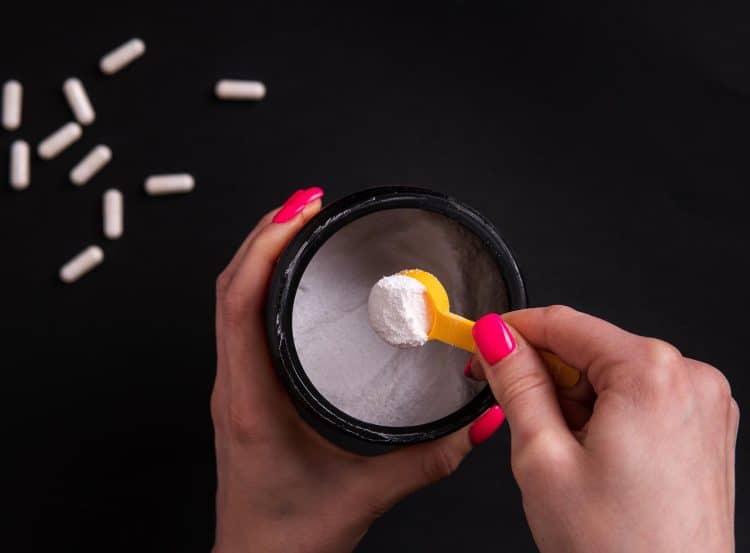
Take 3 grams daily with a meal for the first week. If you tolerate it and want the standard upper maintenance dose, move to 5 grams daily. Keep training and food steady enough that you can judge how you feel. Track useful outcomes such as completed repetitions, training volume, and body weight rather than looking for a sensation after each scoop. A one-rep max calculator can help you monitor strength trends without testing a true maximum every week.
If you stop, muscle creatine stores gradually return toward baseline. You do not need to cycle creatine to protect your natural production.
How to Choose a Creatine Product
Look for plain creatine monohydrate with a short ingredient list. Other forms are usually more expensive without convincing evidence that they outperform monohydrate. A women’s blend may add flavors, sweeteners, stimulants, or small doses of unrelated ingredients without making the creatine itself more suitable for women.
- Check that a serving provides a clear gram amount.
- Prefer a single-ingredient product if you do not need extras.
- For tested sport, look for independent certification such as NSF Certified for Sport, Informed Sport, or BSCG.
- Avoid products that hide creatine inside a proprietary blend.
Dietary supplements are not preapproved by the FDA for safety and effectiveness before sale.13 Third-party testing cannot prove a product works, but it can reduce uncertainty about identity and contamination. FitnessVolt’s creatine supplement review explains the product features worth comparing.
Safety, Kidneys, and Who Should Ask First
Trials in women have not shown a higher overall rate of serious adverse events, gastrointestinal problems, weight problems, or kidney and liver problems than control conditions, but adverse-event reporting has not always been complete.2 For healthy adults, recommended doses of creatine monohydrate have a reassuring safety record.
Kidney blood tests need context. Creatine can cause a small rise in serum creatinine, a breakdown product used to estimate kidney filtration. That can make a creatinine-based estimated GFR look lower even when direct measures and other kidney markers do not show injury. Recent systematic reviews found a small creatinine change without a significant decline in measured GFR.89
Tell your clinician and the laboratory that you take creatine before kidney testing. Do not use this article to self-clear a supplement if you have kidney disease, abnormal kidney results, significant liver disease, a complex medical condition, or medicines that may affect kidney function. Ask your clinician or pharmacist first.
Stop and seek medical advice if you develop a persistent reaction or symptoms that concern you. More powder is not better. Use a measured dose, drink according to thirst and training conditions, and keep the rest of your nutrition plan doing the heavy lifting.
The Bottom Line
Creatine monohydrate is one of the few sports supplements worth considering, but women deserve the same evidence standards as anyone else. A daily 3-to-5-gram dose may support repeated high-intensity work and resistance-training progress. Expect a possible small benefit, not a dramatic overnight change. Loading is optional, early water weight is not fat gain, and consistent use matters more than perfect timing.
The evidence is much less certain for cognition, menstrual symptoms, pregnancy, breastfeeding, and bone density. Treat those as separate medical and life-stage questions, not as bonus claims on a supplement label.
Learn more about Creatine:
- 8 Best Creatine Stick Packs of 2026: Travel-Ready Picks
- The 5-Gram Powder Behind Strength, Lean Mass, and Focus
- 7 Best Pre-Workouts With Creatine of 2026 (Ranked)
- The 5 Supplements Worth Taking (And Another Five That Aren't)
- Creatine Before and After: How Creatine Supplement Affects Your Body
- I’m a Supplement Researcher — These 3 Creatine Forms Will Supercharge Your Gains (and One’s a Total Rip-Off)
- Creatine and Acne: Are You Making This Common Mistake?
- STOP Wasting Your Creatine! The Ultimate Guide to Proper Usage
FAQs
What does creatine do to a woman’s body?
Creatine affects ATP energy maintenance in skeletal muscle, which is needed to have continuous muscle contractions during exercise.
Are creatine supplements safe for women?
Yes! Research shows that creatine supplementation is safe for women. Only those who are pregnant or breastfeeding should supplement creatine with caution.
Does creatine cause women to gain weight?
Creatine itself will not cause weight gain. If weight gain is experienced, it may be due to increased muscle mass from engaging in resistance training or diet.
References
Fitness Volt is committed to providing our readers with science-based information. We use only credible and peer-reviewed sources to support the information we share in our articles.
- Tam R, Mitchell L, Forsyth A. Does Creatine Supplementation Enhance Performance in Active Females? A Systematic Review. Nutrients. 2025;17(2):238.
- de Guingand DL, et al. Risk of Adverse Outcomes in Females Taking Oral Creatine Monohydrate. Nutrients. 2020;12(6):1780.
- National Institutes of Health Office of Dietary Supplements. Dietary Supplements for Exercise and Athletic Performance.
- Chilibeck PD, et al. A 2-yr Randomized Controlled Trial on Creatine Supplementation during Exercise for Postmenopausal Bone Health. Med Sci Sports Exerc. 2023;55(10):1750-1760.
- Xu C, et al. The effects of creatine supplementation on cognitive function in adults. Front Nutr. 2024;11:1424972.
- EFSA Panel on Nutrition, Novel Foods and Food Allergens. Creatine and improvement in cognitive function. EFSA J. 2024;22(11):e9100.
- Lak M, et al. Does creatine cause hair loss? A 12-week randomized controlled trial. J Int Soc Sports Nutr. 2025;22(Suppl 1):2495229.
- Kabiri Naeini R, et al. Effect of creatine supplementation on kidney function. BMC Nephrol. 2025;26(1):622.
- de Souza Almeida A, et al. Impact of creatine supplementation on kidney health. Int Urol Nephrol. 2026.
- Dickinson H, et al. Creatine for women in pregnancy for neuroprotection of the fetus. Cochrane Database Syst Rev. 2014;(12):CD010846.
- de Guingand DL, et al. Creatine and pregnancy outcomes: a prospective cohort study of creatine metabolism in low-risk pregnant females. Am J Clin Nutr. 2024;119(3):838-849.
- Ribeiro F, et al. Timing of Creatine Supplementation around Exercise: A Real Concern? Nutrients. 2021;13(8):2844.
- U.S. Food and Drug Administration. FDA 101: Dietary Supplements.