

Assisted Chest Dip (kneeling) vs Assisted Wide-grip Chest Dip (kneeling): Complete Comparison Guide
Assisted Chest Dip (kneeling) vs Assisted Wide-grip Chest Dip (kneeling) — two beginner-friendly lever-based variations that let you train horizontal adduction with support. If you want clearer guidance on which version builds more chest thickness, which stresses your triceps and shoulders more, and how to cue each rep for safe progress, you’re in the right place. I’ll cover muscle activation, setup and technique cues, biomechanics (torso angle, lever load, length-tension), equipment needs, progression routes, and real-world recommendations based on your goal—hypertrophy, strength, or starting out.
Exercise Comparison
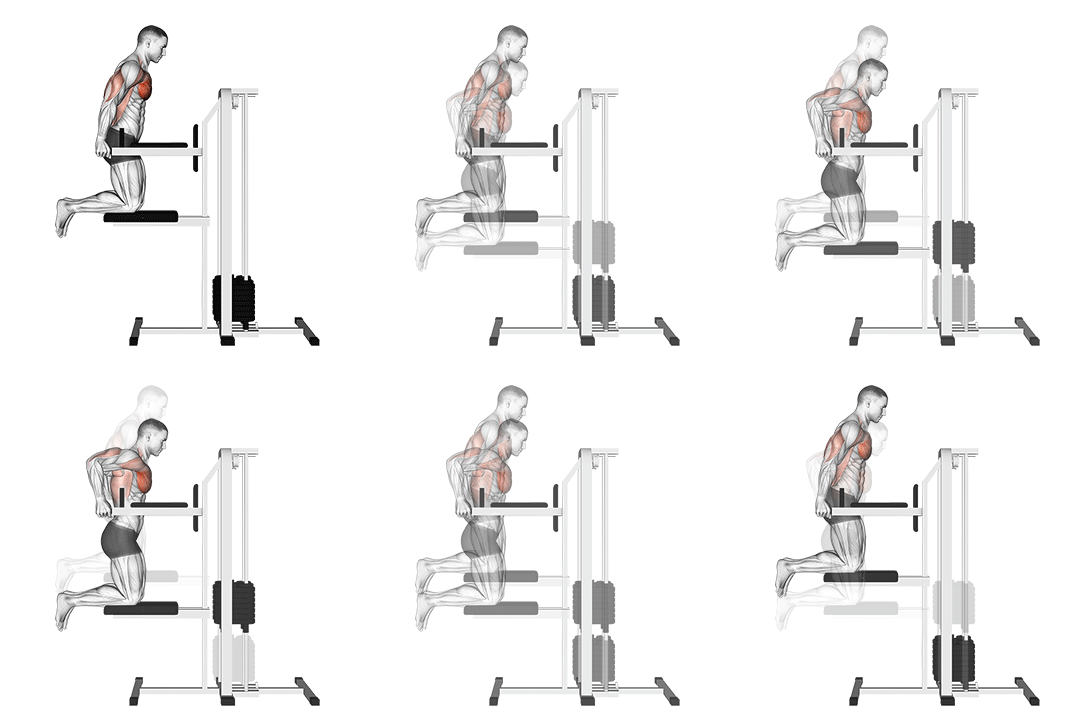
Assisted Chest Dip (kneeling)
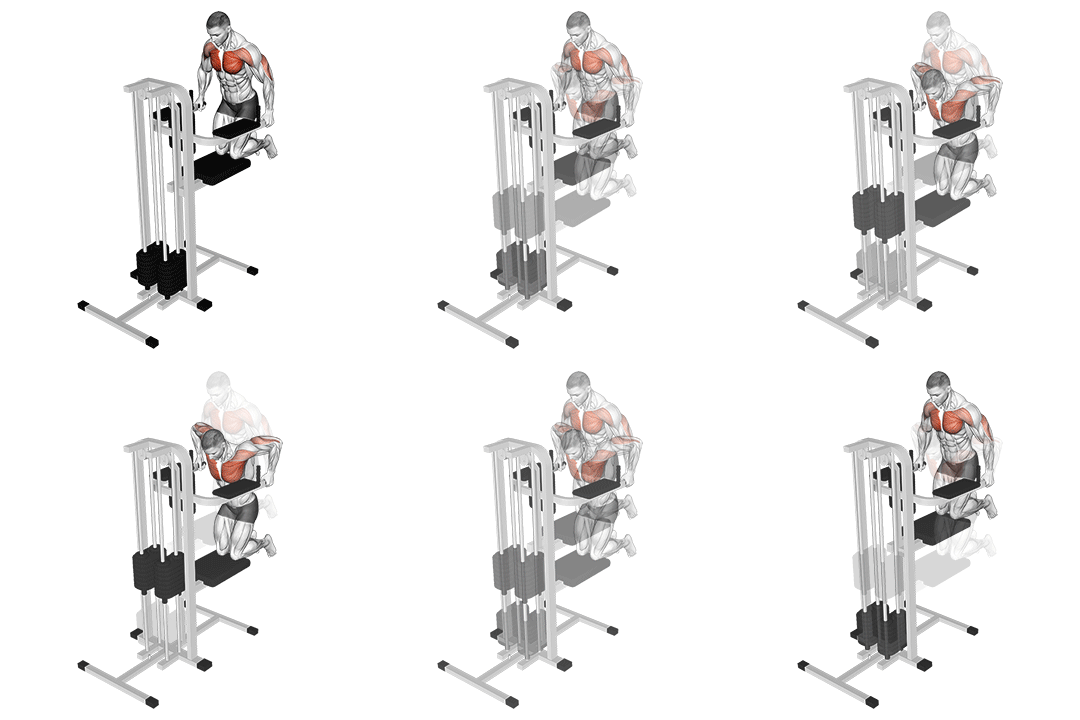
Assisted Wide-grip Chest Dip (kneeling)
Head-to-Head Comparison
| Attribute | Assisted Chest Dip (kneeling) | Assisted Wide-grip Chest Dip (kneeling) |
|---|---|---|
| Target Muscle |
Pectorals
|
Pectorals
|
| Body Part |
Chest
|
Chest
|
| Equipment |
Lever
|
Lever
|
| Difficulty |
Beginner
|
Beginner
|
| Movement Type |
Compound
|
Compound
|
| Secondary Muscles |
2
|
2
|
Secondary Muscles Activated
Assisted Chest Dip (kneeling)
Assisted Wide-grip Chest Dip (kneeling)
Visual Comparison
Overview
Assisted Chest Dip (kneeling) vs Assisted Wide-grip Chest Dip (kneeling) — two beginner-friendly lever-based variations that let you train horizontal adduction with support. If you want clearer guidance on which version builds more chest thickness, which stresses your triceps and shoulders more, and how to cue each rep for safe progress, you’re in the right place. I’ll cover muscle activation, setup and technique cues, biomechanics (torso angle, lever load, length-tension), equipment needs, progression routes, and real-world recommendations based on your goal—hypertrophy, strength, or starting out.
Key Differences
- Both exercises target the Pectorals using Lever. The main differences are in their movement patterns and muscle activation angles.
Pros & Cons
Assisted Chest Dip (kneeling)
+ Pros
- Stronger triceps recruitment improves elbow extension strength and bench-press carryover
- Easier to set up on most assisted-dip machines and narrower stations
- Cleaner vertical-to-horizontal force vector blend for balanced pressing
- Good for progressing from machine assistance to free-body dips
− Cons
- Slightly less isolation of the pectorals compared with wide-grip
- Can over-recruit triceps if you keep a very vertical torso
- Less emphasis on chest stretch at the widest horizontal adduction angles
Assisted Wide-grip Chest Dip (kneeling)
+ Pros
- Greater horizontal adduction moment arm emphasizes pectoral activation
- Better lower-to-mid chest targeting when paired with 30–45° torso lean
- Useful for improving chest thickness and shape
- Still beginner-friendly due to lever assistance
− Cons
- Requires wider bar spacing or adjustable handles on some machines
- Slightly higher anterior shoulder stress at end-range
- Can reduce triceps stimulus, limiting elbow extension strength carryover
When Each Exercise Wins
The wide grip increases the horizontal adduction moment arm and creates a deeper pec stretch at the bottom of the rep, improving mechanical tension. Aim for 8–12 reps with 2–3 s eccentrics and 30–45° torso lean to maximize pectoral time under tension.
The standard grip produces a larger elbow-extension torque and better triceps recruitment, which supports heavier pressing patterns. Use lower-rep ranges (3–6) with reduced assistance to build motor-unit recruitment for strength.
Its narrower movement path is easier to learn, requires less machine adjustment, and encourages safer scapulothoracic control. Start with higher assistance and 10–15 controlled reps to master technique.
Home setups and compact leverage machines usually favor standard dip spacing; wide-grip options need extra width or adjustable handles. The standard version is simpler to implement with limited equipment.
Frequently Asked Questions
Can I do both Assisted Chest Dip (kneeling) and Assisted Wide-grip Chest Dip (kneeling) in the same workout?
Yes. Pair them smartly: use the wide-grip for 2–3 hypertrophy sets (8–12 reps) to pre-exhaust the pecs, then finish with 2 strength-focused standard-assisted sets (4–6 reps) to tax triceps and pressing ability. Watch total volume to avoid shoulder overuse.
Which exercise is better for beginners?
Assisted Chest Dip (kneeling) is generally better for beginners because it’s easier to set up and teaches a simpler vertical-to-horizontal pushing pattern. Start with higher assistance, focus on scapular control and 10–15 controlled reps.
How do the muscle activation patterns differ?
Wide-grip increases the horizontal adduction moment arm so pecs produce more torque during the bottom-to-mid range; the standard grip increases elbow-extension torque and triceps activation, especially near lockout. Torso lean and hand width modulate these activation shifts.
Can Assisted Wide-grip Chest Dip (kneeling) replace Assisted Chest Dip (kneeling)?
It can replace it for chest-focused phases, but not if you need triceps-heavy carryover for pressing strength. Rotate both into your program depending on whether you prioritize pectoral isolation or elbow-extension strength.
Expert Verdict
Use Assisted Wide-grip Chest Dip (kneeling) when your priority is chest hypertrophy and developing lower-to-mid sternal thickness—set a 30–45° torso lean, widen your hands, and control a 2–3 s eccentric for 8–12 reps. Choose Assisted Chest Dip (kneeling) when you want balanced chest and triceps development, easier setup, or strength carryover for heavier pressing; reduce assistance and train 3–6 reps for strength phases. Both are valid beginner options; rotate them across training blocks to manage shoulder load and ensure balanced elbow extension strength versus horizontal adduction development.
Also Compare
More comparisons with Assisted Chest Dip (kneeling)
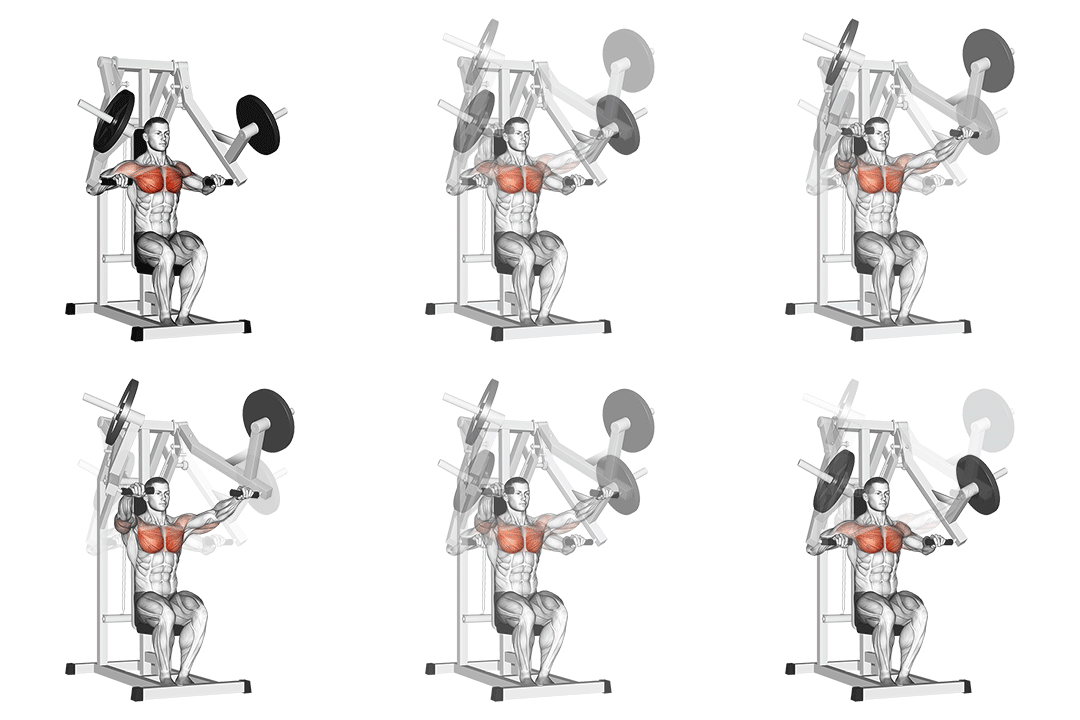
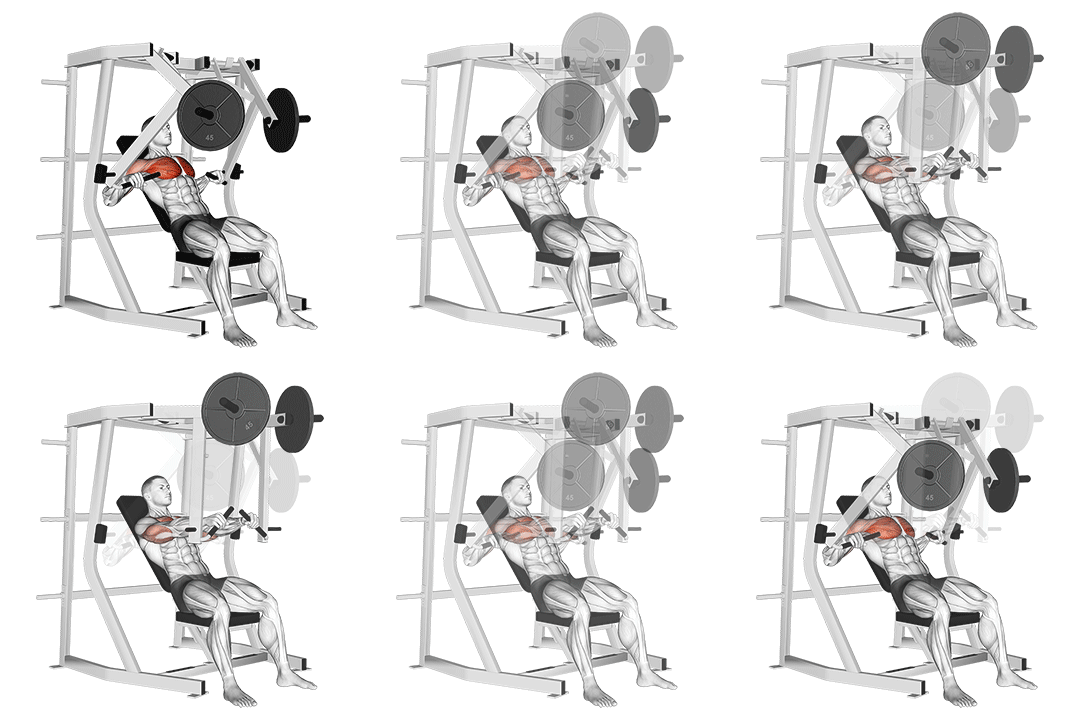
More comparisons with Assisted Wide-grip Chest Dip (kneeling)
Compare More Exercises
Use our free comparison tool to analyze any two exercises head-to-head.
Compare Exercises