

Assisted Chest Dip (kneeling) vs Lever Incline Chest Press
Compare target muscles, equipment, difficulty, movement type, and secondary muscles for Assisted Chest Dip (kneeling) and Lever Incline Chest Press.
Get comparison link
Select the link and use your device's Copy command.
Comparison overview
AI-generatedExercise Comparison
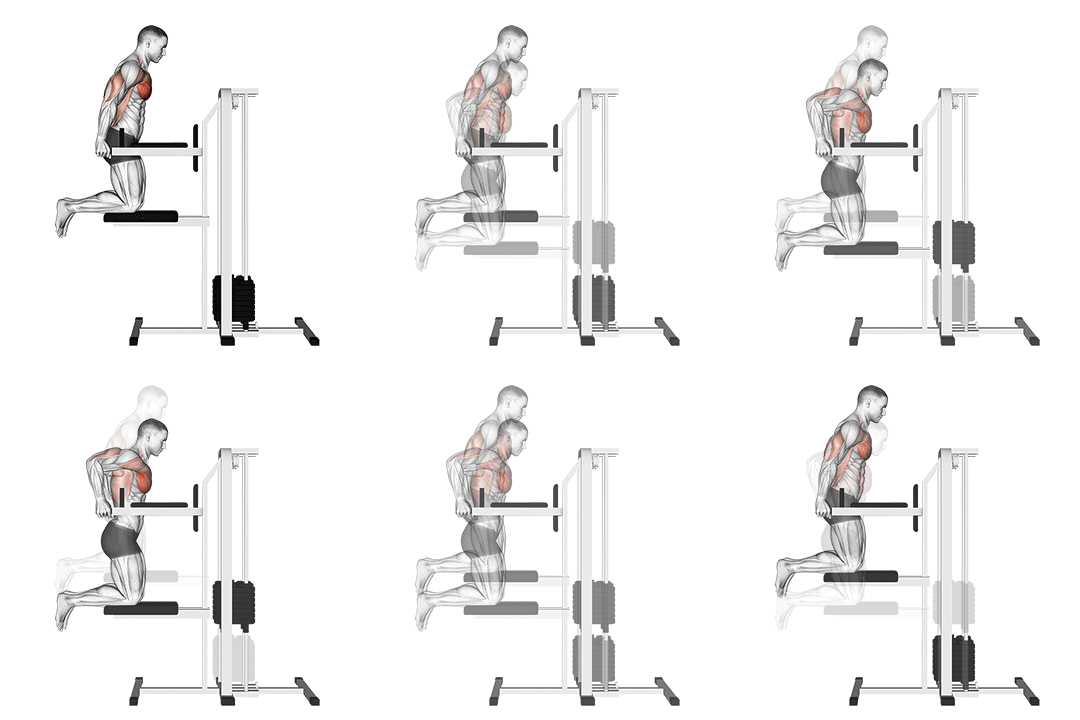
Assisted Chest Dip (kneeling)
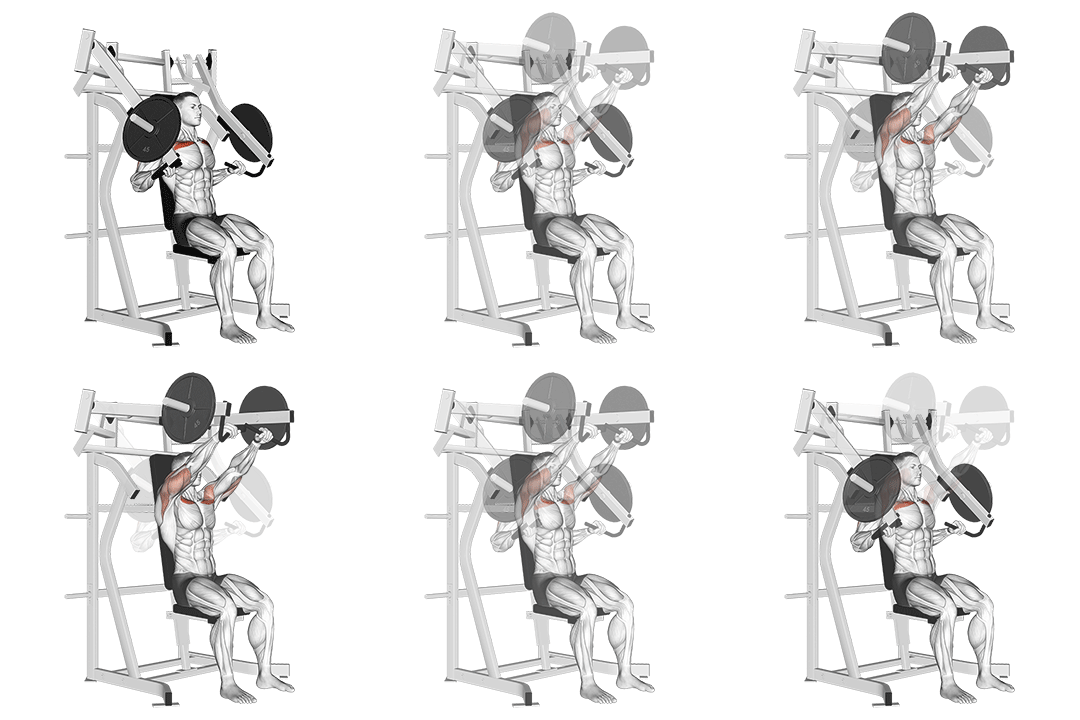
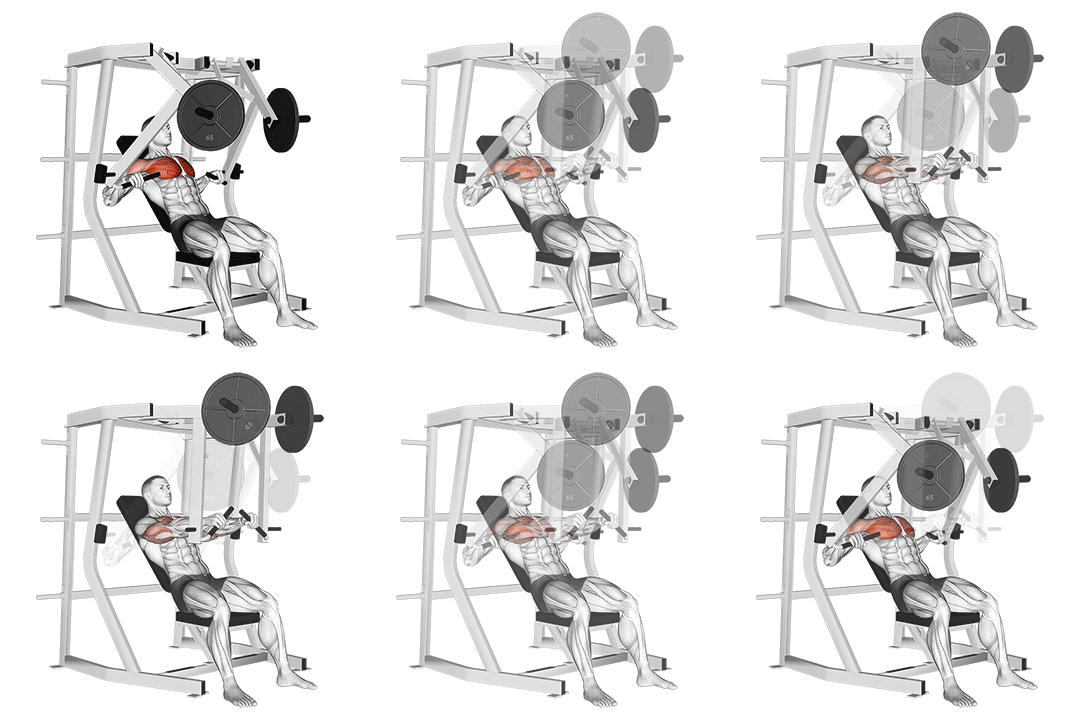
Lever Incline Chest Press
Head-to-Head Comparison
Different values are marked. These are catalogue attributes, not performance scores.
Muscles used
Listed target and secondary muscles, shown on the body. Locations, not activation or strength scores.
- Target
- Secondary
- Not highlighted
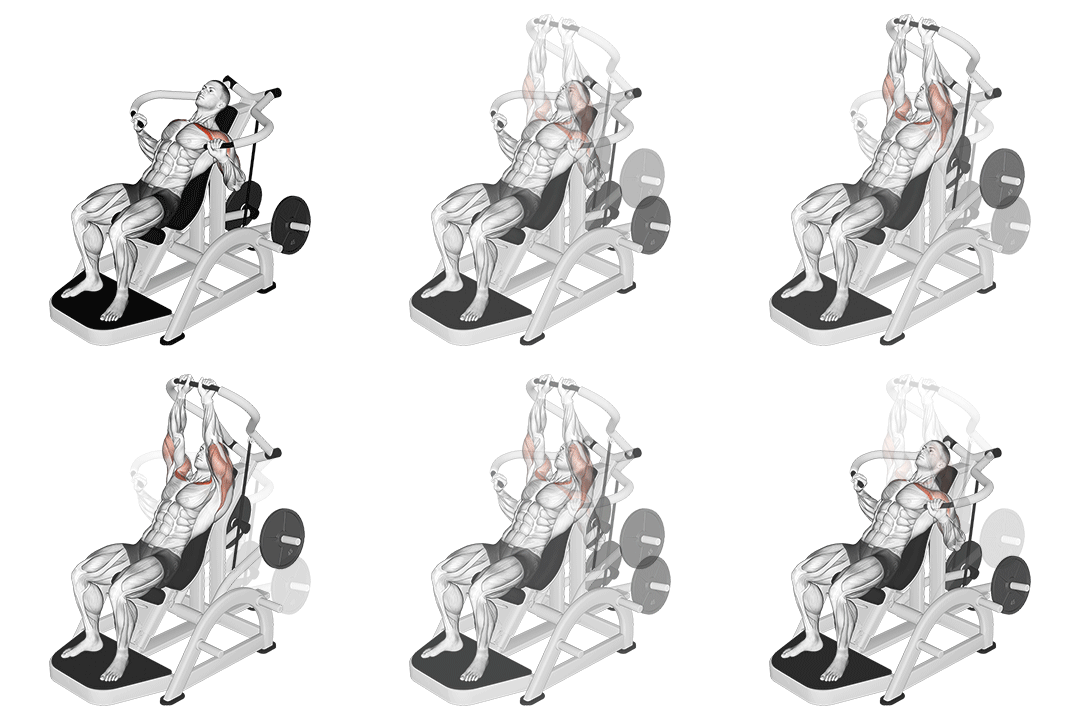
Assisted Chest Dip (kneeling)
- Target
- Pectorals
- Secondary
- Triceps, Shoulders
Not shown on diagram: Shoulders. These labels do not identify a precise region on this map.
Lever Incline Chest Press
- Target
- Pectorals
- Secondary
- Shoulders, Triceps
Not shown on diagram: Shoulders. These labels do not identify a precise region on this map.
Grey does not mean a muscle is unused. The diagrams show only the mapped catalogue labels.
| Attribute | Assisted Chest Dip (kneeling) | Lever Incline Chest Press |
|---|---|---|
| Target Muscle | Pectorals |
Pectorals |
| Body Part | Chest |
Chest |
| Equipment | Lever |
Lever |
| Difficulty Different | Beginner |
Intermediate |
| Movement Type | Compound |
Compound |
| Secondary Muscles | Triceps, Shoulders |
Shoulders, Triceps |
Visual Comparison
An illustrative 1–10 profile derived from catalog difficulty, equipment, and listed-muscle fields—not measured performance or muscle activation.
Key Differences
- Difficulty levels differ: Assisted Chest Dip (kneeling) is beginner, while Lever Incline Chest Press is intermediate.
- Both exercises target the Pectorals using Lever. The catalogue does not establish which exercise is better for an individual goal.
Muscle comparison
Shared target muscles
Secondary muscle differences
Muscle involvement analysis
Equipment and setup
Assisted Chest Dip (kneeling): setup
Lever Incline Chest Press: setup
Access and practicality
Learning and progression
Learning the movements
Progression considerations
Limitations and precautions
Pros & Cons
Assisted Chest Dip (kneeling)
+ Pros
- Beginners can use assistance to build strength and technique quickly
- Greater eccentric stretch across the pecs — useful for hypertrophy
- Engages scapular stabilizers and triceps in a functional dip pattern
- Easily modified (assistance, range of motion, forward lean) to target regions
− Cons
- Deep ranges can stress the anterior shoulder and capsule
- Less precise incremental loading compared to dedicated press machines
- Requires a specific assisted-dip/lever station that not every gym has
Lever Incline Chest Press
+ Pros
- Fixed path allows safe heavy loading and precise progressive overload
- Adjustable back angle (30°–45°) efficiently targets upper chest fibers
- Lower shoulder shear and easier setup for isolating pressing mechanics
- Small incremental plate or pin loads simplify strength planning
− Cons
- Less scapular stabilization carryover than dips
- Can under-recruit lower pec fibers unless combined with other lifts
- Requires a lever incline machine — limited home options without equipment
When Each Exercise Wins
Assisted dips provide a longer eccentric stretch and larger ROM, increasing mechanical tension across the pecs and stimulating stretch-mediated hypertrophy. Use 6–12 reps with controlled 2–3 second eccentrics to exploit length-tension benefits.
The lever incline press allows heavier, safer loading in a fixed path and precise incremental increases, which is superior for building maximal pressing strength. Train in 3–6 rep ranges with 2–5 minute rests for best results.
Assistance lets beginners complete full movement patterns with lower absolute load and learn torso positioning and scapular control. Start with higher assistance and progress by reducing assistance every 2–4 weeks.
Assisted dips can be approximated with bands, assisted setups, or bench variations, requiring less specialized home equipment than a lever incline press. Focus on controlling depth and forward lean to target the chest.
Frequently Asked Questions
Can I do both Assisted Chest Dip (kneeling) and Lever Incline Chest Press in the same workout?
Which exercise is better for beginners?
How do the muscle activation patterns differ?
Can Lever Incline Chest Press replace Assisted Chest Dip (kneeling)?
Comparison Summary
Exercise instructions
Steps from the exercise catalogue. Read the full sequence before starting.
Assisted Chest Dip (kneeling)
- Adjust the machine to your desired height and secure your knees on the pad.
- Grasp the handles with your palms facing down and your arms fully extended.
- Lower your body by bending your elbows until your upper arms are parallel to the floor.
Read remaining steps for Assisted Chest Dip (kneeling)
- Pause for a moment, then push yourself back up to the starting position.
- Repeat for the desired number of repetitions.
Lever Incline Chest Press
- Adjust the seat and backrest of the leverage machine to a comfortable position.
- Sit on the machine with your back against the backrest and your feet flat on the floor.
- Grasp the handles with an overhand grip and position your hands slightly wider than shoulder-width apart.
Read remaining steps for Lever Incline Chest Press
- Push the handles forward and away from your body until your arms are fully extended.
- Pause for a moment, then slowly bend your elbows and lower the handles back towards your chest.
- Repeat for the desired number of repetitions.
Also Compare
More comparisons with Assisted Chest Dip (kneeling)
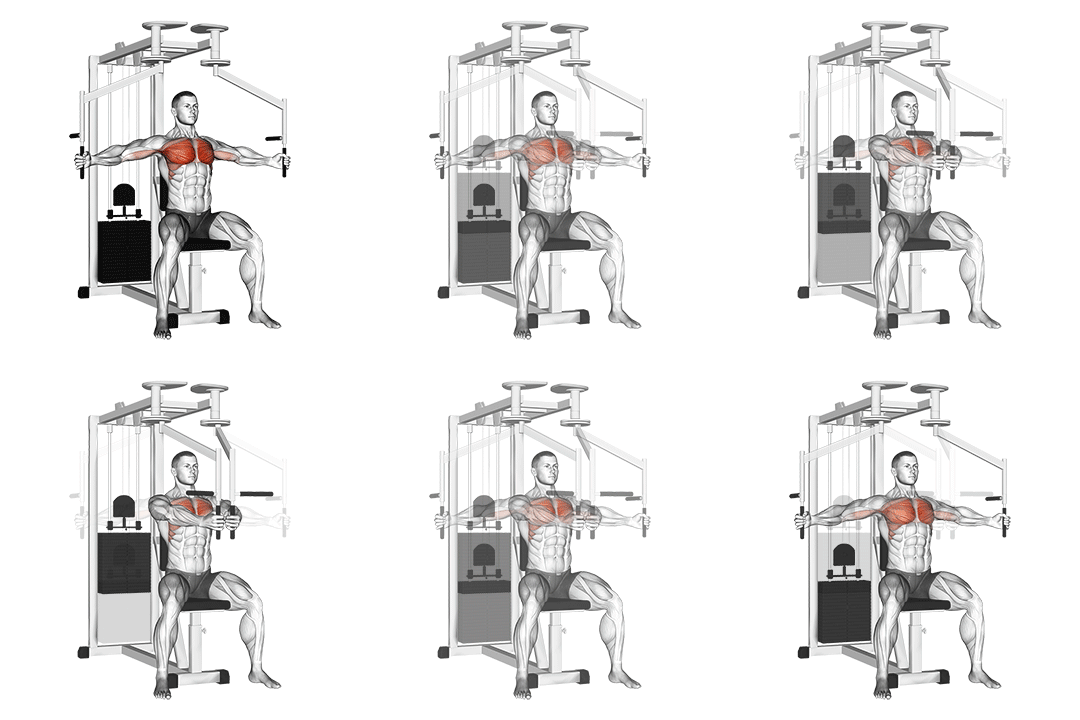

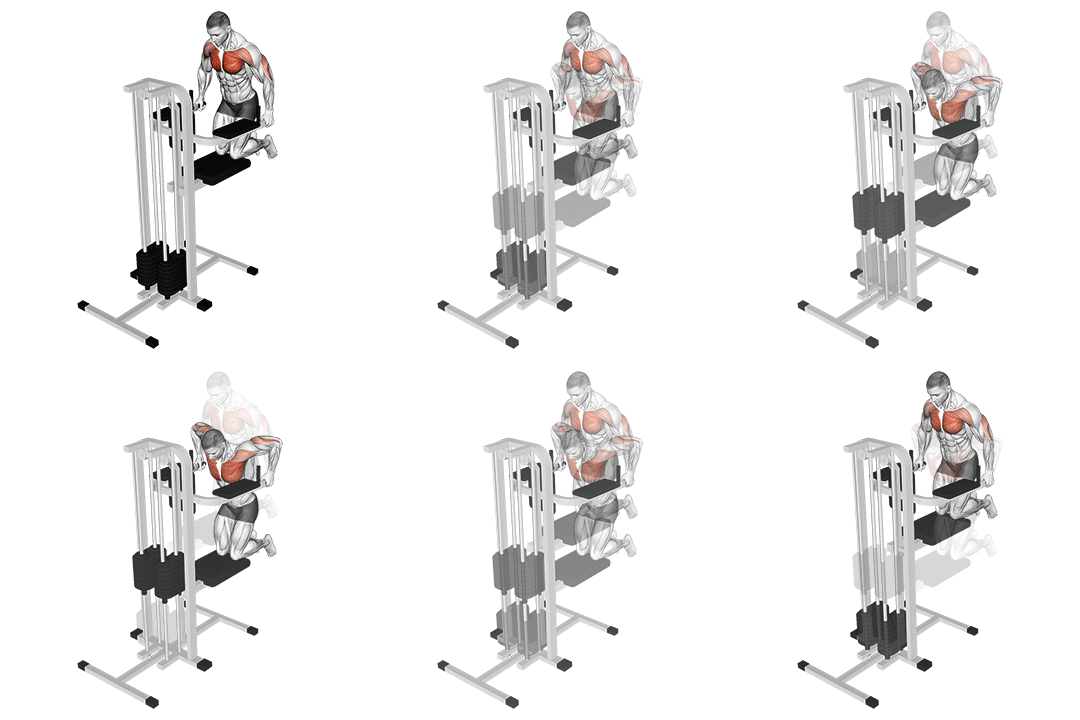
More comparisons with Lever Incline Chest Press
Compare another pair
Choose two exercises to see their differences side by side.