

Assisted Chest Dip (kneeling) vs Cross Over - With Bands: Complete Comparison Guide
Assisted Chest Dip (kneeling) vs Cross Over - With Bands puts two chest-focused moves head-to-head so you can pick the right tool for your goals. You’ll get clear technique cues, biomechanical reasoning (force vectors, length-tension relationships), rep ranges, and progression tips. I’ll compare primary and secondary muscle activation, equipment needs, learning curve, and injury risk. By the end you’ll know which exercise to use for muscle growth, strength, beginner learning, or home training—and how to program them into a routine with specific sets, reps, and tempo.
Exercise Comparison
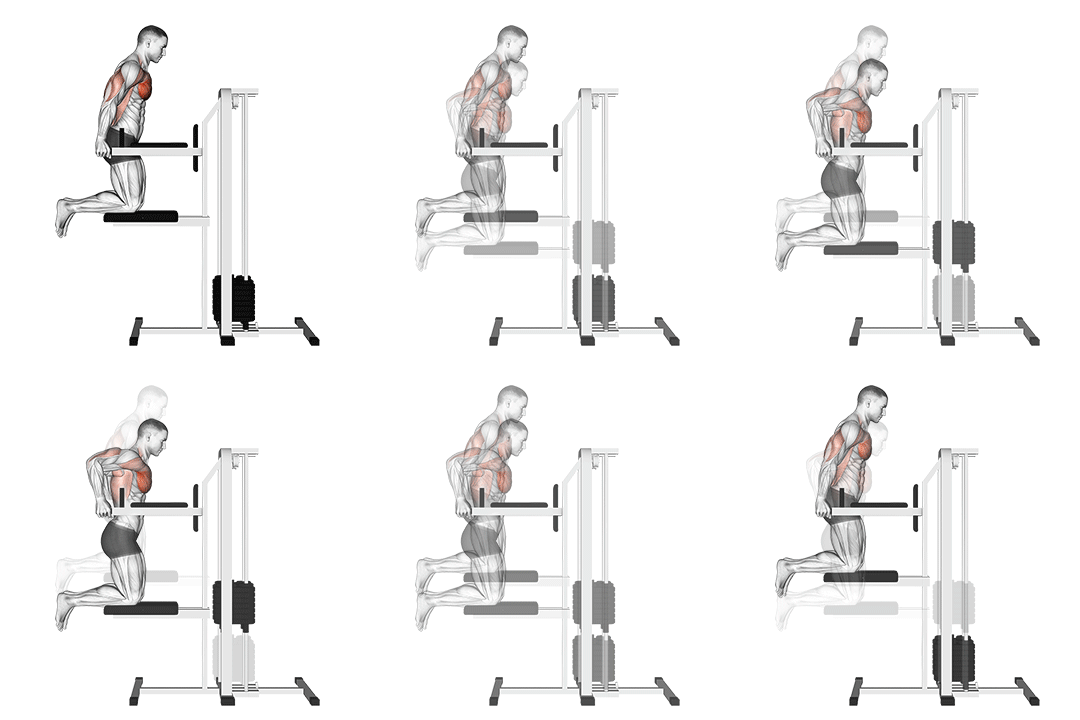
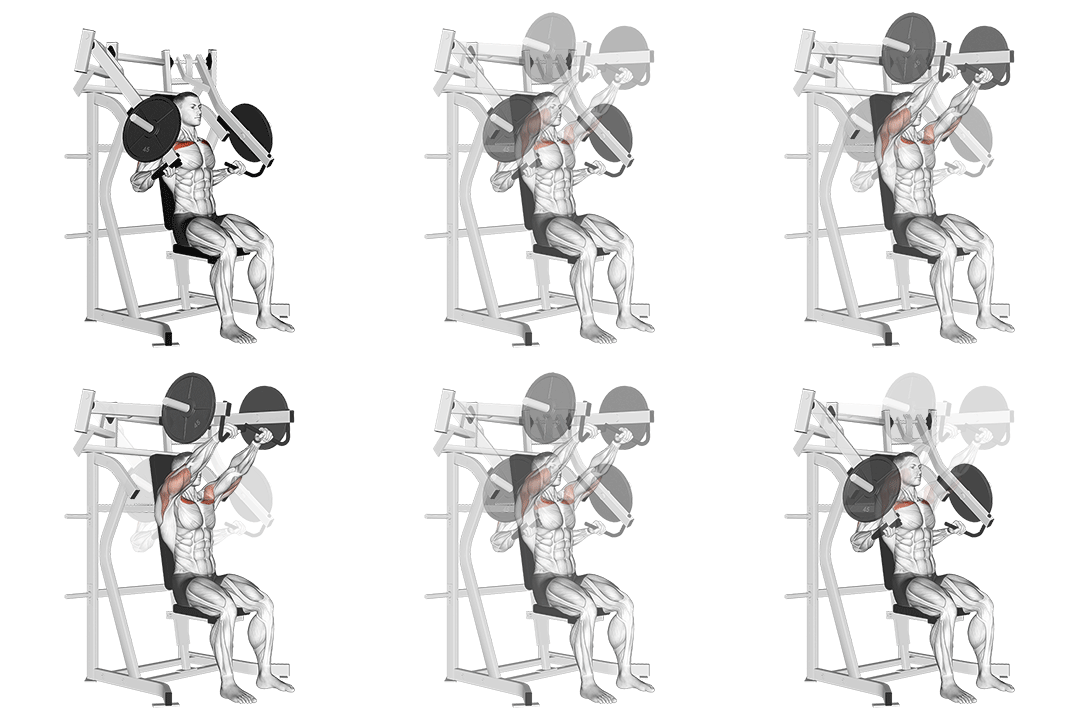
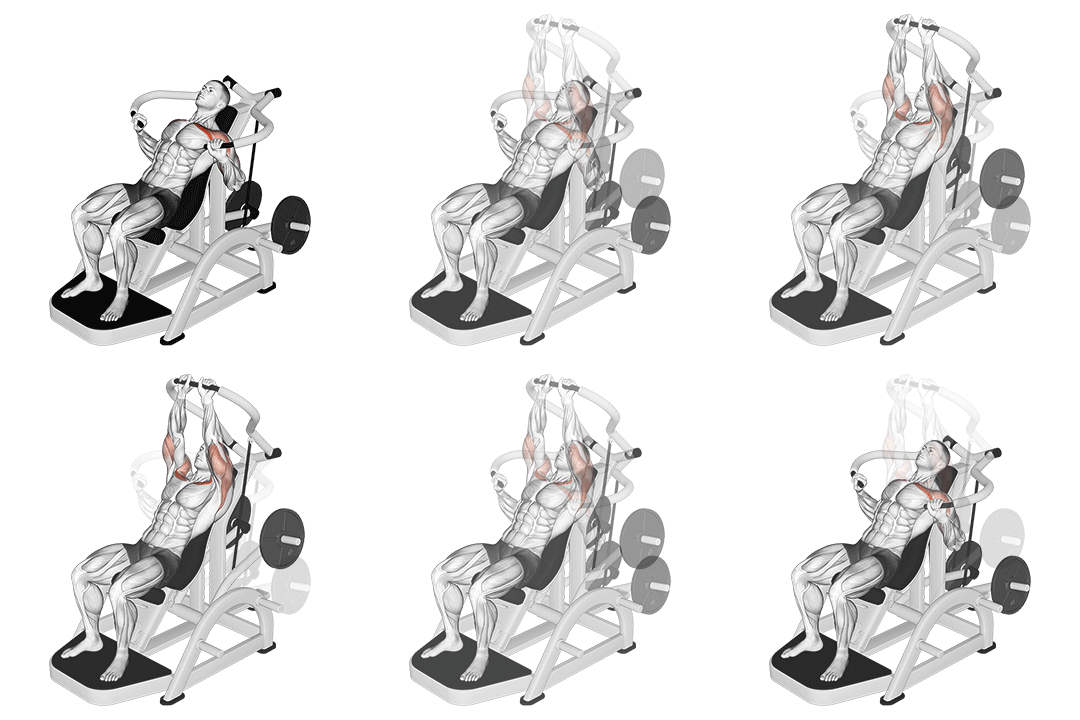
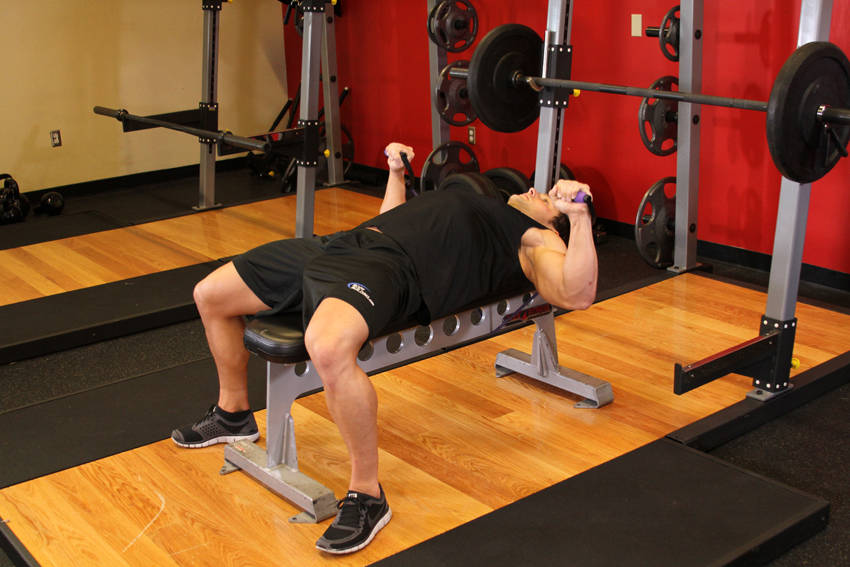
Assisted Chest Dip (kneeling)

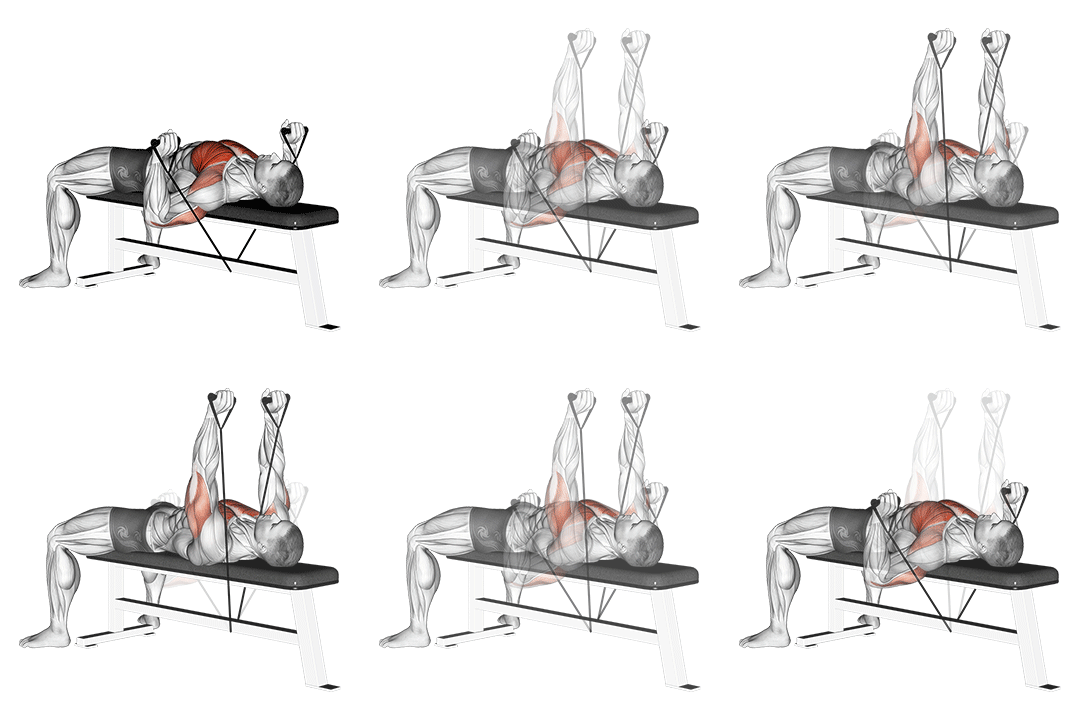
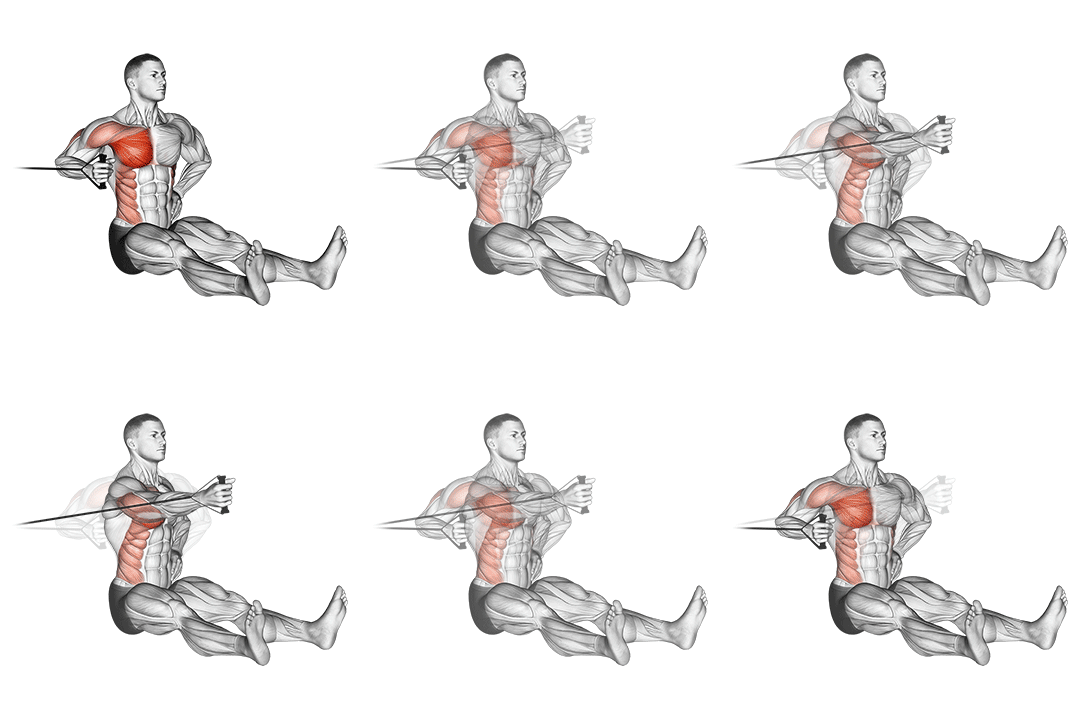
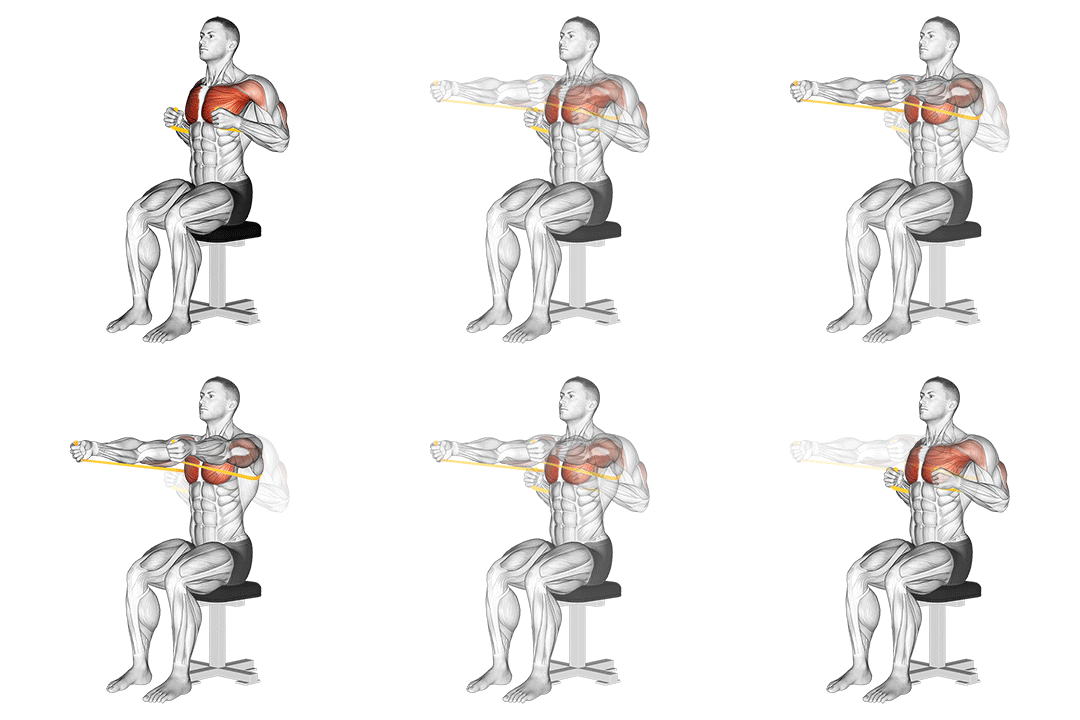
Cross Over - With Bands
Head-to-Head Comparison
| Attribute | Assisted Chest Dip (kneeling) | Cross Over - With Bands |
|---|---|---|
| Target Muscle |
Pectorals
|
Pectorals
|
| Body Part |
Chest
|
Chest
|
| Equipment |
Lever
|
Band
|
| Difficulty |
Beginner
|
Intermediate
|
| Movement Type |
Compound
|
Isolation
|
| Secondary Muscles |
2
|
2
|
Secondary Muscles Activated
Assisted Chest Dip (kneeling)
Cross Over - With Bands
Visual Comparison
Overview
Assisted Chest Dip (kneeling) vs Cross Over - With Bands puts two chest-focused moves head-to-head so you can pick the right tool for your goals. You’ll get clear technique cues, biomechanical reasoning (force vectors, length-tension relationships), rep ranges, and progression tips. I’ll compare primary and secondary muscle activation, equipment needs, learning curve, and injury risk. By the end you’ll know which exercise to use for muscle growth, strength, beginner learning, or home training—and how to program them into a routine with specific sets, reps, and tempo.
Key Differences
- Equipment differs: Assisted Chest Dip (kneeling) uses Lever, while Cross Over - With Bands requires Band.
- Assisted Chest Dip (kneeling) is a compound movement, while Cross Over - With Bands is an isolation exercise.
- Difficulty levels differ: Assisted Chest Dip (kneeling) is beginner, while Cross Over - With Bands is intermediate.
Pros & Cons
Assisted Chest Dip (kneeling)
+ Pros
- High transfer to pressing strength and compound elbow extension
- Easy to scale by adjusting assistance—good for progressive overload
- Loads pecs at longer lengths, aiding stretch-mediated muscle growth
- Simple setup in most commercial gyms with lever machines
− Cons
- Requires gym equipment (lever-assisted dip machine)
- Greater shoulder stress if performed too deep or with poor scapular control
- Less continuous tension through the top range compared to bands
Cross Over - With Bands
+ Pros
- Portable and low-cost; excellent for home use
- Provides continuous tension and peak loading at the finish
- Easy to adjust intensity with band thickness or stance
- Lower compressive load on joints; gentle on wrists and elbows
− Cons
- Challenging to learn symmetry and scapular control
- Limited absolute load for maximal strength (hard to reach 3–6 rep strength stimulus)
- Requires secure anchor point and careful band placement to avoid recoil
When Each Exercise Wins
Bands produce continuous tension and allow high-rep work (8–20 reps) while stressing the pec through the concentric finish. The rising resistance favors metabolic stress and time-under-tension, which supports hypertrophy, especially when combined with slow eccentrics (2–3 s).
The assisted dip transfers directly to pressing and allows progressive overload by reducing assistance or adding weight. You can target heavy sets (3–6 reps) with controlled range of motion to build maximal pushing force.
The lever removes much of your bodyweight and stabilizes the path, making it easier to learn scapular control, elbow mechanics, and horizontal adduction under manageable load.
Bands require minimal space and kit. You can replicate chest-crossing force vectors with a door anchor or post and vary intensity by changing band thickness or stance.
Frequently Asked Questions
Can I do both Assisted Chest Dip (kneeling) and Cross Over - With Bands in the same workout?
Yes. Start with assisted dips as your heavy compound movement (3–6 or 6–12 reps) and follow with 2–4 sets of band crossovers for 8–20 reps as a finisher. That sequence uses dips for force production and bands to maximize continuous tension and metabolic stress.
Which exercise is better for beginners?
Assisted Chest Dip (kneeling) is better for most beginners because the machine reduces load and stabilizes movement. It teaches elbow extension and forward-leant pressing mechanics with a lower technical demand than coordinating band tension.
How do the muscle activation patterns differ?
Dips load pecs and triceps strongly at longer muscle lengths during the bottom, with peak force mid-concentric. Bands increase load as they stretch, shifting peak pec activation later in the concentric closer to full adduction, creating different length-tension exposures across the pec fibers.
Can Cross Over - With Bands replace Assisted Chest Dip (kneeling)?
Bands can replace dips for hypertrophy and home training, but they don’t match the absolute loading potential for strength. If your goal is maximal press strength, keep dips in the program; if you need portability and continuous tension, choose crossovers.
Expert Verdict
Use Assisted Chest Dip (kneeling) when your goal is to build pressing strength and teach large compound movement patterns. The lever lets you reduce effective load, practice a 20–30° forward lean to target lower pec fibers, and progress toward full dips and weighted variations. Choose Cross Over - With Bands when you want portable continuous tension, higher rep hypertrophy work, or a safer option for shoulder-friendly finish-range loading. Program both: place dips earlier for heavier compound work (3–6 or 6–12 reps), then add band crossovers as a finisher for 8–20 reps with a 2–3 second eccentric to maximize time under tension and muscular fatigue.
Also Compare
More comparisons with Assisted Chest Dip (kneeling)
More comparisons with Cross Over - With Bands
Compare More Exercises
Use our free comparison tool to analyze any two exercises head-to-head.
Compare Exercises