

Band Bench Press vs Cross Over - With Bands
Compare target muscles, equipment, difficulty, movement type, and secondary muscles for Band Bench Press and Cross Over - With Bands.
Get comparison link
Select the link and use your device's Copy command.
Comparison overview
AI-generatedExercise Comparison
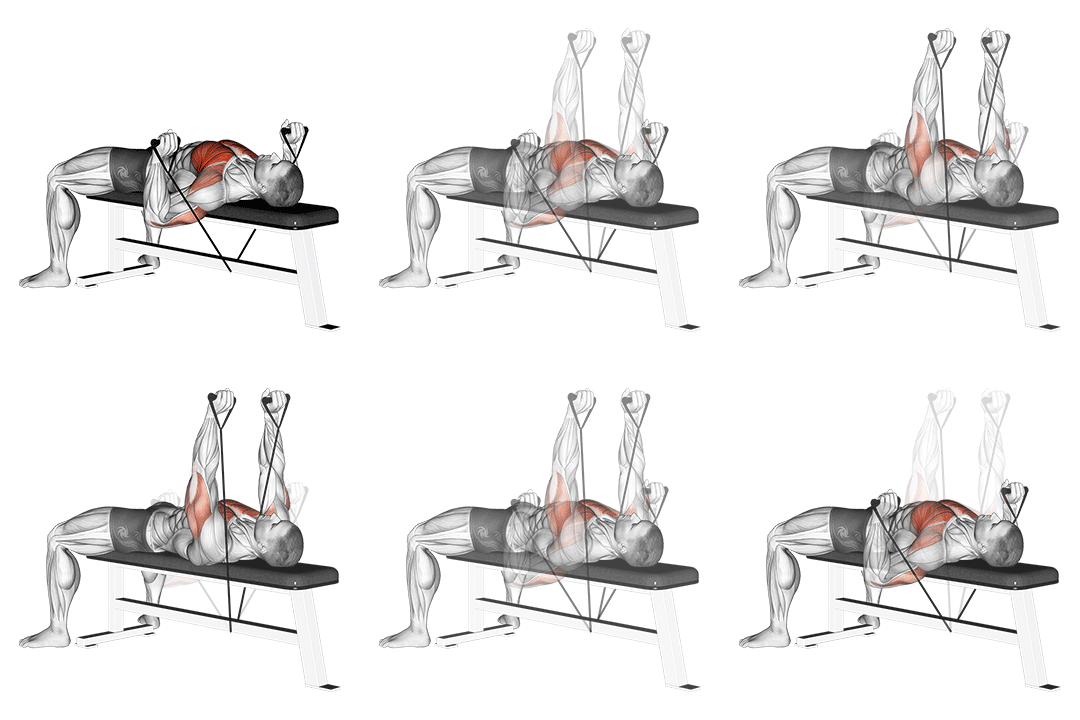
Band Bench Press

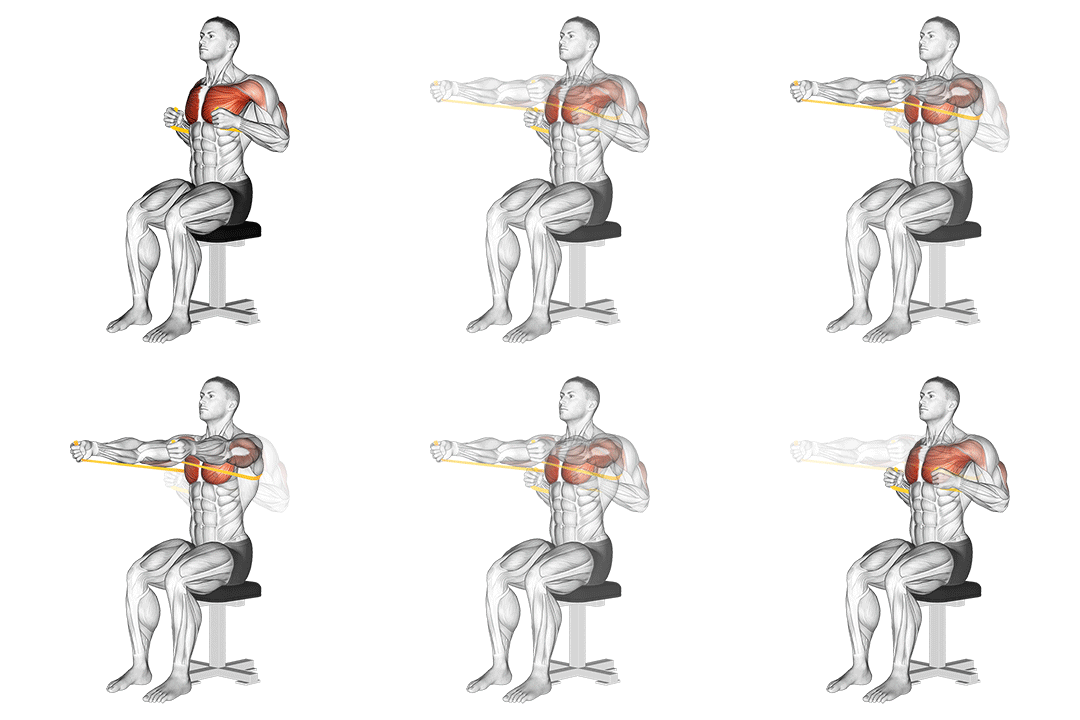
Cross Over - With Bands
Head-to-Head Comparison
Different values are marked. These are catalogue attributes, not performance scores.
Muscles used
Listed target and secondary muscles, shown on the body. Locations, not activation or strength scores.
- Target
- Secondary
- Not highlighted
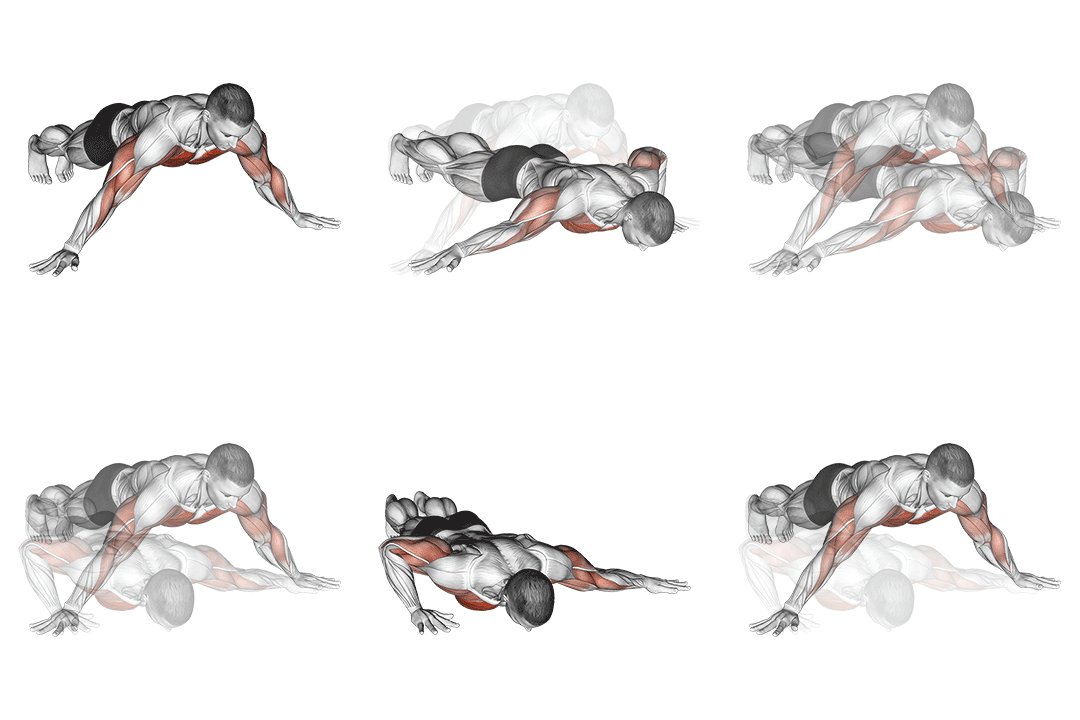
Band Bench Press
- Target
- Pectorals
- Secondary
- Triceps, Shoulders
Not shown on diagram: Shoulders. These labels do not identify a precise region on this map.
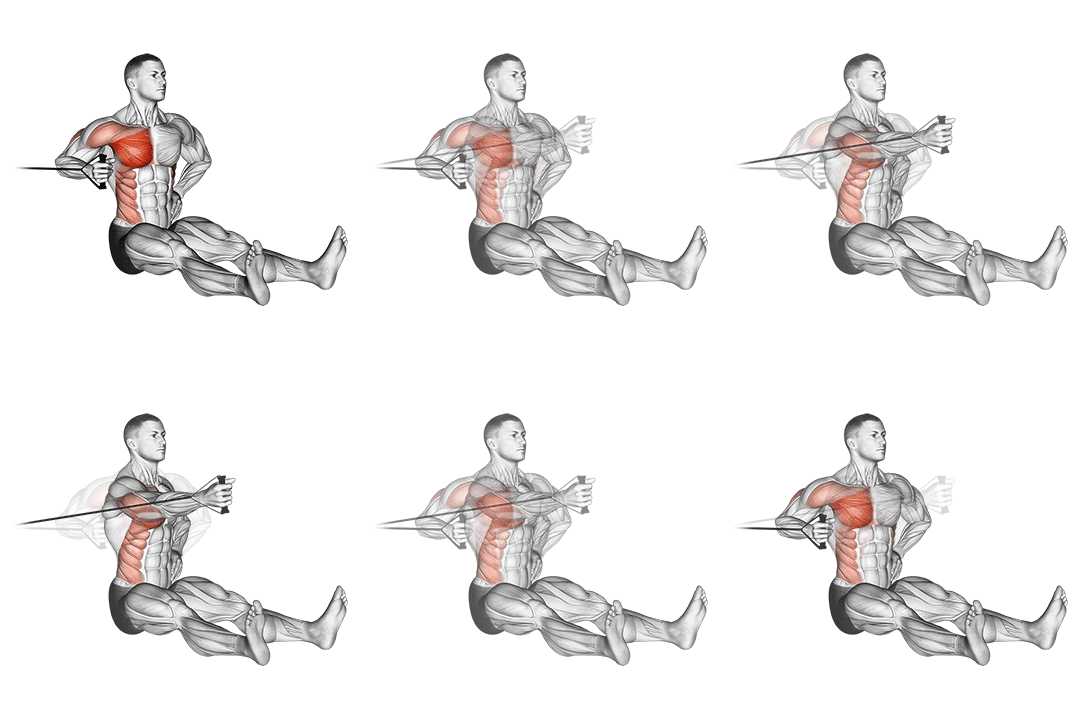
Cross Over - With Bands
- Target
- Pectorals
- Secondary
- Biceps, Shoulders
Not shown on diagram: Shoulders. These labels do not identify a precise region on this map.
Grey does not mean a muscle is unused. The diagrams show only the mapped catalogue labels.
| Attribute | Band Bench Press | Cross Over - With Bands |
|---|---|---|
| Target Muscle | Pectorals |
Pectorals |
| Body Part | Chest |
Chest |
| Equipment | Band |
Band |
| Difficulty | Intermediate |
Intermediate |
| Movement Type Different | Compound |
Isolation |
| Secondary Muscles Different | Triceps, Shoulders |
Biceps, Shoulders |
Visual Comparison
An illustrative 1–10 profile derived from catalog difficulty, equipment, and listed-muscle fields—not measured performance or muscle activation.
Key Differences
- Band Bench Press is a compound movement, while Cross Over - With Bands is an isolation exercise.
- Both exercises target the Pectorals using Band. The catalogue does not establish which exercise is better for an individual goal.
Muscle comparison
Shared target muscles
Secondary muscle differences
Muscle involvement analysis
Equipment and setup
Band Bench Press: setup
Cross Over - With Bands: setup
Access and practicality
Learning and progression
Learning the movements
Progression considerations
Limitations and precautions
Pros & Cons
Band Bench Press
+ Pros
- Compound press that loads pecs, triceps, and anterior deltoids for total chest development
- Easier to progressively overload by stacking bands or increasing band tension
- Accommodating resistance improves lockout power and blends strength with hypertrophy
- Simpler single-anchor setup for home or gym use
− Cons
- Less peak pec isolation compared to crossover
- Band tension increases at lockout, reducing eccentric peak stretch on pecs
- Setup can strain shoulders if scapulae and elbow position aren’t maintained
Cross Over - With Bands
+ Pros
- Excellent isolation and peak contraction of the pectorals at midline
- Keeps tension throughout the movement, improving mind-muscle connection
- Great for shaping and inner-pec work and for high-rep hypertrophy sets
- Portable and simple if you have two anchor points
− Cons
- Harder to achieve heavy progressive overload for strength
- Higher demand on shoulder stability; poor setup can cause impingement
- Requires symmetric anchors and precise setup to keep tension even
When Each Exercise Wins
Crossovers produce a stronger midline contraction and constant tension through horizontal adduction, making them ideal for 8–15 rep hypertrophy work and peak pec fiber recruitment. Use slow eccentrics (2–4 s) and 1–2 s peak squeezes to maximize time under tension.
Band Bench Press allows heavier total loading patterns and accommodating resistance that improves lockout strength; pair with low-rep sets (4–6) and heavier band tension to build pressing power and triceps-driven lockout.
The pressing pattern is more intuitive and mirrors barbell mechanics; with simple cues—scapular retraction, 20–30° elbow tuck, and feet braced—beginners can safely learn force production before adding isolated crossover work.
Single-anchor setup makes it easier to perform at home using a bench or floor, and you can scale tension by swapping bands. Crossovers need side anchors and more setup space, which limits practicality in many homes.
Frequently Asked Questions
Can I do both Band Bench Press and Cross Over - With Bands in the same workout?
Which exercise is better for beginners?
How do the muscle activation patterns differ?
Can Cross Over - With Bands replace Band Bench Press?
Comparison Summary
Exercise instructions
Steps from the exercise catalogue. Read the full sequence before starting.
Band Bench Press
- Lie flat on a bench with your feet flat on the ground and your back pressed against the bench.
- Grasp the band handles with an overhand grip, slightly wider than shoulder-width apart.
- Extend your arms fully, pushing the bands away from your chest.
Read remaining steps for Band Bench Press
- Slowly lower the bands back down to your chest, keeping your elbows at a 90-degree angle.
- Repeat for the desired number of repetitions.
Cross Over - With Bands
- Secure an exercise band around a stationary post.
- While facing away from the post, grab the handles on both ends of the band and step forward enough to create tension on the band.
- Raise your arms to the sides, parallel to the floor, perpendicular to your torso (your torso and the arms should resemble the letter "T") and with the palms facing forward. Have them extended with a slight bend at the elbows. This will be your starting position.
Read remaining steps for Cross Over - With Bands
- While keeping your arms straight, bring them across your chest in a semicircular motion to the front as you exhale and flex your pecs. Hold the contraction for a second.
- Slowly return to the starting position as you inhale.
- Perform for the recommended amount of repetitions.
Also Compare
More comparisons with Band Bench Press
Compare another pair
Choose two exercises to see their differences side by side.