

Assisted Chest Dip (kneeling) vs Lever Chest Press: Complete Comparison Guide
Assisted Chest Dip (kneeling) vs Lever Chest Press — two beginner-friendly lever-based presses that both target the pectorals but load movement and joints differently. If you want clear guidance on which to use for muscle growth, strength, or shoulder-friendly training, this guide breaks down muscle activation, equipment needs, technique cues, progression options, and injury risk. Read on and you’ll get specific rep ranges, joint-angle cues (e.g., 20–30° torso lean for dip emphasis), and actionable coaching tips so you can pick the exercise that fits your current program and goals.
Exercise Comparison
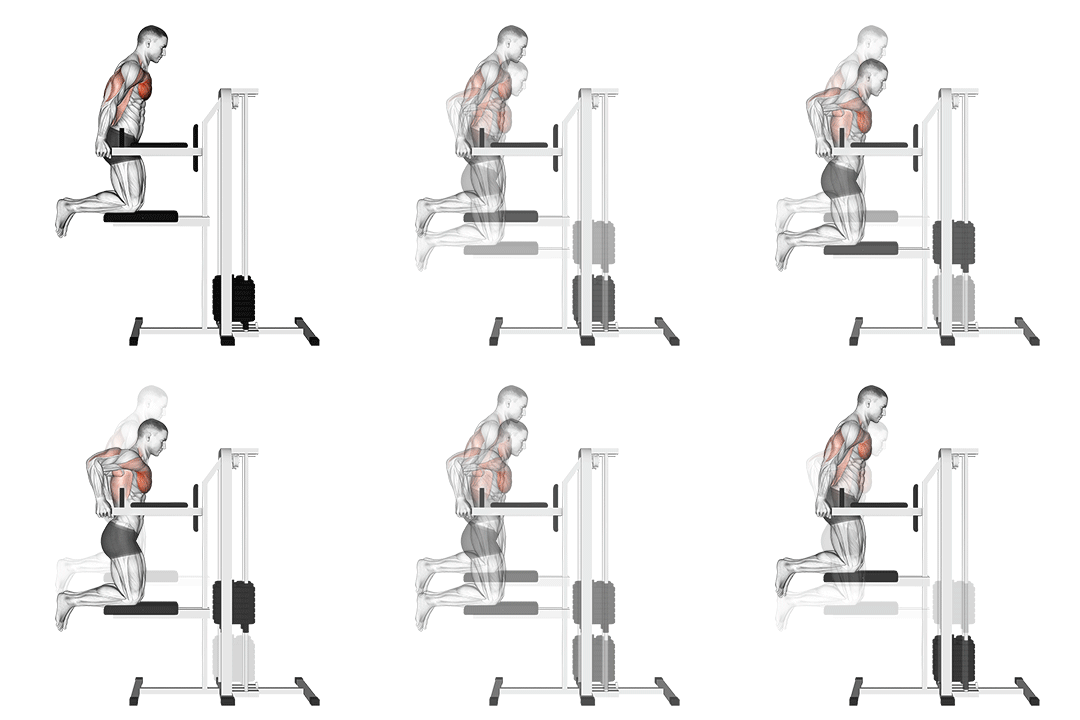
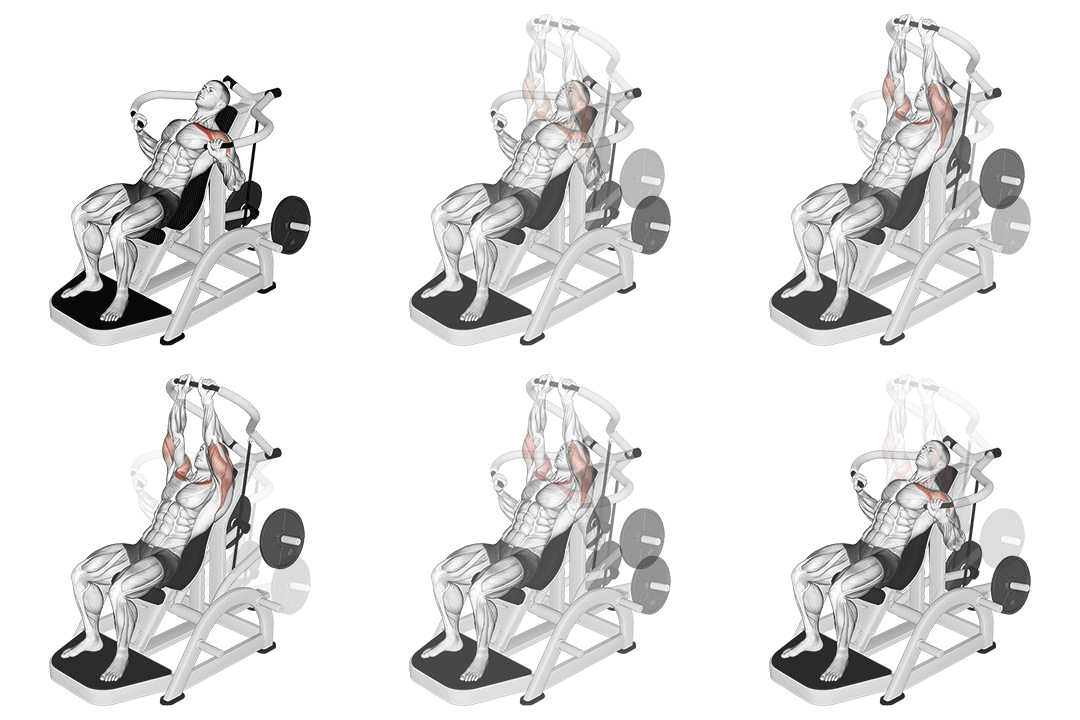
Assisted Chest Dip (kneeling)
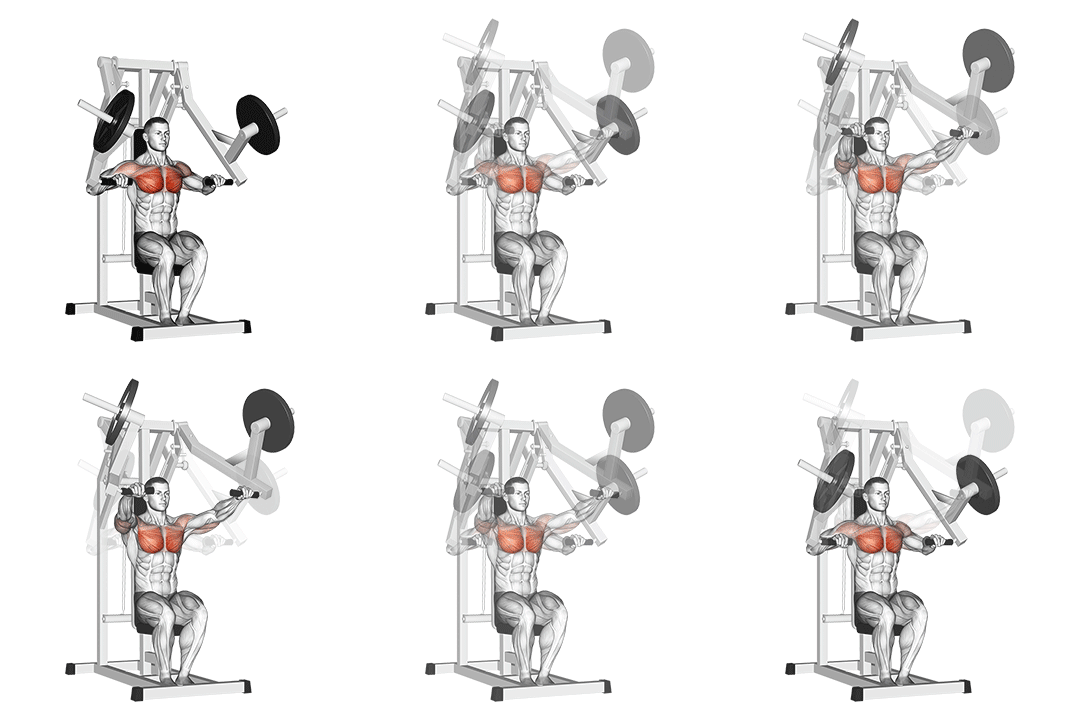
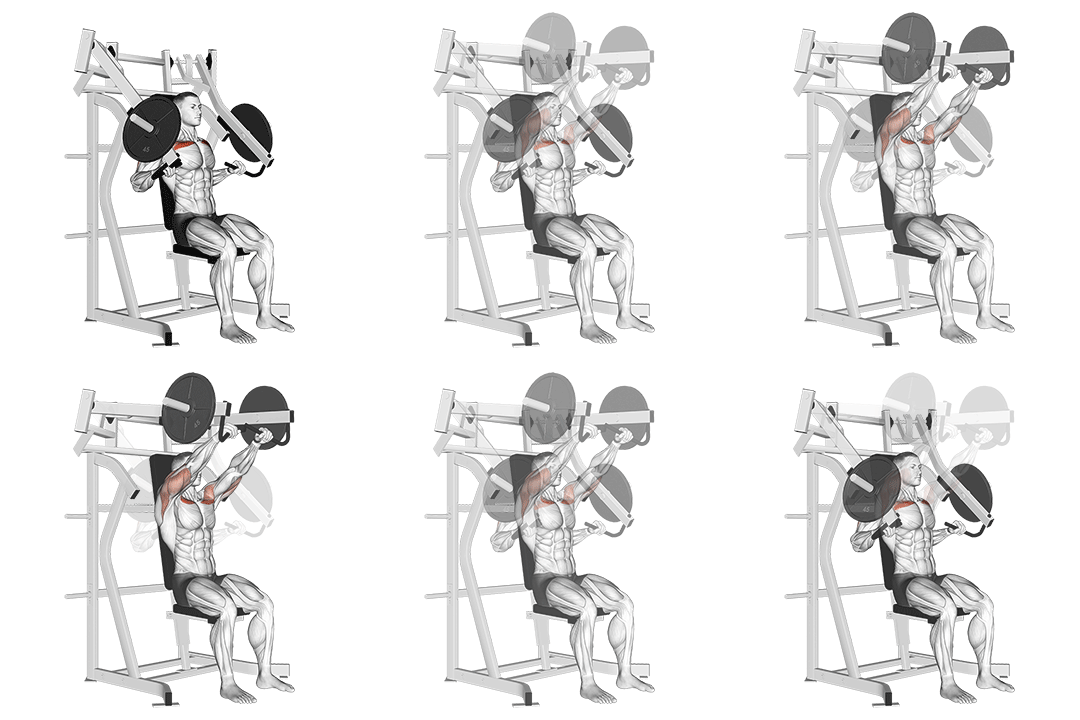
Lever Chest Press
Head-to-Head Comparison
| Attribute | Assisted Chest Dip (kneeling) | Lever Chest Press |
|---|---|---|
| Target Muscle |
Pectorals
|
Pectorals
|
| Body Part |
Chest
|
Chest
|
| Equipment |
Lever
|
Lever
|
| Difficulty |
Beginner
|
Beginner
|
| Movement Type |
Compound
|
Compound
|
| Secondary Muscles |
2
|
2
|
Secondary Muscles Activated
Assisted Chest Dip (kneeling)
Lever Chest Press
Visual Comparison
Overview
Assisted Chest Dip (kneeling) vs Lever Chest Press — two beginner-friendly lever-based presses that both target the pectorals but load movement and joints differently. If you want clear guidance on which to use for muscle growth, strength, or shoulder-friendly training, this guide breaks down muscle activation, equipment needs, technique cues, progression options, and injury risk. Read on and you’ll get specific rep ranges, joint-angle cues (e.g., 20–30° torso lean for dip emphasis), and actionable coaching tips so you can pick the exercise that fits your current program and goals.
Key Differences
- Both exercises target the Pectorals using Lever. The main differences are in their movement patterns and muscle activation angles.
Pros & Cons
Assisted Chest Dip (kneeling)
+ Pros
- Loads pecs at a longer muscle length for strong stretch-mediated stimulus
- Great carryover to unassisted dips and functional pushing patterns
- High triceps involvement helps elbow extension strength
- Can be scaled with assistance to practice movement pattern safely
− Cons
- Requires specific assisted-dip equipment or creative band setup
- Deeper shoulder extension can increase impingement risk if uncontrolled
- Less precise microloading unless you use added weight or calibrated assistance
Lever Chest Press
+ Pros
- Very beginner-friendly with guided path and seat support
- Precise loading—easy to use small incremental increases (2.5–5 lb)
- Lower stabilizer demand, so you can target pecs consistently
- Safer to push heavy for strength sets (3–6 reps)
− Cons
- Fixed path reduces stabilizer and core challenge
- May under-emphasize lower-pec fibers without seat/grip adjustments
- Less carryover to free-body pushing patterns like parallel-bar dips
When Each Exercise Wins
Lever Chest Press wins because you can precisely control load, time under tension, and rep ranges (6–12 reps) to drive hypertrophy. The guided path lets you push close to failure safely and add microloads for steady muscle growth.
The lever press supports heavier, more consistent loading and safer sets of 3–6 reps, making progressive overload straightforward. Machine stability reduces limiting stabilizer fatigue so you can focus on force production.
Beginners benefit from the guided motion and adjustable seat that enforces proper joint alignment, reducing technical demand and injury risk. You can teach pressing mechanics and increase load in small steps.
At home you can replicate assisted dips with a sturdy low bar, rings, or resistance bands and control assistance level; they require less bulky machinery than a lever chest press. This makes dips more adaptable when gym equipment is limited.
Frequently Asked Questions
Can I do both Assisted Chest Dip (kneeling) and Lever Chest Press in the same workout?
Yes. Pairing them can work well: start with the lever press for heavy sets (3–6 reps) to target maximal strength, then use assisted dips for higher-rep finishers (8–15 reps) to increase time under tension and stretch the pecs.
Which exercise is better for beginners?
Lever Chest Press is generally better for beginners because the guided path reduces stabilizer demands and teaches pressing mechanics. It lets you safely load and progress in small increments while minimizing shoulder risk.
How do the muscle activation patterns differ?
Dips load the pecs at longer muscle lengths and increase triceps torque during lockout, especially with a forward lean, while the lever press produces peak pec tension near full extension in a more horizontal vector. Movement plane and shoulder angle change which pec fibers and stabilizers are stressed.
Can Lever Chest Press replace Assisted Chest Dip (kneeling)?
The lever press can replace dips for strength and hypertrophy if you prioritize controlled loading and safety. However, it won’t fully replicate the dip’s long-length pec stimulus and stabilizer carryover—use dips occasionally to train those specific patterns.
Expert Verdict
If you want precise loading, faster strength improvements, and a very user-friendly option for beginners, choose the Lever Chest Press: set the seat so the pivot lines with your sternoclavicular joint, use 3–6 reps for strength or 6–12 for hypertrophy, and increase load in 2.5–5 lb steps. If you want to train a longer pec length-tension curve, develop dip mechanics, and target lower-pec emphasis with a functional push, use Assisted Chest Dip (kneeling) with a 20–30° forward lean and controlled depth. Use dips as a progression toward unassisted dips and the lever press for precise overload—both can coexist in a program depending on your phase.
Also Compare
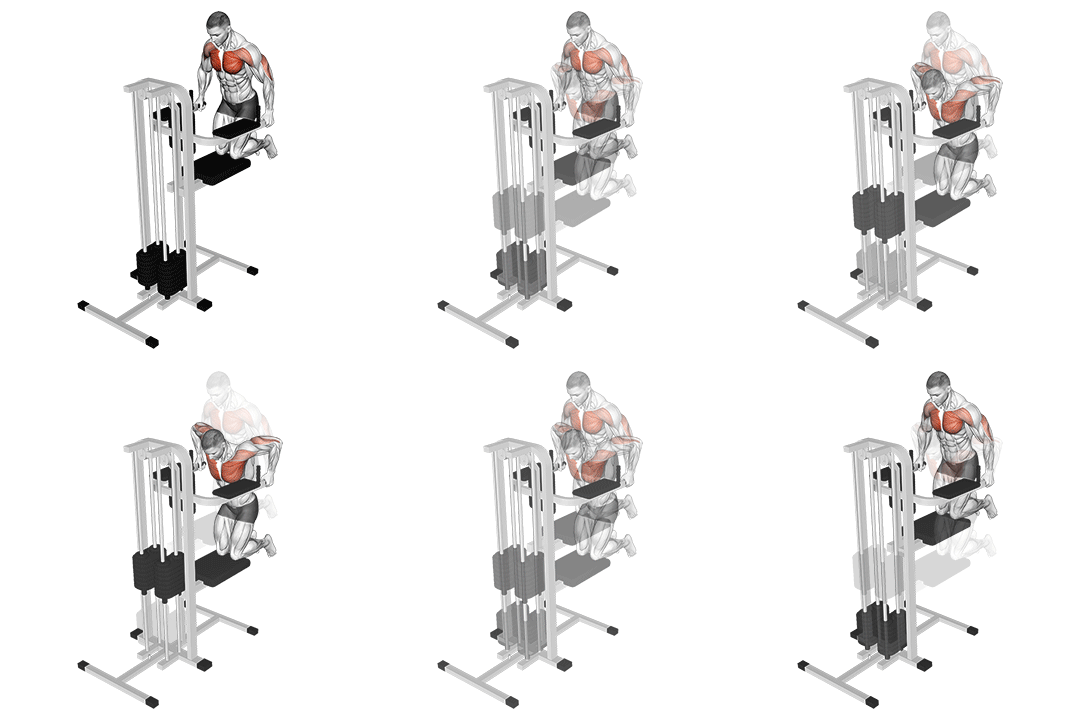
More comparisons with Assisted Chest Dip (kneeling)
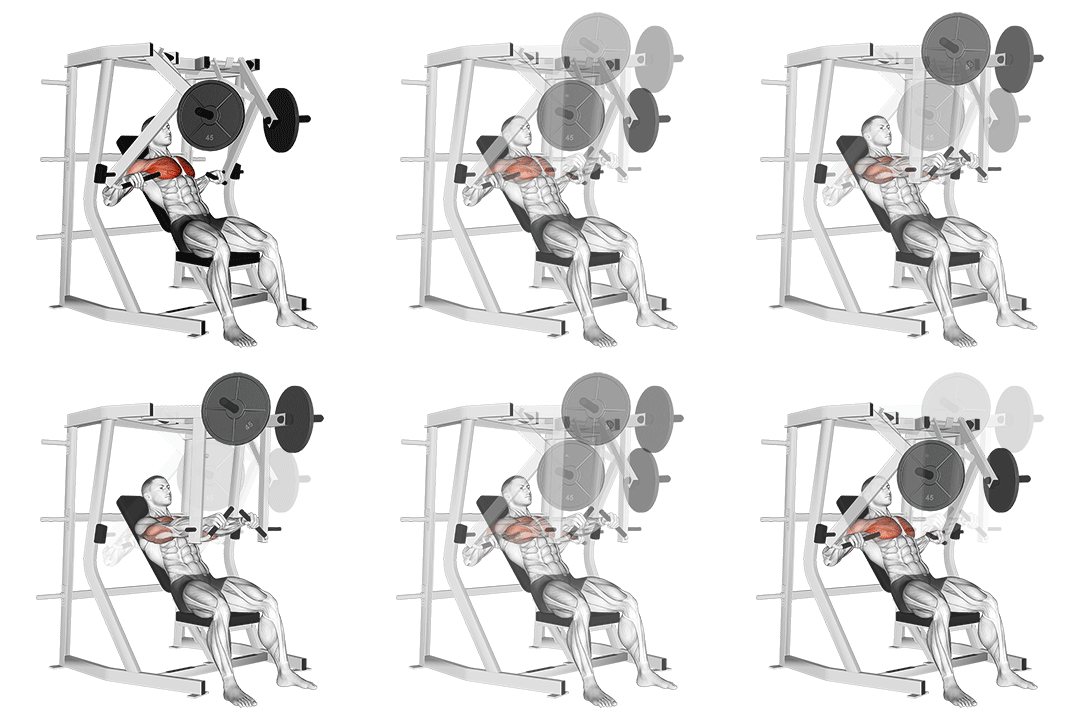
More comparisons with Lever Chest Press
Compare More Exercises
Use our free comparison tool to analyze any two exercises head-to-head.
Compare Exercises