

Assisted Chest Dip (kneeling) vs Lever Incline Chest Press: Complete Comparison Guide
Assisted Chest Dip (kneeling) vs Lever Incline Chest Press — you’re choosing two lever-based compound moves that both target the pectorals but load them differently. I’ll walk you through muscle activation, technique cues, equipment needs, and risk profiles so you can pick the move that matches your goal: hypertrophy, raw strength, or learning the pressing pattern. You’ll get rep-range recommendations (6–12 for growth, 3–5 for strength), concrete cues to improve range of motion and joint safety, and clear scenarios showing when to favor one exercise over the other.
Exercise Comparison
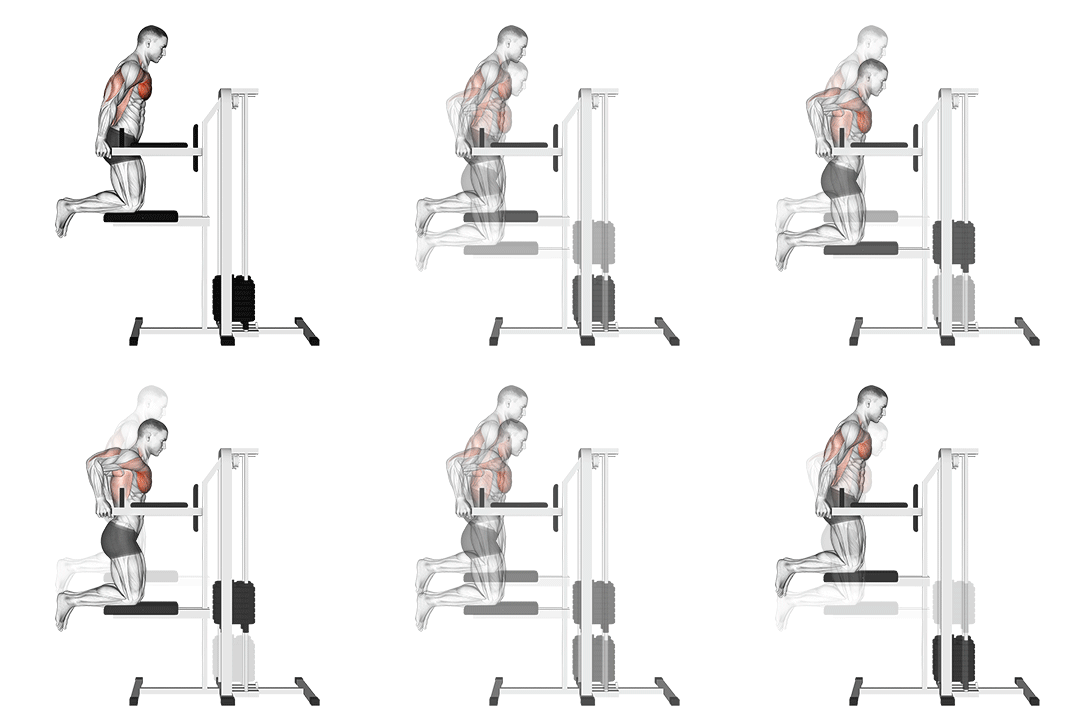
Assisted Chest Dip (kneeling)
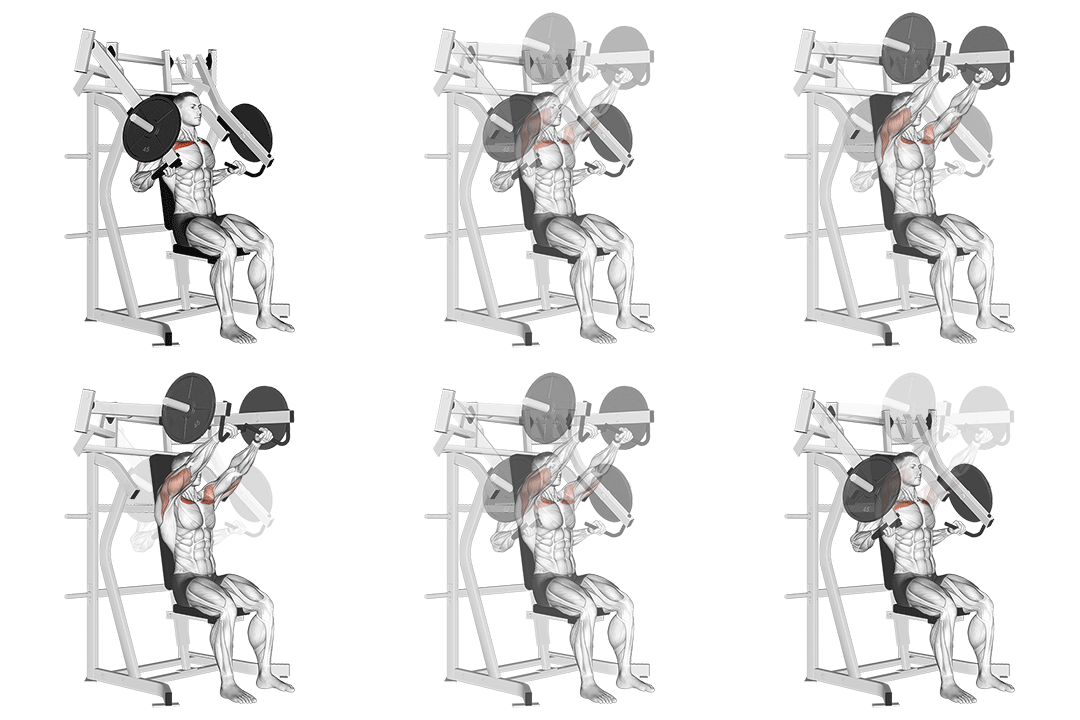
Lever Incline Chest Press
Head-to-Head Comparison
| Attribute | Assisted Chest Dip (kneeling) | Lever Incline Chest Press |
|---|---|---|
| Target Muscle |
Pectorals
|
Pectorals
|
| Body Part |
Chest
|
Chest
|
| Equipment |
Lever
|
Lever
|
| Difficulty |
Beginner
|
Intermediate
|
| Movement Type |
Compound
|
Compound
|
| Secondary Muscles |
2
|
2
|
Secondary Muscles Activated
Assisted Chest Dip (kneeling)
Lever Incline Chest Press
Visual Comparison
Overview
Assisted Chest Dip (kneeling) vs Lever Incline Chest Press — you’re choosing two lever-based compound moves that both target the pectorals but load them differently. I’ll walk you through muscle activation, technique cues, equipment needs, and risk profiles so you can pick the move that matches your goal: hypertrophy, raw strength, or learning the pressing pattern. You’ll get rep-range recommendations (6–12 for growth, 3–5 for strength), concrete cues to improve range of motion and joint safety, and clear scenarios showing when to favor one exercise over the other.
Key Differences
- Difficulty levels differ: Assisted Chest Dip (kneeling) is beginner, while Lever Incline Chest Press is intermediate.
- Both exercises target the Pectorals using Lever. The main differences are in their movement patterns and muscle activation angles.
Pros & Cons
Assisted Chest Dip (kneeling)
+ Pros
- Beginners can use assistance to build strength and technique quickly
- Greater eccentric stretch across the pecs — useful for hypertrophy
- Engages scapular stabilizers and triceps in a functional dip pattern
- Easily modified (assistance, range of motion, forward lean) to target regions
− Cons
- Deep ranges can stress the anterior shoulder and capsule
- Less precise incremental loading compared to dedicated press machines
- Requires a specific assisted-dip/lever station that not every gym has
Lever Incline Chest Press
+ Pros
- Fixed path allows safe heavy loading and precise progressive overload
- Adjustable back angle (30°–45°) efficiently targets upper chest fibers
- Lower shoulder shear and easier setup for isolating pressing mechanics
- Small incremental plate or pin loads simplify strength planning
− Cons
- Less scapular stabilization carryover than dips
- Can under-recruit lower pec fibers unless combined with other lifts
- Requires a lever incline machine — limited home options without equipment
When Each Exercise Wins
Assisted dips provide a longer eccentric stretch and larger ROM, increasing mechanical tension across the pecs and stimulating stretch-mediated hypertrophy. Use 6–12 reps with controlled 2–3 second eccentrics to exploit length-tension benefits.
The lever incline press allows heavier, safer loading in a fixed path and precise incremental increases, which is superior for building maximal pressing strength. Train in 3–6 rep ranges with 2–5 minute rests for best results.
Assistance lets beginners complete full movement patterns with lower absolute load and learn torso positioning and scapular control. Start with higher assistance and progress by reducing assistance every 2–4 weeks.
Assisted dips can be approximated with bands, assisted setups, or bench variations, requiring less specialized home equipment than a lever incline press. Focus on controlling depth and forward lean to target the chest.
Frequently Asked Questions
Can I do both Assisted Chest Dip (kneeling) and Lever Incline Chest Press in the same workout?
Yes — use the Lever Incline Chest Press as your heavy compound (3–6 reps) and follow with Assisted Chest Dip (6–12 reps) for volume and stretch. Keep total shoulder volume in check and monitor fatigue to preserve form on both lifts.
Which exercise is better for beginners?
Assisted Chest Dip (kneeling) is generally better for beginners because assistance reduces required strength while teaching the pressing arc and scapular control. Gradually reduce assistance and prioritize tempo (2–3 second eccentrics) before adding load.
How do the muscle activation patterns differ?
Dips create a longer eccentric stretch and a more vertical force vector that emphasizes lower/sternal pec fibers and triceps, while the incline press produces a diagonal/upward force vector that biases clavicular/upper pec fibers and front delts. The difference stems from joint angles, muscle length-tension, and handle orientation.
Can Lever Incline Chest Press replace Assisted Chest Dip (kneeling)?
Yes for upper-chest development and strength, but not completely: the incline press won’t match the dip’s stretch, lower-pec emphasis, or scapular stabilization demand. If your program needs both force production and stretch-mediated hypertrophy, include both or supplement incline presses with another dip or fly variation.
Expert Verdict
Choose Assisted Chest Dip (kneeling) when your priority is chest hypertrophy, motor-pattern learning, and improving stretch under load — especially if you’re a beginner or want to emphasize lower-pectoral fibers. Use 6–12 reps with slow eccentrics and a forward lean to bias the sternum. Pick the Lever Incline Chest Press when you want to overload the upper chest and build raw pressing strength with safer heavy sets; set the backrest to 30°–45° and work 3–6 reps for strength or 6–10 for upper-chest size. Both moves have a place: pair them across a training block (e.g., incline press as a primary strength lift, assisted dips as a volume or finisher) to cover force-vector and length-tension demands of the entire pectoral complex.
Also Compare
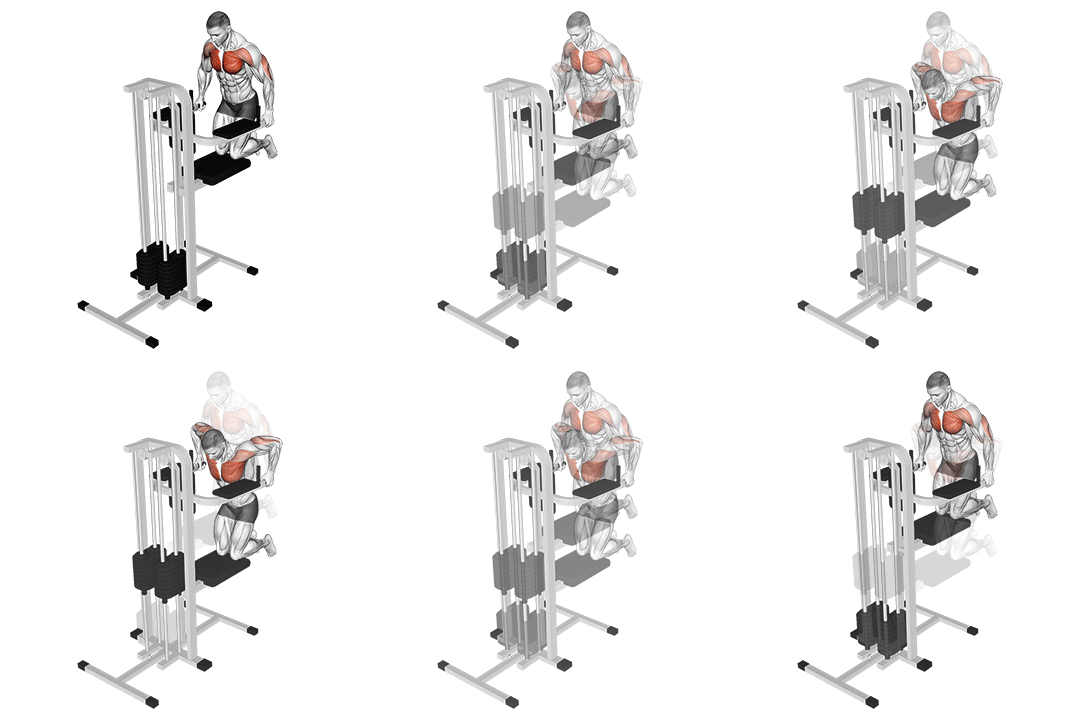
More comparisons with Assisted Chest Dip (kneeling)
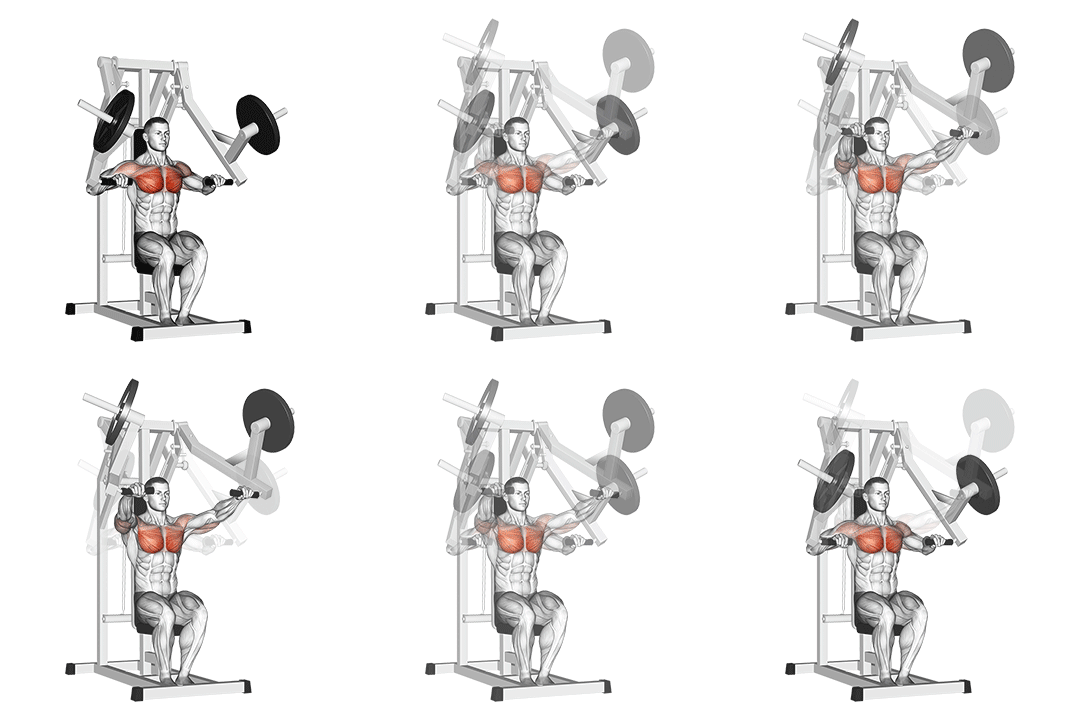
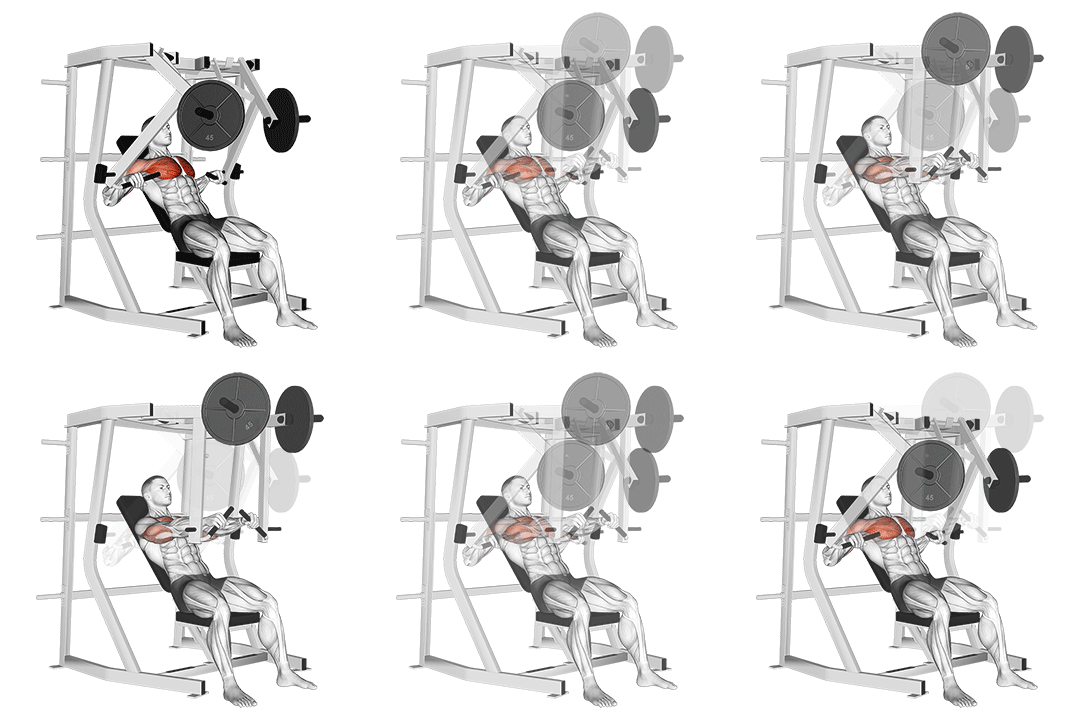
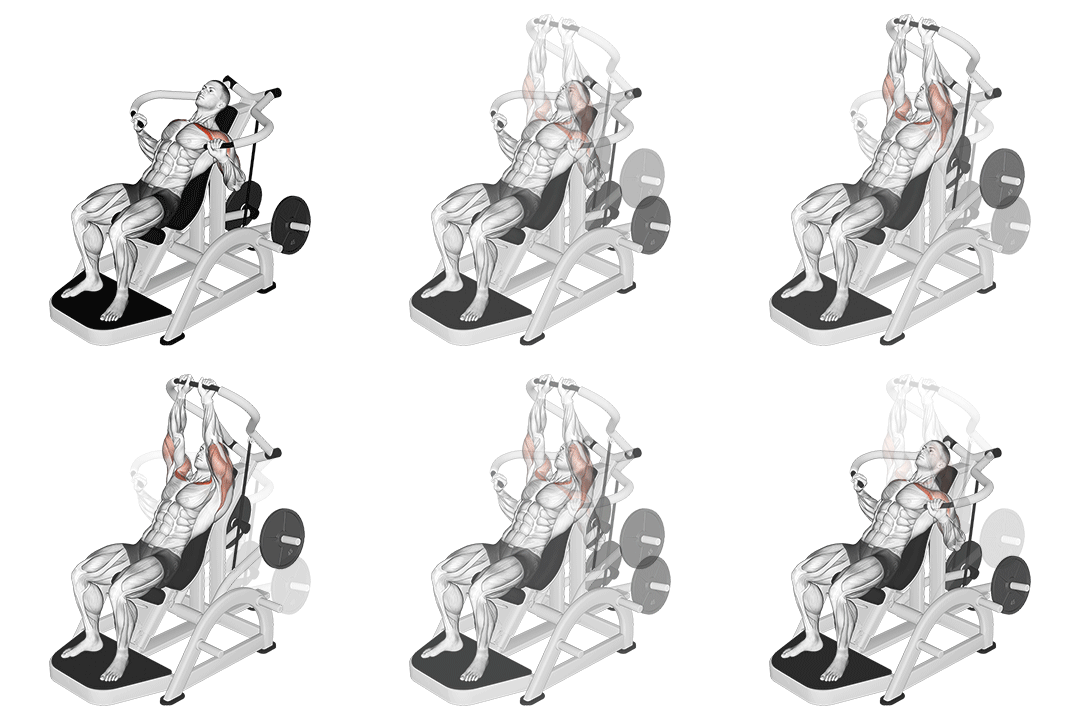
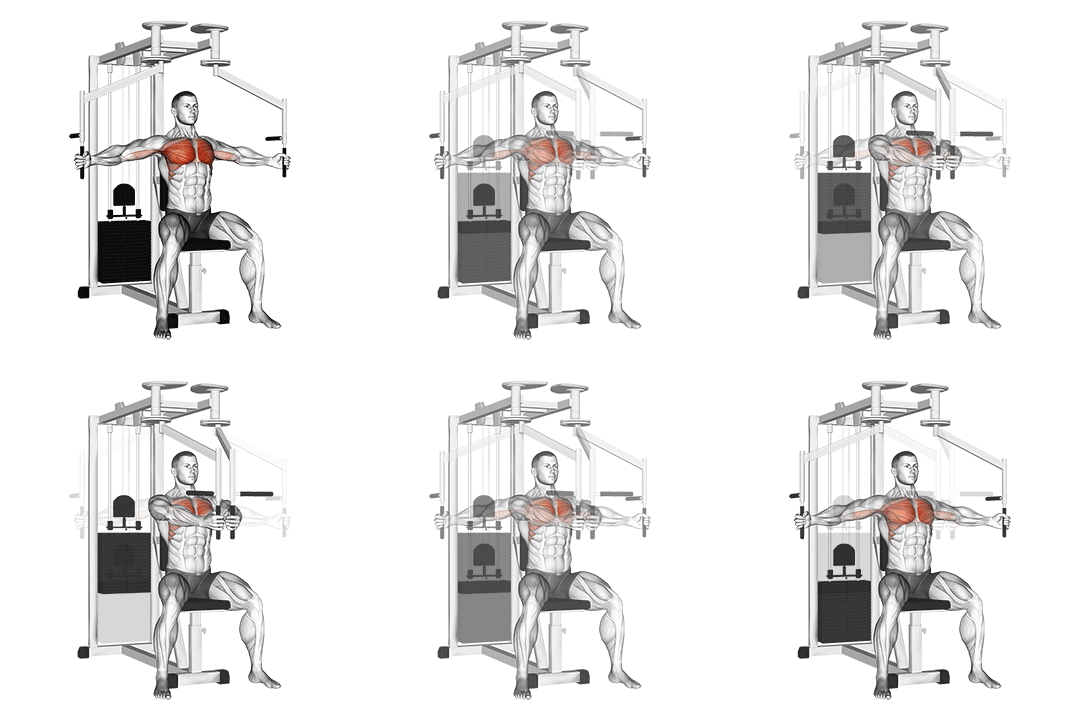
More comparisons with Lever Incline Chest Press
Compare More Exercises
Use our free comparison tool to analyze any two exercises head-to-head.
Compare Exercises