

Assisted Chest Dip (kneeling) vs Lever Seated Fly: Complete Comparison Guide
Assisted Chest Dip (kneeling) vs Lever Seated Fly — you’re choosing between a beginner-friendly compound press and a beginner isolation movement for the chest. If you want clear guidance, this guide breaks down muscle activation, biomechanics, equipment needs, learning curve, and programming tips. I’ll give technique cues (torso lean, scapular control, arm path), rep ranges for strength and hypertrophy, and when to pick one over the other based on goal and gym setup. Read on so you can pick the right chest exercise and program it for measurable progress.
Exercise Comparison
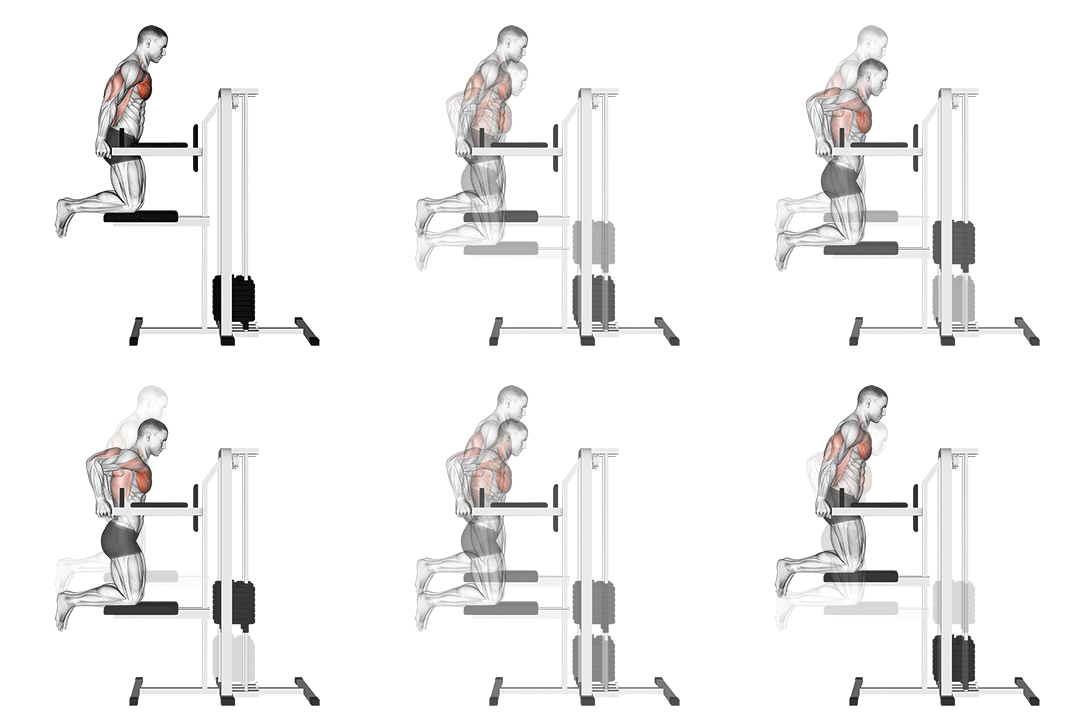
Assisted Chest Dip (kneeling)
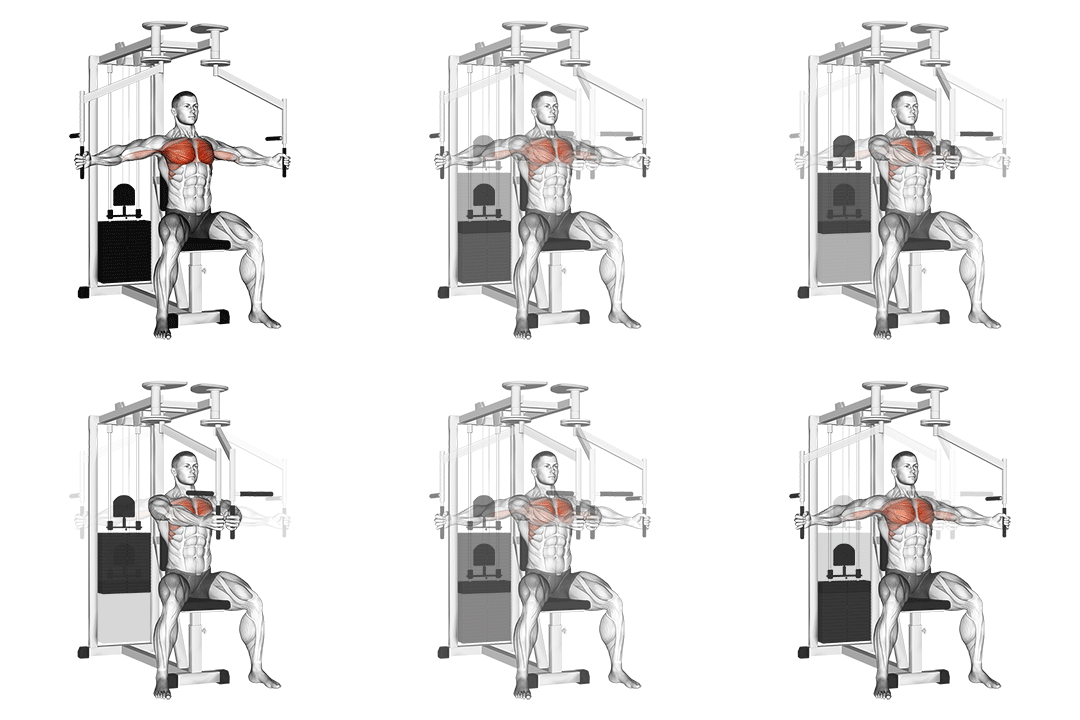
Lever Seated Fly
Head-to-Head Comparison
| Attribute | Assisted Chest Dip (kneeling) | Lever Seated Fly |
|---|---|---|
| Target Muscle |
Pectorals
|
Pectorals
|
| Body Part |
Chest
|
Chest
|
| Equipment |
Lever
|
Lever
|
| Difficulty |
Beginner
|
Beginner
|
| Movement Type |
Compound
|
Isolation
|
| Secondary Muscles |
2
|
2
|
Secondary Muscles Activated
Assisted Chest Dip (kneeling)
Lever Seated Fly
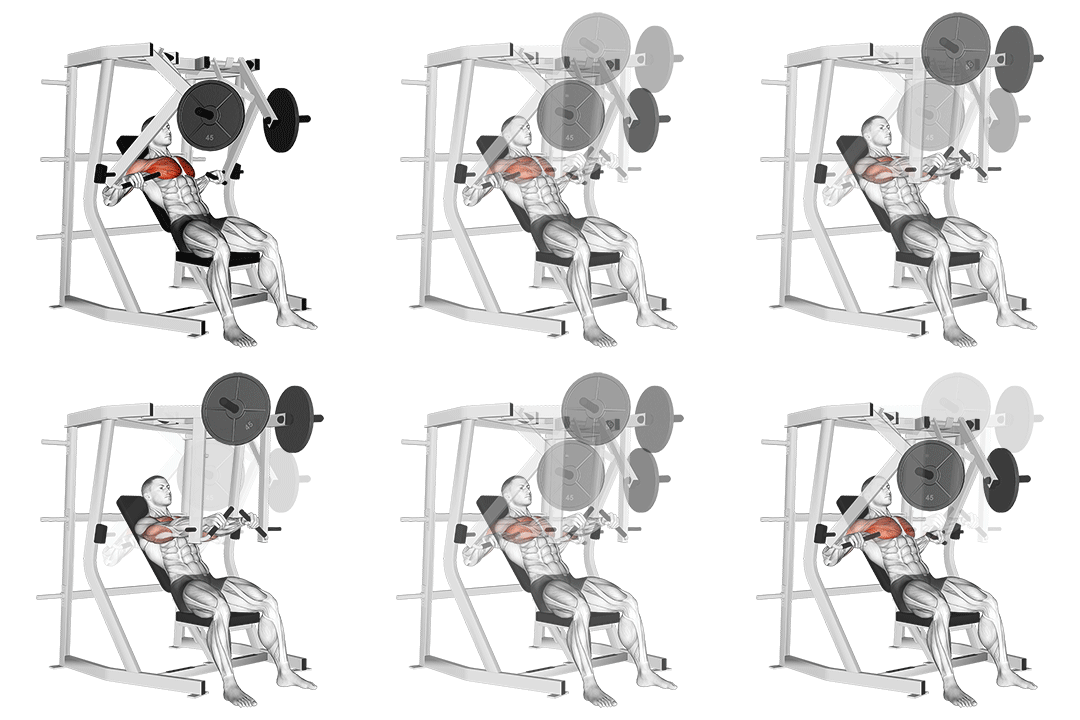
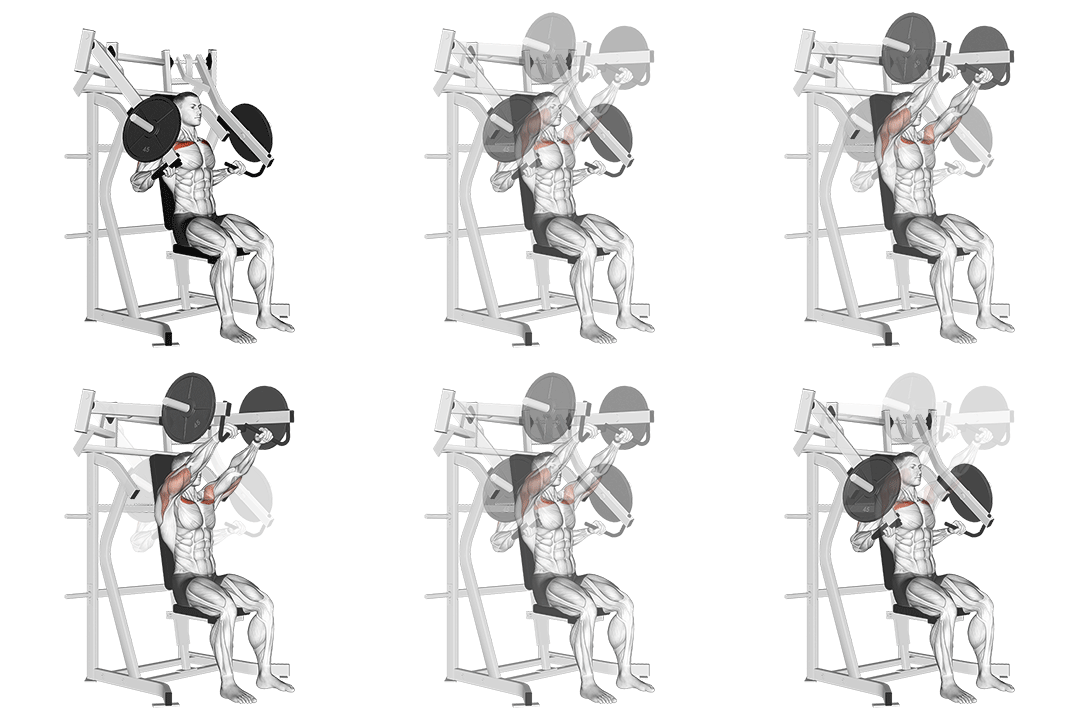
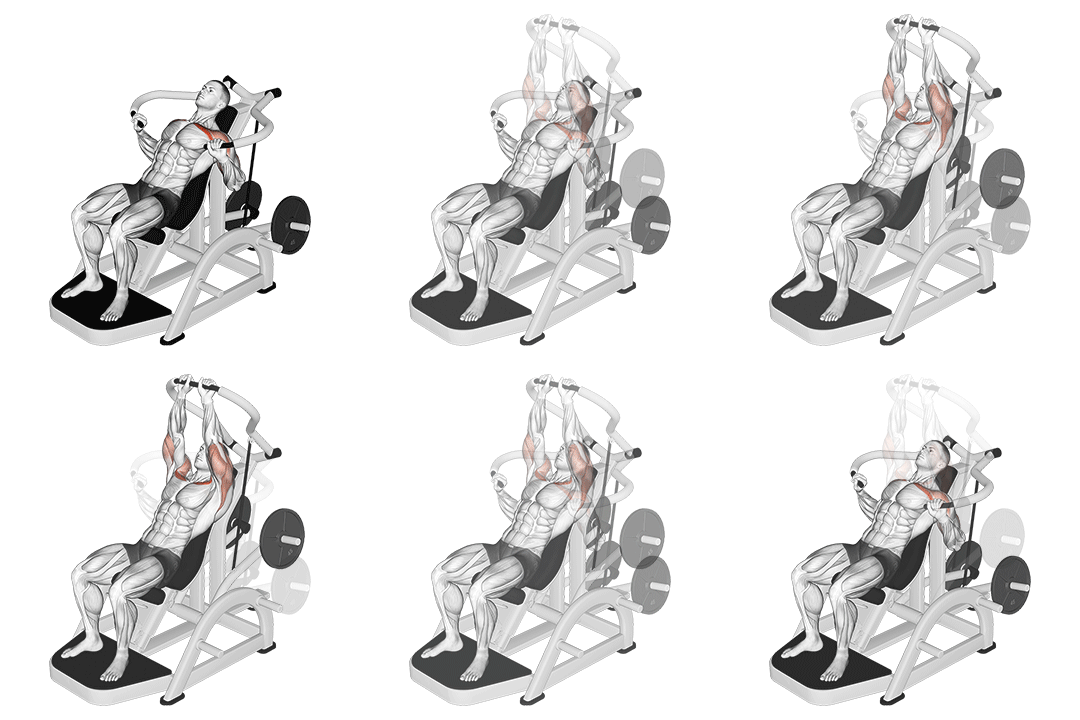
Visual Comparison
Overview
Assisted Chest Dip (kneeling) vs Lever Seated Fly — you’re choosing between a beginner-friendly compound press and a beginner isolation movement for the chest. If you want clear guidance, this guide breaks down muscle activation, biomechanics, equipment needs, learning curve, and programming tips. I’ll give technique cues (torso lean, scapular control, arm path), rep ranges for strength and hypertrophy, and when to pick one over the other based on goal and gym setup. Read on so you can pick the right chest exercise and program it for measurable progress.
Key Differences
- Assisted Chest Dip (kneeling) is a compound movement, while Lever Seated Fly is an isolation exercise.
- Both exercises target the Pectorals using Lever. The main differences are in their movement patterns and muscle activation angles.
Pros & Cons
Assisted Chest Dip (kneeling)
+ Pros
- Builds compound pressing strength while heavily loading the sternal pecs
- Teaches coordinated elbow extension and scapular control useful for pressing lifts
- Easy to progress by decreasing assistance or adding load
- Engages triceps and shoulders, giving more total-body training stimulus
− Cons
- Requires a lever dip or assisted-dip unit (machine space)
- Forward lean can stress anterior shoulder if done aggressively
- Less isolated pec peak contraction compared to a fly
Lever Seated Fly
+ Pros
- Provides strong peak contraction and constant tension on the pecs
- Simple setup and consistent movement path reduce technical errors
- Lower triceps demand lets you isolate the chest effectively
- Easy to micro-load and manipulate tempo for hypertrophy
− Cons
- Limited transfer to compound pressing strength
- Requires a dedicated lever fly / pec-deck machine
- Less effective at training triceps or stabilizer muscles
When Each Exercise Wins
The Lever Seated Fly gives constant tension and stronger peak contraction on the pectorals, which helps sarcomere-level stimulus for hypertrophy. Use 8–12 reps with 2–4 second negatives and short 30–60 second rests to maximize time under tension.
Assisted Chest Dip is a compound pattern that allows heavier progressive loading and trains elbow extension under load, which transfers to pressing strength. Progress by reducing assistance or adding 3–5% load increments and focus on 4–8 rep ranges.
Assisted Chest Dip builds a natural pressing pattern and recruits multiple muscles, giving a bigger functional foundation for new lifters. The assistance mechanism lets you match load to current strength while reinforcing torso and scapular control.
Lever machines are uncommon at home, but you can mimic assisted dips with resistance bands, a bench dip variation, or an assisted dip station. Those substitutions maintain the compound movement and are easier to set up outside a commercial gym.
Frequently Asked Questions
Can I do both Assisted Chest Dip (kneeling) and Lever Seated Fly in the same workout?
Yes. Use Assisted Chest Dip earlier as a compound lift (3–5 sets of 4–8 or 6–10 reps) and follow with 2–4 sets of Lever Seated Fly at 8–15 reps as an isolation finisher to increase time under tension and target peak pec contraction.
Which exercise is better for beginners?
Assisted Chest Dip (kneeling) is better for most beginners because it teaches a natural pressing pattern and allows load scaling via assistance. It builds a stronger foundation for other presses while still being adjustable to your current strength level.
How do the muscle activation patterns differ?
Dips create a combined vertical and horizontal force vector that loads the sternal pecs in mid-range under compound tension, engaging triceps during elbow extension. Flies emphasize horizontal adduction and peak pec shortening with more constant tension and less elbow involvement, so activation peaks at end-range contraction.
Can Lever Seated Fly replace Assisted Chest Dip (kneeling)?
It can replace dips if your goal is pure pec isolation, but it won’t substitute for the compound strength and triceps work dips provide. For balanced development, include flies for hypertrophy and dips for compound strength.
Expert Verdict
If you want a compound movement that builds pressing strength and trains the triceps and stabilizers, prioritize Assisted Chest Dip (kneeling) and progress by reducing assistance or adding weight in the 4–8 rep range for strength or 8–12 for mixed hypertrophy. If your goal is focused pec development and maximizing peak contraction, choose the Lever Seated Fly and use 8–12 reps with controlled eccentric tempo and minimal momentum. Use both in a program: dips earlier as a strength or compound stimulus, flies later as a finisher to increase time under tension and shape the chest fibers.
Also Compare
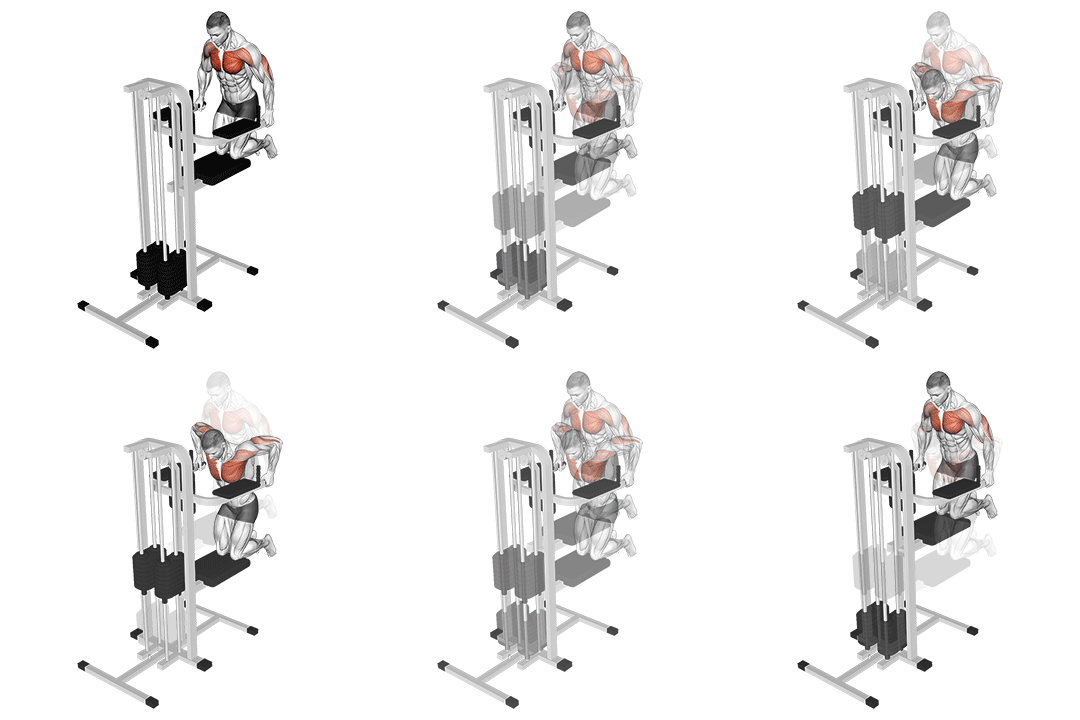
More comparisons with Assisted Chest Dip (kneeling)
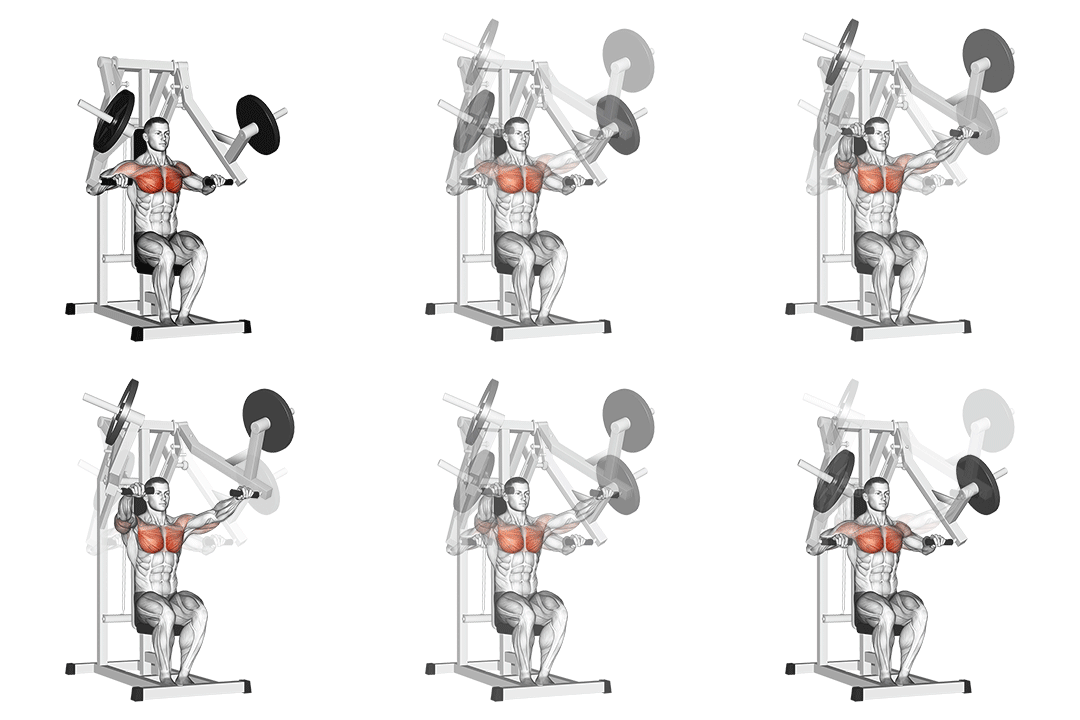
More comparisons with Lever Seated Fly
Compare More Exercises
Use our free comparison tool to analyze any two exercises head-to-head.
Compare Exercises