

Assisted Chest Dip (kneeling) vs Resistance Band Seated Chest Press: Complete Comparison Guide
Assisted Chest Dip (kneeling) vs Resistance Band Seated Chest Press — both train your pectorals, but they load the chest differently. In this guide you’ll get clear, science-backed comparisons of muscle activation, movement mechanics, equipment needs, and progression options. I’ll show technique cues (body angles, elbow paths), rep ranges to use (6–15 reps for strength and hypertrophy), and when to pick one exercise over the other based on your goals, equipment, and injury history. Read on to decide which movement fits your program and how to perform each safely and effectively.
Exercise Comparison
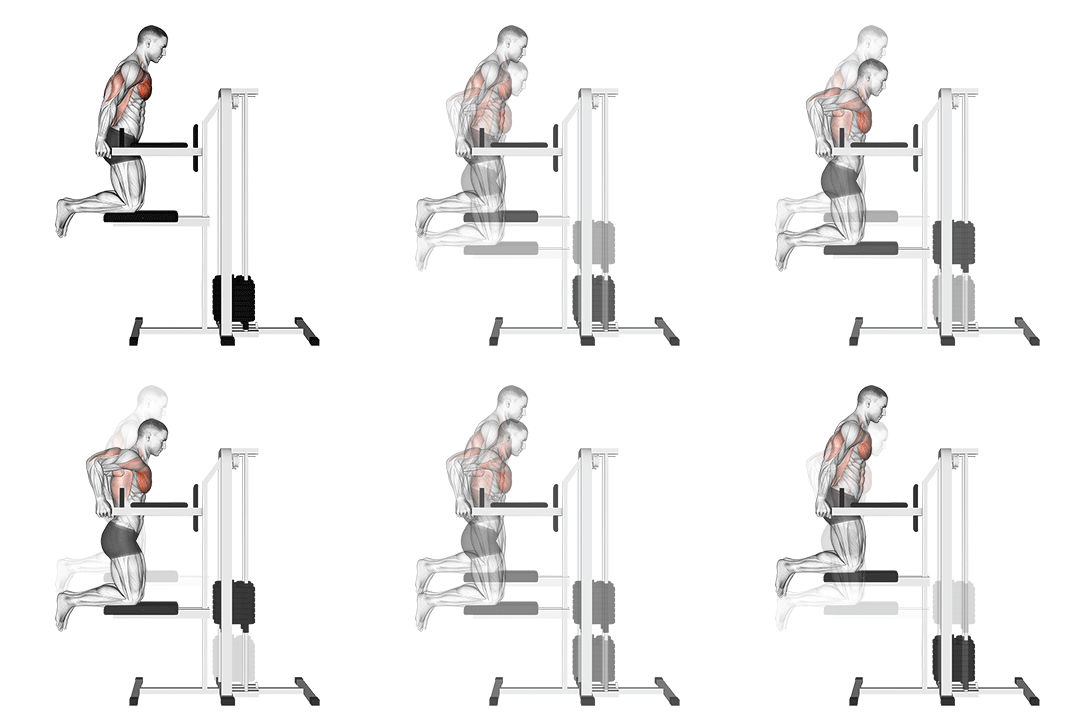
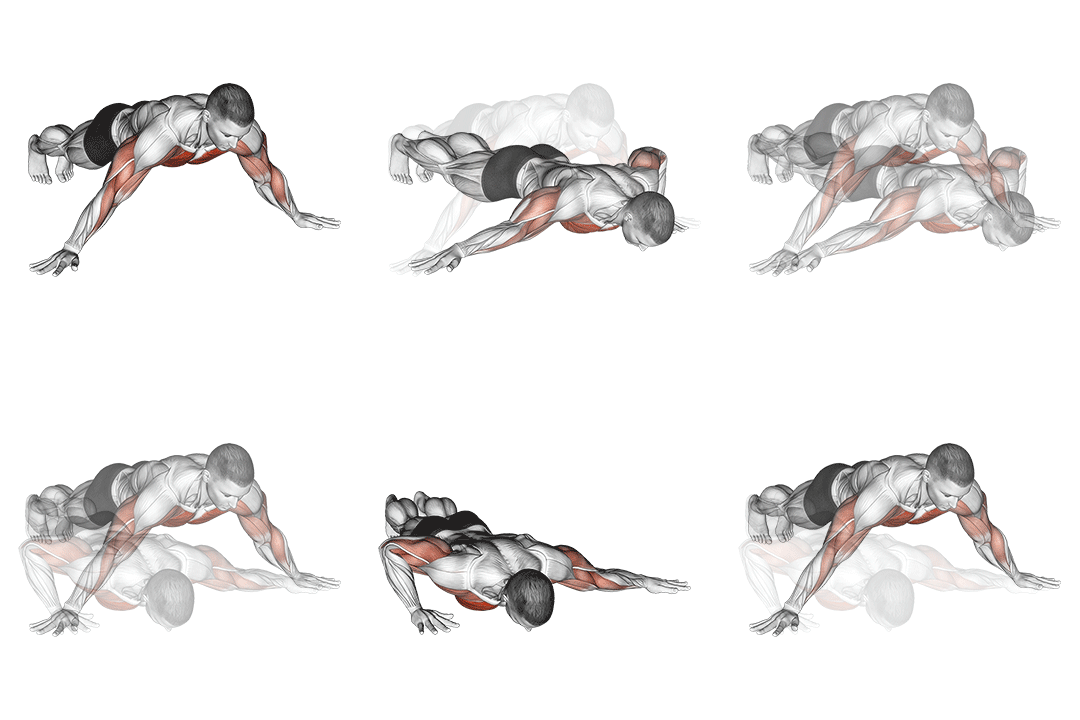
Assisted Chest Dip (kneeling)
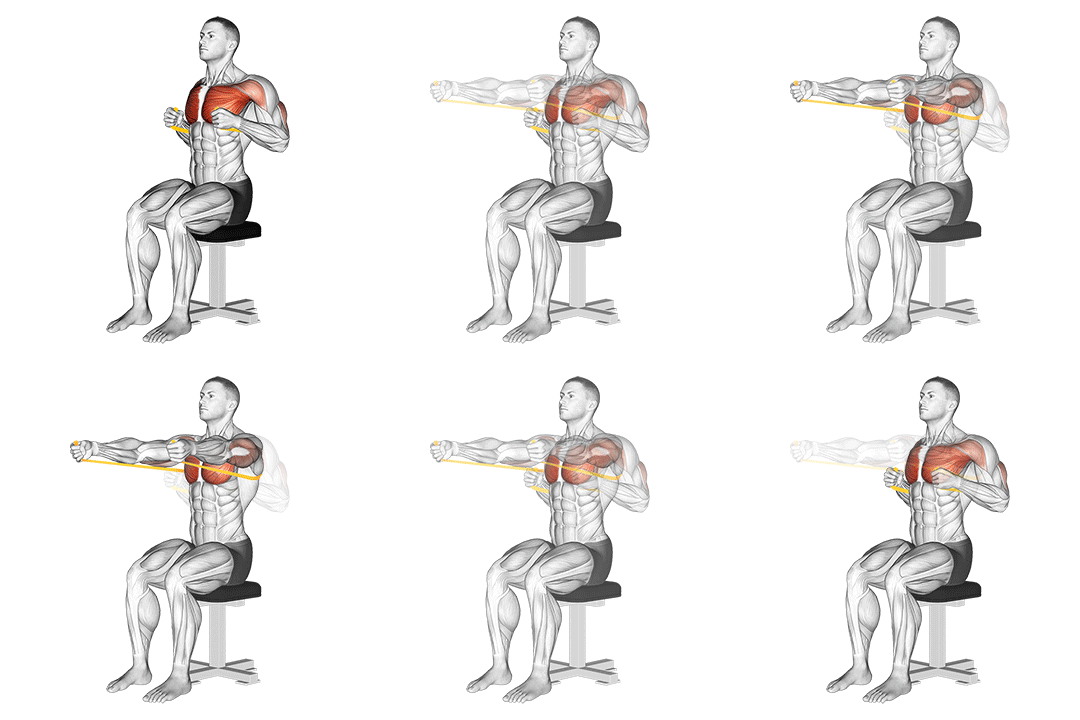
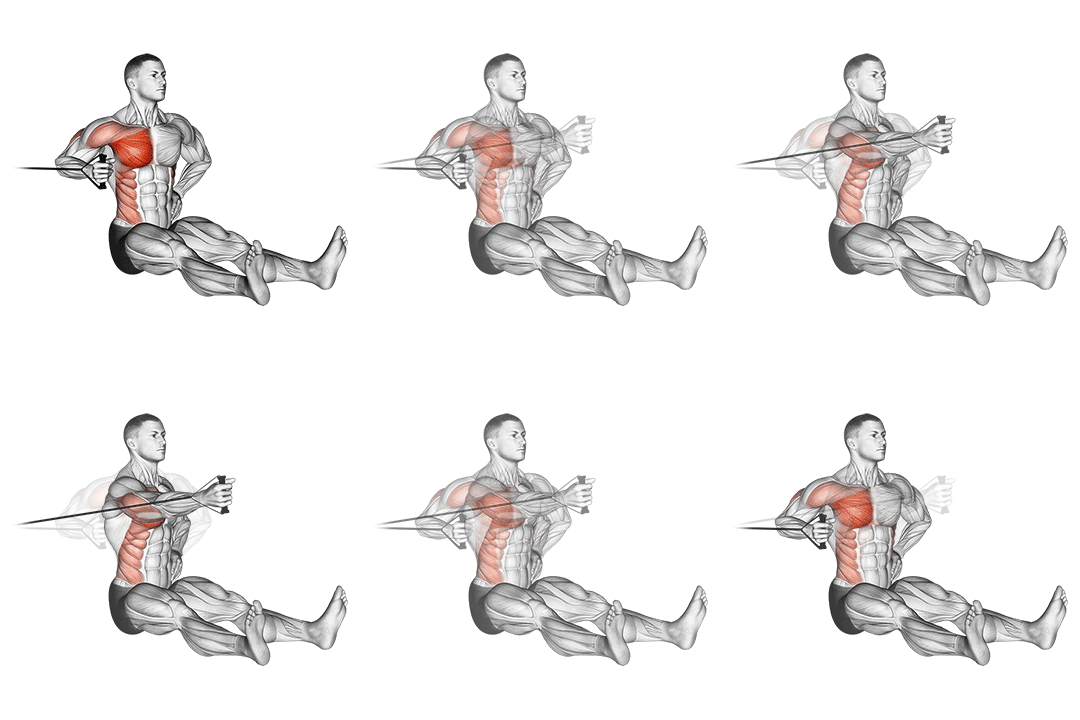
Resistance Band Seated Chest Press
Head-to-Head Comparison
| Attribute | Assisted Chest Dip (kneeling) | Resistance Band Seated Chest Press |
|---|---|---|
| Target Muscle |
Pectorals
|
Pectorals
|
| Body Part |
Chest
|
Chest
|
| Equipment |
Lever
|
Band
|
| Difficulty |
Beginner
|
Intermediate
|
| Movement Type |
Compound
|
Compound
|
| Secondary Muscles |
2
|
2
|
Secondary Muscles Activated
Assisted Chest Dip (kneeling)
Resistance Band Seated Chest Press
Visual Comparison
Overview
Assisted Chest Dip (kneeling) vs Resistance Band Seated Chest Press — both train your pectorals, but they load the chest differently. In this guide you’ll get clear, science-backed comparisons of muscle activation, movement mechanics, equipment needs, and progression options. I’ll show technique cues (body angles, elbow paths), rep ranges to use (6–15 reps for strength and hypertrophy), and when to pick one exercise over the other based on your goals, equipment, and injury history. Read on to decide which movement fits your program and how to perform each safely and effectively.
Key Differences
- Equipment differs: Assisted Chest Dip (kneeling) uses Lever, while Resistance Band Seated Chest Press requires Band.
- Difficulty levels differ: Assisted Chest Dip (kneeling) is beginner, while Resistance Band Seated Chest Press is intermediate.
Pros & Cons
Assisted Chest Dip (kneeling)
+ Pros
- Easy to scale load via assistance — good for absolute beginners and stepwise strength progression
- Strong triceps and chest compound stimulus that trains pushing mechanics
- Teaches joint coordination between shoulder extension and elbow extension
- Clear path to unassisted dips by reducing assistance over time
− Cons
- Requires a lever-assisted dip machine — not practical for home
- Deeper ranges can increase anterior shoulder stress if technique is poor
- Less precise load increments compared to plates or calibrated bands
Resistance Band Seated Chest Press
+ Pros
- Highly portable and inexpensive — ideal for home and travel
- Constant tension through the ROM with stronger peak contraction near lockout
- Easily change angle to emphasize clavicular vs sternal fibers (bench incline/decline)
- Lower compressive stress on shoulder joint when anchored correctly
− Cons
- Harder to quantify exact load (lb/kg) and microload progressions
- Requires secure anchor and good posture to avoid anti-rotation failure
- Bands can pull you forward or off-balance if foot/anchor setup is poor
When Each Exercise Wins
The band press keeps tension through the entire ROM and allows controlled time under tension (40–60 seconds per set) and higher rep ranges (8–15). You can target sternal or clavicular fibers by changing bench angle and maintain a strong peak contraction at lockout.
Assisted dips let you reduce assistance to approach heavier loads and train the compound pushing pattern under higher absolute force, which transfers to bodyweight and weighted dip strength when assistance is removed.
The lever assistance lowers effective load and reduces balance demands, letting you learn torso angle (~20°–30° forward), elbow path, and scapular control before advancing to unassisted variations.
Bands require minimal space, offer multiple resistances, and let you change angles to hit different chest regions without needing a gym machine.
Frequently Asked Questions
Can I do both Assisted Chest Dip (kneeling) and Resistance Band Seated Chest Press in the same workout?
Yes. Pair them as a strength-to-hypertrophy superset: perform 3–5 sets of assisted dips at 4–8 reps for heavy compound work, then 2–3 sets of band presses at 8–15 reps to add volume and time under tension. Monitor shoulder fatigue and reduce volume if form breaks down.
Which exercise is better for beginners?
Assisted Chest Dip (kneeling) is generally better for beginners because the lever reduces load and simplifies balance, letting you learn pushing mechanics and torso position without managing band tension or anchor setup.
How do the muscle activation patterns differ?
Bands increase resistance as the pecs shorten, producing higher peak tension near lockout; assisted dips load the pecs and triceps strongly in mid-range with more joint compression at the bottom. Thus bands favor constant tension and peak contraction, while dips produce higher elbow-extension torque and multi-joint force.
Can Resistance Band Seated Chest Press replace Assisted Chest Dip (kneeling)?
Yes for hypertrophy and convenience — bands can replicate horizontal pressing stimulus and offer variety. No if your goal is building unassisted dip strength or specific bodyweight pushing mechanics, where progressive reduction of assistance on the dip is more effective.
Expert Verdict
If your priority is safe, accessible chest volume at home, go with the Resistance Band Seated Chest Press — it gives continuous tension, easy angle variation, and low joint compression. Use 3–4 sets of 8–15 reps and emphasize controlled 2–3 second eccentrics. If you want to build pressing strength or progress toward unassisted dips, choose the Assisted Chest Dip (kneeling). Reduce assistance over months, keep a 20°–30° torso lean to bias the pecs, and avoid excessive depth to protect the anterior shoulder. Both movements have a place: bands for hypertrophy and convenience; assisted dips for strength and movement specificity.
Also Compare
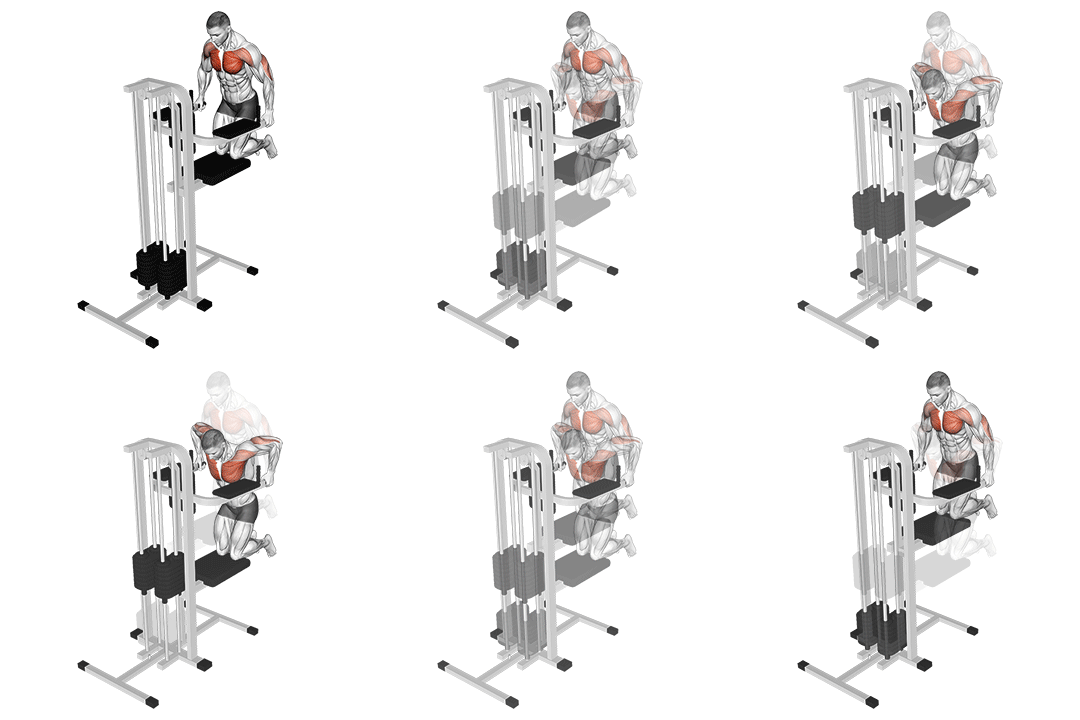
More comparisons with Assisted Chest Dip (kneeling)
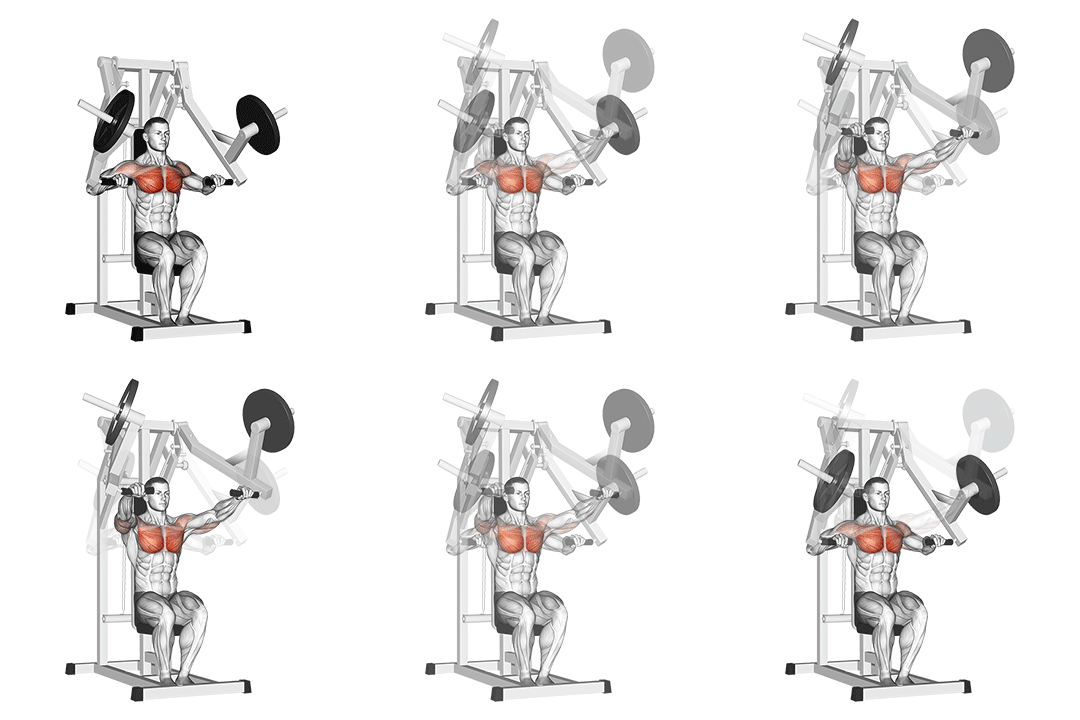
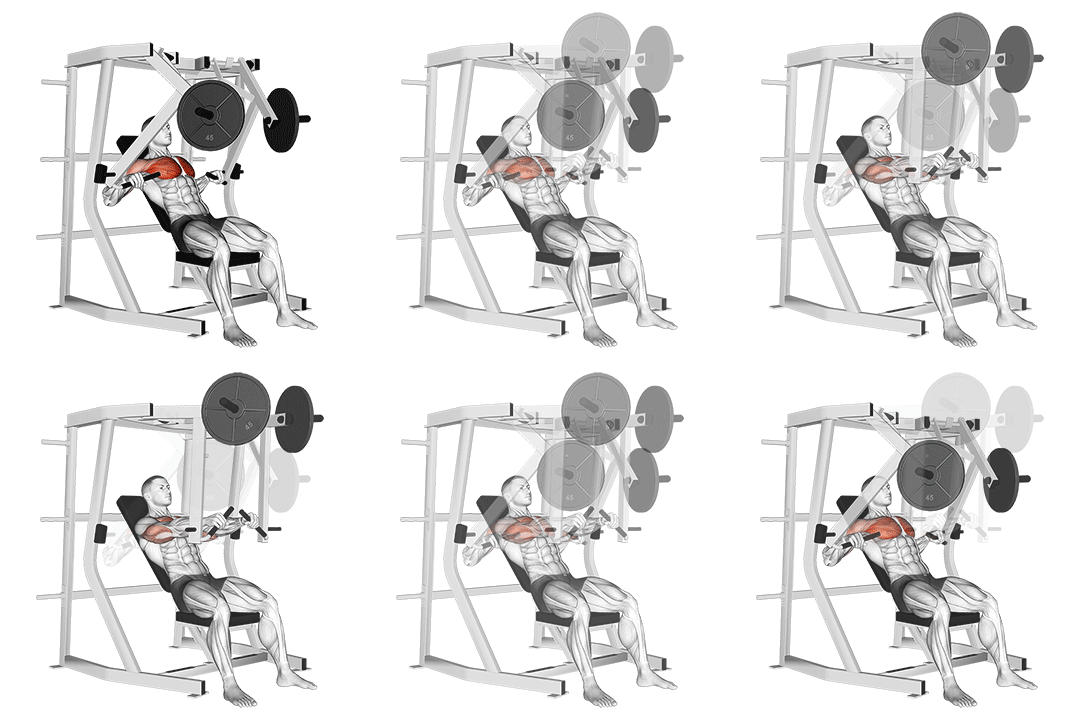
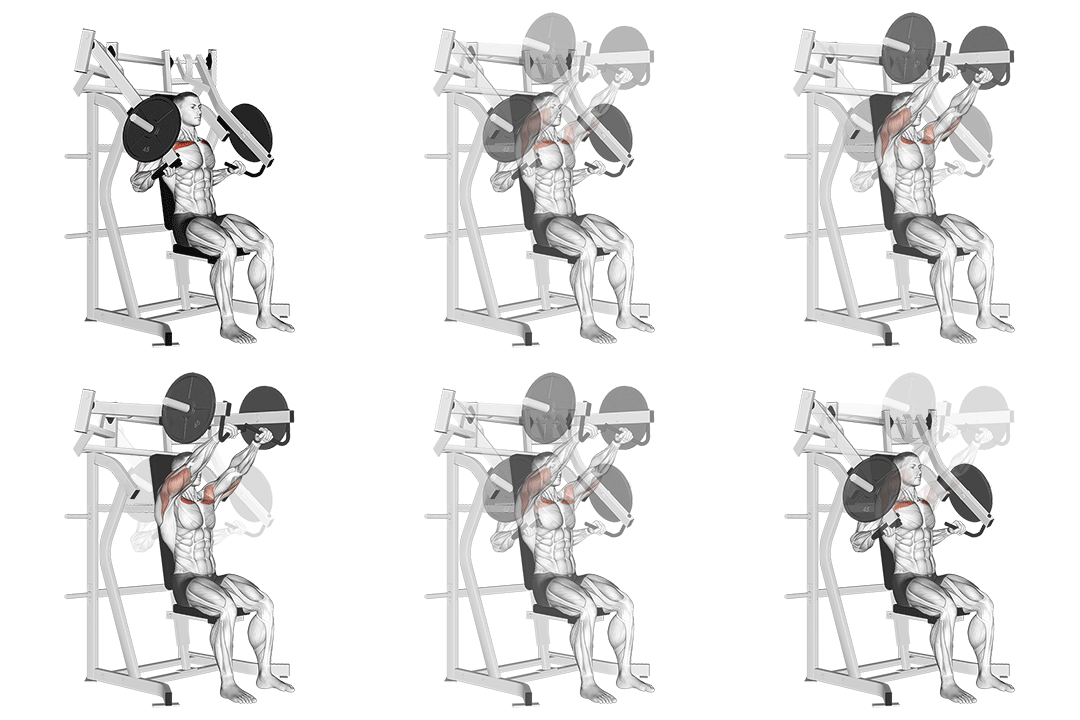
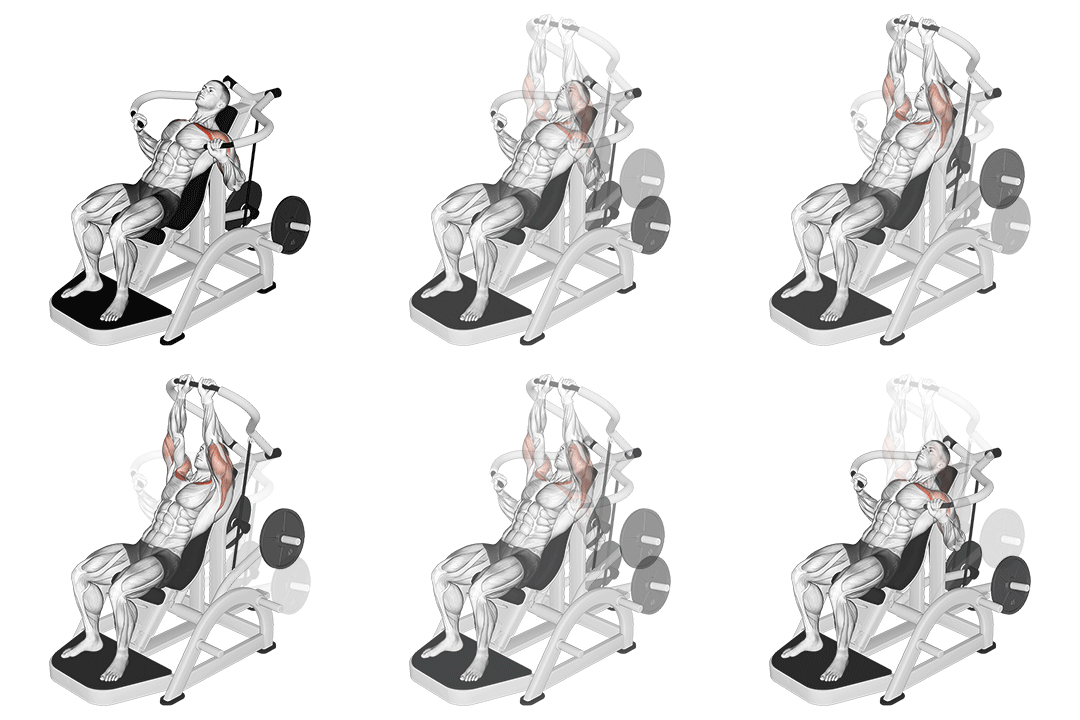
More comparisons with Resistance Band Seated Chest Press
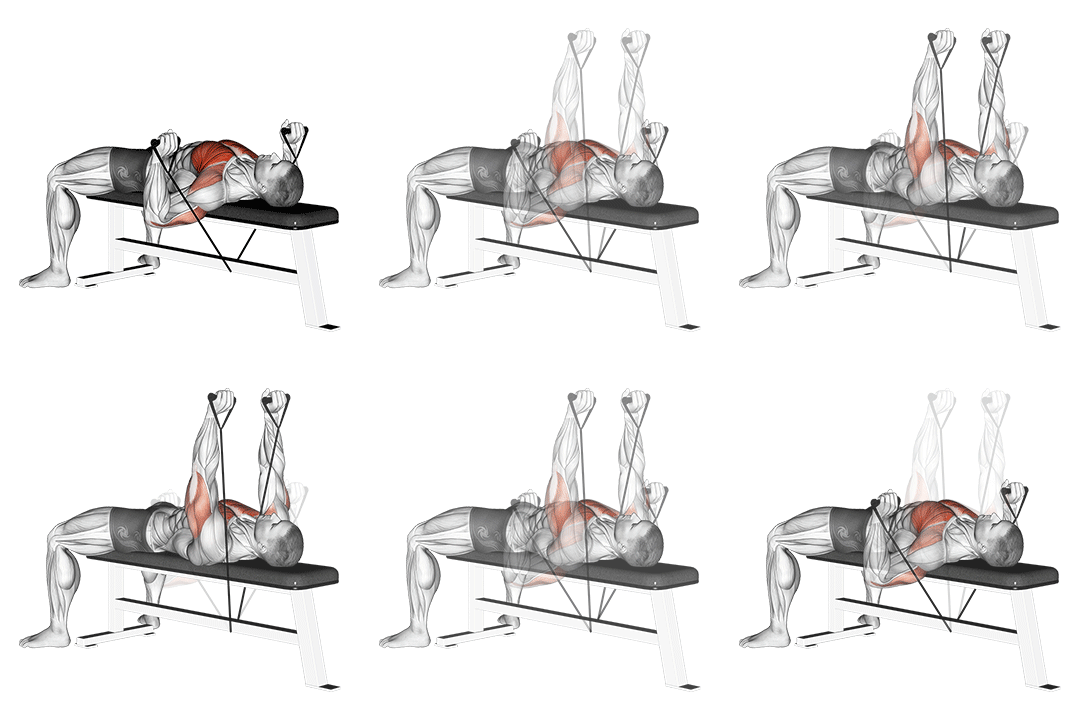

Compare More Exercises
Use our free comparison tool to analyze any two exercises head-to-head.
Compare Exercises