

Assisted Wide-grip Chest Dip (kneeling) vs Lever Incline Chest Press V. 2: Complete Comparison Guide
Assisted Wide-grip Chest Dip (kneeling) vs Lever Incline Chest Press V. 2 is a head-to-head that helps you pick the best lever-based chest movement for your goals. I’ll walk you through primary and secondary muscle recruitment, equipment needs, learning curve, and injury risk. You’ll get concrete technique cues (angles, rep ranges, body position), biomechanics-based reasons why one may favor upper versus lower pecs, and clear recommendations for hypertrophy, strength, or beginner programming so you can choose the right lift for your routine.
Exercise Comparison
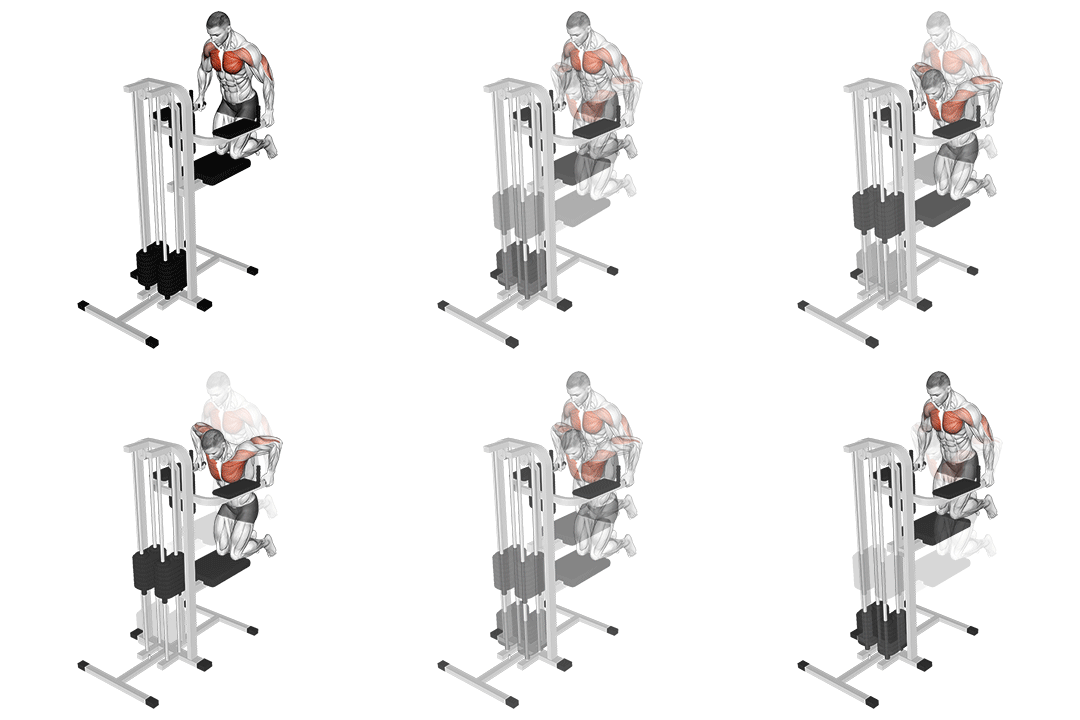
Assisted Wide-grip Chest Dip (kneeling)
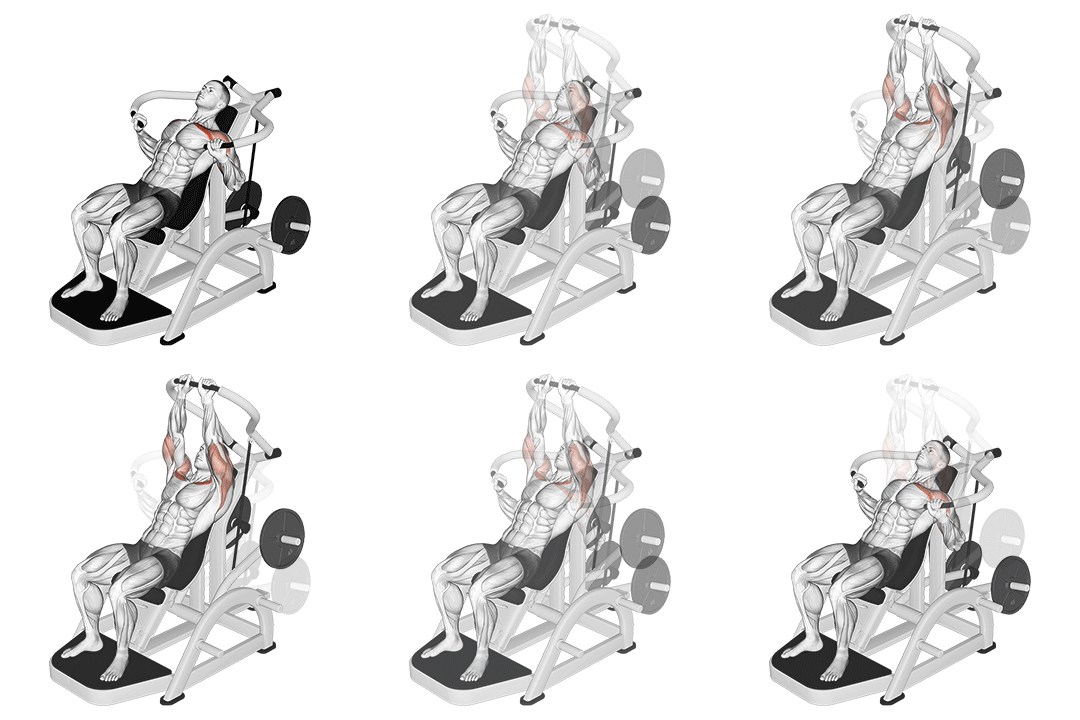
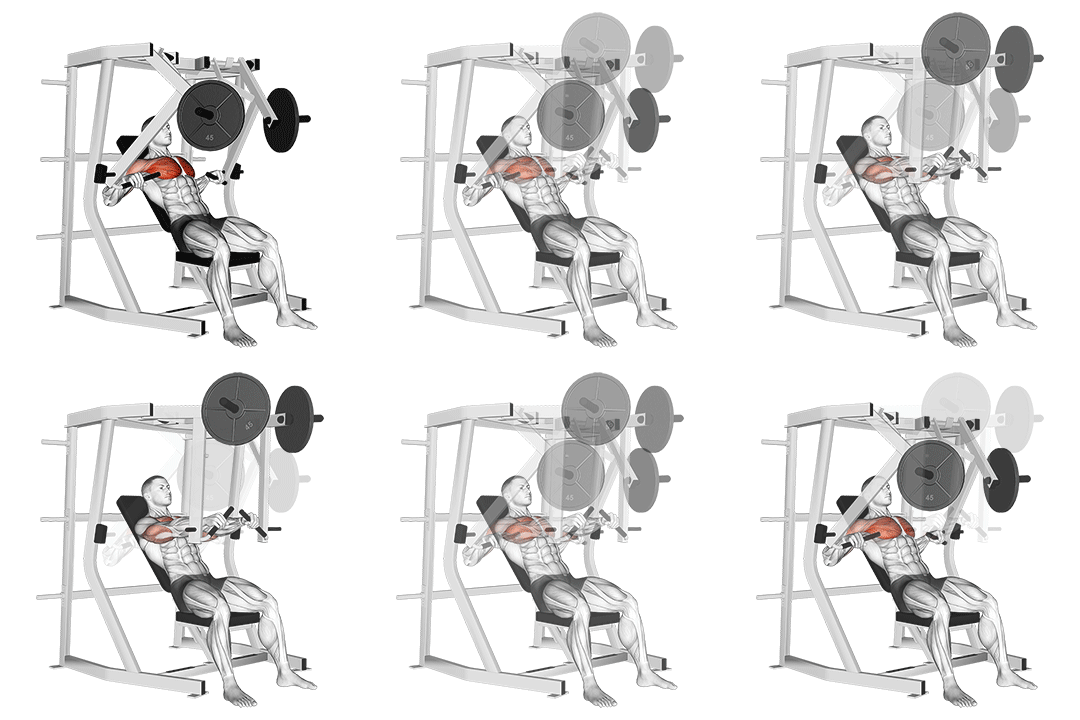
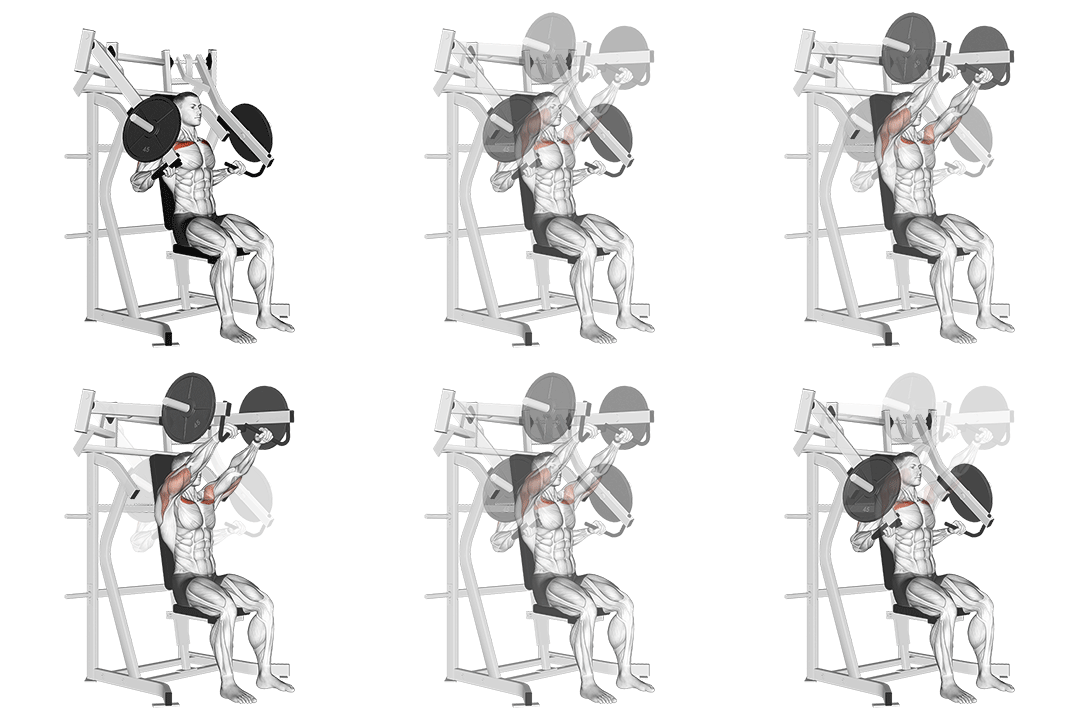
Lever Incline Chest Press V. 2
Head-to-Head Comparison
| Attribute | Assisted Wide-grip Chest Dip (kneeling) | Lever Incline Chest Press V. 2 |
|---|---|---|
| Target Muscle |
Pectorals
|
Pectorals
|
| Body Part |
Chest
|
Chest
|
| Equipment |
Lever
|
Lever
|
| Difficulty |
Beginner
|
Intermediate
|
| Movement Type |
Compound
|
Compound
|
| Secondary Muscles |
2
|
2
|
Secondary Muscles Activated
Assisted Wide-grip Chest Dip (kneeling)
Lever Incline Chest Press V. 2
Visual Comparison
Overview
Assisted Wide-grip Chest Dip (kneeling) vs Lever Incline Chest Press V. 2 is a head-to-head that helps you pick the best lever-based chest movement for your goals. I’ll walk you through primary and secondary muscle recruitment, equipment needs, learning curve, and injury risk. You’ll get concrete technique cues (angles, rep ranges, body position), biomechanics-based reasons why one may favor upper versus lower pecs, and clear recommendations for hypertrophy, strength, or beginner programming so you can choose the right lift for your routine.
Key Differences
- Difficulty levels differ: Assisted Wide-grip Chest Dip (kneeling) is beginner, while Lever Incline Chest Press V. 2 is intermediate.
- Both exercises target the Pectorals using Lever. The main differences are in their movement patterns and muscle activation angles.
Pros & Cons
Assisted Wide-grip Chest Dip (kneeling)
+ Pros
- High lower-pec stimulus with long stretch at the bottom for hypertrophy
- Beginner-friendly when assistance reduces load
- Encourages scapular control and core bracing in kneeling position
- Easy to transition to unassisted dips for progression
− Cons
- Greater shoulder extension risk if taken too deep
- Less precise load increments on some assisted machines
- Requires a specific assisted-dip station which may not be available
Lever Incline Chest Press V. 2
+ Pros
- Consistent, controlled path that’s easy to load progressively
- Strong upper-pec and anterior deltoid emphasis at 20–35° incline
- Lower injury risk due to fixed mechanics and seat adjustments
- Easier to use for heavy sets (3–6 reps) and strict tempo work
− Cons
- Less stretch-mediated tension compared with deep dips
- Requires correct seat and pad setup to target the pecs effectively
- Can under-recruit lower pec fibers unless combined with flat/decline work
When Each Exercise Wins
The incline press lets you load the pecs with precise progressive overload and keeps constant tension across reps; at 8–12 reps it targets upper chest hypertrophy efficiently while reducing shoulder strain, making it easier to accumulate quality volume.
Its fixed lever path and easy micro-loading allow heavy triples and doubles with stable biomechanics. You can overload neurologically with low rep ranges (3–6 reps) while maintaining chest-dominant force vectors.
Assistance lets you train the pushing pattern with minimal joint load and simplified cueing: lean ~20°, keep elbows ~45° from the torso, control the descent for 2–3 seconds. That builds confidence and target muscle activation before moving to heavier presses.
You can approximate assisted dips at home using resistance bands, a bench for support, or a compact assisted station, while a lever incline machine is rarely available outside a gym. Dips are easier to modify for limited equipment setups.
Frequently Asked Questions
Can I do both Assisted Wide-grip Chest Dip (kneeling) and Lever Incline Chest Press V. 2 in the same workout?
Yes. Use the incline press for heavy working sets (3–6 or 6–12 reps) and finish with assisted dips for higher-volume stretch-focused sets (8–15 reps). Sequence pressing heavy first to avoid fatigue-related form breakdown on the lever machine.
Which exercise is better for beginners?
Assisted Wide-grip Chest Dip (kneeling) is better for most beginners because the machine offsets load and simplifies the pattern. It teaches a stable pressing path and allows you to build tolerance before moving to unassisted dips or heavier presses.
How do the muscle activation patterns differ?
Dips create greater pec stretch and emphasize lower sternal fibers due to more humeral extension and a vertical vector, whereas the incline press places the pecs at a shorter operating length and shifts force to the clavicular head and anterior deltoid because of the 20–35° incline and upward force vector.
Can Lever Incline Chest Press V. 2 replace Assisted Wide-grip Chest Dip (kneeling)?
It can replace the dip for upper-pec development and safer heavy loading, but it won’t fully replicate the deep stretch and lower-pec emphasis of dips. For a balanced chest program include both or substitute incline press plus a flat/decline movement to cover the lower pecs.
Expert Verdict
Use the Assisted Wide-grip Chest Dip (kneeling) when you want a beginner-safe, lower-pec-focused movement that trains scapular control and sets you up for full dips. Keep the torso leaning ~15–25°, limit descent to avoid anterior shoulder impingement, and progress by reducing assistance or increasing reps (8–15). Choose the Lever Incline Chest Press V. 2 when you need precise loading, want to emphasize upper-pec development, or plan to train heavy for strength (3–6 reps) or moderate hypertrophy (6–12 reps). Pair both in a program—incline press for heavy, loaded sets and assisted dips for volume and stretch—based on your equipment access and shoulder health.
Also Compare
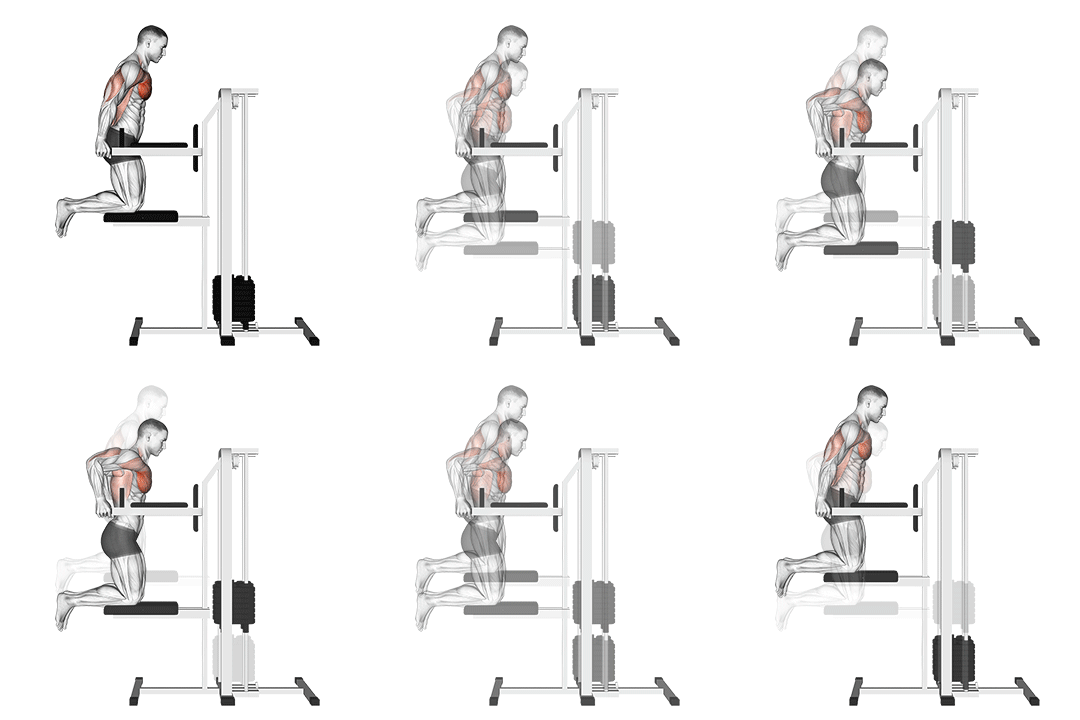
More comparisons with Assisted Wide-grip Chest Dip (kneeling)
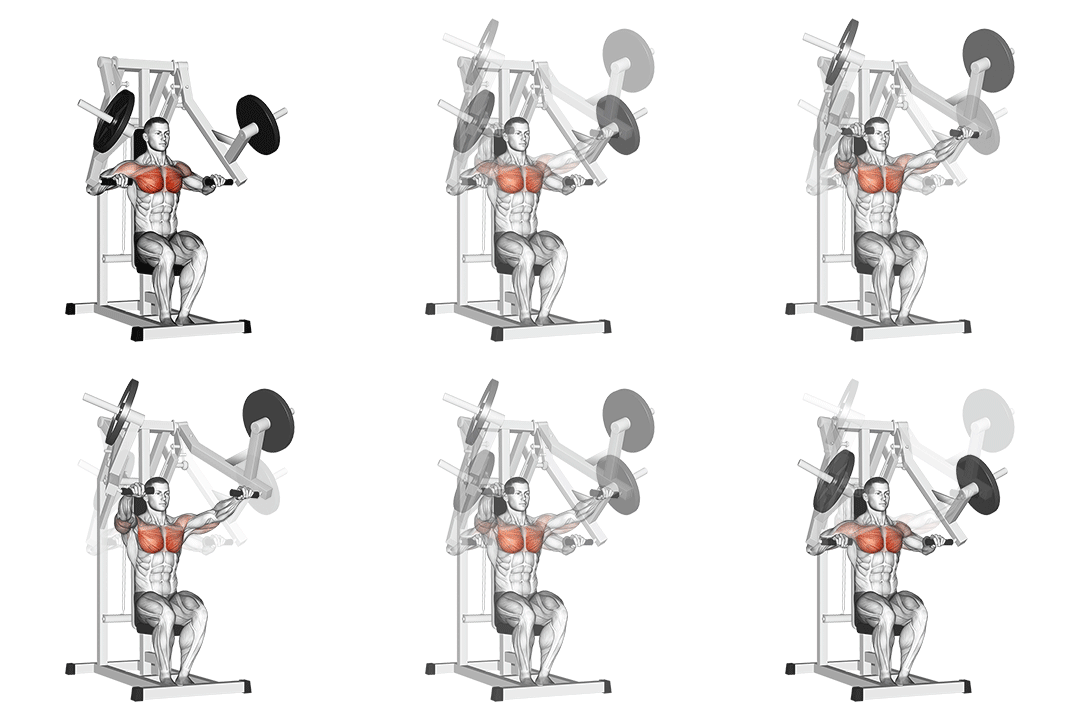
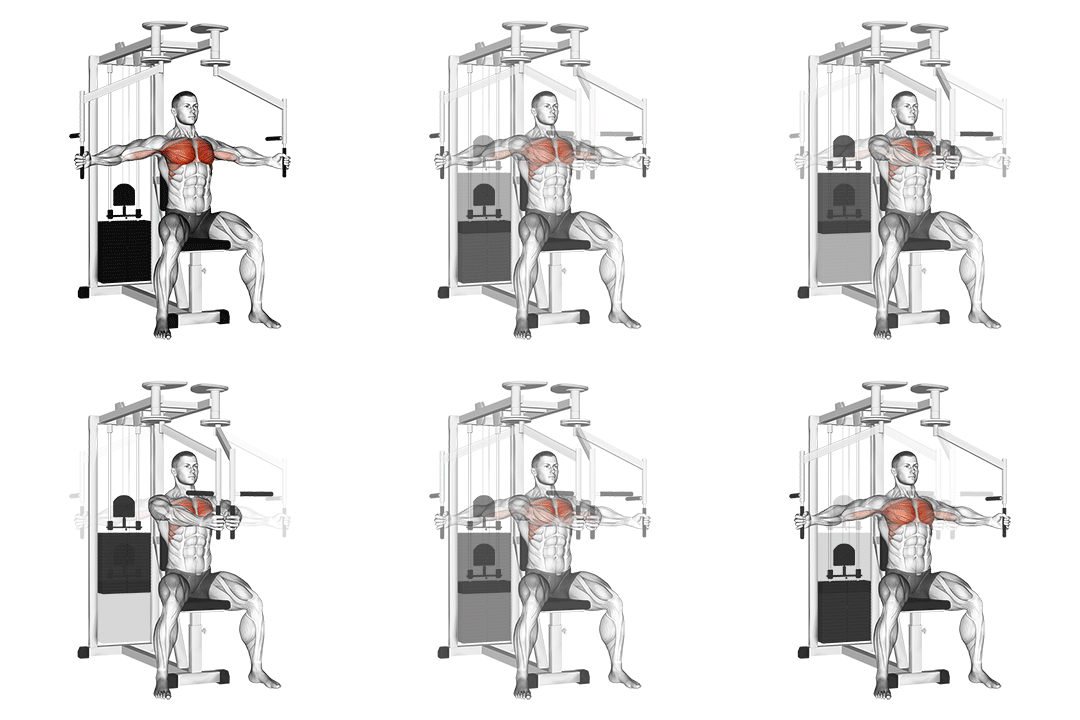
More comparisons with Lever Incline Chest Press V. 2
Compare More Exercises
Use our free comparison tool to analyze any two exercises head-to-head.
Compare Exercises