

Band Alternating V-up vs Band Kneeling Twisting Crunch
Compare target muscles, equipment, difficulty, movement type, and secondary muscles for Band Alternating V-up and Band Kneeling Twisting Crunch.
Get comparison link
Select the link and use your device's Copy command.
Comparison overview
AI-generatedExercise Comparison
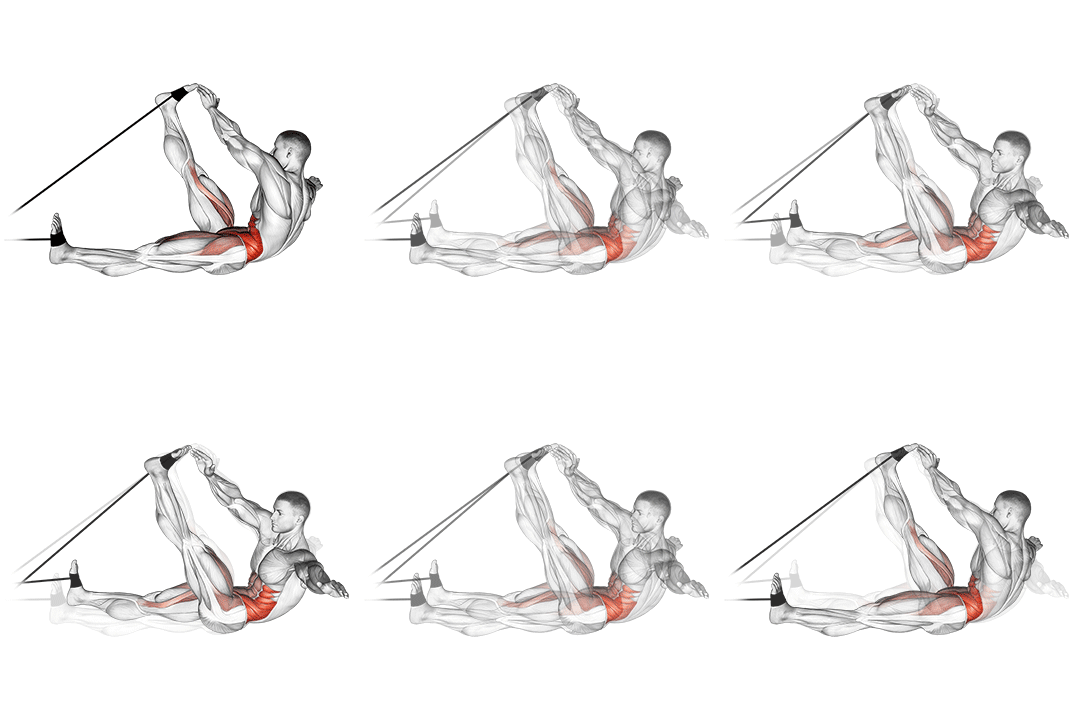
Band Alternating V-up
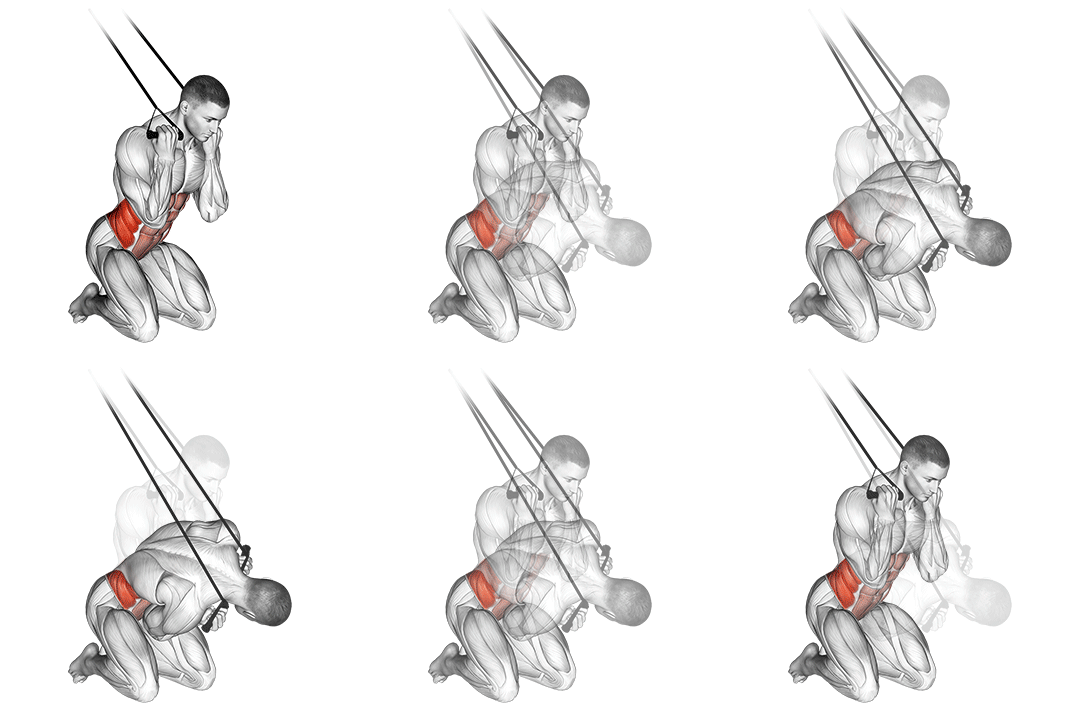
Band Kneeling Twisting Crunch
Head-to-Head Comparison
Different values are marked. These are catalogue attributes, not performance scores.
Muscles used
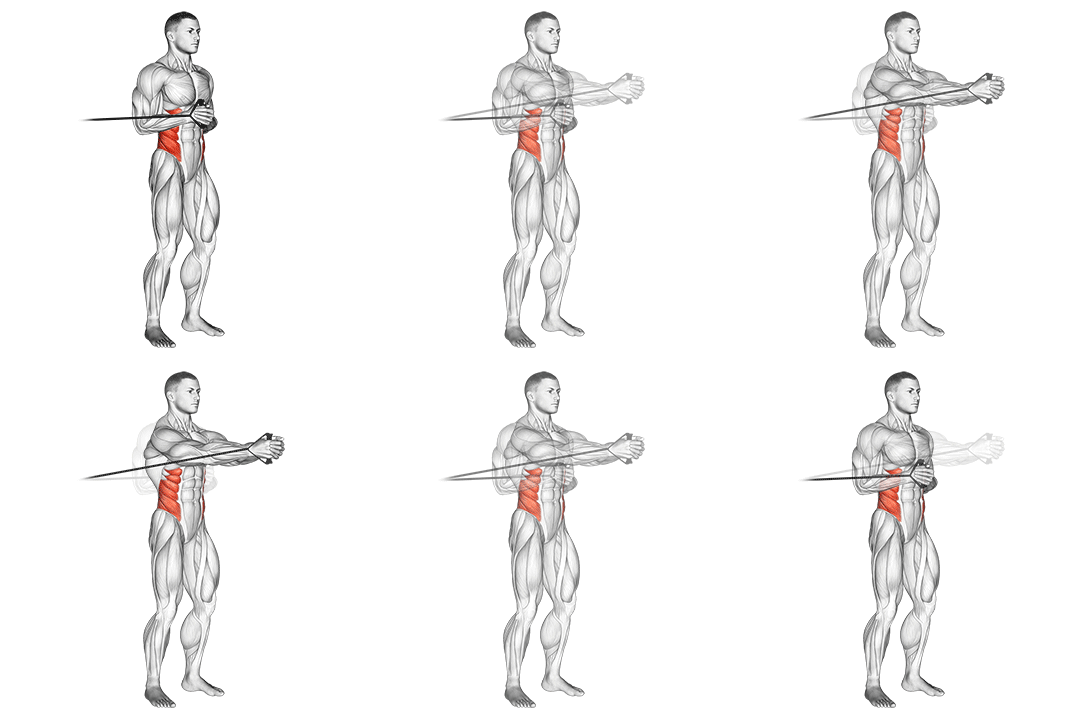
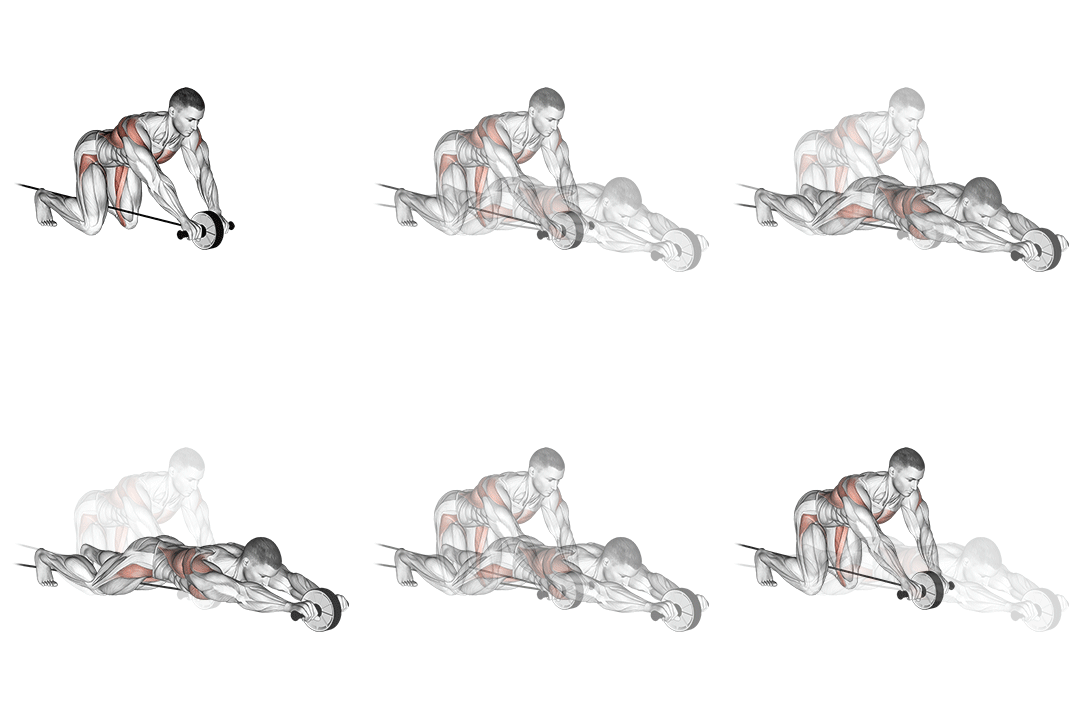
Listed target and secondary muscles, shown on the body. Locations, not activation or strength scores.
- Target
- Secondary
- Not highlighted
Band Alternating V-up
- Target
- Abs
- Secondary
- Hip Flexors
Not shown on diagram: Hip Flexors. These labels do not identify a precise region on this map.
Band Kneeling Twisting Crunch
- Target
- Abs
- Secondary
- Obliques
Grey does not mean a muscle is unused. The diagrams show only the mapped catalogue labels.
| Attribute | Band Alternating V-up | Band Kneeling Twisting Crunch |
|---|---|---|
| Target Muscle | Abs |
Abs |
| Body Part | Waist |
Waist |
| Equipment | Band |
Band |
| Difficulty Different | Advanced |
Intermediate |
| Movement Type | Isolation |
Isolation |
| Secondary Muscles Different | Hip Flexors |
Obliques |
Visual Comparison
An illustrative 1–10 profile derived from catalog difficulty, equipment, and listed-muscle fields—not measured performance or muscle activation.
Key Differences
- Difficulty levels differ: Band Alternating V-up is advanced, while Band Kneeling Twisting Crunch is intermediate.
- Both exercises target the Abs using Band. The catalogue does not establish which exercise is better for an individual goal.
Muscle comparison
Shared target muscles
Secondary muscle differences
Muscle involvement analysis
Equipment and setup
Band Alternating V-up: setup
Band Kneeling Twisting Crunch: setup
Access and practicality
Learning and progression
Learning the movements
Progression considerations
Limitations and precautions
Pros & Cons
Band Alternating V-up
+ Pros
- High rectus abdominis demand through combined hip and spinal flexion
- Unilateral loading improves core symmetry and anti-rotation control
- Large range of motion enhances eccentric strength when you slow the descent
- Easy to increase intensity by using heavier bands or pausing mid-range
− Cons
- Advanced coordination and hip mobility required; steep learning curve
- Greater lumbar flexion stress if pelvic positioning is poor
- Heavier band tension can shift load to hip flexors, reducing pure abdominal emphasis
Band Kneeling Twisting Crunch
+ Pros
- Strong oblique recruitment from rotational force vectors
- More accessible setup and lower mobility demands
- Easier to cue and maintain neutral pelvis, reducing lumbar shear
- Simple to scale with band tension or increased rotation angle
− Cons
- Less hip flexor and full-range rectus loading compared with V-up
- Rotation can overload the lumbar spine if done aggressively
- Provides less overall posterior chain engagement, so limited carryover to hip-driven movements
When Each Exercise Wins
Choose the V-up for hypertrophy because it produces a larger rectus abdominis shortening range and allows heavier progressive overload (aim for 8–15 controlled reps, 3–4 sets). Slowing the eccentric to 3–4 seconds increases time under tension and stimulates muscle growth more effectively.
The V-up builds maximal core strength by combining hip-drive and spinal flexion against band resistance; you can increase force output with heavier bands and unilateral overload to drive absolute strength improvements.
Kneeling twisting crunches are simpler to master, require less hip mobility, and let you feel oblique and rectus contractions quickly; start with 10–15 reps per side using a light band for motor patterning.
Kneeling twists need minimal space and a single anchor point and are easy to scale with common loop bands, making them the more practical choice for home training setups.
Frequently Asked Questions
Can I do both Band Alternating V-up and Band Kneeling Twisting Crunch in the same workout?
Which exercise is better for beginners?
How do the muscle activation patterns differ?
Can Band Kneeling Twisting Crunch replace Band Alternating V-up?
Comparison Summary
Exercise instructions
Steps from the exercise catalogue. Read the full sequence before starting.
Band Alternating V-up
- Lie flat on your back with your legs straight and your arms extended overhead, holding the band.
- Engage your abs and lift your legs and upper body off the ground simultaneously, reaching your hands towards your toes.
- As you lower your legs and upper body back down, switch the position of your legs, crossing one over the other.
Read remaining steps for Band Alternating V-up
- Repeat the movement, alternating the position of your legs with each repetition.
- Continue for the desired number of repetitions.
Band Kneeling Twisting Crunch
- Attach the band to a sturdy anchor point at waist height.
- Kneel down facing away from the anchor point and hold the band with both hands, keeping your elbows bent and close to your sides.
- Engage your abs and slowly twist your torso to one side, bringing your hands towards your opposite hip.
Read remaining steps for Band Kneeling Twisting Crunch
- Pause for a moment, then slowly return to the starting position.
- Repeat on the other side.
- Continue alternating sides for the desired number of repetitions.
Also Compare
More comparisons with Band Alternating V-up
Compare another pair
Choose two exercises to see their differences side by side.