

Band Assisted Wheel Rollerout vs Band Kneeling Twisting Crunch
Compare target muscles, equipment, difficulty, movement type, and secondary muscles for Band Assisted Wheel Rollerout and Band Kneeling Twisting Crunch.
Get comparison link
Select the link and use your device's Copy command.
Comparison overview
AI-generatedExercise Comparison
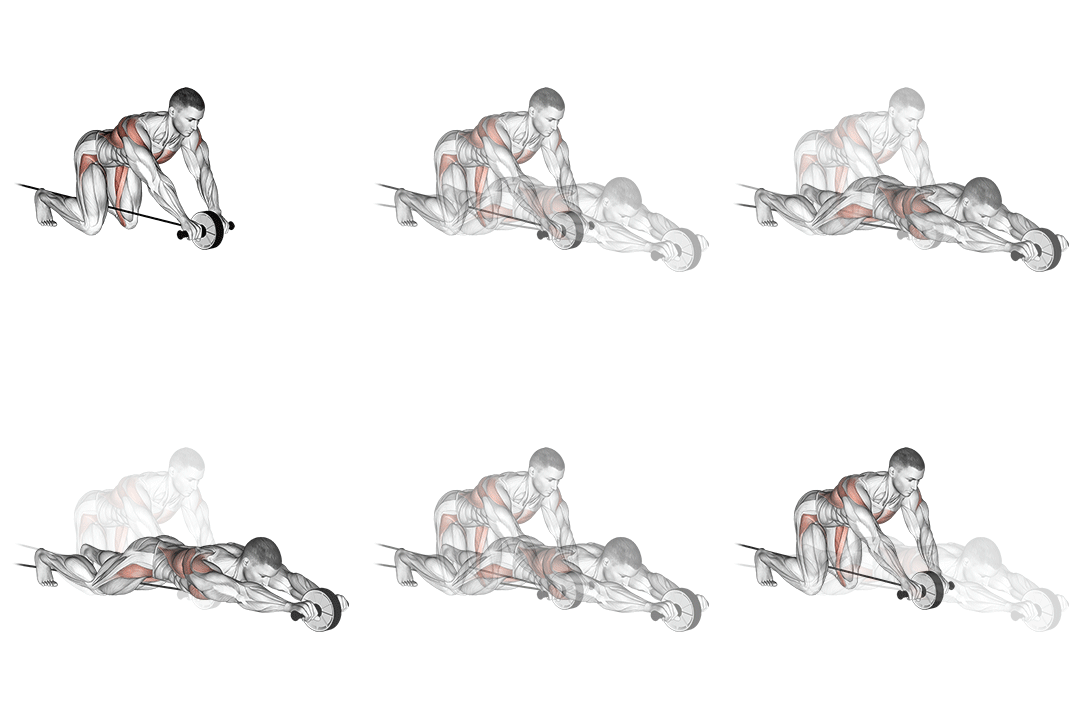
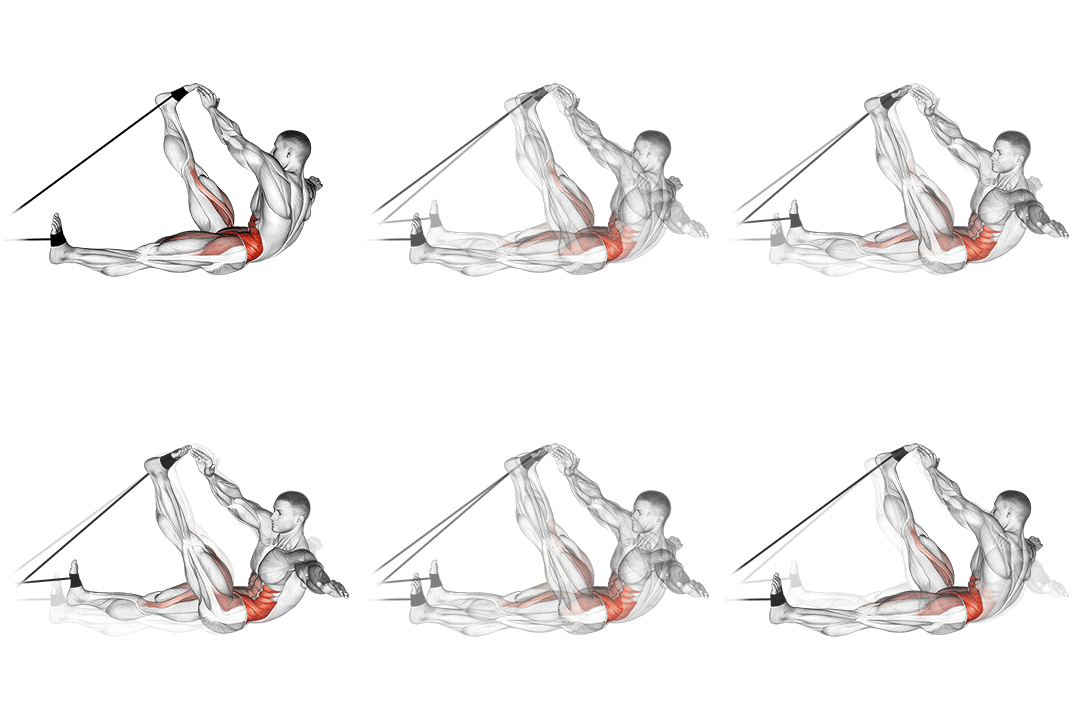
Band Assisted Wheel Rollerout
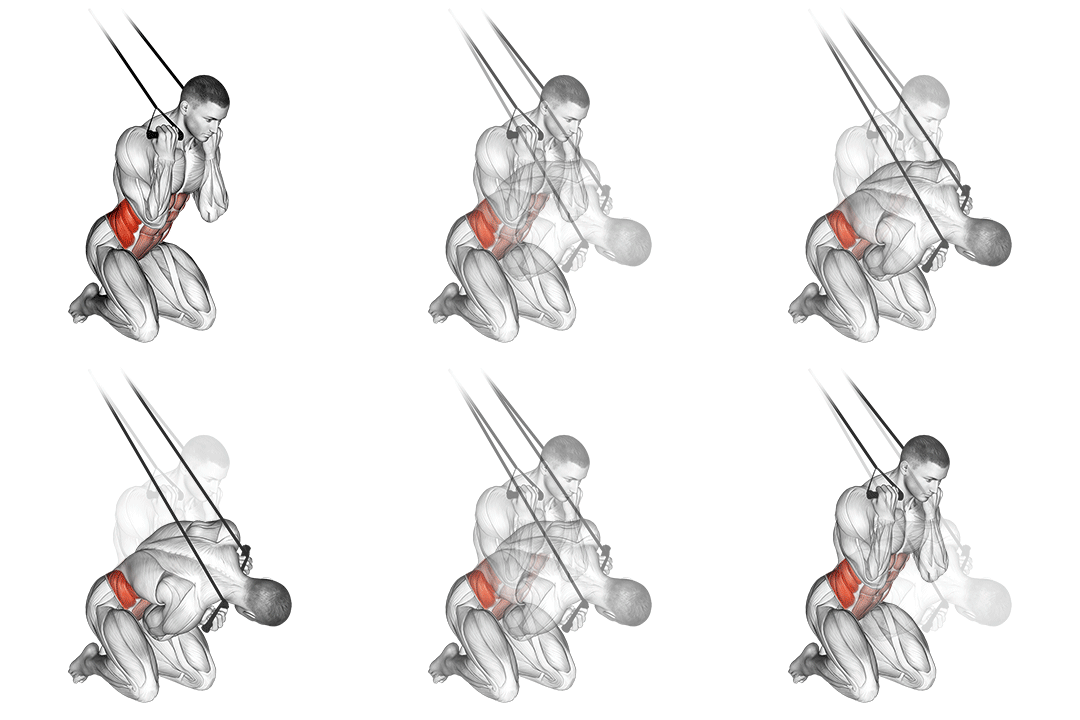
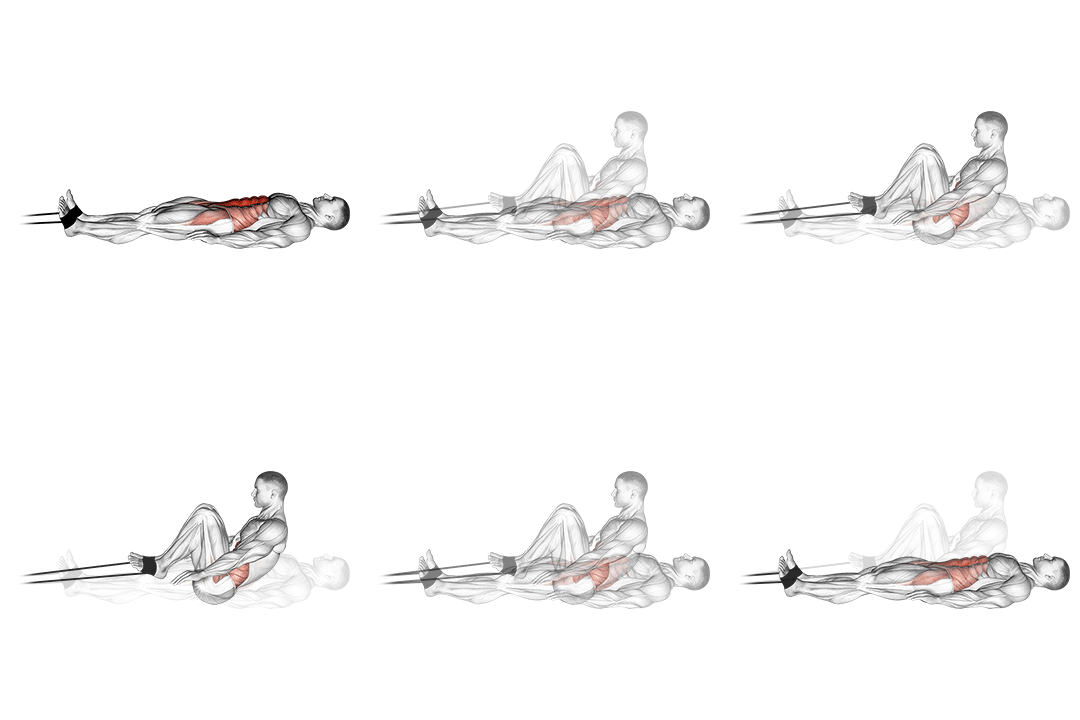
Band Kneeling Twisting Crunch
Head-to-Head Comparison
Different values are marked. These are catalogue attributes, not performance scores.
Muscles used
Listed target and secondary muscles, shown on the body. Locations, not activation or strength scores.
- Target
- Secondary
- Not highlighted
Band Assisted Wheel Rollerout
- Target
- Abs
- Secondary
- Lower Back
Band Kneeling Twisting Crunch
- Target
- Abs
- Secondary
- Obliques
Grey does not mean a muscle is unused. The diagrams show only the mapped catalogue labels.
| Attribute | Band Assisted Wheel Rollerout | Band Kneeling Twisting Crunch |
|---|---|---|
| Target Muscle | Abs |
Abs |
| Body Part | Waist |
Waist |
| Equipment | Band |
Band |
| Difficulty | Intermediate |
Intermediate |
| Movement Type | Isolation |
Isolation |
| Secondary Muscles Different | Lower Back |
Obliques |
Visual Comparison
An illustrative 1–10 profile derived from catalog difficulty, equipment, and listed-muscle fields—not measured performance or muscle activation.
Key Differences
- Both exercises target the Abs using Band. The catalogue does not establish which exercise is better for an individual goal.
Muscle comparison
Shared target muscles
Secondary muscle differences
Muscle involvement analysis
Equipment and setup
Band Assisted Wheel Rollerout: setup
Band Kneeling Twisting Crunch: setup
Access and practicality
Learning and progression
Learning the movements
Progression considerations
Limitations and precautions
Pros & Cons
Band Assisted Wheel Rollerout
+ Pros
- High anti-extension demand that builds core stiffness and transmits force through the anterior chain
- Long time-under-tension for rectus abdominis, favorable for eccentric-driven hypertrophy
- Clear progression path by reducing band assistance or increasing range of motion
- Improves scapular and shoulder stability when performed with proper control
− Cons
- Higher technical demand; poor form quickly increases lumbar shear
- Requires ab wheel and secure anchor, less accessible for home setups without gear
- Limited transverse-plane (rotational) development compared with twisting crunches
Band Kneeling Twisting Crunch
+ Pros
- Simple setup and low equipment needs — ideal for home workouts
- Stronger oblique recruitment through axial rotation, useful for athletic anti-rotation and rotation strength
- Lower lumbar shear risk when performed with controlled pelvic tuck and short range
- Easily modified by changing band tension or rotation angle for reps in the 10–20 range
− Cons
- Lower absolute anti-extension overload, so less carryover to resisting long-lever extension
- Can involve hip flexors and neck if you compensate by pulling with arms instead of rotating the trunk
- Smaller overload ceiling for progressive core strengthening compared with rollout variations
When Each Exercise Wins
The rollout keeps the rectus under tension at longer muscle lengths and offers heavier eccentric loading; use 6–12 reps with slow 3–4 second eccentrics to maximize time under tension and hypertrophy stimulus.
Rollouts demand high anti-extension strength and core stiffness under large moment arms. Progress by reducing band assistance and extending the range to increase torque transfer and absolute strength.
Kneeling twisting crunches let you control rotation angle and band resistance, teach breathing and pelvic tuck, and produce meaningful oblique activation with lower technical risk for learners.
It requires only a single band and minimal setup, scales easily by band tension, and provides solid core stimulus without an ab wheel or complex anchoring.
Frequently Asked Questions
Can I do both Band Assisted Wheel Rollerout and Band Kneeling Twisting Crunch in the same workout?
Which exercise is better for beginners?
How do the muscle activation patterns differ?
Can Band Kneeling Twisting Crunch replace Band Assisted Wheel Rollerout?
Comparison Summary
Exercise instructions
Steps from the exercise catalogue. Read the full sequence before starting.
Band Assisted Wheel Rollerout
- Kneel on the floor and hold the handles of the band with both hands, palms facing down.
- Place the band on the ground in front of you and position your hands shoulder-width apart.
- Engage your core and slowly roll the wheel forward, extending your body as far as you can while maintaining control.
Read remaining steps for Band Assisted Wheel Rollerout
- Pause for a moment at the furthest point, then slowly roll the wheel back towards your knees to return to the starting position.
- Repeat for the desired number of repetitions.
Band Kneeling Twisting Crunch
- Attach the band to a sturdy anchor point at waist height.
- Kneel down facing away from the anchor point and hold the band with both hands, keeping your elbows bent and close to your sides.
- Engage your abs and slowly twist your torso to one side, bringing your hands towards your opposite hip.
Read remaining steps for Band Kneeling Twisting Crunch
- Pause for a moment, then slowly return to the starting position.
- Repeat on the other side.
- Continue alternating sides for the desired number of repetitions.
Also Compare
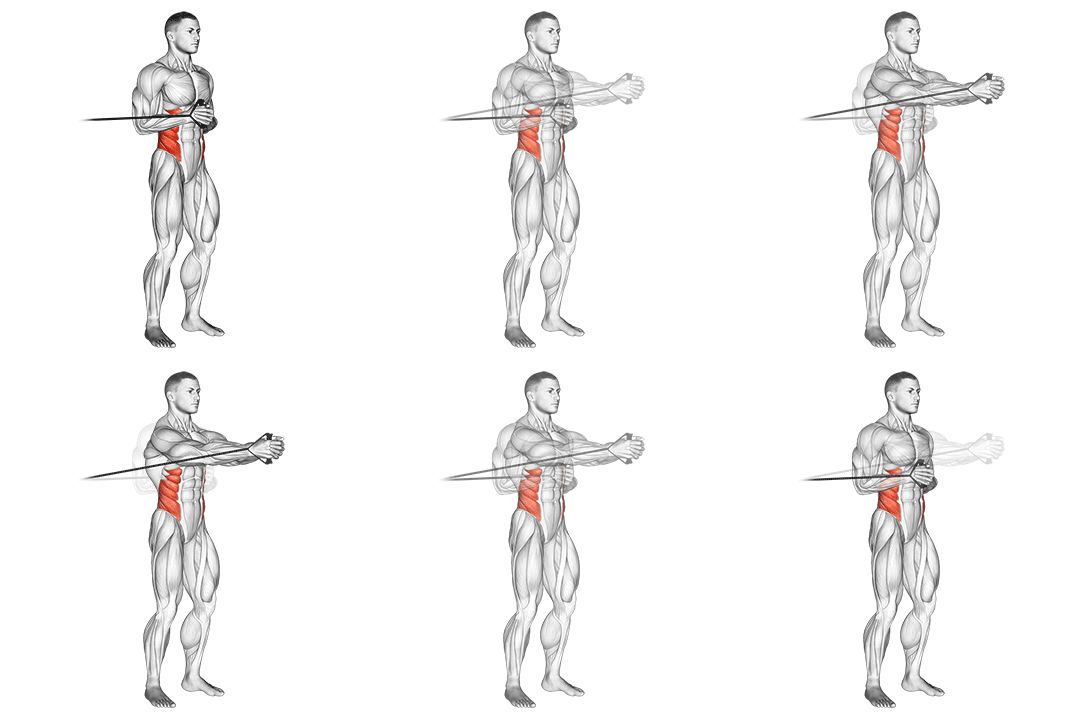
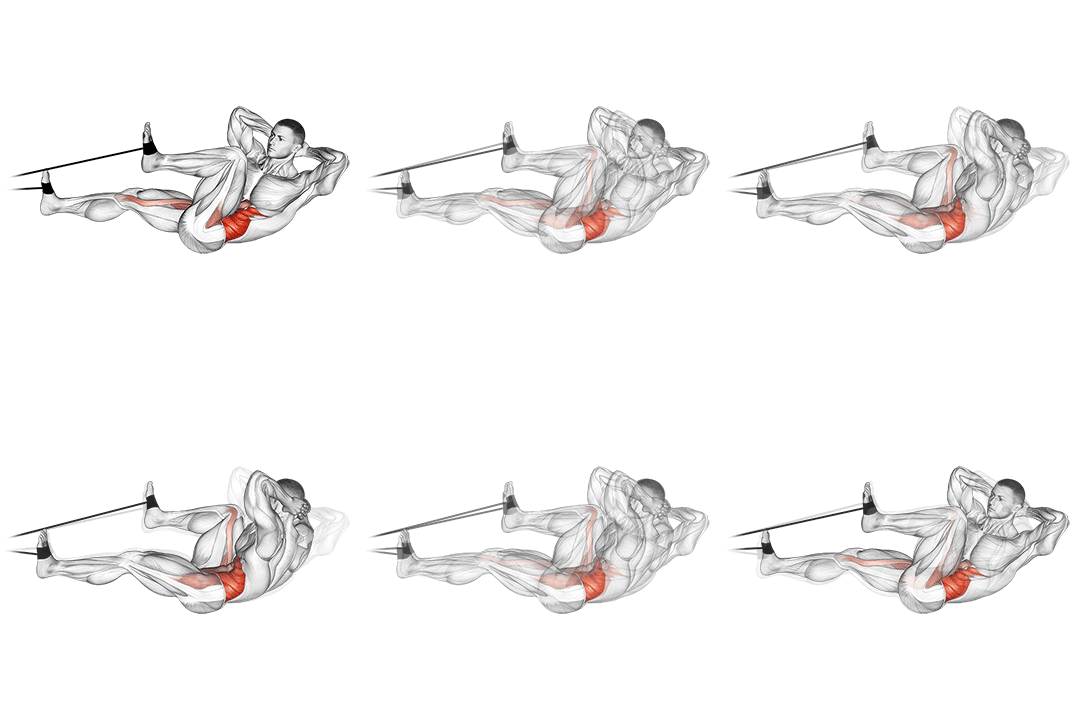
More comparisons with Band Assisted Wheel Rollerout
Compare another pair
Choose two exercises to see their differences side by side.