

Band Bench Press vs Bench Press - With Bands
Compare target muscles, equipment, difficulty, movement type, and secondary muscles for Band Bench Press and Bench Press - With Bands.
Get comparison link
Select the link and use your device's Copy command.
Comparison overview
AI-generatedExercise Comparison
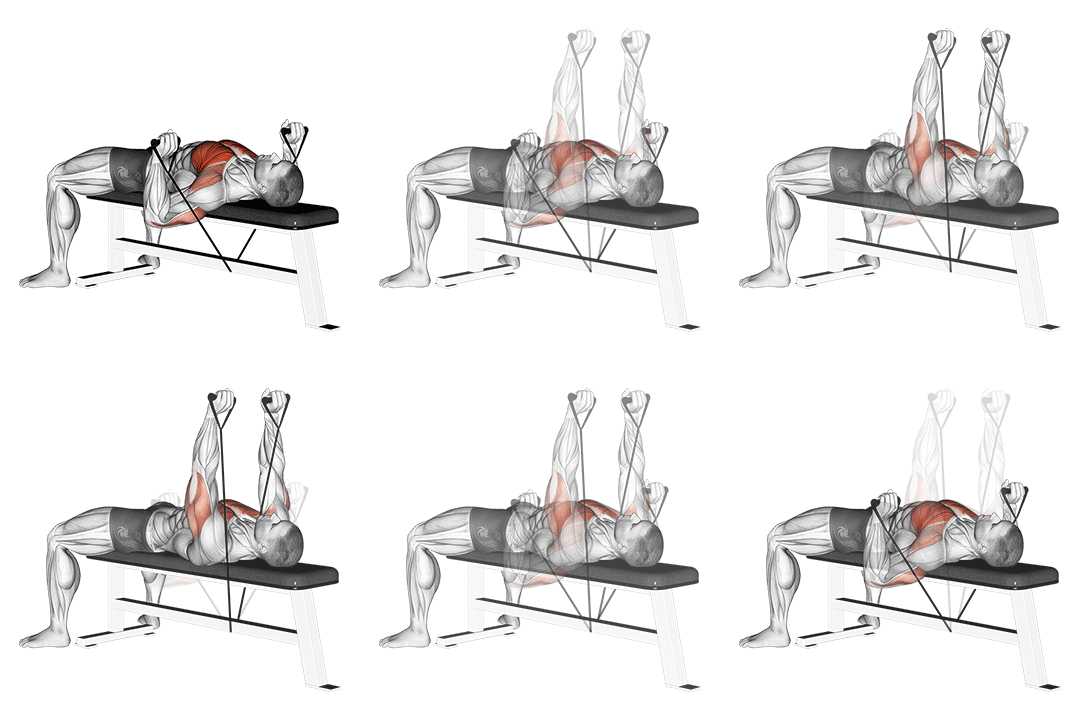
Band Bench Press
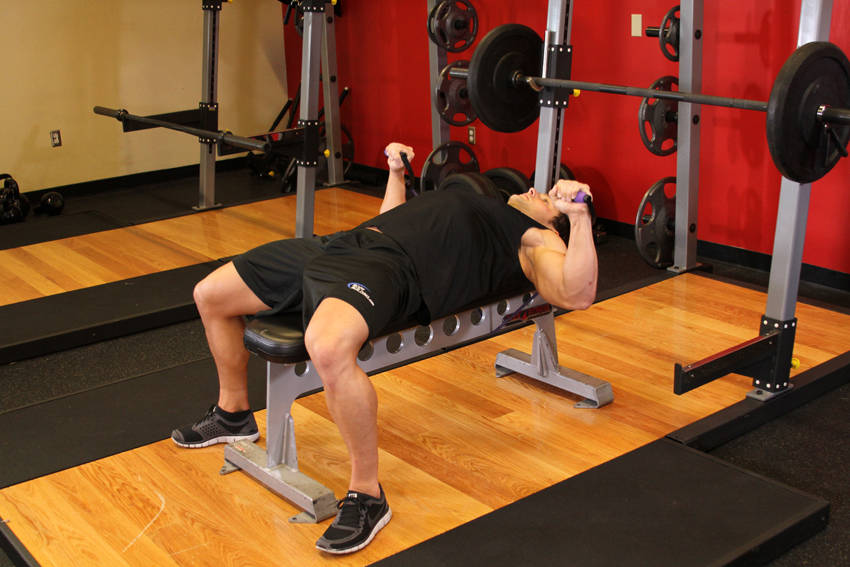
Bench Press - With Bands
Head-to-Head Comparison
Different values are marked. These are catalogue attributes, not performance scores.
Muscles used
Listed target and secondary muscles, shown on the body. Locations, not activation or strength scores.
- Target
- Secondary
- Not highlighted
Band Bench Press
- Target
- Pectorals
- Secondary
- Triceps, Shoulders
Not shown on diagram: Shoulders. These labels do not identify a precise region on this map.
Bench Press - With Bands
- Target
- Pectorals
- Secondary
- Shoulders, Triceps
Not shown on diagram: Shoulders. These labels do not identify a precise region on this map.
Grey does not mean a muscle is unused. The diagrams show only the mapped catalogue labels.
| Attribute | Band Bench Press | Bench Press - With Bands |
|---|---|---|
| Target Muscle | Pectorals |
Pectorals |
| Body Part | Chest |
Chest |
| Equipment | Band |
Band |
| Difficulty | Intermediate |
Intermediate |
| Movement Type | Compound |
Compound |
| Secondary Muscles | Triceps, Shoulders |
Shoulders, Triceps |
Visual Comparison
An illustrative 1–10 profile derived from catalog difficulty, equipment, and listed-muscle fields—not measured performance or muscle activation.
Key Differences
- Both exercises target the Pectorals using Band. The catalogue does not establish which exercise is better for an individual goal.
Muscle comparison
Shared target muscles
Secondary muscle differences
Muscle involvement analysis
Equipment and setup
Band Bench Press: setup
Bench Press - With Bands: setup
Access and practicality
Learning and progression
Learning the movements
Progression considerations
Limitations and precautions
Pros & Cons
Band Bench Press
+ Pros
- Portable and low equipment requirement — ideal for home setups
- Variable resistance improves concentric acceleration and lockout
- Lower absolute load reduces need for a spotter
- Great for speed and hypertrophy with 6–12 rep ranges
− Cons
- Harder to quantify exact load — progressive overload tracking is less precise
- Band tension varies by anchor point and stretch length
- Less ability to apply very high absolute loads for maximal strength work
Bench Press - With Bands
+ Pros
- Combines heavy barbell loading with band accommodation for robust strength gains
- Precise incremental loading using plates and micro-plates
- Improves stability under load and training specificity for powerlifting
- Allows clear periodization between 3–5 rep strength blocks and 6–12 rep hypertrophy blocks
− Cons
- Requires more equipment (barbell, plates, rack) and a spotter or safety setup
- Steeper technical demand: bar path, leg drive, and breathing sequencing
- Higher risk of failed heavy reps without proper safety measures
When Each Exercise Wins
Bench Press - With Bands lets you combine precise barbell loading with band-accommodated resistance to tax the pecs through the full ROM. Use 6–12 reps with moderate band tension to maintain high time under tension and progressive overload.
Barbell plus bands supports heavy top-end loading and overload at lockout while preserving barbell technique needed for maximal force production in 3–5 rep schemes. The barbell component is essential to drive neural adaptations for maximal strength.
Band Bench Press is simpler to learn and safer to load incrementally, letting you dial in scapular retraction, elbow angles (~45°), and breathing without managing heavy plates or a spotter.
Minimal equipment and portability make Band Bench Press the clear pick for home training. You can use progressive band tensions to cover strength and hypertrophy ranges without a rack or heavy plates.
Frequently Asked Questions
Can I do both Band Bench Press and Bench Press - With Bands in the same workout?
Which exercise is better for beginners?
How do the muscle activation patterns differ?
Can Bench Press - With Bands replace Band Bench Press?
Comparison Summary
Exercise instructions
Steps from the exercise catalogue. Read the full sequence before starting.
Band Bench Press
- Lie flat on a bench with your feet flat on the ground and your back pressed against the bench.
- Grasp the band handles with an overhand grip, slightly wider than shoulder-width apart.
- Extend your arms fully, pushing the bands away from your chest.
Read remaining steps for Band Bench Press
- Slowly lower the bands back down to your chest, keeping your elbows at a 90-degree angle.
- Repeat for the desired number of repetitions.
Bench Press - With Bands
- Using a flat bench secure a band under the leg of the bench that is nearest to your head.
- Once the band is secure, grab it by both handles and lie down on the bench.
- Extend your arms so that you are holding the band handles in front of you at shoulder width.
Read remaining steps for Bench Press - With Bands
- Once at shoulder width, rotate your wrists forward so that the palms of your hands are facing away from you. This will be your starting position.
- Bring down the handles slowly until your elbow forms a 90 degree angle. Keep full control at all times.
- As you breathe out, bring the handles up using your pectoral muscles. Lock your arms in the contracted position, squeeze your chest, hold for a second and then start coming down slowly. Tip: It should take at least twice as long to go down than to come up.
- Repeat the movement for the prescribed amount of repetitions of your training program.
Also Compare
More comparisons with Band Bench Press

Compare another pair
Choose two exercises to see their differences side by side.