

Band One Arm Twisting Chest Press vs Bench Press - With Bands: Complete Comparison Guide
Band One Arm Twisting Chest Press vs Bench Press - With Bands is the exact matchup we'll break down so you know which chest move fits your plan. You'll get clear, evidence-based comparisons of muscle activation, equipment needs, learning curve, and programming cues. I’ll show technique points (scapular setup, elbow angle, band anchor), give rep ranges for hypertrophy and strength, and explain the biomechanical differences—force vectors, length-tension, and anti-rotation demands—so you can pick or combine the drills with confidence.
Exercise Comparison
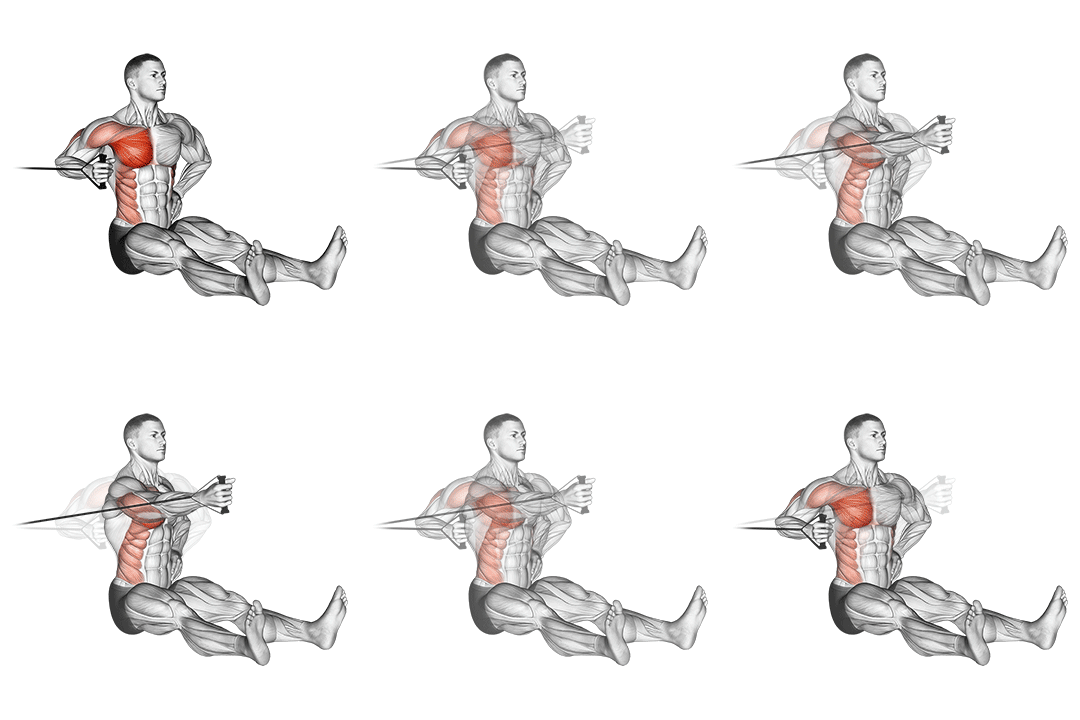
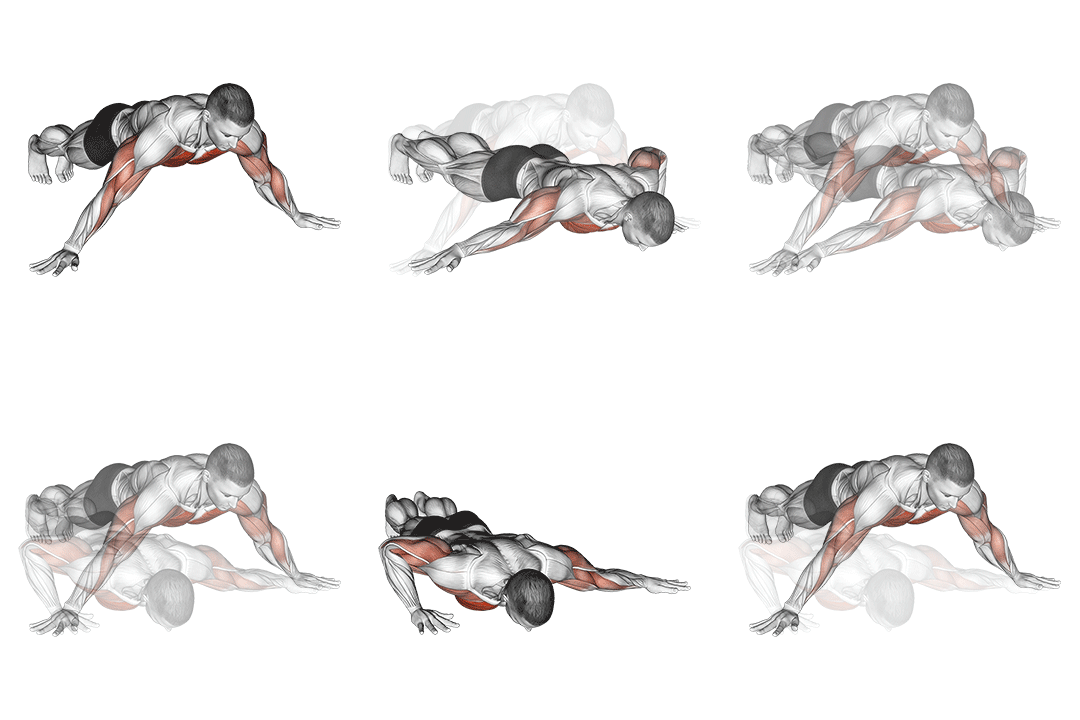
Band One Arm Twisting Chest Press
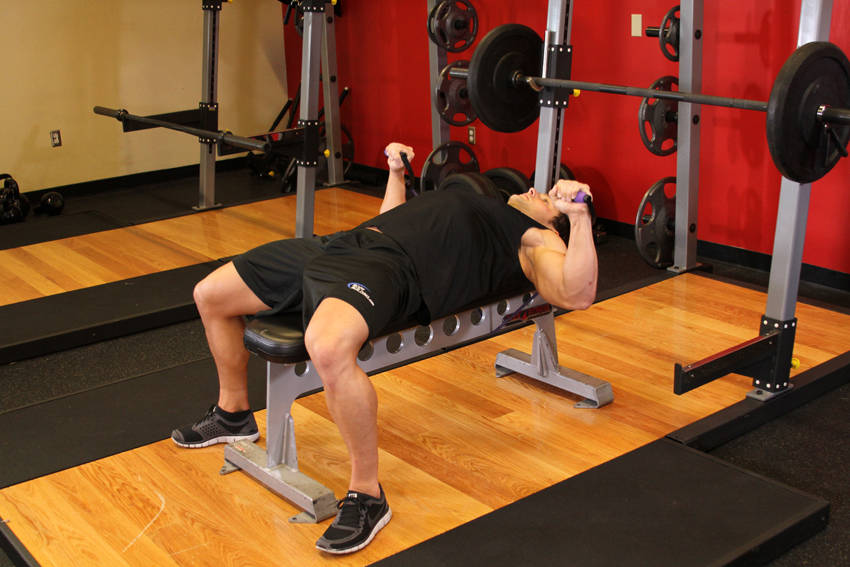
Bench Press - With Bands
Head-to-Head Comparison
| Attribute | Band One Arm Twisting Chest Press | Bench Press - With Bands |
|---|---|---|
| Target Muscle |
Pectorals
|
Pectorals
|
| Body Part |
Chest
|
Chest
|
| Equipment |
Band
|
Band
|
| Difficulty |
Intermediate
|
Intermediate
|
| Movement Type |
Compound
|
Compound
|
| Secondary Muscles |
2
|
2
|
Secondary Muscles Activated
Band One Arm Twisting Chest Press
Bench Press - With Bands
Visual Comparison
Overview
Band One Arm Twisting Chest Press vs Bench Press - With Bands is the exact matchup we'll break down so you know which chest move fits your plan. You'll get clear, evidence-based comparisons of muscle activation, equipment needs, learning curve, and programming cues. I’ll show technique points (scapular setup, elbow angle, band anchor), give rep ranges for hypertrophy and strength, and explain the biomechanical differences—force vectors, length-tension, and anti-rotation demands—so you can pick or combine the drills with confidence.
Key Differences
- Both exercises target the Pectorals using Band. The main differences are in their movement patterns and muscle activation angles.
Pros & Cons
Band One Arm Twisting Chest Press
+ Pros
- Minimal equipment—only a band and anchor needed
- Strong anti-rotation/core activation alongside chest work
- Continuous tension through the ROM and improved scapular control
- Great for unilateral balance and correcting side-to-side asymmetries
− Cons
- Lower absolute loading potential than bilateral bench variations
- Requires good coordination and anti-rotation strength to perform safely
- Harder to quantify progressive overload compared with barbell loading
Bench Press - With Bands
+ Pros
- High progression potential with added band tension and barbell load
- Familiar bilateral pattern—easier to teach and scale
- Bands provide accommodating resistance that improves lockout strength
- Easy to use for structured strength or hypertrophy cycles (3–8 sets)
− Cons
- Requires bench and secure anchor setup, less practical at home
- Band tension shifts load toward shortened muscle lengths, reducing bottom-end overload unless combined with heavy barbell
- If set up poorly, bands can alter bar path and increase shoulder stress
When Each Exercise Wins
Bench press with bands allows heavier absolute loads and precise progressive overload across 6–12 rep ranges. The accommodating resistance keeps tension at lockout while you can still overload the bottom with added bar weight, producing better overall stimulus for pec hypertrophy.
Bands change the force curve so you can train heavy lockouts and bar speed in the 3–5 rep range, improving neural drive and maximal pressing strength. The bilateral setup also lets you handle higher total loads and use periodized loading schemes.
A banded bench press provides a simple, repeatable movement pattern that’s easier to coach—focus on scapular set, 45° elbow tuck, and controlled eccentric. It’s easier to scale load and build baseline strength before adding unilateral rotational complexity.
The one-arm twisting press needs only a band and anchor, so you can train effective chest stimulus without a bench or barbell. It also adds core and scapular demand, giving more ‘bang for your buck’ when equipment is limited.
Frequently Asked Questions
Can I do both Band One Arm Twisting Chest Press and Bench Press - With Bands in the same workout?
Yes. Structure the bench press as your primary heavy movement (3–5 sets of 3–8 reps) and use the one-arm twisting press as a secondary unilateral accessory for 2–4 sets of 8–15 reps. That order preserves maximal strength output while using the unilateral drill to address stability and finish-range muscle activation.
Which exercise is better for beginners?
Bench Press - With Bands is generally better for beginners because the bilateral pattern is easier to coach and scale for progressive overload. Start with light band tension, learn scapular retraction and a 45° elbow tuck, then progress load and complexity.
How do the muscle activation patterns differ?
Banded bench shifts peak external load toward shortened muscle lengths, increasing activation near lockout, while the one-arm twisting press maintains continuous mid-range tension and adds rotation that recruits serratus, obliques, and scapular stabilizers. In short, bench emphasizes bilateral pec and triceps lockout strength; the twisting press emphasizes unilateral pec fibers plus core and shoulder stability.
Can Bench Press - With Bands replace Band One Arm Twisting Chest Press?
Bench Press - With Bands can replace the one-arm drill if your goal is maximal strength or hypertrophy and you have the equipment, but you’ll lose unilateral stability and anti-rotation benefits. If you train both, you’ll cover force production and single-side control for a more complete chest program.
Expert Verdict
Use Bench Press - With Bands when your priority is raw pressing strength or structured hypertrophy: it lets you manipulate absolute load, use progressive overload, and exploit accommodating resistance to improve lockout and bar speed. Choose Band One Arm Twisting Chest Press when you need portability, unilateral work, or to correct imbalances—its continuous tension and rotational finish build pec thickness while training serratus and anti-rotation core. For a complete program, alternate both: heavy banded bench days (3–5 sets of 4–8 reps) and unilateral twisting presses as accessory work (2–4 sets of 8–15 reps) to cover both strength and stability demands.
Also Compare
More comparisons with Band One Arm Twisting Chest Press
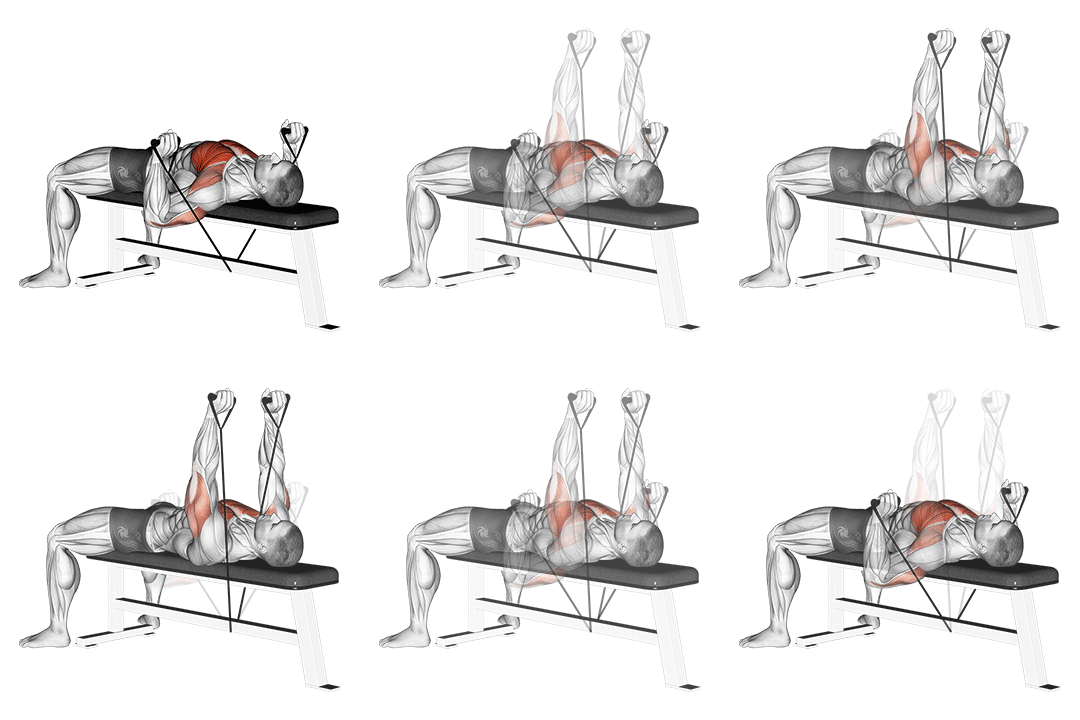
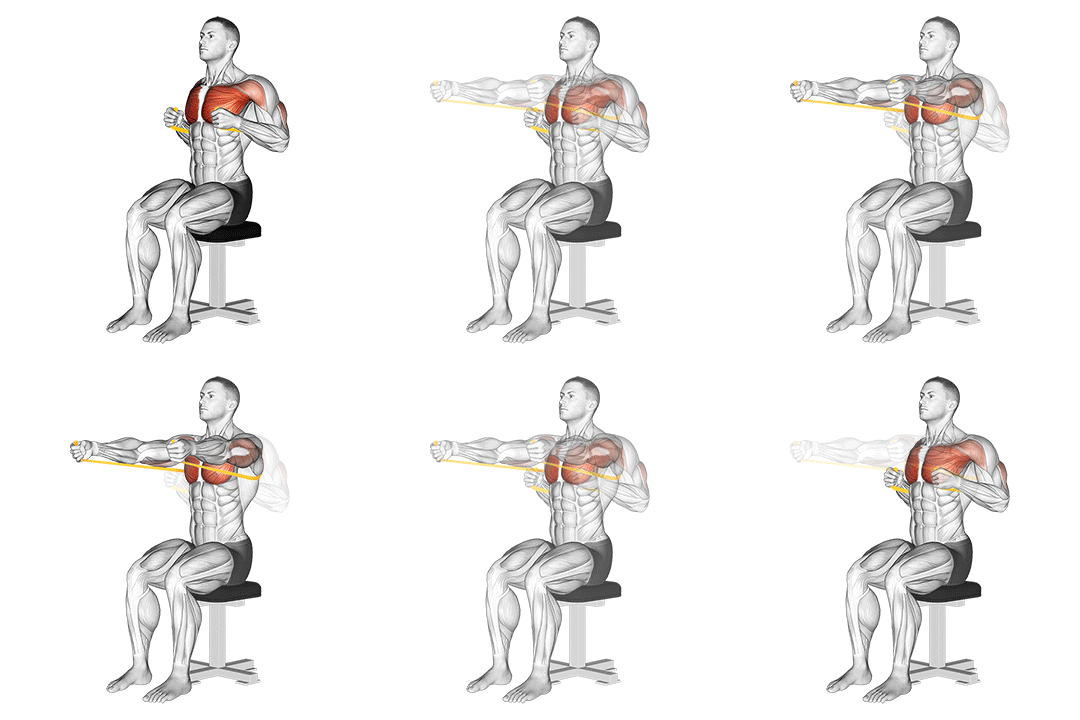

More comparisons with Bench Press - With Bands
Compare More Exercises
Use our free comparison tool to analyze any two exercises head-to-head.
Compare Exercises