

Barbell Alternate Biceps Curl vs Barbell Biceps Curl (with Arm Blaster): Complete Comparison Guide
Barbell Alternate Biceps Curl vs Barbell Biceps Curl (with Arm Blaster) — if you want thicker arms, choosing the right curl matters. You’ll learn how each exercise loads the biceps, how the forearms and shoulders contribute, what equipment you need, and which movement to use for hypertrophy, strength, or convenience. I’ll give technique cues (elbow position, wrist rotation, tempo), biomechanics (length-tension and force vectors), and clear rep ranges so you can pick the movement that fits your goals and training environment.
Exercise Comparison
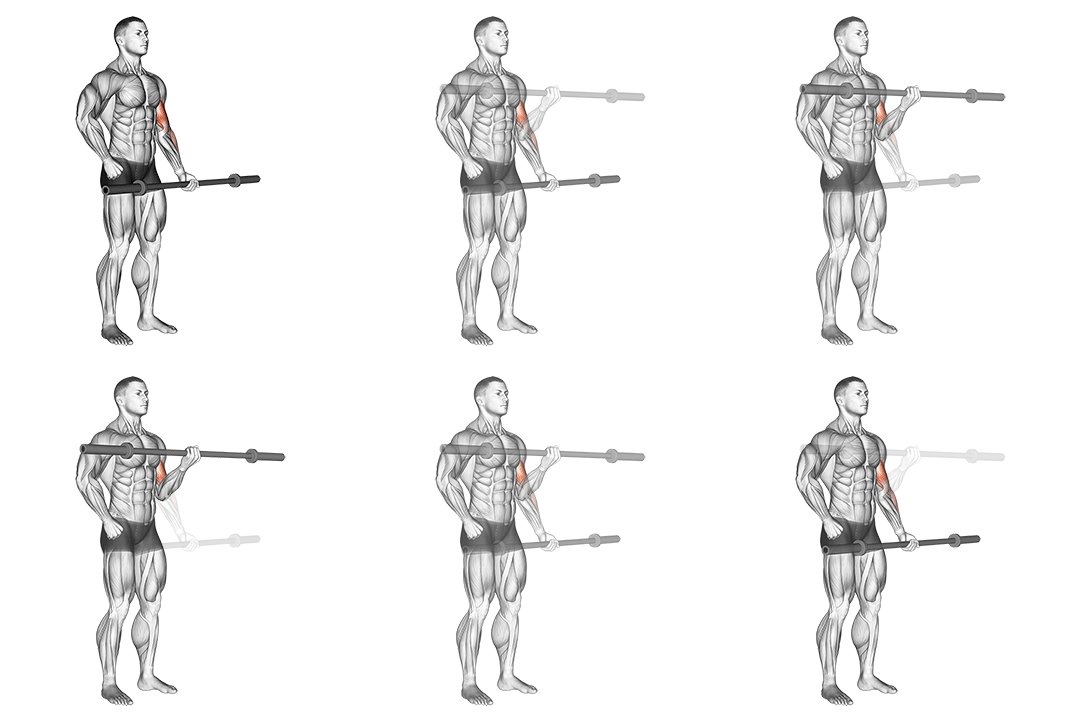
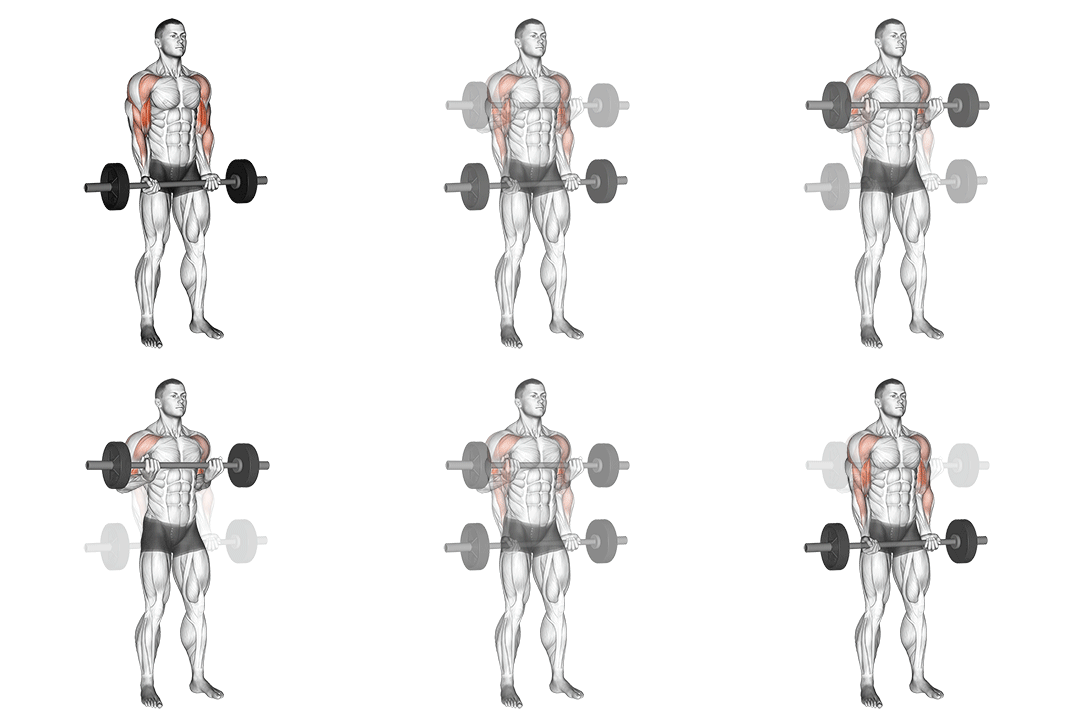
Barbell Alternate Biceps Curl
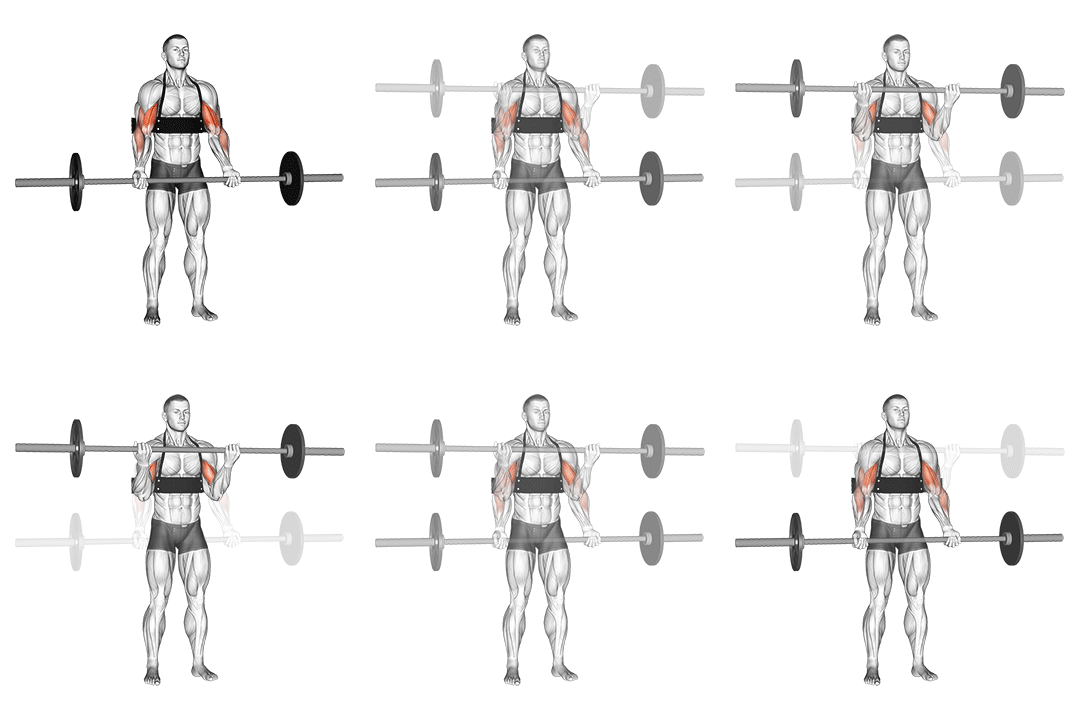
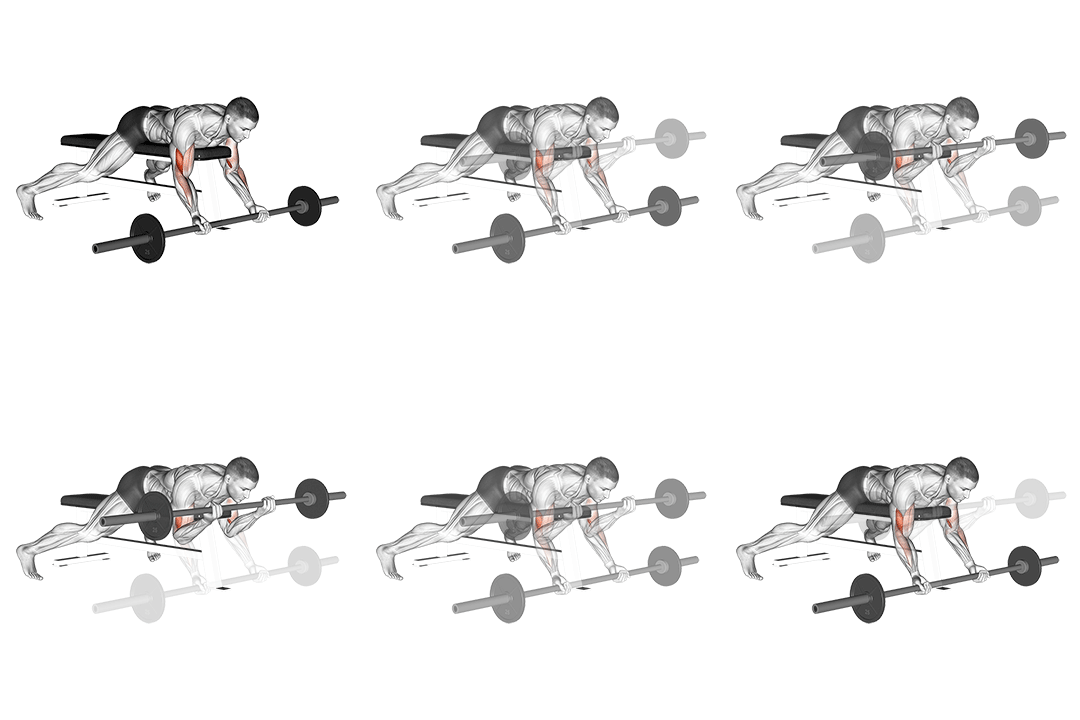
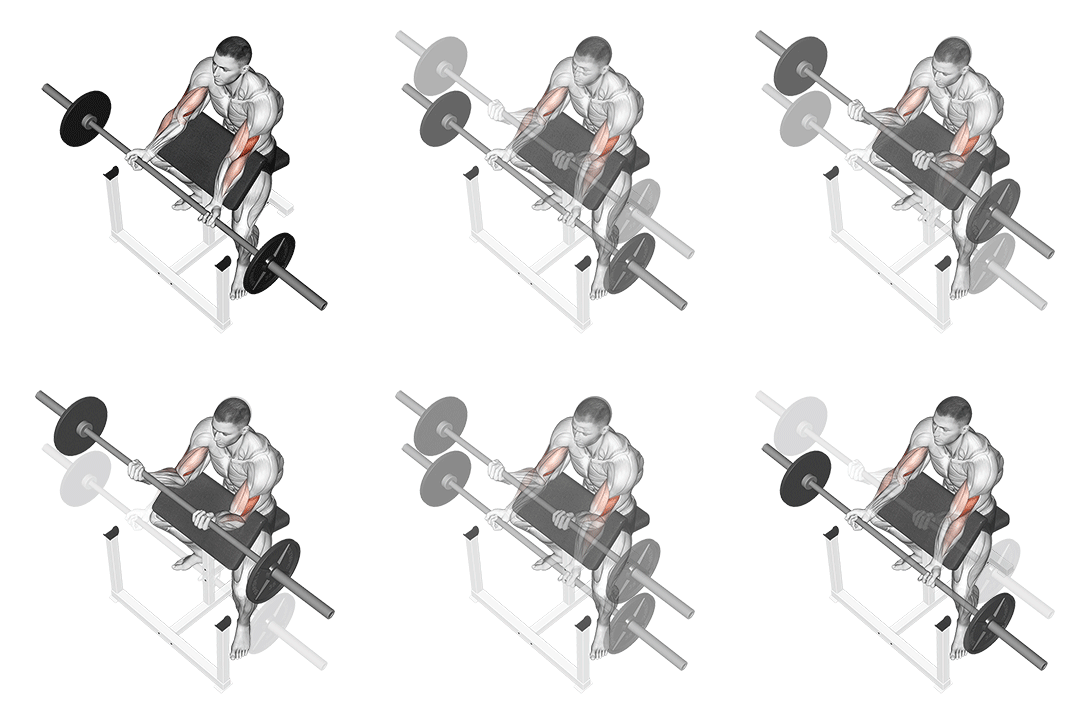
Barbell Biceps Curl (with Arm Blaster)
Head-to-Head Comparison
| Attribute | Barbell Alternate Biceps Curl | Barbell Biceps Curl (with Arm Blaster) |
|---|---|---|
| Target Muscle |
Biceps
|
Biceps
|
| Body Part |
Upper-arms
|
Upper-arms
|
| Equipment |
Barbell
|
Barbell
|
| Difficulty |
Beginner
|
Beginner
|
| Movement Type |
Isolation
|
Isolation
|
| Secondary Muscles |
1
|
1
|
Secondary Muscles Activated
Barbell Alternate Biceps Curl
Barbell Biceps Curl (with Arm Blaster)
Visual Comparison
Overview
Barbell Alternate Biceps Curl vs Barbell Biceps Curl (with Arm Blaster) — if you want thicker arms, choosing the right curl matters. You’ll learn how each exercise loads the biceps, how the forearms and shoulders contribute, what equipment you need, and which movement to use for hypertrophy, strength, or convenience. I’ll give technique cues (elbow position, wrist rotation, tempo), biomechanics (length-tension and force vectors), and clear rep ranges so you can pick the movement that fits your goals and training environment.
Key Differences
- Both exercises target the Biceps using Barbell. The main differences are in their movement patterns and muscle activation angles.
Pros & Cons
Barbell Alternate Biceps Curl
+ Pros
- Requires only a barbell — highly accessible
- Unilateral work fixes left-right strength imbalances
- Natural supination pattern improves peak contraction at the top
- Core and anti-rotation demand improves overall stability
− Cons
- Easier to cheat with torso sway under heavy loads
- Longer set time if you do strict unilateral sets
- Less consistent elbow position can vary biceps loading across reps
Barbell Biceps Curl (with Arm Blaster)
+ Pros
- Pins elbows for consistent length-tension and strict form
- Reduces shoulder involvement so more pure elbow-flexor loading
- Easier to maintain tempo and time-under-tension (TUT)
- Better for loading mid-range (45–90°) where biceps moment arm peaks
− Cons
- Requires an Arm Blaster accessory not always available
- Pins elbows which can increase localized stress on tendons
- Slight learning curve to avoid shrugging and discomfort
When Each Exercise Wins
The Arm Blaster enforces a fixed elbow, maximizing time under tension in the biceps' optimal mid-range (45–90°). That consistent force vector allows you to use strict 8–12 rep sets and progressive overload with less shoulder compensation.
Alternate curls let you target unilateral strength and push heavier relative loads per arm when programmed with 4–6 rep sets; they also teach force transfer and grip control, which transfers to heavier bilateral lifts.
Beginners can learn elbow flexion and forearm supination patterns more easily with one arm at a time and without an accessory; it also reduces the tendency to overload and risk tendon stress.
No extra equipment is required and the exercise adapts to limited space and adjustable barbells, making it the clear home option.
Frequently Asked Questions
Can I do both Barbell Alternate Biceps Curl and Barbell Biceps Curl (with Arm Blaster) in the same workout?
Yes — pair them strategically. Do the Arm Blaster first as a strict mass-builder (8–12 reps) then follow with alternate curls for single-arm finishing work to address imbalances and add 2–3 lighter sets.
Which exercise is better for beginners?
Barbell Alternate Biceps Curl is better for beginners because it requires no accessory and lets you learn elbow flexion and supination with less concentrated tendon stress and easier load progression.
How do the muscle activation patterns differ?
Alternate curls show more anti-rotation and core involvement with slight shoulder micro-movement, producing variable peak points. The Arm Blaster stabilizes the humerus and scapula, yielding a steadier biceps length-tension curve and more consistent mid-range activation.
Can Barbell Biceps Curl (with Arm Blaster) replace Barbell Alternate Biceps Curl?
It can replace it for pure hypertrophy phases because of stricter isolation, but it won’t correct unilateral imbalances as effectively. Keep alternates in your program when you need single-arm strength or when accessories aren’t available.
Expert Verdict
Both curls serve you well, but pick based on your immediate goal. Use the Barbell Biceps Curl (with Arm Blaster) when you want strict isolation and maximal mid-range biceps tension — program it for 8–12 reps, slow eccentrics (2–3 s), and controlled peak contraction. Choose the Barbell Alternate Biceps Curl if you need unilateral balance, limited equipment, or are focusing on strength with lower reps (4–6) and heavier loads. Rotate both across phases: use the Arm Blaster for hypertrophy blocks and alternates when correcting imbalances or emphasizing heavier, unilateral strength work.
Also Compare
More comparisons with Barbell Alternate Biceps Curl
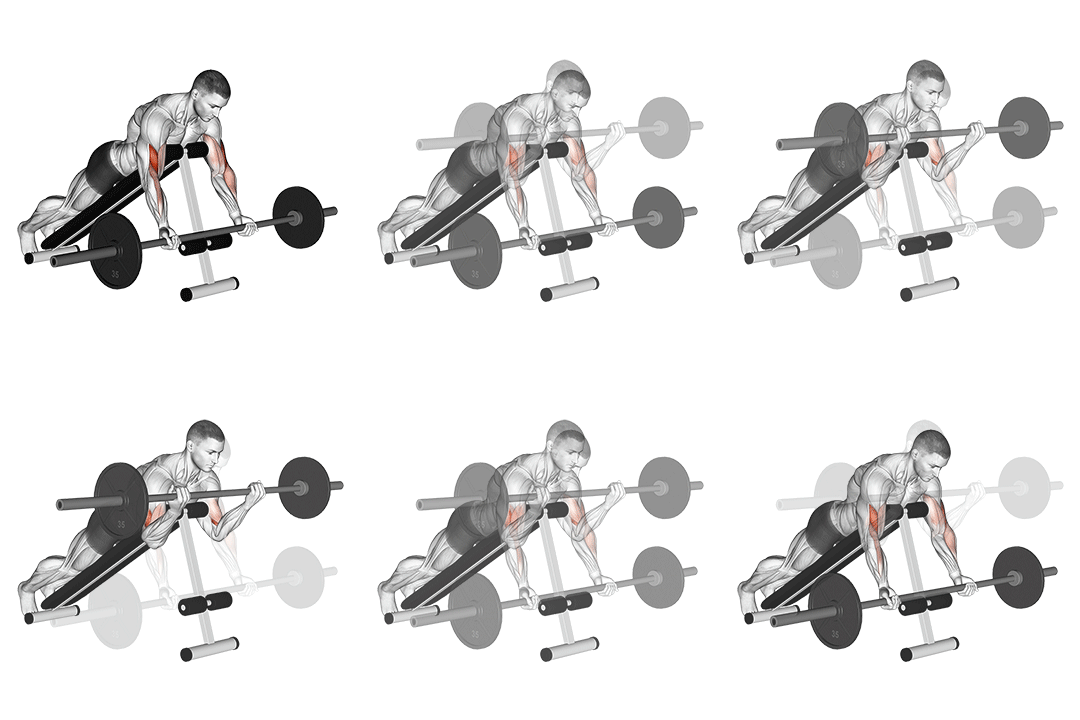
More comparisons with Barbell Biceps Curl (with Arm Blaster)
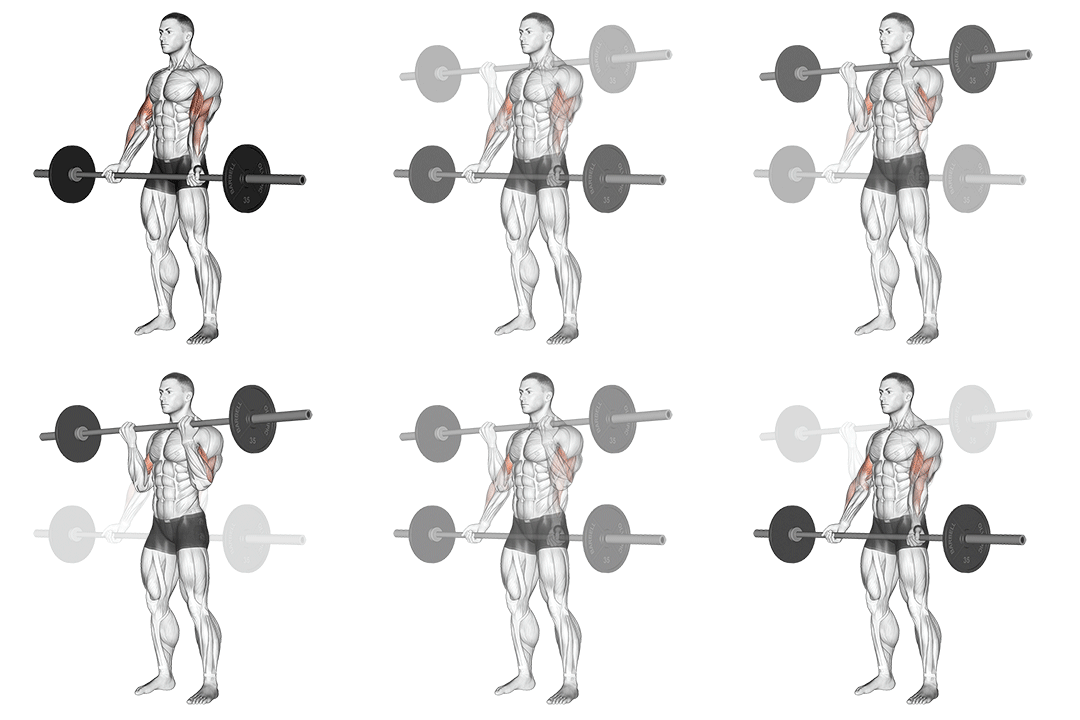
Compare More Exercises
Use our free comparison tool to analyze any two exercises head-to-head.
Compare Exercises