

Barbell Alternate Biceps Curl vs Barbell Curl: Complete Comparison Guide
Barbell Alternate Biceps Curl vs Barbell Curl — both target your biceps, but they load the muscle and the nervous system differently. This guide shows you the biomechanics, step-by-step technique cues, equipment needs, and which option best fits goals like muscle growth, strength, or fixing imbalances. You’ll get specific rep ranges, joint angles to watch, and actionable tips to use each exercise safely. Read on to decide which curl to program first in your workouts and when to swap one for the other.
Exercise Comparison
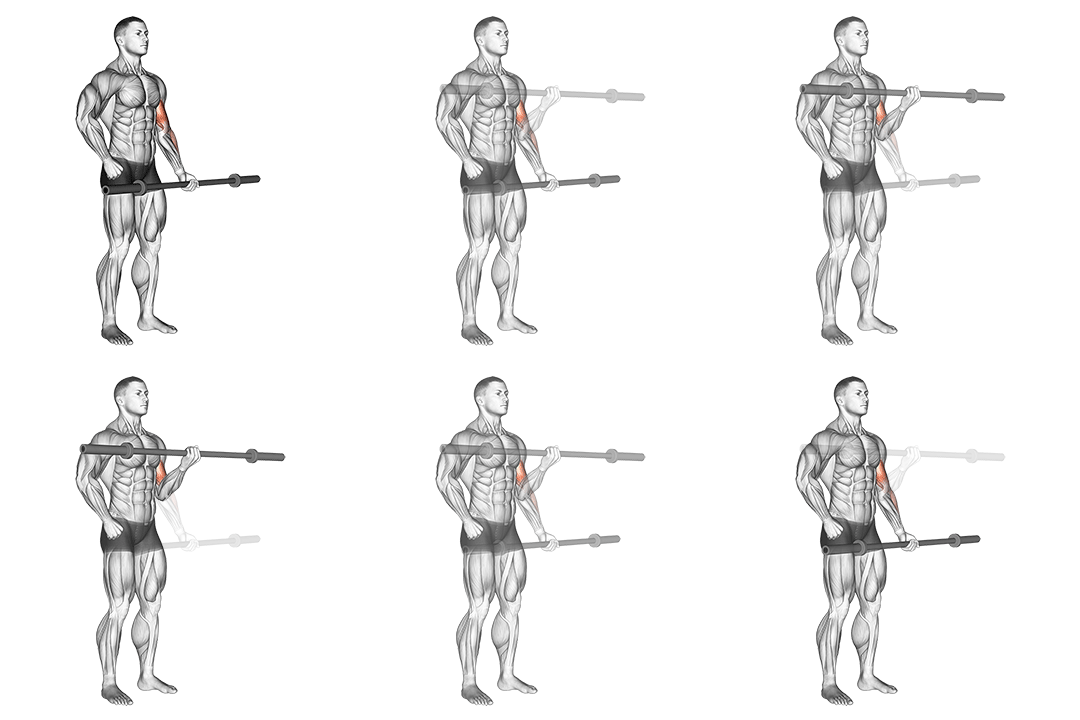
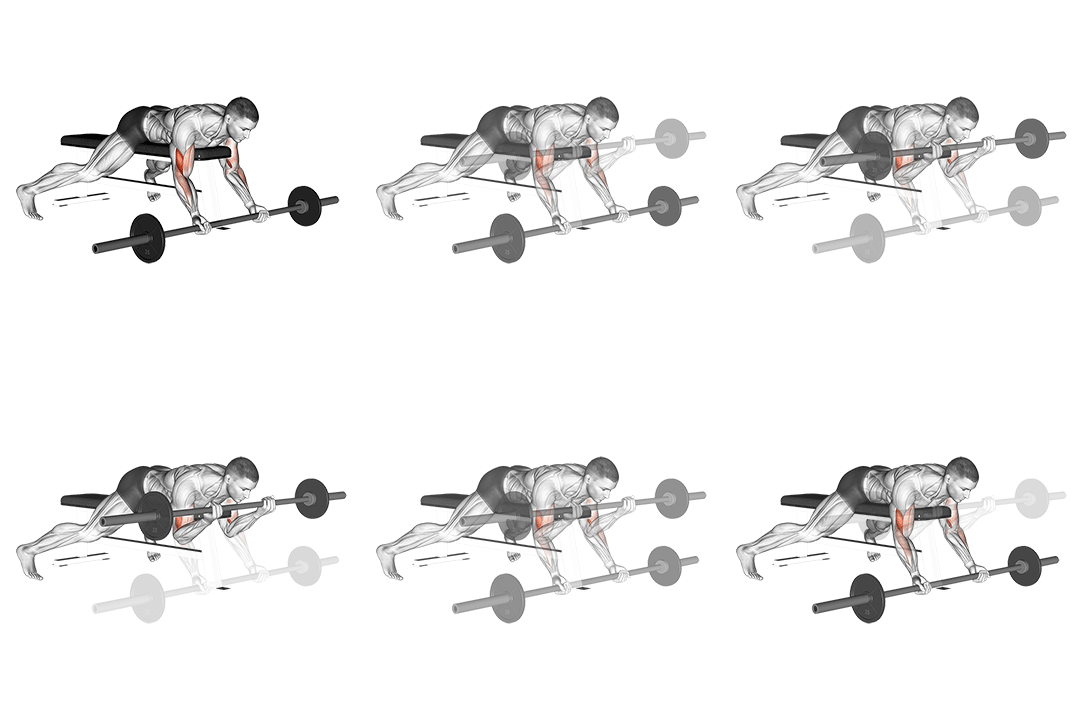
Barbell Alternate Biceps Curl
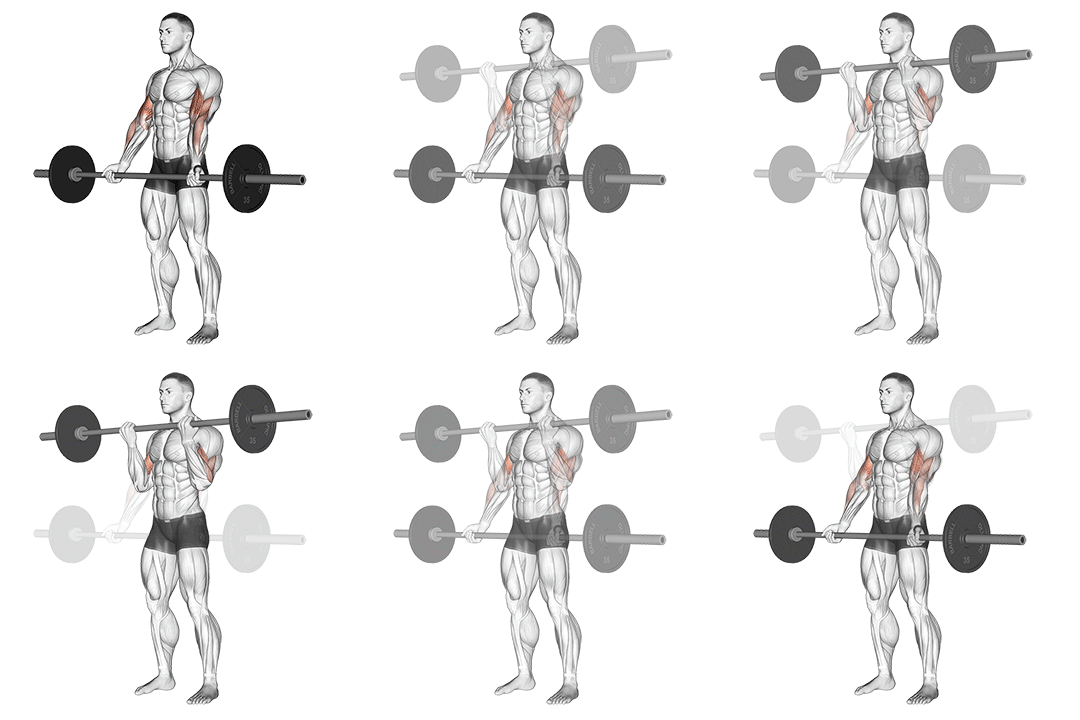
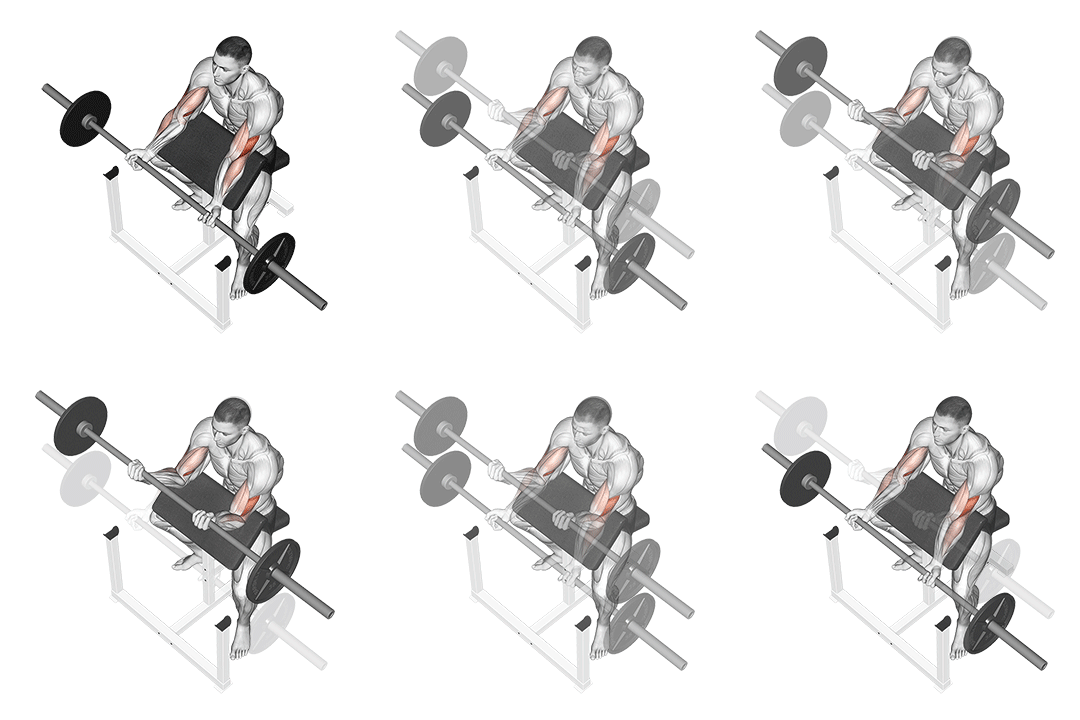
Barbell Curl
Head-to-Head Comparison
| Attribute | Barbell Alternate Biceps Curl | Barbell Curl |
|---|---|---|
| Target Muscle |
Biceps
|
Biceps
|
| Body Part |
Upper-arms
|
Upper-arms
|
| Equipment |
Barbell
|
Barbell
|
| Difficulty |
Beginner
|
Beginner
|
| Movement Type |
Isolation
|
Isolation
|
| Secondary Muscles |
1
|
1
|
Secondary Muscles Activated
Barbell Alternate Biceps Curl
Barbell Curl
Visual Comparison
Overview
Barbell Alternate Biceps Curl vs Barbell Curl — both target your biceps, but they load the muscle and the nervous system differently. This guide shows you the biomechanics, step-by-step technique cues, equipment needs, and which option best fits goals like muscle growth, strength, or fixing imbalances. You’ll get specific rep ranges, joint angles to watch, and actionable tips to use each exercise safely. Read on to decide which curl to program first in your workouts and when to swap one for the other.
Key Differences
- Both exercises target the Biceps using Barbell. The main differences are in their movement patterns and muscle activation angles.
Pros & Cons
Barbell Alternate Biceps Curl
+ Pros
- Targets unilateral imbalances and corrects side-to-side strength differences
- Greater core and anti-rotation stabilization demand, improving functional control
- Allows focused time-under-tension per arm (useful for hypertrophy work with 8–15 reps each side)
- Good for isolation with controlled tempo (try 2 s concentric, 3 s eccentric)
− Cons
- Harder to load maximally per arm compared to simultaneous bilateral curl
- Requires more coordination and can encourage torso rotation if form slips
- May increase wrist/shoulder strain if grip or path deviates
Barbell Curl
+ Pros
- Simpler motor pattern—easy to teach and learn for beginners
- Allows heavier total load for mechanical tension and strength progression
- Consistent bilateral force vector reduces anti-rotation demand
- Efficient for sets with 6–12 reps to build muscle growth via progressive overload
− Cons
- Can hide left-right imbalances unless you test unilateral strength separately
- Easy to cheat with shoulder swing or hip drive at heavier loads
- Less core anti-rotation benefit compared to unilateral options
When Each Exercise Wins
Barbell Curl wins because you can apply greater absolute load and sustain higher mechanical tension across both biceps simultaneously, which supports principle drivers of muscle growth. Use 3–5 sets of 6–12 reps with controlled 2–3 s eccentrics to maximize time under tension.
Strength favors heavier, bilateral loading—Barbell Curl lets you progressively overload with small jumps in weight and train near 4–8 rep ranges to increase maximal torque. The symmetrical force vector also reduces compensatory movements that limit measurable strength progress.
Beginners benefit from the simpler bilateral pattern and easier coaching cues—keep elbows pinned, wrists neutral-to-supinated, and move through a 40–90° elbow flexion range. Master control here before adding unilateral complexity.
At home, you may have limited total weight; the alternate version lets you focus on one arm with lighter loads and tempo work to increase perceived effort and hypertrophy stimulus. It also doubles as a core-stability challenge when space or equipment is limited.
Frequently Asked Questions
Can I do both Barbell Alternate Biceps Curl and Barbell Curl in the same workout?
Yes. Pair them intelligently: start with Barbell Curl for heavy sets (3–5 sets of 6–8 reps) then use Barbell Alternate Biceps Curl as a finisher for 2–3 sets of 8–12 reps per arm to address imbalances and increase time under tension.
Which exercise is better for beginners?
Barbell Curl is better for beginners because it uses a simpler, symmetrical movement that’s easier to cue and load progressively. Once you’ve built basic control, introduce alternate curls to correct side-to-side weaknesses.
How do the muscle activation patterns differ?
Both exercises activate the biceps brachii maximally in mid-range elbow flexion (~40–90°), but alternate curls create unilateral motor unit recruitment and greater anti-rotation demand. Barbell Curl produces higher absolute load per rep and more uniform bilateral activation.
Can Barbell Curl replace Barbell Alternate Biceps Curl?
Yes for many goals—if your priority is strength or overall muscle growth, Barbell Curl can replace alternate curls. Keep at least occasional unilateral work or single-arm testing to catch and correct any imbalances.
Expert Verdict
Use Barbell Curl as your default when your aim is maximal mechanical tension, linear progression, and efficient strength or hypertrophy work—program 3–5 sets of 6–12 reps, keeping elbows stationary and tempo controlled. Add Barbell Alternate Biceps Curl when you need to fix left-right imbalances, emphasize unilateral time under tension (8–15 reps per side), or want additional anti-rotational core stimulus. Both target the biceps brachii and forearms; choose bilateral loading to push weight and stimulate muscle growth, and alternate curls to refine control and symmetry in your upper-arm development.
Also Compare
More comparisons with Barbell Alternate Biceps Curl
Compare More Exercises
Use our free comparison tool to analyze any two exercises head-to-head.
Compare Exercises