

Barbell Alternate Biceps Curl vs Barbell Drag Curl: Complete Comparison Guide
Barbell Alternate Biceps Curl vs Barbell Drag Curl — two isolation moves that target the biceps but use different joint paths and force vectors. You’ll get clear guidance on muscle activation, equipment needs, difficulty, technique cues, rep ranges, and when to pick each exercise. I’ll break down how each move loads the biceps long head, short head, and forearms, show you concrete setup and tempo cues, and give direct recommendations for hypertrophy, strength, beginners, and home workouts so you can choose the right curl for your program.
Exercise Comparison
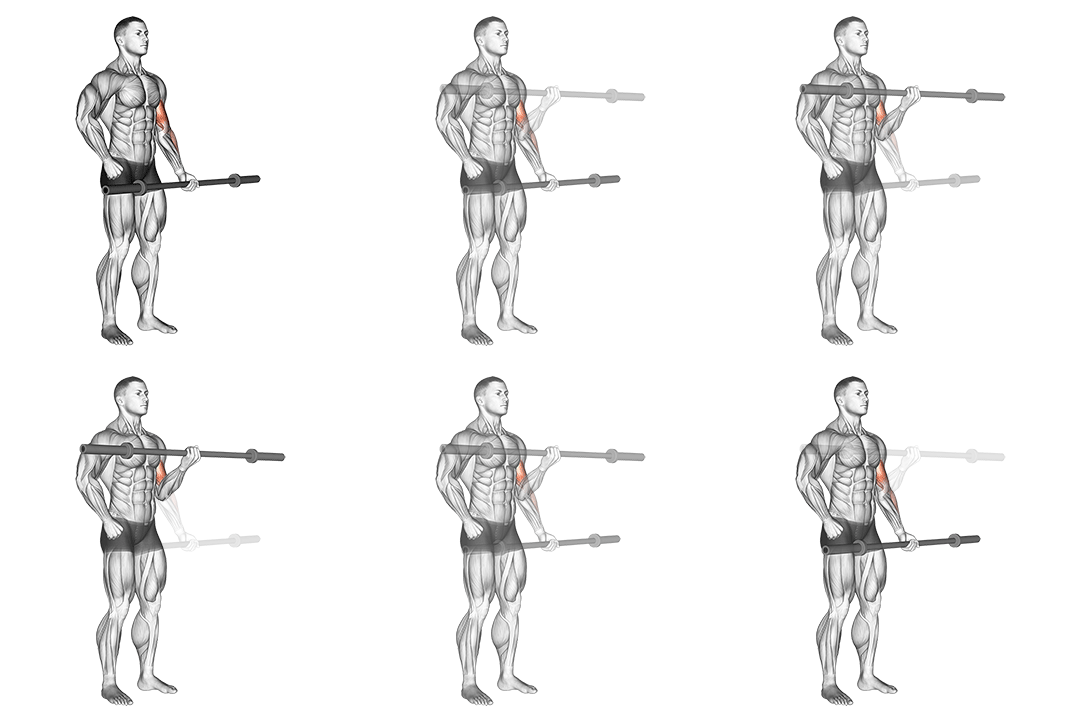
Barbell Alternate Biceps Curl
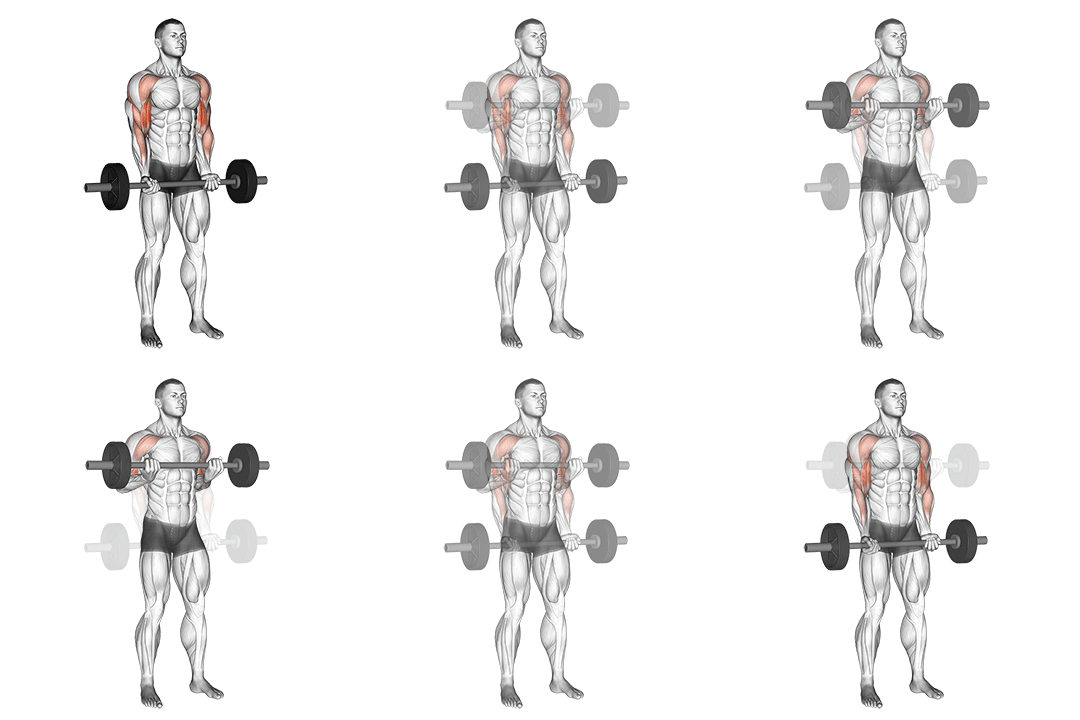
Barbell Drag Curl
Head-to-Head Comparison
| Attribute | Barbell Alternate Biceps Curl | Barbell Drag Curl |
|---|---|---|
| Target Muscle |
Biceps
|
Biceps
|
| Body Part |
Upper-arms
|
Upper-arms
|
| Equipment |
Barbell
|
Barbell
|
| Difficulty |
Beginner
|
Intermediate
|
| Movement Type |
Isolation
|
Isolation
|
| Secondary Muscles |
1
|
1
|
Secondary Muscles Activated
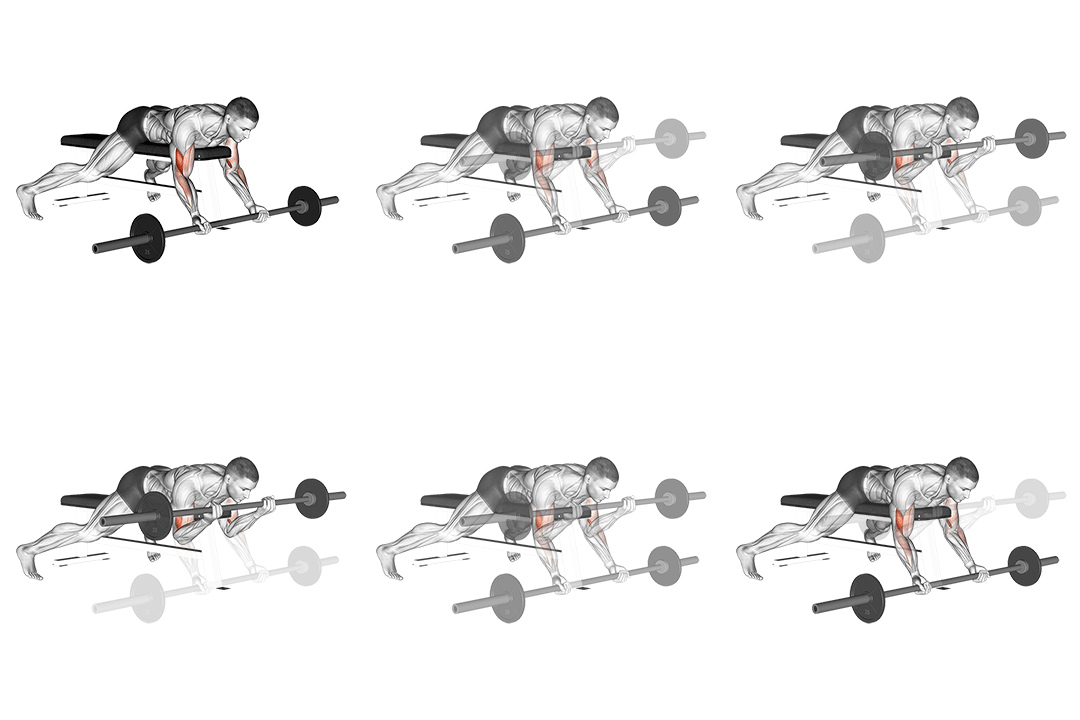
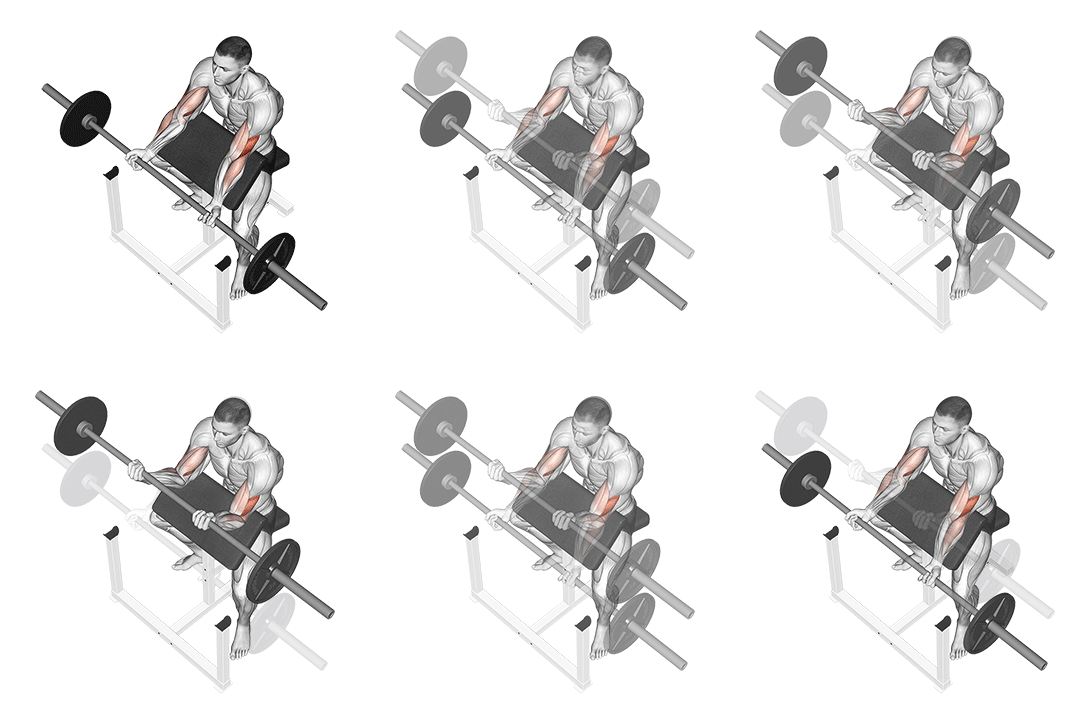
Barbell Alternate Biceps Curl
Barbell Drag Curl
Visual Comparison
Overview
Barbell Alternate Biceps Curl vs Barbell Drag Curl — two isolation moves that target the biceps but use different joint paths and force vectors. You’ll get clear guidance on muscle activation, equipment needs, difficulty, technique cues, rep ranges, and when to pick each exercise. I’ll break down how each move loads the biceps long head, short head, and forearms, show you concrete setup and tempo cues, and give direct recommendations for hypertrophy, strength, beginners, and home workouts so you can choose the right curl for your program.
Key Differences
- Difficulty levels differ: Barbell Alternate Biceps Curl is beginner, while Barbell Drag Curl is intermediate.
- Both exercises target the Biceps using Barbell. The main differences are in their movement patterns and muscle activation angles.
Pros & Cons
Barbell Alternate Biceps Curl
+ Pros
- Simple setup and easy to coach — elbow stays at side, clear supination cue
- Strong peak contraction via forearm supination increasing biceps moment arm
- Beginner-friendly — works well with light bars or cables
- Versatile rep ranges: 8–12 for hypertrophy, 4–6 for strength, 12–20 for endurance
− Cons
- Can encourage swinging and cheating if load is too heavy
- Less targeted long-head emphasis compared with drag curl
- Wrist discomfort with straight bar at heavier loads
Barbell Drag Curl
+ Pros
- Higher long-head emphasis by keeping the biceps at a longer length across the shoulder
- Maintains tension at the top of the rep, improving time under tension for hypertrophy
- Allows heavier loading without excessive shoulder flexion when performed correctly
- Reduces wrist supination demand, often more comfortable for some lifters
− Cons
- Requires precise elbow tracking; learning curve is steeper
- Potential for elbow or shoulder irritation if technique breaks down
- Less intuitive tempo — easy to jerk the bar and lose muscle tension
When Each Exercise Wins
Drag curls keep the biceps under tension at the top and bias the long head, increasing time under tension and mechanical tension across a longer muscle length. Use 8–12 reps with a 2–0–3 tempo to exploit this stimulus.
Alternate curls let you focus on heavier concentric force and clear supination to maximize moment arm leverage; using 4–6 reps with controlled eccentrics helps build raw elbow-flexion strength safely.
The movement is simpler: the elbow stays at the side and the primary cue is supinate-and-lift. That makes it easier to learn elbow control, proper tempo, and avoid compensatory torso lean.
It requires only a basic barbell and less coaching to perform safely in small spaces. You can easily scale with lighter bars or use bands to mimic the movement.
Frequently Asked Questions
Can I do both Barbell Alternate Biceps Curl and Barbell Drag Curl in the same workout?
Yes. Start with the heavier or more technical lift for your goal—if hypertrophy is the priority, do drag curls first for targeted long-head stimulus, then follow with alternate curls for peak contraction and metabolic fatigue.
Which exercise is better for beginners?
Barbell Alternate Biceps Curl is better for beginners because the movement pattern is simpler, the elbow stays stable, and it’s easier to learn supination and tempo before progressing to more complex elbow tracking.
How do the muscle activation patterns differ?
Alternate curls increase biceps activation through wrist supination, boosting short-head and brachialis contribution near peak contraction. Drag curls move the elbow posteriorly, keeping the biceps at a longer length and increasing long-head contribution and sustained top-range tension.
Can Barbell Drag Curl replace Barbell Alternate Biceps Curl?
Drag curls can replace alternate curls when your goal is long-head emphasis and increased time under tension, but they don’t teach supination-driven peak contraction as well. Use drag curls for targeted hypertrophy blocks and alternate curls when you need basic strength and technique building.
Expert Verdict
Both curls target the biceps, but choose based on your objective. Pick the Barbell Alternate Biceps Curl if you’re newer, working from home, or want a simple movement to build elbow-flexion strength and practice supination—use 8–12 reps for muscle growth or 4–6 for strength. Choose the Barbell Drag Curl when you want to bias the long head and increase top-range tension; perform 8–12 reps with slow eccentrics and focus on tracking the elbows back ~10–20° behind the frontal plane. Rotate both across training cycles to balance short- and long-head development and prevent adaptation.
Also Compare
More comparisons with Barbell Alternate Biceps Curl
More comparisons with Barbell Drag Curl
Compare More Exercises
Use our free comparison tool to analyze any two exercises head-to-head.
Compare Exercises