

Barbell Alternate Biceps Curl vs Barbell Lying Preacher Curl: Complete Comparison Guide
Barbell Alternate Biceps Curl vs Barbell Lying Preacher Curl — if you're weighing two isolation staples for the biceps, this guide has your back. You'll get clear, actionable comparisons of muscle activation, equipment needs, difficulty, and when to use each movement for hypertrophy, strength, or beginner programming. I’ll give you technique cues (elbow placement, supination, bench angle), biomechanical rationale (length-tension, force vectors, peak joint angles), and practical recommendations including rep ranges and progressions so you can pick the right move for your plan.
Exercise Comparison
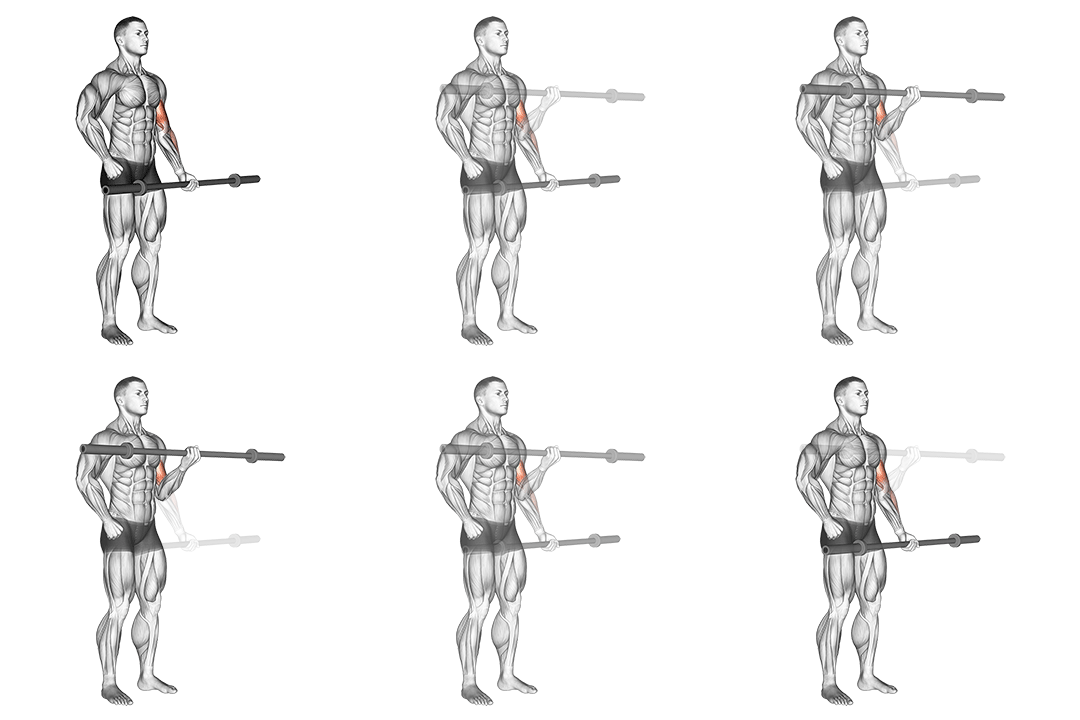
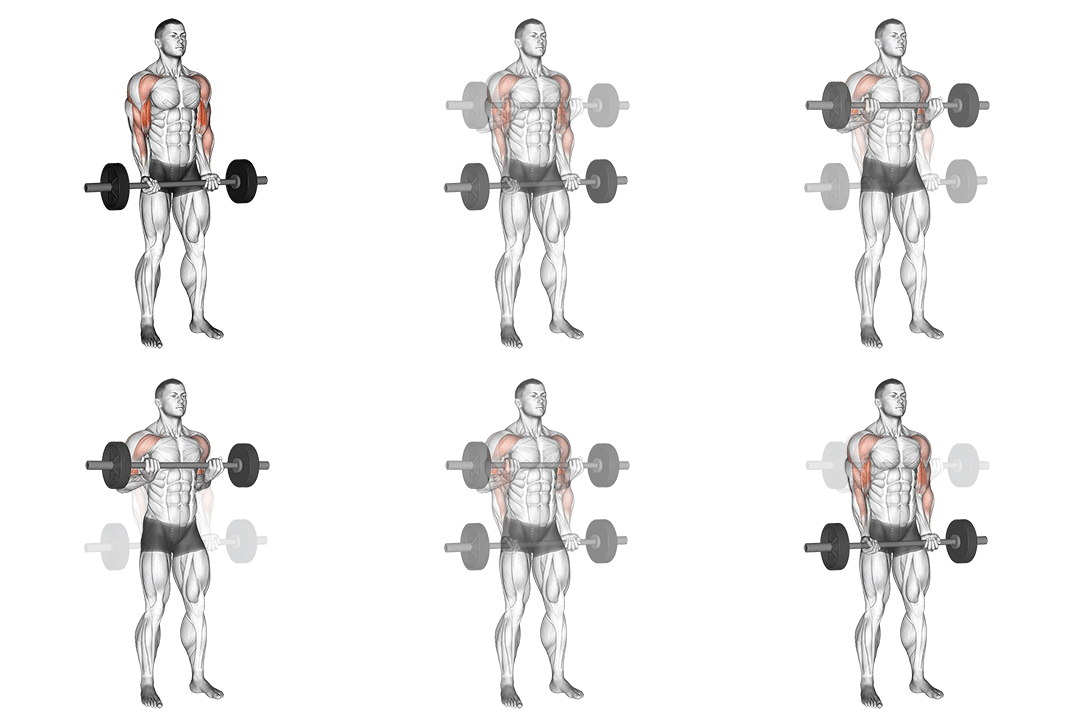
Barbell Alternate Biceps Curl
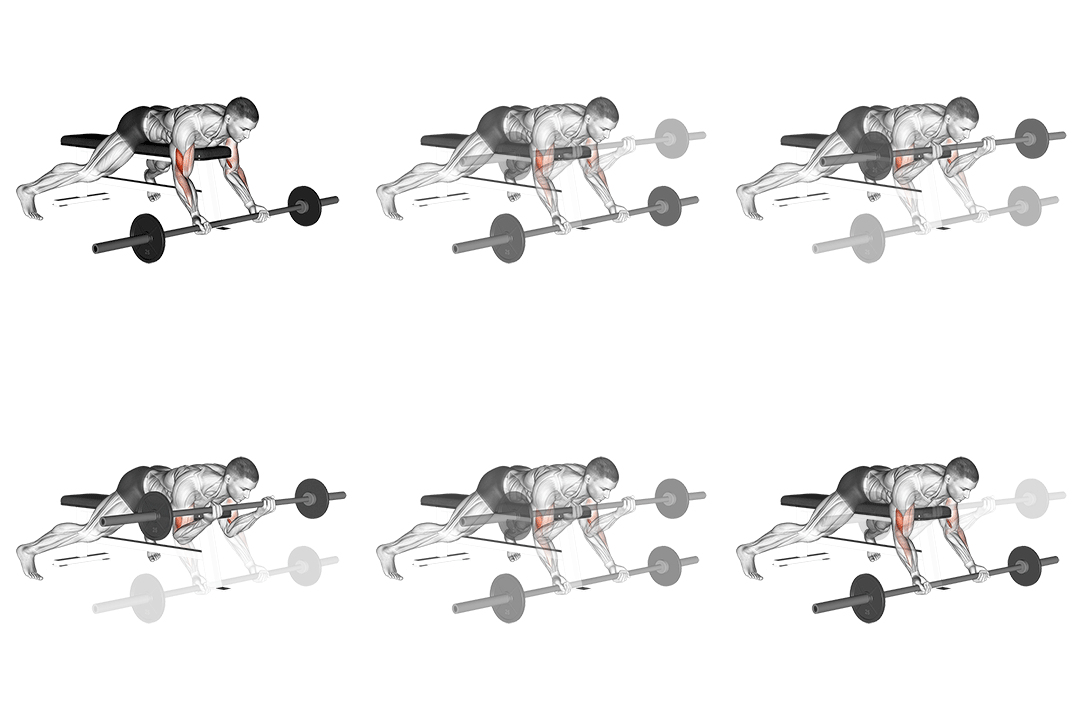
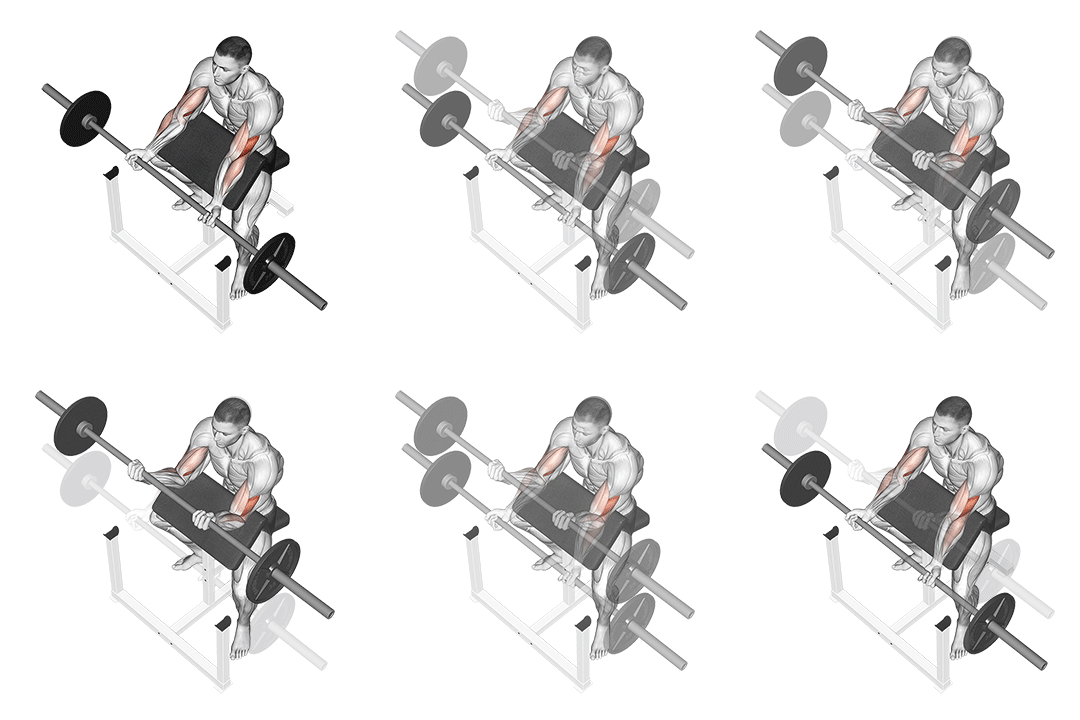
Barbell Lying Preacher Curl
Head-to-Head Comparison
| Attribute | Barbell Alternate Biceps Curl | Barbell Lying Preacher Curl |
|---|---|---|
| Target Muscle |
Biceps
|
Biceps
|
| Body Part |
Upper-arms
|
Upper-arms
|
| Equipment |
Barbell
|
Barbell
|
| Difficulty |
Beginner
|
Beginner
|
| Movement Type |
Isolation
|
Isolation
|
| Secondary Muscles |
1
|
1
|
Secondary Muscles Activated
Barbell Alternate Biceps Curl
Barbell Lying Preacher Curl
Visual Comparison
Overview
Barbell Alternate Biceps Curl vs Barbell Lying Preacher Curl — if you're weighing two isolation staples for the biceps, this guide has your back. You'll get clear, actionable comparisons of muscle activation, equipment needs, difficulty, and when to use each movement for hypertrophy, strength, or beginner programming. I’ll give you technique cues (elbow placement, supination, bench angle), biomechanical rationale (length-tension, force vectors, peak joint angles), and practical recommendations including rep ranges and progressions so you can pick the right move for your plan.
Key Differences
- Both exercises target the Biceps using Barbell. The main differences are in their movement patterns and muscle activation angles.
Pros & Cons
Barbell Alternate Biceps Curl
+ Pros
- Allows unilateral training to correct left-right imbalances
- Greater forearm supination and brachioradialis involvement for thicker upper-arms
- Minimal equipment—only a barbell and floor space required
- Easier to integrate into standing compound circuits and supersets
− Cons
- Easier to cheat with torso swing or shoulder drive
- Less continuous tension across the full ROM compared with preacher variations
- Harder to fully isolate the biceps if you lack strict form
Barbell Lying Preacher Curl
+ Pros
- Strong isolation: upper arm stabilized against pad reduces shoulder contribution
- Maintains constant tension through concentric and eccentric phases
- Ideal for strict eccentric control (3–5 second negatives)
- Good for focusing on peak contraction and mind-muscle connection
− Cons
- Requires preacher pad or incline bench—less accessible at home
- Can place high stress on the distal tendon at full extension if overloaded
- Less opportunity for unilateral work to fix imbalances
When Each Exercise Wins
The preacher curl maintains constant tension and removes shoulder assistance, which increases time under tension and controlled eccentrics—both key drivers of hypertrophy. Use 8–12 reps with 2–3 second concentric and 3–4 second eccentric tempos to maximize fiber recruitment.
Standing alternate curls let you load heavier overall and train unilateral strength, plus you can more easily transition to lower rep ranges (4–6) for strength work. Keep elbows pinned and avoid momentum to transfer force to the biceps rather than the spine.
It’s simpler to learn and doesn’t require specialized equipment; beginners can start with light weight and 10–15 reps to practice elbow control. Focus on strict form: feet shoulder-width, elbows tucked, and full supination through the top.
Requires only a barbell and space, making it practical for most home setups. If you lack a preacher pad or bench, the standing alternate curl is the clear choice for consistent biceps work.
Frequently Asked Questions
Can I do both Barbell Alternate Biceps Curl and Barbell Lying Preacher Curl in the same workout?
Yes. Pair them in the same session by using the preacher curl early for strict sets (3–4 sets of 8–12) and finish with lighter alternate curls for volume or unilateral work. That combination gives you the isolation control of preacher work and the unilateral growth stimulus from alternate curls.
Which exercise is better for beginners?
Barbell Alternate Biceps Curl is better for most beginners because it needs minimal equipment and teaches basic elbow control and supination. Start with 8–12 reps using a light load and focus on eliminating torso swing before progressing.
How do the muscle activation patterns differ?
Alternate curls increase forearm supination and brachioradialis recruitment, producing slightly higher peak activation during the rotational finish. Preacher curls keep the upper arm fixed, producing steadier biceps tension through the range and greater emphasis on controlled eccentrics and peak contraction.
Can Barbell Lying Preacher Curl replace Barbell Alternate Biceps Curl?
Yes for isolation-focused sessions: preacher curls can replace alternate curls when your goal is strict biceps hypertrophy and controlled tempo. However, they don’t offer the same unilateral training or accessibility, so keep alternate curls in your program when you need imbalance correction or minimal equipment.
Expert Verdict
Use the Barbell Lying Preacher Curl when your goal is strict isolation and maximizing time under tension—it’s ideal for hypertrophy phases where controlled eccentrics and peak contraction matter. Choose the Barbell Alternate Biceps Curl when you need accessibility, unilateral work, or slightly higher absolute loading for strength progression. For beginners and home setups, start standing with alternate curls to learn elbow control and supination. As you advance, rotate in preacher curls for focused tension and eccentric emphasis—both moves have a place; pick based on equipment and the specific adaptation you want.
Also Compare
More comparisons with Barbell Alternate Biceps Curl
More comparisons with Barbell Lying Preacher Curl
Compare More Exercises
Use our free comparison tool to analyze any two exercises head-to-head.
Compare Exercises