

Barbell Biceps Curl (with Arm Blaster) vs Barbell Curl: Complete Comparison Guide
Barbell Biceps Curl (with Arm Blaster) vs Barbell Curl — if you want bigger, stronger arms you need to pick the right tool for the job. I’ll break down how each move loads the biceps, the differences in secondary muscle recruitment, setup and equipment needs, and clear programming advice (rep ranges, tempos, and progressions). You’ll get technique cues you can use on your next set, biomechanics—like length-tension and force vectors—and decisive recommendations for hypertrophy, strength, beginners, and home workouts.
Exercise Comparison
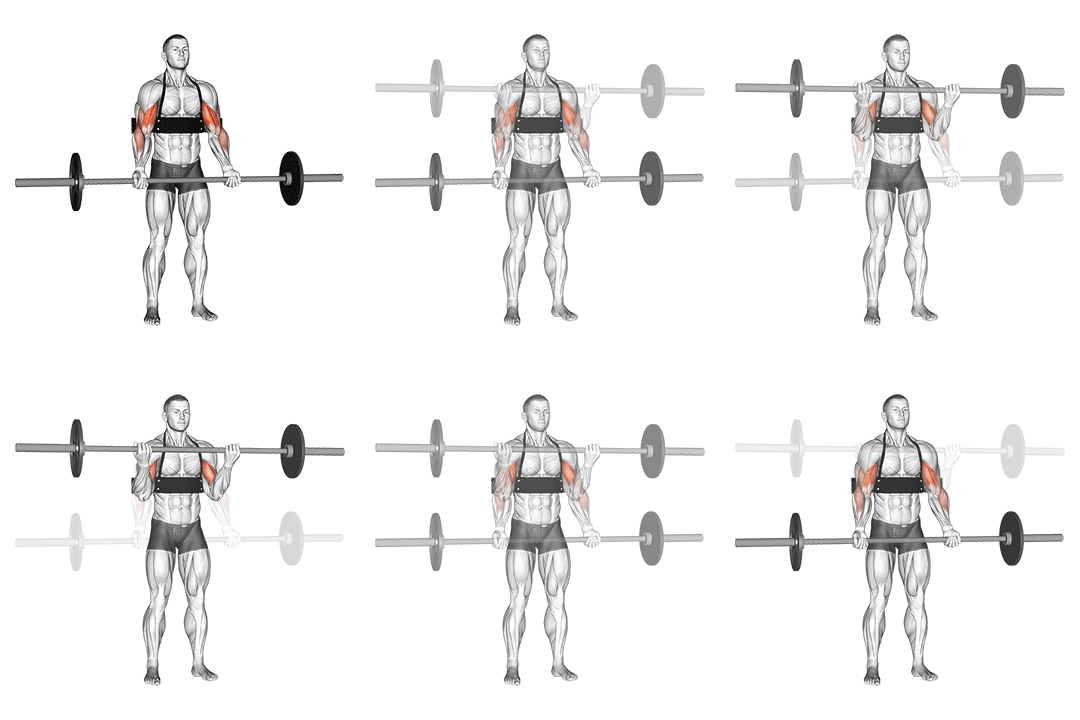
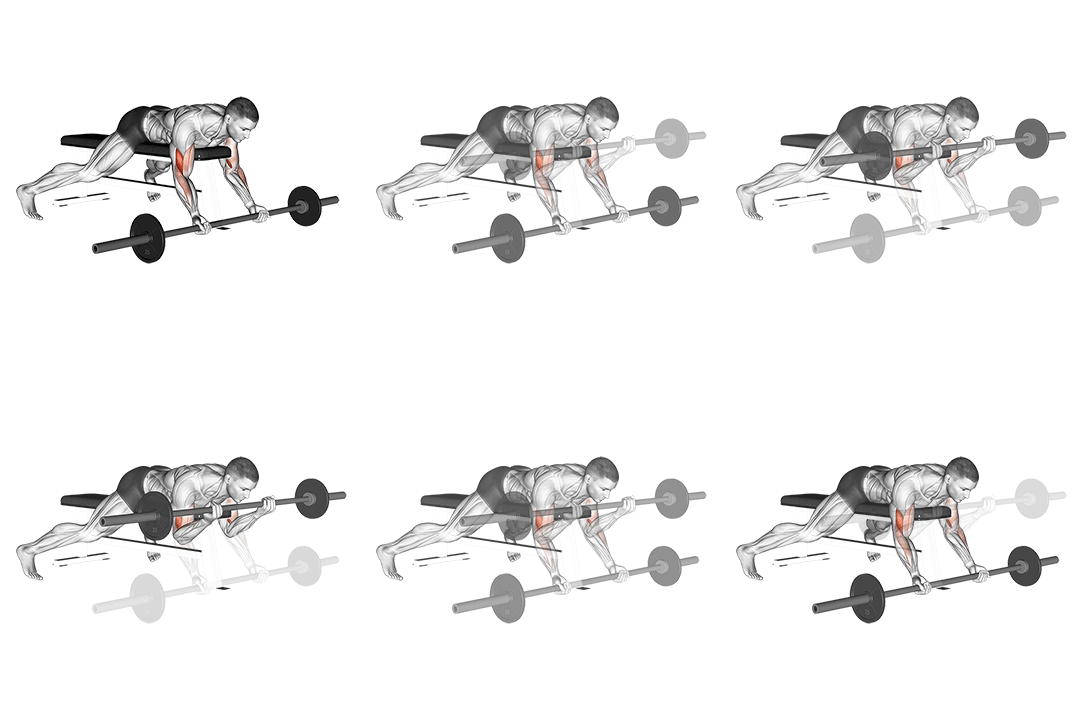
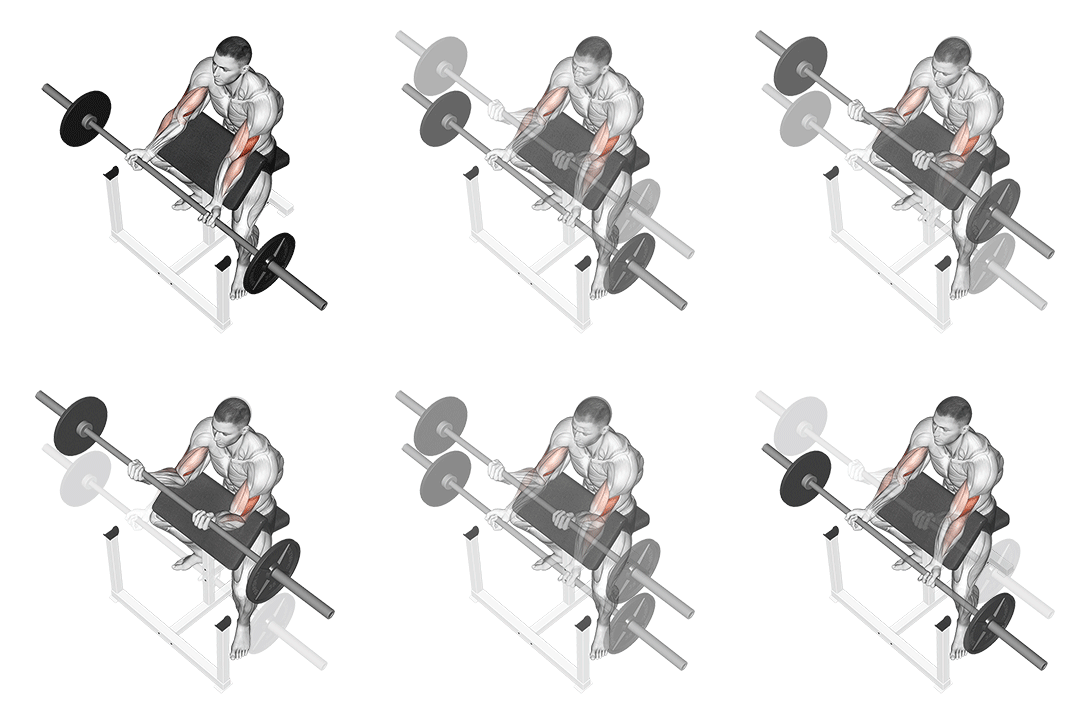
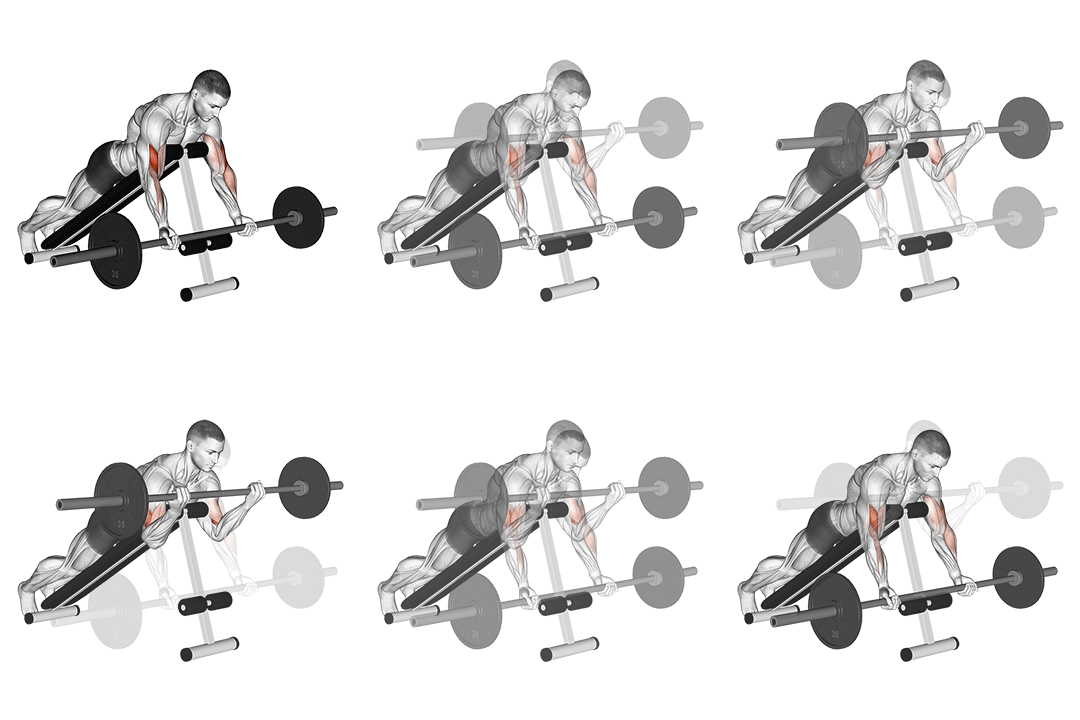
Barbell Biceps Curl (with Arm Blaster)
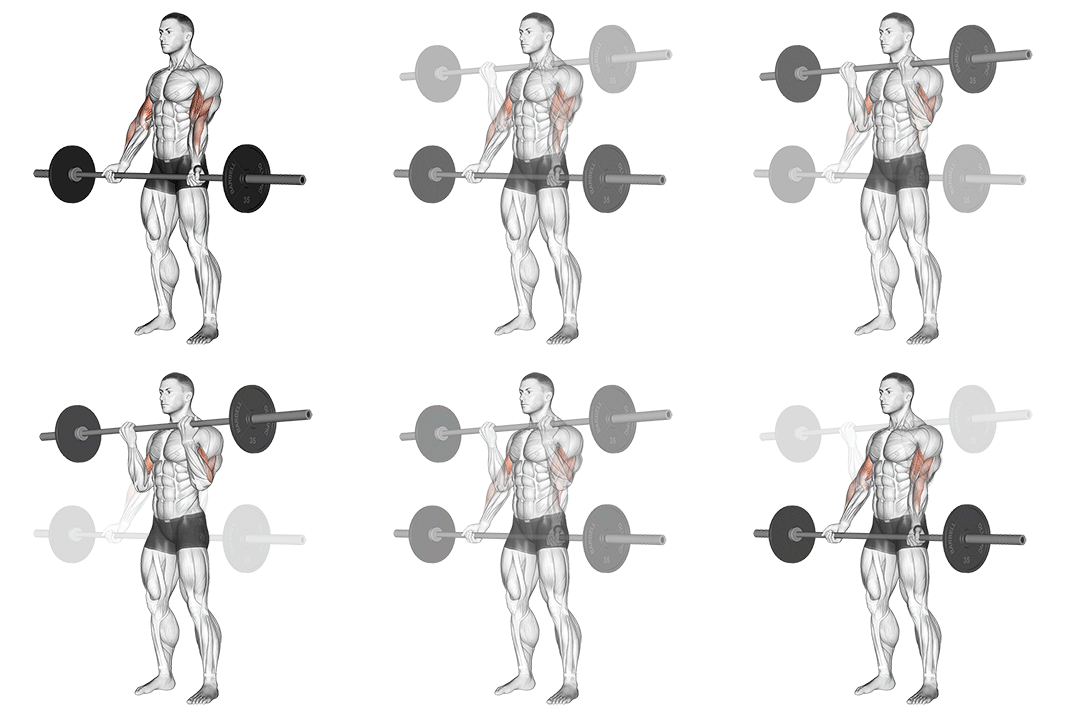
Barbell Curl
Head-to-Head Comparison
| Attribute | Barbell Biceps Curl (with Arm Blaster) | Barbell Curl |
|---|---|---|
| Target Muscle |
Biceps
|
Biceps
|
| Body Part |
Upper-arms
|
Upper-arms
|
| Equipment |
Barbell
|
Barbell
|
| Difficulty |
Beginner
|
Beginner
|
| Movement Type |
Isolation
|
Isolation
|
| Secondary Muscles |
1
|
1
|
Secondary Muscles Activated
Barbell Biceps Curl (with Arm Blaster)
Barbell Curl
Visual Comparison
Overview
Barbell Biceps Curl (with Arm Blaster) vs Barbell Curl — if you want bigger, stronger arms you need to pick the right tool for the job. I’ll break down how each move loads the biceps, the differences in secondary muscle recruitment, setup and equipment needs, and clear programming advice (rep ranges, tempos, and progressions). You’ll get technique cues you can use on your next set, biomechanics—like length-tension and force vectors—and decisive recommendations for hypertrophy, strength, beginners, and home workouts.
Key Differences
- Both exercises target the Biceps using Barbell. The main differences are in their movement patterns and muscle activation angles.
Pros & Cons
Barbell Biceps Curl (with Arm Blaster)
+ Pros
- Enforces fixed-elbow position for cleaner biceps isolation
- Increases peak contraction and time under tension around 70–90°
- Reduces shoulder and trap substitution, improving stimulus specificity
- Great for hypertrophy work in 8–12 rep ranges with 2–3s eccentrics
− Cons
- Requires an arm blaster accessory and correct fit
- Less load ceiling for heavy strength work due to eliminated momentum
- Can concentrate stress on the elbow/wrist if you have joint issues
Barbell Curl
+ Pros
- Minimal equipment — barbell only, highly accessible
- High overload potential for low-rep strength phases (3–6 reps)
- Easier to learn and scale for beginners
- Versatile (can switch to EZ bar, dumbbells, or change grip width)
− Cons
- More prone to cheating with shoulder and torso momentum
- Slightly less pure peak biceps activation when form breaks down
- Harder to achieve strict isolation without a coach or strict cues
When Each Exercise Wins
The Arm Blaster enforces strict upper-arm position, increasing time under tension and peak contraction in the mid-range (70–90°). For 8–12 reps with 2–3 second eccentrics it delivers cleaner biceps stimulus and less compensatory deltoid involvement.
Barbell Curls let you safely use heavier loads and controlled momentum to build maximal force capacity in the elbow flexors. Low-rep blocks (3–6 reps) with progressive loading translate better to raw strength improvements.
A simple setup and intuitive motion make the Barbell Curl easier to learn. Beginners gain coordination and baseline strength faster with barbell-only work before adding isolation tools.
You only need a barbell and plates, which most home lifters have. The Arm Blaster is helpful but not essential, making the standard curl the practical choice at home.
Frequently Asked Questions
Can I do both Barbell Biceps Curl (with Arm Blaster) and Barbell Curl in the same workout?
Yes. Start with Barbell Curls if you plan heavy work (3–6 reps) to prioritize strength, then use the Arm Blaster for isolation finishers (3 sets of 8–12). That sequence uses heavy load first, then precise time under tension to maximize muscle fatigue.
Which exercise is better for beginners?
Barbell Curl is better for beginners because it requires less setup and teaches basic elbow flexion under load. Once you can maintain strict elbow positioning, add the Arm Blaster to improve isolation and peak contraction.
How do the muscle activation patterns differ?
The Arm Blaster fixes the upper arm, keeping the force vector square through the elbow and increasing biceps activation in the mid-range (≈70–90°) by reducing shoulder contribution. The free Barbell Curl allows small shoulder motion and torso lean, which spreads activation to anterior deltoid and spinal stabilizers as load increases.
Can Barbell Curl replace Barbell Biceps Curl (with Arm Blaster)?
Yes, functionally it can—but you’ll lose some isolation specificity. If your goal is pure hypertrophy, add strict sets or a finishing Arm Blaster variation to replicate the higher mid-range tension the accessory provides.
Expert Verdict
Use the Barbell Biceps Curl with an Arm Blaster when you want surgical isolation and to maximize mid-range biceps tension for hypertrophy. Program it in 3–4 sets of 8–12 reps with controlled 2–3 second eccentrics and short rests (60–90s). Choose the plain Barbell Curl when your goal is raw strength, accessibility, or when you’re just starting—load it for 3–6 reps during strength phases or 6–10 reps for general development. If you can, rotate both across cycles: heavy Barbell Curls for strength, then Arm Blaster sets as an isolation finisher to drive muscle growth and technique.
Also Compare
More comparisons with Barbell Biceps Curl (with Arm Blaster)
Compare More Exercises
Use our free comparison tool to analyze any two exercises head-to-head.
Compare Exercises