

Barbell Biceps Curl (with Arm Blaster) vs Barbell Drag Curl: Complete Comparison Guide
Barbell Biceps Curl (with Arm Blaster) vs Barbell Drag Curl — two barbell isolation variations that look similar but load the biceps differently. If you want clearer arm shape, better strict tension, or a way to shift emphasis between the long and short heads, this comparison has your back. You'll get technique cues, the biomechanics behind muscle activation, equipment needs, difficulty and injury-risk takeaways, plus clear recommendations for hypertrophy, strength, beginners, and home workouts so you can pick the right curl for your goals.
Exercise Comparison
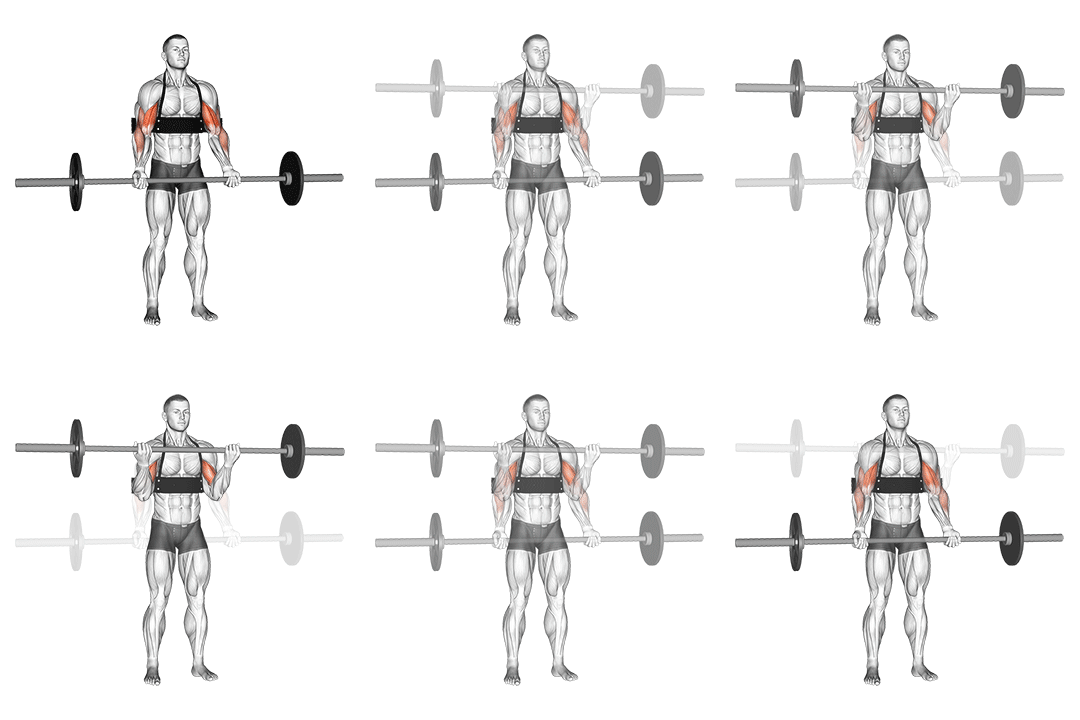
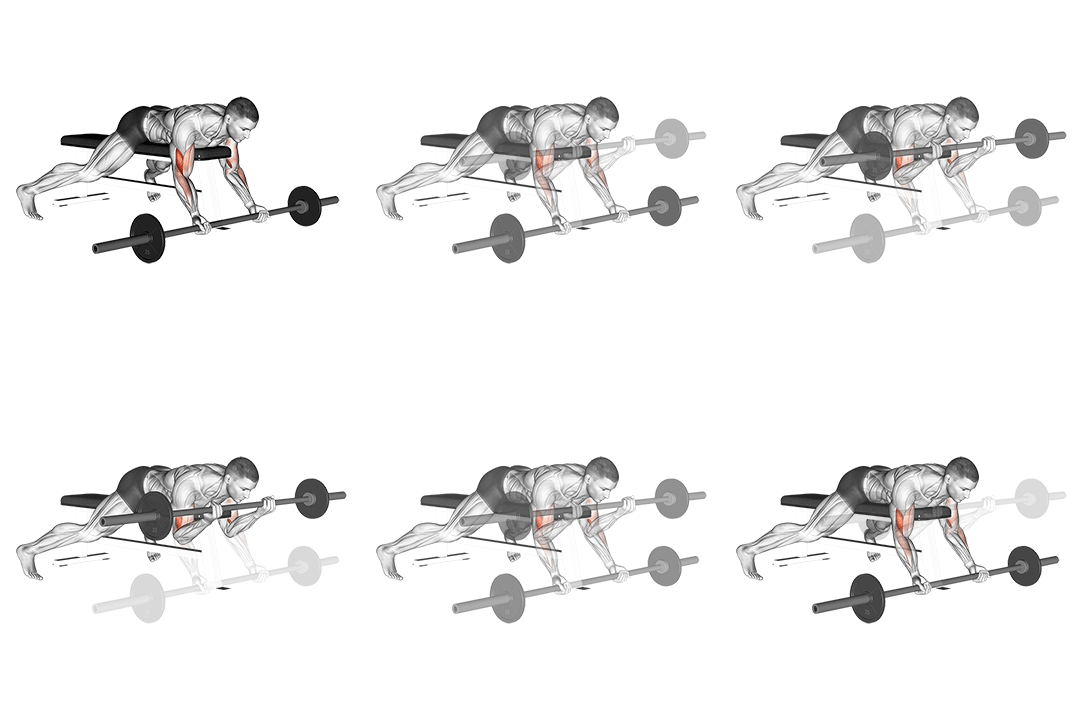
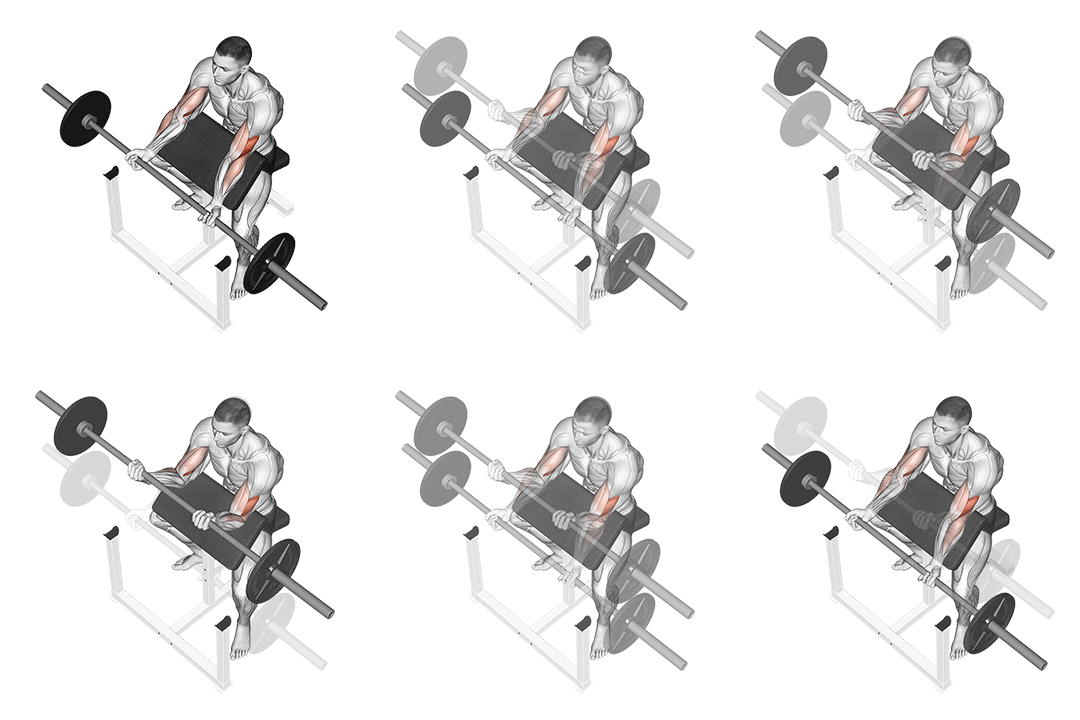
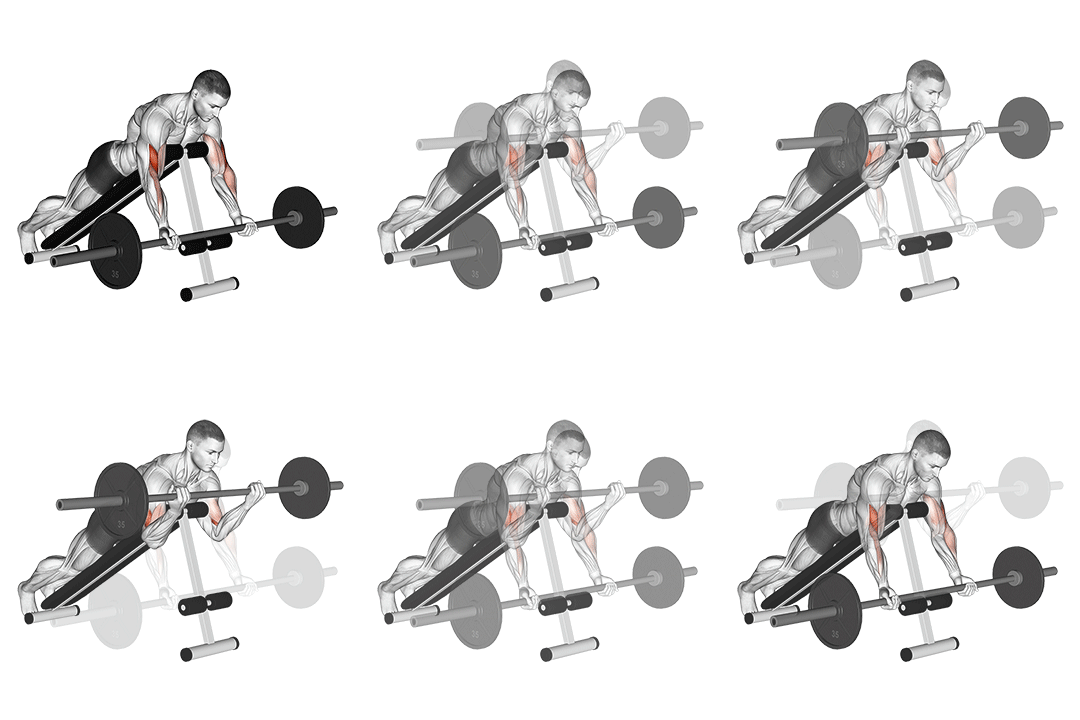
Barbell Biceps Curl (with Arm Blaster)
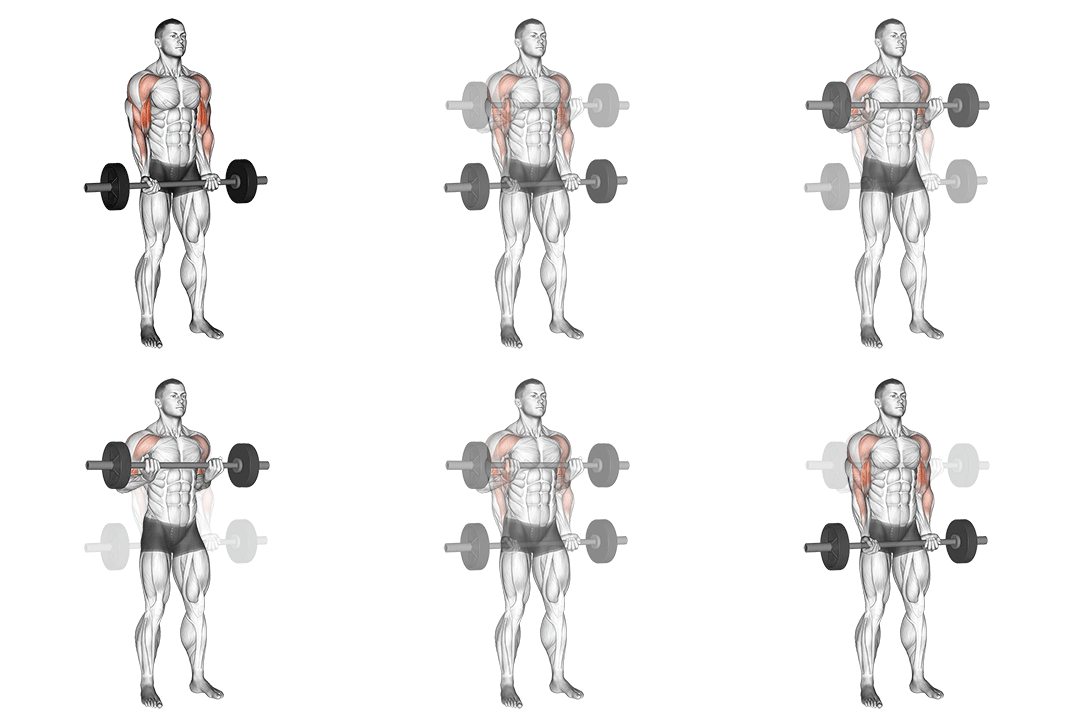
Barbell Drag Curl
Head-to-Head Comparison
| Attribute | Barbell Biceps Curl (with Arm Blaster) | Barbell Drag Curl |
|---|---|---|
| Target Muscle |
Biceps
|
Biceps
|
| Body Part |
Upper-arms
|
Upper-arms
|
| Equipment |
Barbell
|
Barbell
|
| Difficulty |
Beginner
|
Intermediate
|
| Movement Type |
Isolation
|
Isolation
|
| Secondary Muscles |
1
|
1
|
Secondary Muscles Activated
Barbell Biceps Curl (with Arm Blaster)
Barbell Drag Curl
Visual Comparison
Overview
Barbell Biceps Curl (with Arm Blaster) vs Barbell Drag Curl — two barbell isolation variations that look similar but load the biceps differently. If you want clearer arm shape, better strict tension, or a way to shift emphasis between the long and short heads, this comparison has your back. You'll get technique cues, the biomechanics behind muscle activation, equipment needs, difficulty and injury-risk takeaways, plus clear recommendations for hypertrophy, strength, beginners, and home workouts so you can pick the right curl for your goals.
Key Differences
- Difficulty levels differ: Barbell Biceps Curl (with Arm Blaster) is beginner, while Barbell Drag Curl is intermediate.
- Both exercises target the Biceps using Barbell. The main differences are in their movement patterns and muscle activation angles.
Pros & Cons
Barbell Biceps Curl (with Arm Blaster)
+ Pros
- Enforces strict elbow position to isolate biceps and limit shoulder involvement
- Improves peak contraction and mind-muscle connection through top ROM
- Beginner-friendly cueing and consistent form across sets
- Great for high-tension hypertrophy work in 8–12 rep ranges
− Cons
- Requires an arm blaster accessory and setup
- Can feel restrictive and limit natural elbow path for some lifters
- Less direct emphasis on long head compared to drag curl
Barbell Drag Curl
+ Pros
- Needs only a barbell, so highly accessible
- Posterior elbow travel increases long-head stimulus and mid-range tension
- Allows heavier loads and varied bar pathing for progression
- Can create a different peak vs mid-range stress profile useful for programming
− Cons
- Harder to master elbow and bar path control
- Slightly higher strain on elbow tendons if overloaded or rushed
- Requires technical precision to consistently hit intended muscle emphasis
When Each Exercise Wins
The arm blaster enforces strict form and increases time under tension through the peak contraction, making it ideal for 3–4 sets of 8–12 reps focused on muscle growth. It reduces momentum and ensures the biceps, not shoulders, take the load.
Drag curls allow slightly heavier loading and a bar path that sustains mid-range tension, which supports progressive overload and neural adaptation when training in lower rep ranges (4–6).
The arm blaster simplifies cueing by fixing elbow position and limiting compensatory movement, helping beginners learn strict elbow flexion mechanics safely.
Drag curls only need a barbell, so you can perform them at home without buying an accessory; they still provide variable tension and progression options.
Frequently Asked Questions
Can I do both Barbell Biceps Curl (with Arm Blaster) and Barbell Drag Curl in the same workout?
Yes — pair them smartly: start with the more technical or heavier variant (drag curl) for 3–5 sets of lower reps, then finish with arm-blaster curls for 2–3 sets of 8–12 reps to maximize fatigue and peak contraction.
Which exercise is better for beginners?
Barbell Biceps Curl (with Arm Blaster) is better for beginners because it fixes elbow position and reduces cheating, helping you learn strict elbow flexion and build foundational tension control.
How do the muscle activation patterns differ?
Activation differs by elbow and shoulder position: the arm-blaster increases peak top-of-ROM biceps tension by stabilizing the elbow, while the drag curl shifts the moment arm and keeps the biceps slightly more stretched at the shoulder, increasing long-head and mid-range activation.
Can Barbell Drag Curl replace Barbell Biceps Curl (with Arm Blaster)?
Yes, but only if your goal is long-head emphasis or heavier loading; if you need strict isolation and peak contraction for hypertrophy, keep the arm-blaster in rotation rather than fully replacing it.
Expert Verdict
Use the arm-blaster barbell curl when your goal is targeted hypertrophy, strict form, and high-quality time under tension — aim for 3–4 sets of 8–12 reps and focus on a controlled 2–1–2 tempo with full ROM (approximate elbow flexion 0–130°). Choose the drag curl when you want a different long-head emphasis, heavier loading, and enhanced mid-range tension; progress with 3–5 sets of 4–8 reps and prioritize smooth elbow travel posteriorly. Both moves complement each other: rotate them across mesocycles to hit both peak contraction and mid-range overload while minimizing overuse.
Also Compare
More comparisons with Barbell Biceps Curl (with Arm Blaster)
Compare More Exercises
Use our free comparison tool to analyze any two exercises head-to-head.
Compare Exercises