

Barbell Biceps Curl (with Arm Blaster) vs Barbell Preacher Curl: Complete Comparison Guide
Barbell Biceps Curl (with Arm Blaster) vs Barbell Preacher Curl — two staple isolation moves for your upper-arms. If you want clearer decisions about muscle emphasis, equipment needs, and which to prioritize in your routine, this guide has your back. You’ll get side-by-side comparisons of primary and secondary muscle activation, technique cues (elbow placement, torso angle, bar path), concrete rep ranges (3–6 for strength, 6–12 for hypertrophy), progression tips, and injury-risk notes so you can pick the right curl for your goals.
Exercise Comparison
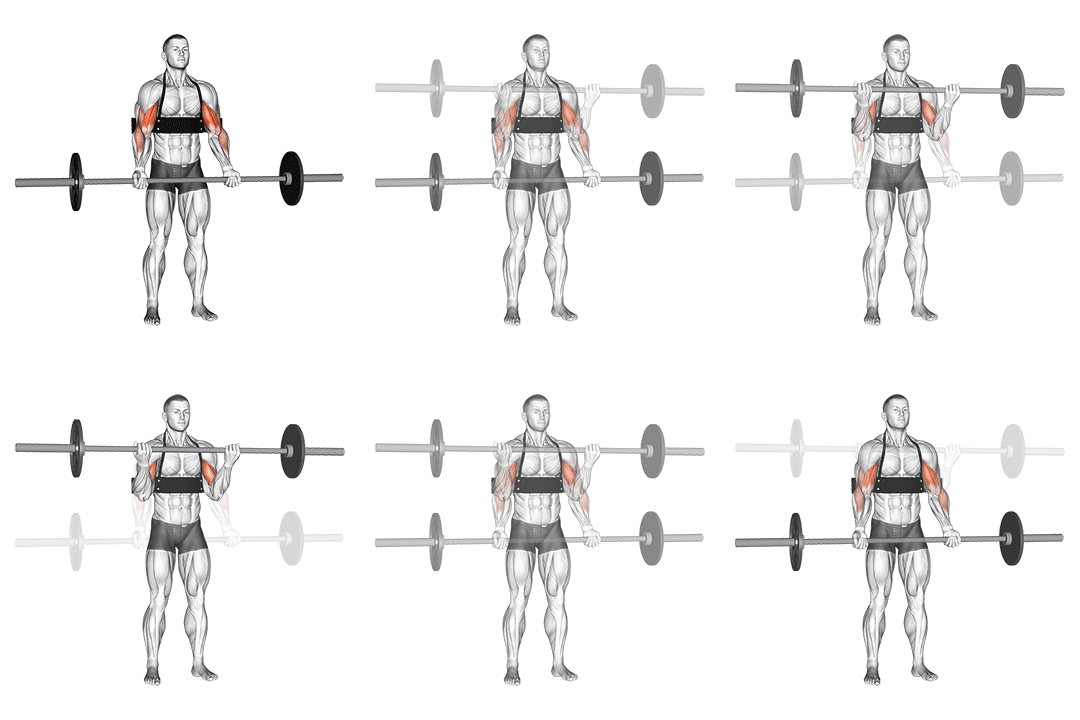
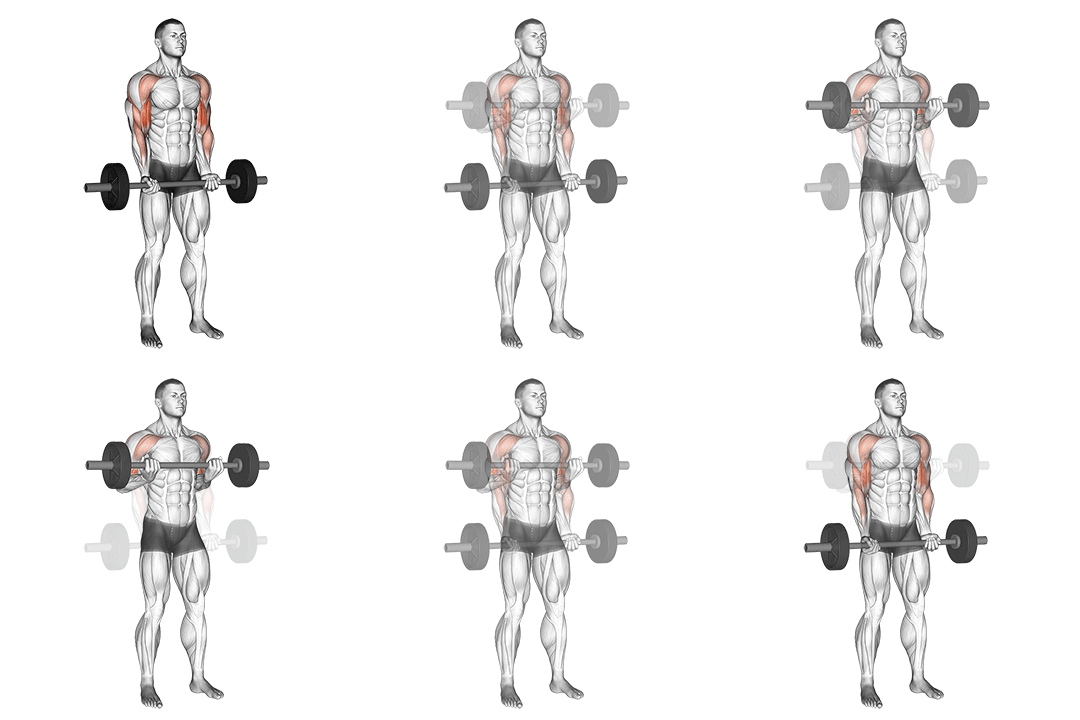
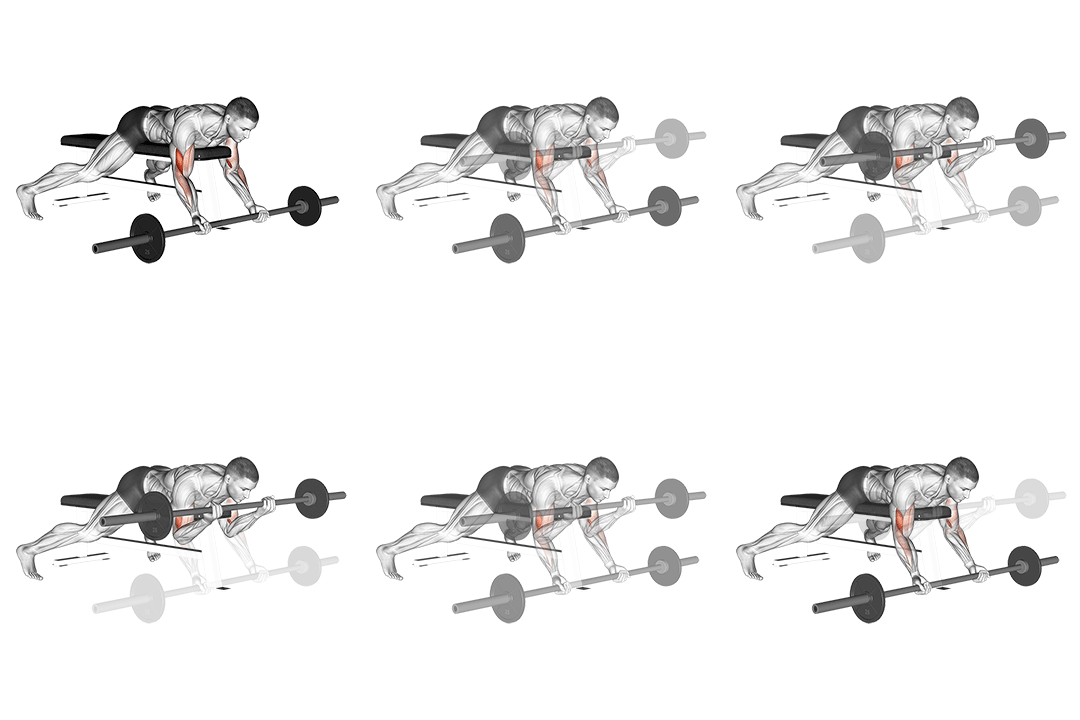
Barbell Biceps Curl (with Arm Blaster)
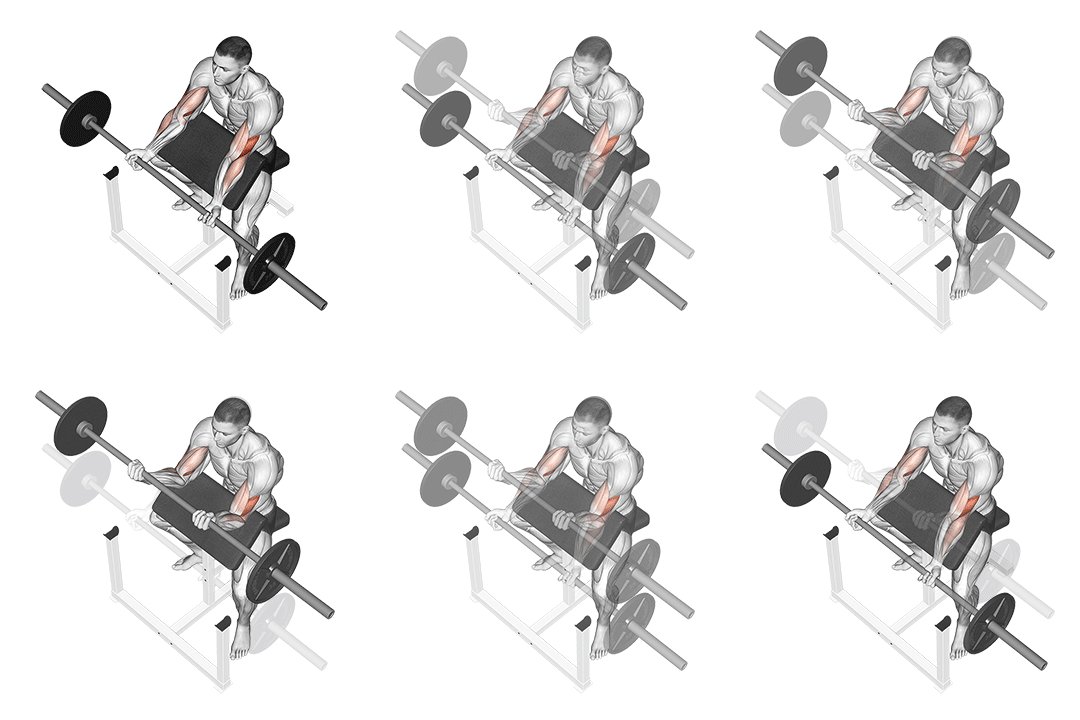
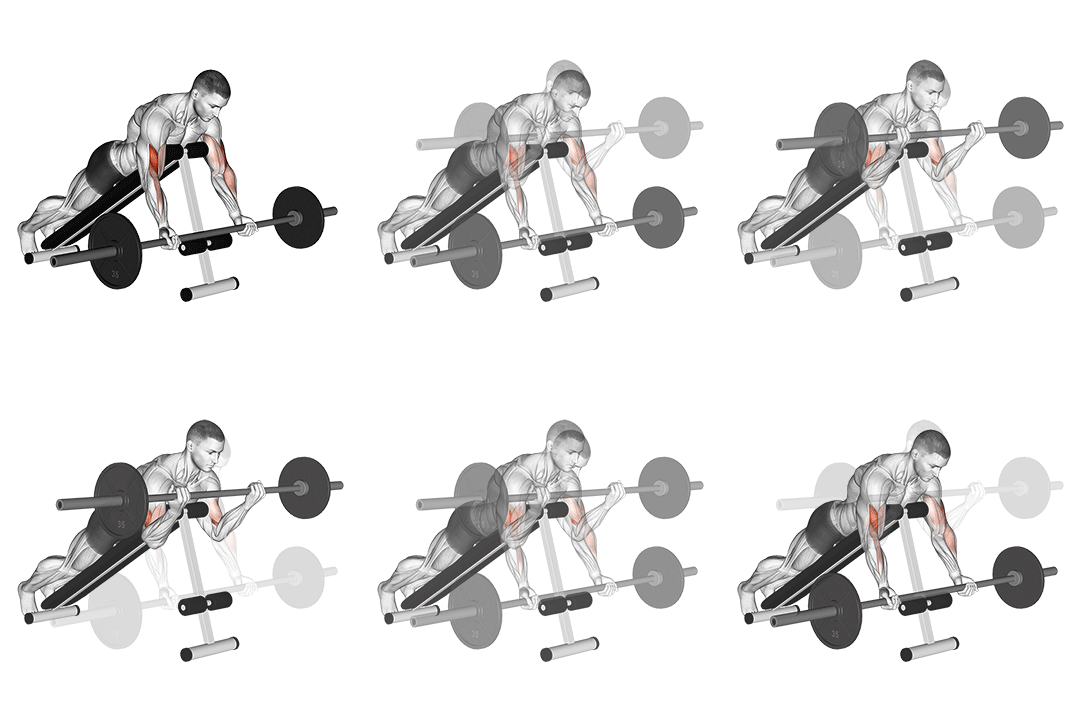
Barbell Preacher Curl
Head-to-Head Comparison
| Attribute | Barbell Biceps Curl (with Arm Blaster) | Barbell Preacher Curl |
|---|---|---|
| Target Muscle |
Biceps
|
Biceps
|
| Body Part |
Upper-arms
|
Upper-arms
|
| Equipment |
Barbell
|
Barbell
|
| Difficulty |
Beginner
|
Beginner
|
| Movement Type |
Isolation
|
Isolation
|
| Secondary Muscles |
1
|
1
|
Secondary Muscles Activated
Barbell Biceps Curl (with Arm Blaster)
Barbell Preacher Curl
Visual Comparison
Overview
Barbell Biceps Curl (with Arm Blaster) vs Barbell Preacher Curl — two staple isolation moves for your upper-arms. If you want clearer decisions about muscle emphasis, equipment needs, and which to prioritize in your routine, this guide has your back. You’ll get side-by-side comparisons of primary and secondary muscle activation, technique cues (elbow placement, torso angle, bar path), concrete rep ranges (3–6 for strength, 6–12 for hypertrophy), progression tips, and injury-risk notes so you can pick the right curl for your goals.
Key Differences
- Both exercises target the Biceps using Barbell. The main differences are in their movement patterns and muscle activation angles.
Pros & Cons
Barbell Biceps Curl (with Arm Blaster)
+ Pros
- Pins elbows to torso improves long-head stretch and reduces cheating
- Portable and inexpensive accessory that works in most gyms or home setups
- Better for stretch-mediated hypertrophy and controlled eccentric work
- Increased forearm stabilization can improve grip strength over time
− Cons
- Requires correct elbow placement—poor setup leads to shoulder strain
- Less support for very heavy singles compared to a preacher bench
- Can be uncomfortable across the chest/neck for some lifters
Barbell Preacher Curl
+ Pros
- Bench pad enforces strict form and prevents torso swing
- Safe platform for heavy, low-rep strength work
- Targets mid-range peak contraction of the short head effectively
- Easy for beginners to learn and for coaches to cue
− Cons
- Fixing the humerus can shorten the long head and limit stretch at the bottom
- Requires a preacher station or bench setup not always available at home
- Heavy loading at the fixed bottom position can increase tendon stress
When Each Exercise Wins
The arm blaster lets you maintain elbow position and achieve a fuller long-head stretch at the bottom, promoting stretch-mediated hypertrophy. Program 6–12 reps with controlled 2–4 second eccentrics to exploit length-tension and muscle damage mechanisms.
The preacher pad stabilizes the shoulder and limits cheating, letting you handle heavier loads safely for 3–6 reps. That consistent bar path and reduced compensatory movement improve overload and neural adaptations for elbow flexion strength.
The fixed pad enforces elbow alignment and prevents momentum, so beginners learn the pure elbow-flexion pattern faster. Use light weights and 8–12 reps to build motor control before increasing load.
An arm blaster (or improvised pad) is cheap and portable, so you can get near-gym isolation at home without a bulky preacher station. It lets you flexibly program 6–12 rep hypertrophy sets in limited space.
Frequently Asked Questions
Can I do both Barbell Biceps Curl (with Arm Blaster) and Barbell Preacher Curl in the same workout?
Yes. Pair them strategically: use preacher curls early for heavy sets (3–6 reps) when you’re fresh, then follow with arm blaster sets for hypertrophy work (8–12 reps) to finish with stretch and volume. Monitor fatigue so form remains strict on both.
Which exercise is better for beginners?
Barbell Preacher Curl is better to start with because the pad enforces elbow position and reduces cheating, helping you learn pure elbow flexion. Begin with light weights and 2–3 sets of 8–12 reps to build motor control.
How do the muscle activation patterns differ?
Activation differs by humerus position and length-tension: the arm blaster positions the humerus slightly back, lengthening the long head and increasing stretch-phase tension, while the preacher pad shortens the long head and emphasizes peak mid-range contraction of the short head. These changes alter the moment arm and where peak torque occurs through the 0°–135° elbow ROM.
Can Barbell Preacher Curl replace Barbell Biceps Curl (with Arm Blaster)?
Yes for basic isolation work—preacher curls can substitute if you lack an arm blaster—but you’ll lose some long-head stretch and stretch-mediated stimulus. If hypertrophy is a priority, rotate both across training cycles rather than relying on one exclusively.
Expert Verdict
Choose the arm blaster curl when your goal is biceps size and stretch-focused tension: it pins the elbows, increases long-head stretch, and works well in 6–12 rep schemes with slow eccentrics. Choose the preacher curl when you want strict form, easier coaching cues, and the ability to safely load for strength in the 3–6 rep range. If you train for both size and raw elbow-flexion strength, alternate them across cycles — use preacher blocks for heavy strength phases and arm blaster blocks for hypertrophy-focused phases. Both are low-difficulty, high-value isolation tools when performed with correct elbow positioning and controlled tempo.
Also Compare
More comparisons with Barbell Biceps Curl (with Arm Blaster)
More comparisons with Barbell Preacher Curl
Compare More Exercises
Use our free comparison tool to analyze any two exercises head-to-head.
Compare Exercises