

Barbell Curl vs Barbell Drag Curl: Complete Comparison Guide
Barbell Curl vs Barbell Drag Curl puts two classic biceps builders side-by-side so you can choose the best move for your upper-arm goals. I’ll walk you through muscle activation, technique cues, equipment needs, difficulty, and when to use each for muscle growth or strength. You’ll get clear rep ranges, specific setup and execution tips (elbow position, bar path, tempo), and practical scenarios—like what to pick for beginners, busy lifters, or experienced trainees wanting refined stimulus. Read this to match exercise mechanics to your training plan and avoid wasted volume.
Exercise Comparison
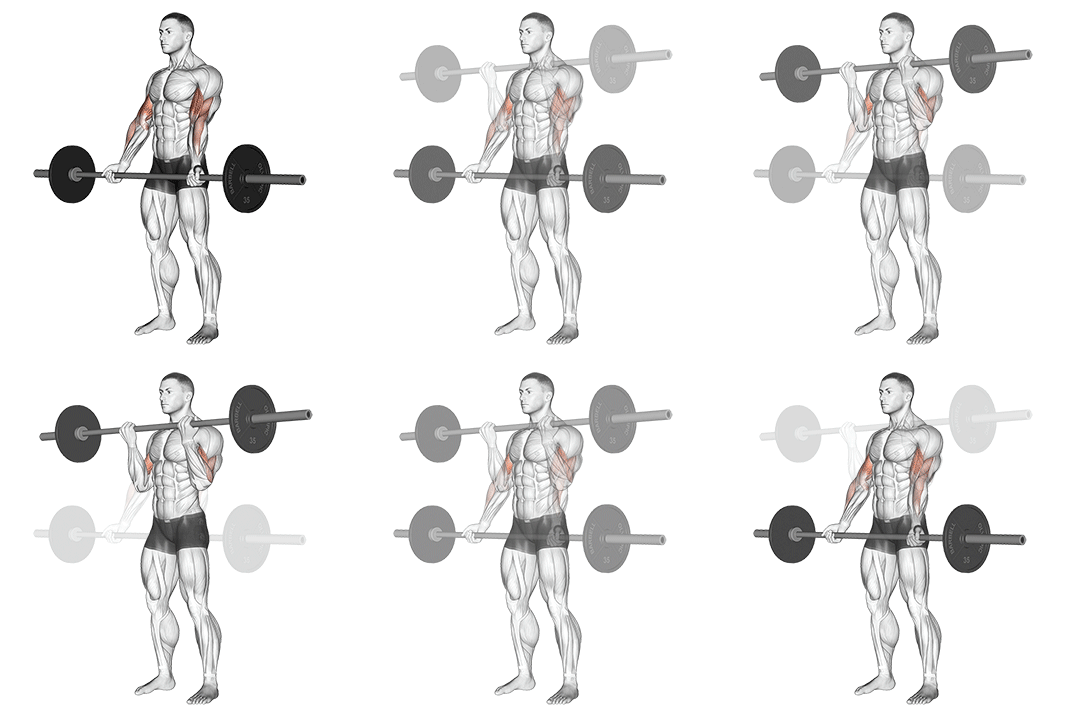
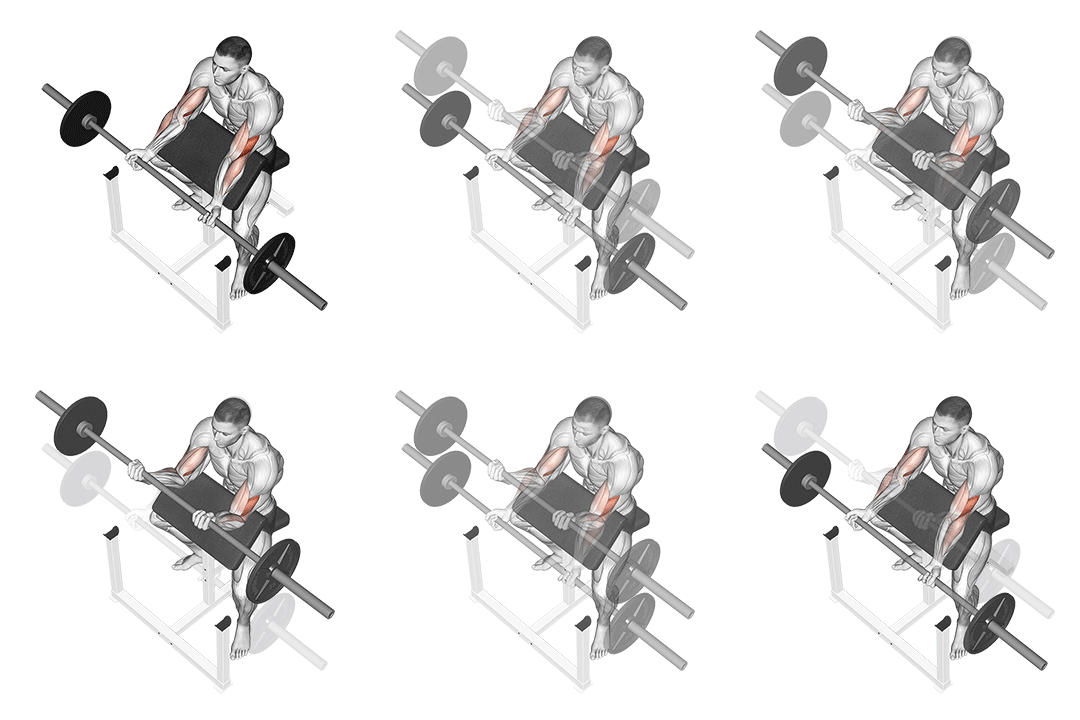
Barbell Curl
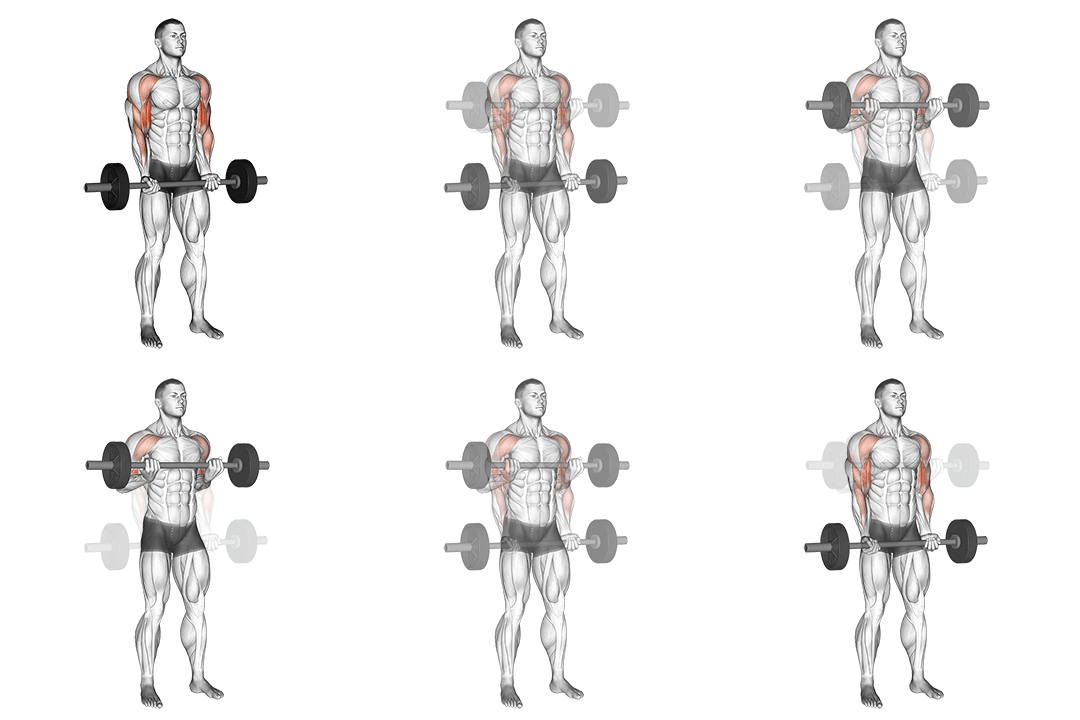
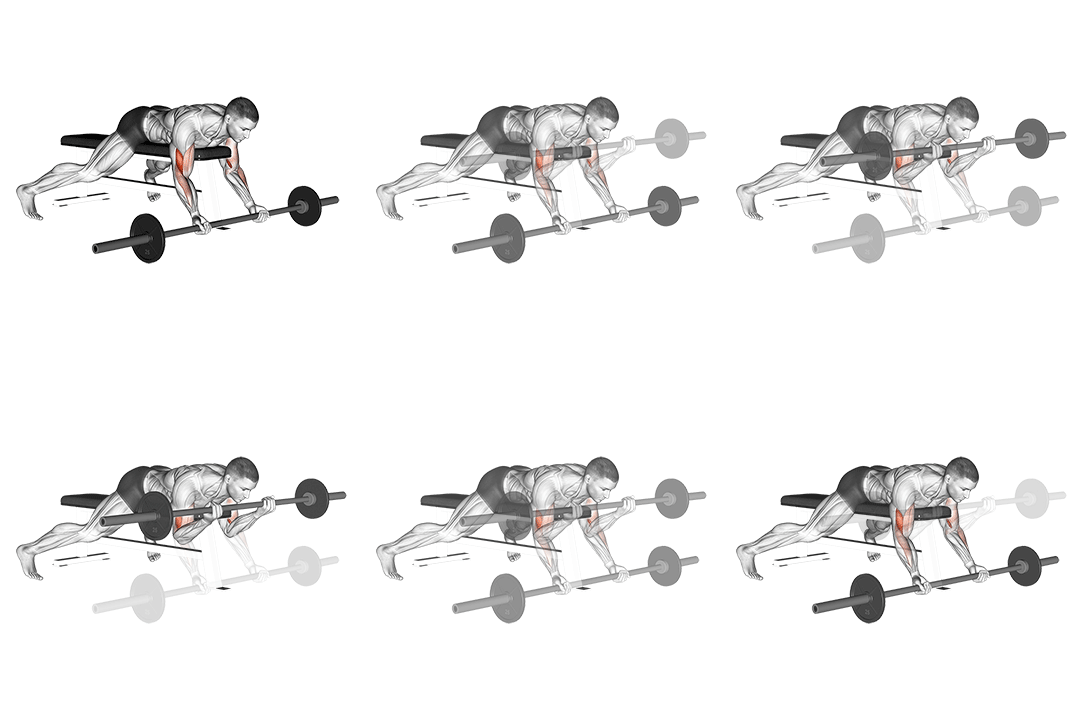
Barbell Drag Curl
Head-to-Head Comparison
| Attribute | Barbell Curl | Barbell Drag Curl |
|---|---|---|
| Target Muscle |
Biceps
|
Biceps
|
| Body Part |
Upper-arms
|
Upper-arms
|
| Equipment |
Barbell
|
Barbell
|
| Difficulty |
Beginner
|
Intermediate
|
| Movement Type |
Isolation
|
Isolation
|
| Secondary Muscles |
1
|
1
|
Secondary Muscles Activated
Barbell Curl
Barbell Drag Curl
Visual Comparison
Overview
Barbell Curl vs Barbell Drag Curl puts two classic biceps builders side-by-side so you can choose the best move for your upper-arm goals. I’ll walk you through muscle activation, technique cues, equipment needs, difficulty, and when to use each for muscle growth or strength. You’ll get clear rep ranges, specific setup and execution tips (elbow position, bar path, tempo), and practical scenarios—like what to pick for beginners, busy lifters, or experienced trainees wanting refined stimulus. Read this to match exercise mechanics to your training plan and avoid wasted volume.
Key Differences
- Difficulty levels differ: Barbell Curl is beginner, while Barbell Drag Curl is intermediate.
- Both exercises target the Biceps using Barbell. The main differences are in their movement patterns and muscle activation angles.
Pros & Cons
Barbell Curl
+ Pros
- Simple, beginner-friendly setup with straightforward bar path
- Allows heavier absolute loading for strength-focused sets (e.g., 4–6 reps)
- Strong mid-range biceps torque—good for overall biceps thickness
- Easy to program progressive overload and tempo manipulation
− Cons
- Can encourage elbow flare or torso cheat under heavy loads
- More shoulder stabilization involvement can reduce biceps isolation
- Wrist strain possible with fully supinated grip or heavy loads
Barbell Drag Curl
+ Pros
- Shifts emphasis to the biceps long head by altering shoulder angle
- Shorter lever arm at the top increases time under tension near peak contraction
- Limits anterior deltoid involvement—better isolation of elbow flexors
- Useful for refining peak contraction and muscle shape
− Cons
- Higher technical demand—requires controlled bar-to-torso path
- Less carryover to heavy strength loads due to limited ability to cheat
- May feel awkward at first and needs lighter loads for safe practice
When Each Exercise Wins
Drag Curls increase time under tension at the top range and bias the long head, which helps fill the biceps peak. Use 8–15 reps with 2–3 second eccentrics to exploit the altered length-tension curve for muscle growth.
Barbell Curls let you handle heavier absolute loads and apply progressive overload in lower rep ranges (4–6 reps), producing greater mechanical tension through the mid-range where biceps torque is high.
The Barbell Curl has a simpler motor pattern and fewer coordination demands—stand, anchor elbows, and flex. Start with 3 sets of 8–12 reps to build baseline strength and technique.
Requires only a barbell and plates and is simpler to perform in a small space. Drag Curls are possible at home but need attention to technique and often lighter loads to be effective and safe.
Frequently Asked Questions
Can I do both Barbell Curl and Barbell Drag Curl in the same workout?
Yes. Use Barbell Curls earlier to handle heavier loads (3–5 sets of 4–8 reps) and follow with Drag Curls as an accessory (2–3 sets of 8–15 reps) to emphasize the long head and increase time under tension without fatiguing form early.
Which exercise is better for beginners?
Barbell Curl is better for beginners because the motor pattern is simpler and you can safely progress load. Focus on strict form and 8–12 rep sets before introducing the coordination demands of drag curls.
How do the muscle activation patterns differ?
Barbell Curls produce peak torque in the mid-range of elbow flexion with more contribution from the brachialis and forearm stabilizers. Drag Curls shift peak tension toward terminal flexion and bias the long head by keeping the shoulder in relative extension and changing the force vector.
Can Barbell Drag Curl replace Barbell Curl?
Drag Curls can replace Barbell Curls when your goal is long-head emphasis and peak contraction, but they don’t substitute well if you need heavy mid-range loading for strength. For balanced development, rotate both movements across training blocks.
Expert Verdict
Choose Barbell Curls when you want straightforward progression and the ability to move heavier weights for strength and general biceps thickness. They’re ideal for beginners and for loading the mid-range where torque is greatest. Pick Barbell Drag Curls when you want targeted long-head stimulus, improved peak contraction, and a movement that reduces anterior deltoid involvement—use them for 8–15 rep hypertrophy work with controlled eccentrics. For a balanced program, start with Barbell Curls to build baseline strength, then add Drag Curls as an accessory to refine shape and increase time under tension near terminal elbow flexion.
Also Compare
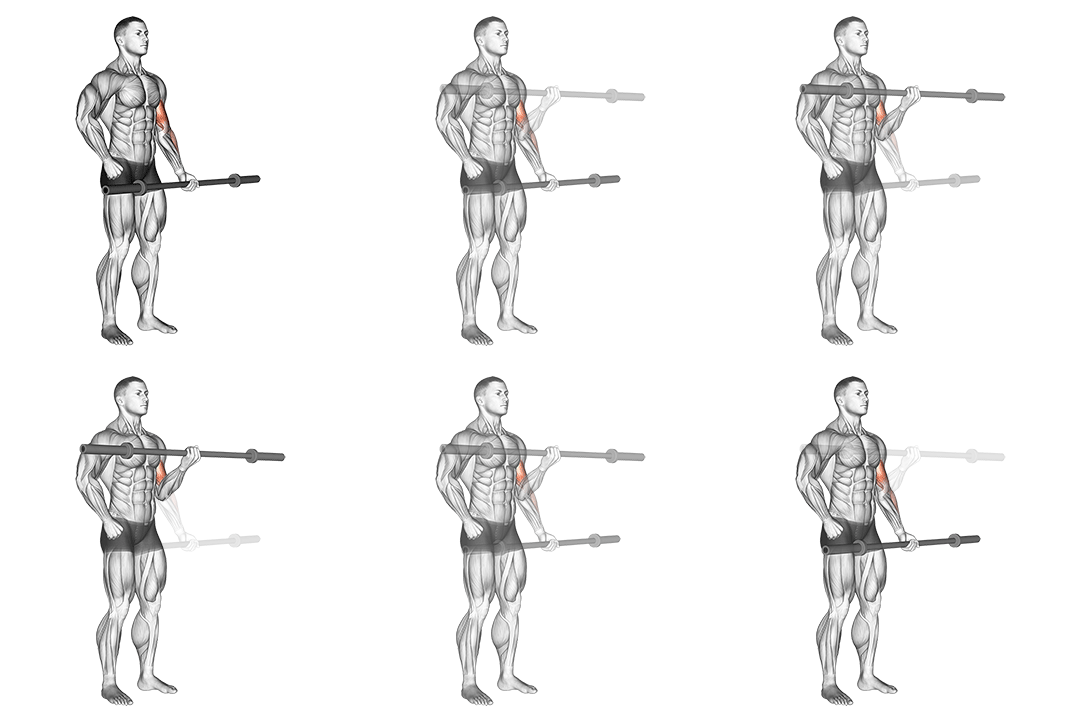
More comparisons with Barbell Curl
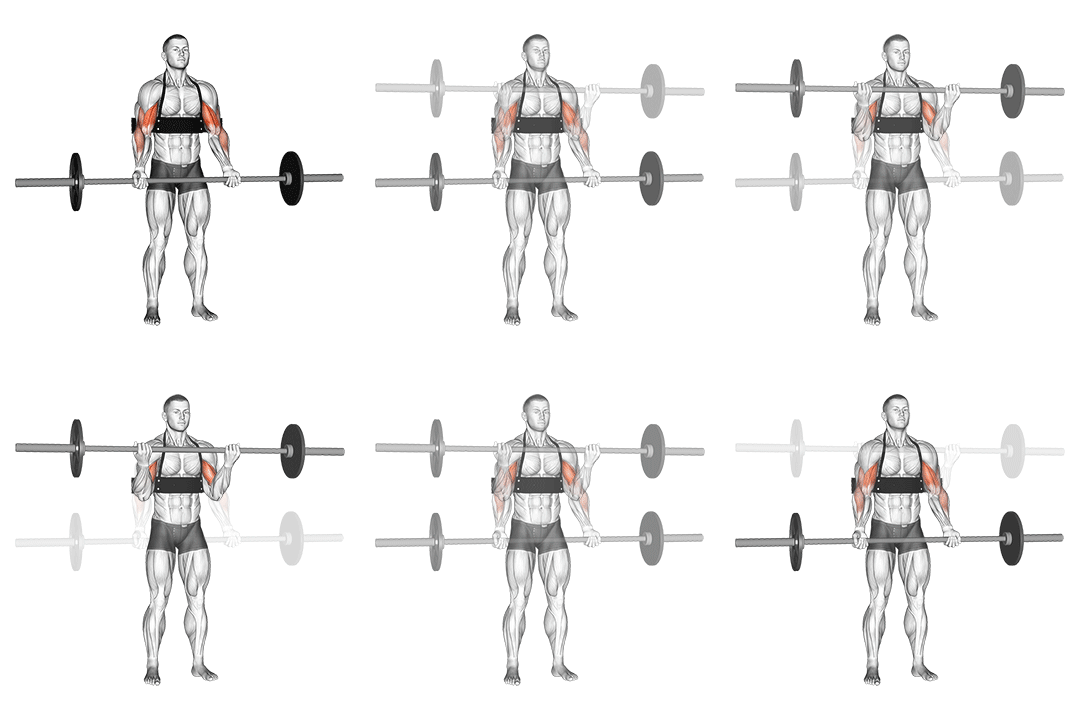
More comparisons with Barbell Drag Curl
Compare More Exercises
Use our free comparison tool to analyze any two exercises head-to-head.
Compare Exercises